Destinations / South America
Encarnación, Paraguay travel guide
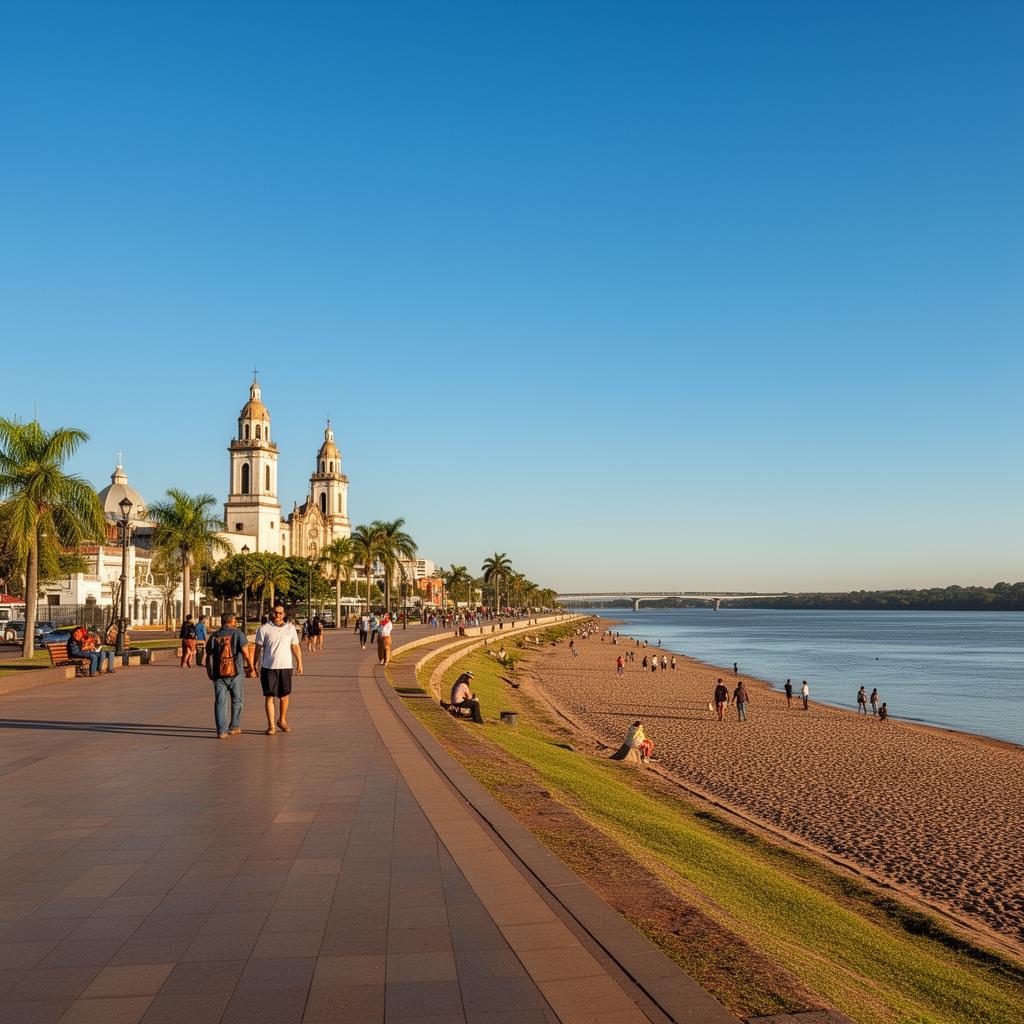
Paraguay's riverside summer capital, Jesuit ruins, carnival, and the most underrated country in South America.
- Best time to visit: March-May and September-November
- Daily budget (budget traveller): $25 to $45 USD
- Ideal trip length: 3 to 5 days
Encarnación is Paraguay's summer capital, a riverside city on the Paraná River with a long beach, a famous carnival, and the UNESCO Jesuit ruins of La Santísima Trinidad just down the road. It is the entry point to a country so underrated that most travellers skip it entirely, which is exactly why you shouldn't. Joy Plus plans your Encarnación days around the carnival season, the river sunsets and the Jesuit history that makes this region one of South America's hidden cultural treasures.
Encarnación is the city most Paraguayans point to when you ask where they go to have fun. It sits on the north bank of the Paraná, facing Posadas in Argentina, and it has been rebuilt twice in living memory. The old lower town was flooded when the Yacyretá dam filled the river, and the city answered with a new Costanera, a long sand beach and a purpose-built Sambódromo. The result is a tidy, breezy, slightly surreal riverside city where families drink tereré at sunset and nobody is trying to sell you anything.
The history is the draw, and it is close. La Santísima Trinidad de Paraná and Jesús de Tavarangué, two UNESCO Jesuit mission ruins, sit 28 to 40 minutes up Ruta 6 on a local bus. Red sandstone churches, carved pulpits and open plazas stand with almost no tour groups. Add Posadas across the bridge, the German-founded colonies up the road, and a carnival season that fills the Sambódromo every Saturday night from mid-January to late February. A long weekend here covers more ground than most South American capitals manage in a week.
Go in with the right expectations. English is rare, so a few words of Spanish (and one or two of Guaraní, like Mba'éichapa for hello and aguyje for thanks) buy you real warmth. It is cheap by any standard: a full lunch at a comedora costs about Gs 30,000 (roughly US$4), and a litre of Pilsen at a riverside bar costs less than a coffee in Lisbon. In summer it is brutally hot and humid, so shift your day to dawn at the ruins, a long siesta, and the Costanera after 5pm like everyone else. Do that and Encarnación will quietly become the surprise of your trip.
How many days in Encarnación?
For Encarnación, we recommend 3 to 5 days.
| Trip length | What you'll see | Itinerary |
|---|---|---|
| 2 days | Centro and Costanera sunset; La Santísima Trinidad and Jesús de Tavarangué | Encarnación in 2 days |
| 3 days · Recommended | Adds: Posadas, Argentina | Encarnación in 3 days |
| 4 days · Recommended | Adds: Zona Baja, river market and beach | Encarnación in 4 days |
| 5 days · Recommended | Adds: San Cosme y Damián | Encarnación in 5 days |
| 7 days | Adds: Beach morning and carnival night | Encarnación in 7 days |
Encarnación itinerary
Arrive, Centro and Costanera sunset
Morning: Arrive at the Terminal de Ómnibus (taxi to Centro Gs 20,000). Drop bags and have a chipa and coffee near Plaza de Armas.
Afternoon: Walk the Catedral and Avenida Irrazábal shops, then a comedora lunch of milanesa or sopa paraguaya. Siesta from 1 to 3pm like everyone else.
Evening: Be on the Costanera by 5:30pm for sunset over Posadas. Grilled surubí or dorado dinner by the river, with a litre of Pilsen.
La Santísima Trinidad and Jesús de Tavarangué
Morning: Take the first bus up Ruta 6 (40 min, about Gs 12,000) and enter Trinidad at the 7am opening. The golden light on the red stone is the whole point.
Afternoon: Hop to Jesús de Tavarangué, 12km further, for the unfinished tower and almost no visitors. Lunch in the village at a family comedora.
Evening: Back in town, an easy tereré on the Costanera. If the Trinidad night light show runs tonight, take a taxi there and back (confirm schedule at the visitor centre).
Posadas, Argentina
Morning: Bring your passport and take the cross-border colectivo over the San Roque González de Santa Cruz bridge (about 30-60 min with immigration, roughly Gs 12,000).
Afternoon: Plaza 9 de Julio, the cathedral, the Costanera and ice cream. Lunch on Argentine pesos or card, and compare the two riverfronts.
Evening: Return before dark and eat a big Paraguayan asado to reset. Early night.
Zona Baja, river market and beach
Morning: Walk the Zona Baja for the old low-town streets, then the Mercado Municipal for mbejú and fresh chipa.
Afternoon: Playa Mboi Ka'e or Playa San José from 3pm, when the sand cools. Rent a shaded chair for Gs 10,000-20,000.
Evening: Fresh-grilled river fish at a Costanera riverside spot, then a slow walk past the exercise stations.
San Cosme y Damián
Morning: Bus from the terminal (about 1h15, roughly Gs 15,000-25,000) to San Cosme y Damián. Visit the Jesuit ruins and the old astronomical observatory.
Afternoon: Lunch in town, then a bus or taxi back by 4pm.
Evening: Easy dinner near your hotel. Pack a day bag for tomorrow's carnival.
Beach morning and carnival night
Morning: Slow start with sopa paraguaya and coffee, then the beach before the heat hits.
Afternoon: Siesta, then a shower and an early Costanera snack. Buy carnival tickets in advance if you can, since Saturday sectors fill.
Evening: Sambódromo from 8pm. The comparsas parade past 10pm, with glitter, drums and costumes until 2 or 3am. Off-season? Take a day trip to Hohenau's German-founded colony instead.
Slow morning, depart
Morning: Last mbejú and chipa at the Mercado Municipal. Pick up ñandutí lace if the weekend market is on.
Afternoon: Bus to Asunción (5 to 6 hours) from the Terminal de Ómnibus, or onward to Ciudad del Este.
Evening: Arrive in Asunción, or cross to Posadas for a night bus to Buenos Aires.
Best neighbourhoods
- San José: The beach and riverside district with the Costanera promenade, sand beaches, water parks and the liveliest summer atmosphere.
- Centro: The commercial and administrative core with shops, banks, the cathedral and the best transport connections.
- La Santísima Trinidad: The village 30km from town that hosts the Jesuit ruins, a UNESCO site with a visitor centre and small local restaurants.
Must-do experiences
- Visit La Santísima Trinidad de Paraná: The most complete Jesuit ruin in Paraguay, a UNESCO site with intact churches, living quarters and plazas. Go at sunrise for golden light and no crowds.
- Walk the Costanera at sunset: A 3-kilometre riverfront promenade with sand beaches, palm trees, exercise stations and views across to Posadas, Argentina. The sunset here is spectacular.
- Experience Encarnación Carnival: Paraguay's biggest carnival, held every Saturday night from January to February. Comparsas (dance troupes) in glittering costumes, live music and a party that rivals Rio on a local scale.
- Day trip to Posadas, Argentina: Cross the San Roque González de Santa Cruz bridge to the Argentine city of Posadas for a different culture, cuisine and a chance to compare two riverfront cities.
- Eat sopa paraguaya and chipa at a local comedora: Paraguayan corn bread (sopa paraguaya) and cheese rolls (chipa) are the national staples, best eaten fresh and warm at a family-run eatery.
- Relax on the river beaches: Encarnación is known as the 'Pearl of the South' for its sandy beaches along the Paraná River, popular in summer and during the city's lively Carnival.
Hidden gems
- The smaller Jesuit ruins at Jesús de Tavarangue, less visited than Trinidad and more atmospheric in the early morning mist.
- The local fish market on the river where dorado and surubí are sold fresh and grilled on the spot.
- Carnival rehearsals in December, free, chaotic and far more local than the main Saturday shows.
- The riverside picnic spots south of the main beach where locals gather with mate and asado on Sundays.
- The artisan market at Plaza de Armas on weekend mornings, with ñandutí lace, leather and woodwork from local craftspeople.
Daily budget
- Accommodation: budget Gs 80,000-150,000 / night (basic hostal or dorm), mid-range Gs 280,000-450,000 (double at a Centro or Costanera hotel), splurge Gs 800,000+ (river-view hotel with pool). True hostels are few, so family-run hostales near Plaza de Armas are the budget norm. Rates rise 30 to 50% on carnival Saturdays.
- Food: budget Gs 60,000-100,000 / day (comedora menus + chipa), mid-range Gs 150,000-250,000 (parrilla dinner on the Costanera), splurge Gs 400,000+ (long river-fish and asado feast with wine). Comedora set lunches run Gs 25,000-40,000. Chipa and mbejú are about Gs 5,000 each at breakfast.
- Transport: budget Gs 20,000-40,000 / day (city bus + local buses), mid-range Gs 60,000-120,000 (taxis + bus to Trinidad), splurge Gs 400,000+ (private driver to the ruins, Posadas and back). Bus to Trinidad is about Gs 10,000-15,000 each way. A short taxi in town is Gs 15,000-35,000, a moto-taxi Gs 5,000-10,000. Agree the fare first.
- Activities: budget Gs 30,000-60,000 / day (one ruin entry, free Costanera), mid-range Gs 150,000-300,000 (Trinidad + night show, carnival general seating), splurge Gs 500,000+ (carnival VIP sector, private guide). Ruin entry is around Gs 30,000 for foreigners (confirm at the gate). Carnival tickets run roughly Gs 50,000-150,000 by sector.
- Drinks & nightlife: budget Gs 20,000-40,000 (tereré + a litre of Pilsen), mid-range Gs 100,000-180,000 (Costanera bars, caipirinhas, carnival night), splurge Gs 400,000+ (carnival VIP table with bottle service). Beer is sold by the litre bottle and shared. Drinking tereré in a circle costs the price of ice and herbs.
Where to stay
- Social hostel in Centro (near Plaza de Armas) (Gs 80,000-150,000 / night): True hostels are scarce, so book a family-run hostal or budget hotel within walking distance of the plaza and the Terminal de Ómnibus. Look for AC, hot water and a shared kitchen. Check recent reviews on Booking or Hostelworld.
- Boutique hotel in Centro / Zona Alta (Gs 280,000-450,000 / night): Mid-range options such as Hotel Cristal or Hotel Viena put you 5 to 10 minutes from the Costanera on foot. Choose rooms with AC and a quiet street side. Book early for carnival Saturdays.
- Apartment in San José / near the Costanera (Gs 250,000-400,000 / night): A furnished flat or small apartment near the beach is great for 4+ nights. Kitchen, AC and a balcony for tereré. Ask for a recent photo of the AC unit.
- Splurge in Costanera riverfront (Gs 800,000-1,500,000 / night): A river-view four-star with a pool is the carnival-week luxury play. Sunset from your balcony, a short walk to the Sambódromo, and breakfast on the terrace. Confirm rates, they spike on Saturdays.
What to eat
- Sopa paraguaya, the thick, cheesy corn bread that is Paraguay's national dish, eaten at every meal
- Chipa, small cheese and manioc flour rolls, best eaten hot from street ovens in the morning
- Mbejú, a crispy cassava pancake stuffed with cheese, a traditional breakfast or snack
- Asado paraguayo, slow-grilled beef with chimichurri, best enjoyed at a riverside parrilla on a Sunday
- Tereré, the cold yerba mate drink that fuels Paraguay all summer, shared in a circle with friends
Day trips
- La Santísima Trinidad + Jesús de Tavarangué (28km and 40km, 40 to 55 min by bus): Two UNESCO Jesuit mission sites, red-sandstone churches, carved pulpits and open plazas. Trinidad is the most complete, and Jesús has the unfinished tower and almost no visitors. Go at the 7am opening. Local bus from the Terminal de Ómnibus up Ruta 6, about Gs 10,000-15,000 each way. A taxi round trip with a wait runs Gs 150,000-200,000. Entry is about Gs 30,000, confirm at the gate.
- Posadas, Argentina (Across the bridge, 30 to 60 min): A different country in an hour: Plaza 9 de Julio, the cathedral, a long Costanera and Argentine bakeries. A good compare-and-contrast day against Encarnación's own riverfront. Cross-border colectivo from central Encarnación over the San Roque González de Santa Cruz bridge, about Gs 12,000. Bring your passport and expect immigration stops both ways.
- San Cosme y Damián (About 60km, around 1h15 by bus): A quieter Jesuit reducción with its own ruins and the old astronomical observatory associated with Padre Buenaventura Suárez. Peaceful and barely touristed. Bus from the Terminal de Ómnibus, a few departures a day (about Gs 15,000-25,000). Confirm times at the ticket window and plan to return by late afternoon.
When to visit
- Autumn (March - May): 20-29°C, lower humidity, occasional warm storms. Crowds: Light, bump around Semana Santa (Easter week). The best window for ruins, river walks and sleeping without the AC roaring. Book ahead only for Holy Week.
- Winter (June - August): 8-21°C, crisp mornings, the odd cold front with 5°C nights. Crowds: Low, with a bump in July when Argentine shoppers cross the bridge. Perfect for Trinidad and Jesús with no sweat and clear light. Beaches are empty and the water is cold, so pack a fleece.
- Spring (September - November): 22-33°C, building humidity, jacaranda and lapacho blooms early on. Crowds: Light to moderate. The second-best window. Warm enough for the beach by late October, with cheap rooms and no carnival prices.
- Summer (December - February): 30-38°C, heavy humidity, violent afternoon thunderstorms. Crowds: Heavy on carnival Saturdays, hotels sell out. Go for carnival, not for comfort. Sightsee at 7am, hide from 12 to 4pm, and book rooms six weeks ahead for any Saturday.
Entry rules for your passport
Visa rules for Paraguay depend on the passport you travel on. Check the official source before you book: Paraguay National Directorate of Migration
Getting there
Most travellers arrive by bus. From Asunción (ASU), take a taxi or app ride to the Terminal de Ómnibus de Asunción (Gs 80,000-100,000), then a long-distance coach to Encarnación, about 370km and 5 to 6 hours. Companies such as Nuestra Señora de la Asunción, Crucero del Norte and Flecha de Oro run semi-cama at around Gs 90,000-130,000 and cama at up to Gs 160,000. From Ciudad del Este (for Foz do Iguaçu, Brazil), allow about 4 to 4.5 hours for Gs 70,000-100,000. From Argentina, fly to Posadas (PSS) from Buenos Aires Aeroparque, then take a cross-border colectivo over the San Roque González de Santa Cruz bridge (30 to 60 minutes with immigration, about Gs 12,000). Encarnación's small airfield sees limited flights, so do not count on it. At the Encarnación Terminal de Ómnibus, a taxi to Centro is about Gs 20,000. Avoid unlicensed drivers who approach you inside the terminal.
Getting around
Encarnación is walkable but spreads along the river. Buses run to the Jesuit ruins and nearby towns. Taxis and moto-taxis are cheap. The San Roque González de Santa Cruz bridge connects to Posadas, Argentina, for day trips. The bus terminal has connections to Asunción (5 to 6 hours) and Ciudad del Este. Encarnación has a small airport with flights to Asunción.
Safety
Encarnación is safe by Paraguayan standards, with low violent crime. Petty theft can occur in crowded carnival areas and at the beach. Keep valuables secure during carnival, avoid isolated areas at night, and use registered taxis. The sun and heat are intense: stay hydrated.
Solo travel tips
- Eat at the comedora counter: Small family comedoras serve set lunches for Gs 25,000-40,000. Sit at the counter, say "lo mismo" to whatever the next person has, and you will usually end up chatting with someone's cousin. English is rare, but pointing and smiling works.
- Join a tereré circle: Tereré is cold yerba mate shared through one bombilla (straw). If invited, drink the full guampa, hand it back, and only say gracias when you want to stop. Saying it early ends your turn.
- Go to the ruins at opening: Trinidad opens at 7am, and a solo visitor at that hour gets the whole site and the best light. Take a bus or share a taxi (Gs 150,000-200,000 round trip with a wait). Bring water and a hat, there is little shade.
- Posadas passport routine: Carry your original passport on the border bus and have a printed hotel booking handy. Cross early, return before dark, and keep small pesos and guaraníes separate to avoid fumbling at the counter.
- Solo female travellers: Encarnación is calm for women alone, but keep to the Costanera and Centro at night, use registered taxis, and keep your drink in sight at carnival. Ask your hotel to call a taxi rather than hailing one late. Dress is relaxed, though cover shoulders in churches.
- Find your tribe at carnival rehearsals: December rehearsals are free and chaotic, and the comparsa members love explaining their costumes. Ask at your hotel or on local Facebook groups for rehearsal dates, then go with a Paraguayan friend if you can.
Cultural etiquette
- Greet people. A handshake plus "buen día" or "Mba'éichapa" (Guaraní hello) goes a long way, and skipping greetings feels rude.
- Tereré etiquette: take the guampa, drink it all, hand it back, and say gracias only when you want to stop. Do not touch the bombilla.
- Paraguay is bilingual. Spanish gets you everywhere, but even "aguyje" (thank you) earns real smiles.
- Siesta is real. Many shops shut from noon to 3pm in summer, so do your errands before or after.
- Ask before photographing comparsa dancers at carnival, and never touch costumes or feathers without permission.
- Cover shoulders and knees in churches, and do not climb on the Jesuit stone walls. Heritage rangers are strict about it.
- Tipping is about 10% at sit-down restaurants (check if service is included). Round up taxis. Avoid heated political talk about the Stroessner era or the Triple Alliance War.
Frequently asked questions
How many days do you need in Encarnación?
Three to five days is ideal: one day for the Jesuit ruins at Trinidad and Jesús de Tavarangue, one for the Costanera beach and riverfront, one for a carnival show or rehearsal, and a day trip to Posadas in Argentina across the bridge.
Is Encarnación safe for tourists?
Encarnación is relatively safe, with lower crime than Asunción or Ciudad del Este. Use standard precautions: avoid isolated areas at night, keep valuables secure during carnival crowds, and use registered taxis. The city is welcoming and increasingly used to independent travellers.
What is the best time to visit Encarnación?
March to May and September to November offer the best weather: warm but not oppressively hot, with lower humidity. December to February is carnival season and peak summer, with intense heat and crowds. June to August is cooler but some riverside attractions may be quieter.
Do I need a visa to visit Paraguay?
Citizens of the EU, UK, US, Canada and Australia can enter Paraguay visa-free for up to 90 days. Your passport must be valid for six months. Citizens of some countries may need proof of onward travel or a yellow fever certificate if arriving from affected areas.
How do I get to Encarnación from Asunción or Posadas?
From Asunción, buses take 5 to 6 hours and run day and night. From Posadas in Argentina, cross the San Roque González de Santa Cruz bridge by the international train (under 10 minutes when it runs), by bus or by taxi. Border queues can be long at weekends and on holidays.
What are the Jesuit Missions and why visit them?
The Jesuit Missions of La Santísima Trinidad and Jesús de Tavarangue are UNESCO-listed 18th-century ruins of Jesuit settlements that housed thousands of indigenous Guaraní people. They represent a unique fusion of European and Guaraní culture and are among the most complete and atmospheric mission ruins in South America.
Is Paraguay worth visiting compared to Argentina and Brazil?
Paraguay is South America's most underrated country: cheaper, less touristy, culturally distinct and genuinely welcoming. Encarnación offers Jesuit history, carnival culture, riverside beaches and the chance to see a side of South America that most travellers miss entirely.
Is Encarnación worth visiting?
Yes, for the nearby UNESCO Jesuit ruins, river beaches and one of Paraguay's best Carnivals. It's a relaxed, pleasant city and a common border crossing point to Argentina.
What are the Jesuit ruins near Encarnación?
Trinidad and Jesús de Tavarangue, 17th-18th century mission complexes with grand red-sandstone churches and carvings. Trinidad's evening light-and-sound show is a highlight.
More about Encarnación
Tours and activities in Encarnación | Encarnación in 2 days | Encarnación in 3 days | Encarnación in 4 days | Encarnación in 5 days | Encarnación in 7 days
Joy Plus home | Destinations | Itineraries | Activities | Flights | Budget planner | Calendar | Map | Blog | Lifetime access