Destinations / Europe
Faroe Islands, Denmark travel guide
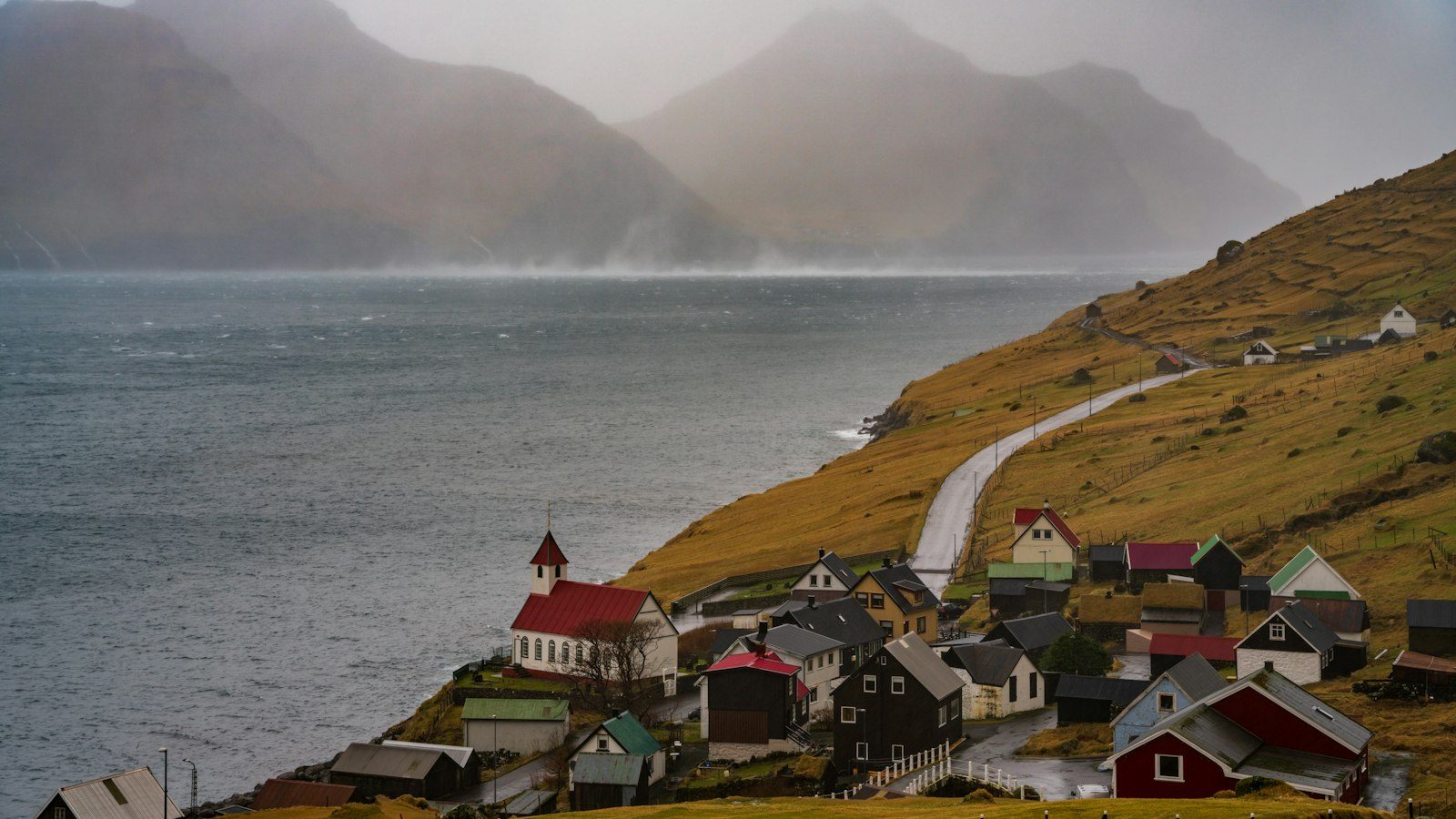
Eighteen steep, green islands in the North Atlantic, roughly halfway between Scotland and Iceland. You hike to cliff-edge lakes and lighthouses, watch puffins on Mykines, travel by bus, ferry and undersea tunnel, and finish the day with fish soup in a turf-roofed town.
- Best time to visit: June to August
- Daily budget (budget traveller): $110 to $380 USD
- Ideal trip length: 5 to 7 days
The Faroe Islands are a self-governing nation within the Kingdom of Denmark. The 18 islands sit in the North Atlantic, about two hours' flight from Copenhagen or Edinburgh, and around 55,000 people live there. There are no trees to speak of, just grass-covered mountains, sheer sea cliffs, waterfalls dropping into the ocean and small villages of coloured houses at the end of long fjords. The capital, Tórshavn, is small and friendly. Its old quarter of Tinganes, with black wooden houses and grass roofs, is one of the oldest parliament sites in the world. Most visitors come to hike: to the lake that seems to hang above the sea at Sørvágsvatn, to the Kallur lighthouse on Kalsoy and to the puffin colonies on Mykines. The weather changes by the hour, fog can close a trail in minutes and several of the best-known walks cross private farmland and charge a fee. It is also expensive, with Nordic prices for beds, meals and beer. Still, a solo traveller can manage well with a bus and ferry travel card, free city buses in Tórshavn, supermarket food and the many trails that cost nothing at all.
The Faroe Islands are a cluster of 18 volcanic islands in the North Atlantic, roughly 300km north of Scotland. They are part of the Kingdom of Denmark but run their own affairs, with their own language, flag, parliament and banknotes. Around 55,000 people live here, about a third of them in or near Tórshavn. The landscape is the reason to come: steep green mountains, basalt cliffs full of seabirds, waterfalls blown back up by the wind and villages tucked into fjords. Most visitors only skim the famous viewpoints in a hire car. Slow down and you get the better version: a quiet morning on the Tinganes rocks, a ferry ride with locals to an island of 30 people, and a long summer evening that never quite gets dark. It is an expensive place, but walking is free, the Tórshavn buses are free and a travel card covers most other transport.
Getting here means flying into Vágar Airport, mainly from Copenhagen, which has several flights a day, or from Edinburgh, Reykjavík, Oslo or Billund. In summer there are also flights from London Gatwick and Paris. Smyril Line's ferry from Hirtshals in northern Denmark takes 30 to 38 hours. From the airport, bus 300 reaches Tórshavn in about 50 minutes. After that, the blue SSL buses and ferries link almost every inhabited island, and the 4-day or 7-day Tourist Travel Card is the way to use them. Base yourself in Tórshavn for the first few nights, then move to Vágar for Mykines or to Klaksvík for Kalsoy. A hire car saves time but adds tunnel tolls.
Timing and weather shape everything. June to August brings 18 to 20 hours of daylight, puffins and the full summer schedule of boats and guided hikes. May and September are calmer and cheaper but less reliable. Winter is dark and stormy, though it has its own appeal. In any month, expect rain, wind and fog, often all in one day. Plan your must-do hikes and boat trips with a spare day either side. Several famous trails charge landowner fees, and since February 2026 there has been a small nightly sustainability fee on paid stays. English is widely spoken, people are reserved but kind, and evenings are calm. If you want nightlife, Tórshavn's harbour bars are about as wild as it gets.
Faroe Islands itinerary
Arrive and explore Tórshavn
Morning: Land at Vágar, buy an SSL travel card at the airport information desk and take bus 300 to Tórshavn (about 50 minutes). Drop your bag and get a coffee in the old town.
Afternoon: Walk through Tinganes and the lanes of Reyni, then climb up to Skansin fort for a view over the harbour.
Evening: Fish dinner around Vágsbotnur, such as at Barbara Fish House, then a Föroya Bjór in a harbour bar.
Kirkjubøur and the National Museum
Morning: Walk the old hill path from the edge of Tórshavn to Kirkjubøur (about two to three hours). Check the forecast first and carry layers.
Afternoon: See the St Magnus Cathedral ruins, Olav's Church and Roykstovan, then take the bus back. Stop at the National Museum in Hoyvík on the free city bus.
Evening: Wander through Viðarlundin park and have a simple dinner. Buy supplies for tomorrow at Bónus.
Vágar: lake and waterfall
Morning: Take bus 300 to Miðvágur and walk along Sørvágsvatn to Trælanípa (200 DKK without a guide). Allow about three hours.
Afternoon: Share a taxi or join a tour to Gásadalur for the Múlafossur waterfall. Move into a guesthouse in Sørvágur or Miðvágur.
Evening: A quiet night on Vágar. Check that tomorrow's Mykines ferry is running.
Puffins on Mykines
Morning: Catch the Mykines ferry from Sørvágur (about 246 DKK return, booked ahead). Your hiking fee, booked online for 400 DKK, includes the guided walk.
Afternoon: Walk out towards the puffin slopes and the Mykineshólmur lighthouse bridge with your guide. Bring snacks, as food on the island is limited.
Evening: Ferry back, then bus 300 to Tórshavn. If the boat was cancelled, swap this day with day 6.
Klaksvík and the Kallur lighthouse
Morning: Take bus 400 through the tunnels to Klaksvík, then the car ferry to Syðradalur on Kalsoy, which the travel card covers.
Afternoon: Ride the Kalsoy bus to Trøllanes and hike to the Kallur lighthouse (200 DKK, card only). Visit the Seal Woman statue in Mikladalur on the way back.
Evening: Stay in Klaksvík. Dinner near the harbour and a beer from the local brewery.
Gjógv and Slættaratindur
Morning: Bus to Gjógv via Oyrarbakki, checking connections the night before. Walk down to the gorge and up the headland behind the village.
Afternoon: On a clear day, hike Slættaratindur (880m) from the Eiðisskarð pass for views over the whole archipelago. If it is cloudy, walk the coast instead.
Evening: Head back to Tórshavn for a last night in the old town, or stay at the guesthouse in Gjógv.
Nólsoy and departure
Morning: Take the short ferry to Nólsoy for a walk around the village and along the coast, if your flight allows.
Afternoon: Ferry back, collect your bag and take bus 300 to Vágar Airport. Allow a buffer, as buses are spaced out.
Evening: Fly to Copenhagen or Edinburgh, or carry on to Iceland.
Best neighbourhoods
- Tórshavn old town and Tinganes: The heart of the capital, on a rocky point between the two harbours. You have the turf-roofed government buildings of Tinganes, the narrow lanes of Reyni, the cathedral and most of the cafés and shops. The free red city buses start nearby and the intercity bus terminal is a short walk away. It is the easiest base for a first-time visitor without a car.
- Vágsbotnur and the harbour: The inner harbour of Tórshavn, lined with old warehouses turned into bars, restaurants and small shops. It is where you eat fish, drink a Föroya Bjór and catch the ferry to Nólsoy or Suðuroy. It is lively on Friday and Saturday nights, so pick a room a few streets back if you want quiet.
- Vágar: Miðvágur and Sørvágur: The island with the airport, about 45 minutes west of Tórshavn by bus. Miðvágur is the start of the Trælanípa walk and Sørvágur has the harbour for Mykines. Stay here if you want an early ferry or a late flight. It is quiet, with a couple of shops and few places to eat.
- Klaksvík: The second town, on Borðoy in the northern islands, reached by bus through the Eysturoy and Norðoy tunnels. It is a working fishing town with a big harbour, the Föroya Bjór brewery and the ferry to Kalsoy for the Kallur lighthouse. It makes a good base for two nights in the north.
- Gjógv and northern Eysturoy: A tiny village at the north tip of Eysturoy, built around a narrow sea gorge that once served as a natural harbour. It is close to Slættaratindur, the highest mountain, and feels properly remote. Buses are infrequent, so plan your connections and expect very quiet evenings.
Must-do experiences
- Walk to the lake above the sea: From Miðvágur, walk along Sørvágsvatn to the cliffs at Trælanípa, where the lake appears to float high above the ocean. The landowners charge 200 DKK (about $30) to walk without a guide, or more with one. Allow three hours and keep well back from the cliff edge.
- See Múlafossur at Gásadalur: A waterfall that drops straight off the cliff into the sea, with the tiny village of Gásadalur behind it. The viewpoint is a few minutes' walk from the road and is free. Buses are scarce, so drive, join a tour or share a taxi from Sørvágur.
- Watch puffins on Mykines: The westernmost island has huge puffin colonies from roughly May to August. Book the ferry from Sørvágur (about 246 DKK return) and the hiking fee separately. The fee is 400 DKK booked online or 500 DKK on the day, and a local guide is included. Boats are often cancelled in rough seas, so keep a spare day.
- Hike to the Kallur lighthouse: Take the car ferry from Klaksvík to Kalsoy, then the bus to Trøllanes, for the short, steep walk to the lighthouse on the ridge. The view north to the sea stacks is one of the most photographed in the islands. The landowner fee is 200 DKK and is paid by card.
- Wander through Tinganes: The Faroese parliament first met on this rocky point in Viking times, and the government still works from the small red and black wooden buildings here. It is free to walk through the lanes. Carry on into the old Reyni quarter and down to the harbour.
- Walk over the hill to Kirkjubøur: Follow the old footpath from the edge of Tórshavn over the hill to Kirkjubøur, the islands' medieval religious centre. You will find the roofless St Magnus Cathedral, the small Olav's Church and Roykstovan, a farmhouse lived in by the same family for generations. The walk takes about two to three hours, and buses run back.
- Take a boat under the Vestmanna cliffs: Boat trips from Vestmanna sail under bird cliffs that rise hundreds of metres straight out of the sea, through narrow channels and into sea caves. Tours run in summer and cost roughly $60 to $80. They are cancelled in heavy swell, so book a flexible slot.
Hidden gems
- Nólsoy, a small island 20 minutes by ferry from Tórshavn, with a quiet village and a long walk out to the lighthouse at its southern tip
- Skansin, the old fort above Tórshavn harbour, with cannons, a lighthouse and a good view over town that few people bother to climb to
- The black sand beach at Tjørnuvík, at the end of a narrow road on northern Streymoy, where local surfers sometimes ride the Atlantic swell
- Viðareiði, the northernmost village, with a white church and the cliffs of Villingardalsfjall above it. The hiking fee is paid into a box by the gate
- Viðarlundin, Tórshavn's small plantation park, one of the few places in the islands with real trees and a stream running through it
Daily budget
- Accommodation: budget $45-70 / night (hostel dorm or campsite), mid-range $170-260 (guesthouse or 3-star hotel), splurge $300+ (Hotel Føroyar or a design hotel in Tórshavn). The sustainability fee of 20 DKK a night, capped at 200 DKK a stay, is added on top. Rooms are scarce in July and during Ólavsøka, so book early. Single rooms are rare in villages.
- Food: budget $35-50 / day (supermarket breakfast and picnic, petrol station hot dog), mid-range $70-110 (café lunch and a sit-down fish dinner), splurge $150+ (tasting menu with wine). Restaurant mains cost roughly $30 to $50. A coffee is about 30 to 40 DKK. Alcohol is sold only in bars, restaurants and the state Rúsdrekkasøla shops, which keep short hours.
- Transport: budget $11-16 / day (7-day or 4-day SSL travel card), mid-range $80-130 (small hire car plus tunnel tolls), splurge $150+ (hire car, tolls and a helicopter hop). Tórshavn's city buses are free. The travel card costs 500 DKK for 4 days and 700 DKK for 7. Tunnel tolls are 175 DKK each way through the Eysturoy and Sandoy tunnels, and 100 DKK return through the Vágar and Norðoy tunnels.
- Activities: budget $0-30 / day (free trails, Trælanípa or Kallur fee), mid-range $60-100 (Mykines fee and ferry, or Vestmanna boat trip), splurge $150+ (private guided hikes, helicopter rides). Trælanípa and Kallur cost 200 DKK each. Mykines is 400 DKK online or 500 DKK on the day, and the ferry is about 246 DKK return. Most other hikes are free.
- Drinks & nightlife: budget $9-12 (a pint of local beer), mid-range $30-50 (a few drinks at a harbour bar), splurge $80+ (cocktails and wine over dinner). A pint costs about 60 to 70 DKK. Nightlife means a handful of bars around Vágsbotnur in Tórshavn, livelier on Friday and Saturday nights.
Where to stay
- Social hostel in Tórshavn centre ($45-70 / night (dorm)): Bládýpi on Dr. Jakobsens gøta offers simple rooms and some dorm-style beds within a few minutes' walk of the harbour, the bus terminal and the bars. It is the cheapest way to stay central.
- Boutique hotel in Tórshavn old town ($200-300 / night): Hotel Hafnia sits in the middle of town, a short walk from Tinganes, the shops and the ferries. Rooms are compact and comfortable, and breakfast is a good way to fuel a hiking day.
- Apartment in Vágar or Klaksvík ($150-230 / night): A small apartment or guesthouse room in Miðvágur, Sørvágur or Klaksvík puts you near the Mykines or Kalsoy ferries and gives you a kitchen to cut food costs. Check bus stops before booking.
- Splurge in Above Tórshavn ($300-450+ / night): Hotel Føroyar is a grass-roofed hotel on the hillside above the capital, with wide views over the town and Nólsoy. It is a few minutes from the centre by taxi or free city bus.
What to eat
- Fish soup or fish of the day: haddock, cod or salmon at harbour restaurants in Tórshavn such as Barbara Fish House, where seafood is the speciality
- Ræst kjøt and skerpikjøt: fermented and wind-dried mutton, the traditional Faroese flavours. Try a small taste first, as they are strong
- Faroese lamb: slow-cooked or roasted, often on the menu in autumn after the sheep come down from the hills
- Föroya Bjór: the Klaksvík brewery's beers, on tap in most bars. A pint is about 60 to 70 DKK ($9 to $11)
- A petrol station hot dog: the cheap Nordic lunch, sold at Effo and Magn stations across the islands, and often the only food near a trailhead
- Bónus or FK supermarket picnics: bread, smoked salmon, cheese and skyr-style yoghurt for hiking days. Buy alcohol only at the state-run Rúsdrekkasøla shops
Day trips
- Mykines (About 45 minutes by ferry from Sørvágur on Vágar): The westernmost island, with a tiny village, thousands of puffins in summer and a footbridge to the Mykineshólmur lighthouse. It is the islands' great wildlife day, but it depends entirely on sea conditions. Take bus 300 to Sørvágur, then the SSL route 36 ferry, about 246 DKK return and booked ahead at ssl.fo. The travel card does not cover it. Book the hiking fee at hiking.fo for 400 DKK, or pay 500 DKK on arrival. A guide is included.
- Kalsoy and the Kallur lighthouse (About 20 minutes by ferry from Klaksvík, then a short bus ride and a 1 to 2-hour round-trip hike): A long, thin island of steep ridges and tunnels, with the Kallur lighthouse at its northern tip and the Seal Woman statue at Mikladalur. The view from the lighthouse ridge is the most famous in the Faroes. Take bus 400 from Tórshavn to Klaksvík, then the car ferry to Syðradalur and the local bus north to Trøllanes. Both are covered by the travel card. The hiking fee is 200 DKK, paid by card.
- Vestmanna sea cliffs (About 40 minutes by road from Tórshavn): Boat trips sail beneath huge bird cliffs, through narrow sounds and into sea caves along the northwest coast of Streymoy. It is one of the best ways to understand the scale of the Faroese coast. Take SSL bus 100 from Tórshavn to Vestmanna, or drive. Tours run in summer, roughly $60 to $80, and depend on the swell, so book a slot you can move.
When to visit
- Spring (April - May): 5-10°C, changeable, with showers, wind and lengthening days. Crowds: Low, picking up in late May. Good for quiet trails and lower prices. Puffins return from around May, but boats and guided hikes run fewer days. Some higher paths can still be muddy or closed.
- Early summer (June): 9-12°C, long light evenings, fog common. Crowds: Moderate. Arguably the best month. Nearly 20 hours of daylight, puffins on Mykines and the full bus and ferry timetable, without the July rush.
- High summer (July - August): 10-13°C, the mildest and most settled months, still often wet. Crowds: Busy at the famous viewpoints, especially Múlafossur and Trælanípa. Best for hiking, boats and festivals such as Ólavsøka in late July. Rooms sell out and hire cars run short, so book months ahead.
- Autumn and winter (September - March): September around 9-11°C, then 3-6°C in winter, with storms and short days. Crowds: Quiet. September is calm and golden, with the sheep coming down from the hills. Winter is cheap and peaceful, with a chance of northern lights, but boats are often cancelled and some trails close.
Entry rules for your passport
Visa rules for Denmark depend on the passport you travel on. Check the official source before you book: European Commission: Schengen visa policy
Getting there
Vágar Airport (FAE) is the only airport, about 45km west of Tórshavn on the island of Vágar. Atlantic Airways flies year-round from Copenhagen several times a day and from Billund, Oslo, Reykjavík and Edinburgh. Summer routes include London Gatwick, Paris, Barcelona and Aalborg. SAS also flies from Copenhagen. Flights from Copenhagen take around two hours. Remember that Copenhagen is in Schengen and the Faroes are not, so non-EU travellers may be registered in the EU Entry/Exit System when changing planes. From the airport, bus 300 runs to Tórshavn in about 50 minutes for 90 DKK, six to ten times a day. You can pay by card or buy the SSL travel card at the information desk. Taxis are expensive, and rental desks are in the terminal. By sea, Smyril Line's Norröna sails weekly from Hirtshals in Denmark to Tórshavn and carries cars. It takes about 30 hours in summer and 38 in winter, and in season it continues to Iceland. Book July flights, cars and rooms several months ahead.
Border checks: non-EU visitors (other than Swiss, Norwegian, Icelandic, Liechtenstein, Andorran, Monegasque, San Marinese and Vatican citizens, and holders of an EU residence permit or long-stay visa) are registered in the EU's Entry/Exit System (EES) instead of getting a passport stamp. On your first crossing, officers take your photo and/or fingerprints, so allow extra time at passport control. ETIAS, the planned travel authorisation, is not in operation yet, so don't pay any website for one.
Getting around
You can see a lot of the Faroes without a car. Tórshavn's red city buses are free for everyone. Strandfaraskip Landsins (SSL) runs the blue intercity buses and the ferries. Route 300 links Vágar Airport and Sørvágur with Tórshavn, route 400 goes to Eysturoy and Klaksvík, and route 100 runs to Vestmanna. The best deal for a solo traveller is the SSL Tourist Travel Card, at 500 DKK (about $76) for four days or 700 DKK (about $107) for seven. It covers the scheduled buses and most ferries, but not the Mykines ferry or pre-booked tickets. Single fares are paid on board. Route 300 takes cards, but carry some Danish kroner for the other buses. Timetables are thin in the evenings and at weekends, so check ssl.fo the night before. A hire car gives you more freedom for Gásadalur, Saksun and the remote villages. Roads are good, but single-track in places. The four undersea tunnels carry tolls, charged automatically by number plate: 175 DKK each way for the Eysturoy and Sandoy tunnels and 100 DKK return for the Vágar and Norðoy tunnels. Rental firms may charge their own rate. Taxis are expensive and best booked ahead.
Safety
Crime is very low, and the Faroes are one of the safest places in Europe to travel alone. The real dangers are the weather and the terrain. Fog can roll in within minutes, and many cliff edges have no fences. The grass is slippery when wet, and gusts can knock you off balance. Check the forecast at the trailhead, stay on marked paths and turn back if the cloud comes down. Tell your host where you are walking. Roads are narrow, sheep wander onto them and some older tunnels are single-lane with passing places. Ferries and the Mykines boat are often cancelled in rough seas, so build a spare day into your plans. Tap water is excellent. The emergency number is 112. The Faroes are outside the EU, so do not rely on an EHIC or GHIC card. Get travel insurance that covers medical care and hiking.
Solo travel tips
- Buy the 7-day travel card: At 700 DKK, it pays for itself in a few rides, covers the Kalsoy and Nólsoy ferries and saves you fumbling for cash on buses. It does not cover Mykines.
- Build in a weather day: Fog, wind and swell cancel boats and close trails. Put Mykines and Kallur early in your trip, with a spare day to move them, and keep museum or town days as backup.
- Check the last bus: Intercity buses can be hours apart, and some villages get only a handful a day, fewer at weekends. Screenshot the SSL timetable before you set off on a hike.
- Eat from the supermarket: Restaurant meals are expensive. A Bónus picnic for lunch, a hot dog at a petrol station and one good fish dinner keeps food costs reasonable.
- Safety for solo travellers: Crime is not the issue here, the cliffs and weather are. Tell your host your route, stay on marked paths, keep back from unfenced edges and turn round if cloud drops onto the trail.
- Meet people on guided hikes: The Mykines walk includes a guide, and small group hikes and boat trips are easy places to talk to other travellers. Hostel kitchens and harbour bars in Tórshavn are good for meeting people too.
Cultural etiquette
- Greet people with 'góðan dag' (good day) and say 'takk' (thank you). Faroese is the main language, but most people speak good English and Danish.
- Close every gate behind you and never walk across infields or grazing land outside marked paths. Nearly all land is privately owned farmland.
- Pay the landowner fees on trails such as Trælanípa, Kallur and Villingardalsfjall. They fund path repairs and keep access open.
- Do not chase, touch or feed sheep, and give way to them on roads. They belong to someone and are a big part of island life.
- Flying a drone needs permission from the authorities and the landowner, so check the rules before you launch one, especially near villages and bird cliffs.
- Pilot whale hunting (grind) is a traditional and sensitive subject. Ask about it respectfully if you are curious, and do not lecture people.
- Tipping is not expected, as service is included in prices, though rounding up for good service is fine.
Frequently asked questions
How do I get to the Faroe Islands and into Tórshavn?
Most people fly into Vágar Airport, the only airport in the islands. Atlantic Airways flies year-round from Copenhagen several times a day and from cities including Billund, Oslo, Reykjavík and Edinburgh, with summer routes from London Gatwick, Paris and Barcelona. SAS also flies from Copenhagen. From the airport, bus 300 runs to Tórshavn in about 50 minutes for 90 DKK (about $14), six to ten times a day, and it takes cards. You can also buy the SSL travel card at the airport information desk. The slow alternative is Smyril Line's Norröna ferry from Hirtshals in Denmark, which takes about 30 hours in summer and 38 in winter.
How many days do I need in the Faroe Islands?
Three days covers Tórshavn, Vágar's waterfall and the lake above the sea, plus one northern village. Five days lets you add Mykines and the Kallur lighthouse, with room for one weather cancellation. A week is ideal if you travel by bus and ferry. It gives you time for Klaksvík, Kirkjubøur, Nólsoy and the hikes you missed when the fog came in.
When is the best time to visit the Faroe Islands?
June to August brings the long days, the mildest weather at around 10 to 13°C and the puffins on Mykines. Ólavsøka, the national festival, fills Tórshavn in late July. May and early September are quieter and cheaper, with fewer boats and guided hikes. From October to March, days are short, storms are common and some trails and boats stop. In return, it is calm and cheaper, and you may see the northern lights.
Do I need a car in the Faroe Islands?
No, but it helps. The SSL buses and ferries reach Tórshavn, Vágar, Klaksvík, Kalsoy, Gjógv and most villages, and a 4-day or 7-day travel card makes them good value. Services are infrequent, though, and some places, such as Gásadalur and Saksun, are hard to reach without a car. If you hire one, budget for the undersea tunnel tolls, especially the Eysturoy tunnel at 175 DKK each way.
How much do the hiking fees cost?
Most land in the Faroes is privately owned, and a few famous trails charge landowner fees. Trælanípa costs 200 DKK without a guide and Kallur costs 200 DKK. Mykines is 400 DKK booked online, or 500 DKK on the day, with a guide included and the ferry paid separately. Villingardalsfjall above Viðareiði has a cash box at the gate. Most other walks are free. A new Sustainable Tourism Act may change these fees, so check before you go.
Is there a tourist tax in the Faroe Islands?
Yes. Since 1 February 2026, visitors aged 16 and over staying in paid accommodation pay a sustainability fee of 20 DKK (about $3) a night. It is capped at 200 DKK per stay. Your hotel, hostel or rental collects it, either on the bill or at check-in. The money goes to trail upkeep and tourism planning.
Is the Faroe Islands safe for solo female travellers?
Yes. It is one of the safest places in Europe for a woman travelling alone. Crime is rare, people are helpful and towns are quiet at night. The main risks come from the outdoors: cliffs, fog and fast-changing weather. Tell someone your hiking route, carry a charged phone and choose busier trails if you are walking alone.
What entry rules apply to the Faroe Islands in 2026?
The Faroe Islands belong to the Kingdom of Denmark but are not in the EU or the Schengen area. EU and Schengen citizens can visit with a passport or ID card. UK, US, Canadian and Australian citizens can visit visa-free for up to three months. If you need a visa for Denmark, a Schengen visa is not enough: you need one specifically valid for the Faroe Islands. Since March 2026, holders of a Schengen residence permit can enter on that permit. EES and ETIAS do not apply in the Faroes themselves, but you will usually pass through them when you change planes in Copenhagen or another Schengen airport. Check the official Danish and Faroese government sites before you travel.
Tours and activities in Faroe Islands | Faroe Islands in 2 days | Faroe Islands in 3 days | Faroe Islands in 4 days | Faroe Islands in 5 days | Faroe Islands in 7 days
Can't decide? Compare Faroe Islands with...
Joy Plus home | Destinations | Itineraries | Activities | Flights | Budget planner | Calendar | Map | Blog | Lifetime access