Faroe Islands in 2 days
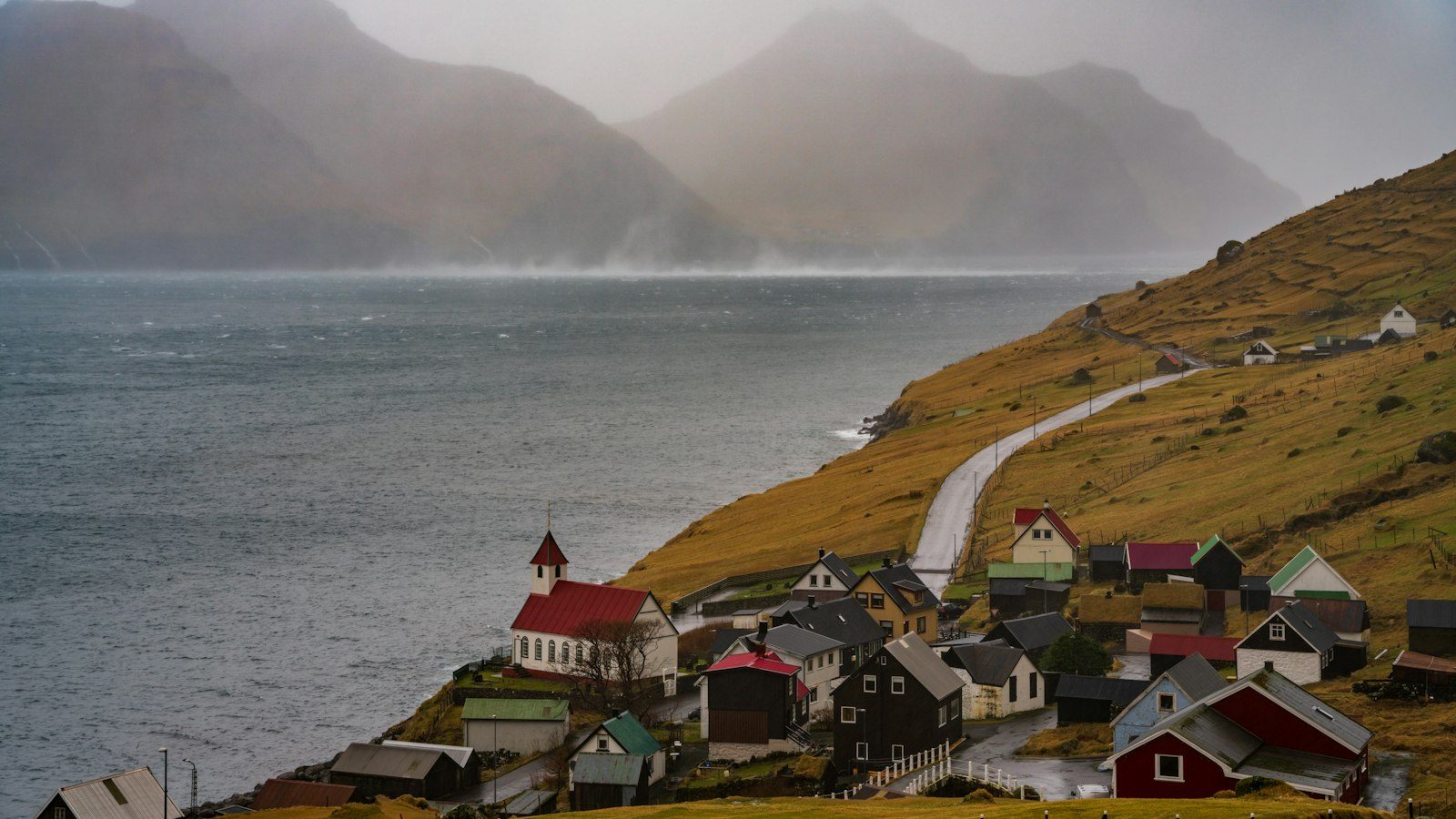
Eighteen steep, green islands in the North Atlantic, roughly halfway between Scotland and Iceland. You hike to cliff-edge lakes and lighthouses, watch puffins on Mykines, travel by bus, ferry and undersea tunnel, and finish the day with fish soup in a turf-roofed town. Best time to visit: June to August. Daily budget (budget traveller): $110 to $380 USD.
Arrive and explore Tórshavn
Morning: Land at Vágar, buy an SSL travel card at the airport information desk and take bus 300 to Tórshavn (about 50 minutes). Drop your bag and get a coffee in the old town.
Afternoon: Walk through Tinganes and the lanes of Reyni, then climb up to Skansin fort for a view over the harbour.
Evening: Fish dinner around Vágsbotnur, such as at Barbara Fish House, then a Föroya Bjór in a harbour bar.
Kirkjubøur and the National Museum
Morning: Walk the old hill path from the edge of Tórshavn to Kirkjubøur (about two to three hours). Check the forecast first and carry layers.
Afternoon: See the St Magnus Cathedral ruins, Olav's Church and Roykstovan, then take the bus back. Stop at the National Museum in Hoyvík on the free city bus.
Evening: Wander through Viðarlundin park and have a simple dinner. Buy supplies for tomorrow at Bónus.
Heading home: Ferry back, collect your bag and take bus 300 to Vágar Airport.
What to eat in Faroe Islands
- Fish soup or fish of the day: haddock, cod or salmon at harbour restaurants in Tórshavn such as Barbara Fish House, where seafood is the speciality
- Ræst kjøt and skerpikjøt: fermented and wind-dried mutton, the traditional Faroese flavours. Try a small taste first, as they are strong
- Faroese lamb: slow-cooked or roasted, often on the menu in autumn after the sheep come down from the hills
- Föroya Bjór: the Klaksvík brewery's beers, on tap in most bars. A pint is about 60 to 70 DKK ($9 to $11)
- A petrol station hot dog: the cheap Nordic lunch, sold at Effo and Magn stations across the islands, and often the only food near a trailhead
- Bónus or FK supermarket picnics: bread, smoked salmon, cheese and skyr-style yoghurt for hiking days. Buy alcohol only at the state-run Rúsdrekkasøla shops
Hidden gems
- Nólsoy, a small island 20 minutes by ferry from Tórshavn, with a quiet village and a long walk out to the lighthouse at its southern tip
- Skansin, the old fort above Tórshavn harbour, with cannons, a lighthouse and a good view over town that few people bother to climb to
- The black sand beach at Tjørnuvík, at the end of a narrow road on northern Streymoy, where local surfers sometimes ride the Atlantic swell
- Viðareiði, the northernmost village, with a white church and the cliffs of Villingardalsfjall above it. The hiking fee is paid into a box by the gate
- Viðarlundin, Tórshavn's small plantation park, one of the few places in the islands with real trees and a stream running through it
Getting around
You can see a lot of the Faroes without a car. Tórshavn's red city buses are free for everyone. Strandfaraskip Landsins (SSL) runs the blue intercity buses and the ferries. Route 300 links Vágar Airport and Sørvágur with Tórshavn, route 400 goes to Eysturoy and Klaksvík, and route 100 runs to Vestmanna. The best deal for a solo traveller is the SSL Tourist Travel Card, at 500 DKK (about $76) for four days or 700 DKK (about $107) for seven. It covers the scheduled buses and most ferries, but not the Mykines ferry or pre-booked tickets. Single fares are paid on board. Route 300 takes cards, but carry some Danish kroner for the other buses. Timetables are thin in the evenings and at weekends, so check ssl.fo the night before. A hire car gives you more freedom for Gásadalur, Saksun and the remote villages. Roads are good, but single-track in places. The four undersea tunnels carry tolls, charged automatically by number plate: 175 DKK each way for the Eysturoy and Sandoy tunnels and 100 DKK return for the Vágar and Norðoy tunnels. Rental firms may charge their own rate. Taxis are expensive and best booked ahead.
Safety
Crime is very low, and the Faroes are one of the safest places in Europe to travel alone. The real dangers are the weather and the terrain. Fog can roll in within minutes, and many cliff edges have no fences. The grass is slippery when wet, and gusts can knock you off balance. Check the forecast at the trailhead, stay on marked paths and turn back if the cloud comes down. Tell your host where you are walking. Roads are narrow, sheep wander onto them and some older tunnels are single-lane with passing places. Ferries and the Mykines boat are often cancelled in rough seas, so build a spare day into your plans. Tap water is excellent. The emergency number is 112. The Faroes are outside the EU, so do not rely on an EHIC or GHIC card. Get travel insurance that covers medical care and hiking.
Frequently asked questions
What does this 2-day Faroe Islands itinerary cover?
Day 1: Arrive and explore Tórshavn. Day 2: Kirkjubøur and the National Museum.
Is 2 days enough for Faroe Islands?
Our recommended trip length for Faroe Islands is 5 to 7 days. This 2-day plan focuses on the highlights and groups sights by area so you spend less time travelling between them.
How much does 2 days in Faroe Islands cost?
A budget traveller spends about $110 to $380 USD a day in Faroe Islands, so roughly $220 to $760 USD for 2 days, not counting flights.
Where should I stay for 2 days in Faroe Islands?
Tórshavn old town and Tinganes: The heart of the capital, on a rocky point between the two harbours. Vágsbotnur and the harbour: The inner harbour of Tórshavn, lined with old warehouses turned into bars, restaurants and small shops.
When is the best time to visit Faroe Islands?
The best time to visit Faroe Islands is June to August.
How do I get around Faroe Islands?
You can see a lot of the Faroes without a car. Tórshavn's red city buses are free for everyone.
Is Faroe Islands safe for solo travellers?
Crime is very low, and the Faroes are one of the safest places in Europe to travel alone. The real dangers are the weather and the terrain.
More 2-day guides
- Copenhagen in 2 days
- Aarhus in 2 days
- Bornholm in 2 days
- Karlovy Vary in 2 days
- Killarney in 2 days
- Kutná Hora in 2 days
- Lake District in 2 days
- Lefkada in 2 days
Faroe Islands in 3 days | Faroe Islands in 4 days | Faroe Islands in 5 days | Faroe Islands in 7 days | Full Faroe Islands guide
Joy Plus home | Destinations | Itineraries | Activities | Flights | Budget planner | Calendar | Map | Blog | Lifetime access