Destinations / South America
Fernando de Noronha, Brazil travel guide
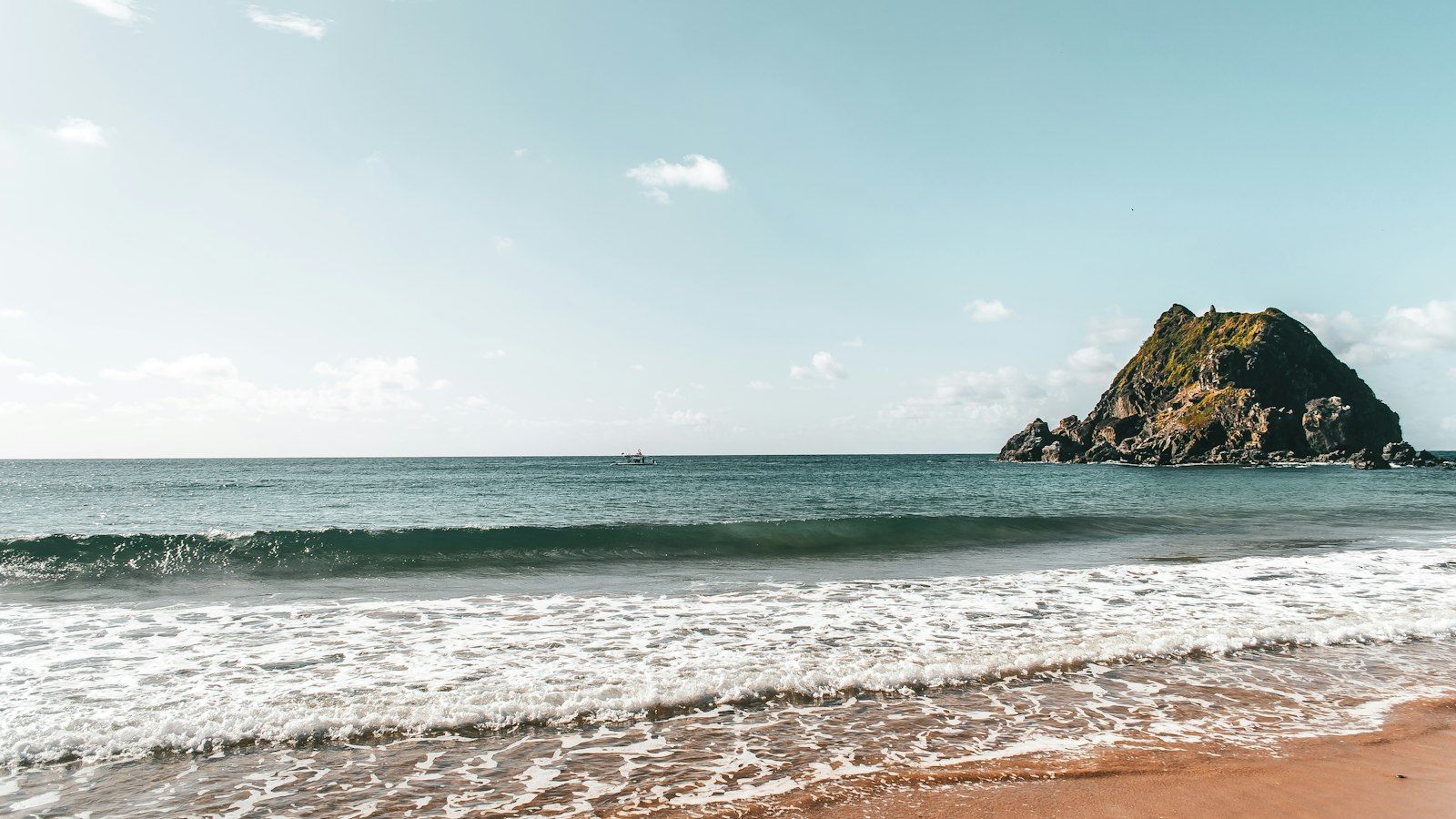
A volcanic archipelago 350km off Brazil's northeast coast, with spinner dolphins at dawn, turtles in the shallows and Baía do Sancho, which is reached by ladders down a cliff.
- Best time to visit: August to November
- Daily budget (budget traveller): $90 to $340 USD
- Ideal trip length: 5 to 7 days
Fernando de Noronha is a cluster of 21 volcanic islands and islets in the Atlantic, about 545km from Recife, and only the main island is open to visitors. Around 70% of it belongs to a marine national park. A single 7km road, the BR-363, links the old port to Baía do Sueste. Everything else is reached by dirt track, trail or boat. Brazil limits tourism here with a daily environmental tax and a park ticket, so the island never feels packed, but it is never cheap either. For a solo traveller that works out well. There is a small hostel scene in Vila dos Remédios and Vila do Trinta, a R$5 bus runs every half hour, and group boat trips and guided hikes make it easy to meet people. You can watch spinner dolphins from a cliff at dawn, snorkel alongside green turtles at Sueste, float in the Atalaia tide pools, and walk down a rock cleft to Baía do Sancho, which often tops lists of the world's best beaches. From August to November the inner sea is calm and clear. Book ahead and budget carefully, because the trip is worth the money.
Fernando de Noronha belongs to the state of Pernambuco and lies 545km off Recife, an hour or so by turboprop. It is the main island of a 21-island archipelago, and the only one where you can stay. Around 70% of the island sits inside a marine national park, and the rest is a protected area. Brazil caps visitor numbers with a daily environmental tax, the TPA, and a park ticket, and those two charges set the tone for a trip. In 2026 a single day of TPA costs R$105.79, a week costs R$672.85, and the park ticket is R$393 for foreigners. Add island prices for everything shipped from the mainland, and Noronha becomes one of Brazil's most expensive destinations. There is still a budget version, though. It has hostel dorms from roughly R$130, prato feito lunches, a R$5 bus and beaches that cost nothing once you have the park ticket. This guide shows you where to find it.
The island has two sides, and understanding them is the key to planning. The mar de dentro, or inner sea, faces Brazil on the north coast. Here you will find Sancho, Baía dos Porcos, Conceição and the port, mirror-calm from roughly August to November. The mar de fora, or outer sea, faces Africa on the south coast. It has Sueste, Leão and Atalaia, and is often the calmer side from December to March, when northern swells hit the inner sea and surfers take over Cacimba do Padre. Stay in Vila dos Remédios or Vila do Trinta for hostels, restaurants and the walk to Praia do Cachorro, or in Floresta Nova for quieter family pousadas. Use the bus to hop along the BR-363 and walk the rest. Only hire a buggy for a day or two, if at all.
Solo travel here is easy, though it takes some organising. The controlled trails are where solo travellers tend to meet, along with shared boat trips, the Ilha Tour jeeps and forró night at Bar do Cachorro. Atalaia, Capim-Açu and Morro São José have daily caps and must be booked on the park platform, ideally a week or two before you fly. The island runs on its own clock, UTC-2, an hour ahead of Recife, and it wakes up early: dolphins in the morning, low-tide pools at midday and sunsets at Boldró. Bring a rash vest instead of relying on sunscreen, carry cash for the bus, and accept that this week will cost more than a month in some parts of Brazil.
How many days in Fernando de Noronha?
For Fernando de Noronha, we recommend 5 to 7 days. With more time, add a day trip to Inner sea boat trip or Shore dive or marine park boat dive.
| Trip length | What you'll see | Itinerary |
|---|---|---|
| 2 days | Pay the fees, sunset at Boldró; Ilha Tour for the lie of the land | Fernando de Noronha in 2 days |
| 3 days | Adds: Dolphins at dawn, Sancho and Porcos | Fernando de Noronha in 3 days |
| 4 days | Adds: Atalaia pools and Sueste turtles | Fernando de Noronha in 4 days |
| 5 days · Recommended | Adds: Capim-Açu to Praia do Leão | Fernando de Noronha in 5 days |
| 7 days · Recommended | Adds: Boat trip and a history walk; Porto, sharks | Fernando de Noronha in 7 days |
Fernando de Noronha itinerary
Land, pay the fees, sunset at Boldró
Morning: Fly from Recife (about 1 hour 20 minutes). Put your watch forward an hour. Pay the TPA at the airport counter if you have a foreign card. Taxi or pousada transfer to Vila do Trinta or Remédios.
Afternoon: Bus to Boldró and buy your park ticket at the ICMBio visitor centre (R$393 for foreigners). Confirm any trail slots you booked online, and ask about tides and sea conditions.
Evening: Walk to Mirante do Boldró for sunset behind Morro Dois Irmãos, then check whether the Tamar centre has a talk on. Cheap dinner back in Remédios.
Ilha Tour for the lie of the land
Morning: Join a shared Ilha Tour jeep (R$250-300). It is the fastest way to learn the island, and it puts you next to other travellers straight away.
Afternoon: The tour stops at viewpoints, the port and several beaches. Note the places you want to come back to on your own.
Evening: Low-tide swim at Praia do Cachorro, then caldinho and a cold beer. If it is forró night, stay for Bar do Cachorro.
Dolphins at dawn, Sancho and Porcos
Morning: Take the first bus to the Golfinhos and Sancho checkpoint. Look for spinner dolphins at Mirante dos Golfinhos, then take the ladders down to Baía do Sancho before the crowds arrive.
Afternoon: Snorkel the rocks at Sancho. Walk on to Baía dos Porcos at low tide via Cacimba do Padre, with the Dois Irmãos peaks in front of you.
Evening: Bus back from the BR-363. Prato feito or grilled fish near the port.
Atalaia pools and Sueste turtles
Morning: Walk the trail from Vila do Trinta to Praia da Atalaia at your booked low-tide slot. No sunscreen, and life jacket, mask and snorkel are compulsory. Wear a rash vest.
Afternoon: Bus to Baía do Sueste and snorkel with green turtles in the bay. Walk up to the Forte de São Joaquim ruins on the headland.
Evening: Rinse off, eat a tapioca, and get an early night before the big hike.
Capim-Açu to Praia do Leão
Morning: Meet your accredited guide (about R$370) for the Capim-Açu trail, around 8km of cliffs, tide pools and a sea cave. Bring 2 litres of water and proper shoes.
Afternoon: The trail ends at Praia do Leão. Swim only if your guide says the sea is safe. Respect the turtle-nesting areas and any closures.
Evening: Sore legs, so take it easy. Grilled fish at Restaurante da Edilma or a low-key bar in Remédios.
Boat trip and a history walk
Morning: Shared boat trip from the port along the inner sea (R$250-350), with dolphin spotting and a swim stop at Sancho. Take a seasickness tablet from December to March.
Afternoon: Walk around Vila dos Remédios: the church of Nossa Senhora dos Remédios, the Forte dos Remédios ruins and the view down to the port.
Evening: Splurge night at the Pousada Zé Maria Festival Gastronômico (around R$290). Book ahead and check which nights it runs.
Porto, sharks and the flight home
Morning: Early swim at Praia da Conceição under Morro do Pico. Then go to Vila do Porto for the Museu do Tubarão and the rock pools at Buraco da Raquel.
Afternoon: Lunch at Recanto da Graça on Praia do Porto, then taxi to the airport for the afternoon flight to Recife. Confirm your departure time the day before.
Evening: Back on the mainland. If you are connecting onwards, stay overnight in Recife or Olinda.
Best neighbourhoods
- Vila dos Remédios: The historic heart of the island, with the 18th-century church, the ruins of Forte dos Remédios, the administration buildings and a cluster of restaurants, bars and hostels. Praia do Cachorro and Praia do Meio are a short walk downhill.
- Vila do Trinta: A residential neighbourhood next door to Remédios, home to several budget pousadas and Casa Swell hostel. The Atalaia trail starts from this end of the island, and supermarkets and bus stops are close by.
- Floresta Nova: A quiet, local neighbourhood in the middle of the island, full of family-run pousadas domiciliares, which are homes licensed to let rooms. Prices are fairer here and the BR-363 bus stops nearby.
- Boldró: The ICMBio visitor centre, where you buy park tickets and book trails, is here, along with the Tamar turtle project and the Boldró viewpoint, the island's classic sunset spot above the ruins of an old fort.
- Vila do Porto: The harbour on Baía de Santo Antônio, where boat trips, dive boats and outrigger canoes leave. Restaurants sit on the waterfront, the Museu do Tubarão is here and the bus route starts here.
Must-do experiences
- Climb down to Baía do Sancho: Walk from the park checkpoint to the cliff edge, then take the steel ladders through a narrow rock cleft to a curve of sand below a forested wall. Snorkel along the rocks on the left.
- Watch spinner dolphins at dawn: Get to the Mirante dos Golfinhos viewpoint early, when pods of spinner dolphins often come into the bay. Bring binoculars and patience.
- Float in the Atalaia natural pools: Book a slot on the park's online platform, then walk the short trail from Vila do Trinta to a tidal pool full of fish. Life jacket, mask and snorkel are compulsory and sunscreen is banned.
- Snorkel with turtles at Baía do Sueste: This sheltered bay on the outer sea is the most reliable place to swim alongside green turtles. Rays and small sharks turn up too. Gear hire is available on the beach.
- Hike Capim-Açu to Praia do Leão: The park's toughest trail covers about 8km of cliffs, tide pools and a sea cave, with a compulsory accredited guide, and ends at the wild sweep of Praia do Leão.
- Sunset at Mirante do Boldró: Watch the sun drop behind Morro Dois Irmãos from the clifftop fort ruins, then head down to the Tamar visitor centre for an evening turtle talk if one is running.
- Take a boat trip on the inner sea: Shared boats from the port run along the north coast to Sancho for a swim stop, with good odds of seeing dolphins. Expect R$250-350.
- Swim at Baía dos Porcos: A tiny cove of rock pools facing the twin peaks of Morro Dois Irmãos. Reach it at low tide by scrambling over the rocks from Cacimba do Padre.
Hidden gems
- Praia do Cachorro at low tide, a five-minute walk from Vila dos Remédios, with rock pools, local kids jumping off the rocks and the Bar do Cachorro forró nights after dark
- The beach walk along the inner sea from Praia do Meio via Conceição to Boldró, best done at low tide in the dry season, with Morro do Pico towering above
- The Forte de São Joaquim do Sueste ruins on the headland above Baía do Sueste, a quiet spot with cannons and views across the outer sea
- The Museu do Tubarão at Vila do Porto, a small shark museum with a café, ideal for a rainy morning or a wait before a boat trip
- Buraco da Raquel near the port, a hole in the rocks on the outer sea side with tide pools and few visitors
Daily budget
- Accommodation: budget R$130-280 / night (hostel dorm bed), mid-range R$600-1,200 (pousada double, solo occupancy), splurge R$4,000+ (Pousada Maravilha, NANNAI Noronha). Single rooms are rare, so solo travellers either pay the full double rate or take a dorm. Breakfast is usually included. Book December to February and July months ahead. Prices are indicative, so check live rates.
- Food: budget R$120-200 / day (tapioca breakfast, prato feito, supermarket), mid-range R$250-400 (beach-bar lunch, restaurant dinner), splurge R$500+ (Zé Maria festival, sunset cocktails). Most produce is flown or shipped in, so expect mainland prices plus a premium. A hostel kitchen is the best saving. Restaurants usually add a 10% service charge.
- Transport: budget R$10-30 / day (BR-363 bus at R$5 per ride), mid-range R$60-150 (a mix of bus and fixed-fare taxis), splurge R$450-700+ (buggy hire plus fuel). Taxis run fixed fares of roughly R$25-60. Buggies cost about R$350-480 a day without fuel, and fuel is over R$9 a litre. Many tours include pick-up, so check before booking a taxi.
- Activities & fees: budget R$150-250 / day (TPA, park ticket spread over the stay, self-guided trails), mid-range R$400-700 (plus a boat trip or Ilha Tour at R$250-350), splurge R$1,000+ (boat dive in the marine park, private tours). In 2026 the TPA is R$105.79 for one day and R$672.85 for seven. The park ticket is R$393 for foreigners from 1 November 2026, valid 10 days. A Capim-Açu guide costs about R$370, and Atalaia is self-guided once booked.
- Drinks & nightlife: budget R$30-60 (supermarket beer, one caipirinha), mid-range R$100-200 (sunset drinks, forró night), splurge R$300+ (cocktails at a pousada bar). Nightlife means sunset at Boldró and forró at Bar do Cachorro, where nights vary, so ask locally. Most places wind down well before midnight.
Where to stay
- Social hostel in Vila do Trinta (R$130-280 / night): Casa Swell has female and mixed dorms of up to six beds with private bathrooms, lockers, air conditioning, a shared kitchen and breakfast included, about 400m from Vila dos Remédios. Ilha Hostel near the Remédios square is another well-reviewed option.
- Boutique hotel in Floresta Velha, near Vila dos Remédios (R$1,500-3,000 / night (check live rates)): Pousada Zé Maria is an island institution, with a pool, garden bungalows and its famous Festival Gastronômico on site. It is within taxi distance of everything.
- Apartment in Floresta Nova (R$450-900 / night): Pousadas domiciliares, or licensed family homes, often have a kitchenette or shared kitchen, local hosts with good advice, and the bus on the BR-363 nearby. They make a good-value base if you cook half your meals.
- Splurge in Sueste road or Boldró (R$4,000-12,000+ / night): Pousada Maravilha, high above Sueste, or NANNAI Noronha, for infinity pools, sea views and full concierge help with trail bookings and boats.
What to eat
- Peixe na brasa: the catch of the day, often barracuda or tuna, grilled whole or in fillets and served with rice, beans, farofa and vinaigrette
- Prato feito (PF): the island's cheapest proper meal, a set plate of protein, rice, beans, salad and farofa from simple local restaurants near the port and in the villages
- Moqueca: fish or seafood stewed with coconut milk, palm oil, tomato and coriander, served bubbling in a clay pot for sharing or a hungry solo
- Tapioca: a griddled cassava pancake folded around cheese, coconut, chicken or banana, the go-to breakfast and cheap snack
- Caldinho de feijão or de peixe: a small cup of thick bean or fish broth, the standard bar snack with a cold beer at sunset
- Açaí na tigela: frozen açaí blended thick and topped with granola and banana, a quick lunch after a long morning in the water
Day trips
- Inner sea boat trip (About 3 hours from Vila do Porto): Cruise the north coast past Conceição, Boldró and Dois Irmãos, with good odds of spinner dolphins and a swim stop at Baía do Sancho. Sunset versions add fish grilled on board. Book with a tour desk or your hostel. Shared boats cost roughly R$250-350 per person, often including pick-up. You need a park ticket because most of the route is inside the marine park.
- Capim-Açu trail and Praia do Leão (About 8km, a full day on the island's wild western coast): The park's hardest and least crowded hike, passing clifftop viewpoints, tide pools and the Capim-Açu sea cave before ending at Praia do Leão. Book the slot on the park platform, then hire an accredited guide, which is compulsory, for about R$370. Recommended only for fit walkers, and not for young children.
- Shore dive or marine park boat dive (From Vila do Porto): Noronha is Brazil's top dive destination, with turtles, rays, reef sharks and visibility that can reach 50m in the dry season. Shore-dive taster sessions suit first-timers. Book with a dive operator at the port. Expect roughly R$490 for a shore-dive taster and around R$1,150 for a marine-park boat dive. Bring your certification card if you have one.
When to visit
- Dry season (August - November): 26-30°C, very little rain, steady trade winds, calm inner sea. Crowds: Moderate, busier around Brazilian public holidays. The sweet spot. The inner sea is flat, visibility can reach 50m, and Sancho and Porcos are at their best. Book flights and trail slots early.
- Summer swell (December - March): 27-31°C, hot, occasional showers, northern swell on the inner sea. Crowds: Peak at New Year and Carnival. Surf season at Cacimba do Padre and Boldró, so switch your swimming to Sueste, Atalaia and Leão and check sea conditions daily. Buggy rental can double at New Year.
- Rainy season (April - June): 26-29°C, the wettest months, mostly short heavy downpours, swell easing. Crowds: Low. Prices drop and the island is quiet. Showers rarely last all day, but pack a rain jacket and keep flexible days in your plan.
- Winter holidays (July): 25-29°C, rain tapering off, breezy. Crowds: Busy with Brazilian school holidays. Conditions are improving, but families arrive in numbers. Book accommodation and trails well ahead or wait for August.
Entry rules for your passport
Visa rules for Brazil depend on the passport you travel on. Check the official source before you book: Brazil Ministry of Foreign Affairs
Getting there
Fernando de Noronha Airport (FEN) sits in the centre of the island, a few kilometres from Vila dos Remédios. Azul flies daily from Recife in about 1 hour 20 minutes. Gol flies from Recife and from São Paulo-Guarulhos, and some seasons add flights from Natal, so check current schedules. International visitors usually connect in Recife or São Paulo. Noronha runs on UTC-2, an hour ahead of Recife and Brasília. You must pay the TPA environmental tax (R$105.79 for one day in 2026, on a progressive table). Brazilian cards can pay online, but foreign cards can only pay at the airport counter on arrival. Buy the national park ticket (R$393 for foreigners from 1 November 2026, valid 10 days) online before you fly or at the Boldró visitor centre, open 8am to 7pm. From the airport, fixed-fare taxis cost roughly R$25-60, and many pousadas include a transfer. There is no passenger ferry from the mainland for visitors.
Getting around
The island has one paved road, the BR-363, which runs about 7km from Vila do Porto to Baía do Sueste. Two minibuses run along it every 30 minutes or so, roughly 5am to 10pm. The fare is R$5, paid in cash to the driver. Stops sit close to most beach access points, including Boldró, the Sancho and Golfinhos checkpoint turn-off and Sueste. Taxis from the local cooperative charge fixed fares, roughly R$25 for short hops and R$60 for longer runs, and are useful for the airport and late returns. Buggies cost roughly R$350-480 a day in 2026 without fuel, and around double that at New Year. Fuel costs over R$9 a litre, so hire one only for a day or two. Electric bikes are available from about R$100 a day. Many beaches and all the controlled trails are reached on foot from the road. There is no ferry service from the mainland for visitors, so you arrive by plane.
Safety
Crime against visitors is rare and Noronha feels very safe, including for women travelling alone, though you should still keep valuables out of sight on the beach and lock your room. The real hazards are natural. The equatorial sun is fierce, so cover up with a rash vest and hat, because sunscreen is banned in the natural pools. From December to March the swell can make inner-sea beaches such as Cacimba do Padre and Boldró dangerous, while outer-sea beaches can be rough at other times. Ask locally each day, follow ICMBio signs and swim near other people. Sharks, mainly nurse and lemon sharks, are seen at Sueste and are not normally a threat, but never feed or touch any wildlife. Keep at least a few metres from turtles. The Capim-Açu and Sancho ladders demand fitness and proper shoes. Carry insect repellent, as dengue is present in Brazil, and drink plenty of water on the trails.
Solo travel tips
- Book the controlled trails before you fly: Buy the park ticket online, then book Atalaia, Capim-Açu or Morro São José on the park's scheduling platform straight away. Slots are capped, depend on the tides, and Atalaia often sells out a week or two ahead.
- Stay in a hostel near Remédios: Ilha Hostel, Casa Swell and Noronha 350 put you within walking distance of beaches and bars, with kitchens that save serious money. Common rooms are where you will find people to share taxis and a buggy day.
- Learn the bus, skip the buggy: The BR-363 bus costs R$5 a ride and runs every half hour or so. Carry coins and small notes. If you want a buggy for one day, split it with hostel mates, because the daily rate alone can exceed ten taxi rides.
- Plan around tides and swell: Atalaia, Baía dos Porcos and the inner-sea beach walk all need low tide. From December to March, swim on the outer sea and leave the north coast to the surfers. A free tide app is your best planning tool.
- Safety for solo travellers: Noronha is very safe, including for women alone. The real risks are the sea, the sun and steep trails. Never swim alone on an empty beach, do not touch or chase turtles, and take a fixed-fare taxi rather than walking unlit tracks at night.
- Join the group activities: Shared Ilha Tours, boat trips, outrigger canoes and shore-dive taster sessions are full of solo Brazilians and foreigners. Learn a little Portuguese, because English is patchier here than in Rio.
Cultural etiquette
- Greet with 'bom dia' or 'boa tarde' and thank people with 'obrigado' (or 'obrigada' if you are a woman). Islanders appreciate the effort, and English is not universal.
- Never touch, feed or chase turtles, dolphins, sharks or fish. Park rangers enforce the rules, and fines are real.
- No sunscreen in the natural pools, and do not stand on, sit on or touch coral. A rash vest is the local answer.
- Take all your rubbish home with you, including cigarette ends. The island has to ship its waste off by sea.
- Respect closures on turtle-nesting beaches such as Leão, and keep to marked trails and checkpoint hours.
- Ask before photographing residents, and remember that Noronha is a small community, not a resort.
- Restaurants usually add 10% service to the bill. It is customary to pay it if service was good.
Frequently asked questions
How do I get from Fernando de Noronha airport to my accommodation?
The airport sits in the middle of the island, only a few kilometres from Vila dos Remédios, Vila do Trinta and Floresta Nova. Many pousadas and hostels include or arrange a transfer. Otherwise, cooperative taxis wait outside on fixed fares, usually R$25-60 depending on distance. The R$5 bus passes along the BR-363 nearby but is awkward with luggage.
How many days do I need in Fernando de Noronha?
Five to seven days lets you do Sancho, Atalaia, Sueste, a boat trip and Capim-Açu without rushing, with a spare day for weather. The environmental tax is charged per day and gets steeper the longer you stay, so most visitors keep it to about a week.
What fees do I pay to visit Fernando de Noronha?
There are two. The TPA environmental tax is R$105.79 for a single day in 2026, on a progressive table, so seven days costs R$672.85. If you have a foreign card you pay it at the airport counter. The national park ticket rose on 1 November 2026 to R$393 for foreigners and R$196.50 for Brazilians, valid for 10 days. Buy it online or at the Boldró visitor centre. Fees are adjusted yearly, so check the official sites before you go.
When is the best time to visit Fernando de Noronha?
August to November is dry, with a calm inner sea and water visibility that can reach 50m. December to March brings swell to the north coast, which is great for surfers but worse for snorkelling there. April to June is the rainiest and cheapest period, with mostly short showers.
Do I need to book the Atalaia pools in advance?
Yes. Atalaia, Capim-Açu, Morro São José and a few other trails have daily caps and must be booked on the park's scheduling platform after you buy your park ticket. Slots depend on the tides and sell out fast, so book one to two weeks ahead, especially in high season. Capim-Açu also requires an accredited guide.
Can I use my credit card everywhere?
Visa and Mastercard are accepted at most pousadas, restaurants and tour desks. Carry cash for the bus, small snack stalls and some taxis, because ATMs are few. Pix, Brazil's instant payment system, is everywhere but usually needs a Brazilian bank account.
Is Fernando de Noronha safe for solo female travellers?
Yes, it is one of the safest places in Brazil, with a small resident population and a heavy park presence. Use normal precautions: avoid isolated beaches and unlit tracks after dark, take a taxi home late at night, and watch your drink at forró nights.
What entry rules apply to travellers visiting Brazil in 2026?
Citizens of the United States, Canada and Australia have needed an e-Visa since 10 April 2025, costing US$80.90 and issued online before travel. As of late 2026 it remained in force, even though the Senate voted to scrap it. Many European and South American passport holders can still visit without a visa for up to 90 days. Rules change, so always confirm on the official Brazilian government (gov.br) and consular e-Visa websites and your own government's travel advice before booking.
Tours and activities in Fernando de Noronha | Fernando de Noronha in 2 days | Fernando de Noronha in 3 days | Fernando de Noronha in 4 days | Fernando de Noronha in 5 days | Fernando de Noronha in 7 days
Joy Plus home | Destinations | Itineraries | Activities | Flights | Budget planner | Calendar | Map | Blog | Lifetime access