Fernando de Noronha in 7 days
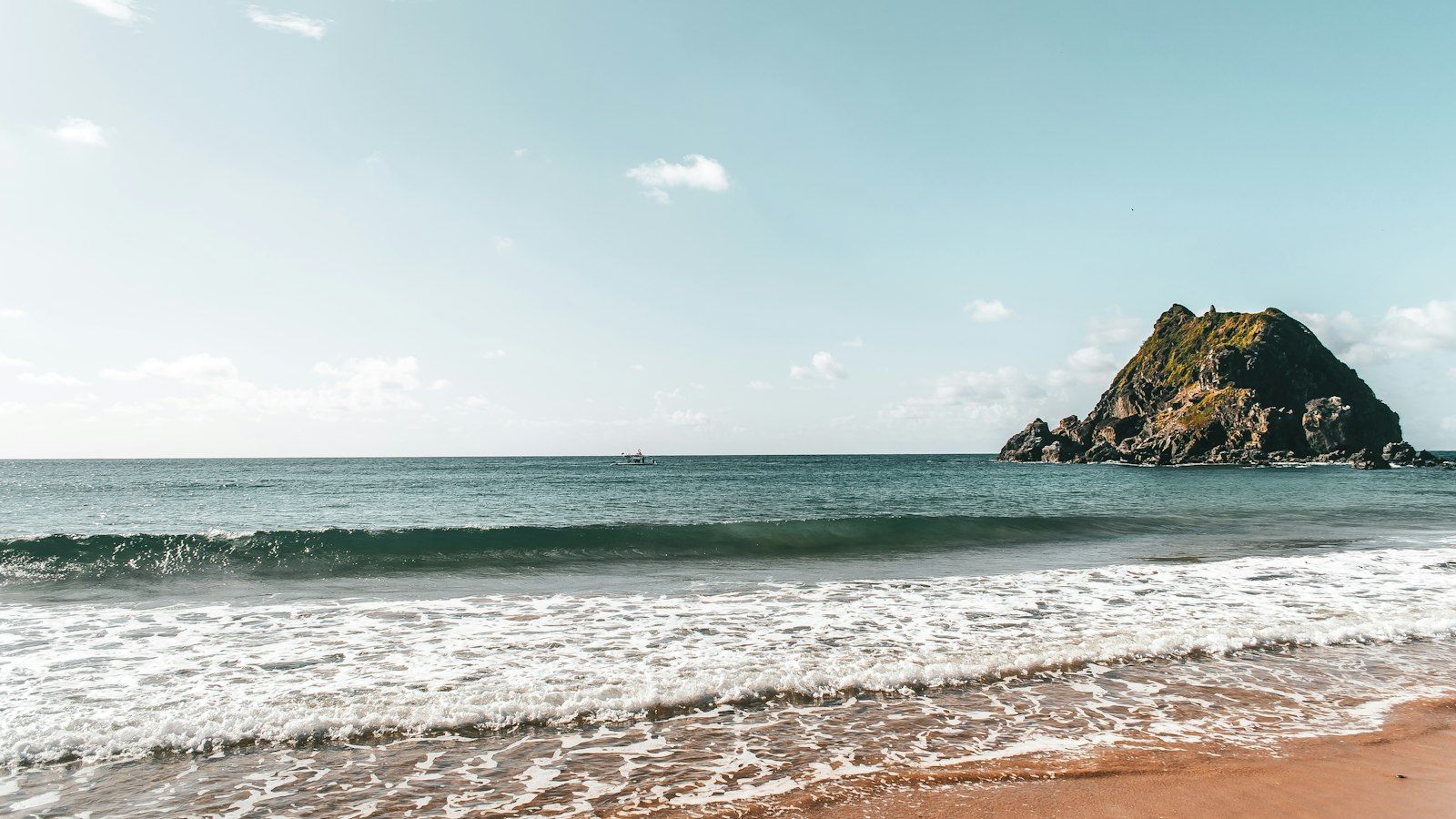
A volcanic archipelago 350km off Brazil's northeast coast, with spinner dolphins at dawn, turtles in the shallows and Baía do Sancho, which is reached by ladders down a cliff. Best time to visit: August to November. Daily budget (budget traveller): $90 to $340 USD.
Land, pay the fees, sunset at Boldró
Morning: Fly from Recife (about 1 hour 20 minutes). Put your watch forward an hour. Pay the TPA at the airport counter if you have a foreign card. Taxi or pousada transfer to Vila do Trinta or Remédios.
Afternoon: Bus to Boldró and buy your park ticket at the ICMBio visitor centre (R$393 for foreigners). Confirm any trail slots you booked online, and ask about tides and sea conditions.
Evening: Walk to Mirante do Boldró for sunset behind Morro Dois Irmãos, then check whether the Tamar centre has a talk on. Cheap dinner back in Remédios.
Ilha Tour for the lie of the land
Morning: Join a shared Ilha Tour jeep (R$250-300). It is the fastest way to learn the island, and it puts you next to other travellers straight away.
Afternoon: The tour stops at viewpoints, the port and several beaches. Note the places you want to come back to on your own.
Evening: Low-tide swim at Praia do Cachorro, then caldinho and a cold beer. If it is forró night, stay for Bar do Cachorro.
Dolphins at dawn, Sancho and Porcos
Morning: Take the first bus to the Golfinhos and Sancho checkpoint. Look for spinner dolphins at Mirante dos Golfinhos, then take the ladders down to Baía do Sancho before the crowds arrive.
Afternoon: Snorkel the rocks at Sancho. Walk on to Baía dos Porcos at low tide via Cacimba do Padre, with the Dois Irmãos peaks in front of you.
Evening: Bus back from the BR-363. Prato feito or grilled fish near the port.
Atalaia pools and Sueste turtles
Morning: Walk the trail from Vila do Trinta to Praia da Atalaia at your booked low-tide slot. No sunscreen, and life jacket, mask and snorkel are compulsory. Wear a rash vest.
Afternoon: Bus to Baía do Sueste and snorkel with green turtles in the bay. Walk up to the Forte de São Joaquim ruins on the headland.
Evening: Rinse off, eat a tapioca, and get an early night before the big hike.
Capim-Açu to Praia do Leão
Morning: Meet your accredited guide (about R$370) for the Capim-Açu trail, around 8km of cliffs, tide pools and a sea cave. Bring 2 litres of water and proper shoes.
Afternoon: The trail ends at Praia do Leão. Swim only if your guide says the sea is safe. Respect the turtle-nesting areas and any closures.
Evening: Sore legs, so take it easy. Grilled fish at Restaurante da Edilma or a low-key bar in Remédios.
Boat trip and a history walk
Morning: Shared boat trip from the port along the inner sea (R$250-350), with dolphin spotting and a swim stop at Sancho. Take a seasickness tablet from December to March.
Afternoon: Walk around Vila dos Remédios: the church of Nossa Senhora dos Remédios, the Forte dos Remédios ruins and the view down to the port.
Evening: Splurge night at the Pousada Zé Maria Festival Gastronômico (around R$290). Book ahead and check which nights it runs.
Porto, sharks and the flight home
Morning: Early swim at Praia da Conceição under Morro do Pico. Then go to Vila do Porto for the Museu do Tubarão and the rock pools at Buraco da Raquel.
Afternoon: Lunch at Recanto da Graça on Praia do Porto, then taxi to the airport for the afternoon flight to Recife. Confirm your departure time the day before.
Evening: Back on the mainland. If you are connecting onwards, stay overnight in Recife or Olinda.
What to eat in Fernando de Noronha
- Peixe na brasa: the catch of the day, often barracuda or tuna, grilled whole or in fillets and served with rice, beans, farofa and vinaigrette
- Prato feito (PF): the island's cheapest proper meal, a set plate of protein, rice, beans, salad and farofa from simple local restaurants near the port and in the villages
- Moqueca: fish or seafood stewed with coconut milk, palm oil, tomato and coriander, served bubbling in a clay pot for sharing or a hungry solo
- Tapioca: a griddled cassava pancake folded around cheese, coconut, chicken or banana, the go-to breakfast and cheap snack
- Caldinho de feijão or de peixe: a small cup of thick bean or fish broth, the standard bar snack with a cold beer at sunset
- Açaí na tigela: frozen açaí blended thick and topped with granola and banana, a quick lunch after a long morning in the water
Hidden gems
- Praia do Cachorro at low tide, a five-minute walk from Vila dos Remédios, with rock pools, local kids jumping off the rocks and the Bar do Cachorro forró nights after dark
- The beach walk along the inner sea from Praia do Meio via Conceição to Boldró, best done at low tide in the dry season, with Morro do Pico towering above
- The Forte de São Joaquim do Sueste ruins on the headland above Baía do Sueste, a quiet spot with cannons and views across the outer sea
- The Museu do Tubarão at Vila do Porto, a small shark museum with a café, ideal for a rainy morning or a wait before a boat trip
- Buraco da Raquel near the port, a hole in the rocks on the outer sea side with tide pools and few visitors
Getting around
The island has one paved road, the BR-363, which runs about 7km from Vila do Porto to Baía do Sueste. Two minibuses run along it every 30 minutes or so, roughly 5am to 10pm. The fare is R$5, paid in cash to the driver. Stops sit close to most beach access points, including Boldró, the Sancho and Golfinhos checkpoint turn-off and Sueste. Taxis from the local cooperative charge fixed fares, roughly R$25 for short hops and R$60 for longer runs, and are useful for the airport and late returns. Buggies cost roughly R$350-480 a day in 2026 without fuel, and around double that at New Year. Fuel costs over R$9 a litre, so hire one only for a day or two. Electric bikes are available from about R$100 a day. Many beaches and all the controlled trails are reached on foot from the road. There is no ferry service from the mainland for visitors, so you arrive by plane.
Safety
Crime against visitors is rare and Noronha feels very safe, including for women travelling alone, though you should still keep valuables out of sight on the beach and lock your room. The real hazards are natural. The equatorial sun is fierce, so cover up with a rash vest and hat, because sunscreen is banned in the natural pools. From December to March the swell can make inner-sea beaches such as Cacimba do Padre and Boldró dangerous, while outer-sea beaches can be rough at other times. Ask locally each day, follow ICMBio signs and swim near other people. Sharks, mainly nurse and lemon sharks, are seen at Sueste and are not normally a threat, but never feed or touch any wildlife. Keep at least a few metres from turtles. The Capim-Açu and Sancho ladders demand fitness and proper shoes. Carry insect repellent, as dengue is present in Brazil, and drink plenty of water on the trails.
Frequently asked questions
What does this 7-day Fernando de Noronha itinerary cover?
Day 1: Land, pay the fees, sunset at Boldró. Day 2: Ilha Tour for the lie of the land. Day 3: Dolphins at dawn, Sancho and Porcos. Day 4: Atalaia pools and Sueste turtles. Day 5: Capim-Açu to Praia do Leão. Day 6: Boat trip and a history walk. Day 7: Porto, sharks and the flight home.
Is 7 days enough for Fernando de Noronha?
Yes, 7 days is a good length for Fernando de Noronha. We recommend 5 to 7 days.
How much does 7 days in Fernando de Noronha cost?
A budget traveller spends about $90 to $340 USD a day in Fernando de Noronha, so roughly $630 to $2,380 USD for 7 days, not counting flights.
Where should I stay for 7 days in Fernando de Noronha?
Vila dos Remédios: The historic heart of the island, with the 18th-century church, the ruins of Forte dos Remédios, the administration buildings and a cluster of restaurants, bars and hostels. Vila do Trinta: A residential neighbourhood next door to Remédios, home to several budget pousadas and Casa Swell hostel.
When is the best time to visit Fernando de Noronha?
The best time to visit Fernando de Noronha is August to November.
How do I get around Fernando de Noronha?
The island has one paved road, the BR-363, which runs about 7km from Vila do Porto to Baía do Sueste. Two minibuses run along it every 30 minutes or so, roughly 5am to 10pm.
Is Fernando de Noronha safe for solo travellers?
Crime against visitors is rare and Noronha feels very safe, including for women travelling alone, though you should still keep valuables out of sight on the beach and lock your room. The real hazards are natural.
More 7-day guides
- Lençóis Maranhenses in 7 days
- Chapada Diamantina in 7 days
- Bonito in 7 days
- Rio de Janeiro in 7 days
- Salvador in 7 days
- Ilha Grande in 7 days
- São Paulo in 7 days
- Florianópolis in 7 days
Fernando de Noronha in 2 days | Fernando de Noronha in 3 days | Fernando de Noronha in 4 days | Fernando de Noronha in 5 days | Full Fernando de Noronha guide
Joy Plus home | Destinations | Itineraries | Activities | Flights | Budget planner | Calendar | Map | Blog | Lifetime access