Destinations / Europe
Freiburg, Germany travel guide
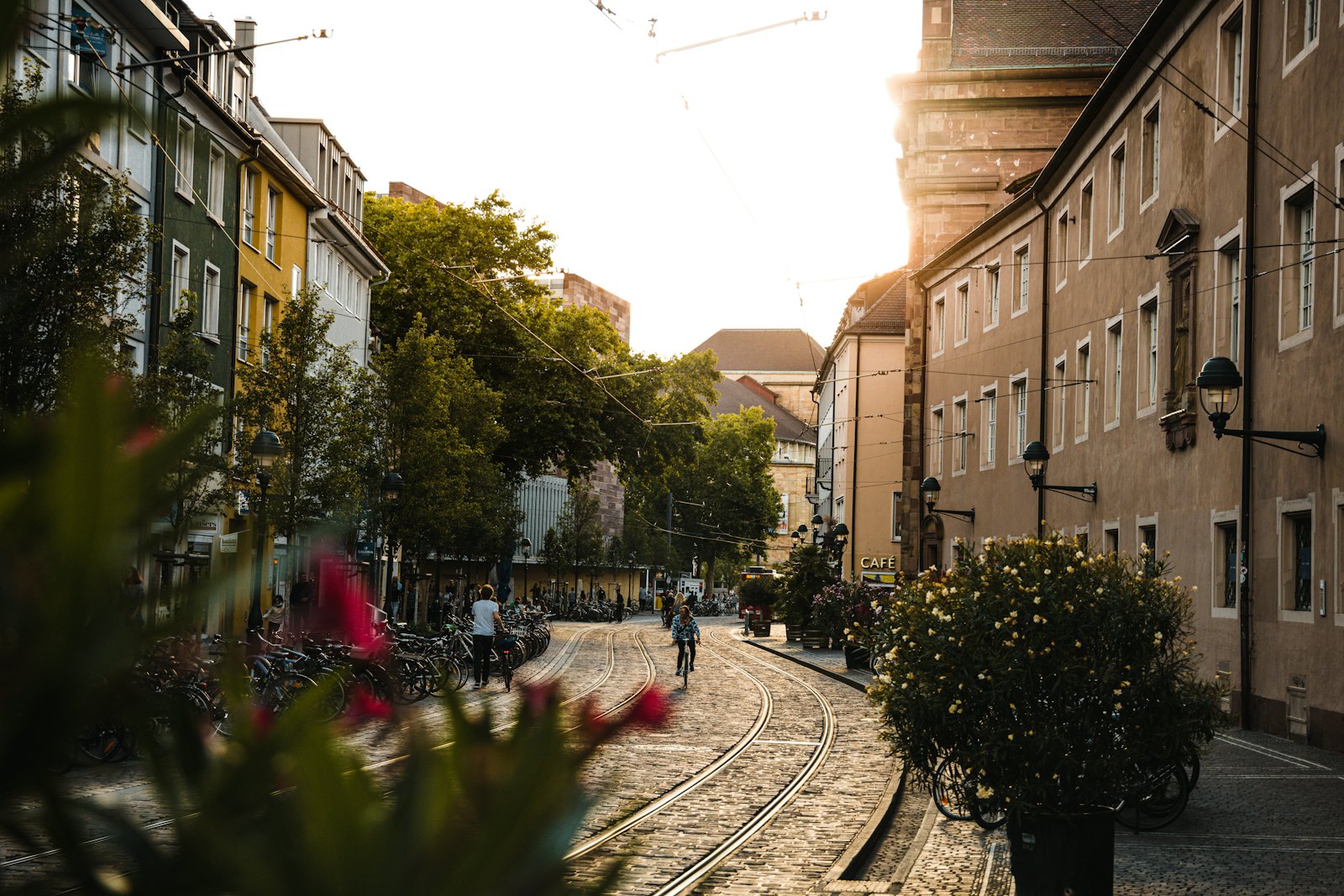
A sunny university city on the edge of the Black Forest, with a red sandstone cathedral, little water channels running through the streets and a cable car up into the hills.
- Best time to visit: May to September
- Daily budget (budget traveller): $95 to $270 USD
- Ideal trip length: 3 to 7 days
Freiburg im Breisgau is in the far southwest of Germany, about 45 minutes by train from Basel and close to the French border. It is one of the sunniest cities in the country. Around 230,000 people live here, and a big share of them are students. The old town grew up around the Münster, a Gothic cathedral built from red sandstone with a 116m spire. Small stone-lined channels called Bächle run beside the streets. Behind the city the Black Forest starts straight away. You can walk up the Schlossberg from the market square in 20 minutes, ride the Schauinslandbahn cable car to almost 1,300m, or take the Höllentalbahn train to Titisee in under 40 minutes. Freiburg is also known for green living. The Vauban district is a car-light eco suburb, trams and bikes are everywhere, and the cathedral market sells local produce every morning except Sunday. The city is compact, safe and easy for a solo traveller. A hostel bed, a sausage from the market and a day ticket keep costs reasonable, and wine from the Kaiserstuhl, a nearby volcanic hill area, is cheap and good.
Freiburg im Breisgau is a city of about 230,000 people in the southwest corner of Germany, between the Rhine plain and the hills of the Black Forest. It has one of the warmest and sunniest climates in the country, and its old university gives it a young, relaxed feel. Much of the centre was rebuilt after bombing in 1944, but the Münster survived, along with the medieval gates and the Bächle, the small channels that carry water through the streets. Most visitors come for a day from Basel or on a Black Forest tour. Stay a few nights and you get the slower version: breakfast at the cathedral market, sunset on the Schlossberg, a cable car ride into the hills, a train through the Höllental to Titisee and an evening glass of Kaiserstuhl wine in a beer garden. Freiburg is not the cheapest city in Germany, but it is far from the most expensive. A hostel bed, market lunches, app tickets and free hilltop walks keep a solo budget under control.
Logistics are simple. Freiburg main station is on the main line between Frankfurt and Basel, so ICE trains connect it with much of Germany and Switzerland. The nearest airport is EuroAirport Basel-Mulhouse-Freiburg, about 55 minutes away by direct bus. Base yourself in the Altstadt for a short trip, or in Stühlinger or Wiehre for lower prices and a local feel. You will walk most places in the centre, and trams cover the rest. A single trip in the city costs €2.70 in the app. Save your Black Forest days, Schauinsland, Titisee and the Feldberg, for the clearest forecast, and keep the museums for a rainy day. Remember that the Münstermarkt runs only in the mornings and never on Sundays, and that the Augustinermuseum is closed on Mondays.
Timing shapes the trip. Late spring and summer bring warm weather, beer gardens, the wine festival on Münsterplatz in early July and the Zelt-Musik-Festival tent concerts. Autumn means the grape harvest, new wine with onion tart and gold forests. The Christmas market fills the old town from late November. Winter is grey in the city, but there is snow on the Feldberg for walking and skiing. Freiburg is safe, English is widely spoken by younger people, and the city runs on bikes and trams. If you want big-city nightlife, go to Berlin. If you want a cathedral, a mountain and a glass of local wine all in one day, Freiburg is a good choice.
Freiburg itinerary
Arrive and find your feet in the old town
Morning: This plan assumes you arrive on a Monday. Take the airport bus or train to Freiburg main station and drop your bags. Walk east along Bertoldstraße to the Martinstor and the Kaiser-Joseph-Straße.
Afternoon: Follow the Bächle through the old town to the Fischerau and Gerberau, then up to the Schwabentor. Buy a city day ticket or download the VAG mobil app for the days ahead.
Evening: Walk up the Schlossberg to the Kanonenplatz for sunset over the rooftops. Come down for dinner and a house beer at Hausbrauerei Feierling on the Gerberau.
Münster, market and museum
Morning: Breakfast at the Münstermarkt with a Lange Rote and fresh fruit. Look around the Münster, then climb the tower when it opens at 11am (about €5).
Afternoon: Spend two or three hours in the Augustinermuseum (€12, free under 27) and have coffee in its café. Use the same ticket to visit the Museum für Neue Kunst if you have energy left.
Evening: Wine by the glass in the old town, then an early dinner of Schäufele and Brägele at a traditional inn.
Schauinsland and the hills
Morning: Take tram 2 to Günterstal, then bus 21 to the Schauinslandbahn valley station. Ride up (about €15 return) and walk to the lookout tower near the summit.
Afternoon: Hike one of the marked trails along the ridge and have lunch at the mountain restaurant. Ride back down, or walk part of the way to Günterstal if you have good shoes.
Evening: Back in town, have a relaxed evening in Wiehre, with dinner at a neighbourhood restaurant and a short walk up the Lorettoberg if the light is good.
Titisee and the Feldberg
Morning: Catch the Höllentalbahn from the main station to Titisee (about 37 to 39 minutes, every half hour). Sit on the right for the steepest valley views. Walk along the lake.
Afternoon: Take bus 7300 from Titisee to the Feldberg, about an hour from Freiburg in total. Walk to the summit area for views towards the Alps on clear days. Carry a warm layer.
Evening: Train back to Freiburg. Dinner in Stühlinger, where student cafés and bars keep prices down.
Vauban, Wiehre and the Seepark
Morning: Take tram 3 to Vauban and walk the car-light streets, solar houses and courtyard gardens. Stop for coffee and cake in a local café.
Afternoon: Head back to Wiehre for a stroll among the villas, then take a tram out to the Seepark for a lakeside walk or a swim in summer.
Evening: Friday is the late opening day for the Augustinermuseum, open until 7pm, if you want a second look. Otherwise, beer garden at Martin's Bräu near the Martinstor.
Day trip to Staufen or Colmar
Morning: Go early to the Saturday Münstermarkt for picnic supplies. Then take the train to Staufen im Breisgau via Bad Krozingen, about 35 to 45 minutes.
Afternoon: Walk the old town, look at the cracked buildings and climb through the vineyards to the castle ruin. If you prefer France, spend the day in Colmar instead. Allow 1.5 to 2 hours each way and check connections.
Evening: Back in Freiburg, have a final big dinner and a glass of Grauburgunder from the Kaiserstuhl. Pack, because shops are closed tomorrow.
Quiet Sunday and departure
Morning: Shops and the market are closed today. Walk to the Alter Friedhof in Herdern for a peaceful hour among the old gravestones.
Afternoon: Visit the free Dokumentationszentrum Nationalsozialismus if it is open, or go back up the Schlossberg for a last view. Then head to the station or airport bus.
Evening: Train onwards to Basel, Frankfurt or Strasbourg, or fly out from EuroAirport. Allow extra time for Sunday timetables.
Best neighbourhoods
- Altstadt (Old Town): The pedestrianised centre around the Münster, Martinstor and Schwabentor. Most of the sights, the market, the Bächle and the Fischerau and Gerberau lanes are here. It is the easiest base for a short stay, but rooms cost more and the main streets get busy on Saturdays.
- Stühlinger: West of the main station, across the Stühlinger bridge. It is a student area with cheaper places to eat, bars and good tram links. You can walk to the old town in 10 to 15 minutes. Stühlinger Kirchplatz can feel rough late at night, so keep your wits about you there.
- Wiehre: A leafy area of old villas and cafés south of the Dreisam river. It is quiet, pretty and a short walk or tram ride from the centre. The Lorettoberg viewpoint is close by. It suits travellers who want a calm base with a local feel.
- Vauban: A car-light eco district on the site of an old French army barracks, with solar homes, green courtyards and community projects. Tram 3 takes about 15 minutes from the centre. It is a good place for an afternoon walk and a café stop, though there is little nightlife.
- Herdern: A hillside area north of the old town, with older houses, the Alter Friedhof (old cemetery) and paths up into the vineyards. It is residential and quiet, and you can walk to the Münster in 10 to 15 minutes.
Must-do experiences
- Climb the Münster tower: The steps lead up past the bell chamber to a platform looking out over the rooftops, the Black Forest and, on clear days, the Vosges in France. The tower is usually open from 11am to 4pm Monday to Saturday and 1pm to 5pm on Sundays. Adults pay about €5. Opening days can change around services, so check before you go.
- Eat breakfast at the Münstermarkt: Farmers and traders fill Münsterplatz every morning except Sunday with fruit, cheese, flowers and crafts. Buy a Lange Rote sausage in a bread roll from one of the grill stands on the north side. Go before 11am, because stalls start packing up after lunchtime.
- Walk up the Schlossberg: A path from the Schwabentor area climbs through the woods to the Kanonenplatz viewpoint in about 15 to 20 minutes. Carry on to the Schlossbergturm, a wooden tower with wide views. The Schlossbergbahn funicular from the Stadtgarten is an easier way up. Sunset is the best time.
- Ride the Schauinslandbahn: This cable car opened in 1930 and climbs 746m to Freiburg's own mountain. A return ticket costs about €15 for adults and €12 one way. Take tram 2 to Günterstal, then bus 21 to the valley station. At the top there are walking trails, a lookout tower and views across the Rhine valley.
- Spend a morning in the Augustinermuseum: After more than 20 years of restoration, the old Augustinian monastery reopened fully in February 2026. Inside there are medieval sculpture, stained glass, city history and a cloister courtyard. Entry is €12, free if you are under 27, and the ticket works as a day pass for all the city museums. It is closed on Mondays.
- Take the Höllentalbahn to Titisee: The train runs through the steep Höllental (Hell Valley) and reaches Titisee in about 37 to 39 minutes, roughly every half hour. Walk around the lake, hire a pedalo in summer or carry on by bus to the Feldberg, the highest peak in the Black Forest.
- Wander the Bächle and Fischerau: Follow the water channels through the old town to the Fischerau and Gerberau, two old lanes along a canal where fishermen and tanners once worked. Locals say if you step into a Bächle by accident, you will end up marrying someone from Freiburg.
Hidden gems
- The Lorettoberg in Wiehre, a small wooded hill with a chapel and a quiet viewpoint over the city and the Münster, far less busy than the Schlossberg
- The Alter Friedhof in Herdern, an 18th and 19th century cemetery full of mossy gravestones and old trees, a peaceful place for a walk
- The Dokumentationszentrum Nationalsozialismus, the city's free documentation centre on Freiburg under National Socialism, a sobering and well-presented visit
- Mundenhof, a large free animal park on the western edge of the city, with farm animals and open fields, reached by bus from the centre
- An evening walk along the Gerberau after the day crowds leave, when the canal and the old houses are lit up and the cafés are quieter
Daily budget
- Accommodation: budget €30-45 / night (hostel dorm), mid-range €110-180 (3-star or boutique hotel), splurge €280+ (Colombi Hotel, top old-town rooms). Prices rise at weekends, during trade fairs and in July. Check whether a city tax is added and whether your stay comes with a KONUS card. Book Christmas market weekends well ahead.
- Food: budget €25-40 / day (bakery breakfast, market sausage, supermarket picnic), mid-range €50-80 (café lunch and a sit-down Baden dinner), splurge €120+ (fine dining and wine pairing). A Lange Rote at the market costs a few euros, and a main course at a traditional inn is roughly €16-28. Lunch menus on weekdays are usually cheaper. Prices are rough guides, so check.
- Transport: budget €0-8 / day (walking, app singles or a day ticket), mid-range €10-20 (day tickets plus a regional trip), splurge €40+ (taxis, ICE day trips). City singles are €2.70 in the app in 2026. The Deutschlandticket costs €63 a month in 2026 and covers all local and regional transport. A KONUS card, if your accommodation offers one, makes local travel free.
- Activities: budget €0-15 / day (Schlossberg, Bächle, free Dokumentationszentrum, Münster tower), mid-range €15-35 (Schauinslandbahn return, Augustinermuseum), splurge €60+ (guided wine tasting, Feldberg lifts). The Augustinermuseum costs €12 and the ticket covers all city museums that day. Under-27s get in free. The Schauinslandbahn return is about €15 and the Münster tower about €5.
- Drinks & nightlife: budget €5-15 (supermarket beer or wine by the Dreisam), mid-range €25-45 (beer garden or wine tavern evening), splurge €70+ (cocktail bars and late nights). A half-litre of beer is roughly €4.50-6, and a glass of local wine about €5-8. Nightlife is student-driven, with bars around Stühlinger and the old town. Things are livelier on Thursday to Saturday.
Where to stay
- Social hostel in Oberau, east of the Altstadt (€30-45 / night (dorm)): Black Forest Hostel is a relaxed independent hostel in an old building about a 10-minute walk from the Schwabentor. It has dorms, private rooms and a guest kitchen, and the Schlossberg path is close by.
- Boutique hotel in Altstadt (€140-220 / night): Hotel Oberkirch is a traditional family-run hotel on Münsterplatz with its own Baden restaurant. You wake up next to the cathedral and the market, and everything in the old town is a few minutes' walk away.
- Apartment in Wiehre or Stühlinger (€90-150 / night): A self-catering flat in Wiehre gives you a quiet, leafy base with a kitchen, a short tram ride from the centre. Stühlinger is cheaper and close to the main station. Check reviews and the local rules on short-term lets.
- Splurge in Altstadt edge (€280-450+ / night): Colombi Hotel is Freiburg's grand five-star hotel next to the Colombipark. It has polished service, a spa and highly rated restaurants, and it is a short walk to the Münster.
What to eat
- Lange Rote: an extra-long grilled pork sausage in a bread roll with fried onions, sold at the Münstermarkt and the city's unofficial snack
- Badisches Schäufele: a slow-cooked smoked pork shoulder served with potato salad, a Baden classic in traditional inns
- Brägele: crispy fried potatoes, the usual side with schnitzel and Schäufele all over southern Baden
- Schwarzwälder Kirschtorte: Black Forest gateau with chocolate sponge, cream, cherries and kirsch, best with coffee in an old-fashioned café
- Kaiserstuhl and Markgräflerland wine: Grauburgunder, Spätburgunder and Gutedel, served by the glass or as a small Viertele in wine taverns
- A beer at Hausbrauerei Feierling on the Gerberau or Martin's Bräu near the Martinstor, two in-house breweries with beer gardens and hearty food
Day trips
- Titisee and the Feldberg (About 37-39 minutes to Titisee by train, about an hour to the Feldberg): The Höllentalbahn climbs through a steep, wooded valley to Titisee, a glacial lake with walking paths and boat hire. From there, buses continue to the Feldberg, at 1,493m the highest peak in the Black Forest, with summer hikes and winter snow. Take the S-Bahn on the Höllentalbahn line from Freiburg Hbf to Titisee, usually every 30 minutes. A three-zone single is about €6.90 from a machine. Then take bus 7300 to the Feldberg. A KONUS card makes it free.
- Staufen im Breisgau (About 20km southwest, 35-45 minutes by train): A small wine town with a castle ruin above the vineyards and a pretty old centre. According to legend, Doctor Faust died here at the Gasthaus zum Löwen. Some buildings show cracks caused by a failed geothermal drilling project, which makes the walk around town even more interesting. Take the train from Freiburg Hbf to Bad Krozingen, then the local train to Staufen. It is within the RVF network, so app tickets, a day ticket, a Deutschlandticket or a KONUS card all work.
- Colmar, France (About 50km west across the Rhine, 1.5-2 hours by public transport): An Alsatian town of half-timbered houses, canals and wine bars, with the Unterlinden Museum and the Little Venice quarter. It is a big change of scene for a day, with French food and a different style of wine. Public transport goes via Breisach and a cross-border bus, or by train via Mulhouse. Connections change, so check DB and SNCF timetables the day before. Bring your passport or ID card.
When to visit
- Spring (March - May): 8-22°C, mild and changeable, blossom from April. Crowds: Moderate, busier at Easter. A good-value window with asparagus season and fresh green hills. Trails above 1,000m can stay snowy into April, and the Schauinslandbahn may close for spring maintenance.
- Summer (June - August): 20-30°C, sunny, occasional thunderstorms. Crowds: Busy, especially at weekends and during the July festivals. The best time for hiking, lakes and beer gardens. Book accommodation early for the wine festival and the Zelt-Musik-Festival, and plan shady breaks on hot afternoons.
- Autumn (September - November): 8-22°C, often bright in September and October, misty later. Crowds: Moderate, quieter after mid-October. The locals' pick. Harvest season, new wine, autumn colour in the forest and good hiking weather. The Schauinslandbahn closes for maintenance from mid-November to early December.
- Winter (December - February): -2-7°C in the city, snow on the Feldberg. Crowds: Busy at the Christmas market, quiet in January. Cosy rather than sunny. The Christmas market and snowy days on the Feldberg are the highlights. January and February are cheap but grey, so plan museums and cafés.
Entry rules for your passport
Visa rules for Germany depend on the passport you travel on. Check the official source before you book: European Commission: Schengen visa policy
Getting there
Freiburg (Breisgau) Hauptbahnhof is on the main rail line between Frankfurt and Basel. ICE trains reach Frankfurt in about two hours and Basel in around 40 to 45 minutes, and there are good connections to Karlsruhe, Cologne and Zurich via Basel. Book Deutsche Bahn saver fares early for the cheapest prices. The nearest airport is EuroAirport Basel-Mulhouse-Freiburg (BSL/MLH), about 70km south, on the French side of the border. Direct airport buses run to Freiburg main station in about 55 minutes, with fares from around €26 when booked ahead. A taxi costs roughly €155-165 during the day and more at night. You can also take the bus to Basel and continue by train. Frankfurt Airport has its own long-distance station with direct ICE trains to Freiburg in about two hours, and Strasbourg and Karlsruhe/Baden-Baden airports are other options. FlixBus connects Freiburg with many German and European cities. Germany is in the Schengen Area, so check entry rules for your passport before you travel.
Border checks: non-EU visitors (other than Swiss, Norwegian, Icelandic, Liechtenstein, Andorran, Monegasque, San Marinese and Vatican citizens, and holders of an EU residence permit or long-stay visa) are registered in the EU's Entry/Exit System (EES) instead of getting a passport stamp. On your first crossing, officers take your photo and/or fingerprints, so allow extra time at passport control. ETIAS, the planned travel authorisation, is not in operation yet, so don't pay any website for one.
Getting around
Freiburg's old town is small and flat, so you will walk most of the time. Trams and buses are run by VAG within the RVF transport network. In 2026, a single ticket within Freiburg (fare zone A) costs €3.00 from a machine or €2.70 in the VAG mobil, RVF mobil or DB Navigator apps. From January 2027 the machine price rises to €3.20, but the app price stays at €2.70, so buy tickets on your phone. Day tickets are better value if you will make three or more trips. Regional trains such as the Höllentalbahn to Titisee and the line to Staufen use the same RVF tickets. A single to Titisee covers all three zones and costs about €6.90 from a machine, a little less in the app. If you hold a Deutschlandticket, it covers all local trams, buses and regional trains. It costs €63 a month in 2026 and €66.80 from January 2027. If your accommodation is in a KONUS area of the Black Forest, you may get a free KONUS guest card that covers local transport. Freiburg is very bike-friendly, with bike hire available around the station. Taxis are reliable but expensive.
Safety
Freiburg is one of the safer cities in Germany, and serious crime against visitors is rare. Watch for pickpockets around the main station, on busy trams and at the Saturday market. Stühlinger Kirchplatz, just west of the station, has a reputation for drug dealing and the odd fight after dark, so walk through it rather than hanging around late at night. The biggest everyday hazard is bikes. Do not walk in the red cycle lanes, and look both ways before you cross them. In the Black Forest, the weather can change quickly on the Feldberg and Schauinsland, so carry a layer and water, and stick to marked trails. Baden-Württemberg is a risk area for ticks that can carry tick-borne encephalitis and Lyme disease, so check yourself after walks in long grass or woods. In winter, trails above about 1,000m can be icy or snowy. The emergency number is 112, and police are 110.
Solo travel tips
- Stay in a hostel near the centre: Black Forest Hostel on Kartäuserstraße is a long-running, social hostel within walking distance of the old town. It has a shared kitchen and a relaxed crowd, so it is easy to find someone for a Schauinsland trip.
- Buy tickets in the app: From January 2027, app tickets in the RVF network will be noticeably cheaper than machine tickets. Download VAG mobil, RVF mobil or DB Navigator before you arrive and you can buy tickets in seconds.
- Plan around the market and Sundays: The Münstermarkt runs only in the mornings and never on Sundays, and almost all shops close on Sundays too. Put your market breakfast on a weekday and stock up on Saturday.
- Ask about the KONUS card: If you stay in a Black Forest town that issues KONUS, local trains and buses are free for your whole stay. Even one night in a KONUS village can make a Titisee and Feldberg day almost free.
- Safety for solo travellers: Freiburg is very safe. The main risks are cycle lanes, pickpockets at the station and changeable mountain weather. Do not linger at Stühlinger Kirchplatz late at night, and tell someone your route if you hike alone.
- Join a free walking tour or wine tasting: Old town walking tours and wine bar tastings are easy ways to meet other travellers. The student bars in Stühlinger are friendly too, and many people there speak English.
Cultural etiquette
- Say 'Guten Tag' or 'Hallo' when you walk into a shop or café, and 'Tschüss' or 'Auf Wiedersehen' when you leave. 'Danke' goes a long way.
- Never walk in the red cycle lanes. Cyclists move fast and will ring their bells at you.
- Wait for the green light at pedestrian crossings, even when the road is empty. Crossing on red is frowned upon, especially near children.
- Sunday is a rest day. Shops are closed, and loud DIY or noise in residential areas is not welcome. Quiet hours also usually apply after 10pm.
- Return glass and plastic bottles marked with a deposit (Pfand) to supermarket machines for a refund. Sort your rubbish into the right bins at hostels and flats.
- Dress respectfully in the Münster and keep your voice down. Do not visit during services, and check before taking photos when a service is on.
- Tipping is normal but modest. Round up or add about 5 to 10%, and tell the server the total when you pay rather than leaving coins on the table.
Frequently asked questions
How do I get from the airport to Freiburg?
The nearest airport is EuroAirport Basel-Mulhouse-Freiburg, about 70km south. Direct airport buses run to Freiburg main station in about 55 minutes, with fares from around €26 if you book ahead. A taxi costs roughly €155-165 during the day. You can also take the bus to Basel and then the train north. From Frankfurt Airport, ICE trains reach Freiburg in about two hours.
How many days do I need in Freiburg?
Two or three days covers the old town, the Münster, the Schlossberg and the Schauinslandbahn. Five days adds Titisee, the Feldberg and a slower look at Vauban and Wiehre. A week lets you add Staufen, the Kaiserstuhl wine villages or a day across the border in Colmar.
When is the best time to visit Freiburg?
May to September brings long sunny days, beer gardens and good hiking. July and August can reach the low 30s°C. September and October are lovely for wine harvests and autumn colour. The Christmas market runs from late November to just before Christmas. January to March is grey and cold in the city, but there is often snow on the Feldberg.
What is the KONUS guest card and will I get one?
KONUS is a free guest card that some Black Forest towns give to overnight guests, paid for through the local tourist tax. It covers second-class travel on local buses and trains across the region, plus trams and buses in Freiburg. It does not cover ICE, IC or EC trains or ski lifts. Some youth hostels and other places do not issue it, so ask your accommodation before you book.
Is the Schauinslandbahn open all year?
Mostly, but it closes for maintenance twice a year. In 2026 the autumn closure runs from 16 November to 4 December, and spring maintenance starts in late February 2027. Normal hours are about 9am to 5pm, until 6pm in summer. A return ticket is about €15 for adults. Check the official site before you go, especially in shoulder season.
Are shops open on Sundays?
No. Most shops and supermarkets close all day on Sunday, and the Münstermarkt does not run either. Museums, cafés, restaurants and the Münster tower are usually open in the afternoon, and small shops in the main station sell basics. Do your food shopping on Saturday.
Is Freiburg safe for solo female travellers?
Yes. Freiburg is relaxed and friendly, and the old town stays busy into the evening. Use normal city sense: keep valuables close at the station and on crowded trams, avoid lingering at Stühlinger Kirchplatz late at night and take a tram or taxi if you are going back to an outlying area very late. On solo hikes, tell someone your route and check the weather.
What entry rules apply to Germany in 2026?
Germany is in the Schengen Area. Many non-EU visitors, including UK, US, Canadian and Australian citizens, can stay for up to 90 days in any 180-day period without a visa. The EU Entry/Exit System now records non-EU travellers' fingerprints and photos at the external Schengen border. The ETIAS travel authorisation is planned but has not started yet. Rules change, so check the official EU and German Foreign Office websites before you travel.
More about Freiburg
Tours and activities in Freiburg | Freiburg in 2 days | Freiburg in 3 days | Freiburg in 4 days | Freiburg in 5 days | Freiburg in 7 days
Can't decide? Compare Freiburg with...
Joy Plus home | Destinations | Itineraries | Activities | Flights | Budget planner | Calendar | Map | Blog | Lifetime access