Destinations / Europe
Füssen, Germany travel guide
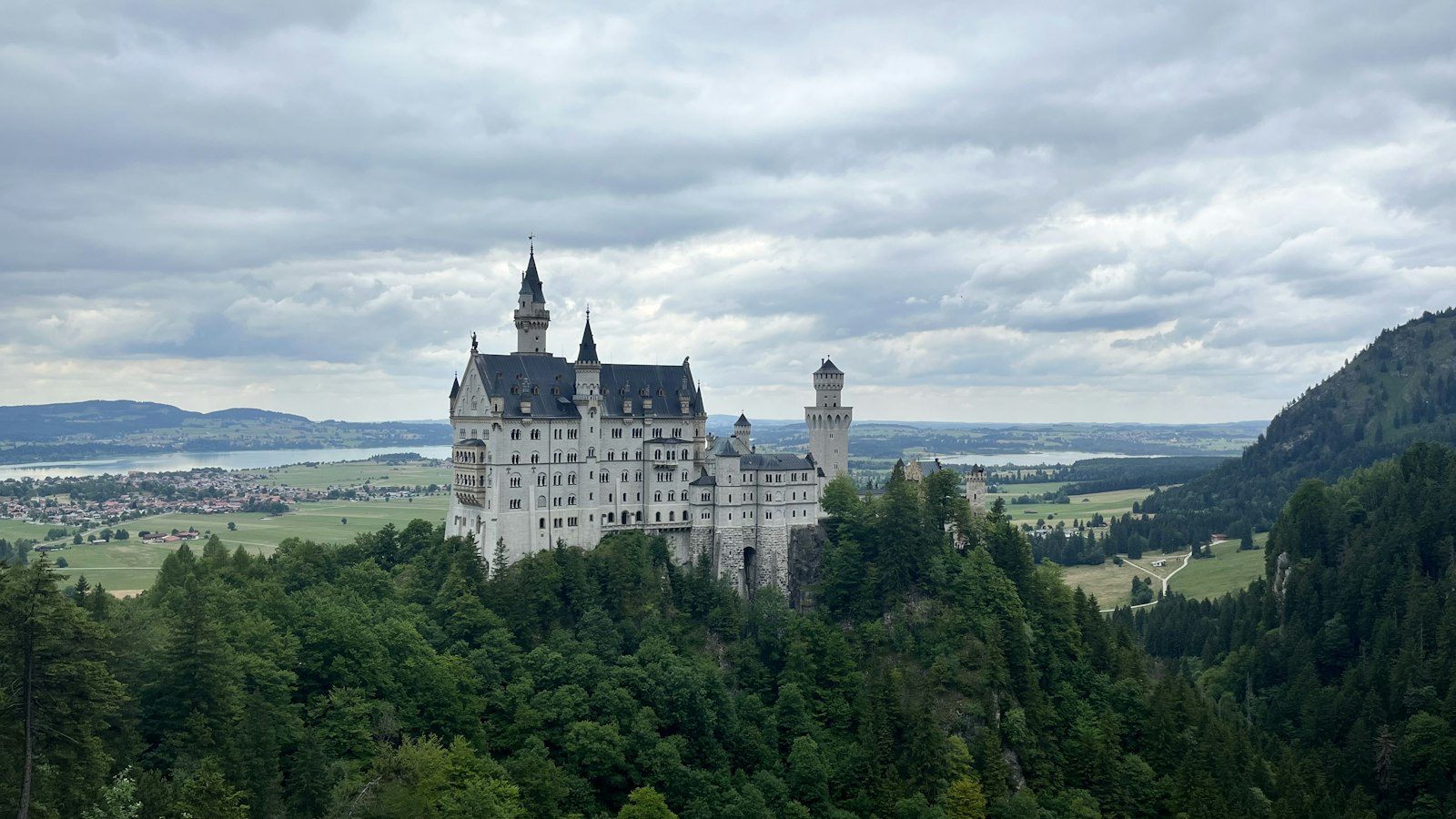
A small walled town in the far south of Bavaria, right where the Alps start. You tour Neuschwanstein in the morning, walk around a turquoise lake in the afternoon and finish with cheese noodles and a local beer in the painted old town.
- Best time to visit: May to June and September to early October
- Daily budget (budget traveller): $80 to $260 USD
- Ideal trip length: 3 to 5 days
Füssen sits on the River Lech at the southern end of the Romantic Road. The Austrian border is a few kilometres away, and the Alps rise straight up behind the town. At about 800m, it is one of the highest towns in Bavaria. Most people know it as the base for Neuschwanstein, King Ludwig II's fairy-tale castle, which stands about 4km away above the village of Hohenschwangau. Many visitors arrive on a day trip from Munich, see the castle and leave. Füssen is worth more time than that. The old town has pastel houses, a bishops' castle with painted false windows and a baroque abbey that now holds the town museum, and it is small enough to cross in 10 minutes. The Lech crashes over a weir just south of the centre, and lakes surround the town on all sides. Hotels and restaurants cost more here than in much of rural Bavaria, and the castle area is very crowded in summer. Even so, the free buses that come with the guest card, cheap bakery breakfasts, free lake walks and a timed castle ticket booked in advance make it an easy place for a solo traveller to spend a few days.
Füssen is a town of about 16,000 people tucked into the corner where the Bavarian Allgäu meets Austria's Tyrol. The Romantic Road ends here, and the old Roman Via Claudia Augusta passed through on its way over the Alps. Its old centre is compact and pretty, with pastel houses, an abbey and a late Gothic castle where the prince-bishops of Augsburg spent their summers. Most visitors use Füssen only as the gateway to Neuschwanstein and Hohenschwangau, the royal castles 4km away. Stay a few nights and you get a better trip: the castles before the coach tours arrive, a walk around the Alpsee with the place nearly to yourself, the Lechfall in evening light and a plate of Kässpatzen in a wood-panelled inn. It is not cheap by German standards, but the guest card's free buses and the free lakes and trails help a lot.
Getting here is easy without a car. Regional trains from Munich take about 2 hours, and a €34 Bayern-Ticket covers the trip and local buses for a day. If you are in Germany for longer, the €63 monthly Deutschlandticket also covers regional trains and buses. It rises to €66.80 from January 2027. Once you are here, walk around town and use buses 73 and 78 for the castles and Tegelberg. Your Füssen Card makes these free. Base yourself in the old town for cafés and evenings, near the station for easy trains, or in Hohenschwangau if you want to reach Neuschwanstein before anyone else.
Plan the trip around the season. May, June and September bring good walking weather and lighter crowds. July and August are the busiest months, with lake swimming and boat trips, but also full buses and sold-out castle slots. In late autumn and winter, things slow down. Tegelberg closes for maintenance from early November to about mid-December, the museums switch to weekend-only hours, and snow can close the Marienbrücke. On the other hand, the castles in snow are beautiful and rooms are cheaper. Füssen is safe and friendly, and English is widely spoken in hotels and at the sights. Evenings are quiet, with dinner, a beer and bed rather than nightlife.
Füssen itinerary
Arrive and find your feet
Morning: Take a regional train from Munich (about 2 hours, covered by the Bayern-Ticket). Drop your bag and pick up your Füssen Card from your host.
Afternoon: Wander Reichenstraße and the Brotmarkt, then step into the Hohes Schloss courtyard to see the painted illusions.
Evening: Walk to the Lechfall and the Maxsteg footbridge as the light softens, then eat Kässpatzen in an old town inn.
Neuschwanstein and the Marienbrücke
Morning: Catch an early bus 73 or 78 to Hohenschwangau, walk up to Neuschwanstein and join your pre-booked tour (€21 plus €2.50 fee).
Afternoon: Walk up to the Marienbrücke for the classic view, then head down for a picnic and the 5km loop around the Alpsee.
Evening: Bus back to Füssen. Have an early dinner and a local beer in town.
Old town museums and viewpoints
Morning: Visit the Museum of the City of Füssen in St Mang's Abbey, including the Dance of Death in St Anne's Chapel. Use the €9 combined ticket.
Afternoon: Walk up to the Hohes Schloss galleries, then climb the Kalvarienberg for views over the town and the castles.
Evening: Coffee and strudel in a café, then a slow walk along the Lech.
Hohenschwangau and Tegelberg
Morning: Tour Hohenschwangau Castle, where Ludwig II grew up. Book the King's Ticket if you want both castles on one day.
Afternoon: Take bus 78 to the Tegelberg cable car (about €32.50 return) for views over the Forggensee. Check the maintenance dates first.
Evening: Head back to town and have a relaxed dinner near the station or in the old town.
Reutte and the Highline179
Morning: Take a regional bus over the border to Reutte in Austria (about 30 minutes, so check the timetable). Carry your passport.
Afternoon: Walk up to the Ehrenberg castle ruins and cross the Highline179 suspension bridge, high above the valley road.
Evening: Bus back to Füssen. Have dinner at a beer garden in summer or a warm inn in winter.
Wieskirche and the lakes
Morning: Take bus 73 towards Steingaden and the Wieskirche, a UNESCO-listed rococo pilgrimage church in open meadows.
Afternoon: Come back via the Forggensee for a summer boat trip, or a walk or bike ride along the shore.
Evening: Watch the sunset over the Hopfensee, reached on bus 56, then return to town.
Slow morning and depart
Morning: Walk the Faulenbach lakes to the Obersee before breakfast, then buy cheese and a Brezn for the train.
Afternoon: Catch a train to Munich or onward along the Romantic Road. Check connections the day before.
Evening: Arrive in Munich or carry on to your next stop.
Best neighbourhoods
- Old town (Altstadt): The centre of Füssen, set around Reichenstraße, the Brotmarkt and the slope up to the Hohes Schloss. You have cafés, bakeries, inns, the museums and the Lechfall, all within walking distance. It is lively by day and quiet by about 10pm. Rooms here cost the most, but you will not need a bus to get around town.
- Around the station: The streets near the railway station and the bus station, just north of the old town. The hotels are plainer, but every train and the castle buses leave from here, and the old town is five minutes away on foot. It is the most practical base if you are arriving late or leaving early.
- Bad Faulenbach: A quiet spa district about 15 minutes' walk west of the centre. Wooded paths lead to small lakes such as the Mittersee, the Obersee and the Alatsee. Expect guesthouses, holiday flats and almost no nightlife. It suits you if you want walks from the door and peaceful nights.
- Hohenschwangau: The village below the two royal castles, about 4km east of Füssen, with the Ticket Center, the Alpsee and a handful of hotels. Stay here and you can reach Neuschwanstein before the coaches arrive. It goes very quiet in the evening, and the restaurants are mostly aimed at tourists, so it suits early risers better than night owls.
- Hopfen am See: A lakeside village about 5km north of Füssen on the Hopfensee, with guesthouses, a lakeside promenade and sunset views of the mountains. Bus 56 links it to town and is free with the guest card. It is calmer than Füssen and good for swimming in summer, but you will spend more time on buses.
Must-do experiences
- Tour Neuschwanstein: Ludwig II's unfinished castle is the reason most people come. Adult entry is €21 plus a €2.50 online booking fee, and under-18s go free but still need a ticket. The tour is timed and lasts about 30 minutes. Book online well ahead, allow 30 to 40 minutes for the walk up from Hohenschwangau, and be at the gate on time.
- Look down from the Marienbrücke: This iron bridge over the Pöllat gorge gives the classic view of Neuschwanstein. It is free, about 15 minutes' walk above the castle. Go early, as queues build by late morning. The bridge often closes in snow and ice, so check before you go in winter.
- Walk around the Alpsee: The clear lake below Hohenschwangau has a flat path of about 5km around its shore through forest. It takes roughly 1.5 hours and is free. It is the best way to escape the crowds at the castles, and in summer you can swim from the small beaches.
- Explore the Hohes Schloss: The old castle of the Augsburg prince-bishops stands above the old town. Look up in the courtyard at the painted window frames and towers, which are illusions. Galleries of Gothic and Munich School paintings cost €6, or €9 with the town museum. From 13 November 2026 they open only Friday to Sunday mornings.
- Visit the museum in St Mang's Abbey: The Museum of the City of Füssen fills the former Benedictine abbey. Look out for baroque halls, a library and a collection of lutes and violins, as Füssen was once a centre of instrument-making. Adults pay €6. Winter hours from 13 November 2026 are Friday to Sunday, 1.30pm to 4pm.
- See the Lechfall and the Lech gorge: Five minutes' walk south of the old town, the river drops over a stepped weir into a narrow turquoise gorge. It is free. Cross the small Maxsteg footbridge for the best view, then follow the riverside path back towards town.
- Ride the Tegelberg cable car: The cable car near Schwangau climbs to about 1,720m, with views over the castles, the Forggensee and the Alps. A return trip costs about €32.50. Fit walkers hike down instead. The autumn maintenance break starts in early November and lasts until about mid-December, so check before you go.
Hidden gems
- The Dance of Death painting in St Anne's Chapel inside the town museum, a row of skeletons leading people of every rank away, painted in the early 1600s
- The Kalvarienberg, a short, steep path up from the Lech to a hilltop with stations of the cross and a view of Neuschwanstein and the old town
- The Faulenbach valley lakes west of town, a chain of small, quiet lakes and forest paths that most castle visitors never see
- The terrace garden and courtyard of the Hohes Schloss, which you can visit without a ticket and where the painted illusions are easiest to spot
- The Hopfensee at sunset, when the mountains turn pink above the water and the promenade empties out
Daily budget
- Accommodation: budget €35-55 / night (hostel dorm), mid-range €100-170 (old town 3-star hotel or guesthouse), splurge €250+ (lakeside resort in Hohenschwangau). Summer and the Christmas period cost the most. A nightly visitor tax is added, but it gets you the Füssen Card with free buses. Single rooms are scarce, so book early.
- Food: budget €25-35 / day (bakery breakfast, Leberkäse roll, supermarket picnic), mid-range €45-70 (café lunch and a sit-down Bavarian dinner), splurge €90+ (three courses with wine at a top hotel restaurant). Kässpatzen or roast pork mains cost roughly €14-24. Food near the castles costs more than in town, so bring a picnic. These prices are a rough guide.
- Transport: budget €0-5 / day (walking, free buses with the Füssen Card), mid-range €10-40 (castle shuttle, bike hire or a €34 Bayern-Ticket day), splurge €60+ (taxis or private transfers). The Bayern-Ticket is €34 for one person. The Deutschlandticket costs €63 a month in 2026 and €66.80 from January 2027. Some smaller places take cash only.
- Activities: budget €0-25 / day (Neuschwanstein €23.50 with booking fee, free lakes and the Lechfall), mid-range €30-60 (King's Ticket €43.50 plus fees, museums €6 or €9 combined), splurge €70+ (Tegelberg about €32.50 return, guided tours, a musical). Under-18s go free at the castles and town museums. A Königscard from a partner host covers many lifts, pools and boat trips.
- Drinks & nightlife: budget €5-10 (a half litre of beer in a beer garden), mid-range €15-30 (a few drinks in an inn), splurge €50+ (wine and cocktails at a hotel bar). A coffee costs about €3-4 and a half litre of beer about €4.50-5.50. Nightlife here means inns and hotel bars, and most places close by midnight.
Where to stay
- Social hostel in Near the station (€35-55 / night (dorm)): House LA is a small, independent hostel within walking distance of the station and the old town. It has dorms, a kitchen and a common room, and it is easy to find others to share a castle day with.
- Boutique hotel in Old town edge (€120-200 / night): Hotel Hirsch is a long-running, traditional hotel on Kaiser-Maximilian-Platz, between the station and the old town. Rooms are themed around Bavarian history, and the castle buses are a few minutes away.
- Apartment in Old town or Bad Faulenbach (€80-140 / night): Holiday flats give you a kitchen and a quieter stay, and Bad Faulenbach puts forest lakes on your doorstep. Check whether the guest card is included and how far you are from the bus stop.
- Splurge in Hohenschwangau (€250-450+ / night): The AMERON Neuschwanstein Alpsee Resort & Spa sits on the shore of the Alpsee below the castles, with a spa and lake views. You can be at Neuschwanstein before the day trippers.
What to eat
- Kässpatzen: Allgäu egg noodles baked with mountain cheese and topped with crispy onions, the region's classic hearty dish, served in most inns
- A Brezn and a Leberkäse roll from a bakery or butcher, the cheapest filling lunch in town, and good for a castle-day picnic
- Schweinebraten with dumplings: roast pork in dark beer gravy, served in Bavarian inns and at its best on Sundays
- Allgäu cheese: Bergkäse and Emmentaler from local dairies, sold in delis and at weekly market stalls, good for picnics by the lakes
- Local beer: a half litre of Helles or wheat beer from a Füssen or Allgäu brewery, best enjoyed in a beer garden in summer
- Kaiserschmarrn or apple strudel: torn sugared pancake or warm strudel in a café or at a mountain hut after a walk
Day trips
- Wieskirche (About 25km north-east of Füssen, roughly 45 to 60 minutes by bus): A UNESCO-listed rococo pilgrimage church standing alone in meadows, with an interior of white, gold and painted ceilings. It is one of the finest baroque churches in Bavaria and quiet early in the day. Take bus 73 towards Steingaden. Some journeys continue to the Wies, so check the timetable. The bus is free with the Füssen Card.
- Reutte, Ehrenberg and the Highline179 (About 15km south, over the Austrian border): Castle ruins on a hill above the Lech valley, linked by the Highline179, a long pedestrian suspension bridge. There are good walking trails and big views. Take a regional bus from Füssen to Reutte, about 30 minutes, and check the times, as Austrian services may not be covered by the guest card. Carry your passport.
- Pfronten and Falkenstein (About 12km west of Füssen): A spread-out mountain village below the Falkenstein ruin, where Ludwig II planned yet another fantasy castle. Walk up for views, or ride the Breitenberg cable car in season. Take bus 56 via Hopfen am See, which is free with the Füssen Card, then walk or hike up from Pfronten-Meilingen.
When to visit
- Spring (April - May): 8-18°C, changeable, snow lingering on the peaks. Crowds: Low to moderate, busier at Easter and on holiday weekends. Fresh, green and good value. Some high paths are still snowy, and Tegelberg has a spring maintenance break, but the castles and lakes are calm.
- Summer (June - August): 18-26°C, warm days with afternoon thunderstorms. Crowds: Busy, very busy at the castles in July and August. Best for swimming, boat trips on the Forggensee and long hikes. Book castle tickets and rooms well ahead, and do the sights early in the day.
- Autumn (September - October): 10-20°C, clear and crisp, cold mornings. Crowds: Moderate, easing through October. The local favourite. Golden forests, sharp mountain views and calmer castles. Days get shorter, so start hikes early.
- Winter (November - March): -5 to 5°C, often snowy, icy paths. Crowds: Low, apart from Christmas and New Year. Snowy castles and cheaper rooms. The Marienbrücke may close, the museums open only at weekends, and Tegelberg closes for maintenance in early winter.
Entry rules for your passport
Visa rules for Germany depend on the passport you travel on. Check the official source before you book: European Commission: Schengen visa policy
Getting there
There is no airport in Füssen. Munich is the main gateway, about 2.5 hours away by train via the city, while Memmingen, a budget airline hub, is about 1.5 to 2 hours by train with a change. Innsbruck is about 2 hours by road. From Munich, regional trains reach Füssen in about 2 hours. Some are direct and others change in Buchloe or Kaufbeuren. A single-day Bayern-Ticket at €34 covers the trip and local buses. The Deutschlandticket (€63 a month in 2026, €66.80 from January 2027) also works on regional trains and buses but not on ICE or IC trains. Long-distance coaches also stop in Füssen. If you drive, use the car parks outside the old town. In Hohenschwangau, parking is paid and fills early in summer. Austrian motorways need a vignette if you approach via Tyrol.
Border checks: non-EU visitors (other than Swiss, Norwegian, Icelandic, Liechtenstein, Andorran, Monegasque, San Marinese and Vatican citizens, and holders of an EU residence permit or long-stay visa) are registered in the EU's Entry/Exit System (EES) instead of getting a passport stamp. On your first crossing, officers take your photo and/or fingerprints, so allow extra time at passport control. ETIAS, the planned travel authorisation, is not in operation yet, so don't pay any website for one.
Getting around
Füssen's old town is small and mostly pedestrianised, so you can walk everywhere in town. From the station to the Lechfall takes about 15 minutes. The castles are 4km away in Hohenschwangau. Buses 73 and 78 leave from the bus station by the railway station and take about 10 minutes. They are free with the Füssen Card that your accommodation gives you and also accept the Deutschlandticket. Otherwise, a ticket costs a few euros. From Hohenschwangau to Neuschwanstein, walk uphill for 30 to 40 minutes, take the shuttle bus to near the Marienbrücke for a few euros or ride a horse-drawn carriage. The guest card also covers the wider allgäumobil bus network and the Füssen to Kaufbeuren train line (carry ID on the train), so lakes, Pfronten and Steingaden cost nothing. Bike hire is easy in town, and flat cycle paths run around the Forggensee and the Hopfensee. Taxis wait at the station but are expensive for a solo traveller. If you drive, park outside the old town, and expect to pay for parking in Hohenschwangau.
Safety
Füssen is very safe, and crime against visitors is rare. Watch your bag in the crowds at Hohenschwangau, at the Marienbrücke and on packed summer buses. The real risks come from the mountains. Paths around the castles can be steep and slippery, the Marienbrücke and the Pöllat gorge path close in snow, ice or after storms, and summer afternoons often bring sudden thunderstorms. On Tegelberg or longer hikes, start early, check the weather, carry water and a layer, and tell someone your route. Do not swim alone in cold lakes, and watch for ticks in long grass. In winter, pavements can be icy, so wear proper boots. Tap water is safe to drink. The emergency number is 112, which also covers mountain rescue. EU travellers should carry an EHIC and UK travellers a GHIC, and everyone else needs travel insurance with medical cover.
Solo travel tips
- Book the castle first: Your Neuschwanstein slot is the one thing in Füssen that can sell out. Book it as soon as your dates are fixed, then plan the rest of the trip around it.
- Go early or late: Coach tours from Munich arrive by late morning. Take the first buses to Hohenschwangau, or visit the Marienbrücke and the Alpsee late in the afternoon, and you will have a much calmer day.
- Use your guest card: The Füssen Card comes with your bed and pays for itself on the first bus. Carry it, sign it and show it without being asked.
- Picnic on castle days: Food near the castles is expensive and the queues are long. A bakery roll, cheese and fruit eaten by the Alpsee is cheaper and nicer.
- Safety for solo travellers: The town is safe, so the real risks are in the hills. Check the weather, start hikes early, stick to marked paths and tell your host where you are going.
- Meet people on a walk or in an inn: Join a guided old town walk or a group hike, or sit at a shared table in a beer garden. Hostel common rooms are the easiest place to find company for the castles.
Cultural etiquette
- Greet people with 'Grüß Gott' or a simple 'Servus', and say 'danke' (thank you). A friendly hello in shops and inns goes a long way.
- Wait for the green man at pedestrian crossings. Locals do, even when the road is empty.
- Dress modestly and keep quiet in churches such as St Mang's and the Wieskirche, especially during services.
- Ask before sitting at a table marked 'Stammtisch', which is reserved for regulars.
- Keep to marked paths and close gates in the mountains, as cows graze on the high pastures.
- Round up or add 5 to 10% for table service, and tell the server the total as you pay rather than leaving coins on the table.
- Sort your rubbish into the right bins, and return glass bottles with a deposit (Pfand) to supermarkets.
Frequently asked questions
How do I get to Füssen and from the station to my room?
Most people come by regional train from Munich, which takes about 2 hours. Some trains are direct and others change in Buchloe or Kaufbeuren. A single-day Bayern-Ticket costs €34 and covers the train plus local buses, so it often works out cheaper than a normal ticket. The old town is about 5 minutes' walk from the station, and the Lechfall about 15. If you are staying in Hohenschwangau, Bad Faulenbach or Hopfen am See, take a bus from the bus station next to the trains.
How many days do I need in Füssen?
One full day is enough for Neuschwanstein, the Marienbrücke and the Alpsee, but you will be rushing. Three days lets you add Hohenschwangau Castle, the old town museums, the Lechfall and Tegelberg. Five days adds Reutte and the Highline179 bridge in Austria, the Wieskirche and a day on the lakes. A week suits hikers and anyone who wants to slow down.
When is the best time to visit Füssen?
May, June and September to early October are the sweet spot, with green hills or autumn colours, comfortable walking weather and fewer crowds than in July and August. High summer brings lake swimming and boat trips on the Forggensee, but also long queues at the castles. Winter is quiet and often snowy, and the castles stay open. However, the Marienbrücke may close, Tegelberg has a maintenance break, and the museums cut back their hours.
How do I get tickets for Neuschwanstein?
Book online through the official Ticket Center Hohenschwangau. You pick a timed tour, and each ticket carries a €2.50 booking fee. Adult entry is €21, and under-18s go free but still need a booked ticket. The King's Ticket, which adds Hohenschwangau Castle on the same day, costs €43.50 before fees. Some tickets are sold on the day at the Ticket Center in Hohenschwangau, but in summer they go early. Allow 30 to 40 minutes for the walk up, because latecomers cannot join their tour.
What is the Füssen Card and do I get free buses?
Füssen charges a nightly visitor tax, which your accommodation adds to your bill. In return, it gives you the Füssen Card. This covers buses on the allgäumobil network and RVO buses, including lines 73 and 78 to the castles, and the Füssen to Kaufbeuren train. It also gives you discounts, for example on the town museum. If your accommodation is a Königscard partner, you get more than 200 free extras, including some museums, lifts, pools and boat trips. Ask your host which card you will get.
Is it worth visiting Füssen in winter?
Yes, if you like quiet and snow. Neuschwanstein and Hohenschwangau stay open with shorter hours, and the crowds are much thinner. The Marienbrücke and some forest paths often close in snow or ice, and the shuttle bus up the hill may not run. The Tegelberg cable car closes for maintenance from early November until about mid-December. From 13 November 2026, the town museum and the Hohes Schloss galleries open only from Friday to Sunday.
Is Füssen safe for solo female travellers?
Yes. It is a calm, small town where you can walk around comfortably on your own, including in the evening. Most risks are about the outdoors rather than people. Stick to marked paths, avoid hiking alone in poor weather and let your accommodation know if you are heading into the mountains. Take normal care with drinks in bars and your bag in crowds.
What entry rules apply to Germany in 2026?
Germany is in the EU and the Schengen area. Many non-EU visitors, including those from the UK, US, Canada and Australia, can stay visa-free for up to 90 days in any 180-day period across Schengen. The EU's Entry/Exit System has been fully running since April 2026. It records non-EU travellers' fingerprints and a face photo at the external border. ETIAS is not yet in operation, and no start date has been announced, so do not pay any website for it. Germany has also been checking some land borders, so carry your passport on day trips to Austria. Confirm the rules on official EU and German government websites.
More about Füssen
Tours and activities in Füssen | Füssen in 2 days | Füssen in 3 days | Füssen in 4 days | Füssen in 5 days | Füssen in 7 days
Can't decide? Compare Füssen with...
Joy Plus home | Destinations | Itineraries | Activities | Flights | Budget planner | Calendar | Map | Blog | Lifetime access