Destinations / Europe
Giethoorn, Netherlands travel guide
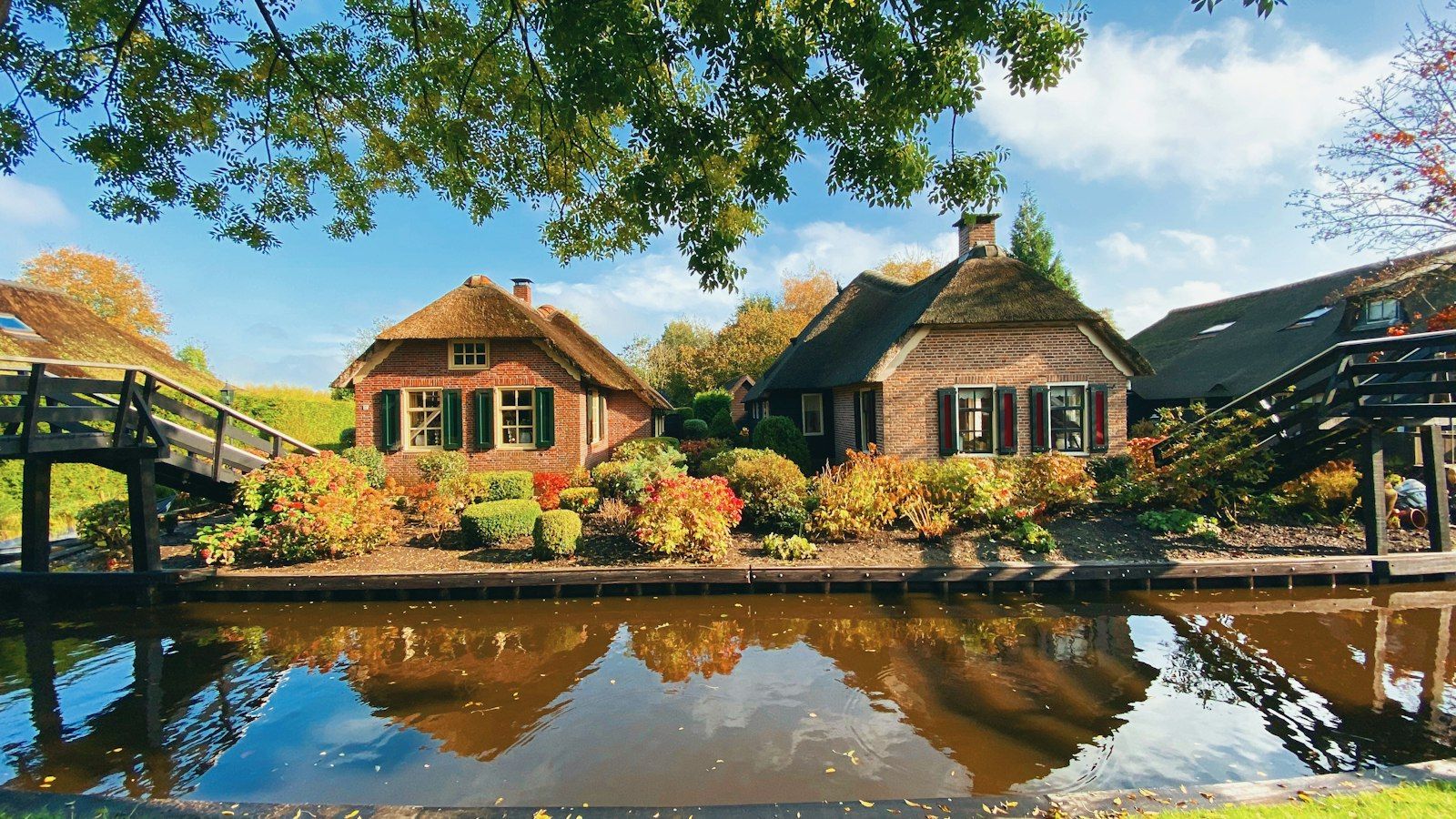
A car-free canal village of thatched farmhouses and arched footbridges, on the edge of the largest lowland peat bog in northwest Europe, where you get around by boat, canoe and bike.
- Best time to visit: May to June and September
- Daily budget (budget traveller): $90 to $280 USD
- Ideal trip length: 3 to 7 days
Giethoorn is a village of about 2,800 people in the north of Overijssel. It was built on water dug out by peat cutters, and its old core has no road. Thatched farmhouses sit on their own small islands, each joined to the footpath by a wooden bridge, and the only traffic on the Dorpsgracht canal is electric whisper boats and the odd punter. On a sunny summer afternoon up to 30,000 day-trippers can arrive at once, and that is why so many people leave disappointed. Stay the night and it is a different place. At 8am the Binnenpad is empty and the canal is still enough to reflect the reeds. Giethoorn also sits inside Weerribben-Wieden National Park, about 100 square kilometres of reedbeds, lakes and alder woods that are free to explore by canoe or bike. Add the old Zuiderzee harbour at Blokzijl and Steenwijk's ramparts and you have a slow, safe and very easy week for a solo traveller.
Giethoorn exists because of peat. For centuries villagers cut it out of the marsh and shipped it out by punter, and the channels and lakes they left behind became the village's roads. The result is about 2,800 people living in thatched farmhouses on small islands, each linked to the footpath by its own wooden bridge. The 1958 comedy Fanfare made it famous in the Netherlands, and social media made it famous everywhere else. On a hot summer Saturday tens of thousands of visitors queue for boats on a single narrow canal. Most of them leave by teatime. If you stay overnight, you get the village most visitors never see: the Binnenpad empty at 8am, herons on the jetties and a beer at Fanfare after the last coach has gone.
For a solo traveller, the easiest setup is two to four nights in the village, ideally at The Black Sheep Hostel on the Zuiderpad. From there, a bike opens up the rest of Weerribben-Wieden National Park, roughly 100 square kilometres of reedbeds, lakes and alder woods run by Natuurmonumenten and Staatsbosbeheer. Entry is free, and the network of cycle paths is flat and well signed. Sint Jansklooster, with its visitor centre and climbable water tower, is a short ride south. The old harbour of Blokzijl and the canal village of Kalenberg make an easy day loop to the west. Ossenzijl, in the far north of the park, is the place for canoeing. Steenwijk, the station town, has ramparts, supermarkets and cheaper fallback rooms.
Timing decides everything here. Crowds peak from about 11am to 3pm, so do your boating and photos early or late and spend the middle of the day on a bike out in the park. Most activities run from April to October: the Giethoorn Express bus, ranger boat trips, full museum hours and nearly all boat rentals. In winter the village goes quiet, many rentals close and the visitor centres open only a few days a week. Costs are moderate for the Netherlands, but boats are priced per boat, not per person, so solo travellers should look at group cruises and canoes. Overnight stays carry a municipal tourist tax of €2.26 per person per night in 2026.
Giethoorn itinerary
Arrive in Giethoorn, first evening on the canal
Morning: Train to Steenwijk, usually via Zwolle (about 2 hours from Amsterdam). Walk out to the bus station by the station and take bus 70, or the Giethoorn Express 270 from late April to October, to Dominee Hylkemaweg (about 15 minutes). Tap your bank card to pay.
Afternoon: Check in at The Black Sheep Hostel on the Zuiderpad and drop your bags. Rent a bike for your stay. Get your bearings with an easy wander along the southern canal paths.
Evening: From about 5pm, as the day-trippers leave, walk north along the Binnenpad. Have shrimp croquettes and a Geytbier at Grand Café Fanfare, then walk back along the quiet canal after dark.
Early canal, boat and museum
Morning: Walk the Binnenpad at 8am for empty bridges and mist. Get on the water by 9am: a group canal cruise (about €9-13) or share a whisper boat with hostel mates (about €30-35 an hour per boat). Ask for a route across the Bovenwijde lake.
Afternoon: Museum Giethoorn 't Olde Maat Uus at Binnenpad 52 (adults €7.50; from April to October open daily 11am-5pm). Then cycle about 3km west to Dwarsgracht for the quiet version of Giethoorn.
Evening: Satay at Café-Restaurant Smit, or cook in the hostel kitchen. Sunset over the reeds from the lake edge.
De Wieden by bike, ranger boat and water tower
Morning: Cycle about 10km south to the De Wieden Visitor Centre at Beulakerpad 1, Sint Jansklooster (April to October: Tuesday to Sunday 10am-5pm, Monday from noon). Join a ranger boat trip from the jetty, and book ahead online.
Afternoon: If it is a Saturday, climb the water tower (about €5, book a slot online). Otherwise walk a marked trail from the centre. Lunch at the tea room beside the visitor centre.
Evening: Ride back through Belt-Schutsloot and along the lakes. Dinner on a Giethoorn terrace.
Cycle loop to Blokzijl and Kalenberg
Morning: Ride west through the polders to Blokzijl, about 10-12km. Wander the old harbour, the lock and the gabled merchants' houses.
Afternoon: Lunch by the harbour, then try smoked eel if you are curious. Loop north to Kalenberg, a canal village, for coffee, then back to Giethoorn. That makes about 30-35km in total, all flat, so an e-bike is optional.
Evening: An easy night. Pancakes or a picnic in the hostel garden, then plan tomorrow's bus or route.
Canoeing the Weerribben from Ossenzijl
Morning: Cycle about 15km north-west to Ossenzijl, or take the regional bus (about 50 minutes, check times). Start at Buitencentrum De Weerribben, Hoogeweg 27. On Tuesday and Thursday mornings from April to October, you can join the ranger boat trip.
Afternoon: Hire a canoe near the centre and paddle the narrow peat-cutting channels between reedbeds. Wear the life jacket and keep to marked routes in protected zones.
Evening: Back to Giethoorn. Sunset walk on the Zuiderpad and a beer at Fanfare.
Quiet water from Wanneperveen
Morning: Cycle about 4km east to Wanneperveen and rent a boat or canoe from Nijenhuis Botenverhuur. It is about a 10-minute ride by water to Giethoorn, and you enter from the quiet back channels.
Afternoon: Explore the lakes and reed channels around the village, avoiding the Dorpsgracht between 11am and 3pm. Return the boat, then lie on a jetty with a book.
Evening: Splurge at De Lindenhof (two Michelin stars, Beulakerweg 77, book weeks ahead), or keep it simple on a canal terrace.
Last canal walk, Steenwijk ramparts, depart
Morning: One final 8am walk along the Binnenpad. Check out and take bus 70 to Steenwijk.
Afternoon: Leave your bag at the station if possible and walk Steenwijk's old ramparts and market square. Then take the train home via Zwolle, which is worth a short stop for its Hanseatic old town.
Evening: Back in Amsterdam or at Schiphol in about 2 hours. Check the NS planner for engineering works the day before.
Best neighbourhoods
- Giethoorn Centrum (Dorpsgracht): The postcard stretch. The Binnenpad footpath runs beside the main village canal past thatched farmhouses, private bridges, boat rental jetties, Museum 't Olde Maat Uus and Grand Café Fanfare. It is crowded from late morning to mid-afternoon in season, and close to empty early and late.
- Giethoorn Noord: The northern end of the canal, where the tour groups thin out. You get the same thatch and water with fewer boats, and it is a good place for an early walk or a quiet terrace coffee.
- Zuiderpad (Giethoorn Zuid): The southern section of canal-side houses, which many day visitors never reach. The Black Sheep Hostel and Hotel Giethoorn are down here, a walk from the main drag but close to rental jetties.
- Steenwijk: A small fortified town about 6km north, with old ramparts, a market square, supermarkets and the intercity station. It is a cheaper fallback base if Giethoorn is full, 15 minutes away by bus 70.
- Blokzijl: A former Zuiderzee harbour about 10-12km west by bike, with a lock, gabled merchants' houses and a marina full of classic boats. It is quieter than Giethoorn and has good terraces for lunch.
Must-do experiences
- Walk the Binnenpad before 9am: Follow the footpath beside the Dorpsgracht while the village is still asleep. You get mist on the water, empty bridges and reflections, all before the coaches arrive between 11am and 1pm.
- Take a whisper boat or canoe off the main canal: Electric whisper boats need no licence. Steer away from the jammed Dorpsgracht and loop out across the open Bovenwijde lake. Solo travellers can save money with a group canal cruise or a canoe.
- Visit Museum Giethoorn 't Olde Maat Uus: This is the one place in the village where you can go inside an original Giethoorn farmhouse. Learn about peat cutting and punter building with the included audio tour. Adults pay €7.50, and the Museumkaart is valid.
- Join a ranger boat trip in De Wieden: From April to October, excursion boats leave from the jetty at the De Wieden Visitor Centre in Sint Jansklooster. Ranger boats get into reedbed channels you would never find alone.
- Climb the Sint Jansklooster water tower: About 207 steps take you to a lookout around 45m up, with views across the whole wetland. Book a time slot online in advance. It is usually open on Saturdays only, so check dates.
- Cycle to Blokzijl: Ride west through polders and reedland to the old harbour town. Have lunch by the lock and come back through Kalenberg for a loop of roughly 30-35km on flat, signposted cycle routes.
- Canoe the Weerribben from Ossenzijl: The Weerribben's narrow channels are left over from peat cutting, with strips of land and water side by side. Rent a canoe near the Buitencentrum and paddle out among the reedbeds and quaking bog.
Hidden gems
- Dwarsgracht, a tiny canal hamlet about 3km west of Giethoorn with the same thatched houses and almost none of the crowds
- Starting a boat day from Wanneperveen or Belt-Schutsloot instead of the village centre, so you cruise calm water and enter Giethoorn from the quiet back channels
- Kalenberg, a one-street Weerribben village strung along a canal, perfect as a coffee stop on the Blokzijl cycling loop
- The Zuiderpad stretch south of the centre, where the canal-side houses carry on and most day-trippers turn back
- Steenwijk's old ramparts, a quiet green walk around a fortified town that most visitors only see from the bus stop
Daily budget
- Accommodation: budget €35-55 / night (dorm bed at The Black Sheep Hostel), mid-range €120-190 (B&B or small hotel double), splurge €300+ (De Lindenhof hotel rooms). Steenwijkerland's 2026 tourist tax is €2.26 per person per night, often added on top of the quoted price. Summer weekends and Gondelvaart week sell out months ahead. Steenwijk is a cheaper fallback. Prices drop noticeably from November to March.
- Food: budget €25-40 / day (hostel breakfast, supermarket picnic, café lunch), mid-range €50-80 (terrace lunch, two-course dinner), splurge €200+ (tasting menu with wine at De Lindenhof). A café main on the canal is roughly €18-26 and a pancake €10-15. Stock up at supermarkets in Steenwijk, and use the hostel kitchen to keep costs down. Book De Lindenhof well in advance.
- Transport: budget €5-18 / day (bus legs about €3-4, standard bike hire about €12-18), mid-range €25-40 (e-bike hire, extra bus trips), splurge €60+ (taxis, private skipper transfers). A return train from Amsterdam to Steenwijk is roughly €55-60. Buses are tap-in with a contactless bank card, cash is not accepted. Bike hire prices are approximate, so check locally.
- Activities: budget €0-20 / day (walking and cycling free, museum €7.50, group canal cruise about €9-13), mid-range €35-70 (whisper boat at about €30-35 an hour per boat, ranger boat trip, canoe hire), splurge €150+ (private boat with skipper, from about €150 per group). Entry to Weerribben-Wieden National Park is free, though the De Wieden visitor centre car park has charged a parking contribution since February 2026. The Sint Jansklooster water tower is about €5 and needs a pre-booked slot. Check current boat and ranger trip prices before you go.
- Drinks & nightlife: budget €5-10 (one local Geytbier or a supermarket beer), mid-range €20-35 (a few beers or wines on a terrace), splurge €60+ (wine pairing, cocktails at a hotel bar). Nightlife means a beer at Fanfare or a canal-side terrace, and most places wind down by about 10-11pm. For bars, Zwolle is the nearest proper town, about an hour away by bus and train.
Where to stay
- Social hostel in Zuiderpad, Giethoorn Zuid (€35-55 / night (dorm bed)): The Black Sheep Hostel is the village's only hostel, in a renovated 1888 thatched farmhouse on the canal, with a shared kitchen, a big garden and breakfast included. Boats can be rented right outside.
- Boutique hotel in Giethoorn Centrum (€120-190 / night): Hotel De Pergola or B&B Plompeblad put you within a short walk of the Binnenpad, so you can be on the canal at 8am before the crowds. Hotel De Pergola has no staffed reception, so expect electronic check-in.
- Apartment in Edge of Giethoorn (€140-230 / night): Self-catering chalets at Chaletpark Kroondomein Giethoorn give you a kitchen and space to spread out, a short cycle from the canal. They make sense for longer stays.
- Splurge in Beulakerweg, Giethoorn (€300-600+ / night): De Lindenhof is an elegant thatched farmhouse hotel with an English garden and a two-Michelin-star restaurant. It is the classic once-in-a-trip night of dinner and a room.
What to eat
- Geytbier, a beer brewed locally and on tap at Grand Café Fanfare, the café named after the 1958 Dutch film shot in the village
- Shrimp croquettes and loaded fries at Fanfare, the classic solo snack-and-a-beer stop on the canal
- Smoked eel (gerookte paling), a traditional delicacy of the old Zuiderzee fishing towns such as Blokzijl and Vollenhove, eaten on bread or straight from the paper
- Dutch pancakes (pannenkoeken), sweet or savoury, the cheapest filling sit-down lunch in the area
- Indonesian chicken satay at Café-Restaurant Smit, a Dutch café staple served on the canal
- Appeltaart met slagroom, thick Dutch apple pie with whipped cream on a canal-side terrace
- A tasting menu at De Lindenhof, held at two Michelin stars since 2005 under chef Martin Kruithof, for a once-in-a-trip splurge
Day trips
- De Wieden and Sint Jansklooster (About 10km south, 40 minutes by bike): Start at the visitor centre at Beulakerpad 1 for maps and the April to October ranger boat trips through the reedbeds. Climb the 1930s water tower, about 45m high, for a view over the whole wetland. Cycle via Belt-Schutsloot on flat, signposted routes, or take a regional bus (about 35 minutes, check times). The tower needs a pre-booked slot online and is usually open on Saturdays.
- Blokzijl and Kalenberg (About 10-12km west to Blokzijl, a 30-35km loop): Blokzijl is a former Zuiderzee harbour town with a lock, merchants' houses and a marina of classic boats. Kalenberg is a canal-side Weerribben village on the way back. Best by bike. Buses from Giethoorn to Blokzijl take about an hour with changes, so check the 9292 planner if you are not cycling.
- The Weerribben at Ossenzijl (About 15km north-west of Giethoorn): Long strips of reedland and water left by peat cutting, ideal for canoeing. Buitencentrum De Weerribben has information, boat trips, and ranger trips on Tuesday and Thursday mornings from April to October. Cycle in just over an hour, or take the bus (about 50 minutes from Giethoorn, check times). From Steenwijk station, the bus takes about 30 minutes.
When to visit
- Spring (April - May): 9-18°C, mixed sun and showers, cool breezy mornings. Crowds: Moderate, busy on King's Day (27 April), Ascension and Whitsun weekends. A strong choice. Visitor centres and ranger boats restart in April, the Giethoorn Express returns from late April, and reedbed birdlife is at its liveliest. Book holiday weekends ahead.
- Summer (June - August): 18-24°C, long light evenings, occasional heatwaves and thunderstorms. Crowds: Very heavy, especially sunny weekends from 11am to 3pm. June is lovely. July and August mean queues for boats and jams on the Dorpsgracht, so boat early and cycle at midday. The illuminated Gondelvaart boat parade closes Festival Week in late August (29 August in 2026), and tickets sell fast.
- Autumn (September - October): 11-19°C, misty mornings, more rain from mid-October. Crowds: Low to moderate, busier on weekends and in the autumn school holidays. The locals' pick. The light is soft, the canals are quieter and most services run until 31 October. September is the best all-round month.
- Winter (November - March): 1-7°C, grey, damp and windy, short days, rare frosts. Crowds: Very quiet. Atmospheric and cheaper, but limited. Many boat rentals close, the museum opens Friday to Monday only, and the De Wieden centre opens on Wednesdays and weekends only. A hard freeze can bring ice skating, but only go onto the ice when locals say it is safe.
Entry rules for your passport
Visa rules for the Netherlands depend on the passport you travel on. Check the official source before you book: European Commission: Schengen visa policy
Getting there
Most international travellers fly into Amsterdam Schiphol (AMS). Take the train to Steenwijk, usually changing at Zwolle. The trip takes about 2 hours from Amsterdam, and a return costs roughly €55-60. Use the NS planner and check for weekend engineering works. From the bus station beside Steenwijk station, bus 70 (RRReis) runs to Giethoorn about once an hour, about 15 minutes to the Dominee Hylkemaweg stop for the centre. From late April to October, the Giethoorn Express (bus 270) adds departures every half hour between about 10am and 6pm, running on to Blauwe Hand. Pay on board by tapping a contactless bank card. Cash is not accepted, and last buses leave early in the evening, so check times. By car, leave the A32 at Steenwijk Noord, then park in the paid car parks on the edge of the village, because the old core is car-free. Non-EU visitors are registered under the EU Entry/Exit System (EES) at their first Schengen border.
Border checks: non-EU visitors (other than Swiss, Norwegian, Icelandic, Liechtenstein, Andorran, Monegasque, San Marinese and Vatican citizens, and holders of an EU residence permit or long-stay visa) are registered in the EU's Entry/Exit System (EES) instead of getting a passport stamp. On your first crossing, officers take your photo and/or fingerprints, so allow extra time at passport control. ETIAS, the planned travel authorisation, is not in operation yet, so don't pay any website for one.
Getting around
The old village core is car-free. Walk the Binnenpad and other canal paths, or travel by water. Electric whisper boats need no licence and rent by the hour. Rental firms prefer you to avoid the jammed centre at peak times, so ask for a quieter route. For anything further, rent a bike: the region is completely flat, with excellent signposted cycle routes to Dwarsgracht, Blokzijl, Kalenberg and Sint Jansklooster. Bus 70, run by RRReis, links Steenwijk station with Giethoorn about once an hour and continues south to Belt-Schutsloot and Zwartsluis. The main stop for the centre is Dominee Hylkemaweg. From late April to October, the Giethoorn Express (bus 270) adds departures every half hour between about 10am and 6pm. You pay on board by tapping a contactless bank card (OVpay); buses do not take cash. Regional buses also reach Blokzijl, Ossenzijl and Sint Jansklooster, but services are slow and thin out in the evening, so for those trips a bike is usually quicker.
Safety
Giethoorn is very safe and violent crime is rare. The main risks involve water and bikes. Canal edges have no railings, so take care on wet bridges and in the dark, and wear the life jacket offered when canoeing. When steering a boat, keep right, go slowly, and watch for low bridges and other boats on the busy Dorpsgracht. Lock your bike every time, as bike theft is common across the Netherlands. In the reedbeds and grassland, check for ticks after walks because Lyme disease is present, and carry repellent for summer mosquitoes. In winter, never walk or skate on frozen water unless locals and official notices say the ice is safe. Respect private property: most bridges and gardens belong to residents, and the national park's protected areas have strict rules on drones and leaving paths.
Solo travel tips
- Sleep in the village, not just a day trip: Crowds peak between about 11am and 3pm, and the coaches empty the village by early evening. One night gives you the canal at dusk and dawn, which is the Giethoorn people come for.
- Boats are priced per boat, so share or go small: A whisper boat costs roughly €30-35 an hour whether one or six people are aboard. Team up with other guests at The Black Sheep Hostel, or join a group canal cruise from about €9-13. A canoe is also cheaper, and quieter.
- Make the bike your main transport: Buses run about once an hour and slow down outside the April to October season. A rented bike gets you to Dwarsgracht in 10 minutes and Blokzijl in under an hour on flat, signposted routes. Always lock it.
- Use the hostel kitchen: Canal-side terrace prices add up fast. Pick up groceries in Steenwijk on arrival, cook dinner in the shared kitchen and save your restaurant budget for one good meal.
- Safety for solo travellers: The area is very safe, including for women alone. The real risks are canal edges at night, cyclists on narrow paths and ticks in the reeds. Carry a phone light and tell someone your cycling route, and check your bus back before heading out to Ossenzijl.
- Meet people on organised trips: Ranger boat trips from De Wieden and Ossenzijl, group canal cruises and the hostel's shared garden are the easiest ways to meet other travellers. Download offline maps, because signal can drop out among the reedbeds.
Cultural etiquette
- Remember that people live here. Most bridges, jetties and gardens are private, so stay on public paths, respect 'privé' signs and never walk onto someone's island for a photo.
- Keep the noise down on the water, especially early and late. Whisper boats are electric for a reason.
- Do not fly a drone. The village sits in a national park and Natura 2000 bird area, and drone flying is heavily restricted.
- On bike paths, cyclists have right of way and move fast. Do not stand in red-tarmac cycle lanes, and signal before you turn.
- The Dutch are direct and punctual. A quick 'goedemorgen' (good morning) and 'dank je wel' (thank you) is appreciated, and almost everyone speaks good English.
- Many places are card-only. It is normal to pay by tapping a card or phone, even for a coffee.
- Leave no trace in the reedbeds. Keep to marked paths and canoe routes, and do not disturb nesting birds in spring.
Frequently asked questions
How do I get from Amsterdam or Schiphol to Giethoorn by public transport?
Take the train to Steenwijk. This usually means changing at Zwolle, and the whole trip takes about 2 hours from Amsterdam. From the bus station next to Steenwijk station, take bus 70 or, from late April to October, the Giethoorn Express (bus 270) to the Dominee Hylkemaweg stop, which takes about 15 minutes. A return from Amsterdam costs roughly €55-60. Pay for the bus by tapping a contactless bank card. Check the NS and 9292 journey planners for live times.
Is Giethoorn worth staying overnight, or is a day trip enough?
Stay at least one night. Crowds peak between roughly 11am and 3pm, and evenings and early mornings are far calmer. Two or three nights let you add Weerribben-Wieden National Park by bike or canoe. A full week works if you use Giethoorn as a base for Blokzijl, Ossenzijl, Sint Jansklooster and Steenwijk.
When is the best time to visit Giethoorn?
May, June and September are the best balance of mild weather, long days, open visitor centres and manageable crowds. July and August are warmest but busiest, especially on sunny weekends. From November to March the village is very quiet and atmospheric, but many boat rentals close, the museum and visitor centres cut their hours, and days are short and grey.
Do I need a licence to rent a boat in Giethoorn?
No. The electric whisper boats rented in Giethoorn are simple to steer and need no boating licence, and you get a short briefing before you set off. Whole-boat rental is priced per boat, roughly €30-35 an hour for a boat that seats several people. If you are on your own, a group canal cruise from about €9-13 or a canoe usually works out cheaper. Book ahead on summer weekends.
Can I pay by card everywhere?
Mostly, yes. The Netherlands is close to cashless, and many cafés, shops and buses take cards only. Debit cards and contactless payments are accepted almost everywhere, but some smaller businesses do not take credit cards, so carry a debit card or phone wallet as a backup. Buses accept contactless bank cards only, not cash.
Is Giethoorn good for solo travellers?
Yes, as long as you plan your costs. The Black Sheep Hostel is the only hostel in the village, with a shared kitchen and garden that make meeting people easy. Boats are priced per boat, so join a group cruise or team up with other hostel guests. Cycling and walking are free, safe and easy to navigate alone.
Is Giethoorn safe for solo female travellers?
Very. The Netherlands is one of Europe's safest countries, and Giethoorn is a small, quiet village. Normal precautions apply: take a torch or phone light for unlit canal paths at night, tell someone your route before a long cycle through the reedbeds, and use the last bus or a pre-booked taxi rather than walking long rural roads after dark.
What entry rules apply to travellers visiting the Netherlands in 2026?
The Netherlands is in the Schengen area. Many nationalities, including UK, US, Canadian and Australian passport holders, can visit without a visa for up to 90 days in any 180-day period. The EU Entry/Exit System (EES) has been fully running since 10 April 2026, so non-EU visitors have fingerprints and a facial image recorded at the external border instead of a passport stamp. The ETIAS travel authorisation was not in operation as of November 2026 and had no confirmed start date, so do not pay unofficial sites for it. Rules can change, so always confirm on the official Dutch government site (netherlandsworldwide.nl), the EU's travel-europe.europa.eu portal and your own government's travel advice before you book.
More about Giethoorn
Tours and activities in Giethoorn | Giethoorn in 2 days | Giethoorn in 3 days | Giethoorn in 4 days | Giethoorn in 5 days | Giethoorn in 7 days
Joy Plus home | Destinations | Itineraries | Activities | Flights | Budget planner | Calendar | Map | Blog | Lifetime access