Destinations / Europe
Girona, Spain travel guide
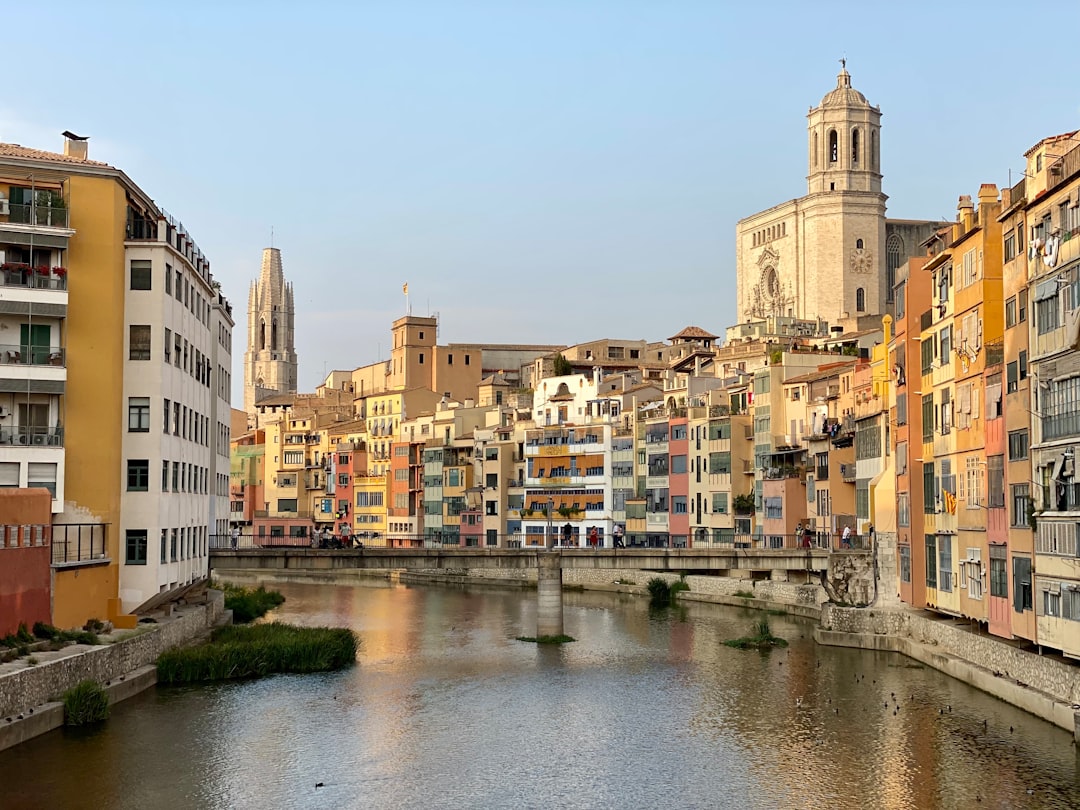
Catalonia's walled river city: colour-stacked houses, a Jewish quarter and Game of Thrones steps.
- Best time to visit: April-June and September-October
- Daily budget (budget traveller): $110 to $190 USD
- Ideal trip length: 2 to 3 days
Girona packs a medieval old town, one of Europe's best-preserved Jewish quarters and a walkable stretch of Carolingian city walls into an hour's train ride from Barcelona. The Onyar river's stacked ochre houses are the postcard, the cathedral's vast staircase doubled as King's Landing on screen, and the food scene punches far above the city's size thanks to El Celler de Can Roca. The Costa Brava and Pyrenees are both close.
Girona is the Catalan city that most visitors treat as a Barcelona side trip and then regret not sleeping in. The Onyar river splits it down the middle, ochre and rust houses stacked along one bank, the cathedral and Barri Vell climbing the other. Inside the old town you get a Romanesque monastery, a 12th-century bathhouse, one of Europe's best-preserved medieval Jewish quarters (El Call) and a 3km walkable stretch of city walls. The best thing about the walls: most tour groups never go up them.
The food is the other reason to stay. El Celler de Can Roca, the three-Michelin-star restaurant run by the Roca brothers, is a short taxi ride from the old town, and the city's mid-range cooking is shaped by the same Empordà produce: botifarra, suquet de peix, Costa Brava anchovies, local wine from DO Empordà. Lunch is the sweet spot. A menu del dia costs about €14-18 and often beats the dinner price by half.
Girona is also a hub. The Avant train reaches Barcelona Sants in about 38 minutes and Figueres (the Dalí Theatre-Museum) in 15. Besalú's Romanesque bridge is an hour by bus, and the Costa Brava coves around Begur and Calella de Palafrugell are within reach. Stay two nights for the city itself, add three or four more if you want the day trips, and avoid mid-May's Temps de Flors weekends unless you book early and like crowds.
How many days in Girona?
For Girona, we recommend 2 to 3 days.
| Trip length | What you'll see | Itinerary |
|---|---|---|
| 2 days · Recommended | Onyar river and Rambla; Cathedral, El Call and the walls | Girona in 2 days |
| 3 days · Recommended | Adds: Besalú day trip | Girona in 3 days |
| 4 days | Adds: Costa Brava coves | Girona in 4 days |
| 5 days | Adds: Figueres and the Dalí Theatre-Museum | Girona in 5 days |
| 7 days | Adds: Arab Baths, Sant Pere and Casa Masó; Market, xuixo | Girona in 7 days |
Girona itinerary
Arrive, Onyar river and Rambla
Morning: Avant from Barcelona Sants (about 38 min) or the airport bus to the bus station. Walk 15 minutes east to the old town, drop bags.
Afternoon: Photograph the Onyar houses from Pont de les Peixateries Velles (Eiffel bridge). Wander the Rambla de la Llibertat arcades. Lunch menu at Casa Marieta on Plaça de la Independència.
Evening: Rocambolesc ice cream on Carrer Santa Clara. Terrace drinks on Plaça de la Independència, then an early night.
Cathedral, El Call and the walls
Morning: Cathedral at opening, climb the 90-step baroque staircase, cloister and Tapestry of Creation. Then Sant Feliu church.
Afternoon: Wander El Call and visit the Museu d'Història dels Jueus. Late menu del dia in Barri Vell.
Evening: Walk the Passeig de la Muralla from Pujada de Sant Feliu to Torre Gironella around 6pm. Dinner at Massana or a tapas bar near the Rambla.
Besalú day trip
Morning: TEISA bus from Girona bus station to Besalú (about 1 hour, check fares at teisa-bus.com). Cross the Romanesque bridge and visit the Miqwe (Jewish ritual bath, guided).
Afternoon: Lunch in a plaça, then a walk to Santa Maria de Besalú and the medieval lanes.
Evening: Bus back. Dinner at a local bar in Mercadal, easy night.
Costa Brava coves
Morning: Sarfa bus from Girona to Palafrugell, then a local bus to Calella de Palafrugell.
Afternoon: Swim, then walk the Camí de Ronda coastal path to Llafranc (about 30 min). Fish lunch on the beach.
Evening: Return to Girona. Casual dinner and a long walk by the river.
Figueres and the Dalí Theatre-Museum
Morning: Regional train to Figueres (about 35 min, €5-6) or Avant (15 min). Dalí Theatre-Museum at opening (closed Mondays outside July and August), book online (from €18.50).
Afternoon: Lunch in Figueres, then Castell de Sant Ferran if you have energy. Train back.
Evening: Dinner in Mercadal, the modern side. Early night.
Arab Baths, Sant Pere and Casa Masó
Morning: Banys Àrabs (about €3) at opening, then Sant Pere de Galligants monastery and the archaeological museum.
Afternoon: Casa Masó guided visit on Carrer Ballesteries, then the Museu del Cinema. If you booked it, Can Roca lunch.
Evening: Wine bar crawl through Barri Vell, then dinner. Sunset from the Montjuïc viewpoint if you still have legs.
Market, xuixo, depart
Morning: Mercat del Lleó for coffee and pastries, then a warm xuixo from any Barri Vell bakery.
Afternoon: Last stroll through Jardins de la Francesa and along the walls. Pick up Empordà wine for the bag.
Evening: Avant to Barcelona Sants or the airport bus to GRO.
Best neighbourhoods
- Barri Vell (Old Town): Stone lanes, arcaded Rambla and the cathedral staircase at its heart.
- El Call: The dense former Jewish quarter with its museum and narrow stepped alleys.
- Mercadal & Eixample: The modern side across the river with shops, tapas bars and better-value hotels.
- Sant Pere de Galligants: Quiet monastery district by the Arab baths and the river's northern gate.
- Montjuïc hill: Short climb north-east for the classic panorama over the cathedral and roofs.
Must-do experiences
- Walk the city walls: Follow the Passeig de la Muralla for rooftop and hillside views end to end.
- Girona Cathedral: Climb the 90-step baroque staircase and see the widest Gothic nave in the world.
- El Call Jewish quarter: Wander the medieval alleys and the Museum of Jewish History.
- Onyar river houses: Shoot the colour-stacked facades from Pont de les Peixateries Velles.
Hidden gems
- The Arab Baths, a 12th-century bathhouse with a skylit octagonal pool.
- Sant Feliu church's Roman and early Christian sarcophagi set into its walls.
- Casa Masó, the riverside home of architect Rafael Masó, open by tour.
- Cinema Museum, an unusually good collection of pre-cinema optical devices.
Daily budget
- Accommodation: budget €25-40 / night (hostel dorm), mid-range €100-160 (boutique double, Barri Vell), splurge €240+ (Casa Cacao, the Roca brothers' boutique hotel). Mercadal side hotels are €20-40 cheaper than the old town and still a 5-minute walk. Prices jump during Temps de Flors.
- Food: budget €25-35 / day (menu del dia + market + bakery), mid-range €50-80 (one proper dinner), splurge €300+ (El Celler de Can Roca tasting menu). Weekday lunch menus are €14-18 with wine and dessert, the best value in town. Book Can Roca months ahead.
- Transport: budget €0-5 / day (everything is walkable), mid-range €10-25 (Besalú bus or Figueres train), splurge €60+ (taxi to Costa Brava coves, car hire). Barcelona Sants to Girona is about €11-12 on regional trains, €15-25 on Avant. Don't drive into Barri Vell.
- Activities: budget €0-10 / day (walls are free, one small museum), mid-range €25-45 (cathedral, Jewish museum, Arab Baths, Casa Masó), splurge €80+ (private Game of Thrones tour, Dalí Theatre-Museum plus guide). The cathedral is roughly €7-10 with a cloister and Tapestry of Creation. The Arab Baths are about €3 and the Jewish museum about €6.
- Drinks & nightlife: budget €8-12 (caña + vermut), mid-range €20-35 (wine bars + cocktails), splurge €60+ (Empordà wine flight, long dinner pairings). A caña is €2-3, a glass of Empordà wine €3-5. Nightlife is mostly terraces on Plaça de la Independència and student bars near the Rambla.
Where to stay
- Social hostel in Barri Vell (€25-45 / night): Alberg Girona Xanascat on Carrer Ciutadans, steps from the Rambla and cathedral, dorms plus privates, easy to meet other travellers.
- Boutique hotel in El Call (€110-190 / night): Hotel Històric or Bellmirall on Carrer Bellmirall, restored medieval houses in the Jewish quarter, quiet at night and a minute from the cathedral.
- Apartment in Mercadal (€80-130 / night): A one-bedroom across the river, near Plaça de la Independència, with a kitchen for market food. Cheaper than the old town and still a 5-minute walk.
- Splurge in Plaça de Catalunya, by the old town (From about €240 / night): Casa Cacao, the Roca brothers' 15-room boutique hotel on Plaça de Catalunya, with a roof terrace looking over the old town. Pair with a Can Roca booking for the full trip.
What to eat
- Xuixo, a fried cream-filled Girona pastry
- Botifarra with mongetes and escalivada
- Suquet de peix, Costa Brava fish stew
- Empordà wines and Rocambolesc ice cream from the Roca brothers
Day trips
- Besalú (1 hour by bus): A medieval village with a fortified Romanesque bridge, a rare Jewish ritual bath (Miqwe) and a compact old town. Go early to see it before coach tours arrive. TEISA bus from Girona bus station. Weekday frequency is better than weekends, so check times and fares at teisa-bus.com before you go.
- Figueres (Dalí Theatre-Museum) (15 to 35 min by train): Salvador Dalí's surreal museum, with a glass dome, a Cadillac and his tomb. Book online and go at opening or late afternoon to avoid peak crowds. Regional train about 35 min (€5-6) or Avant about 15 min (€11-15). Entry from €18.50, closed Mondays outside July and August.
- Costa Brava (Calella de Palafrugell and Llafranc) (1 hour by bus): Whitewashed fishing villages, small coves and the Camí de Ronda coastal path. Swim in summer, walk in spring and autumn, eat fish at the beach. Sarfa bus from Girona to Palafrugell (about €7-9), then a local bus to Calella. A car makes cove-hopping far easier.
When to visit
- Spring (April - June): 15-26°C, mostly sunny, short showers in April. Crowds: Building, peaks during Temps de Flors in mid-May. The best window for walking the walls. Long light, cool mornings, and flower installations fill the old town in May, but book hotels months ahead.
- Summer (July - August): 27-34°C, humid, little shade on the walls. Crowds: Heavy, Costa Brava overflow and French weekenders. Doable if you walk at 8am or after 7pm and spend midday in museums. Some local restaurants close for part of August.
- Autumn (September - November): 17-27°C in September, cooler and wetter by late October. Crowds: Moderate, quiet after mid-October. The locals' pick. Warm light, the Fires de Sant Narcís fair in late October, and heavy rain is the main risk. Pack a jacket.
- Winter (December - March): 3-13°C, cold tramuntana wind, occasional fog. Crowds: Low. Cheapest rooms and empty alleys. Bring a proper coat. Good for cathedral, museums and long lunches, less good for coves.
Entry rules for your passport
Visa rules for Spain depend on the passport you travel on. Check the official source before you book: European Commission: Schengen visa policy
Getting there
Girona-Costa Brava airport (GRO) is about 12km south of the city, mostly Ryanair and a few other low-cost routes. A Sagalés bus to the bus station takes about 25 minutes and costs around €3-4. A taxi is about €30-40. From Barcelona El Prat (BCN) there is a direct Sagalés bus (about 1h15, roughly €18-22), or take the R2 Nord train to Sants and change to the Avant. High-speed Avant and AVE trains from Barcelona Sants take about 38 minutes (€15-25), and regional R11 trains take about 1h20 for around €11-12. Girona train and bus stations sit side by side on the west bank, about 15 minutes' walk from Barri Vell. If you drive, skip the old town and use the underground car parks on Plaça Catalunya or by the Mercadal, around €20-25 a day.
Border checks: non-EU visitors (other than Swiss, Norwegian, Icelandic, Liechtenstein, Andorran, Monegasque, San Marinese and Vatican citizens, and holders of an EU residence permit or long-stay visa) are registered in the EU's Entry/Exit System (EES) instead of getting a passport stamp. On your first crossing, officers take your photo and/or fingerprints, so allow extra time at passport control. ETIAS, the planned travel authorisation, is not in operation yet, so don't pay any website for one.
Getting around
Girona-Costa Brava airport is 20 minutes out with mostly low-cost routes, and high-speed trains reach Barcelona in 38 minutes and Figueres in 15. The old town is entirely walkable, if steep and stepped, and the train and bus stations sit a 15-minute walk west. Buses serve Costa Brava towns in summer, but a car makes coves, Besalú and Pyrenean villages far easier.
Safety
Girona is one of Spain's safest cities, with occasional pickpocketing on the Rambla and around the cathedral the main risk. The real issues are physical: steep stairways, polished stone that turns slick in rain and long wall walks with little shade in summer heat. Some Call alleys are poorly lit at night, and Catalan protest marches can close central streets.
Solo travel tips
- Eat at the market counters: Mercat del Lleó is the easiest place to talk to locals. Grab a stool at a counter bar, order the dish of the day and ask for the wine pairing. Cheap, fast and social.
- Walk the walls late, not at noon: The Passeig de la Muralla has little shade and gets hot by 11am in summer. Go at 8am or after 6pm, the light on the cathedral and the Onyar is far better and the path is empty.
- Hostel pick: Alberg Girona Xanascat: A youth hostel on Carrer Ciutadans in the heart of Barri Vell, with dorms and privates. Basic, central and the best place to meet other solo travellers on a budget.
- Rent a bike: Girona is a cycling capital, with road and gravel routes out of the city and shops that rent by the day. Join a shop ride or a Greenway ride (Ruta del Carrilet) if you want company.
- Solo female travellers: Girona is one of Spain's safest cities. Standard rules apply: watch bags on the Rambla, avoid the unlit Call alleys late at night and keep to the main bridges after midnight.
- Take a Game of Thrones or free walking tour: Small groups meet at the cathedral steps and cover Braavos and King's Landing filming spots in about two hours. An easy way to learn the layout on day one and meet other solos.
Cultural etiquette
- Catalan is the first language here. Start with 'Bon dia' and 'Gràcies', then switch to Spanish or English if needed. The effort is noticed.
- Lunch is 1:30-3:30pm and dinner starts around 9pm. Arrive at 7pm and you will find a closed kitchen or a tourist menu.
- Many shops, museums and some restaurants close on Mondays and between 2pm and 5pm. Plan your day around it.
- El Call is a residential neighbourhood as well as a sight. Keep voices down, don't block doorways and don't photograph people's homes.
- Dress covered shoulders and knees for the cathedral and Sant Feliu. Don't sit on the cathedral steps during services.
- Tipping is not expected. Round up at cafés and leave 5-10% at sit-down dinners if service was good.
- Bread with tomato (pa amb tomàquet) is part of the meal and is often charged as a cover. Wave it away if you don't want it.
Frequently asked questions
How many days do you need in Girona?
Two days is ideal: one for the cathedral, El Call, Sant Feliu and the Onyar houses, and one for the city walls, Arab baths, Montjuïc viewpoint and a proper long lunch. A third day opens up the Costa Brava, Besalú or the Dalí museum in Figueres.
Is Girona worth visiting or just a day trip?
It works as a day trip from Barcelona, but staying overnight is much better. The old town empties in the evening, the walls at sunset are the highlight, and the restaurant scene is the real reason to stay. Two nights turns a rushed stop into a genuinely good short break.
How do you get from Barcelona to Girona?
High-speed AVE and Avant trains take about 38 minutes from Barcelona Sants, with regional trains around 1h20 for less money. Buses take roughly 1h30. Driving on the AP-7 takes about an hour and a quarter, though old town parking is restricted, so use the underground car parks across the river.
Was Game of Thrones filmed in Girona?
Yes. Season six used the city extensively: the cathedral staircase stood in for the Great Sept of Baelor in King's Landing, Sant Pere de Galligants became the Citadel of Oldtown, and the Arab baths and Carrer del Bisbe Josep Cartañà appeared as Braavos. Several walking tours cover the locations, all within the old town.
When is the best time to visit Girona?
April to June and September to October give warm days and comfortable walking. Mid-May brings Temps de Flors, when the old town fills with flower installations, which is spectacular but very crowded. July and August are hot and busy with Costa Brava overflow; winter is quiet, cool and cheap.
Is Girona expensive?
Moderate for Catalonia at roughly $110 to $190 a day, cheaper than Barcelona for hotels but similar for food. Menu del día lunches around $18 are the best value, cathedral and museum tickets are modest, and the walls are free. Rates spike during Temps de Flors and Formula 1 weekends in Barcelona.
Is Girona good for food?
Exceptionally. El Celler de Can Roca, a three-star restaurant twice ranked best in the world, is here and books months ahead. Beyond it there is a strong mid-range scene of Empordà cooking, good market produce at Mercat del Lleó, and the Roca brothers' Rocambolesc ice cream shop for a cheap taste.
More about Girona
- Where to Travel in 2027: 15 Places Worth Planning a Trip Around
- Total Solar Eclipse 2 August 2027: Where to Watch It and How to Plan Now
- Barcelona in 3 Days: Gaudí, Tapas, the Beach and 2026 Prices
Tours and activities in Girona | Girona in 2 days | Girona in 3 days | Girona in 4 days | Girona in 5 days | Girona in 7 days
Can't decide? Compare Girona with...
Joy Plus home | Destinations | Itineraries | Activities | Flights | Budget planner | Calendar | Map | Blog | Lifetime access