Destinations / Europe
Grindelwald, Switzerland travel guide
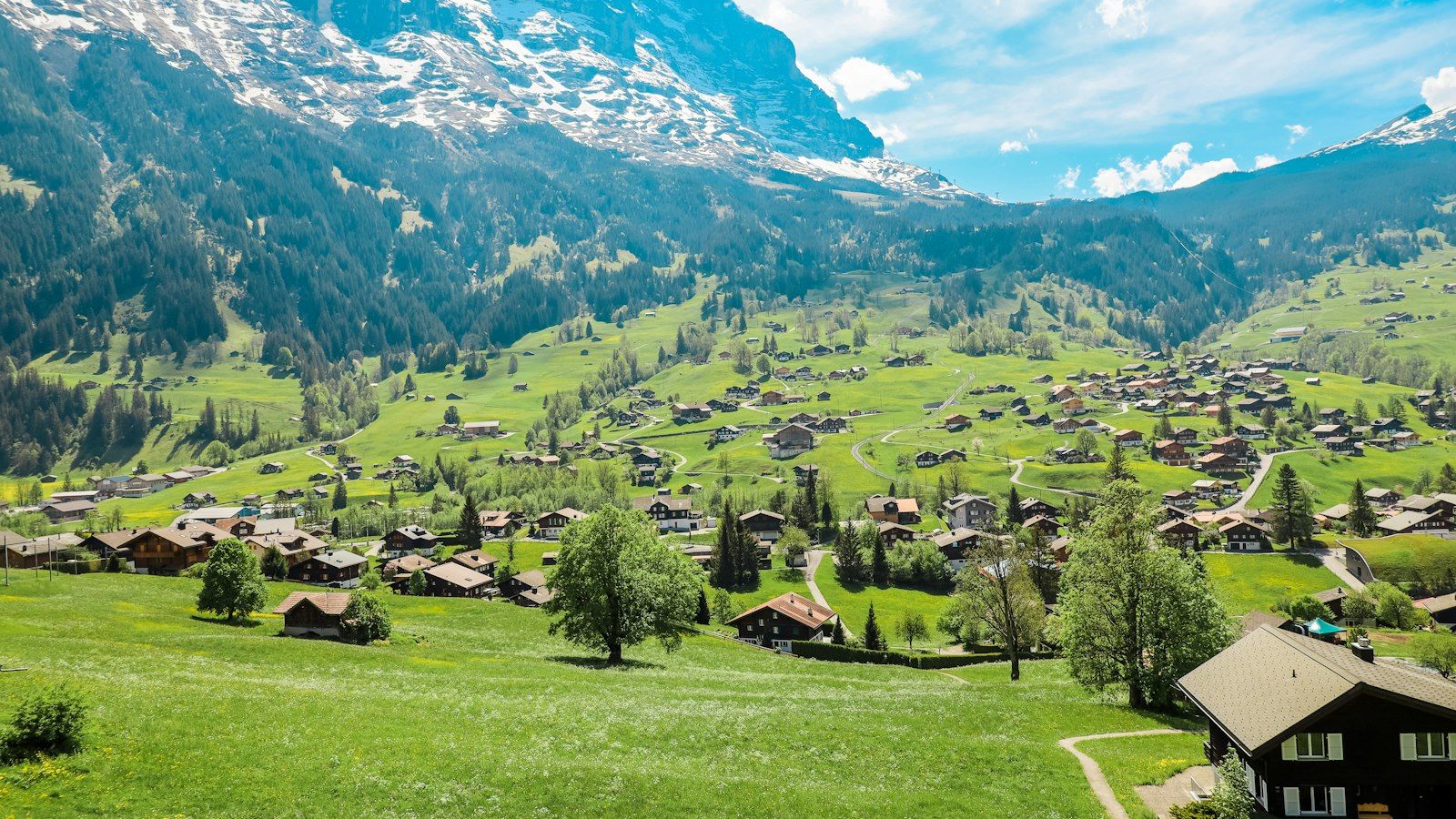
A Bernese Oberland village under the Eiger North Face, where cable cars, cogwheel trains and well-marked trails can get one person to alpine lakes, glaciers and ridge walks most days.
- Best time to visit: Mid-June to mid-September for hiking, January to March for snow
- Daily budget (budget traveller): $170 to $510 USD
- Ideal trip length: 4 to 7 days
Grindelwald sits at about 1,030 metres, directly below the Eiger, the Wetterhorn and the Mettenberg. The North Face fills the view from almost every balcony in the village. It is one of the best bases in the Alps for a solo traveller because the hard work is done for you. Trains run up from Interlaken Ost and cable cars climb out of the village in three directions. The trails are signposted in hours, not kilometres. In one week you can walk to Bachalpsee from the First gondola, follow the Panorama Trail from Männlichen to Kleine Scheidegg, take the Eiger Express towards Jungfraujoch and cross the ridge to the Lauterbrunnen valley for Mürren. The catch is price. Switzerland is expensive, and mountain transport is where the money goes, so the right regional pass matters more here than almost anywhere else. Sleep in a hostel dorm, picnic from the Coop and buy a multi-day pass, and Grindelwald becomes a manageable, safe and spectacular place to travel alone.
Grindelwald is a mountain village of about 4,000 people at the foot of the Eiger, and nearly everything a visitor wants sits above it. The First gondola climbs north to Bachalpsee and the Cliff Walk. The Männlichen gondola and the Eiger Express leave from Grindelwald Terminal for the ridge walks and Jungfraujoch. The Wengernalpbahn cogwheel train runs up to Kleine Scheidegg, and the Pfingstegg cable car lifts you towards the glacier. Switzerland is famously expensive, and the prices here confirm it: a return on the First gondola was CHF 76 at full summer fare in 2026, and a restaurant main course is often CHF 25 to 45. But a cheaper Grindelwald exists. It runs on dorm beds, picnics from the Coop and Migros, free tap water from village fountains, and a multi-day pass that turns expensive lift rides into prepaid ones. This guide is built around that version.
The pass decision comes first. The Jungfrau Travel Pass covers the regional trains, First, Männlichen, the Eiger Express to Eigergletscher, Schynige Platte and the boats on Lakes Thun and Brienz. In 2026 it costs CHF 210 for 3 days or CHF 290 for 6, with a discount for Half Fare Card and Swiss Travel Pass holders. Jungfraujoch itself needs a discounted connecting ticket. For a week of daily lifts, it usually pays for itself by the third day. Base yourself in the village centre or on Terrassenweg for the views, or in Grund if you plan an early Eiger Express. Then just walk. The trails are well marked, signposted in hours and maintained, and the yellow signposts make it hard to get lost in good weather.
Timing matters more than usual, because lifts run to seasonal calendars and snow decides which trails are open. The summer lifts start between April and late May, but high routes like the Panorama Trail rarely open before mid-June. July and August are warmest and busiest, with afternoon thunderstorms. September is the local favourite, with clear air and thinner crowds. Late October to mid-December is the quiet gap when several lifts close for maintenance, and winter brings the Jungfrau Ski Region back to life. English is widely spoken, the trains run to the minute and the village is very safe. If you want nightlife, go to Interlaken. If you want a sunrise ridge walk, a Rösti lunch and a cold lake swim on the same day, stay here.
Grindelwald itinerary
Arrive, settle in, Glacier Canyon
Morning: Train to Interlaken Ost, then the BOB to Grindelwald (about 35 minutes). The train splits at Zweilütschinen, so sit in the Grindelwald carriages. Drop your bags and collect your guest card.
Afternoon: Bus or walk about 30 minutes to the Glacier Canyon (about CHF 21, CHF 2 off with the guest card, open roughly May to November). Walk the gorge and step onto the Spiderweb net.
Evening: Queue early at Onkel Tom's Hütte near the First gondola for wood-fired pizza, because it takes no reservations. Shop at the Coop for tomorrow's picnic.
First, Bachalpsee and the Cliff Walk
Morning: First gondola from Dorfstrasse by 8am (about 25 minutes, CHF 76 return at full fare or included in the pass). Walk to Bachalpsee, about an hour each way, and eat breakfast by the water.
Afternoon: Back at First, cross the Cliff Walk. Add the First Flyer (CHF 35) if you want the thrill, or ride down to Bort and walk the last stretch through the meadows.
Evening: Dinner and a beer at Barry's on Dorfstrasse. It is easy to sit at the bar alone and swap trail tips.
Männlichen Royal Walk and Panorama Trail
Morning: Gondola from Grindelwald Terminal to Männlichen (about 20 minutes). Walk the Royal Walk to the 2,343m summit, about 25 minutes up, for views down both valleys.
Afternoon: Follow the Panorama Trail to Kleine Scheidegg (4.5km, about 1 hour 20, open mid-June to October). Rösti lunch at Kleine Scheidegg, then the Wengernalpbahn down to Grund. The loop is CHF 74.60 at full fare.
Evening: Coffee and cake at Café 3692 on Terrassenweg if it is still open, then cook at the hostel and watch the light fade on the North Face.
Jungfraujoch and the Eiger Trail
Morning: Pick the clearest morning of your stay. Take an early Eiger Express from Grindelwald Terminal and continue to Jungfraujoch, about 45 minutes in total. Book the CHF 10 seat reservation (compulsory May to October). Move slowly at 3,454m.
Afternoon: Ride back down to Eigergletscher and walk the Eiger Trail to Alpiglen under the North Face, about 2.5 hours mostly downhill, normally July to October. Train from Alpiglen to Grindelwald.
Evening: Celebrate with cheese fondue at Hirschen. Book ahead in summer.
Lauterbrunnen valley and Mürren
Morning: Train via Zweilütschinen to Lauterbrunnen and walk to Staubbach Falls. Take the cable car to Grütschalp and the train along the cliff to Mürren.
Afternoon: Optional Schilthorn from Mürren (CHF 91.40 return, 25% off with the Jungfrau Travel Pass) if the summit is clear. Otherwise walk down to Gimmelwald and take the cable car to Stechelberg, then the bus to Lauterbrunnen.
Evening: Train back to Grindelwald. Picnic dinner on a bench facing the Wetterhorn.
Schynige Platte to First high route
Morning: Early train to Wilderswil and the cogwheel railway to Schynige Platte (summer only, check dates). Set off by 9am on the high route over the Loucherhorn.
Afternoon: Continue over the Faulhorn to Bachalpsee and First, about 6 hours in total. Stop at the Faulhorn mountain hotel for a drink. Check the last gondola down from First before you set off.
Evening: Gondola down, hot shower, then an easy pizza or a supermarket dinner. Your legs will thank you.
Pfingstegg and a slow last day
Morning: Pfingstegg cable car (summer season, 25 April to 25 October in 2026) for the balcony path towards the Lower Grindelwald Glacier. Check the trail status at the station.
Afternoon: Ride the summer toboggan run at Pfingstegg, then browse Dorfstrasse or take the bus up to Bussalp for a quiet final walk.
Evening: Farewell dinner at C&M (Café und Mehr) or Barry's. Pack, check your train to Interlaken Ost and the airport for tomorrow.
Best neighbourhoods
- Grindelwald Dorf (village centre): The main street, Dorfstrasse, runs from the railway station past the First gondola, with the supermarkets, outdoor shops, Barry's, Onkel Tom's Hütte and most of the hotels. It is the easiest base if you want to walk to everything.
- Grund and Grindelwald Terminal: The lower end of the valley, home to the Terminal station for the Eiger Express and the Männlichen gondola, plus the Wengernalpbahn stop at Grund. It is quieter and practical, with budget beds such as Eiger Lodge Easy on Grundstrasse.
- Terrassenweg: A narrow lane on the sunny slope above the village with the Grindelwald Youth Hostel, the Naturfreundehaus and Café 3692. The walk up is steep, but the views of the Eiger are among the best in the valley.
- Wengen: A car-free village across the ridge on the Lauterbrunnen side, linked to Männlichen by cable car and to Kleine Scheidegg by train. Worth a night if you want to stay on both sides of the Eiger.
- Interlaken: The transport hub 35 minutes down the valley, with cheaper and more social hostels, lake boats and day trips. Some solo travellers sleep here and commute, but you lose the early mornings in the mountains.
Must-do experiences
- Walk from First to Bachalpsee: Ride the First gondola up to about 2,168 metres and follow the wide trail to Bachalpsee, a lake at 2,265 metres that reflects the Schreckhorn and Wetterhorn on still mornings. Allow about two hours return.
- Cross the First Cliff Walk: Walk the metal walkway bolted to the cliff beside the First top station. Access is included in the gondola ticket, and it takes about 20 minutes. Go before 10am for the clearest views and the fewest people.
- Hike the Männlichen Panorama Trail: Take the gondola from Grindelwald Terminal to Männlichen, add the short Royal Walk to the summit, then follow the gentle 4.5km trail to Kleine Scheidegg with the Eiger, Mönch and Jungfrau ahead the whole way.
- Ride the Eiger Express towards Jungfraujoch: The 3S cableway lifts you from Grindelwald Terminal to Eigergletscher in about 15 minutes, then the tunnel railway climbs to Jungfraujoch at 3,454 metres for the Aletsch Glacier view. Pick a clear day and book early.
- Walk the Eiger Trail: From Eigergletscher, a trail traverses the base of the North Face down to Alpiglen, with rubble, meltwater streams and climbers' routes directly overhead. It is normally a July to October walk.
- Explore the Glacier Canyon: Follow the walkways into the gorge cut by the Lower Grindelwald Glacier, and walk out onto the rope Spiderweb net slung over the meltwater river. Entry is about CHF 21 for adults.
- Hike Schynige Platte to First: One of the classic high routes in Switzerland, about six hours over the Loucherhorn and the Faulhorn to Bachalpsee and First, with Lake Brienz on one side and the big peaks on the other.
- Cross to Lauterbrunnen and Mürren: Take the train round to the Lauterbrunnen valley for Staubbach Falls, then ride up to car-free Mürren on its cliff shelf and walk down to Gimmelwald.
Hidden gems
- The Bussalp road above the village, where a seasonal bus climbs to pastures with Eiger views and quiet trails, far from the First crowds
- The Pfingstegg cable car on the east side of the village, the earliest of the summer lifts to open, with a summer toboggan run and a balcony path towards the Lower Grindelwald Glacier
- Café 3692 on Terrassenweg, a small café above the village with good coffee, homemade cakes and a terrace looking at the Eiger
- Walking down from First to Bort instead of riding all the way, a downhill stretch through flower meadows where the crowds thin out fast
- The summer bus over the Grosse Scheidegg pass towards Meiringen, a scenic road under the Wetterhorn that most visitors never take
Daily budget
- Accommodation: budget CHF 45-80 / night (hostel dorm, often with breakfast), mid-range CHF 220-400 (3-star or boutique double), splurge CHF 500-1,000+ (Bergwelt Grindelwald, Romantik Hotel Schweizerhof). Book July, August and the Christmas weeks months ahead. A local visitor tax is added per night, and your accommodation gives you a guest card with village discounts. Prices drop sharply in spring and late autumn.
- Food: budget CHF 35-55 / day (supermarket breakfast and picnic, one cheap hot meal), mid-range CHF 70-110 (mountain restaurant lunch, sit-down dinner), splurge CHF 150+ (fine dining, fondue with wine). Coop and Migros on Dorfstrasse are your best friends for sandwiches, fruit and ready meals. A restaurant main costs roughly CHF 25-45, and Rösti at a mountain hut around CHF 22-30. Fill your bottle at fountains unless they are marked as not drinking water.
- Transport & lifts: budget CHF 40-55 / day (Jungfrau Travel Pass spread over 6 days), mid-range CHF 60-90 (single return tickets, around CHF 70-80 each), splurge CHF 200+ (Jungfraujoch day at full fare). Full-fare returns in summer 2026: First about CHF 76, the Männlichen and Kleine Scheidegg loop CHF 74.60. The 6-day Jungfrau Travel Pass is CHF 290, or CHF 225 reduced. Jungfraujoch adds a CHF 63-89 connecting ticket plus a CHF 10 seat reservation from May to October.
- Activities: budget CHF 0-25 / day (hiking is free, Glacier Canyon CHF 21), mid-range CHF 35-90 (First Flyer CHF 35, Schilthorn with pass discount), splurge CHF 150+ (paragliding tandem, Canyon Swing, guided glacier tour). The trails cost nothing once you are up the mountain. The Glacier Canyon is CHF 21, or CHF 2 less with the guest card. First adventure rides cost extra. The Schilthorn return is CHF 115 from Stechelberg, with 25% off for Jungfrau Travel Pass holders.
- Drinks & nightlife: budget CHF 5-15 (supermarket beer, one coffee), mid-range CHF 25-50 (a few beers at Barry's at roughly CHF 7-9 each), splurge CHF 80+ (cocktails, Swiss wine with dinner). Nightlife is a bar with a fire and a few hikers comparing routes. Most places wind down by 11pm. Interlaken has more going on, but check the last train back before you go.
Where to stay
- Social hostel in Terrassenweg, above the village (CHF 45-80 / night (dorm bed)): The Grindelwald Youth Hostel has dorms, private rooms, a common room and big Eiger views. Eiger Lodge Easy in Grund is a cheaper, basic alternative near the Terminal. Both are full of hikers.
- Boutique hotel in Grindelwald Dorf (CHF 300-550 / night (check seasonal rates)): Hotel Glacier is a small, design-led hotel with a well-regarded restaurant, close to the village centre and the First gondola. It is calm, comfortable and ideal for a few nights of recovery between big hikes.
- Apartment in Grund or the slopes around Terrassenweg (CHF 150-280 / night): Chalet studios and holiday flats, listed through Grindelwald Tourism and the usual booking sites, give you a kitchen and a balcony. Cooking most meals saves a lot in Switzerland. Note that many require minimum stays in high season.
- Splurge in Grindelwald Dorf (CHF 500-1,000+ / night): Bergwelt Grindelwald Alpine Design Resort or the Romantik Hotel Schweizerhof, both with spas, pools and North Face views from the room, for when the legs need serious care.
What to eat
- Rösti: crisp fried grated potato, often topped with cheese, egg or bacon, the default hiker's lunch at mountain restaurants such as Kleine Scheidegg and Bort
- Cheese fondue: best as a slow evening meal, and Hirschen in the village has a strong local reputation for it
- Älplermagronen: alpine macaroni with potatoes, cheese, cream and fried onions, served with apple sauce on the side
- Wood-fired pizza at Onkel Tom's Hütte: a small chalet near the First gondola with a long wine list, no reservations and a queue most evenings
- Burgers and Swiss classics at Barry's: a rustic, lively restaurant and bar on Dorfstrasse, easy for eating alone at the bar
- Meringue with double cream: a Bernese Oberland dessert, rich enough to share but rarely shared
Day trips
- Lauterbrunnen, Mürren and Gimmelwald (About 45 minutes by train from Grindelwald, changing at Zweilütschinen): A valley of waterfalls and sheer cliffs, with Staubbach Falls by the village and car-free Mürren on a ledge 800m above. Walk down to Gimmelwald, and add the Schilthorn on a clear day. BOB to Zweilütschinen, then on to Lauterbrunnen. The cable car to Grütschalp and the train to Mürren are included in the Jungfrau Travel Pass. The Schilthorn is CHF 115 return from Stechelberg, 25% off with the pass. Check the fare.
- Schynige Platte (About 1 hour 30 minutes from Grindelwald via Wilderswil): A historic cogwheel railway climbs to a ridge with an alpine botanical garden and some of the best views of the Eiger, Mönch and Jungfrau. Walk back to Grindelwald via the Faulhorn high route if you are fit. BOB to Wilderswil, then the Schynige Platte railway, summer only. Included in the Jungfrau Travel Pass. Check opening dates on jungfrau.ch.
- Interlaken and Lake Brienz (35 minutes by train to Interlaken Ost): Ride the funicular to Harder Kulm, take a lake boat to Iseltwald or Brienz, and use Interlaken's bigger supermarkets and outdoor shops. A good bad-weather day. BOB to Interlaken Ost. Boats leave from beside the station. The Harder Kulm funicular (CHF 44 return in 2026) and the lake boats are included in the Jungfrau Travel Pass.
When to visit
- Spring thaw (April - May): 5-15°C in the village, snow lingering above about 1,800m, changeable. Crowds: Low, apart from Easter and Ascension weekends. Cheap rooms and green valley floors, but high trails stay snowbound and some lifts pause for maintenance. Pfingstegg opens earliest, from 25 April in 2026. Good for valley walks and the Glacier Canyon, less so for big hikes.
- High summer (June - August): 15-25°C in the village, cooler and windy up high, frequent afternoon thunderstorms. Crowds: Heavy, especially July and August and on the Jungfraujoch route. Every lift and trail is open from mid-June. Start hikes by 8am to beat both the crowds and the storms. Book beds and Jungfraujoch seats well ahead.
- Autumn (September - October): 8-18°C, crisp and often clear, first snow possible on the peaks. Crowds: Moderate in September, quieter in October. The locals' pick. Clear air, fewer people and golden larches. Many summer lifts close around 25 October, so finish your high hikes before then.
- Winter (December - March): -5 to 5°C in the village, colder on the ridges, reliable snow from January. Crowds: Peak at Christmas, New Year and February holidays. Skiing, winter walking paths and sledging. The ski area starts opening from late November, and Männlichen reopened on 12 December 2026. November itself is the dead season, so check which lifts are running.
Entry rules for your passport
Visa rules for Switzerland depend on the passport you travel on. Check the official source before you book: European Commission: Schengen visa policy
Getting there
The nearest major airports are Zurich (ZRH), Geneva (GVA) and Basel (BSL). Zurich has the most long-haul connections. From Zurich Airport, trains run to Interlaken Ost, usually with a change at Bern, in about two hours, and the Berner Oberland-Bahn continues to Grindelwald in about 35 minutes, so allow 2.5 to 3 hours door to door. From Geneva, allow about 3.5 hours. Trains run at least hourly from the airports and every 30 minutes on the BOB in the main seasons. A Swiss Travel Pass covers the train all the way to Grindelwald and gives discounts on mountain lifts, which suits travellers combining Grindelwald with other Swiss cities. Driving is possible via Interlaken, but parking in the village is paid and the car will sit unused, so the train is the better choice. Switzerland is in Schengen. Visa-exempt visitors can usually stay 90 days in 180 and will be registered by the EU's Entry/Exit System at the external border where they first enter the Schengen Area. Check the official Swiss SEM website before you fly.
Border checks: non-EU visitors (other than Swiss, Norwegian, Icelandic, Liechtenstein, Andorran, Monegasque, San Marinese and Vatican citizens, and holders of an EU residence permit or long-stay visa) are registered in the EU's Entry/Exit System (EES) instead of getting a passport stamp. On your first crossing, officers take your photo and/or fingerprints, so allow extra time at passport control. ETIAS, the planned travel authorisation, is not in operation yet, so don't pay any website for one.
Getting around
Grindelwald is easy without a car. Berner Oberland-Bahn (BOB) trains run from Interlaken Ost to Grindelwald in about 35 minutes, with a stop at Grindelwald Terminal for the Eiger Express and the Männlichen gondola. The train splits at Zweilütschinen, so check which carriages go to Grindelwald and which go to Lauterbrunnen. In the village, the First gondola leaves from Dorfstrasse, the Pfingstegg cable car is on the eastern side, and the Wengernalpbahn cogwheel train climbs from Grindelwald and Grund to Kleine Scheidegg. Local buses link the village with the Glacier Canyon, Bussalp and the outlying hamlets. Your guest card from your accommodation gives discounts, so ask what it covers. Lifts run on seasonal calendars with maintenance closures in spring and late autumn, so always check jungfrau.ch and maennlichen.ch before planning a day. Use the SBB app for timetables. A car is pointless here because parking is expensive and the best places can only be reached by lift or train.
Safety
Grindelwald is very safe, and crime against visitors is rare. The real risks are in the mountains. Weather changes fast, summer afternoons often bring thunderstorms, and snow can linger on high trails into June, so start early, check the forecast and trail status, and turn back if the cloud drops. Stick to marked paths. White-red-white markings mean a mountain trail that needs sturdy footwear, and never walk onto glaciers without a guide. Jungfraujoch is at 3,454 metres, so move slowly, drink water and come down if you feel dizzy or get a headache. Give cows with calves a wide berth and close gates behind you. Note the last lift down, because missing it can mean a long, steep descent in the dark. For mountain rescue call Rega on 1414, or the general emergency number 112. Make sure your travel insurance covers hiking and helicopter rescue.
Solo travel tips
- Buy the pass before you buy anything else: Mountain transport is the biggest cost here. Price your route on jungfrau.ch and compare single tickets with the Jungfrau Travel Pass. For four or more lift days, the pass almost always wins and removes the daily pain of paying CHF 70 to 80 for each return.
- Start early, every day: The first lifts give you the clearest air, empty trails and a buffer before afternoon storms. Most summer thunderstorms build after 2pm. Be at the gondola by 8am and aim to finish high-level walking by mid-afternoon.
- Stay in a hostel for company: The Grindelwald Youth Hostel on Terrassenweg is where solo hikers meet, compare routes and team up for longer walks. Breakfast is often included, and the common room terrace looks straight at the Eiger.
- Picnic like a local: Pick up bread, cheese, fruit and chocolate at the Coop or Migros on Dorfstrasse. Eating your picnic by Bachalpsee costs a fraction of a mountain restaurant lunch and comes with a better view.
- Tell someone your route: Leave your plan with your hostel or hotel reception, carry a charged phone and a power bank, and save Rega (1414) and 112 in your contacts. The MeteoSwiss app and the Jungfrau and Männlichen live trail pages are essential daily checks.
- Save Jungfraujoch for a clear day: It is the most expensive day of your trip, so do not waste it in cloud. Check the webcams the evening before and in the morning, and stay flexible. Move another hike if the forecast says the summit will be clear tomorrow instead.
Cultural etiquette
- Greet people. In Bern canton, 'Grüessech' (hello) and 'Merci vielmal' (thanks very much) are the local versions, and a nod or 'Grüessech' to other hikers on the trail is normal.
- Respect quiet hours. Sundays and evenings after about 10pm are quiet, and loud noise in guesthouses and chalet flats is frowned upon.
- Close every farm gate behind you, stay on the trail through pastures and keep your distance from cows, especially mothers with calves.
- Be punctual. Trains and lifts leave to the minute, and restaurant reservations are taken seriously, so cancel if your plans change.
- Recycle properly. Switzerland sorts PET bottles, glass, aluminium and paper, and dumping rubbish is fined. Take all litter back down from the mountains.
- Service is included in prices. Rounding up or leaving a few francs for good service is appreciated but not expected.
- Many shops close early on Saturdays or shorten their hours on Sundays, so stock up for picnics the day before.
Frequently asked questions
How do I get to Grindelwald from Zurich or Geneva airport?
Take the train. From Zurich Airport, trains run to Interlaken Ost, usually with a change at Bern, and the BOB train continues to Grindelwald in about 35 minutes. Allow roughly 2.5 to 3 hours in total. From Geneva, allow around 3.5 hours. Trains are frequent, there is plenty of space for luggage, and the SBB app shows live connections.
How many days do I need in Grindelwald?
Four days covers the essentials: First and Bachalpsee, the Männlichen Panorama Trail, Jungfraujoch and the Glacier Canyon. A week lets you add the Lauterbrunnen valley, Mürren and the long Schynige Platte to First hike, and gives you spare days to work around bad weather, which matters in the mountains.
When is the best time to visit Grindelwald?
For hiking, mid-June to mid-September is best, when the high trails are clear of snow. The Männlichen Panorama Trail usually opens in mid-June. September is calmer and often clear. For skiing, January to March is most reliable. Spring and late autumn bring lift maintenance closures, so check dates before you book.
Is the Jungfrau Travel Pass worth it for solo travellers?
Usually, yes, if you stay three days or more. In 2026 it costs from CHF 210 for 3 days to CHF 330 for 8 days, or less with a Swiss Half Fare Card or Swiss Travel Pass. It covers First, Männlichen, the Eiger Express to Eigergletscher, Schynige Platte and regional trains. Jungfraujoch needs a discounted connecting ticket of CHF 63, or CHF 89 from May to October. Check current prices on jungfrau.ch.
How much does Jungfraujoch cost from Grindelwald?
Prices vary by season and departure time. The return from Grindelwald Terminal via the Eiger Express starts at roughly CHF 130 and can reach about CHF 220 in peak summer. From 1 May to 31 October 2026, a CHF 10 seat reservation is also compulsory. A Swiss Travel Pass gets you 25% off, and a Jungfrau Travel Pass cuts the cost a lot. Always check the live fare on jungfrau.ch.
Is Grindelwald worth visiting in November?
It is the quietest month. Many lifts close for maintenance between the summer and winter seasons. The Männlichen gondola, for example, is closed until 12 December 2026, and the First summer season ended in late October. The ski area usually starts opening from late November. Walks in the valley and cheaper rooms are the upside, but check which lifts are running before you go.
Is Grindelwald safe for solo female travellers?
Yes. Grindelwald is one of the safest places in Europe to travel alone, and solo hikers are a common sight. The main precautions are about the mountains rather than people: tell your accommodation where you are hiking, carry a charged phone, stick to marked trails and start long hikes early. Women-only dorms are available in some hostels.
What entry rules apply to travellers visiting Switzerland in 2026?
Switzerland is in the Schengen Area. Visa-exempt visitors such as UK, US, Canadian and Australian citizens can usually stay up to 90 days in any 180-day period. The EU's Entry/Exit System now registers non-EU travellers' fingerprints and photos at external Schengen borders. ETIAS, the planned online travel authorisation, had no confirmed launch date as of late October 2026. Your passport should be valid for at least three months after you leave. Confirm the latest rules on the official Swiss State Secretariat for Migration (SEM) website and your own government's travel advice before you book.
More about Grindelwald
Tours and activities in Grindelwald | Grindelwald in 2 days | Grindelwald in 3 days | Grindelwald in 4 days | Grindelwald in 5 days | Grindelwald in 7 days
Can't decide? Compare Grindelwald with...
Joy Plus home | Destinations | Itineraries | Activities | Flights | Budget planner | Calendar | Map | Blog | Lifetime access