Destinations / Europe
Interlaken, Switzerland travel guide
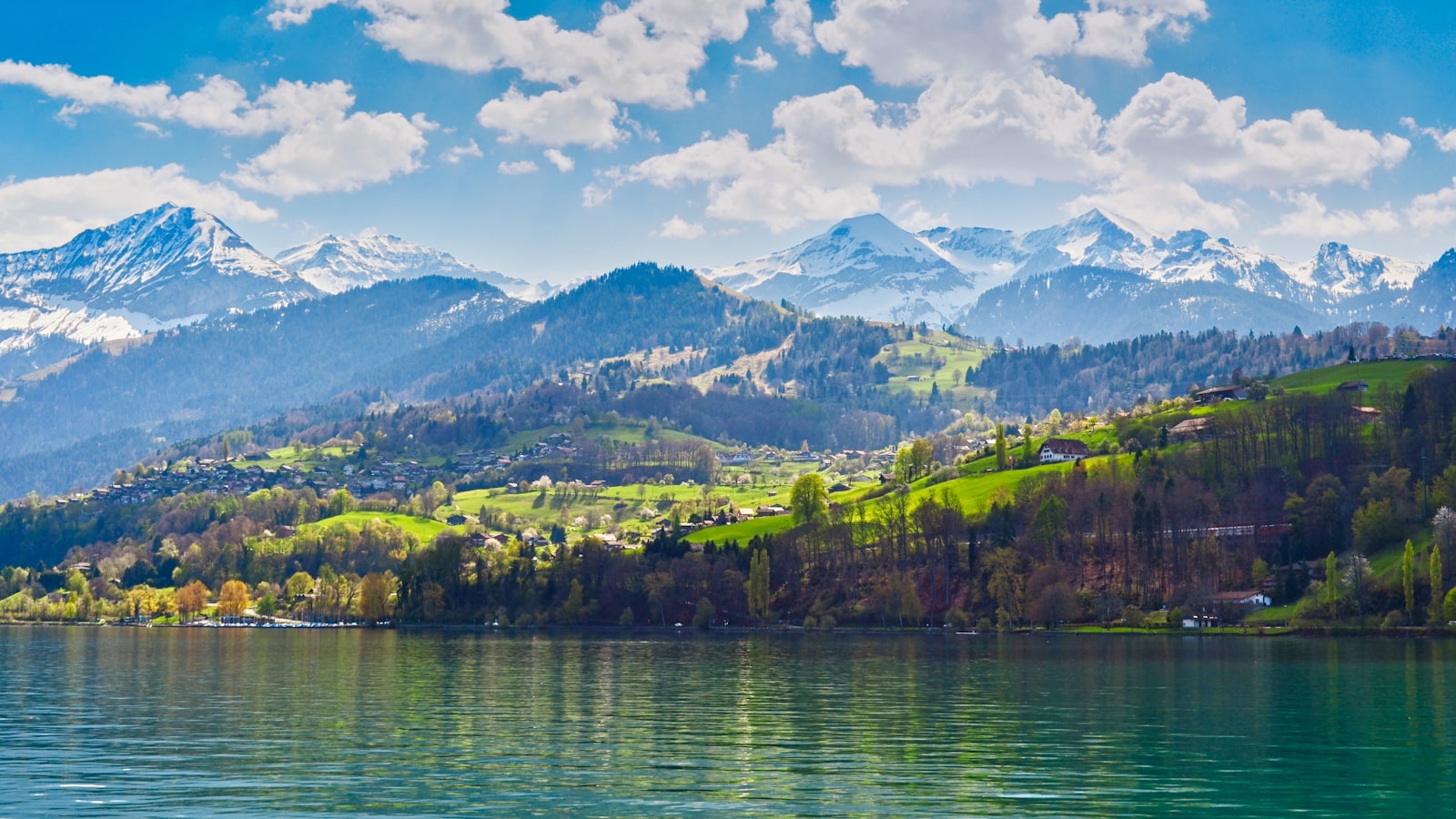
Switzerland's adventure capital. Two turquoise lakes, the Jungfrau peaks, and adrenaline in every direction.
- Best time to visit: June-September
- Daily budget (budget traveller): $150 to $350 USD
- Ideal trip length: 3 to 4 days
Interlaken sits on a flat valley floor between two brilliant turquoise lakes, Thun and Brienz, with the snow-capped Eiger, Mönch and Jungfrau towering above. It's Switzerland's adventure hub, where paragliders drift over the town, cogwheel trains climb to alpine villages, and boats cruise the lakes. Joy Plus organises your mountain excursions, hikes and adrenaline activities around the train timetables and weather windows so you maximise the clear-sky views.
Interlaken means 'between the lakes', and the town sits on the flat delta of the Aare at 570m, wedged between turquoise Thun and Brienz. Walk to the Höhematte meadow at 9am and you get the postcard: the Jungfrau filling the gap at the end of the lawn, paragliders landing at your feet, a Coop sandwich in your hand. The town itself is pleasant but built for visitors, with watch shops, Swiss Army knife windows and a lot of fondue. Treat it as a base. Its trains put you at glacier level in about 90 minutes, and that is the real reason to come.
Switzerland is expensive, and Interlaken is the expensive part of Switzerland. A Jungfraujoch return from Interlaken Ost is around CHF 240, a dorm bed in July can hit CHF 70, and a fondue is CHF 35 before the wine. The good news is that the costs are predictable and beatable. A Swiss Half Fare Card (CHF 150 for a month) halves most trains, boats and lifts. Supermarket picnics (Coop, Migros) cost CHF 8 instead of CHF 28. Sleeping in Wilderswil, Unterseen or Lauterbrunnen saves 20 to 30 percent. The hostels also run the most social adventure scene in the Alps, so solo travellers rarely pay for company.
The one rule is that weather decides everything. A CHF 240 ticket to a cloud is a bad day, so build the trip around forecast windows rather than a fixed order. Stay at least four nights, pick one hero mountain day (Jungfraujoch or Schilthorn), one adventure day, one lake day and keep a spare day for sun. Check the MeteoSwiss app and the live webcams at jungfrau.ch the night before, and buy lift tickets the same morning. If the valley is grey, higher lifts sometimes break through above the cloud, so ask before you cancel.
How many days in Interlaken?
For Interlaken, we recommend 3 to 4 days. With more time, add a day trip to Mürren and Schilthorn or Bern.
| Trip length | What you'll see | Itinerary |
|---|---|---|
| 2 days | Höhematte and Harder Kulm sunset; Jungfraujoch, the big mountain day | Interlaken in 2 days |
| 3 days · Recommended | Adds: Lauterbrunnen valley and waterfalls | Interlaken in 3 days |
| 4 days · Recommended | Adds: Grindelwald-First and Bachalpsee | Interlaken in 4 days |
| 5 days | Adds: Adventure day | Interlaken in 5 days |
| 7 days | Adds: Lake Brienz, Giessbach and Iseltwald; Unterseen | Interlaken in 7 days |
Interlaken itinerary
Arrive, Höhematte and Harder Kulm sunset
Morning: Land at Zurich (ZRH), train via Bern to Interlaken Ost (about 2h20). Drop bags, coffee and a pastry at Schuh on the Höheweg.
Afternoon: Walk the Höheweg to the Höhematte meadow, then cross the Aare into Unterseen for its timber old town and river views.
Evening: Funicular up Harder Kulm in late afternoon for the Two Lakes Bridge and sunset (check the last descent). Late fondue at Goldener Anker back in town.
Jungfraujoch, the big mountain day
Morning: Check the webcams at jungfrau.ch and pick your clearest day. Take an early train from Interlaken Ost (the Good Morning ticket saves about CHF 30). Route up via Lauterbrunnen and Kleine Scheidegg.
Afternoon: At 3,454m: Sphinx observation deck, Ice Palace, the Plateau and the Aletsch Glacier. Move slowly and drink water. Return via Grindelwald and stop at Kleine Scheidegg for rösti under the Eiger.
Evening: Beer and a rösti at Hüsi Bierhaus. Early bed, altitude and 6am starts catch up.
Lauterbrunnen valley and waterfalls
Morning: Train from Interlaken Ost to Lauterbrunnen (20 min, about CHF 8). Walk to Staubbach Falls (297m) and the valley floor.
Afternoon: Bus 141 to Trümmelbach Falls, glacier waterfalls inside the mountain (about CHF 17, April to November). Walk the valley path back to Lauterbrunnen past Staubbach.
Evening: Train back to Interlaken. Coop picnic with a Rugenbräu by the Aare in Unterseen.
Grindelwald-First and Bachalpsee
Morning: Train from Interlaken Ost to Grindelwald (about 35 min). Take the gondola to First (about CHF 70 return) and walk the Cliff Walk.
Afternoon: Hike 50 min to Bachalpsee (2,265m) for the Schreckhorn reflection. Lunch at Berghaus First, then First Flyer zipline (about CHF 33) or hike down.
Evening: Train back, fondue or Älplermagronen at Goldener Anker.
Adventure day
Morning: Tandem paraglide with Skywings Paragliding Interlaken (CHF 190-230). Landing is on the Höhematte, look for it from the ground first.
Afternoon: Canyoning in the Saxetbach gorge with Alpin Raft or Outdoor Interlaken (CHF 130-170).
Evening: Pints at the Balmers Bar with the groups from the day. Compare photos.
Lake Brienz, Giessbach and Iseltwald
Morning: BLS boat from Interlaken Ost to Giessbach (about 1h, included in Swiss Travel Pass). Ride the historic Giessbach funicular (April to October only) and walk beside the 14 stepped falls.
Afternoon: Boat on to Iseltwald for the lakeside jetty and Seeburg Park. Swim if it is warm.
Evening: Boat or train back, dinner on the Höheweg, ice cream by the Höhematte.
Slow morning, Unterseen, depart
Morning: Coffee at Schuh and a last walk across the Aare through Unterseen.
Afternoon: Buy chocolate and cheese at Coop or Migros for the trip home.
Evening: Train to Zurich airport via Bern (leave 3 to 4 hours before your flight).
Best neighbourhoods
- Interlaken West & East: The two halves of town with stations, hotels and the central Höhematte park.
- Höhematte: The huge open meadow in the centre where paragliders land with peak views.
- Lauterbrunnen: The famous valley of waterfalls and cliffs, a short train ride away.
- Grindelwald: An alpine resort village beneath the Eiger, gateway to First and the Jungfrau.
- Wilderswil: A quiet village at the foot of the Schynige Platte railway.
Must-do experiences
- Take the train to Jungfraujoch: The 'Top of Europe', the highest railway station on the continent.
- Paraglide over the valley: Soar above Interlaken with the lakes and peaks all around.
- Visit Lauterbrunnen valley: Staubbach Falls and cliffs that inspired Tolkien's Rivendell.
- Ride to Grindelwald-First: Cliff walks, the First Flyer zipline and trails beneath the Eiger.
- Cruise Lake Brienz or Thun: Turquoise water, lakeside castles and storybook villages.
- Hike Schynige Platte to First: A classic alpine ridge walk with panoramic views.
Hidden gems
- The car-free clifftop village of Mürren, with views straight onto the Jungfrau.
- Lake Brienz's Iseltwald, a tiny lakeside hamlet with photogenic jetties.
- The Harder Kulm funicular for sunset views over both lakes.
- The lesser-known Saxeten valley for quiet meadow hikes.
Daily budget
- Accommodation: budget CHF 40-70 / night (hostel dorm), mid-range CHF 200-320 (boutique double), splurge CHF 550+ (Victoria-Jungfrau Grand Hotel & Spa). Wilderswil, Unterseen and Lauterbrunnen run 20 to 30% cheaper than central Interlaken. Ask for the Guest Card, it usually includes free local buses and discounts.
- Food: budget CHF 30-45 / day (Coop and Migros picnics, one hot meal), mid-range CHF 70-100 (café lunch, fondue dinner), splurge CHF 180+ (grand-hotel tasting menu). Migros and Coop restaurants serve mains for CHF 14-18. Fondue is CHF 32-38 pp, rösti CHF 22-28. Tap and fountain water is free and excellent.
- Transport: budget CHF 20-40 / day (Half Fare Card CHF 150 once, short rail hops), mid-range CHF 60-100 (Swiss Travel Pass or Berner Oberland Pass, one cable car), splurge CHF 250+ (Jungfraujoch return, first class, private transfers). Interlaken West to Ost is 5 min by train (by replacement bus during works) or a 30 min walk along the Höheweg. Skip the car, parking is pricey and the trains are better.
- Activities: budget CHF 0-30 (Höhematte, lakeside walks, Staubbach Falls), mid-range CHF 100-250 (First, or a paragliding flight at CHF 190-230), splurge CHF 450+ (skydive, or Jungfraujoch plus canyoning). Walking, swimming spots, waterfall viewpoints and most village paths are free. Trümmelbach Falls is about CHF 17, First gondola about CHF 70 return.
- Drinks & nightlife: budget CHF 10-15 (Rugenbräu from Coop or one hostel bar pint), mid-range CHF 30-50 (Hüsi Bierhaus or Balmers Bar session), splurge CHF 80+ (Victoria-Jungfrau cocktails, Casino Kursaal). A 0.5L beer in a bar is CHF 7-9. Interlaken goes to bed early, most places wind down around midnight.
Where to stay
- Social hostel in Interlaken Ost / Matten (CHF 40-70 / night): Balmers Hostel, the long-running backpacker hub with a bar, group activities and a short walk to Ost station. Backpackers Villa Sonnenhof is the quieter alternative.
- Boutique hotel in Höheweg / Höhematte (CHF 220-350 / night): Hotel Interlaken (dating from 1323) or Hotel Lötschberg, steps from the meadow and both stations. Ask for a room with a Jungfrau view.
- Apartment in Unterseen or Wilderswil (CHF 150-260 / night): Holiday apartments with kitchens, a river or mountain view and the Schynige Platte railway at your door in Wilderswil. Best for 4+ nights.
- Splurge in Höheweg (CHF 550-1,100 / night): Victoria-Jungfrau Grand Hotel & Spa, Interlaken's grand old dame with a spa, restaurants and Jungfrau views from the garden.
What to eat
- Swiss cheese fondue and raclette in a mountain chalet
- Älplermagronen, the alpine macaroni with apple sauce
- Rösti topped with cheese, egg or speck
- Lake fish from Brienz or Thun, freshly grilled
Day trips
- Mürren and Schilthorn (About 50 min to Mürren, 1h10 to the top): Car-free cliff village facing the Jungfrau, then the 2,970m Piz Gloria revolving restaurant of Bond fame. Stop at Gimmelwald for a quiet walk. Train to Lauterbrunnen, then cable car to Grütschalp and train to Mürren, or bus 141 to Stechelberg and the Schilthornbahn. About CHF 130 return, roughly half with a Swiss Travel Pass or Half Fare Card.
- Bern (About 50 min by train): UNESCO old town with 6km of arcades, the Zytglogge clock tower, Bear Park and Rosengarten viewpoint. In summer, locals float down the Aare river. Direct IC trains from Interlaken Ost every 30 minutes (during works they start at Interlaken West, with a replacement bus from Ost), about CHF 30 each way, half with a Half Fare Card.
- Thun and Oberhofen (25 min by train, or 2h by boat): Thun Castle and its two-level old town street, then Oberhofen Castle on the lakeshore. A relaxed day after mountain trips. Train from Interlaken West, or the BLS lake boat from Interlaken West (about CHF 45 one way, included in Swiss Travel Pass).
When to visit
- Spring (April - May): 6-17°C in the valley, rain showers, snow above 1,800m. Crowds: Low to moderate. Waterfalls at full roar and blossom in the valley, but many lifts shut for maintenance and high trails are still snowed in. Jungfraujoch runs all year.
- Summer (June - August): 18-27°C, long days, afternoon thunderstorms. Crowds: Heavy, tour groups and school holidays. Every lift and trail is open. Go mid June or early July before the school break, and start mountain days by 7am to get clear views before cloud builds.
- Autumn (September - October): 8-20°C, crisp clear mornings, first snow above 2,000m. Crowds: Moderate, drops sharply after the Jungfrau Marathon (mid September). The locals' favourite. Golden larches, stable high-pressure weather and cheaper rooms. Check lift closing dates from mid October.
- Winter (November - March): -3 to 5°C in town, deep snow above. Crowds: Low in town, busy at ski resorts at Christmas and February. Ski Wengen, Grindelwald and Mürren, and catch the Lauberhorn races in January. Trümmelbach Falls and many summer activities close, but Jungfraujoch is stunning and hotels are cheaper.
Entry rules for your passport
Visa rules for Switzerland depend on the passport you travel on. Check the official source before you book: European Commission: Schengen visa policy
Getting there
Zurich Airport (ZRH) is the best gateway. Trains run via Bern to Interlaken Ost in about 2h20, around CHF 75 full fare, half with a Half Fare Card, and Super Saver fares on the SBB app can undercut it if booked ahead. Geneva (GVA) is about 3h via Bern. From Bern, trains run to Interlaken West then Ost in about 50 min (during works they end at West, with a replacement bus on to Ost). Get off at West for the town centre and Lake Thun boats, at Ost for the Jungfrau railways, Lake Brienz and Harder Kulm. The scenic Lucerne-Interlaken Express (about 2h, around CHF 35) is a good alternative from central Switzerland. Don't drive. Parking in town is CHF 20-30 a day, a motorway vignette is CHF 40, and the trains reach every attraction.
Border checks: non-EU visitors (other than Swiss, Norwegian, Icelandic, Liechtenstein, Andorran, Monegasque, San Marinese and Vatican citizens, and holders of an EU residence permit or long-stay visa) are registered in the EU's Entry/Exit System (EES) instead of getting a passport stamp. On your first crossing, officers take your photo and/or fingerprints, so allow extra time at passport control. ETIAS, the planned travel authorisation, is not in operation yet, so don't pay any website for one.
Getting around
Interlaken is compact and walkable between its two stations, but the real magic is the famous Swiss mountain railways, cable cars and lake boats. The Jungfrau and Bernese Oberland regions are superbly connected, and travel passes like the Swiss Travel Pass or regional Jungfrau passes can save money on the frequent but pricey trips. Trains run on time, so plan connections precisely. A car is unnecessary and often less convenient than the rail network.
Safety
Interlaken is extremely safe, with the main risks tied to its adventure activities, paragliding, canyoning, skydiving and hiking, so always use reputable operators and respect mountain weather. High-altitude excursions like Jungfraujoch can cause mild altitude effects, so take it easy up top. Alpine weather changes fast, so carry layers and check forecasts. Costs are very high, so budget carefully. Solo travellers, including women, feel completely comfortable here.
Solo travel tips
- Picnic on the Höhematte: Grab a Coop or Migros sandwich and eat on the meadow. Paragliders land metres away, and plenty of other solo travellers do the same.
- Hostel pick: Balmers Hostel or Backpackers Villa Sonnenhof: Balmers is the social one, with a bar and group activities. Sonnenhof is quieter and homelier. Both sell adventure packages and share weather updates daily.
- Book group adventures: Paragliding, canyoning and rafting price the same for solos and you instantly have a group. Many operators offer hostel pickup.
- Check the webcam before you buy: Use the MeteoSwiss app and jungfrau.ch webcams. Buy lift tickets the morning of, and keep one flexible day for the best forecast.
- Hike smart: Yellow signs are easy walks, white-red-white are alpine trails. Tell someone your route, carry offline maps, and save 144 (ambulance) and 1414 (Rega, mountain rescue). The general emergency number is 112.
- Solo female travellers: Interlaken is very safe at night. Check the SBB app for last trains, late departures from Lauterbrunnen and Grindelwald run out earlier than you expect. Stay in hostel rooms near the stations.
Cultural etiquette
- Say 'Grüezi' when entering shops and to hikers on the trail. A greeting matters more than perfect German.
- Shops are mostly closed on Sundays. Buy supplies on Saturday, though station Coop and Migros outlets stay open.
- Keep your distance from cows, especially mothers with calves. Don't touch electric fences and always close pasture gates behind you.
- Uphill hikers have the right of way. Step aside and let them pass.
- Trains and cable cars leave on time. Be early rather than sprinting.
- Service is included in prices. Round up or leave CHF 2-5 at sit-down meals, and CHF 10-20 for a good adventure guide.
- Keep voices down on public transport, and take your litter with you. Swiss towns are spotless and expect it to stay that way.
Frequently asked questions
How many days do you need in Interlaken?
Three to four days is ideal. That gives you time for a major mountain excursion such as Jungfraujoch, a day exploring Lauterbrunnen and Grindelwald, an adventure activity like paragliding, and a lake cruise or a scenic hike. Because the best mountain trips depend on clear weather, having a few days gives you flexibility to pick the sunniest days. If you only want a taste, two days can cover the highlights at a faster pace.
Is Interlaken good for solo travellers?
Yes, it's one of the best spots in the Alps for solo travel. It's extremely safe, easy to navigate by train, and packed with adventure activities and hostels that make it social and easy to meet other travellers. Group activities like paragliding, canyoning and guided hikes are great for connecting with people. The main consideration is cost, as Switzerland is expensive. Solo women travellers feel completely comfortable here, day and night.
When is the best time to visit Interlaken?
June to September is best for hiking, lake activities and clear mountain views, with long days and green alpine meadows. July and August are busiest and warmest. Late spring and early autumn are quieter and beautiful, though higher trails may still have snow or start to close. Winter (December-March) transforms the region into a ski destination, with nearby resorts like Grindelwald and Wengen, though some summer activities pause.
Is Jungfraujoch worth the trip and cost?
For many visitors, yes, on a clear day. Jungfraujoch, the 'Top of Europe', is the highest railway station on the continent, with glaciers, an ice palace and stunning high-alpine views. It is expensive and can be crowded, and views are poor in bad weather, so it's worth checking the forecast and the live webcams before committing. If the summit is clouded over, alternatives like Schilthorn, First or Schynige Platte offer spectacular views for less. In high season, from May to October, book a seat reservation (CHF 10 return) ahead.
Is Interlaken expensive?
Yes, Switzerland is one of the most expensive countries in Europe, and Interlaken's mountain excursions, restaurants and hotels reflect that. You can manage costs by using travel passes like the Swiss Travel Pass or Jungfrau regional passes, staying in hostels or nearby villages, self-catering some meals, and choosing cheaper viewpoints over the priciest summit trips. Booking trains and activities in advance and travelling in shoulder season also helps reduce the bill.
What adventure activities can you do in Interlaken?
Interlaken is Switzerland's adventure capital. Popular activities include paragliding over the valley, skydiving, canyoning, white-water rafting, bungee jumping, and ziplining at Grindelwald-First. In winter there's world-class skiing and snowboarding nearby. There are also gentler options like lake cruises, e-biking and countless hiking trails for all levels. Always book with reputable, licensed operators, as the activities are run to high safety standards but still carry inherent risks.
How do you get to Interlaken?
Interlaken is well connected by Switzerland's superb rail network, with direct or easy connections from Zurich and Geneva airports in around two to three hours, and from Bern in under an hour. The town has two stations, Interlaken West and Interlaken Ost, the latter being the hub for mountain railways. Trains are punctual and scenic, so there's no need to drive. The Golden Pass and other scenic rail routes also pass through the region.
More about Interlaken
Tours and activities in Interlaken | Interlaken in 2 days | Interlaken in 3 days | Interlaken in 4 days | Interlaken in 5 days | Interlaken in 7 days
Can't decide? Compare Interlaken with...
- Lucerne vs Interlaken
- Interlaken vs Grindelwald
- Interlaken vs Lauterbrunnen
- Chamonix vs Interlaken
- Dolomites vs Interlaken
- Innsbruck vs Interlaken
- Interlaken vs Zermatt
Joy Plus home | Destinations | Itineraries | Activities | Flights | Budget planner | Calendar | Map | Blog | Lifetime access