Destinations / Asia
Jeonju, South Korea travel guide
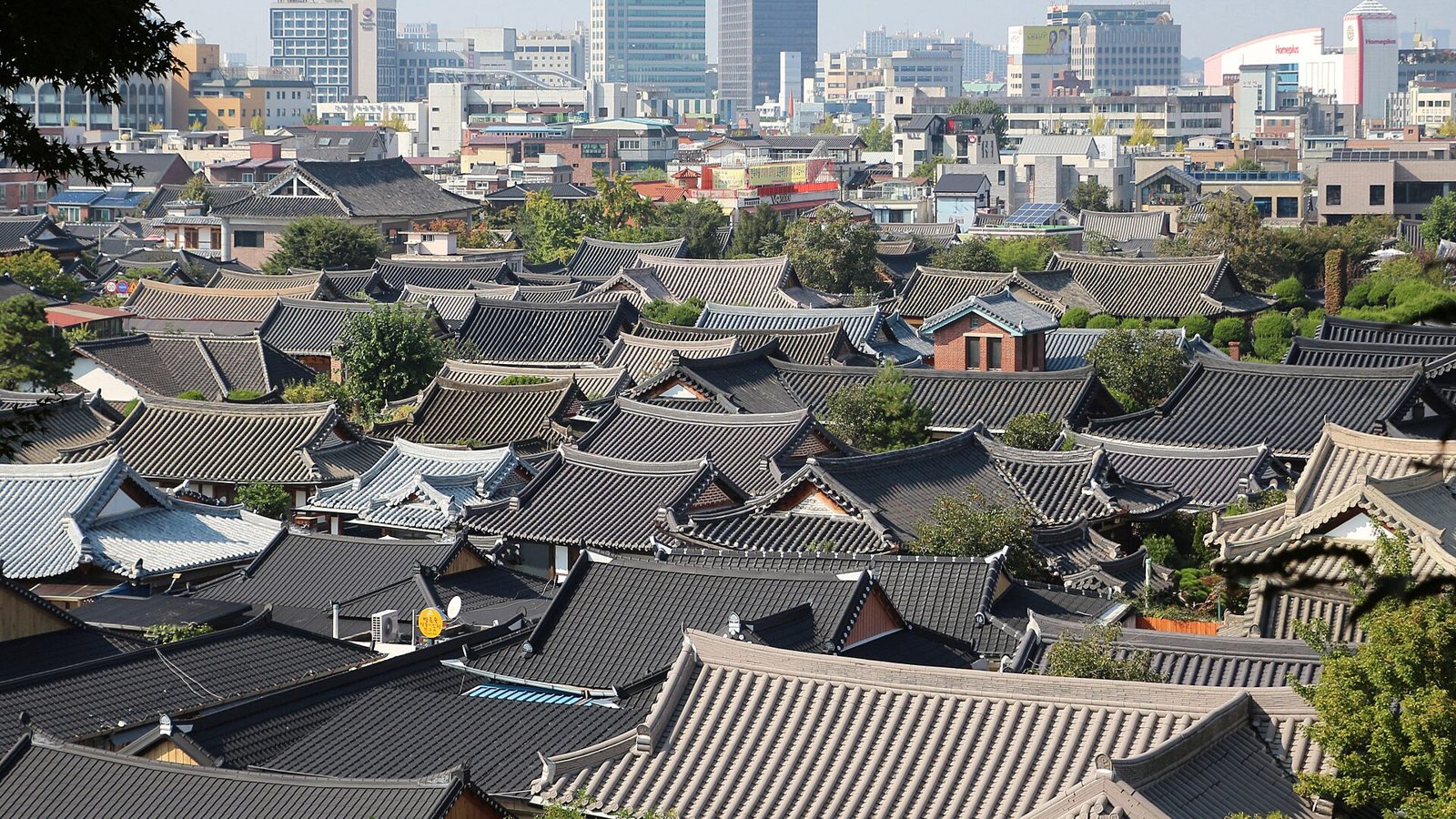
A food-loving provincial capital in South Korea's south-west, built around a village of tiled-roof hanok houses. You stroll the lanes past a royal portrait shrine, eat bibimbap where it was made famous and spend your evenings over kettles of makgeolli that keep arriving with more side dishes.
- Best time to visit: April to May and October to early November
- Daily budget (budget traveller): $55 to $180 USD
- Ideal trip length: 3 to 5 days
Jeonju is the capital of Jeonbuk State, about 1 hour 40 minutes south of Seoul by KTX. It is a city of around 640,000 people, but most visitors come for one compact corner of it: the Hanok Village, a neighbourhood of more than 700 traditional wooden houses with curved tiled roofs. The Joseon dynasty traced its roots to Jeonju, and you can still see that history at Gyeonggijeon Shrine, which holds the portrait of the dynasty's founder, at the red-brick Jeondong Cathedral and at Pungnammun, the old southern gate. The main reason people stay longer, though, is the food. Jeonju is a UNESCO City of Gastronomy and the home of Korea's best-known bibimbap, as well as bean-sprout soup for breakfast, a busy weekend night market and makgeolli alleys where each kettle of rice wine comes with a spread of free dishes. The Hanok Village gets very crowded at weekends, and the main street can feel like a theme park full of hanbok rental shops and snack stalls. Get up early or walk a few lanes back and it turns quiet again. Cheap buses, free sights and good-value food make Jeonju an easy, sociable stop for solo travellers between Seoul and the south coast.
Jeonju has a reputation in Korea that is out of proportion to its size. It is a mid-sized provincial capital, but Koreans know it as the home of the Joseon royal family, the centre of traditional hanji paper-making and above all the country's food capital. The Hanok Village is the heart of a visit. It has more than 700 tiled-roof houses on a neat grid of lanes, many now guesthouses, tea rooms and craft shops. At midday on a weekend, the main street is crowded with groups in rented hanbok and queues at snack stalls. At 8am, or after the day trippers leave, it becomes a quiet residential neighbourhood again. Stay a few nights and you get both sides: the shrine and the cathedral in the morning, soup and noodles for lunch, the view from Omokdae at sunset and rice wine in a makgeolli alley at night.
Getting here is easy. KTX trains from Yongsan Station in Seoul take about 1 hour 30 minutes to 1 hour 50 minutes, and slower Mugunghwa trains are cheaper. Express and intercity buses link Jeonju with Seoul, Incheon Airport, Busan and the rest of the south-west. Once you are here, the old town is small enough to walk, and city buses cost 1,650 won with a T-money card. Stay in the Hanok Village for the atmosphere, near Pungnammun for the night market, or around Gaeksa for cheaper beds and a more everyday city feel. Use local and intercity buses for Deokjin Park, Moaksan, Maisan and Gunsan.
Timing matters more than you might expect. Spring and autumn are the best seasons, with mild weather, cherry blossom in April and golden ginkgo trees in late October. The film festival brings crowds in late April and early May, and October brings food and makgeolli events. Summer is hot and sticky, with monsoon rain in July, though the lotus flowers at Deokjin Park are a highlight. Winter is cold but quiet, and hot soup suddenly makes sense. Plan at least one Friday or Saturday night for the market. Jeonju is safe, friendly and slower than Seoul, and it rewards anyone who comes hungry.
Jeonju itinerary
Arrive and find your feet
Morning: Take a morning KTX from Yongsan (about 1.5 to 2 hours). Leave your bag at your guesthouse and get a T-money card at a convenience store.
Afternoon: Have a bibimbap lunch, then stroll the Hanok Village lanes away from Taejo-ro. Visit Jeondong Cathedral and walk to Pungnammun.
Evening: Climb Omokdae for sunset over the roofs. If it is a Friday or Saturday, eat dinner at the Nambu Market night market.
Shrine, school and the stream
Morning: Be at Gyeonggijeon at 9am (3,000 won, bring cash). Join a free English tour if one is running, and walk through the bamboo grove.
Afternoon: Walk to Jeonju Hyanggyo and its ginkgo trees, then follow the Jeonjucheon stream to Hanbyeokdang. Cross to Seohak-dong Art Village for coffee.
Evening: Take a taxi to Samcheon-dong for a makgeolli alley evening. Share kettles with friends from your hostel.
Murals, markets and a lake
Morning: Have a bean-sprout soup breakfast at Nambu Market, then look around the early morning market by the stream.
Afternoon: Cross the footbridge to Jaman Mural Village and wander its painted lanes. Then walk to Gaeksa and Film Street for shops and cafés.
Evening: Take a bus to Deokjin Park for a walk around the lake at dusk. Have dinner in the city centre.
Hike Moaksan
Morning: Take city bus 79 to Geumsansa at the foot of Moaksan and visit the temple before the crowds arrive.
Afternoon: Hike towards the 793m summit for views over the Jeolla plains, or take a shorter loop if you prefer. Pack water and snacks.
Evening: Bus back to Jeonju. Have a hot bowl of kalguksu and an early night.
Maisan's stone towers
Morning: Take an intercity bus to Jinan (about 1 hour), then a local bus or taxi to the south entrance of Maisan Provincial Park.
Afternoon: Walk past the lake to Tapsa, where a hermit stacked dozens of stone towers by hand. Climb between the two horse-ear peaks if your legs allow.
Evening: Head back to Jeonju. Do a last round of Hanok Village snacks or Youth Mall bars if it is the weekend.
A day in Gunsan
Morning: Take an intercity bus to Gunsan (about 1 hour). Start with bread at Lee Seong-dang, often called Korea's oldest bakery.
Afternoon: Explore the old port's 1930s buildings, the Gunsan Modern History Museum, Hirotsu House and Dongguksa temple.
Evening: Bus back to Jeonju for a farewell bibimbap or a long Korean set dinner.
Slow morning and depart
Morning: Walk the Hanok Village one last time at 8am, when it is quiet. Have coffee in a hanok café.
Afternoon: Buy PNB choco pies or hanji paper for home, then catch a KTX or bus onwards. Book weekend trains a few days ahead.
Evening: Arrive in Seoul, or carry on south to Yeosu, Gwangju or Busan.
Best neighbourhoods
- Hanok Village: The traditional quarter of tiled-roof houses, with Gyeonggijeon, the cathedral, Omokdae and most of the hanok guesthouses. The main street of Taejo-ro is packed with snack stalls and hanbok shops, but the side lanes are calm. Stay here for the atmosphere, and expect thin walls, floor mattresses and early starts as the day trippers arrive.
- Jeondong and Pungnammun: The western edge of the old town, around the cathedral, the old southern gate and Nambu Market. It is handy for the night market, cheap soup at the market and buses from the station. Small guesthouses and motels here cost a little less than in the heart of the Hanok Village, and everything is within a 10-minute walk.
- Gaeksa and Film Street: Jeonju's old downtown, about 10 to 15 minutes' walk north-west of the Hanok Village. It is full of shops, cafés, cheap restaurants and the cinemas used by the film festival each spring. You will find small hostels and business hotels here, and it feels like a normal Korean city rather than a heritage zone.
- Jeonju Station: The KTX station sits about 4km north-east of the old town, in a newer area with chain hotels, convenience stores and a few restaurants. It is practical if you arrive late or leave early, but you will need a bus or taxi into the centre each day. There is little to see nearby.
- Seobu Sinsigaji: The newer west side of the city, with apartment towers, bars, karaoke rooms and a younger local crowd. Business hotels here are often good value, and the nightlife is livelier than around the Hanok Village. It is a 15-minute taxi or bus ride from the old town.
Must-do experiences
- Walk the Hanok Village early: Arrive on Taejo-ro before 9am, when the lanes are almost empty and the light falls softly on the tiled roofs. Wander away from the main street towards the river and the quieter residential lanes. Renting a hanbok costs from about 15,000 to 30,000 won for a few hours if you want to dress up.
- Visit Gyeonggijeon Shrine: Built in 1410 and rebuilt in 1614, the shrine holds the portrait of King Taejo, who founded the Joseon dynasty. Adults pay 3,000 won (about $2), so carry some cash. It is open from 9am to 7pm from March to October and until 6pm in winter. Join a free English tour if one is running, and do not miss the bamboo grove or the Royal Portrait Museum.
- See Jeondong Cathedral and Pungnammun: The red-brick Romanesque cathedral, finished in 1914, stands where Korea's first Catholic martyrs were executed. It is free, but keep quiet if a service is on. Then walk a few minutes west to Pungnammun, the old city's only surviving gate, which is lit up nicely after dark.
- Climb Omokdae and cross to Jaman Mural Village: Omokdae is a small hill on the east side of the village where Yi Seong-gye celebrated a victory before becoming king. The short climb gives the classic view over the roofs. Cross the footbridge to Jaman Mural Village, a hillside of painted houses and small cafés. Both are free.
- Eat your way through Nambu Market at night: On Friday and Saturday evenings, from 5pm until around midnight, Nambu Market fills with food stalls selling skewers, pancakes, dumplings and sweets. Go upstairs to the Youth Mall for small shops and bars. Come back on another morning for a bowl of bean-sprout soup at the market.
- Spend an evening in a makgeolli alley: Head to Samcheon-dong or Seosin-dong, where makgeolli houses serve rice wine by the kettle. Each kettle, roughly 20,000 to 30,000 won, comes with a spread of side dishes that gets bigger with every round. Go with people from your hostel, as the portions are made for sharing.
- Walk around Deokjin Park: This large lake park in the north of the city is free, and it is a favourite with locals for evening strolls. In July and August the pond is covered in lotus flowers. Walk across the suspension bridge and around the shore, then catch a bus back to the old town.
Hidden gems
- Jeonju Hyanggyo, a Confucian school on the southern edge of the Hanok Village, where huge old ginkgo trees turn bright yellow in late October and early November
- Seohak-dong Art Village across the river, a quiet neighbourhood of small galleries and artists' studios that few tour groups find
- Hanbyeokdang, a small pavilion perched on the rocks above the Jeonjucheon stream, best reached on the riverside path at sunset
- The early morning market along the Jeonjucheon stream, where farmers set out vegetables from around 4am to 9am
- The bamboo grove and the old royal archive (Jeonju Sago) in the back of the Gyeonggijeon grounds, which most visitors rush past
Daily budget
- Accommodation: budget $20-35 / night (hostel dorm or simple guesthouse), mid-range $60-120 (hanok guesthouse room or business hotel), splurge $180+ (Lahan Hotel or a historic hanok stay). Prices rise on Friday and Saturday nights, during the film festival and over holidays. Many hanok rooms have floor mattresses and shared bathrooms, so read the listing carefully.
- Food: budget $18-28 / day (gukbap breakfast, noodles, market snacks), mid-range $35-55 (bibimbap lunch and a sit-down dinner), splurge $80+ (Korean set-course meal, hanjeongsik). Kongnamul gukbap is about 8,000-10,000 won and bibimbap about 15,000-20,000 won. Water and side dishes are free. Prices are rough guides.
- Transport: budget $0-5 / day (walking and city buses), mid-range $8-20 (buses plus taxis), splurge $40+ (taxis to the mountains or a private driver). City buses cost 1,650 won with a T-money card. The KTX from Seoul is about 34,400 won each way, and intercity buses to Gunsan or Jinan cost a few thousand won.
- Activities: budget $0-5 / day (Hanok Village, cathedral, Omokdae, Gyeonggijeon at 3,000 won), mid-range $10-25 (hanbok rental, museums, Maisan entry), splurge $40+ (cooking classes, hanji crafts, guided tours). Most sights in the old town are free. Gyeonggijeon is 3,000 won and often cash only. Hanbok rental runs from about 15,000 to 30,000 won for a few hours.
- Drinks & nightlife: budget $8-15 (convenience-store beer or a share of a makgeolli kettle), mid-range $20-35 (a few kettles in a makgeolli alley), splurge $50+ (cocktail bars in Seobu Sinsigaji). A kettle of makgeolli with side dishes costs roughly 20,000-30,000 won and is meant for sharing. Coffee in the Hanok Village costs about 4,500-6,500 won.
Where to stay
- Social hostel in Gaeksa and Film Street ($18-30 / night (dorm)): Small hostels around the old downtown offer cheap dorms and common rooms, with cafés and restaurants on the doorstep. The Hanok Village is a 10 to 15-minute walk away, and buses run to the station.
- Hanok guesthouse in Hanok Village ($45-100 / night): Sleep on a heated ondol floor in a traditional house, often around a small courtyard. Rooms are simple, walls are thin and bathrooms are sometimes shared, but waking up among the tiled roofs is the point.
- Historic hanok in Hanok Village ($120-220 / night): Older family houses such as Hagindang, built in the early 20th century, offer stays and tea in fine, well-kept rooms. They are quieter and more atmospheric than the standard guesthouses. Book ahead for weekends.
- Splurge in Edge of the Hanok Village, near Omokdae ($150-280 / night): Lahan Hotel Jeonju is a modern hotel with proper beds, good showers and upper-floor rooms looking over the hanok roofs. You get comfort without leaving the old town.
What to eat
- Jeonju bibimbap: rice topped with vegetables, beef and egg in a brass bowl, about 15,000 to 20,000 won at long-running places such as Gajok Hoegwan or Hankookjib
- Kongnamul gukbap: spicy bean-sprout and rice soup, the local hangover breakfast, about 8,000 to 10,000 won at Sambaekjip near Gaeksa or Hyundaiok in Nambu Market
- Makgeolli with side dishes: a kettle of rice wine in Samcheon-dong or Seosin-dong, with free dishes that multiply with each round
- Kalguksu: hand-cut noodle soup at Veteran in the Hanok Village, a cheap, filling lunch that locals have queued for over decades
- PNB choco pie: the chocolate-coated bakery pie from Pungnyeon Bakery, about 2,300 won each and a popular gift to take home
- Night market snacks: skewers, mandu, hotteok and fried treats at Nambu Market on Friday and Saturday evenings
Day trips
- Moaksan and Geumsansa (About 25km south-west of Jeonju, around 1 hour by city bus): Moaksan is a 793m mountain with views over the Jeolla plains and good autumn colour. Geumsansa, a large Buddhist temple at its foot, has a rare three-storey wooden hall. Hike the full summit route or stick to the temple and the lower trails. Take city bus 79 to Geumsansa. Buses also reach the Daewonsa side of the mountain in Wanju. Check routes and return times on Kakao Map, and start early in the short winter days.
- Maisan Provincial Park (About 40km east of Jeonju, near the town of Jinan): Two strange peaks shaped like a horse's ears rise above Tapsa, a temple surrounded by dozens of stone towers that a hermit stacked by hand. It is especially pretty with spring cherry blossom and autumn leaves. Take an intercity bus from Jeonju to Jinan (about 1 hour), then a local bus or taxi to the south entrance. Expect a small entry fee of a few thousand won.
- Gunsan (About 50km north-west of Jeonju, around 1 hour by bus): An old port town with the best-preserved 1930s Japanese-era streets in Korea. Highlights include Lee Seong-dang bakery, the Modern History Museum, Hirotsu House and Dongguksa temple. It makes a good contrast with Jeonju's hanok. Intercity buses leave regularly from the Jeonju Intercity Bus Terminal and cost a few thousand won. The old town is walkable from Gunsan's intercity terminal, or a short taxi ride away.
When to visit
- Spring (April - May): 12-24°C, mild and mostly dry, with occasional yellow dust days. Crowds: Busy at weekends, very busy during the film festival in late April and early May. One of the two best times. Cherry blossom in early April, comfortable walking weather and the film festival. Book rooms early for festival dates.
- Summer (June - August): 24-32°C, hot and humid, monsoon rain from late June into July. Crowds: Moderate, busy during Korean school holidays in late July and August. Sticky and sometimes wet, but the lotus flowers at Deokjin Park are at their best. Go out early and late, and spend the hot afternoons in cafés and museums.
- Autumn (September - November): September around 20-27°C, falling to about 5-15°C by November. Crowds: Busy in October, especially at weekends and during Chuseok. The local favourite. Clear skies, golden ginkgo trees at the Hyanggyo and colourful leaves on Moaksan. Avoid the Chuseok holiday week if you can, as transport sells out.
- Winter (December - March): -4 to 7°C, dry and cold, with occasional snow. Crowds: Quiet except over New Year and Seollal. Cheap and peaceful, and the hanok roofs look lovely under snow. Gyeonggijeon closes at 6pm, so plan around the short days and pack warm layers.
Entry rules for your passport
Visa rules for South Korea depend on the passport you travel on. Check the official source before you book: Korea's K-ETA site (Ministry of Justice)
Getting there
Jeonju has no commercial airport. Most international travellers fly into Incheon, then take a direct airport bus to Jeonju (about 3.5 to 4 hours) or go into Seoul and catch a train. KTX trains run from Yongsan Station, plus a few from Seoul Station, and take about 1 hour 30 minutes to 1 hour 50 minutes for about 34,400 won (around $24) one way. Yongsan has the most departures, from about 5am until about 10pm. Mugunghwa trains cost about 17,600 won but take around 3.5 hours. Book on the Korail website or app, especially for Friday, Sunday and holiday trains. Express buses from Seoul's Central City Terminal take about 2 hours 40 minutes and are cheaper. Buses from Busan take about 3 hours, and there is no direct KTX from Busan. Jeonju Station is about 4km from the old town, so take bus 119 or a taxi. From the Express Bus Terminal, take bus 79. If you drive, use a car park on the edge of the Hanok Village, as the lanes are narrow and parking inside is very limited.
Getting around
The Hanok Village, the cathedral, Pungnammun, Nambu Market and Omokdae are all within a 15-minute walk of each other, so you will walk most of the time in the centre. Gaeksa and Film Street are another 10 to 15 minutes on foot. Jeonju has no metro, but city buses are cheap and frequent on the main routes. A ride costs 1,650 won with a T-money card or 1,700 won in cash, and transfers within a short time are free with a card. Bus 119 runs from Jeonju Station to the Jeondong Cathedral stop at the Hanok Village, and bus 79 runs from the Express Bus Terminal. Buy and top up a T-money card at any convenience store. Use Naver Map or Kakao Map for bus routes, as Google Maps gives poor directions in Korea. Taxis are plentiful and fairly cheap, with a base fare of around 4,300 won. Most take cards and T-money, and the Kakao T app is the easiest way to call one. Buses also run out to Geumsansa at the foot of Moaksan, while intercity buses go to Jinan for Maisan and to Gunsan.
Safety
Jeonju is very safe, and violent crime against visitors is rare. Lone travellers walk around the Hanok Village and the market late at night without trouble. The main risks are everyday ones. Watch for scooters and delivery bikes on pavements and in narrow lanes, and take care on wet stone paths and steep steps at Omokdae and Jaman. Summer is hot and humid, with heavy monsoon rain from late June into July and the odd typhoon, so carry water and check the weather. Winters are cold and can be icy. Makgeolli tastes light but adds up quickly, so pace yourself. Hiking trails on Moaksan and Maisan are steep in places, so start early and tell someone your route. Tap water is safe, though most locals drink filtered water. Call 112 for the police and 119 for an ambulance or fire. The 1330 tourist hotline offers English help around the clock. Travel insurance with medical cover is essential, as Korean hospitals are excellent but charge visitors.
Solo travel tips
- Plan around Friday or Saturday: The night market runs only on these two evenings, and that is when Jeonju feels most sociable. Arrive by Friday if you can, and do your sightseeing on weekdays when it is quieter.
- Get out early: Day trippers from Seoul arrive mid-morning. Do the Hanok Village lanes, Gyeonggijeon and Omokdae before 10am and you will often have them almost to yourself.
- Eat solo without worry: Gukbap shops, noodle places and market stalls are used to single diners. Some barbecue and stew restaurants require two portions, so save those for when you have company.
- Find a makgeolli crew: Makgeolli houses are built for groups, and the side dishes grow with each kettle. Ask in your hostel common room, as someone is usually keen to go.
- Safety for solo travellers: Jeonju is very safe. The main risks are scooters on pavements, slippery steps and drinking more makgeolli than you planned. Use Kakao T for taxis late at night, and start mountain hikes early.
- Meet people on a tour or in a class: Join a free English tour at Gyeonggijeon, a walking tour of the Hanok Village, or a bibimbap or hanji workshop. Hostels around Gaeksa and the Youth Mall bars are also easy places to chat.
Cultural etiquette
- Greet people with 'annyeonghaseyo' (hello) and a slight bow, and say 'gamsahamnida' (thank you).
- Take your shoes off when you enter a hanok room, a guesthouse or a restaurant with floor seating.
- People still live in the Hanok Village, so keep your voice down, do not open closed gates and ask before photographing residents.
- When drinking with others, pour for them rather than yourself, and receive a glass with two hands, especially from someone older.
- Do not stand chopsticks upright in a bowl of rice, as this is linked to funeral rites.
- Dress modestly and keep quiet inside Jeondong Cathedral and at temples such as Geumsansa.
- Do not tip. It is not expected in restaurants, taxis or hotels and can cause confusion.
Frequently asked questions
How do I get to Jeonju and from the station to my room?
Most people take the KTX from Yongsan Station in Seoul. It takes roughly 1 hour 30 minutes to 1 hour 50 minutes and costs about 34,400 won (around $24) one way. Slower Mugunghwa trains cost about 17,600 won and take around 3.5 hours. Express buses from Seoul's Central City Terminal take about 2 hours 40 minutes and cost less. Jeonju Station is about 4km from the old town. Take bus 119 to the Jeondong Cathedral stop (1,650 won with a T-money card) or a taxi for roughly 8,000 to 10,000 won. From the Express Bus Terminal, take bus 79.
How many days do I need in Jeonju?
One full day covers the Hanok Village, Gyeonggijeon, the cathedral and Omokdae. Two or three nights let you eat properly, catch the weekend night market and spend an evening in a makgeolli alley. Four or five days let you add a hike on Moaksan, the stone towers at Maisan and a day in Gunsan. A week suits slow travellers who want to explore the countryside of Jeonbuk State.
When is the best time to visit Jeonju?
April to May and October to early November are the best times. The weather is mild and dry, and the Hanok Village looks its best with spring blossom or autumn ginkgo leaves. The Jeonju International Film Festival runs for 10 days in late April and early May (29 April to 8 May in 2026), and rooms fill up during it. Summer is hot, humid and wet in the monsoon, while winter is cold but quiet and cheap.
Can I visit Jeonju as a day trip from Seoul?
Yes, with an early KTX you can be in the Hanok Village by mid-morning and back in Seoul by night. You will see the main sights, but you will miss the quiet early mornings, the makgeolli alleys and the night market, which are the best parts. If you can, stay at least one night, ideally on a Friday or Saturday.
When is the Nambu Market night market?
It runs on Friday and Saturday evenings only, from 5pm until around midnight. Stalls start packing up earlier on quiet or rainy nights. The market itself is open during the day all week, with soup shops serving from early morning, and the Youth Mall upstairs has small shops, cafés and bars. Arrive around 6pm to avoid the longest queues.
Is Jeonju safe for solo female travellers?
Yes. Jeonju is one of the easiest places in Korea to travel alone. The old town is busy and well lit in the evenings, and harassment of visitors is uncommon. Take the usual care with drinks in bars, watch out for hidden-camera warnings in public toilets (now rare and widely policed) and use Kakao T for taxis late at night so the trip is logged.
Do people speak English in Jeonju?
Less than in Seoul. Staff in hostels, hotels and many Hanok Village cafés speak some English, but older restaurant owners and bus drivers often do not. Many places use picture menus or ordering kiosks. A translation app such as Papago and a few Korean phrases go a long way, and the 1330 tourist hotline can interpret for you.
What entry rules apply to South Korea in 2026?
Citizens of many countries, including the UK, US, Canada, Australia and most EU states, can visit South Korea visa-free for short stays. Visitors from these countries do not need a K-ETA (electronic travel authorisation) until 31 December 2026, so check whether the exemption has been extended if you travel from January 2027. If you do not have a K-ETA, fill in the online e-Arrival card before you land. Confirm the current rules on the official K-ETA and Korean immigration websites, and check your own government's travel advice.
Tours and activities in Jeonju | Jeonju in 2 days | Jeonju in 3 days | Jeonju in 4 days | Jeonju in 5 days | Jeonju in 7 days
Joy Plus home | Destinations | Itineraries | Activities | Flights | Budget planner | Calendar | Map | Blog | Lifetime access