Jeonju in 4 days
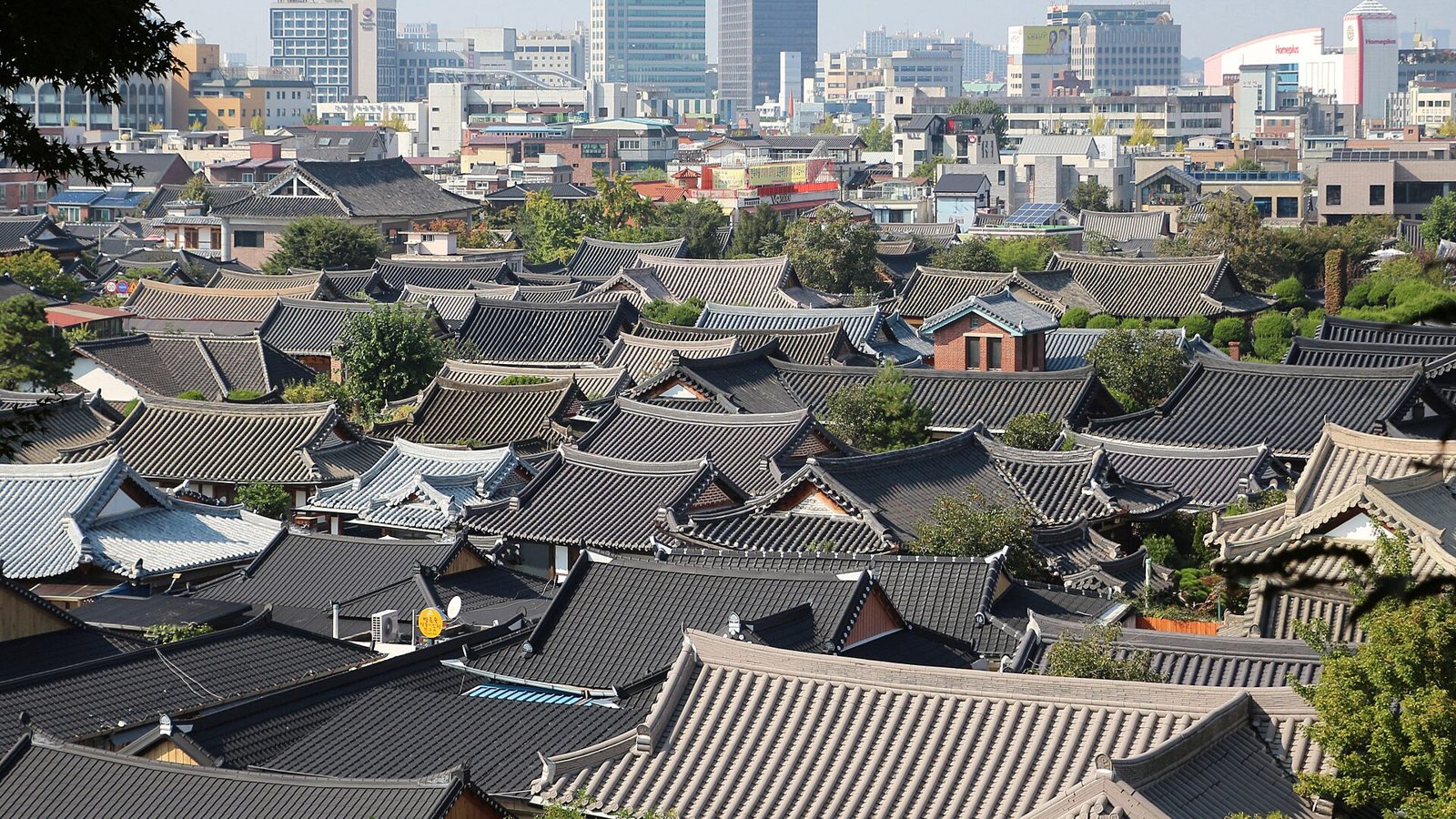
A food-loving provincial capital in South Korea's south-west, built around a village of tiled-roof hanok houses. You stroll the lanes past a royal portrait shrine, eat bibimbap where it was made famous and spend your evenings over kettles of makgeolli that keep arriving with more side dishes. Best time to visit: April to May and October to early November. Daily budget (budget traveller): $55 to $180 USD.
Arrive and find your feet
Morning: Take a morning KTX from Yongsan (about 1.5 to 2 hours). Leave your bag at your guesthouse and get a T-money card at a convenience store.
Afternoon: Have a bibimbap lunch, then stroll the Hanok Village lanes away from Taejo-ro. Visit Jeondong Cathedral and walk to Pungnammun.
Evening: Climb Omokdae for sunset over the roofs. If it is a Friday or Saturday, eat dinner at the Nambu Market night market.
Shrine, school and the stream
Morning: Be at Gyeonggijeon at 9am (3,000 won, bring cash). Join a free English tour if one is running, and walk through the bamboo grove.
Afternoon: Walk to Jeonju Hyanggyo and its ginkgo trees, then follow the Jeonjucheon stream to Hanbyeokdang. Cross to Seohak-dong Art Village for coffee.
Evening: Take a taxi to Samcheon-dong for a makgeolli alley evening. Share kettles with friends from your hostel.
Murals, markets and a lake
Morning: Have a bean-sprout soup breakfast at Nambu Market, then look around the early morning market by the stream.
Afternoon: Cross the footbridge to Jaman Mural Village and wander its painted lanes. Then walk to Gaeksa and Film Street for shops and cafés.
Evening: Take a bus to Deokjin Park for a walk around the lake at dusk. Have dinner in the city centre.
Hike Moaksan
Morning: Take city bus 79 to Geumsansa at the foot of Moaksan and visit the temple before the crowds arrive.
Afternoon: Hike towards the 793m summit for views over the Jeolla plains, or take a shorter loop if you prefer. Pack water and snacks.
Evening: Bus back to Jeonju. Have a hot bowl of kalguksu and an early night.
Heading home: For the airport or station, see Getting there in the full Jeonju guide.
What to eat in Jeonju
- Jeonju bibimbap: rice topped with vegetables, beef and egg in a brass bowl, about 15,000 to 20,000 won at long-running places such as Gajok Hoegwan or Hankookjib
- Kongnamul gukbap: spicy bean-sprout and rice soup, the local hangover breakfast, about 8,000 to 10,000 won at Sambaekjip near Gaeksa or Hyundaiok in Nambu Market
- Makgeolli with side dishes: a kettle of rice wine in Samcheon-dong or Seosin-dong, with free dishes that multiply with each round
- Kalguksu: hand-cut noodle soup at Veteran in the Hanok Village, a cheap, filling lunch that locals have queued for over decades
- PNB choco pie: the chocolate-coated bakery pie from Pungnyeon Bakery, about 2,300 won each and a popular gift to take home
- Night market snacks: skewers, mandu, hotteok and fried treats at Nambu Market on Friday and Saturday evenings
Hidden gems
- Jeonju Hyanggyo, a Confucian school on the southern edge of the Hanok Village, where huge old ginkgo trees turn bright yellow in late October and early November
- Seohak-dong Art Village across the river, a quiet neighbourhood of small galleries and artists' studios that few tour groups find
- Hanbyeokdang, a small pavilion perched on the rocks above the Jeonjucheon stream, best reached on the riverside path at sunset
- The early morning market along the Jeonjucheon stream, where farmers set out vegetables from around 4am to 9am
- The bamboo grove and the old royal archive (Jeonju Sago) in the back of the Gyeonggijeon grounds, which most visitors rush past
Getting around
The Hanok Village, the cathedral, Pungnammun, Nambu Market and Omokdae are all within a 15-minute walk of each other, so you will walk most of the time in the centre. Gaeksa and Film Street are another 10 to 15 minutes on foot. Jeonju has no metro, but city buses are cheap and frequent on the main routes. A ride costs 1,650 won with a T-money card or 1,700 won in cash, and transfers within a short time are free with a card. Bus 119 runs from Jeonju Station to the Jeondong Cathedral stop at the Hanok Village, and bus 79 runs from the Express Bus Terminal. Buy and top up a T-money card at any convenience store. Use Naver Map or Kakao Map for bus routes, as Google Maps gives poor directions in Korea. Taxis are plentiful and fairly cheap, with a base fare of around 4,300 won. Most take cards and T-money, and the Kakao T app is the easiest way to call one. Buses also run out to Geumsansa at the foot of Moaksan, while intercity buses go to Jinan for Maisan and to Gunsan.
Safety
Jeonju is very safe, and violent crime against visitors is rare. Lone travellers walk around the Hanok Village and the market late at night without trouble. The main risks are everyday ones. Watch for scooters and delivery bikes on pavements and in narrow lanes, and take care on wet stone paths and steep steps at Omokdae and Jaman. Summer is hot and humid, with heavy monsoon rain from late June into July and the odd typhoon, so carry water and check the weather. Winters are cold and can be icy. Makgeolli tastes light but adds up quickly, so pace yourself. Hiking trails on Moaksan and Maisan are steep in places, so start early and tell someone your route. Tap water is safe, though most locals drink filtered water. Call 112 for the police and 119 for an ambulance or fire. The 1330 tourist hotline offers English help around the clock. Travel insurance with medical cover is essential, as Korean hospitals are excellent but charge visitors.
Frequently asked questions
What does this 4-day Jeonju itinerary cover?
Day 1: Arrive and find your feet. Day 2: Shrine, school and the stream. Day 3: Murals, markets and a lake. Day 4: Hike Moaksan.
Is 4 days enough for Jeonju?
Our recommended trip length for Jeonju is 3 to 5 days. This 4-day plan focuses on the highlights and groups sights by area so you spend less time travelling between them.
How much does 4 days in Jeonju cost?
A budget traveller spends about $55 to $180 USD a day in Jeonju, so roughly $220 to $720 USD for 4 days, not counting flights.
Where should I stay for 4 days in Jeonju?
Hanok Village: The traditional quarter of tiled-roof houses, with Gyeonggijeon, the cathedral, Omokdae and most of the hanok guesthouses. Jeondong and Pungnammun: The western edge of the old town, around the cathedral, the old southern gate and Nambu Market.
When is the best time to visit Jeonju?
The best time to visit Jeonju is April to May and October to early November.
How do I get around Jeonju?
The Hanok Village, the cathedral, Pungnammun, Nambu Market and Omokdae are all within a 15-minute walk of each other, so you will walk most of the time in the centre. Gaeksa and Film Street are another 10 to 15 minutes on foot.
Is Jeonju safe for solo travellers?
Jeonju is very safe, and violent crime against visitors is rare. Lone travellers walk around the Hanok Village and the market late at night without trouble.
More 4-day guides
- Seoul in 4 days
- Busan in 4 days
- Jeju in 4 days
- Gyeongju in 4 days
- Gangneung in 4 days
- Kampot in 4 days
- Kanchanaburi in 4 days
- Karakol in 4 days
Jeonju in 2 days | Jeonju in 3 days | Jeonju in 5 days | Jeonju in 7 days | Full Jeonju guide
Joy Plus home | Destinations | Itineraries | Activities | Flights | Budget planner | Calendar | Map | Blog | Lifetime access