Destinations / Asia
Kampot, Cambodia travel guide
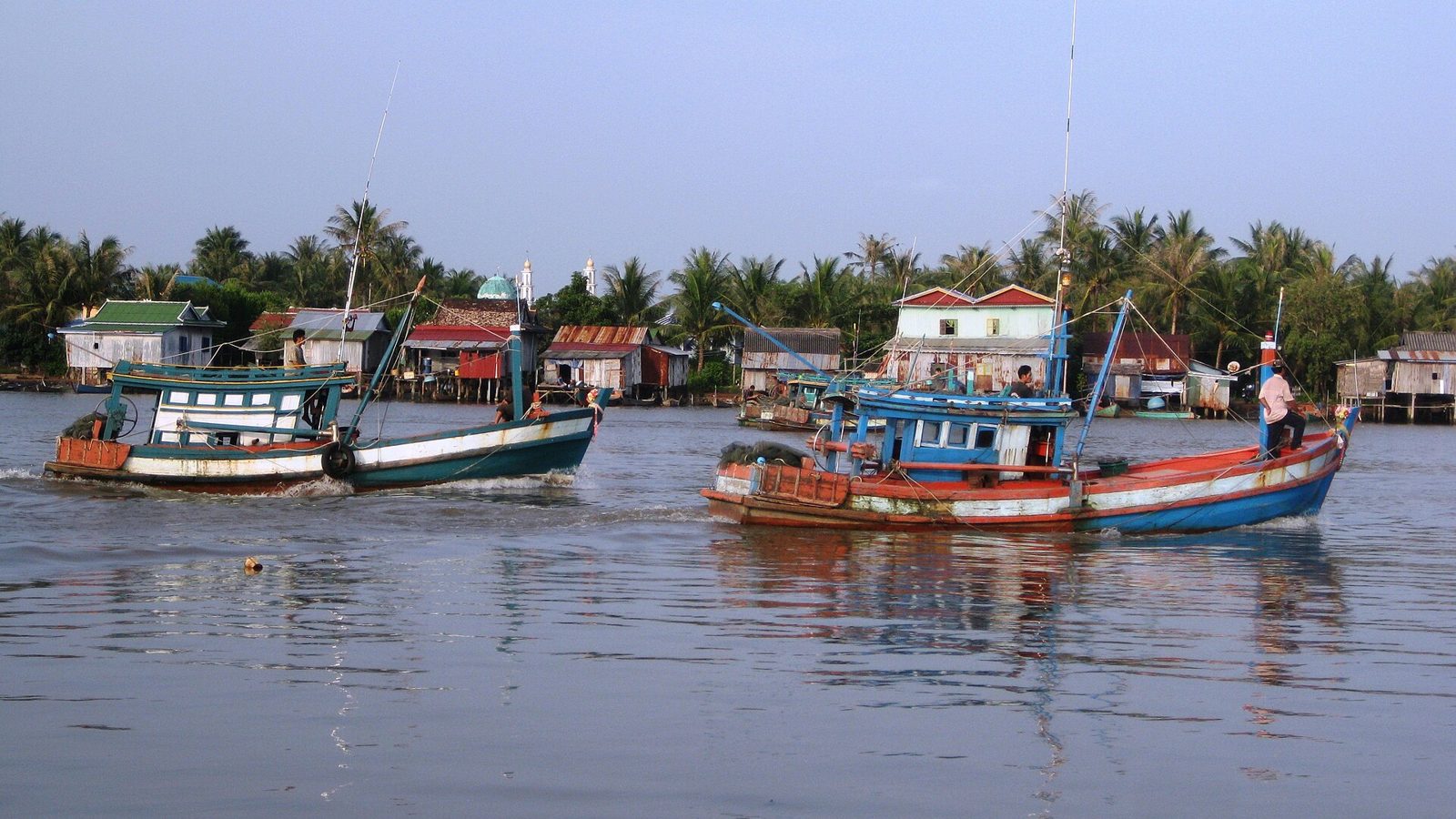
A sleepy riverside town in southern Cambodia, with French shophouses, pepper farms and Bokor Mountain rising behind it. You watch the sunset from a river boat, ride a scooter into the clouds and eat crab with green pepper by the sea in Kep.
- Best time to visit: November to February
- Daily budget (budget traveller): $25 to $90 USD
- Ideal trip length: 4 to 7 days
Kampot sits on the Praek Tuek Chhu river in southern Cambodia, about three to four hours by bus from Phnom Penh and half an hour from the coast at Kep. It is a small provincial capital with a faded French past. Rows of old shophouses line the riverfront, there is a renovated colonial market in the centre and a rusting iron bridge crosses the river. Behind the town, Bokor Mountain climbs to over 1,000 metres, with an abandoned French hill station, a waterfall and often a thick bank of cloud on top. Most people come to slow down. You walk the riverside at sunset, take a boat out to see the fireflies, cycle past rice fields and salt pans and visit the farms that grow the famous Kampot pepper. Kep's crab market, quiet Rabbit Island and limestone cave temples are all within an easy day. Kampot is not a party town and there is no beach in town itself. It is cheap, though, with a good range of hostels and guesthouses, and it is easy to meet other travellers. For a solo traveller who wants a rest from Cambodia's bigger cities, it is hard to beat.
Kampot is a small provincial capital of around 40,000 people on the Praek Tuek Chhu river, a few kilometres from where it meets the Gulf of Thailand. The French ran it as a trading port, and their shophouses still line the riverside and the streets around the Old Market, many of them painted in faded yellows and blues. Bokor Mountain fills the view to the west, and the countryside around town is a patchwork of rice paddies, salt pans and pepper farms. Most visitors come for two nights and stay for five. The day has a simple rhythm. You get a coffee by the river, then ride out to a cave, a farm or the mountain, then come back to town for the sunset walk and a cheap dinner. It is one of the best-value stops in Southeast Asia, with dorm beds, $2 street breakfasts and free farm visits.
Getting here is easy. Buses and minivans from Phnom Penh take about 3 to 4 hours and cost around $8 to $12, with departures through the day from several companies. The Royal Railway train runs once a day in each direction and is slower but pleasant. Phnom Penh's new Techo International Airport is south of the city, which shortens the drive to Kampot. Sihanoukville is around two hours away, and the Vietnamese border at Prek Chak is near Kep. The land borders with Thailand are closed. In town, walk or use tuk-tuks. Rent a bicycle for Fish Island and the salt fields, and join a tour or rent a scooter for Bokor and Kep. Stay on the riverside for the social scene, across the river for hammocks and pontoons, or upriver for real quiet.
Timing matters more than you might think. November to February brings dry weather, comfortable heat and the clearest views from Bokor, so it is also the busiest and priciest time. March to May is very hot, and the heat sits heavy on the town in the afternoons. From June to October the rains arrive, usually as heavy afternoon storms. The countryside turns bright green, prices fall and the town is quiet, but Bokor is often in cloud and boats to Rabbit Island can be cancelled in rough seas. Kampot is calm and friendly, and English is widely spoken in guesthouses and cafés. Nightlife means riverside bars, live music nights and the odd hostel party. If you want clubs, go to Phnom Penh. If you want a hammock, a river and a plate of pepper crab, stay here.
Kampot itinerary
Arrive and find the river
Morning: Take a morning bus or the 7am train from Phnom Penh. Drop your bag at your hostel or guesthouse and get an iced coffee by the river.
Afternoon: Walk around the Old Market, the French shophouses and the Durian roundabout. Have a late lunch of fish amok at a small Khmer café.
Evening: Take a sunset and firefly boat from the riverside piers (roughly $5 to $10). Then walk along the river and have a cheap dinner at the night market.
Bokor Mountain
Morning: Set off early by scooter or on a group tour (roughly $15 to $30) to beat the fog. Stop at the viewpoint over Kampot, then carry on to the Black Palace and the giant Lok Yeay Mao statue.
Afternoon: Explore the old French church, the Bokor Palace and Wat Sampov Pram. Walk to Popokvil Waterfall (about $0.50), which is at its best after the rains.
Evening: Back in town for a hot shower and a happy hour beer on the riverside. Dinner at a café near the Old Market.
Caves, salt and pepper
Morning: Hire a tuk-tuk or join a countryside tour. Start at Phnom Chhngok cave temple (around $1) before the heat builds.
Afternoon: Stop at the salt fields on the road to Kep, then head to La Plantation for a pepper tour and tasting (about $5). Buy pepper to take home.
Evening: Visit Secret Lake at sunset if your driver includes it, then have a quiet dinner and an early night.
Kep and the crab market
Morning: Take a tuk-tuk or minivan to Kep (30 to 45 minutes). Walk the trail in Kep National Park for views over the sea and the islands.
Afternoon: Lunch at the crab market on fresh crab with green pepper. Wander past the ruined modernist villas and along the seafront.
Evening: Watch the sunset from Kep's seafront, then head back to Kampot or stay the night in Kep.
Rabbit Island
Morning: Catch the morning boat from Kep to Koh Tonsay (roughly $7 to $10 return). Agree the return time before you board.
Afternoon: Swim, read in a hammock and eat grilled fish at one of the beach shacks. Walk along the shore to the quieter end of the island.
Evening: Take the afternoon boat back and return to Kampot, or stay overnight in a basic bungalow on the island.
Upriver and Fish Island
Morning: Rent a bicycle and ride the flat loop around Fish Island, past palm groves, villages and fishing jetties.
Afternoon: Take a tuk-tuk to the Teuk Chhou rapids for a swim and a picnic in the bamboo huts, or rent a kayak and paddle upriver.
Evening: Dinner at Epic Arts Café or another social enterprise café, then a drink at a riverside bar.
Slow morning and depart
Morning: Have a last bai sach chrouk breakfast at the market and walk across the Old Bridge for a final look at Bokor.
Afternoon: Catch an afternoon bus or train to Phnom Penh, or a minivan to Sihanoukville or the Vietnamese border. Check times the day before.
Evening: Arrive in Phnom Penh, or carry on to your next stop.
Best neighbourhoods
- Riverside and the old town: The strip of old shophouses along the river between the Old Bridge and the New Bridge. Most of the guesthouses, cafés, bars and boat operators are here, and the sunset walk along the water is the town's main social event. It is lively in the evenings but calms down early, so light sleepers will usually be fine.
- Old Market and the French quarter: The streets behind the river around the restored Old Market, now full of small restaurants, coffee shops and craft stalls. Look up to see faded colonial facades and old shop signs. It is central and good value, and the night market and the Durian roundabout are a short walk away.
- West bank: Across the New Bridge, the far side of the river is greener and quieter, with hostels and bungalow places set on the water. Some have pontoons, kayaks and rope swings. You will need a tuk-tuk or a bicycle to get into town, which takes about 5 to 10 minutes.
- Upriver towards Teuk Chhou: A few kilometres north of town, small eco-lodges and bungalow resorts sit among the trees along the river. Expect hammocks, swimming from wooden decks and very dark, quiet nights. It suits a slow stay, but you rely on the lodge's restaurant and on tuk-tuks for trips into town.
- Kep: The seaside town about 25km south-east, known for its crab market, ruined modernist villas and the boat to Rabbit Island. It is more spread out and quieter than Kampot, with a few smart resorts. Stay a night or two if you want sea views, or visit for the day.
Must-do experiences
- Walk the riverside at sunset: Start at the Old Bridge and stroll south along Riverside Road as the light turns gold over Bokor Mountain. It is free. Locals come out to exercise, fishing boats head downriver and the bars put out their happy hour boards.
- Take a sunset and firefly boat: Small boats leave from the riverside piers in the late afternoon, heading upriver past fishing villages, then drifting back after dark to see fireflies in the mangroves. Expect to pay roughly $5 to $10 on a shared boat. Bring insect repellent.
- Ride up Bokor Mountain: A good sealed road climbs about 32km from the park gate to the old French hill station, with its ghostly Catholic church, the restored Bokor Palace and the Wat Sampov Pram pagoda. There is no park entry fee, just a small motorbike parking charge. Popokvil Waterfall costs about $0.50, and that includes a bottle of water.
- Learn how Kampot pepper is grown: La Plantation is the best-known farm, about 30 to 40 minutes east of town. It runs English tours and tastings of black, red, white and fresh green pepper. Fees have changed recently and the guided tour with tasting costs about $5, so check before you go. Smaller family farms such as Sothy's near Kep offer free visits.
- Explore Phnom Chhngok cave temple: A short ride east of town, steps lead into a limestone cave with a small 7th-century brick temple built inside it. Entry costs around $1. Local children may offer to guide you with a torch for a tip, and the climb out the back gives views over the rice fields.
- Eat crab at the Kep crab market: Women pull crab pots straight from the sea at the market in Kep, and the shacks behind them cook the catch with fresh green Kampot pepper. A plate costs roughly $5 to $10 depending on the season and weight. Go at lunchtime and sit on the deck over the water.
- Spend a day on Rabbit Island: Koh Tonsay is a short boat ride from Kep, with a quiet beach, hammocks, simple seafood shacks and basic bungalows. A return boat costs roughly $7 to $10. Boats leave at set times in the morning and return mid-afternoon, so agree the times before you go.
Hidden gems
- The Kampot Traditional Music School, which teaches traditional Khmer music and dance to orphaned and disadvantaged children and sometimes opens rehearsals or performances to visitors
- Phnom Kbal Romeas, a quieter cave temple set in a limestone hill near the railway line, often skipped by tour groups
- Fish Island (Koh Trolach) across the river, an easy bicycle loop through palm groves, villages and fishing jetties
- The ruined 1960s modernist villas scattered through the trees in Kep, left empty since the Khmer Rouge years
- Wat Sampov Pram on Bokor Mountain late in the afternoon, when the clouds sometimes clear and you can see down to the coast and the islands
Daily budget
- Accommodation: budget $5-10 / night (hostel dorm), mid-range $20-45 (riverside guesthouse or boutique room), splurge $100+ (resort in Kep or upriver lodge). Prices rise from December to February and around Khmer New Year. Single rooms with a fan are cheap, while air conditioning adds a few dollars. Book ahead for the Christmas and New Year period.
- Food: budget $8-12 / day (street breakfasts, market noodles, Khmer rice dishes), mid-range $15-25 (café lunch and a sit-down dinner with a drink), splurge $35+ (Western restaurants, wine, a big crab feast). Street breakfasts cost about $1.50-2.50 and Khmer mains in cafés $3-6. Western dishes cost more. Crab in Kep is priced by weight and season, so ask first.
- Transport: budget $2-6 / day (walking, bicycle, short tuk-tuk rides), mid-range $8-15 (scooter rental and fuel, or shared tuk-tuks), splurge $30-50 (private driver for the day). The bus from Phnom Penh is about $8-12. Short tuk-tuk hops are $1-3, a scooter about $5-7 a day and a half-day Bokor tuk-tuk about $15-25 for the vehicle.
- Activities: budget $0-5 / day (riverside walks, Bokor at no entry fee, cave temple at about $1), mid-range $10-30 (group tours, sunset boat, pepper farm tour), splurge $40+ (private tours, cooking classes, kayak trips). Bokor has no park entry fee, just a small motorbike parking charge, and Popokvil Waterfall is about $0.50. Group countryside tours start at roughly $15-20. La Plantation's guided tour with tasting is about $5.
- Drinks & nightlife: budget $2-5 (a couple of draught beers at happy hour), mid-range $8-15 (cocktails and beers at riverside bars), splurge $25+ (wine or a night of cocktails). Draught beer is often under $1 during happy hour and coffee around $1.50-2.50. Nightlife means riverside bars, live music and hostel parties rather than clubs.
Where to stay
- Social hostel in West bank, north of town ($6-12 / night (dorm)): Arcadia Backpackers is a long-running riverside hostel with a pontoon, rope swings, a water park and a lively bar. It is the place for meeting people, though it is a short tuk-tuk ride from town.
- Boutique hotel in Riverside ($45-80 / night): Rikitikitavi is a small hotel in a restored building on the riverfront, with a rooftop restaurant looking across to Bokor. You are a short walk from the Old Market, the boats and the bars.
- Guesthouse in Old Market and the French quarter ($12-30 / night): Family-run guesthouses in old shophouses give you a cheap private room in the centre, often with a balcony. Fan rooms are cheapest. Check for air conditioning and hot water if you visit in the hot season.
- Splurge in Kep ($150-300+ / night): Knai Bang Chatt is a seafront resort built around restored 1960s modernist villas, with an infinity pool and a sailing club next door. It is a calm, smart base for the crab market and Rabbit Island.
What to eat
- Crab with green Kampot pepper: the signature dish of the coast, best eaten fresh at the Kep crab market
- Fish amok: fish steamed in banana leaves with coconut milk, lemongrass and kroeung spice paste, on most Khmer menus for $3 to $6
- Bai sach chrouk: grilled pork with broken rice and pickles, the standard street breakfast for about $1.50 to $2.50
- Num banh chok: fresh rice noodles with a green fish curry and raw vegetables, sold from morning stalls around the markets
- Kampot pepper: buy small bags of black, red and white pepper straight from the farms to take home, as it is lighter and fresher than airport versions
- Durian and other tropical fruit from the markets, plus a cold Kampot or Angkor beer at a riverside happy hour
Day trips
- Bokor National Park (About 40km to the hill station, 1 hour by scooter or tour): An old French hill station at over 1,000 metres, with an empty church, the restored Bokor Palace, Wat Sampov Pram, a giant Lok Yeay Mao statue and Popokvil Waterfall. It is cool and misty, and very different from the plains below. Rent a scooter in Kampot, hire a tuk-tuk or car for the day or join a group tour for roughly $15 to $30. There is no park entry fee, just a small motorbike parking charge. Go early, before the fog builds.
- Kep and the crab market (About 25km south-east, 30 to 45 minutes by tuk-tuk or minivan): A small seaside town with a famous crab market, the trails of Kep National Park, ruined modernist villas and quiet sunsets over the Gulf of Thailand. Take a tuk-tuk, a shared minivan or a scooter along the paved road from Kampot. Many countryside tours combine Kep with the salt fields and a pepper farm.
- Koh Tonsay (Rabbit Island) (A short boat ride from the pier in Kep): A small island with a quiet beach, hammocks, seafood shacks and basic bungalows. There are no cars and little electricity, so it is perfect for a lazy day or a simple night away. Get to Kep, then take a boat from the pier, usually in the morning, with returns mid-afternoon. A return trip costs roughly $7 to $10. Agree the return time, or the day if you stay overnight, before you go.
When to visit
- Cool dry season (November - February): 24-32°C, dry and sunny, cooler nights and much cooler on Bokor. Crowds: Moderate to busy, especially at Christmas, New Year and Chinese New Year. The best time to visit. Clear skies for Bokor, calm seas for Rabbit Island and pleasant evenings by the river. Book dorms and riverside rooms ahead in late December.
- Hot season (March - May): 30-35°C, very hot and humid, first storms in May. Crowds: Moderate, with a busy spell around Khmer New Year in mid-April. Still dry and good value, but plan outdoor trips for early morning. Khmer New Year brings domestic crowds, water fights and some closures.
- Wet season (June - September): 26-31°C, heavy afternoon downpours, humid. Crowds: Low. Cheap and lush, with dramatic skies and few tourists. Bokor is often foggy, roads can flood and some boat trips are cancelled in rough weather. Bring a rain jacket and stay flexible.
- Late rains (October): 26-31°C, still wet but easing towards the end of the month. Crowds: Low, rising late in the month. A good shoulder month. Rice fields are at their greenest, waterfalls are full and prices are still low, though some days are washed out.
Entry rules for your passport
Visa rules for Cambodia depend on the passport you travel on. Check the official source before you book: Cambodia's official e-Visa site
Getting there
There is no airport in Kampot. Most people fly into Phnom Penh, where the new Techo International Airport sits south of the city, or into Siem Reap and then take a bus or a domestic flight. If you fly in, fill in the free e-Arrival Card within seven days before landing. From Phnom Penh, buses and minivans run to Kampot all day with Giant Ibis, Virak Buntham, Kimseng, Ekareach and others. The trip takes roughly 3 to 4 hours and costs around $8 to $12. Book a day ahead through 12Go, Bookmebus or your hostel, and check which pick-up point your company uses. The Royal Railway train leaves Phnom Penh once a day at 7am and arrives late morning for about $8 to $10. It continues to Sihanoukville, and the return train leaves Kampot in the afternoon. A private taxi from Phnom Penh or the airport costs very roughly $50 to $70, so agree the price before you set off. Minivans also link Kampot with Sihanoukville in about two hours and with the Prek Chak and Ha Tien border crossing to Vietnam. The land borders with Thailand are closed, so if you are coming from Thailand you will need to fly.
Getting around
Kampot's centre is flat and compact, so you can walk between the riverside, the Old Market and the Durian roundabout in 10 to 15 minutes. Tuk-tuks wait on most corners. Short rides in town cost around $1 to $3, and a half-day tuk-tuk tour of Bokor costs roughly $15 to $25 for the whole vehicle, so it is cheaper if you can share. Agree the price before you set off. Ride-hailing apps such as PassApp and Grab work in some parts of Cambodia, but cover in Kampot is patchy. Many guesthouses rent bicycles for a few dollars a day, which is the nicest way to explore Fish Island and the salt fields. Scooters cost around $5 to $7 a day. Wear a helmet, as police do check and the roads to Kep and Bokor carry fast trucks and buses. Strictly speaking you need a valid licence, and your insurance may not cover you without one. Many travellers join a cheap group tour for Bokor or the countryside rather than ride themselves. Minivans and tuk-tuks connect Kampot with Kep in about 30 to 45 minutes.
Safety
Kampot and Kep are among the calmer places to visit in Cambodia, and violent crime against visitors is rare. Bag snatching from passing motorbikes happens occasionally, so keep your phone and bag on the side away from the road, especially after dark. Road safety is the biggest risk. Scooter accidents are common, especially on wet roads and on Bokor in fog, when visibility can drop to almost nothing. Ride slowly or take a tour. Swim carefully in the river, where currents can be strong in the rainy season, and do not swim after drinking. Do not drink the tap water. Use insect repellent, as dengue is present in the wet season. Kampot is far from the Thai border, but governments currently advise against travel within 50km of it, and the land crossings with Thailand are closed. Kampot has private clinics, but serious cases go to Phnom Penh, so travel insurance with medical evacuation cover is essential. In an emergency, call 117 for police and 119 for an ambulance.
Solo travel tips
- Choose your side of the river: Stay on the riverside if you want cafés, bars and other travellers on your doorstep. Pick the west bank or upriver if you want quiet nights and swimming from a pontoon, and accept a tuk-tuk ride into town.
- Go up Bokor early: The fog usually builds through the day. Leave town by 8am and you have the best chance of views from the top, plus cooler air for the ride.
- Share tuk-tuks and tours: Tuk-tuks charge by the vehicle, not per person. Ask at your hostel about others heading to Bokor, Kep or the pepper farms, and you can split the cost two or three ways.
- Eat Khmer food to save money: Western dishes cost two or three times as much as local ones. Have street breakfasts and Khmer lunches, then save for one good crab lunch in Kep.
- Safety for solo travellers: The main risks are scooter crashes and bag snatching. Ride only if you are confident, avoid riding in fog or heavy rain and keep your bag on the side away from the road. Use a known tuk-tuk at night.
- Meet people on a tour or a boat: Group tours to Bokor and the countryside, sunset boats and hostel family dinners are easy ways to meet other travellers. Riverside happy hours are sociable too, and quiz and live music nights pop up through the week.
Cultural etiquette
- Greet people with 'sous-dey' (hello) and say 'or-kun' (thank you). A slight bow with your palms together, the sampeah, is appreciated, especially with older people.
- Cover your shoulders and knees at pagodas and cave temples, and take off your shoes and hat before entering a shrine.
- Do not touch anyone's head, and avoid pointing your feet at people or at Buddha images when you sit down.
- Women should not touch monks or hand things to them directly. Place the item down or pass it through a man.
- Keep calm and smile if a price or a plan goes wrong. Raising your voice causes a loss of face and rarely helps.
- Ask before photographing people, especially at markets, in villages and at the crab market.
- Haggle politely at markets and with tuk-tuk drivers, but remember that a dollar matters more to them than to you.
Frequently asked questions
How do I get from Phnom Penh to Kampot?
Most people take a bus or minivan. Several companies, including Giant Ibis, Virak Buntham, Kimseng and Ekareach, run through the day. Tickets cost roughly $8 to $12 and the journey takes about 3 to 4 hours. Book a day ahead on 12Go, Bookmebus or through your hostel. The Royal Railway train runs once a day in each direction for around $8 to $10. It is slower but more scenic, leaving Phnom Penh at 7am and Kampot in the afternoon. Check current times before you plan around it.
How many days do I need in Kampot?
Two nights is the minimum, enough for the riverside, a sunset boat and either Bokor or the pepper farms. Four to five nights lets you do both, plus Kep and Rabbit Island. A week works well if you want to slow right down, stay upriver for a couple of nights or spend a night on the island.
When is the best time to visit Kampot?
November to February is the most comfortable time, with dry weather, cooler evenings and the best chance of clear views from Bokor. March to May is very hot. From June to October the rainy season brings heavy afternoon downpours, green countryside and lower prices, but Bokor is often lost in cloud and some boat trips are cancelled.
Is it worth going up Bokor Mountain?
Yes, if the weather plays along. The ride up is beautiful, the old French church and hill station ruins are atmospheric and it is several degrees cooler than town. There is no park entry fee. Fog can roll in quickly and hide everything, so go early in the day, bring a warm layer and check the weather. A group tour costs roughly $15 to $30 if you would rather not ride a scooter.
How do I get to Kep and Rabbit Island?
Kep is about 25km from Kampot. A tuk-tuk takes about 45 minutes, a shared minivan is cheaper and a scooter gives you the most freedom. Boats to Rabbit Island leave from the pier in Kep, usually in the morning, and return mid-afternoon. A return trip costs roughly $7 to $10. If you want to stay overnight on the island, tell the boat operator which day you will come back.
Do I need cash in Kampot?
Yes. Cambodia uses both US dollars and riel. Prices are often given in dollars, and change under $1 comes in riel, at about 4,000 riel to the dollar. ATMs in town give out dollars but charge a fee of a few dollars per withdrawal. Guesthouses and some restaurants take cards, but tuk-tuks, markets, street food and boats are cash only. Bring clean, untorn dollar notes, as damaged ones are often refused.
Is Kampot safe for solo female travellers?
Generally, yes. Kampot is relaxed and friendly, and many women travel here alone. Take normal care. Watch your drink in bars, avoid walking alone on unlit roads late at night and use a tuk-tuk your guesthouse knows after dark. Dress modestly away from the river and the beach, especially at temples and in villages.
What entry rules apply to Cambodia in 2026?
Most visitors need a visa. A 30-day tourist visa on arrival costs $30 in cash at airports and most land borders, and you need a passport photo. The official e-visa costs about $36 in total, including the processing fee. If you fly in, you must also fill in the free e-Arrival Card at arrival.gov.kh within seven days before landing. The land borders with Thailand are closed, but the Prek Chak crossing to Ha Tien in Vietnam is close to Kep. Rules change, so check official Cambodian government sites and your own government's travel advice before you go.
More about Kampot
Tours and activities in Kampot | Kampot in 2 days | Kampot in 3 days | Kampot in 4 days | Kampot in 5 days | Kampot in 7 days
Can't decide? Compare Kampot with...
Joy Plus home | Destinations | Itineraries | Activities | Flights | Budget planner | Calendar | Map | Blog | Lifetime access