Destinations / Asia
Karakol, Kyrgyzstan travel guide
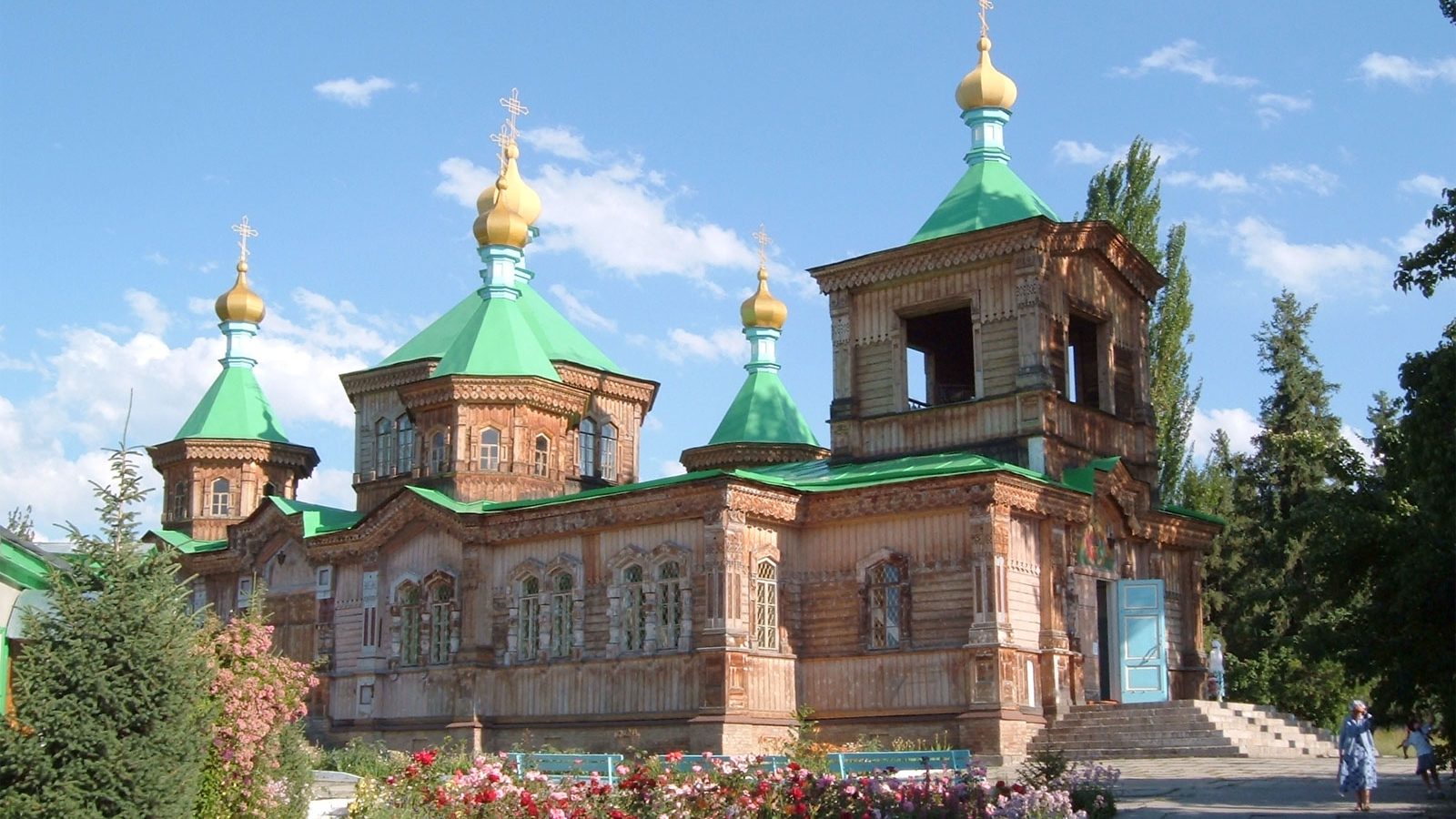
A low-rise, tree-lined town at the eastern end of Lake Issyk-Kul, with the snowy Tian Shan rising behind it. You eat cold, spicy noodles at the bazaar, visit a wooden mosque built without nails and set off on foot into some of Central Asia's best mountain valleys.
- Best time to visit: July to September
- Daily budget (budget traveller): $25 to $120 USD
- Ideal trip length: 4 to 7 days
Karakol sits at about 1,700m at the far eastern end of Lake Issyk-Kul, roughly 400km from Bishkek, or six to seven hours by minibus. Russian officers founded it as a garrison town in the 1860s. It grew into a market town of wide streets, poplar trees and single-storey wooden houses with carved window frames, and many of those houses still stand. Two buildings show the town's mixed past. One is the wooden Holy Trinity Cathedral with its golden domes. The other is the Dungan Mosque, built in Chinese style without nails for the Chinese-Muslim community who settled here. Most people come for the mountains, though. The Karakol valley begins just south of town and leads to the turquoise lake of Ala-Kul and the hot springs at Altyn Arashan, and the red Seven Bulls rocks at Jeti-Oguz are less than an hour away. In winter the town becomes the base for Kyrgyzstan's biggest ski area. There is not much to see in the town itself, and you will need cash, patience with minibuses and some basic Russian phrases. In return you get cheap hostels full of hikers, bowls of ashlan-fu for a dollar or two and high valleys you can reach on a city bus. For a solo traveller it is one of the easiest places in Central Asia to arrive alone and quickly find people to trek with.
Karakol is the largest town on the eastern side of Lake Issyk-Kul, with about 80,000 people, and it is the main base for trekking in the central Tian Shan. Russian officers founded it in 1869 as a frontier garrison, and the explorer Nikolai Przhevalsky died here in 1888. The town was named Przhevalsk after him for much of the Soviet period. You can still see that history in the wide, tree-lined streets, the wooden cathedral and the carved houses. Dungan families, Chinese-speaking Muslims who fled across the border in the 1870s, left the mosque, the noodle dishes and much of the food culture. Day trippers rarely make it this far east. Stay a few nights and you get a slow, friendly town of bazaars and tea, with high mountain valleys at the end of a 20 som bus ride.
Getting here is cheap but slow. Marshrutkas from Bishkek's main bus station take six to seven hours along the north shore of the lake for about 500 to 650 som. Shared taxis are a bit faster, and overnight buses arrive around dawn. There are some flights from Bishkek, but schedules are irregular. Once you arrive, walk around the centre and use city minibuses and cheap taxis. Base yourself in the centre or the old quarter for cafés and the cathedral, or near Ak-Tilek bazaar for early minibuses to Jeti-Oguz and Ak-Suu. Hostels are the best place to arrange shared jeeps, rent tents and find people to trek with.
Timing shapes the trip. July to September is trekking season, when the Ala-Kul pass is usually clear and the yurt camps are open. June is green but often still snowy higher up. Autumn is quiet and golden until the first snow, usually in late October. Winter is cold, often well below freezing at night, but lift passes at the ski base cost a fraction of Alpine prices. Karakol is safe and relaxed. English is spoken in hostels but rarely elsewhere, so a few words of Russian help a lot. This is a cash economy, so carry som. If you want nightlife, you will be disappointed. If you want a mountain lake, a hot spring and a bowl of noodles, this is the place.
Karakol itinerary
Arrive and find your feet
Morning: Take an early marshrutka from Bishkek's main bus station (six to seven hours) and watch the lake go by along the north shore.
Afternoon: Ride marshrutka 109 or a taxi into the centre and drop your bag at your hostel. Walk to the nearest ATM and get som.
Evening: Wander the old quarter as the light fades, then have your first bowl of ashlan-fu by the bazaar and an early night.
Mosque, cathedral and museum
Morning: Visit the Dungan Mosque (about 20 to 50 som) before midday prayers, then walk to Holy Trinity Cathedral (free).
Afternoon: Look around the regional history museum and the carved houses nearby. Shop at Ak-Tilek bazaar for trek snacks and rent any gear you need.
Evening: Ask at your hostel about Ala-Kul conditions and people to share a jeep with. Dinner of lagman and manti in the centre.
Jeti-Oguz and the Seven Bulls
Morning: Take a marshrutka from the Ak-Tilek area (about 80 to 120 som) to Jeti-Oguz and see the red Seven Bulls and Broken Heart rocks.
Afternoon: Walk up the valley past the old sanatorium towards the Kok-Jaiyk meadows. Bring a picnic and water.
Evening: Catch a minibus back before about 5pm. Pack for the trek and go to bed early.
Ala-Kul trek: up the Karakol valley
Morning: Take marshrutka 101 to the national park gate (pay about 250 som), or share a jeep to the bridge to save several hours of walking on the road.
Afternoon: Hike up through the forest to the Sirota camp area at about 2,800m and sleep there to adjust to the altitude.
Evening: Eat at the yurt camp or cook your own dinner. Check the weather for the pass with other hikers.
Ala-Kul lake and the pass
Morning: Start early and climb steeply past the waterfall to Ala-Kul lake at about 3,500m. Fill your water before the top.
Afternoon: Cross the pass at about 3,900m if the weather is clear, then go down the scree into the Altyn Arashan valley.
Evening: Soak in a hot spring pool and sleep in a guesthouse or yurt in Altyn Arashan.
Altyn Arashan and back to town
Morning: Have a slow breakfast and another soak, then walk down the valley to the Ak-Suu road, or share a UAZ van.
Afternoon: Take marshrutka 350 back to Karakol and recover with a shower and a big plate of plov.
Evening: Swap trek stories over a beer at your hostel. Arrange a taxi for the market if tomorrow is Sunday.
Market morning and depart
Morning: If it is Sunday, take a taxi to the animal market by 7am. If not, visit the Przhevalsky Memorial near the lake.
Afternoon: Buy honey or jam at the bazaar, then catch an afternoon marshrutka to Bishkek. Check the last departure the day before.
Evening: Arrive in Bishkek, or break the journey in Cholpon-Ata on the north shore.
Best neighbourhoods
- Town centre and Toktogul Street: The grid of streets around the central park and the main Toktogul and Abdrakhmanov roads. You have the cathedral, the museum, cafés, ATMs and most of the hostels within a 15-minute walk. It is the most practical base for a first visit, and it is quiet at night because there is very little nightlife.
- Ak-Tilek bazaar: The busy market district east of the centre, where the ashlan-fu stalls, fruit sellers and most local minibuses gather. Marshrutkas for Jeti-Oguz, Ak-Suu and Jyrgalan leave from around here. Staying nearby makes early starts easy, but the streets are scruffy and empty after dark.
- Old Russian quarter: The leafy streets around Holy Trinity Cathedral and the Dungan Mosque, lined with 19th-century wooden houses with painted shutters and carved eaves. Several family guesthouses sit behind gates here. It is the prettiest part of town for a slow walk and only a few minutes from the centre.
- South side, towards the national park: The quieter southern edge of town, on the road to the Karakol valley and the ski base. You will find guesthouses with gardens and mountain views. Trailhead taxis are a short ride away, but you will walk 20 to 30 minutes, or take a minibus, to reach the bazaar and cafés.
- Ak-Suu (Teploklyuchenka): A village about 12km east of Karakol, where the trail up to Altyn Arashan begins and where there is a small hot-spring resort. Marshrutka 350 runs here from town. It suits you if you want a rural base and a soak at the end of the day, but evenings are very quiet.
Must-do experiences
- Visit the Dungan Mosque: Chinese craftsmen built this mosque in the early 1900s for the local Dungan community, without using nails. It has a pagoda in place of a minaret and brightly painted wood. Entry is about 20 to 50 som. Women are lent a robe and headscarf at the gate, and it is best to go outside prayer times.
- See Holy Trinity Cathedral: A wooden Russian Orthodox cathedral with golden domes, set in a quiet park in the old quarter. Entry is free and donations are welcome. It is usually open from about 8am to 6pm, and the late afternoon light on the wood is lovely. Women should cover their heads inside.
- Go to the Sunday animal market: Herders come in from the villages to trade horses, sheep, cows and goats at the Mal Bazaar just north of town. Get there by 7am, as it winds down by about 9 or 10. A taxi costs around 100 to 150 som, entry is free, and you should ask before taking photos. Wear shoes you do not mind getting muddy.
- Eat ashlan-fu at the bazaar: Karakol's signature dish is a bowl of cold noodles and starch jelly in a sour, chilli-spiked broth, usually eaten with a fried bread bun. The cluster of cafés by Ak-Tilek bazaar serves it all day for a dollar or two. It is especially good on a hot afternoon.
- Trek to Ala-Kul lake: The classic hike climbs the Karakol valley to a glacier lake at about 3,500m, crosses a pass of roughly 3,900m and drops into Altyn Arashan. It is about 50km over three days. Karakol National Park charges foreigners around 250 som, plus about 100 som if you camp, and it is usually passable from July to September.
- Soak at Altyn Arashan: A high meadow valley at about 2,500m with wooden bathhouses fed by hot springs, yurt camps and guesthouses. Walk up from the Ak-Suu road in four to seven hours, or share a Soviet UAZ van. Pools cost a few hundred som. Stay overnight if you can, as the stars are spectacular.
- See the Seven Bulls at Jeti-Oguz: A row of red sandstone cliffs about 25km west of Karakol, with the split Broken Heart rock nearby. Marshrutkas from the Ak-Tilek area cost roughly 80 to 120 som. Walk up the green valley beyond the old sanatorium, towards the Kok-Jaiyk meadows, for a fuller day.
Hidden gems
- The Przhevalsky Memorial and museum near the lakeshore at Pristan, about 12km from town, where the Russian explorer who gave Karakol its Soviet name is buried. Entry is about 100 som and it is closed on Mondays
- The side streets of the old Russian quarter, where you can still find carved wooden houses with painted shutters away from the main roads
- A Dungan family dinner in a nearby village such as Yrdyk, where you share a long run of small dishes with a local family. Hostels and local tour offices can arrange it
- The Ak-Suu Arboretum walk, a gentler forest route from the national park gate towards Ak-Suu that most trekkers skip on their way to Ala-Kul
- The small Tatar mosque, a plain wooden building in the centre that gets a fraction of the Dungan Mosque's visitors
Daily budget
- Accommodation: budget $8 to $15 USD / night (hostel dorm), mid-range $30 to $60 USD (guesthouse private room or small hotel), splurge $90+ USD (the best hotels in town or the ski-base hotel in winter). Breakfast is often included in guesthouses. Rooms fill in late July and August, and in winter the ski-base hotels charge more at New Year. Yurt camps on the trek usually charge per person, often with dinner and breakfast.
- Food: budget $8 to $15 USD / day (ashlan-fu, samsa, bazaar fruit), mid-range $20 to $35 USD (café lunches and a sit-down dinner), splurge $50+ USD (Dungan family dinner, steak and wine). A bowl of ashlan-fu costs a dollar or two, and a café main is often $4 to $8 USD. Some restaurants add a 10 to 15% service charge, so check the menu. Prices are rough guides.
- Transport: budget $0 to $3 USD / day (walking, city marshrutkas at about 20 som), mid-range $10 to $25 USD (taxis and shared jeeps to trailheads), splurge $45 to $65 USD (chartering a UAZ van to Altyn Arashan). The marshrutka from Bishkek costs about 500 to 650 som ($6 to $8 USD). A private car from Bishkek costs about $120 to $170 USD. Split jeep costs with other hikers through your hostel.
- Activities: budget $0 to $5 USD / day (cathedral free, mosque 20 to 50 som, national park about 250 som), mid-range $10 to $30 USD (hot springs, museum, a guide for a day), splurge $85+ USD (private 4x4 day trips). Altyn Arashan pools cost a few hundred som. In winter, a day lift pass at the ski base is roughly $15 to $30 USD and ski rental about $10 to $15 USD.
- Drinks & nightlife: budget $2 to $5 USD (tea, kymyz or a local beer), mid-range $10 to $20 USD (a few drinks at a café or hostel bar), splurge $30+ USD (imported wine or cocktails at a hotel). Karakol is quiet after dark. Nightlife means a beer in a café or sitting around the hostel with other trekkers. Tea is cheap everywhere and often free with meals.
Where to stay
- Social hostel in Town centre ($8 to $15 USD / night (dorm)): Karakol has several hostels aimed at trekkers, such as Snow Leopard Hostel, with shared kitchens, gear rental and noticeboards for finding hiking partners. Most are within walking distance of the cafés and city minibuses.
- Boutique hotel in Town centre ($50 to $90 USD / night): Hotel Amir is a small, well-kept hotel in the centre with comfortable rooms, good breakfasts and helpful staff who can book drivers and tours. It is a calm base after a hard trek.
- Apartment in Old Russian quarter and south side ($25 to $50 USD / night): Rented flats and private rooms in family guesthouses give you a kitchen, a garden and a quieter street. Check how far you are from the bazaar minibuses if you plan early starts.
- Splurge in Karakol Ski Base ($90 to $180+ USD / night): In winter, Kapriz hotel at the ski base puts you next to the lifts in the pine forest above town. In summer, the most comfortable hotels in the centre are the better choice.
What to eat
- Ashlan-fu: cold noodles and starch jelly in a sour, spicy broth, eaten with a fried bun at the cafés by Ak-Tilek bazaar for about $1 to $2 USD
- Lagman: hand-pulled noodles with beef and peppers, either stir-fried (gyuro lagman) or in soup, on almost every menu in town
- Manti and samsa: steamed dumplings and tandoor-baked pastries filled with mutton and onion, cheap for breakfast or on the road
- Plov: rice cooked with carrots and mutton, often only served at lunch and best early, before the pot runs out
- Kymyz: fermented mare's milk sold in summer along the roads and at yurt camps. It is sour and fizzy, so try a small cup first
- Issyk-Kul honey and sea buckthorn jam from the bazaar, good with tea in the morning and light enough to take home
Day trips
- Jeti-Oguz and the Seven Bulls (About 25 to 30km west of Karakol, 40 to 60 minutes by road): Red sandstone cliffs, the split Broken Heart rock and a green valley that leads up to the summer pastures at Kok-Jaiyk. You can see the rocks in an hour, but a half day lets you walk into the valley. Take a marshrutka or shared taxi from the Ak-Tilek bazaar area for about 80 to 120 som, and check whether it goes all the way to the resort. A private taxi costs roughly 1,500 to 2,000 som each way. Minibuses back are frequent until about 5pm.
- Altyn Arashan (About 15km up the valley from the Ak-Suu road, 4 to 7 hours on foot or 2.5 to 4 hours by jeep from the turn-off): A high valley of meadows, pine forest and hot-spring bathhouses, with the peak of Palatka rising above it. It works as a long day trip, but it is far better with a night there. Take marshrutka 350 from Ak-Tilek towards Ak-Suu and ask to get off at the Altyn Arashan turn-off, then walk. Or share a UAZ van, which costs about $45 to $65 USD for the whole vehicle. Pay for the hot springs in cash.
- Skazka canyon (About 120km west of Karakol on the south shore of Issyk-Kul): A small maze of eroded red, orange and yellow rock formations close to the lake. Its name means fairy tale. Combine it with a swim on the south shore in summer. Take a shared taxi or marshrutka from the southern bus station on Toktogul Street for about 150 som. Ask to be dropped at the canyon turn-off and walk in. A private taxi costs around 4,000 som for the day.
When to visit
- Spring (April - May): 10-20°C by day, cold nights, snow lingering above about 2,500m. Crowds: Low. Good for the town, Jeti-Oguz and lower walks, and the orchards are in blossom. The high passes are still under snow, so Ala-Kul is not realistic yet.
- Summer (June - August): 20-28°C in town, cool nights, afternoon storms in the mountains. Crowds: Moderate to busy on the trails, busiest in late July and August. Peak season. Yurt camps are open, the passes clear from about July and the lake is warm enough to swim. Book hostels a few days ahead in August.
- Autumn (September - October): September 15-22°C, then cooling quickly, with first snow possible in the mountains from October. Crowds: Moderate in September, quiet from October. September is the local pick, with clear skies, golden birch forest and thinner crowds on the trek. By mid-October yurt camps close and nights are freezing.
- Winter (November - March): Around -5 to 5°C by day, often -15°C or lower at night, snowy. Crowds: Quiet in town, busier at the ski base at New Year and weekends. For skiers and anyone who likes empty, frosty mountain towns. Treks are closed, but the ski base, hot springs and cheap rooms make up for it.
Getting there
Most visitors arrive via Bishkek's Manas airport, which is now coded BSZ. Marshrutkas to Karakol leave from Bishkek's main bus station through the morning when they are full. They take six to seven hours via the north shore of Issyk-Kul and cost about 500 to 650 som ($6 to $8 USD). Bishkek's old Western bus station closed in October 2024, so ignore older advice that sends you there. Shared taxis cost a little more and save half an hour or so. Overnight buses leave from near Victory Square in Bishkek and arrive in Karakol around dawn. A private car costs roughly $120 to $170 USD. Karakol's small airport (IKG) has some flights from Bishkek and Osh, but airlines and schedules change often, so check before relying on them. In July and August, a slow, scenic train runs from Bishkek to Balykchy, where you can pick up a minibus east. Coming from Almaty, the easiest year-round route is a bus to Bishkek and on from there.
Getting around
Central Karakol is flat and you can walk most of it. It takes 15 to 20 minutes from the cathedral to the bazaar. City marshrutkas cost about 20 som. Number 109 runs between the main bus station and the centre, and number 101 goes south towards the national park gate. Taxis are cheap, from about 100 som across town, and Yandex Go works here, so you do not have to haggle. Minibuses for Jeti-Oguz, Ak-Suu and Jyrgalan leave from the streets around Ak-Tilek bazaar, while those for the south shore and Skazka canyon leave from the southern bus station on Toktogul Street. Most run in the morning and early afternoon, and the last ones back can leave by about 5pm. Have small notes ready, as drivers rarely change a 1,000 som note. For trailheads beyond the paved roads, such as the bridge in the Karakol valley or Altyn Arashan, you need a 4x4 or an old UAZ van. Hostels can find you other people to share one with.
Safety
Karakol is a safe, friendly town, and serious crime against visitors is rare. The main risks are in the mountains. Altitude sickness is common on the Ala-Kul trek, so sleep lower on the first night, drink plenty of water and turn back if you have a bad headache or feel confused. Weather changes fast above 3,000m, and snow is possible on the pass even in summer. Tell your hostel your route, carry a paper or offline map and do not cross the pass alone in bad weather. Rivers can be fast in the afternoons. Some streets are badly lit and have loose dogs, so take a taxi late at night and steer clear of men who have been drinking. Do not drink tap water without boiling or filtering it. The emergency numbers are 102 for police and 103 for an ambulance. Medical care is basic, so bring travel insurance that covers trekking at altitude and evacuation.
Solo travel tips
- Stay in a trekking hostel: Hostels are where you find hiking partners, share jeep costs and get up-to-date trail news. Many also rent tents and stoves, so you need to carry less.
- Plan around Sunday: The animal market only runs early on Sunday mornings. Fix that day first, then fit your trek and day trips around it.
- Carry cash in small notes: Minibuses, yurt camps, park gates and hot springs are cash only. Bring 50 to 200 som notes, as drivers rarely change big ones.
- Respect the altitude: Spend a night around 2,800m before crossing the Ala-Kul pass, drink plenty of water and turn back if you have a pounding headache. A rest day after the trek is worth it.
- Safety for solo travellers: Tell your hostel your route and expected return date, carry an offline map and do not cross the pass alone in bad weather. In town, take a taxi at night rather than walking on dark streets.
- Learn a little Russian: Hello (zdravstvuyte), thank you (spasibo) and how much (skolko) go a long way. Download Russian for offline translation, as menus and minibus signs are rarely in English.
Cultural etiquette
- Greet people with 'salam' or the Russian 'zdravstvuyte', and say 'rakhmat' (Kyrgyz) or 'spasibo' (Russian) for thank you.
- Take your shoes off when you enter someone's home or guesthouse, and in yurts.
- Treat bread with respect. Do not put it on the floor or throw it away in front of your hosts.
- At the Dungan Mosque, cover your arms and legs, and women should cover their heads. Robes are lent at the gate. Women should also cover their heads in the cathedral.
- Ask before taking photos of people, especially at the animal market and in villages.
- Accept tea when it is offered. A host keeps topping up your bowl, so leave a little in it when you have had enough.
- Dress modestly in town and villages. Shorts and vests are fine on the trail but stand out at the bazaar.
Frequently asked questions
How do I get to Karakol and from the bus station to my room?
Most people take a marshrutka from the main bus station in Bishkek. Minibuses leave throughout the morning when they are full, take six to seven hours and cost about 500 to 650 som ($6 to $8 USD). Overnight buses and shared taxis also run, and there are some flights to Karakol airport, though schedules change often. In Karakol, marshrutka 109 runs from the bus station into the centre for about 20 som, or a taxi costs around 100 som. Most hostels are within a 15-minute walk of the centre.
How many days do I need in Karakol?
Two nights covers the mosque, the cathedral, ashlan-fu and a half-day trip to Jeti-Oguz. Four to five nights lets you add a trip to Altyn Arashan or the full three-day Ala-Kul trek. A week gives you time to rest after the trek, catch a Sunday market and visit Skazka canyon or Jyrgalan.
When is the best time to visit Karakol?
July to September is best for trekking. The high passes are usually clear of snow, the yurt camps are open and the days are warm. June is greener, but snow can still block Ala-Kul. October is cold and quiet, with autumn colours. From December to March the ski base is open, and the town is cold but cheap.
Do I need a guide for the Ala-Kul trek?
No. The trail is well used in summer and no permit is needed beyond the national park fee of about 250 som. A guide costs roughly $15 to $30 USD a day and is a good idea if you have not trekked at altitude before, or if you are going early or late in the season. If you go without one, download an offline map, leave your route with your hostel and try to cross the pass with other hikers.
Can I swim in Lake Issyk-Kul from Karakol?
Not right in town, because the lake is about 10km away. In July and August the water is warm enough for a quick swim. Beaches on the south shore, or the lakeshore near the Przhevalsky Memorial at Pristan, are an easy taxi or minibus ride away. The lake is cold at other times of year.
Can I travel between Karakol and Almaty?
There is no simple direct route all year. Most people go via Bishkek, where buses to Almaty leave several times a day. In summer, some drivers and tour companies use the Karkara crossing east of Karakol, but it is seasonal and not served by regular public transport, so check that it is open before you plan around it.
Is Karakol safe for solo female travellers?
Generally, yes. Many women trek and travel alone here, and hostels make it easy to find hiking partners. Dress modestly in town and at religious sites, take a taxi rather than walking on dark streets at night and keep away from groups of men who have been drinking. On the trail, the bigger risks are weather and altitude rather than people.
What entry rules apply to Kyrgyzstan in 2026?
Since 1 January 2026, citizens of 55 countries, including the UK, Ireland, EU and Schengen countries, the US, Canada, Australia and New Zealand, can stay visa-free for up to 30 days in any 60-day period. This replaces the old 60-day rule. There is no visa on arrival for ordinary tourists, so everyone else needs an e-visa before travelling. Check the official e-visa portal and your own government's travel advice before you book.
Tours and activities in Karakol | Karakol in 2 days | Karakol in 3 days | Karakol in 4 days | Karakol in 5 days | Karakol in 7 days
Joy Plus home | Destinations | Itineraries | Activities | Flights | Budget planner | Calendar | Map | Blog | Lifetime access