Karakol in 5 days
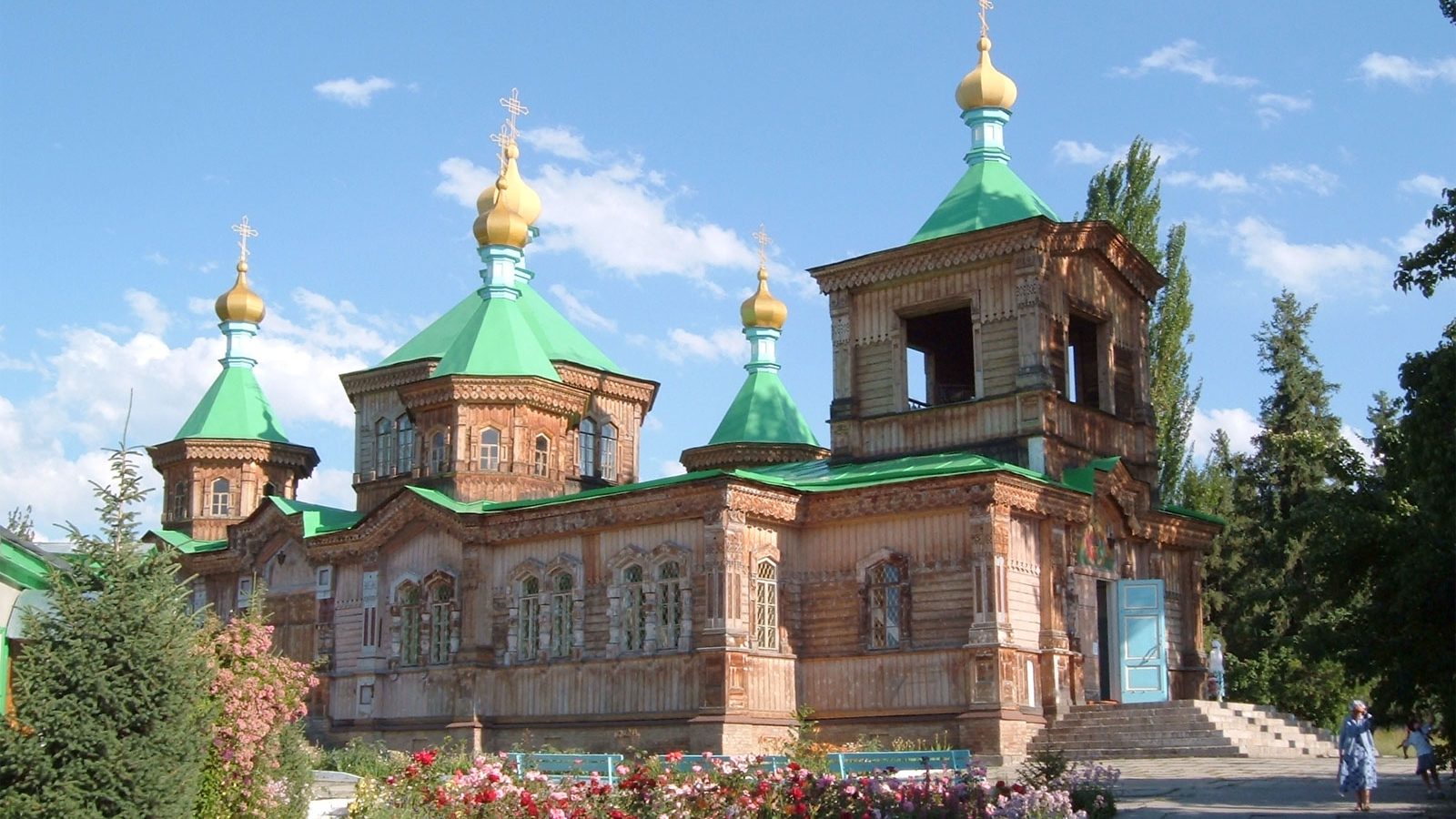
A low-rise, tree-lined town at the eastern end of Lake Issyk-Kul, with the snowy Tian Shan rising behind it. You eat cold, spicy noodles at the bazaar, visit a wooden mosque built without nails and set off on foot into some of Central Asia's best mountain valleys. Best time to visit: July to September. Daily budget (budget traveller): $25 to $120 USD.
Arrive and find your feet
Morning: Take an early marshrutka from Bishkek's main bus station (six to seven hours) and watch the lake go by along the north shore.
Afternoon: Ride marshrutka 109 or a taxi into the centre and drop your bag at your hostel. Walk to the nearest ATM and get som.
Evening: Wander the old quarter as the light fades, then have your first bowl of ashlan-fu by the bazaar and an early night.
Mosque, cathedral and museum
Morning: Visit the Dungan Mosque (about 20 to 50 som) before midday prayers, then walk to Holy Trinity Cathedral (free).
Afternoon: Look around the regional history museum and the carved houses nearby. Shop at Ak-Tilek bazaar for trek snacks and rent any gear you need.
Evening: Ask at your hostel about Ala-Kul conditions and people to share a jeep with. Dinner of lagman and manti in the centre.
Jeti-Oguz and the Seven Bulls
Morning: Take a marshrutka from the Ak-Tilek area (about 80 to 120 som) to Jeti-Oguz and see the red Seven Bulls and Broken Heart rocks.
Afternoon: Walk up the valley past the old sanatorium towards the Kok-Jaiyk meadows. Bring a picnic and water.
Evening: Catch a minibus back before about 5pm. Pack for the trek and go to bed early.
Ala-Kul trek: up the Karakol valley
Morning: Take marshrutka 101 to the national park gate (pay about 250 som), or share a jeep to the bridge to save several hours of walking on the road.
Afternoon: Hike up through the forest to the Sirota camp area at about 2,800m and sleep there to adjust to the altitude.
Evening: Eat at the yurt camp or cook your own dinner. Check the weather for the pass with other hikers.
Ala-Kul lake and the pass
Morning: Start early and climb steeply past the waterfall to Ala-Kul lake at about 3,500m. Fill your water before the top.
Afternoon: Cross the pass at about 3,900m if the weather is clear, then go down the scree into the Altyn Arashan valley.
Evening: Soak in a hot spring pool and sleep in a guesthouse or yurt in Altyn Arashan.
Heading home: Check the last departure the day before.
What to eat in Karakol
- Ashlan-fu: cold noodles and starch jelly in a sour, spicy broth, eaten with a fried bun at the cafés by Ak-Tilek bazaar for about $1 to $2 USD
- Lagman: hand-pulled noodles with beef and peppers, either stir-fried (gyuro lagman) or in soup, on almost every menu in town
- Manti and samsa: steamed dumplings and tandoor-baked pastries filled with mutton and onion, cheap for breakfast or on the road
- Plov: rice cooked with carrots and mutton, often only served at lunch and best early, before the pot runs out
- Kymyz: fermented mare's milk sold in summer along the roads and at yurt camps. It is sour and fizzy, so try a small cup first
- Issyk-Kul honey and sea buckthorn jam from the bazaar, good with tea in the morning and light enough to take home
Hidden gems
- The Przhevalsky Memorial and museum near the lakeshore at Pristan, about 12km from town, where the Russian explorer who gave Karakol its Soviet name is buried. Entry is about 100 som and it is closed on Mondays
- The side streets of the old Russian quarter, where you can still find carved wooden houses with painted shutters away from the main roads
- A Dungan family dinner in a nearby village such as Yrdyk, where you share a long run of small dishes with a local family. Hostels and local tour offices can arrange it
- The Ak-Suu Arboretum walk, a gentler forest route from the national park gate towards Ak-Suu that most trekkers skip on their way to Ala-Kul
- The small Tatar mosque, a plain wooden building in the centre that gets a fraction of the Dungan Mosque's visitors
Getting around
Central Karakol is flat and you can walk most of it. It takes 15 to 20 minutes from the cathedral to the bazaar. City marshrutkas cost about 20 som. Number 109 runs between the main bus station and the centre, and number 101 goes south towards the national park gate. Taxis are cheap, from about 100 som across town, and Yandex Go works here, so you do not have to haggle. Minibuses for Jeti-Oguz, Ak-Suu and Jyrgalan leave from the streets around Ak-Tilek bazaar, while those for the south shore and Skazka canyon leave from the southern bus station on Toktogul Street. Most run in the morning and early afternoon, and the last ones back can leave by about 5pm. Have small notes ready, as drivers rarely change a 1,000 som note. For trailheads beyond the paved roads, such as the bridge in the Karakol valley or Altyn Arashan, you need a 4x4 or an old UAZ van. Hostels can find you other people to share one with.
Safety
Karakol is a safe, friendly town, and serious crime against visitors is rare. The main risks are in the mountains. Altitude sickness is common on the Ala-Kul trek, so sleep lower on the first night, drink plenty of water and turn back if you have a bad headache or feel confused. Weather changes fast above 3,000m, and snow is possible on the pass even in summer. Tell your hostel your route, carry a paper or offline map and do not cross the pass alone in bad weather. Rivers can be fast in the afternoons. Some streets are badly lit and have loose dogs, so take a taxi late at night and steer clear of men who have been drinking. Do not drink tap water without boiling or filtering it. The emergency numbers are 102 for police and 103 for an ambulance. Medical care is basic, so bring travel insurance that covers trekking at altitude and evacuation.
Frequently asked questions
What does this 5-day Karakol itinerary cover?
Day 1: Arrive and find your feet. Day 2: Mosque, cathedral and museum. Day 3: Jeti-Oguz and the Seven Bulls. Day 4: Ala-Kul trek: up the Karakol valley. Day 5: Ala-Kul lake and the pass.
Is 5 days enough for Karakol?
Our recommended trip length for Karakol is 4 to 7 days. This 5-day plan focuses on the highlights and groups sights by area so you spend less time travelling between them.
How much does 5 days in Karakol cost?
A budget traveller spends about $25 to $120 USD a day in Karakol, so roughly $125 to $600 USD for 5 days, not counting flights.
Where should I stay for 5 days in Karakol?
Town centre and Toktogul Street: The grid of streets around the central park and the main Toktogul and Abdrakhmanov roads. Ak-Tilek bazaar: The busy market district east of the centre, where the ashlan-fu stalls, fruit sellers and most local minibuses gather.
When is the best time to visit Karakol?
The best time to visit Karakol is July to September.
How do I get around Karakol?
Central Karakol is flat and you can walk most of it. It takes 15 to 20 minutes from the cathedral to the bazaar.
Is Karakol safe for solo travellers?
Karakol is a safe, friendly town, and serious crime against visitors is rare. The main risks are in the mountains.
More 5-day guides
- Kazbegi (Stepantsminda) in 5 days
- Khiva in 5 days
- Koh Lipe in 5 days
- Lake Toba in 5 days
- Mirissa in 5 days
- Mysuru (Mysore) in 5 days
- Naoshima in 5 days
- Paro in 5 days
Karakol in 2 days | Karakol in 3 days | Karakol in 4 days | Karakol in 7 days | Full Karakol guide
Joy Plus home | Destinations | Itineraries | Activities | Flights | Budget planner | Calendar | Map | Blog | Lifetime access