Destinations / Asia
Kolkata, India travel guide
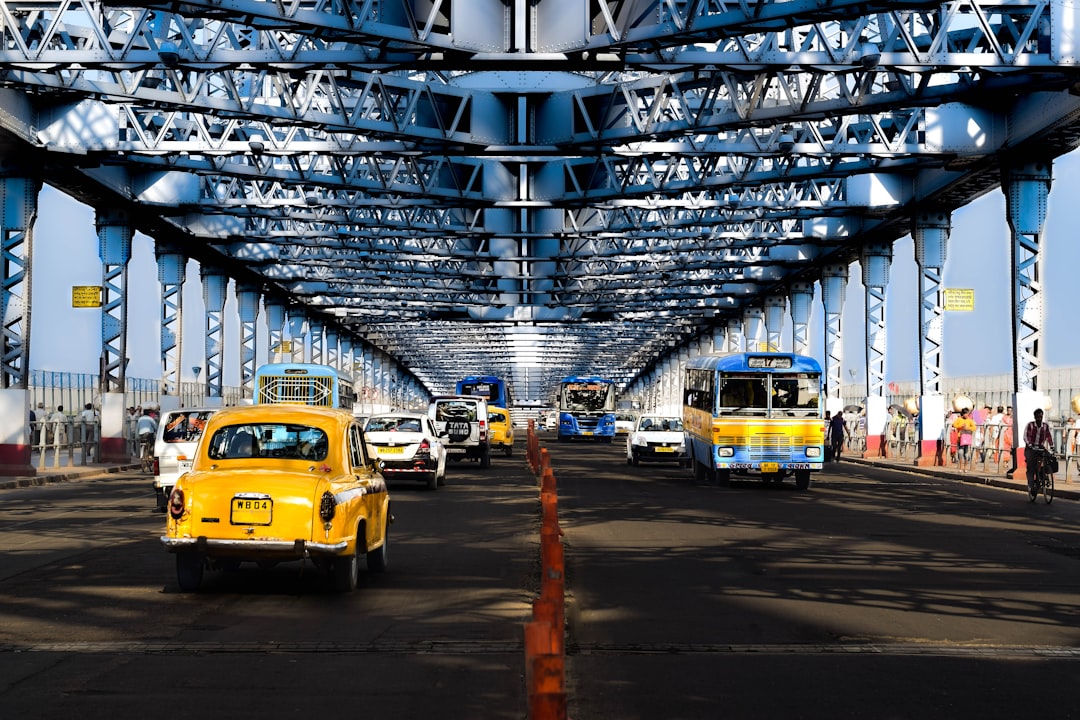
India's literary, intellectual and culinary capital: crumbling mansions, yellow taxis and the country's best street food.
- Best time to visit: November-February
- Daily budget (budget traveller): $25 to $70 USD
- Ideal trip length: 3 to 4 days
Kolkata is the most intellectual and least sanitised of India's big cities: coffee-house debates, Durga Puja pandals, colonial-era ruins draped in banyan roots and a food scene that beats anywhere in the country for value. It's chaotic, warm and endlessly talkative. Joy Plus builds days around the Maidan, the ghats and the eating.
Kolkata is the Indian city that argues back. It has the oldest coffee house culture in the country, a publishing quarter where a million secondhand books are stacked on pavements, and trams that still clank past Georgian banks. The city rewards the curious and punishes the clock-watcher. Plan fewer things per day than you think you can manage, then add a second tea stop.
The food is the real headline. Kathi rolls at Nizam's, puchka from a cart with tamarind water that bites back, shorshe ilish wrapped in banana leaf, biryani at Arsalan with its signature potato, and sweet shops that have been making the same sandesh since the 1800s. A full day of eating here costs less than one cocktail in Lisbon. The catch is logistics. The city is long and thin along the Hooghly, the metro now reaches the airport and a second line links Howrah, Esplanade, Sealdah and Salt Lake, but traffic jams from 9am. Cluster your days by district and you will lose very little time.
Go in winter, when it is 12-27°C and dry, and expect to be asked where you are from roughly forty times a day, usually by someone who wants to tell you about Tagore. October is Durga Puja, the biggest festival in eastern India: thrilling, deafening and packed. Outside Puja, Kolkata still feels like it belongs to its residents, not to visitors. That is exactly why it is worth the trip.
How many days in Kolkata?
For Kolkata, we recommend 3 to 4 days. With more time, add a day trip to Santiniketan or Sundarbans.
| Trip length | What you'll see | Itinerary |
|---|---|---|
| 2 days | Park Street after dark; Colonial core, Victoria Memorial and the Maidan | Kolkata in 2 days |
| 3 days · Recommended | Adds: Dawn flower market and north Kolkata | Kolkata in 3 days |
| 4 days · Recommended | Adds: College Street and the Indian Museum | Kolkata in 4 days |
| 5 days | Adds: Kalighat, Mother House and the south | Kolkata in 5 days |
| 7 days | Adds: Chandannagar, the French town; Chinatown breakfast, Armenian Church | Kolkata in 7 days |
Kolkata itinerary
Arrive, settle, Park Street after dark
Morning: Land at CCU and use the prepaid taxi counter (₹550-750 to Park Street), an Uber, or the metro, which reaches the airport with a train every 20 to 30 minutes. Drop bags near Sudder Street or Park Street. Breakfast at Flurys, the 1927 Swiss tearoom, for pastries and strong tea.
Afternoon: Walk Park Street to South Park Street Cemetery (daytime hours, small ticket), a jungle of Georgian obelisks and mossy tombs. Wander through New Market for a first look.
Evening: Kathi roll at Kusum, then dinner at Peter Cat for the chelo kebab (₹500-700). One beer at Olypub and an early night, as the city starts early.
Colonial core, Victoria Memorial and the Maidan
Morning: Blue Line metro to Esplanade. Walk BBD Bagh to see Writers' Building from outside, the GPO and St John's Church. Weekday lunch on Dacres Lane: mutton chop, fish fry and chai for under ₹250.
Afternoon: Victoria Memorial (Tue to Sun, about 10am to 5pm, closed Monday), then St Paul's Cathedral next door. Ride whichever tram line is running from Esplanade, fare ₹6-10.
Evening: Jhalmuri on the Maidan at dusk, then a cab to Park Circus for biryani at Arsalan.
Dawn flower market and north Kolkata
Morning: Cab at 5:30am to Mullick Ghat flower market under Howrah Bridge (about ₹200 from Park Street). Marigold avalanches and porters at their best. Walk the pedestrian footpath of the bridge, then kochuri-sabzi and jalebi at a roadside shop.
Afternoon: Metro to Shobhabazar Sutanuti and walk into Kumartuli to watch clay idols take shape. Marble Palace if you have the free permit (closed Mon and Thu), then Jorasanko Thakur Bari, Tagore's family home.
Evening: Sunset at Prinsep Ghat on the river, then dinner at Bhojohori Manna: shorshe ilish, mutton kosha and a plate of bhaja.
College Street and the Indian Museum
Morning: Be at the Coffee House on College Street at 9am for infusion coffee (₹50-70) and a fish fry. Browse Boi Para's bookstalls and drink a Paramount sherbet.
Afternoon: Taxi to the Indian Museum (Tue to Sun, closed Monday, about ₹500 for foreigners). Egyptian mummy, Mauryan sculpture and Bharhut stupa gates.
Evening: Dinner at Bar-B-Q on Park Street, then live music or quiz night at Someplace Else in The Park Hotel.
Kalighat, Mother House and the south
Morning: Kalighat Temple at 6:30am, shoes off and phone away, politely refusing touts who offer to be your guide. Taxi to Mother House (open mornings and afternoons, closed Thursday) to visit Mother Teresa's tomb.
Afternoon: Walk around Rabindra Sarobar lake, then coffee and bookshop time along Southern Avenue. Gariahat market for cotton sarees and tant fabrics.
Evening: Mishti doi and sandesh from Mithai, then a Bengali dinner at 6 Ballygunge Place. Metro back from Kalighat.
Chandannagar, the French town
Morning: Metro to Howrah on the Green Line, which runs under the Hooghly river. Local train to Chandannagar (about 40 minutes, ₹10-30). Walk the Strand and Sacred Heart Church.
Afternoon: Lunch at a riverside cafe, then the Institut de Chandernagor museum. Return by afternoon train before rush hour.
Evening: Splurge dinner at Oh! Calcutta, with a refined Bengali tasting menu that justifies its price.
Chinatown breakfast, Armenian Church, depart
Morning: Taxi to Tiretti Bazar before 7am for the old Chinese breakfast: steamed momos, fish ball soup and sausage buns. Then the Armenian Church of Nazareth on Armenian Street.
Afternoon: Final haggling at New Market, one last mutton roll at Nizam's, and a rosogolla from K C Das.
Evening: App cab to CCU, leaving 3 hours before your flight, as traffic can be unpredictable after 5pm.
Best neighbourhoods
- BBD Bagh & Esplanade: The colonial administrative core: Writers' Building, Dalhousie Square and grand banks.
- North Kolkata (Shobhabazar, Kumartuli): Old family mansions, idol-makers' workshops and the city's oldest lanes.
- Park Street & Camac Street: Restaurants, old-school bars, bookshops and the city's after-dark centre.
- Ballygunge & Southern Avenue: Leafy, middle-class south Kolkata with the best cafes and quieter stays.
- Kalighat & Bhowanipore: Temple crowds, market streets and a very lived-in Bengali neighbourhood.
Must-do experiences
- Victoria Memorial and the Maidan: White marble imperial pile set in gardens, best at sunset with a walk across the Maidan.
- Kumartuli idol-makers' workshops: Artisans building clay Durga idols in narrow riverside lanes, year-round but frantic before Puja.
- Howrah Bridge and the Mullick Ghat flower market: Dawn chaos of marigolds, porters and river light under the cantilever span.
- Coffee House on College Street: Cheap coffee, loud arguments and stacks of secondhand books along Boi Para.
Hidden gems
- Marble Palace, a private mansion crammed with European art and live peacocks.
- The Armenian Church of Nazareth, the city's oldest, tucked behind Barabazar.
- South Park Street Cemetery's mossy Georgian tombs under giant trees.
- A tram ride on Asia's oldest electric tram network: two routes still run from Esplanade (5 to Shyambazar and 25 to Gariahat), and the state has announced plans to revive and expand it.
Daily budget
- Accommodation: budget ₹600-1,500 / night (dorm or basic Sudder Street room), mid-range ₹3,500-6,500 (heritage or boutique double), splurge ₹14,000+ (Taj Bengal, The Oberoi Grand, ITC Royal Bengal). Park Street and Ballygunge give the best value mid-range. Expect 2 to 3 times these prices during Durga Puja.
- Food: budget ₹400-700 / day (street food, Coffee House, rolls), mid-range ₹1,200-2,000 (Bengali thali plus one proper dinner), splurge ₹3,000+ per head (Oh! Calcutta, hotel dining). Kathi rolls ₹120-220, puchka ₹30-50, Arsalan biryani ₹300-450, a Bhojohori Manna meal ₹500-900. Lunch on Dacres Lane costs under ₹250.
- Transport: budget ₹100-250 / day (metro ₹5-30, ferries ₹7-10, trams), mid-range ₹500-900 (metro plus Uber, Ola or Rapido), splurge ₹3,000+ (car with driver for a full day). The metro is quick and cheap on the north-south spine, and a second line links Howrah, Esplanade, Sealdah and Salt Lake. Use app cabs for other hops, and ask yellow taxi drivers to run the meter.
- Activities: budget ₹300-800 (free ghats, College Street, one museum), mid-range ₹1,500-3,000 (Victoria Memorial, Indian Museum, guided heritage walk), splurge ₹6,000+ (private guide, Hooghly boat charter, car to Santiniketan). Foreigner tickets run ₹500 at Victoria Memorial and the Indian Museum. Marble Palace is free with a permit.
- Drinks & nightlife: budget ₹300 (chai ₹10-20, Coffee House coffee ₹50-70, one beer), mid-range ₹1,500-2,500 (Park Street pub crawl, pints ₹350-500), splurge ₹5,000+ (hotel bar cocktails at ₹800-1,200 each). Bars close around midnight, earlier than most Indian metros. Dry days on election days and some holidays shut liquor sales entirely.
Where to stay
- Social hostel in Sudder Street / New Market (₹600-1,800 / night): Salvation Army Red Shield Guest House for dorm beds, Hotel Paragon for private rooms. A legendary backpacker lane, walkable to the Indian Museum, New Market and Park Street.
- Boutique hotel in Park Street (₹4,500-9,000 / night): The Park Kolkata for design and the Someplace Else bar downstairs, or Fairlawn Hotel on Sudder Street for a heritage garden and old-world charm.
- Apartment in Ballygunge / Southern Avenue (₹2,500-5,000 / night): Leafy residential streets, the best cafes and a fast metro hop to Rabindra Sarobar. A serviced flat with a kitchenette is ideal for 5+ nights.
- Splurge in Alipore / Chowringhee (₹14,000-30,000 / night): Taj Bengal for the leafy Alipore garden and rooftop pool, or The Oberoi Grand, Kolkata's colonial grande dame, a short walk from New Market and Maidan.
What to eat
- Kathi rolls from Nizam's near New Market or Kusum on Park Street
- Machher jhol and shorshe ilish at a Bengali thali house
- Puchka (Kolkata's sharper, tangier pani puri) from a street cart
- Mishti doi and rosogolla from a century-old sweet shop
Day trips
- Chandannagar (35km, about 45 minutes by train): Former French colony on the Hooghly. Walk the Strand promenade, visit Sacred Heart Church and the Institut de Chandernagor museum, and eat at the riverside cafes. Famed for its Jagadhatri Puja lighting in November. Green Line metro to Howrah, then a local train to Chandannagar (₹10-30). Trains run every 15 to 30 minutes.
- Santiniketan (160km, about 2h15 by train): Rabindranath Tagore's university town and UNESCO World Heritage site, with Visva-Bharati campus, mud-walled studios and the Sonajhuri Khoai haat market on Saturday afternoons. Better as an overnight. Shatabdi or Santiniketan Express from Howrah to Bolpur (₹500-1,000 depending on class), then an e-rickshaw (₹100-200) into the campus.
- Sundarbans (100km, 3 to 4 hours by road and boat): Mangrove delta and tiger territory. Boat safaris through creeks, watchtowers at Sajnekhali, and village life on Gosaba. Day trips are exhausting, so overnight if you can. Book a package tour (₹3,500-6,500 including permits and boat) or take a train to Canning and a shared car to Godkhali jetty.
When to visit
- Winter (November - February): 12-27°C, dry, sunny, cool mornings and evenings. Crowds: Peak season, busy but never overwhelming. Park Street lights up for Christmas, the Kolkata Book Fair runs late Jan to Feb. The best window by far. Walking days are comfortable. Air quality dips in December and January, so carry a mask and skip the early morning cycle rides.
- Summer (March - May): 28-38°C, sticky humidity, sudden evening Kalbaishakhi thunderstorms. Crowds: Low. Hot and sweaty, but hotels are cheap and Poila Boishakh (Bengali New Year, mid April) is a joyful street festival. Sightsee before 11am and after 4pm.
- Monsoon (June - August): 27-33°C, heavy rain, waterlogged streets in low areas. Crowds: Very low. Rooms are at their cheapest and hilsa (ilish) is at its best. Streets flood regularly, so book somewhere central and pack a proper umbrella and sandals.
- Autumn and Durga Puja (September - October): 24-32°C, humid, rain breaks and clearing skies. Crowds: Extreme during Puja, roughly 6 to 9 October in 2027. Unforgettable if you book accommodation months ahead and accept gridlock. Hotel prices double or triple, and pandal hopping runs until 3am. The biggest pandals get dangerously packed at night, so visit them in the morning or early afternoon and step away if a queue starts to push. Come the week after for the same lights and half the crush.
Entry rules for your passport
Visa rules for India depend on the passport you travel on. Check the official source before you book: Government of India e-Visa portal
Getting there
Netaji Subhash Chandra Bose International Airport (CCU) is 17km north-east of the centre. A prepaid taxi to Park Street costs ₹550-750 and takes 45 to 75 minutes. Uber, Ola and Rapido run ₹450-700 depending on surge. Since 25 August 2025 the metro reaches the airport, with a train every 20 to 30 minutes, and a second line links Howrah, Esplanade, Sealdah and Salt Lake. Flights from Delhi take about 2h15 (₹4,000-7,000), from Mumbai 2h45 and from Bengaluru 2h30. By train, Howrah and Sealdah are the main stations. The Rajdhani from Delhi takes about 17 hours (3AC around ₹3,000-3,800). Avoid touts at the airport arrivals door, and never agree an unmetered price at the taxi rank.
Getting around
Netaji Subhash Chandra Bose International Airport is 17 km north-east, 45 to 75 minutes by prepaid taxi or app cab, and since August 2025 on the metro's Yellow Line, with trains every 20 to 30 minutes. The north-south Blue Line is the fast, cheap spine, the east-west Green Line links Howrah, Esplanade, Sealdah and Salt Lake, and yellow taxis and app cabs cover the rest. Trams and ferries across the Hooghly are slow but worth doing once. Traffic is heavy from 9am and again after 5pm.
Safety
Kolkata is among India's safest big cities and violent crime against visitors is rare, though pickpocketing happens in Barabazar and on crowded metros. Solo women report fewer problems here than in Delhi, but modest dress and app cabs after dark remain sensible. Air quality dips badly in winter, drink only sealed water, and expect heavy crowds and closures during Durga Puja in September or October, and visit the biggest pandals by day, as packed night-time queues in narrow lanes can turn dangerous.
Solo travel tips
- Eat at the Coffee House: The College Street Coffee House is full of solo readers and arguers. Take a corner table, order a coffee and a fish fry, and someone will start a conversation within ten minutes.
- Ride the metro, skip the cab, when you can: The Blue Line is cheap (₹5-25), air conditioned and covers Dakshineswar, Shobhabazar, Esplanade, Park Street and Kalighat. The first and last trains are around 7am and 10pm, so leave before the evening crush.
- Hostel pick: Salvation Army Red Shield Guest House: On Sudder Street, a long-time backpacker hub with cheap dorm beds, a noticeboard and an instant community. Hotel Paragon next door is a fallback, and you are minutes from Park Street.
- Adda is the local art: Bengalis love long conversations about politics, film, poetry and football. If someone invites you to sit down for tea, say yes. You will learn more in an hour than from any guidebook.
- Solo female travellers: Kolkata is one of India's more comfortable cities for women alone. Dress modestly, use Uber or Ola after dark, avoid empty back lanes at night, and take the front metro carriage with other women when travelling at rush hour.
- Find your tribe on a heritage walk: Calcutta Walks and similar local guides run small-group tours of north Kolkata and the old Chinatown for ₹1,500-3,000. They are an easy way to meet other travellers and understand the city's layers.
Cultural etiquette
- Remove shoes at temples, mosques and some museums. Wear socks if the floor is hot, and avoid leather items at Hindu shrines.
- Greet people with 'Nomoshkar' and thank them with 'Dhonnobad'. A few Bengali words earn a disproportionate amount of warmth.
- At Kalighat, ignore unofficial guides and fix any priest's fee before the ritual. Donations are voluntary.
- Photography is banned at Marble Palace and inside many shrines. Always ask before photographing Kumartuli artisans or flower-market porters.
- Eat with your right hand when using your hands, and don't pass food with your left. Rolls and puchka are eaten on the spot.
- Dress modestly, covering shoulders and knees, in temples and traditional neighbourhoods. Park Street is more relaxed.
- Lunch is around 1-3pm and dinner from 8pm. Many sweet shops and small restaurants shut in the afternoon lull, so check before you travel.
Frequently asked questions
How many days do you need in Kolkata?
Three to four. One day for the colonial core and Victoria Memorial, one for north Kolkata's lanes, Kumartuli and the flower market at dawn, and one or two for College Street, Kalighat, museums and serious eating.
Is Kolkata safe for tourists?
Yes, it's widely considered one of India's safest large cities. Petty theft in crowded markets and transport is the main risk. Use app cabs at night, keep bags in front in Barabazar, and avoid political rallies, which are frequent and can block roads.
When is the best time to visit Kolkata?
November to February, when days sit around 20-27C and humidity drops. October brings Durga Puja, which is spectacular but packs the city. April to June is punishing heat and the monsoon from June to September floods streets regularly.
What food is Kolkata famous for?
Kathi rolls, puchka, fish curries like machher jhol and shorshe ilish, mutton biryani with its signature potato, and Bengali sweets such as rosogolla and mishti doi. Street eating here is cheap, safe by Indian standards and genuinely world class.
Is Kolkata cheap to visit?
Very. Hostels and guesthouses run $8 to $20 a night, mid-range hotels $30 to $60, street meals $1 to $3 and restaurant dinners $6 to $12. Metro rides cost pennies. Most travellers spend $25 to $70 a day comfortably.
Is Kolkata good for solo travellers?
Yes. It's walkable in parts, people are unusually chatty and helpful, and cafes, bookshops and coffee houses make eating alone normal. Solo women should still stick to app cabs after dark and dress modestly in temple areas.
Do I need a visa for India?
Yes, almost every foreign visitor needs one. Most nationalities can apply online for an e-Visa on the official portal, indianvisaonline.gov.in, at least four days before arrival. You must also complete the free e-Arrival Card on the same site within the 72 hours before you land. Use only the official portal: lookalike sites charge fees.
Tours and activities in Kolkata | Kolkata in 2 days | Kolkata in 3 days | Kolkata in 4 days | Kolkata in 5 days | Kolkata in 7 days
Joy Plus home | Destinations | Itineraries | Activities | Flights | Budget planner | Calendar | Map | Blog | Lifetime access