Destinations / Europe
Kraków, Poland travel guide
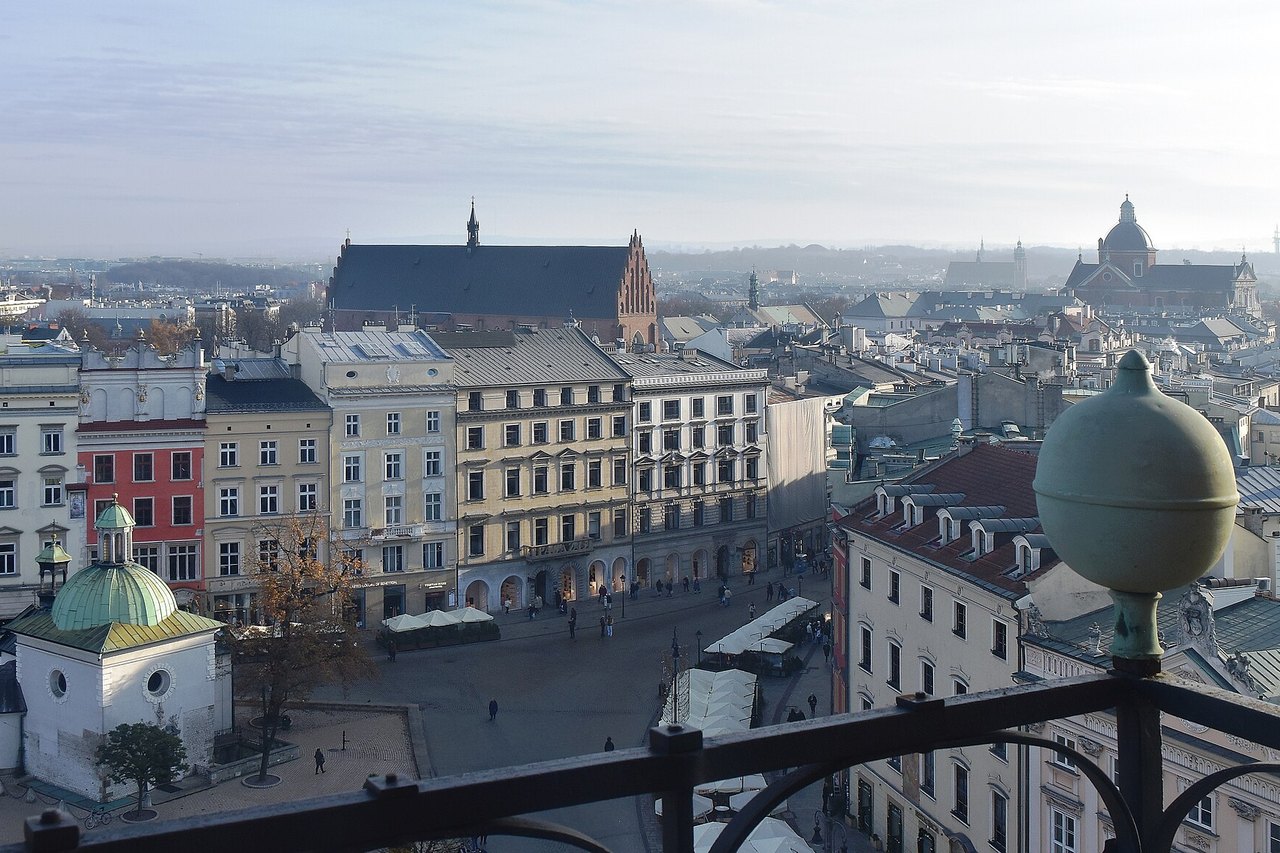
A perfectly preserved medieval old town, deep history, and Europe's best value city break.
- Best time to visit: May-June and September (mild, fewer crowds)
- Daily budget (budget traveller): $65 to $100 USD
- Ideal trip length: 3 to 4 days
Kraków survived the war almost untouched, and it shows - the largest medieval market square in Europe, a royal castle on the hill, and a Jewish quarter that has become the city's most soulful district. It's also astonishingly good value. Joy Plus walks you through the old town and Kazimierz at the right pace, tells you which days to book Wieliczka and Auschwitz-Birkenau, and finds the milk-bar lunches and cellar bars that keep this a local city, not just a stag-do stop.
Kraków is the Central European city that came through the 20th century with its medieval skeleton intact. The Rynek Główny is 40,000 square metres of cobbles, the largest medieval market square in Europe, with a Renaissance Cloth Hall in the middle and two mismatched church towers on the corner. Every hour a trumpeter in St Mary's tower plays the hejnał and stops mid-note, in memory of a watchman said to have been shot in the throat by an arrow. Below the castle hill, the old Jewish quarter of Kazimierz has turned into the city's best neighbourhood after dark: candlelit cellar bars, mismatched furniture, klezmer from open doors and a zapiekanka stand on every corner.
It is also absurdly good value. A bowl of żurek at a milk bar is about 15 zł, a pint of craft beer 14 to 18 zł, a dorm bed 70 to 130 zł, a tram ride about 6 zł. One złoty is roughly €0.23, so you can eat well, sleep centrally and still afford the two big excursions most people come for. The old town is flat, compact and walkable end to end in 20 minutes. Trams cover everything else, and a train gets you to Wieliczka in 25 minutes. Seven days is generous, but it lets the city breathe: two days for the old town and Kazimierz, one for the salt mine, one for Auschwitz, then Nowa Huta and Podgórze at a slower pace.
The heavy history here is real, and it deserves planning. Auschwitz-Birkenau is 70km west in Oświęcim and needs a timed pass booked weeks ahead in summer. Schindler's Factory and the Podgórze ghetto sites are a serious half-day on their own. Do not stack them back to back. Put the salt mine, a river evening or Nowa Huta in between, and keep the night after Auschwitz quiet. Avoid the Floriańska and Szewska stag-party strip, and Kraków is a deeply civilised, relaxed city. Go in May, June or September and it is hard to beat.
How many days in Kraków?
For Kraków, we recommend 3 to 4 days. With more time, add a day trip to Zakopane and the Tatras.
| Trip length | What you'll see | Itinerary |
|---|---|---|
| 2 days | Old Town and the Rynek; Wawel Hill and Kazimierz | Kraków in 2 days |
| 3 days · Recommended | Adds: Wieliczka Salt Mine and the river | Kraków in 3 days |
| 4 days · Recommended | Adds: Auschwitz-Birkenau | Kraków in 4 days |
| 5 days | Adds: Nowa Huta, the communist-era city | Kraków in 5 days |
| 7 days | Adds: Podgórze, Schindler's Factory and Kościuszko Mound; Stary Kleparz | Kraków in 7 days |
Kraków itinerary
Arrive, Old Town and the Rynek
Morning: Train from KRK to Kraków Główny (about 20 min, 20 zł). Walk through the Planty park to St Florian's Gate and drop bags. Buy an obwarzanek (about 3 zł) from a blue cart, then coffee at Jama Michalika (Floriańska 45).
Afternoon: Cloth Hall, then climb St Mary's tower on a timed ticket (20 zł, sold only on the day at the visitor centre, Plac Mariacki 7, closed Mondays). Catch the hejnał at the top of the hour. Underneath the square, the Rynek Underground museum is worth booking ahead.
Evening: Dinner at Pod Aniołami (Grodzka 35) for roast meats and pierogi. Skip the Szewska stag strip and wander the Rynek lit up at night. Early bed, tomorrow is a long walk.
Wawel Hill and Kazimierz
Morning: Be at Wawel Castle at the 9am opening. Book timed State Rooms online, add the Cathedral with the Sigismund Bell (about 30 zł). The hill grounds are free. Dragon statue breathes fire every few minutes.
Afternoon: Walk Stradom street to Kazimierz. Lunch is a zapiekanka at the Okrąglak on Plac Nowy (15 to 25 zł). Then Szeroka street, the Remuh Synagogue and old cemetery, and the Old Synagogue museum (Mondays 10:00 to 15:00, other days 9:00 to 17:00).
Evening: Klezmer dinner at Ariel (Szeroka 18), then cellar bars: Alchemia (Estery 5), then Singer (Estery 20) with its sewing-machine tables.
Wieliczka Salt Mine and the river
Morning: Train from Kraków Główny to Wieliczka Rynek-Kopalnia (about 25 min, under 10 zł), then a 10-minute walk to the mine. Book the 9am English tour (about 143 to 159 zł, depending on season). About 800 steps down, lift back up, constant 17 to 18°C.
Afternoon: Back in town by 2pm. Late milk bar lunch at Bar Mleczny Pod Temidą (Grodzka 43), then a loop of the Planty park.
Evening: Drinks on the rooftop terrace of the Sheraton Grand (Powiśle 7, open in season), with the Vistula below and the castle lit up along the bank.
Auschwitz-Birkenau
Morning: Pre-booked guided tour or transfer. Minibus from Kraków takes about 1h30 each way. The guided visit covers Auschwitz I and Birkenau in about 3.5 hours. Bags over 35x25x15 cm are not allowed inside.
Afternoon: Back in Kraków mid-afternoon. Do nothing planned. Eat something simple and sit in the Planty or a quiet café.
Evening: Quiet dinner, an early night. No bars tonight, you will want the space.
Nowa Huta, the communist-era city
Morning: Tram 4 or 10 east to Plac Centralny (about 25 min). Walk the Stalinist boulevards and see Arka Pana, the 1970s concrete church. Coffee and pierogi at Restauracja Stylowa on the main square.
Afternoon: Join a Crazy Guides Trabant tour (about 200 zł per person) or visit the PRL Museum. Tram back to the centre.
Evening: Lazy dinner on Józefa street in Kazimierz. Try Eszeweria or Starka for a vodka and a late table.
Podgórze, Schindler's Factory and Kościuszko Mound
Morning: Schindler's Factory (Lipowa 4), timed ticket 60 zł, book online. Monday entry is free from 10am to 3pm but can't be booked ahead, and the museum is closed the first Tuesday of each month. Allow 2.5 hours.
Afternoon: Ghetto Heroes Square with its empty chairs memorial, then Pharmacy Under the Eagle. Tram to Salwator, bus 100 to the Kościuszko Mound (34 zł to climb) for the city panorama.
Evening: Sunset on the mound, then a relaxed dinner in the Old Town, perhaps Szara Gęś on the Rynek for a last roast goose.
Slow morning, Stary Kleparz, depart
Morning: Wander Stary Kleparz market for fruit, smoked cheese (oscypek) and flowers. Coffee at Café Szafe (Felicjanek 10).
Afternoon: Last pierogi at Pierogi Krakowiacy or the milk bar. Pick up Polish chocolate and craft from the Cloth Hall.
Evening: Train from Kraków Główny to the airport station (about 20 min). Leave about 2.5 hours before the flight, which is plenty as the airport is compact.
Best neighbourhoods
- Stare Miasto (Old Town): The walled medieval core around the vast Rynek Główny market square. The classic base.
- Kazimierz: The former Jewish quarter, now the city's most atmospheric district of bars, galleries and food trucks.
- Wawel: The royal hill with the castle and cathedral overlooking the Vistula.
- Podgórze: Across the river, home to the wartime ghetto sites and Schindler's Factory museum.
- Nowa Huta: A planned communist-era steel town on the outskirts - a fascinating contrast to the old town.
Must-do experiences
- Rynek Główny & Cloth Hall: Europe's largest medieval square - climb St Mary's tower, hear the hourly trumpet call, browse the Cloth Hall stalls.
- Wawel Castle & Cathedral: The seat of Polish kings, with state rooms, royal tombs and Vistula views.
- Kazimierz at night: The Jewish quarter's squares fill with cellar bars, klezmer music and street food after dark.
- Schindler's Factory Museum: A powerful, immersive museum on Kraków under Nazi occupation, in Podgórze.
Hidden gems
- Eat zapiekanka (Polish bread-pizza) at the round Okrąglak food court in Kazimierz.
- A milk bar (bar mleczny) lunch - canteen-priced pierogi and żurek soup.
- The Wieliczka Salt Mine, a UNESCO labyrinth of chapels carved entirely from salt.
- Drinks at a Kazimierz cellar bar like Alchemia, candlelit and gloriously ramshackle.
Daily budget
- Accommodation: budget 70-130 zł / night (hostel dorm), mid-range 350-600 zł (boutique or apartment double), splurge 1,100+ zł (Hotel Stary, Hotel Copernicus). Kazimierz and Podgórze give the best value. Old Town rooms cost 30 to 50% more, and noise from the Rynek is real.
- Food: budget 80-120 zł / day (milk bars, zapiekanka, obwarzanek), mid-range 180-280 zł (café brunch plus one sit-down dinner), splurge 450+ zł (tasting menu at Bottiglieria 1881 or Cyrano de Bergerac). Milk bar lunches (pierogi, żurek, kompot) run 20 to 35 zł, the single best budget hack in the city.
- Transport: budget About 20 zł / day (24h transit ticket), mid-range 40-70 zł (transit, Bolt, train to Wieliczka), splurge 300+ zł (private driver to Auschwitz). Walk the old town and Kazimierz. A single 60-minute ticket is 8 zł. Validate it on board or risk a fine.
- Activities: budget 30-60 zł (free Wawel grounds, Planty park, one museum), mid-range 150-250 zł (Wawel Cathedral, St Mary's tower, Wieliczka), splurge 400+ zł (private Auschwitz guide, Trabant tour of Nowa Huta). Wieliczka runs about 143 to 159 zł and the Auschwitz guided tour about 150 zł. Several museums have a weekly free day, check before you go.
- Drinks & nightlife: budget 30-50 zł (a few beers at a pub or Pijalnia), mid-range 80-130 zł (Kazimierz cellar crawl), splurge 250+ zł (craft cocktails and a late club night). Beer is 10 to 18 zł, a vodka shot 10 to 15 zł. Alchemia and Singer in Kazimierz are the classic two.
Where to stay
- Social hostel in Old Town edge, by the main station (70-140 zł / night): Greg & Tom Hostel (Pawia 12) is a sociable base by the main station, with a kitchen, a common room and free breakfast and dinner, a short walk from the Rynek.
- Boutique hotel in Kazimierz (450-750 zł / night): Hotel Rubinstein (Szeroka 12) sits in the former Jewish quarter, steps from the bars and synagogues. Characterful rooms and quiet courtyards.
- Apartment in Podgórze or Kazimierz (280-480 zł / night): A self-contained flat with a kitchen on a local street. Best value for stays of 5+ nights and handy for Schindler's Factory and the Vistula.
- Splurge in Old Town, Kanonicza / Szczepańska (1,100-2,200 zł / night): Hotel Copernicus (Kanonicza 16) has a spa and pool under medieval vaults on the royal road. Hotel Stary (Szczepańska 5) is a 5-star in a converted 15th century townhouse.
What to eat
- Pierogi (dumplings) - try the ruskie and meat versions
- Żurek, sour rye soup served in a bread bowl
- Zapiekanka, the open-faced toasted baguette
- Obwarzanek, the twisted street pretzel sold from blue carts
Day trips
- Auschwitz-Birkenau (70km west, about 1h30): The Nazi German concentration and extermination camp, now a memorial and museum. A guided tour covers Auschwitz I and Birkenau in about 3.5 hours. Profound and heavy, keep the rest of the day light. Book the official tour at visit.auschwitz.org. Guided tour about 150 zł. Minibus transfers from the Kraków bus station run 20 to 25 zł each way, or take a train to Oświęcim (about 1h40).
- Wieliczka Salt Mine (15km, about 25 min by train): A UNESCO labyrinth of chambers, chapels and lakes carved from rock salt. St Kinga's Chapel, with chandeliers made of salt crystals, is the highlight. About 800 steps in total, lift back up. Train from Kraków Główny to Wieliczka Rynek-Kopalnia (under 10 zł), then a 10-minute walk. Or bus 304. Tourist route about 143 to 159 zł, book timed tours online.
- Zakopane and the Tatras (About 2 hours by bus): The mountain town at the foot of the Tatras. Krupówki street for oscypek and woodcarvings, Gubałówka funicular, Kasprowy Wierch cable car. A long day trip, better as an overnight. Minibuses and Flixbus from Kraków MDA bus station, 25 to 40 zł each way. Book the cable car online, it is about 100+ zł return.
When to visit
- Spring (April - June): 10-22°C, lengthening days, occasional showers. Crowds: Building, manageable until June. The best window. Planty park in bloom, café terraces open, Juwenalia student festival in May. Pack a rain layer.
- Summer (July - August): 22-30°C, humid, afternoon thunderstorms. Crowds: Heavy, tour groups and weekend stag parties. Fun but busy. Book Auschwitz and Wawel tickets weeks ahead. Late June has the Jewish Culture Festival in Kazimierz, worth planning around.
- Autumn (September - October): 8-20°C, dry and golden in September. Crowds: Moderate, easing from October. The locals' pick. Warm days, cool evenings, cheaper rooms, Wawel and the Vistula banks at their best.
- Winter (November - March): -5 to 5°C, snow possible, short days. Crowds: Low, except for the Christmas market in December. Cheapest and cosiest, with mulled wine in the Rynek. Smog can be bad on still days, check the Airly app. Wieliczka is warmer than outside.
Entry rules for your passport
Visa rules for Poland depend on the passport you travel on. Check the official source before you book: European Commission: Schengen visa policy
Getting there
Kraków John Paul II Airport (KRK) at Balice is 11km west of the centre. A Koleje Małopolskie train runs from the terminal to Kraków Główny every 30 min, takes about 20 min and costs 20 zł. Buses 209 and 300 (night bus 902) are cheaper but slower. A Bolt to the Old Town is 50 to 80 zł. Avoid the airport taxi rank. From Warsaw, an Express InterCity train takes about 2h20 and costs from 70 zł. Prague is roughly 7 hours by train or Flixbus, and Berlin about 9 hours. Kraków Główny station is attached to Galeria Krakowska, with the Planty park and Old Town a 10-minute walk away.
Border checks: non-EU visitors (other than Swiss, Norwegian, Icelandic, Liechtenstein, Andorran, Monegasque, San Marinese and Vatican citizens, and holders of an EU residence permit or long-stay visa) are registered in the EU's Entry/Exit System (EES) instead of getting a passport stamp. On your first crossing, officers take your photo and/or fingerprints, so allow extra time at passport control. ETIAS, the planned travel authorisation, is not in operation yet, so don't pay any website for one.
Getting around
The old town is fully walkable and largely pedestrianised. Trams and buses cover the rest cheaply - buy tickets from machines or the app and validate on board. Auschwitz-Birkenau is about 1.5 hours away; book an organised transfer or guided tour rather than winging the buses.
Safety
Kraków is very safe and easy for solo travellers, day or night. The main nuisance is the rowdy stag-party scene clustered around a few old-town bars - easily avoided in Kazimierz. Standard pickpocket care in the busy square and on packed trams.
Solo travel tips
- Use the milk bars: Bary mleczne are cafeteria-style, cheap and communal. Order at the counter, pay, carry your tray, return it. Nobody blinks at a solo diner, and you eat for 25 zł.
- Hostel pick: Greg & Tom Hostel: Greg & Tom Hostel (Pawia 12, by the main station) is a sociable base with a kitchen, a good common room and free breakfast and dinner. Avoid its sister Greg & Tom Party Hostel unless you want the nightly pub crawl.
- Book Auschwitz solo, join a small group: Book the official guided tour at visit.auschwitz.org at least 3 to 4 weeks ahead in summer, or take a small-group minibus tour with a licensed guide. Plan nothing loud that evening.
- Dodge the stag parties: Szewska, Floriańska and Mikołajska fill with British and Scandinavian stag groups on weekends. Head to Kazimierz or Zabłocie for a calmer night.
- Solo female travellers: Kraków is very safe at night. Standard rules: watch your drink, use Bolt or FreeNow rather than street taxis, and stay alert on late night trams and the area around the main station.
- Find your tribe on a free walking tour: Tip-based walking tours leave from near St Florian's Gate daily. Expect to leave 30 to 50 zł. Pierogi cooking classes (150 to 200 zł) and the Kazimierz Plac Nowy food stalls are other easy ways to meet people.
Cultural etiquette
- Say dzień dobry (good day) when you enter a shop or café and dziękuję (thank you) when leaving. Staff warm up fast if you try.
- Poles identify as Central European, not Eastern. Avoid the phrase 'Polish death camps', say 'Nazi German camps' at Auschwitz.
- Be quiet and serious at Auschwitz, Schindler's Factory and the Kazimierz memorials. No smiling selfies, no drones, and follow photography rules in each room.
- Tip 10% at sit-down restaurants if service is not already added. Round up at bars and in taxis. When paying by card, say the tip before the terminal comes out.
- Most shops close on Sundays because of the trading ban. Buy groceries Saturday, and eat out or use a Żabka that day.
- Don't jaywalk. Locals wait for the green pedestrian light even on empty streets, and there are fines.
- In a Polish home, take your shoes off and accept the slippers (kapcie). Toast with na zdrowie, eye contact, and eat something alongside every shot.
Frequently asked questions
How many days do you need in Kraków?
Two days for the old town and Kazimierz, plus a third (and ideally fourth) for the Auschwitz-Birkenau and Wieliczka Salt Mine day trips, which each take half a day or more.
Is Kraków cheap?
Very - it's one of Europe's best-value cities. Hearty meals, good beer and central accommodation all cost a fraction of Western Europe, which makes it ideal for a longer, slower trip.
Should I visit Auschwitz from Kraków?
Most visitors do, and it's a profound, sobering experience. Book a timed entry or guided transfer in advance, allow a full half-day, and plan something gentle afterwards.
When is the best time to visit Kraków?
May-June and September (mild, fewer crowds) is the sweet spot for weather and crowds. Shoulder season brings lower prices and easier bookings, while peak months mean higher accommodation costs and longer queues at the best known sights, so book early if you travel then.
How much does a trip to Kraków cost?
Budget around $65 to $100 USD per person per day, covering a hostel bed or simple room, local transport, two or three meals out and an activity or entry ticket. You can go lower with markets and free walking tours, or far higher with boutique hotels and private guides.
Is Kraków safe for solo female travellers?
Kraków is generally a comfortable place to travel solo, including for women, as long as you use normal city sense. Kraków is very safe and easy for solo travellers, day or night. The main nuisance is the rowdy stag-party scene clustered around a few old-town bars - easily avoided in Kazimierz. Standard pickpocket care in the busy square and on packed trams.
How do you get around Kraków?
The old town is fully walkable and largely pedestrianised. Trams and buses cover the rest cheaply - buy tickets from machines or the app and validate on board. Auschwitz-Birkenau is about 1.5 hours away; book an organised transfer or guided tour rather than winging the buses.
More about Kraków
Tours and activities in Kraków | Kraków in 2 days | Kraków in 3 days | Kraków in 4 days | Kraków in 5 days | Kraków in 7 days
Can't decide? Compare Kraków with...
Joy Plus home | Destinations | Itineraries | Activities | Flights | Budget planner | Calendar | Map | Blog | Lifetime access