Destinations / Africa
Kruger National Park, South Africa travel guide
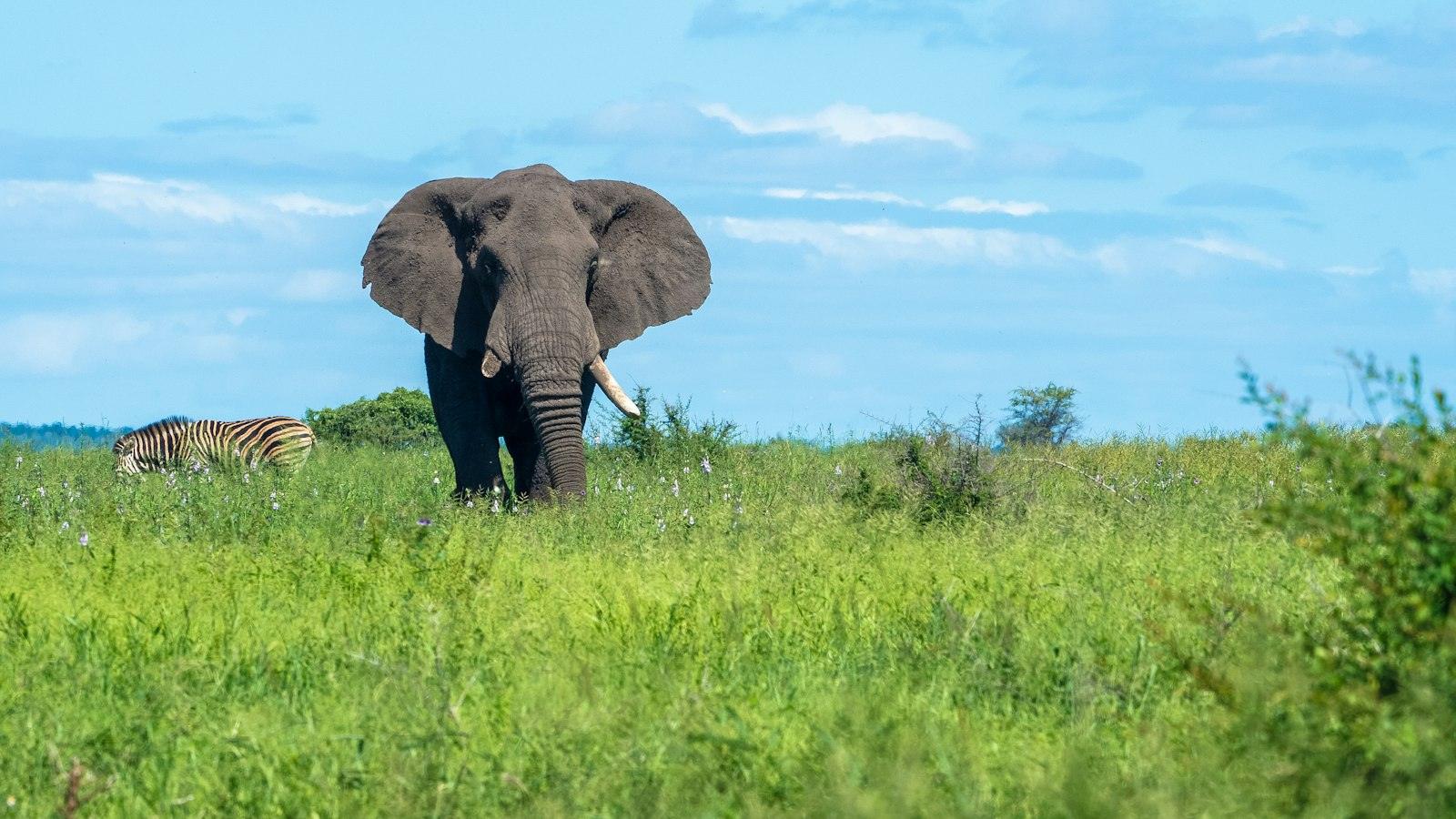
Africa's most accessible big game wilderness: Big Five encounters, sweeping bushveld, and self-drive freedom for the solo safari-goer.
- Best time to visit: May to September
- Daily budget (budget traveller): $80 to $250 USD
- Ideal trip length: 4 to 6 days
Stretching roughly 360 kilometres from north to south along South Africa's border with Mozambique, Kruger National Park covers nearly two million hectares, an area comparable to Wales. It is one of the oldest and best-managed protected areas on the continent, home to the Big Five, more than 140 mammal species, and around 500 bird species. Unlike many safari destinations, Kruger rewards independent travellers: you can drive yourself along well-maintained tar and gravel roads, sleep in government-run rest camps, and watch elephants drink at a river from your own car window. Each region has its own character, from the dense lion country of the central plains to the baobab-studded, remote north. For those travelling alone, the rest camps are safe, sociable, and fenced, with communal braai areas, shops, and guided drives that make it easy to share sightings with fellow travellers. Expect early starts, long quiet hours of scanning the bush, and the electric thrill of a leopard stepping onto the road ahead.
Kruger is 19,485 square kilometres of bushveld, roughly the size of Wales, and the first thing to get right is that it is not one place. The south around Skukuza and Lower Sabie is leafy, busy and crammed with leopard, rhino and buffalo. The central plains around Satara are open golden grass with some of the densest lion country in Africa. Olifants and Letaba sit on the big rivers, where elephants dominate the skyline. Beyond Mopani the road empties out into baobab and fever tree country around Punda Maria and Pafuri, where you can drive for an hour and see one other car. Most first-timers should spend four to six days in the south and centre rather than trying to cover all 360 kilometres.
The rhythm is simple and slightly brutal. You wake at 4:45am, queue at a camp gate that opens as early as 4:30am (camp gates, November–January), 5:30am in February–March and October, and 6:00am in April–September, and spend the cool hours creeping along tar and gravel at 50 and 40 km/h with the engine off at every stopped car. Around 10am you retreat to a picnic site such as Tshokwane for a burger, then rest through the heat. You head out again at 3pm, and you must be back inside a camp before the gate shuts at 5:30pm in winter or 6:30pm in summer. Nights are for the braai fire, a Castle or a Windhoek Lager, and the sound of hyenas outside the fence. That is the whole formula, and it works because the park runs it so well.
For a solo traveller Kruger is easier than it sounds. Rest camps are fenced, staffed and social, and guided sunrise, sunset and night drives are priced per seat, so you never pay a single supplement. The one real cost is the car: a rental, fuel and the daily conservation fee (R602 per international adult per day through 31 October 2026, rising to R692 from 1 November 2026; lower resident and SADC rates apply). Book camps early, as SANParks opens reservations about 11 months ahead and school holidays sell out fast. Take malaria advice from a travel clinic before you go, pack binoculars, and plan on a night in the south and a night in the centre rather than racing the whole park in one go.
Kruger National Park itinerary
Land, stock up, first night in Skukuza
Morning: Fly JNB to Kruger Mpumalanga International (MQP) and collect your car from the Avis, Hertz or Budget desk. Drive to Hazyview and fill a cooler box with boerewors, ice, braai wood and water.
Afternoon: Enter at Phabeni Gate, then drive on to Skukuza Rest Camp (check-in from 14:00). Stop at Lake Panic bird hide if there is time before the gate times.
Evening: Join the SANParks sunset drive from Skukuza reception for about R650-850, then dinner at Cattle Baron or a braai at your site. Early bed.
Skukuza to Lower Sabie along the river
Morning: Leave at gate opening (6:00 in winter) and drive the H4-1 along the Sabie River. Elephant, hippo and buffalo are common, leopard possible. Allow 2 hours for a 43 km road.
Afternoon: Check in at Lower Sabie, then eat on the Mugg & Bean deck overlooking the river. Drive the short loop to Sunset Dam and park for 45 minutes before dusk.
Evening: Braai at camp or dinner on the deck. Ask at reception for the day's sightings board before bed.
North through Tshokwane to Satara
Morning: Take the H10 north, stopping at Tshokwane Picnic Site for a burger and coffee. Watch your plate, because the hornbills and vervets will not ask.
Afternoon: Continue on the H1-3 into the central plains. This is lion and zebra country, so slow down every time you see a car stopped on the verge.
Evening: Check in at Satara and book a night drive (about R650-850), the best chance in the park for civet, genet and hyena.
Satara plains, then Olifants
Morning: Drive the S100 toward Nwanetsi at first light for lions on the open grass. Stop at Sweni hide on the way back.
Afternoon: Take the H1-4 north to Olifants Rest Camp, about 1.5 hours. Order a drink at the viewpoint restaurant and watch elephant and buffalo cross the river below.
Evening: Sunset on the clifftop, then a quiet dinner at the camp restaurant or a braai. The Olifants River valley is the best view in the south-central park.
Letaba and the big tuskers
Morning: Drive the S44 along the Olifants River to Letaba (about 1.5 hours with stops). Elephants are almost guaranteed.
Afternoon: Visit the Elephant Hall for the tusks of Kruger's famous giants, then take the afternoon loop along the Letaba River.
Evening: Check which food outlets are open at Letaba, or self-cater with a braai. Ask the ranger at reception about tomorrow's route to Phalaborwa.
Masorini, then Hoedspruit
Morning: Early drive from Letaba toward Phalaborwa Gate (about 2 hours). Stop at Masorini, the Iron Age village site with an iron smelting display.
Afternoon: Exit at Phalaborwa Gate and drive to Hoedspruit (about 2 hours on the R71 and R527). Check in at a guesthouse.
Evening: Dinner in town and a long shower. After five nights in the bush it feels extravagant.
Cheetah centre, depart
Morning: Take the morning guided tour at the Hoedspruit Endangered Species Centre (R350 per adult for the standard two-hour tour; book at least 24 hours ahead), which covers cheetah, wild dog and rehabilitation work.
Afternoon: Return the car at Hoedspruit Eastgate Airport (HDS) and fly to JNB with Airlink. Allow a one-way drop-off fee on the rental.
Evening: Connect onward from Johannesburg, or stay a night at an airport hotel if you have an early international flight.
Best neighbourhoods
- Southern Kruger (Skukuza and Lower Sabie): The most visited and best-connected region, with the park's largest camp at Skukuza, the scenic Sabie River, and some of the highest predator densities. A good base for first-timers and those without long drives.
- Central Plains (Satara and Orpen): Open grassland and knob-thorn savannah that attracts large herds of zebra, wildebeest, and buffalo, and with them, lions and other predators. Many visitors consider it the best area for big cat sightings.
- Olifants and Letaba: Camps perched above river valleys in the north-central park, known for large elephant herds, dramatic views over the Olifants River, and excellent birdlife.
- Far North (Punda Maria and Pafuri): A remote, wild corner of the park with baobabs, fever tree forests, and a very different landscape. It rewards patient visitors with rare birds and fewer vehicles on the road.
Must-do experiences
- Drive the Skukuza to Lower Sabie road: Take the H4-1 along the Sabie River at dawn or late afternoon, one of the park's most reliable routes for elephant, hippo, buffalo, and the chance of a big cat.
- Join a guided sunrise or night drive: Book an open vehicle drive from a rest camp with a trained ranger, who can spot well-camouflaged animals, explain behaviour, and take you out after dark when nocturnal species emerge.
- Watch the light fade at Sunset Dam: Park near Lower Sabie and watch hippos, crocodiles, herons, and visiting elephants gather at this popular waterhole as the sky turns orange.
- Take a guided bush walk: Experience the bush on foot with an armed ranger on a morning walk or a multi-day wilderness trail, where tracks, plants, and small creatures take centre stage.
- Admire the view from Olifants Camp: Stay or stop at this clifftop camp for sweeping views over the Olifants River, where elephants, buffalo, and crocodiles can be seen from the terrace.
- Visit the Elephant Hall at Letaba: Learn about the park's legendary tuskers in this museum at Letaba Camp, which displays tusks and skulls of some of Kruger's most famous elephants.
Hidden gems
- The Lake Panic bird hide near Skukuza, a quiet wooden hide overlooking a small dam where waterbirds, crocodiles, and the occasional animal visit
- The fever tree forests around the Luvuvhu River at Pafuri in the far north, one of the most beautiful and bird-rich corners of the park
- The Masorini archaeological site near Phalaborwa, an Iron Age settlement where you can learn about early iron smelting and the people who lived here
- Crooks' Corner, the remote confluence of the Limpopo and Luvuvhu rivers where South Africa, Zimbabwe, and Mozambique meet, once a hideout for poachers and smugglers
Daily budget
- Accommodation: budget R450-650 / night (SANParks campsite), mid-range R1,800-3,500 (rest camp bungalow or safari tent), splurge R5,500+ pp (Kruger Shalati or a Sabi Sand lodge). Camp prices are for two, so solos pay the full rate. Book skukuza, Satara and Lower Sabie as early as the booking window allows.
- Food: budget R250-400 / day (Spar groceries, braai), mid-range R600-900 (Mugg & Bean breakfast, camp restaurant dinner), splurge R1,500+ (lodge dining, wine pairings). Stock up on boerewors, ice and braai wood in Hazyview or Mbombela before you enter. Camp shops charge a premium.
- Transport: budget R550-800 / day (small hatchback plus fuel), mid-range R900-1,400 (automatic SUV plus fuel), splurge R2,500+ (4x4 or a private driver-guide). A sedan handles the tar and graded gravel. Budget about R300 of fuel per day at roughly R22-24 per litre, and top up at Skukuza, Satara, Olifants or Letaba.
- Activities: budget About R600-700 / day (international adult conservation fee; check your dates), mid-range R1,300-2,000 (fee, one guided drive, one bush walk), splurge R5,000+ (private reserve game drives or a multi-day wilderness trail). SANParks sunrise, sunset and night drives run about R650-900 per seat and a morning walk about R900-1,100. A Wild Card can pay off on longer stays.
- Drinks & nightlife: budget R50-150 (camp shop beers at the braai), mid-range R200-400 (sundowner deck at Lower Sabie), splurge R800+ (lodge gin bar, wine pairings). There is no nightlife, which is the point. Lights are out by 10pm, the fire is the party, and the hyenas are the soundtrack.
Where to stay
- Social hostel in Lower Sabie Rest Camp, southern Kruger (R450-1,800 / night): Safari tents and campsites beside communal braai areas, with the Mugg & Bean deck and Sunset Dam a short drive away. The most social camp in the park for solos.
- Boutique hotel in Skukuza (R3,000-5,500 / night (double)): Skukuza Safari Lodge, the park's concession lodge beside the Sabie River. It has a pool, a restaurant and bush views, and is a ten-minute drive from the airstrip.
- Apartment in Marloth Park (next to Crocodile Bridge Gate) (R1,200-2,500 / night): Self-catering bush houses where zebra, giraffe and warthog wander through the garden. Cook your own braai and be a short drive from Crocodile Bridge Gate. Best for stays of 3+ nights.
- Splurge in Skukuza and the Sabi Sand reserves (R5,500-15,000+ pp / night): Kruger Shalati, a train hotel on the old Selati Bridge over the Sabie River, or an all-inclusive Sabi Sand lodge such as Sabi Sabi or Londolozi, famed for leopard sightings.
What to eat
- Braai with boerewors: South Africa's social cooking ritual, with spiced farmer's sausage and grilled meat cooked over wood coals at your camp's communal braai area
- Biltong and droëwors: air-dried cured meat and dried sausage, the classic road trip snack to keep in the car during long game drives
- Pap and chakalaka: a stiff maize porridge served with a spicy relish of onions, carrots, tomatoes, and beans, a staple of South African home cooking
- Malva pudding: a sweet, sticky baked sponge dessert soaked in a warm cream sauce, often served at camp restaurants after a day in the bush
Day trips
- Blyde River Canyon and the Panorama Route (About 2 hours from Hazyview): One of the world's largest green canyons, with viewpoints at God's Window, Bourke's Luck Potholes and the Three Rondavels. Go early, before cloud covers the escarpment. Drive the R535 to Graskop and then the R532 along the canyon. Small group tours from Hazyview cost roughly R1,400-1,800 per person.
- Sabi Sand Game Reserve (About 40 minutes from Hazyview): A private reserve that borders Kruger with no fences. Off-road driving and night drives make leopard sightings far more likely than in the public park. Book a half-day or full-day drive through a lodge such as Sabi Sabi or Londolozi, or a Hazyview operator. Expect R2,500-4,500 per person.
- Hoedspruit Endangered Species Centre (About 45 minutes from Orpen Gate): A working rehabilitation and breeding centre for cheetah, wild dog and rare antelope. Guided tours are short, informative and a good rest from driving. Drive from Orpen Gate or Hoedspruit town. Tours start R350 per adult for the standard two-hour tour; book at least 24 hours ahead per person, and booking ahead is smart.
When to visit
- Dry winter (May - August): Dawns 5-10°C, days 22-27°C, dry and sunny. Crowds: Moderate, peaks in the late June to July school holidays. The best window. Grass is low, animals crowd the rivers and waterholes, and malaria risk is lowest. Bring a fleece for open-vehicle dawn drives.
- Hot spring (September - November): 28-38°C, dry until the first storms in late October. Crowds: Busy in the late September school holidays, then easing. The locals' pick. Sunset Dam and the Sabie and Letaba rivers become the whole show, and baby impala arrive from November. Start drives at the gate opening, because midday is brutal.
- Green summer (December - February): 30-40°C, humid, afternoon thunderstorms. Crowds: Very heavy over Christmas and New Year, quiet in February. Spectacular birding and lots of newborns, but thick vegetation hides the big cats. Higher malaria risk and gates open at 5:30am. Go in February if you must.
- Autumn shoulder (March - April): 20-31°C, the bush is still green but drying. Crowds: Low, with a bump over the Easter holidays. Good value and good light. Easter weekend sells out, so book early or aim for the weeks either side.
Entry rules for your passport
Visa rules for South Africa depend on the passport you travel on. Check the official source before you book: South Africa Department of Home Affairs
Getting there
Most travellers fly into Johannesburg OR Tambo (JNB) and then either drive or connect. Airlink and FlySafair fly from JNB to Kruger Mpumalanga International (MQP, near Mbombela, about 55 minutes) for roughly R1,200-2,500 each way. Airlink also serves Hoedspruit Eastgate (HDS) and Skukuza Airport (SZK) inside the park, usually the most expensive option. Cape Town has a direct FlySafair link to MQP. If you prefer to drive, it is about 5 to 5.5 hours from JNB to Malelane Gate via the N12 and N4, with around R250-350 in tolls each way. Do the drive in daylight. Intercape and Greyhound coaches run JNB to Mbombela (about 5 hours, R300-500), but you still need a car or tour from there. Rental desks at MQP include Avis, Hertz and Budget, and a small automatic starts at about R500-700 per day. Uber and Bolt work in Mbombela but not in the park. Check SANParks' current road and camp notices first: January 2026 flooding damaged infrastructure and facilities have reopened in stages.
Getting around
Most visitors fly into Johannesburg and either drive roughly five to six hours to the southern gates or take a domestic flight to Kruger Mpumalanga International Airport near Mbombela, Hoedspruit Eastgate, or Skukuza Airport inside the park. A rental car is the best way to explore, and a standard sedan handles most tar and well-graded gravel roads. Inside the park, the speed limit is 50 km/h on tar and 40 km/h on gravel, and you may only leave your vehicle at designated picnic sites, hides, and camps. Gates open at around 5:30 to 6:30 in the morning and close at around 17:30 to 18:30 depending on the season, and arriving late can result in fines, so plan your drives carefully. Fuel is available at the larger rest camps. If you do not want to drive, small group safari tours and transfers from Mbombela and Hoedspruit are available, and guided drives from the camps offer a good alternative. Mobile coverage is patchy, so download offline maps before you enter.
Safety
Kruger is generally safe for solo travellers, particularly inside the fenced rest camps, but the main risks come from wildlife and the environment. Never leave your vehicle outside designated areas, keep windows up near predators, and give elephants plenty of space, as they can be unpredictable. Baboons and vervet monkeys are quick to snatch food, so keep doors and windows closed. Kruger lies in a malaria area, with higher risk in the warmer, wetter months, so consult a travel doctor about prophylaxis and use repellent at dusk and dawn. Drive carefully at sunrise and sunset when animals are active on the road, and avoid driving in the dark outside the park, where livestock and pedestrians are hazards. Carry plenty of water, wear sun protection, and keep valuables out of sight in your car on the journey from Johannesburg, where petty crime is more common than in the park itself.
Solo travel tips
- Book guided drives, not a car for two: SANParks sunrise, sunset and night drives are sold per seat in open vehicles of up to 22 people. There is no single supplement and you will chat to someone within five minutes. Reserve your first sunset drive at check-in.
- Make the communal braai your social hub: Every rest camp has communal braai areas and kitchens. Cook boerewors near other travellers, offer a beer, and you will get tips on where the leopard was seen that morning.
- Check the sightings board: Camp receptions have whiteboards where people mark wildlife sightings (never share rhino locations). The Latest Sightings app also helps where there is signal. Both are free and better than driving blind.
- Respect the gate times: Gates close around 17:30 in winter and 18:30 in summer, and late arrivals are fined. Build in a 30-minute buffer, and never rely on your phone to track time in the bush.
- Solo female travellers: Kruger is safe for women alone inside the fenced camps. Do not leave your vehicle outside designated spots, park near the camp lights at night, keep your tank above half, and avoid driving the N4 after dark.
- Split the cost with a small group tour: If a rental car is too expensive for one person, small group tours from Hazyview or Mbombela cost roughly R1,800-2,500 per day. Hostels in Hazyview often post shared-car notices for people heading into the park.
Cultural etiquette
- Greet before you ask. A friendly 'Sawubona' (Zulu and Swati) or 'Avuxeni' (Tsonga, good morning) goes a long way with camp staff, and English works everywhere.
- Be silent at sightings. Engine off, voices low, no hooting, no hanging out of windows. Reverse out if other cars are waiting for the view.
- Respect the rules. 50 km/h on tar, 40 km/h on gravel, and never leave the car outside hides, picnic sites and camps. Rangers do fine offenders.
- Never feed baboons or vervets, even by accident. Close car doors and tent flaps, and keep food in the cooler box.
- Tip your guides. R100-200 per person after a drive and R150-300 after a walk is normal, with R10-20 for fuel attendants.
- Do not post rhino locations. Poaching is a real threat, so avoid geotagging sightings and be careful what you share on social media.
- Dress in neutral tones. Khaki, olive and tan are standard. Avoid camouflage, which is frowned upon, and bright colours that spook animals.
Frequently asked questions
How do I get to Kruger National Park as a solo traveller?
The most common route is to fly into Johannesburg and rent a car for the five to six hour drive to the southern gates. Alternatively, fly to Kruger Mpumalanga International Airport near Mbombela, Hoedspruit Eastgate, or Skukuza Airport inside the park. If you prefer not to drive, small group tours and shuttle transfers run from nearby towns.
How many days do I need in Kruger?
Four to six days allow you to stay in at least two different regions, enjoy several self-drive game drives, and book a guided sunrise or night drive and a bush walk without rushing. Even a long weekend can be rewarding, but the park is large and distances add up.
When is the best time of year to visit Kruger?
May to September is the dry winter season, when vegetation is thinner and animals gather around water, making sightings easier. Mornings are cold and afternoons mild. The wetter summer months from October to March are hotter and greener, with newborn animals and excellent birding, but wildlife can be harder to spot.
Is it safe to self-drive in Kruger on my own?
Yes, self-driving is very popular and the roads are well signposted. Stay inside your vehicle except at designated areas, keep your distance from animals, and be back in camp before the gates close. Solo travellers often combine self-drive days with guided drives for added safety and expert insight.
Do I need malaria tablets for Kruger?
Kruger is in a malaria risk area, with the risk generally higher in the warm, wet summer months. Speak to a travel health professional well before your trip about whether prophylaxis is appropriate for you, and use repellent and cover up in the evenings regardless.
Can I use my credit card in the park?
Major cards are accepted at rest camp reception, shops, restaurants, and fuel stations in the larger camps. It is still wise to carry some South African rand in cash for smaller purchases, tips for guides and fuel attendants, and in case of connectivity problems.
Is Kruger suitable for solo female travellers?
Yes, many solo women visit Kruger. The rest camps are fenced, well lit, and staffed, and guided drives are a great way to meet other travellers. Standard precautions apply: book accommodation in advance, avoid driving after dark outside the park, and keep valuables out of sight in your car.
What entry rules apply to travellers visiting South Africa and Kruger in 2026?
Many nationalities, including most travellers from the US, UK, Canada, Australia, and the EU, can currently visit South Africa for tourism without a visa for a limited period, typically up to 90 days. You will need a passport valid for at least 30 days after departure with at least two blank pages, and special document rules can apply when travelling with children. Rules can change, so always check the South African Department of Home Affairs and your own government's travel advice before you book. Park entry also requires paying SANParks conservation fees and, in busy periods, booking in advance.
Tours and activities in Kruger National Park | Kruger National Park in 2 days | Kruger National Park in 3 days | Kruger National Park in 4 days | Kruger National Park in 5 days | Kruger National Park in 7 days
Can't decide? Compare Kruger National Park with...
Joy Plus home | Destinations | Itineraries | Activities | Flights | Budget planner | Calendar | Map | Blog | Lifetime access