Kruger National Park in 3 days
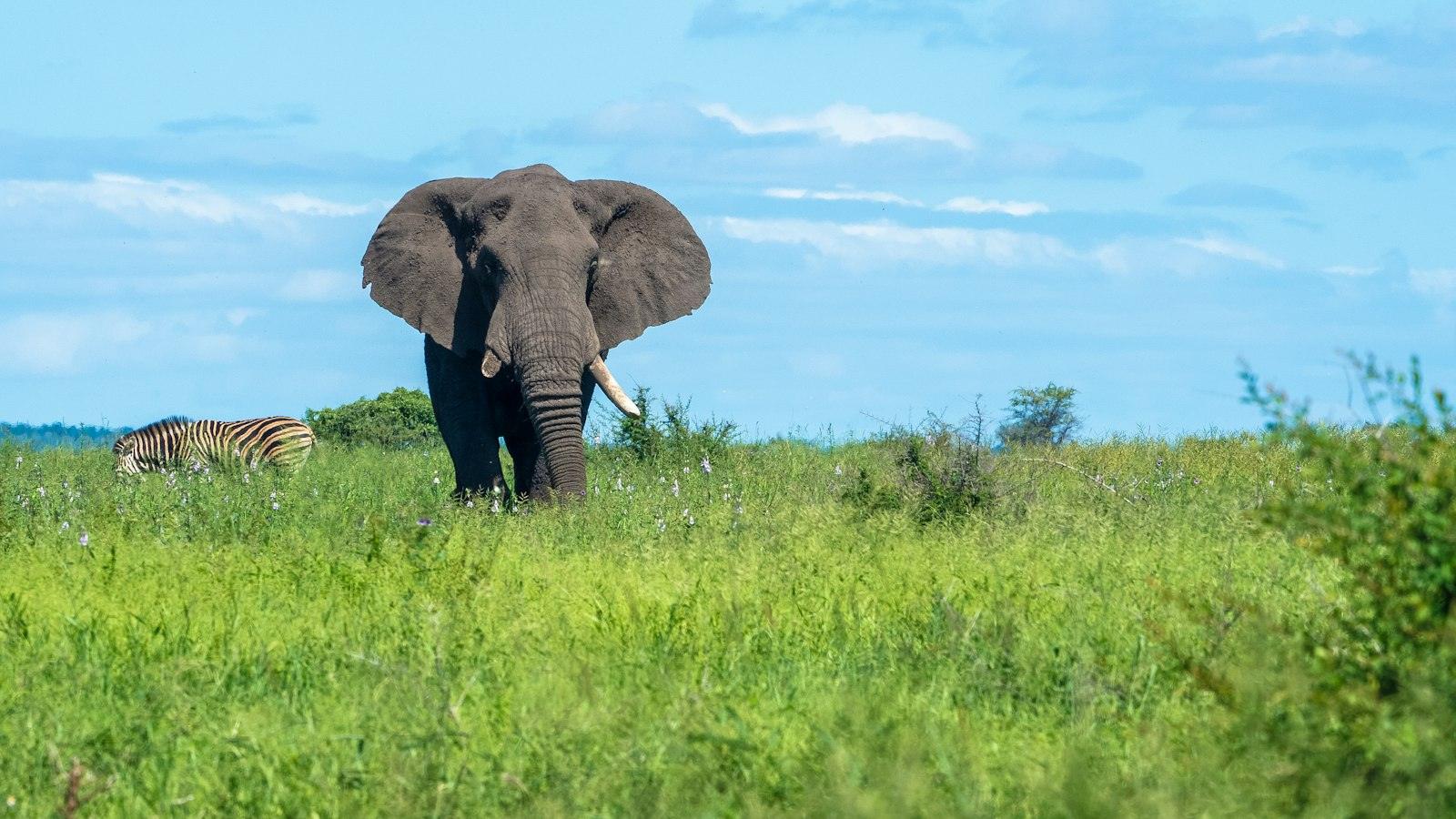
Africa's most accessible big game wilderness: Big Five encounters, sweeping bushveld, and self-drive freedom for the solo safari-goer. Best time to visit: May to September. Daily budget (budget traveller): $80 to $250 USD.
Land, stock up, first night in Skukuza
Morning: Fly JNB to Kruger Mpumalanga International (MQP) and collect your car from the Avis, Hertz or Budget desk. Drive to Hazyview and fill a cooler box with boerewors, ice, braai wood and water.
Afternoon: Enter at Phabeni Gate, then drive on to Skukuza Rest Camp (check-in from 14:00). Stop at Lake Panic bird hide if there is time before the gate times.
Evening: Join the SANParks sunset drive from Skukuza reception for about R650-850, then dinner at Cattle Baron or a braai at your site. Early bed.
Skukuza to Lower Sabie along the river
Morning: Leave at gate opening (6:00 in winter) and drive the H4-1 along the Sabie River. Elephant, hippo and buffalo are common, leopard possible. Allow 2 hours for a 43 km road.
Afternoon: Check in at Lower Sabie, then eat on the Mugg & Bean deck overlooking the river. Drive the short loop to Sunset Dam and park for 45 minutes before dusk.
Evening: Braai at camp or dinner on the deck. Ask at reception for the day's sightings board before bed.
North through Tshokwane to Satara
Morning: Take the H10 north, stopping at Tshokwane Picnic Site for a burger and coffee. Watch your plate, because the hornbills and vervets will not ask.
Afternoon: Continue on the H1-3 into the central plains. This is lion and zebra country, so slow down every time you see a car stopped on the verge.
Evening: Check in at Satara and book a night drive (about R650-850), the best chance in the park for civet, genet and hyena.
Heading home: Return the car at Hoedspruit Eastgate Airport (HDS) and fly to JNB with Airlink. Connect onward from Johannesburg, or stay a night at an airport hotel if you have an early international flight.
What to eat in Kruger National Park
- Braai with boerewors: South Africa's social cooking ritual, with spiced farmer's sausage and grilled meat cooked over wood coals at your camp's communal braai area
- Biltong and droëwors: air-dried cured meat and dried sausage, the classic road trip snack to keep in the car during long game drives
- Pap and chakalaka: a stiff maize porridge served with a spicy relish of onions, carrots, tomatoes, and beans, a staple of South African home cooking
- Malva pudding: a sweet, sticky baked sponge dessert soaked in a warm cream sauce, often served at camp restaurants after a day in the bush
Hidden gems
- The Lake Panic bird hide near Skukuza, a quiet wooden hide overlooking a small dam where waterbirds, crocodiles, and the occasional animal visit
- The fever tree forests around the Luvuvhu River at Pafuri in the far north, one of the most beautiful and bird-rich corners of the park
- The Masorini archaeological site near Phalaborwa, an Iron Age settlement where you can learn about early iron smelting and the people who lived here
- Crooks' Corner, the remote confluence of the Limpopo and Luvuvhu rivers where South Africa, Zimbabwe, and Mozambique meet, once a hideout for poachers and smugglers
Getting around
Most visitors fly into Johannesburg and either drive roughly five to six hours to the southern gates or take a domestic flight to Kruger Mpumalanga International Airport near Mbombela, Hoedspruit Eastgate, or Skukuza Airport inside the park. A rental car is the best way to explore, and a standard sedan handles most tar and well-graded gravel roads. Inside the park, the speed limit is 50 km/h on tar and 40 km/h on gravel, and you may only leave your vehicle at designated picnic sites, hides, and camps. Gates open at around 5:30 to 6:30 in the morning and close at around 17:30 to 18:30 depending on the season, and arriving late can result in fines, so plan your drives carefully. Fuel is available at the larger rest camps. If you do not want to drive, small group safari tours and transfers from Mbombela and Hoedspruit are available, and guided drives from the camps offer a good alternative. Mobile coverage is patchy, so download offline maps before you enter.
Safety
Kruger is generally safe for solo travellers, particularly inside the fenced rest camps, but the main risks come from wildlife and the environment. Never leave your vehicle outside designated areas, keep windows up near predators, and give elephants plenty of space, as they can be unpredictable. Baboons and vervet monkeys are quick to snatch food, so keep doors and windows closed. Kruger lies in a malaria area, with higher risk in the warmer, wetter months, so consult a travel doctor about prophylaxis and use repellent at dusk and dawn. Drive carefully at sunrise and sunset when animals are active on the road, and avoid driving in the dark outside the park, where livestock and pedestrians are hazards. Carry plenty of water, wear sun protection, and keep valuables out of sight in your car on the journey from Johannesburg, where petty crime is more common than in the park itself.
Frequently asked questions
What does this 3-day Kruger National Park itinerary cover?
Day 1: Land, stock up, first night in Skukuza. Day 2: Skukuza to Lower Sabie along the river. Day 3: North through Tshokwane to Satara.
Is 3 days enough for Kruger National Park?
Our recommended trip length for Kruger National Park is 4 to 6 days. This 3-day plan focuses on the highlights and groups sights by area so you spend less time travelling between them.
How much does 3 days in Kruger National Park cost?
A budget traveller spends about $80 to $250 USD a day in Kruger National Park, so roughly $240 to $750 USD for 3 days, not counting flights.
Where should I stay for 3 days in Kruger National Park?
Southern Kruger (Skukuza and Lower Sabie): The most visited and best-connected region, with the park's largest camp at Skukuza, the scenic Sabie River, and some of the highest predator densities. Central Plains (Satara and Orpen): Open grassland and knob-thorn savannah that attracts large herds of zebra, wildebeest, and buffalo, and with them, lions and other predators.
When is the best time to visit Kruger National Park?
The best time to visit Kruger National Park is May to September.
How do I get around Kruger National Park?
Most visitors fly into Johannesburg and either drive roughly five to six hours to the southern gates or take a domestic flight to Kruger Mpumalanga International Airport near Mbombela, Hoedspruit Eastgate, or Skukuza Airport inside the park. A rental car is the best way to explore, and a standard sedan handles most tar and well-graded gravel roads.
Is Kruger National Park safe for solo travellers?
Kruger is generally safe for solo travellers, particularly inside the fenced rest camps, but the main risks come from wildlife and the environment. Never leave your vehicle outside designated areas, keep windows up near predators, and give elephants plenty of space, as they can be unpredictable.
More 3-day guides
- Franschhoek in 3 days
- Hermanus in 3 days
- Stellenbosch in 3 days
- Garden Route (Knysna) in 3 days
- Cape Town in 3 days
- Johannesburg in 3 days
- Durban in 3 days
- Serengeti in 3 days
Kruger National Park in 2 days | Kruger National Park in 4 days | Kruger National Park in 5 days | Kruger National Park in 7 days | Full Kruger National Park guide
Joy Plus home | Destinations | Itineraries | Activities | Flights | Budget planner | Calendar | Map | Blog | Lifetime access