Destinations / Europe
La Gomera, Spain travel guide
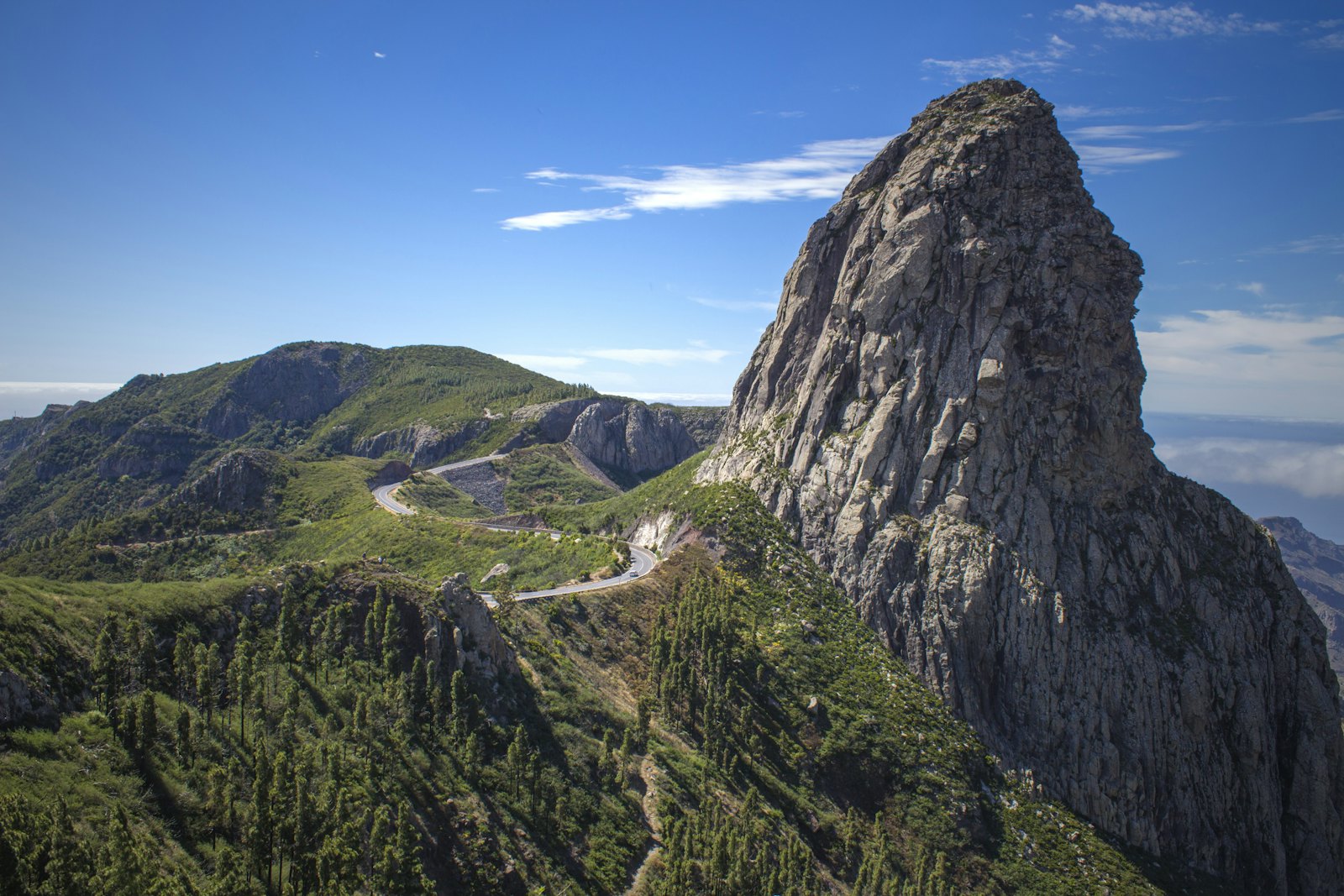
A small, steep, round island an hour by ferry from Tenerife, where you walk through misty laurel forest, eat almogrote on village terraces and finish the day watching the sun set over Valle Gran Rey.
- Best time to visit: March to June and September to November
- Daily budget (budget traveller): $75 to $215 USD
- Ideal trip length: 5 to 7 days
La Gomera is the second smallest of the main Canary Islands. It is roughly round, about 25km across, and sits around 50 minutes by ferry west of Los Cristianos in southern Tenerife. There are no big resorts and no airport for international flights. Deep ravines (barrancos) run from the high centre down to the sea, and terraced slopes, palm groves and small villages cling to their sides. In the middle is Garajonay National Park, a UNESCO-listed laurel forest that is often wrapped in cloud. The island's highest point, Alto de Garajonay, is 1,487m. Columbus stopped in San Sebastián in 1492 before crossing the Atlantic. The island is also home to Silbo Gomero, a whistled language that is still taught in schools. Many visitors only come over on a day trip from Tenerife. Stay longer and you can walk well-marked trails, swim off black-sand beaches and take boat trips out to see whales. Valle Gran Rey has the island's old-hippy, slow-living reputation. It is quiet, safe and easy to manage alone, but the roads are slow, so plan your days around them.
La Gomera is a round volcanic island about 25km wide, rising steeply from the sea to a high plateau covered in laurel forest. Around 22,000 people live here. Deep barrancos cut the island into separate worlds: busy little San Sebastián on the east coast, banana valleys at Hermigua and Agulo in the north, the dry south around Playa Santiago, and Valle Gran Rey in the west, with its palm groves and black-sand beaches. Many visitors arrive on a coach tour from Tenerife, take photos at the Roque de Agando and leave by teatime. Staying gives you a different island: cloud drifting through mossy trees at El Cedro, whistled Silbo Gomero at a village fiesta, potaje de berros in a mountain bar and sunsets from the beach at Valle Gran Rey. It is not a party island. Nights are quiet and life runs at a walking pace, which is exactly why most people come.
Getting here is easy once you reach Tenerife. Ferries from Los Cristianos take about 50 minutes, with several sailings a day across three operators, and one-way fares are roughly €27-45. Once you arrive, the island is slower than it looks. A car makes the most sense, but buses and Fred. Olsen's Benchi Express catamaran along the south coast make a car-free trip possible if you plan around them. Spend your first or last night in San Sebastián for ferry times, and base the rest of your stay in Valle Gran Rey, or in Hermigua or Agulo if you prefer a quieter, greener base in the north. Plan the national park walks for clear mornings, and book weather-dependent boat trips early in your stay.
The weather here is mild all year, but it changes with height. The coasts are often sunny and around 20-28°C, while the top of the park can be cool, damp and foggy when the trade winds bring cloud in. Spring brings wild flowers and full streams. Autumn brings warm seas and quieter trails. Summer is hot in the south and fire rules can close some trails. Winter suits walkers, though the high paths can be cold and wet. Pilot whales and dolphins live off the coast all year. Locals are friendly but reserved, and Spanish is the language of daily life, though English and German are widely understood in Valle Gran Rey. Shops close for a long lunch, and Sundays are very quiet.
La Gomera itinerary
Ferry over and Columbus's San Sebastián
Morning: Take a morning ferry from Los Cristianos (about 50 minutes) and sit on deck for the view of Tenerife behind you. Drop your bag at your San Sebastián hotel.
Afternoon: Walk to the Torre del Conde, the Iglesia de la Asunción and the old customs house well linked to Columbus. Pick up a hire car if you have booked one, and get cash.
Evening: Watch the ferries come in from the town beach, then have tapas with almogrote and a glass of local wine near the main square.
Roque de Agando and the summit
Morning: Drive up into the hills and stop at the Mirador de Los Roques for Roque de Agando. Continue to Pajarito and walk up Alto de Garajonay (about 40 minutes) while it is still clear.
Afternoon: Lunch at the Laguna Grande recreation area, then walk an easy forest loop. Drive down to Valle Gran Rey via Arure, stopping at the Mirador de César Manrique.
Evening: Check into your apartment near La Playa or Vueltas. Watch the sunset from the beach, then have grilled fish in Vueltas.
Whales and a slow day in the valley
Morning: Join a whale and dolphin trip from Vueltas port with Oceano Gomera (about €44) or Excursiones Tina (about €43). Bring a hat and seasickness tablets.
Afternoon: Swim at Charco del Conde, the sheltered rock pool, then nap or read. Walk up through the palm groves towards La Calera.
Evening: Join the sunset crowd on the beach at La Playa, then have a drink at a beach bar. Self-cater to save money.
Los Órganos by boat
Morning: If the sea is calm, take a four-hour boat trip from Vueltas to Los Órganos, with a good chance of dolphins on the way. If it is cancelled, swap with day 3 or 5.
Afternoon: Back on land, have a late menú del día lunch. If you still have energy, walk up the valley's old paths or drive up to Arure.
Evening: Quiet evening. Plan tomorrow's route and check the cloud forecast for the north.
The north: Epina, Vallehermoso and Agulo
Morning: Drive north to the Chorros de Epina springs in the forest, then down to Vallehermoso for coffee in the square under Roque Cano.
Afternoon: Visit the free Juego de Bolas visitor centre (daily 9:30 to 16:30), then the Mirador de Abrante if it is open. Wander the cobbled lanes of Agulo.
Evening: Move to a rural stay in Hermigua or Agulo, or drive back to Valle Gran Rey. Dinner in Hermigua, with potaje de berros if it is on the menu.
El Cedro forest and Hermigua
Morning: Walk the laurel forest around El Cedro, with its stream, mossy trees and small chapel. Strong walkers can follow the steep trail down towards Hermigua.
Afternoon: Rest your legs at Hermigua's sea pool or the beach at La Caleta. Buy palm honey or almogrote to take home.
Evening: Drive or take the bus to San Sebastián for your last night if you have an early ferry. Eat near the harbour.
Playa Santiago and the ferry home
Morning: Take the Benchi Express from San Sebastián to Playa Santiago (about 30 minutes), or drive there, for a coffee on the harbour and a swim off the pebble beach.
Afternoon: Return to San Sebastián and catch an afternoon ferry to Los Cristianos. Check sailing times the day before.
Evening: Fly home from Tenerife South, or stay a night in Los Cristianos if your flight leaves early the next day.
Best neighbourhoods
- San Sebastián de La Gomera: The capital and ferry port on the east coast. It has the Torre del Conde, the church where Columbus is said to have prayed, a town beach, shops, ATMs and the main bus station. It is handy for arrival and departure nights and for reaching the north by bus.
- Valle Gran Rey: A deep, green valley in the west that ends in black-sand beaches and a small port at Vueltas. Most independent travellers stay here, in apartments around La Playa and Vueltas. Beach bars, whale-watching boats and sunsets are all walkable, and the old village of La Calera sits up the slope.
- Hermigua: A long, green valley on the north coast with banana plantations, a stony beach and a natural sea pool. It is quiet and rural, and close to the walk up to El Cedro in the national park. Buses run along the north road to San Sebastián.
- Agulo: A small, tidy village of cobbled lanes on a ledge above the north coast, with views across to Mount Teide on Tenerife. It is near the Juego de Bolas visitor centre and the Mirador de Abrante. It is a peaceful base if you have a car.
- Playa Santiago: A former fishing village on the sunny south coast, near the island's small airport. It has a pebble beach, a harbour where the Benchi Express stops and the Hotel Jardín Tecina on the cliffs above. It gets drier, warmer weather than the north.
Must-do experiences
- Walk to the top of Alto de Garajonay: The island's highest point, at 1,487m, is an easy walk of about 40 minutes up from the Pajarito car park. On a clear day you can see Tenerife, La Palma and El Hierro. Go early, before the clouds roll in.
- Wander through the laurel forest at El Cedro: This is the dampest, mossiest part of Garajonay National Park, with streams, ferns and a small chapel. Walk the trail from El Cedro down towards Hermigua for waterfall views and a steep but rewarding descent.
- Stop at the Roque de Agando viewpoint: Mirador de Los Roques, on the road between San Sebastián and the park, looks out over Roque de Agando, an old volcanic plug standing alone above the pine forest. It is a short stop and free.
- Go whale and dolphin watching from Valle Gran Rey: Small boats leave from Vueltas port. Oceano Gomera lists around €44 per person and Excursiones Tina about €43. Pilot whales and bottlenose dolphins live off the island all year, so sightings are common.
- Take a boat to Los Órganos: These basalt columns look like giant organ pipes on the north coast cliffs and can only be seen from the sea. Trips from Valle Gran Rey take about four hours and only run when the sea is calm.
- Explore Columbus's San Sebastián: See the 15th-century Torre del Conde, the Iglesia de la Asunción and the well at the old customs house where Columbus is said to have taken water in 1492. It is all within a few streets of the ferry port.
- Visit the Juego de Bolas visitor centre: The national park's main centre near Agulo is free and open daily from 9:30 to 16:30. It has gardens of native plants, a small museum of rural life and trail advice. Check the weather forecast for the park here before you set off.
Hidden gems
- Charco del Conde in Valle Gran Rey, a natural rock pool sheltered from the waves, good for a calm swim at high tide
- Mirador de César Manrique above Valle Gran Rey, a viewpoint and restaurant building by the Lanzarote artist, with a sheer drop into the valley
- Chorros de Epina near Vallehermoso, a small set of springs in the forest, with a local legend about drinking from them in the right order
- La Fortaleza near Chipude, a flat-topped table mountain that was sacred to the island's first inhabitants, reached by a short scramble
- The village of Agulo early in the morning, when the cobbled lanes are empty and Teide floats above the clouds across the water
Daily budget
- Accommodation: budget €40-70 / night (simple pensión room or studio apartment), mid-range €80-140 (boutique hotel or good apartment), splurge €160-300+ (Parador de La Gomera, Hotel Jardín Tecina). There are no real backpacker hostels. Apartments with kitchens in Valle Gran Rey are the best value for longer stays. Prices rise at Easter, in August and over Christmas.
- Food: budget €20-35 / day (supermarket breakfast, menú del día lunch), mid-range €40-60 (café lunch and a sit-down dinner), splurge €80+ (parador or hotel restaurant dinners with wine). A menú del día at lunchtime is the cheapest way to eat well. Expect around €10-15 for a set lunch, and fish mains of roughly €14-22. Prices are rough guides, so check.
- Transport: budget €5-20 / day (buses and the odd Benchi Express trip), mid-range €35-60 (small hire car plus fuel), splurge €80+ (taxis across the island, private transfers). The return ferry from Los Cristianos costs roughly €55-90 for a foot passenger. The Benchi Express costs about €15-20 a trip. Fuel is cheaper than on mainland Spain.
- Activities: budget €0-10 / day (free park, trails, viewpoints and beaches), mid-range €40-55 (whale watching or a Los Órganos boat trip), splurge €100+ (private guided hike or private boat hire). Garajonay National Park and the Juego de Bolas visitor centre are free. Whale watching costs about €43-48 per adult, and Los Órganos trips cost a similar amount.
- Drinks & nightlife: budget €5-12 (a beer or two at a beach bar), mid-range €15-30 (sunset drinks in Valle Gran Rey), splurge €40+ (cocktails and wine with dinner). A caña (small beer) costs roughly €1.50-3. Nightlife means a few bars in Valle Gran Rey and San Sebastián, plus the odd drumming session on the beach at sunset.
Where to stay
- Social hostel in Valle Gran Rey (€35-60 / night): La Gomera has no real dorm hostels. The nearest equivalent is a simple pensión room or shared house in La Playa or Vueltas, where long-stay travellers and walkers gather on the beach at sunset.
- Boutique hotel in San Sebastián (€80-130 / night): Hotel Torre del Conde is a small, central hotel beside the park and tower, a short walk from the ferry and bus station. It is ideal for arrival and departure nights.
- Apartment in Valle Gran Rey (La Playa or Vueltas) (€50-90 / night): Studios and one-bedroom apartments with kitchens are the island's best value. You can walk to the beach, shops and boats, and cooking for yourself cuts your food costs.
- Splurge in San Sebastián or Playa Santiago (€160-300+ / night): Parador de La Gomera sits on a clifftop above San Sebastián, with gardens and views of Tenerife. Hotel Jardín Tecina sits above the sea at Playa Santiago, with pools and a lift down to the beach.
What to eat
- Almogrote: a spicy spread of hard, aged goat's cheese blended with peppers, garlic and oil, eaten on bread or crackers
- Miel de palma: palm honey, a dark syrup boiled down from palm sap, poured over desserts, cheese and pancakes
- Potaje de berros: a hearty watercress stew with potatoes, maize and pork, the classic mountain-village lunch
- Papas arrugadas con mojo: small salt-crusted potatoes with red and green mojo sauces, served with almost everything
- Fresh local fish such as vieja (parrotfish), grilled simply at harbour restaurants in Vueltas and Playa Santiago
- Gomerón: a sweet local liqueur of aguardiente and palm honey, offered as a digestif after a long lunch
Day trips
- Los Órganos (About 1 hour by boat each way from Vueltas port, Valle Gran Rey): Hundreds of basalt columns stand like organ pipes on a cliff on the north coast, visible only from the sea. Dolphins often join the boat, and the coast on the way is wild and empty. Book a four-hour boat trip from Vueltas. Prices are around €45-55, and trips only run when the sea is calm, so allow a spare day.
- Garajonay highlands loop (About 45 minutes by car from San Sebastián or Valle Gran Rey): Combine the Mirador de Los Roques, the short climb to Alto de Garajonay from Pajarito, a picnic at Laguna Grande and a forest walk. The best views are on a clear morning. Easiest by car. Without one, bus line 1 passes through the high part of the island, so ask the driver for Pajarito and check the return times before you set off.
- La Fortaleza and Chipude (About 30 minutes by car from Valle Gran Rey): A flat-topped table mountain that was sacred to the island's first inhabitants, above the village of Chipude. The short, steep scramble to the top gives wide views over the southwest of the island. Drive or take a local bus towards Chipude, then follow the marked path from the road. Wear good shoes and avoid it in strong wind.
When to visit
- Spring (March - June): 18-25°C on the coast, cooler and sometimes misty in the park. Crowds: Moderate, busier at Easter. The best all-round time. The hills are green, the streams are flowing, and the days are bright and comfortable for long walks.
- Summer (July - August): 25-30°C+, hot and dry in the south, occasional Saharan dust haze. Crowds: Busy with Spanish and Canarian holidaymakers, especially in August. Good for beaches, sea pools and boat trips. Hike early in the day, carry plenty of water and check for trail closures when fire risk is high.
- Autumn (September - November): 22-27°C, warm seas, first rains in late autumn. Crowds: Moderate, quieter in November. The locals' pick. The sea is at its warmest, the trails are quieter and the heat has eased. San Sebastián's Columbus festivities usually fall in early September.
- Winter (December - February): 16-22°C on the coast, cold, wet and windy at the top of the park. Crowds: Steady with northern European walkers and long-stay visitors. Mild sunshine on the coast and lush forest inland. Pack waterproofs and warm layers for higher ground, and expect some walks to be cancelled by rain.
Entry rules for your passport
Visa rules for Spain depend on the passport you travel on. Check the official source before you book: European Commission: Schengen visa policy
Getting there
There are no direct international flights to La Gomera. Most travellers fly into Tenerife South (TFS) and take a taxi or bus for about 20 minutes to the port of Los Cristianos. Fred. Olsen, Naviera Armas and Baleària all sail from Los Cristianos to San Sebastián de La Gomera. The crossing takes about 50 minutes, there are several sailings a day, and one-way foot passenger fares are roughly €27-45. Book ahead for Easter, August and weekends. You can take a hire car across, but it is usually cheaper to hire one on La Gomera. Binter flies small planes from Tenerife North and Gran Canaria to La Gomera Airport (GMZ), near Playa Santiago, and bus line 7 links the airport with San Sebastián. From San Sebastián, GuaguaGomera line 1 runs to Valle Gran Rey, and the Benchi Express catamaran sails along the south coast to Playa Santiago and Valle Gran Rey in about 70 minutes. Check all timetables shortly before you travel, as they change by season.
Border checks: non-EU visitors (other than Swiss, Norwegian, Icelandic, Liechtenstein, Andorran, Monegasque, San Marinese and Vatican citizens, and holders of an EU residence permit or long-stay visa) are registered in the EU's Entry/Exit System (EES) instead of getting a passport stamp. On your first crossing, officers take your photo and/or fingerprints, so allow extra time at passport control. ETIAS, the planned travel authorisation, is not in operation yet, so don't pay any website for one.
Getting around
Most visitors hire a car, and a small one costs roughly €30-50 a day. Roads are good but steep and winding, so the 45km from San Sebastián to Valle Gran Rey takes well over an hour. Fuel is cheaper than on mainland Spain. The public bus company, GuaguaGomera, runs eight lines. Line 1 links San Sebastián with Valle Gran Rey across the middle of the island in about 1 hour 40 minutes, with only a few departures a day. Line 2 runs along the north via Hermigua and Agulo to Vallehermoso, and line 7 links San Sebastián with the airport. Fares are a few euros, and bank cards are increasingly accepted on board. Check timetables carefully, because Sunday services are thin. Fred. Olsen's Benchi Express catamaran sails along the south coast between San Sebastián, Playa Santiago and Valle Gran Rey. The full trip takes about 70 minutes and costs roughly €15-20. Taxis are available in the main towns, but long journeys across the island are expensive, so agree the fare first. Walkers can join trails from bus stops, especially on line 1.
Safety
La Gomera is very safe, and crime against visitors is rare. The real risks are outdoors. Trails are steep, often loose underfoot and can be slippery in the cloud forest, so wear proper shoes, carry water and tell someone your route. Cloud can drop quickly in Garajonay, so check the forecast and take a layer. Trails and roads can be closed during high fire risk, storms or strong winds, and the island lost large areas of forest in the 2012 wildfire, so follow any warnings and never light fires. Many beaches have strong Atlantic swell and currents, especially on the north coast. Swim only where locals do, and use sea pools in rough weather. Mountain roads are narrow, with sharp bends and occasional rockfall, so drive slowly and do not drive tired after a long hike. The sun is strong all year, even on cool, breezy days. EU visitors should carry a GHIC or EHIC card, and everyone should have travel insurance.
Solo travel tips
- Base yourself in Valle Gran Rey: You can walk to beaches, bars, the port and sunset, and it has the most independent and long-stay travellers, so meeting people is easy. Add a night in San Sebastián at either end for ferry times.
- Join a guided walk or a small boat: Group walks in the park and small whale-watching boats are the easiest ways to meet people. Oceano Gomera takes around 10 guests, so conversation comes naturally.
- Plan your days around the bus: If you are not driving, screenshot the GuaguaGomera timetables. Line 1 runs only a few times a day, and missing the last bus can mean an expensive taxi.
- Hike early and share your route: Clouds often build over the park by midday. Start early, tell your host where you are going, carry water and a layer, and download offline maps, because signal drops in the ravines.
- Safety for solo travellers: Crime is rare, so the main risks are slips on trails, strong sea currents and tiring mountain drives. Use sea pools when the swell is up, and avoid remote paths late in the day.
- Learn a little Spanish: Outside Valle Gran Rey, many bar owners speak only Spanish. A few phrases and a smile go a long way, and locals will often help you plan a walk or find a lift.
Cultural etiquette
- Greet people with 'buenos días' or 'buenas tardes' when you enter a shop or bar. In villages, a hello to passers-by is normal.
- Lunch is the main meal and many shops close from roughly 13:00 to 16:00 or 17:00. Sunday is a family day, and many places are closed.
- Cover up when you leave the beach. Swimwear belongs on the sand, not in village squares, shops or churches.
- Silbo Gomero is a source of real pride. If you hear a demonstration, listen quietly, and ask before filming people.
- Stay on marked paths. Terraces and fruit trees belong to families, so do not pick fruit or cut across fields.
- Respect fire rules completely. Do not smoke on trails, and never light barbecues or campfires outside official areas.
- Drive with patience. Locals know the bends, so pull over to let them pass, and use the horn lightly on blind corners.
Frequently asked questions
How do I get to La Gomera?
Most people fly to Tenerife South airport, then go to the port of Los Cristianos, which is about 20 minutes away by taxi or bus. Fred. Olsen, Naviera Armas and Baleària sail to San Sebastián de La Gomera in about 50 minutes. One-way foot passenger fares are roughly €27-45, depending on the operator and how early you book. Binter also flies small planes to La Gomera Airport near Playa Santiago from Tenerife North and Gran Canaria.
How many days do I need on La Gomera?
Five to seven days lets you walk in the national park, spend a few slow days in Valle Gran Rey, take a boat trip and drive the north coast. Three days covers the main highlights if you hire a car. A day trip from Tenerife shows you San Sebastián and a viewpoint or two, but you spend much of it on the road.
Do I need a car on La Gomera?
Not strictly, but it helps a lot. Buses connect the main towns, but there are only a few a day, especially on Sundays, and some sights such as the Mirador de Abrante are not on a bus route. If you do not drive, base yourself in Valle Gran Rey and combine line 1 buses, the Benchi Express boat and walks that start from bus stops.
When is the best time to visit La Gomera?
The island is mild all year. March to June and September to November are the best months for hiking, with comfortable temperatures and green hillsides in spring. Summer is hot and dry in the south, with occasional calima (dust haze) from the Sahara. Winter is mild on the coast but can be wet and cold in the park, and it is popular with northern European walkers.
Is Garajonay National Park free to enter?
Yes. The park is open all year and entry is free, as is the Juego de Bolas visitor centre near Agulo. The centre opens daily from 9:30 to 16:30 and closes on 25 December and 1 January. The information point at Laguna Grande opens from 8:30 to 16:30. Trails can close during high fire risk or storms, so check before you go.
Is La Gomera good for solo female travellers?
Yes. It is one of the calmest, safest places in Spain to travel alone. Valle Gran Rey has a mix of long-stay visitors, walkers and locals, so it is easy to fall into conversation at beach bars. The main precautions are practical ones: share your hiking route, avoid remote trails late in the day and carry a charged phone and a head torch.
Can I see Los Órganos from land?
No. The basalt columns sit on near-vertical cliffs on the north coast and can only be seen from the sea. Boat trips leave from Vueltas port in Valle Gran Rey, take about four hours and run only when the sea allows. Book early in your stay so you can move to another day if a trip is cancelled.
What are the entry rules for La Gomera in 2026?
La Gomera is part of Spain and the Schengen area. EU citizens need an ID card or passport. Many non-EU visitors, including those from the UK and US, can visit visa-free for up to 90 days in any 180, and are registered under the EU's Entry/Exit System at their first Schengen border. ETIAS, a pre-travel authorisation, was expected to start in late 2026. Check the official EU and Spanish government websites, and your own government's travel advice, before you book.
More about La Gomera
Tours and activities in La Gomera | La Gomera in 2 days | La Gomera in 3 days | La Gomera in 4 days | La Gomera in 5 days | La Gomera in 7 days
Joy Plus home | Destinations | Itineraries | Activities | Flights | Budget planner | Calendar | Map | Blog | Lifetime access