Destinations / Europe
Lauterbrunnen, Switzerland travel guide
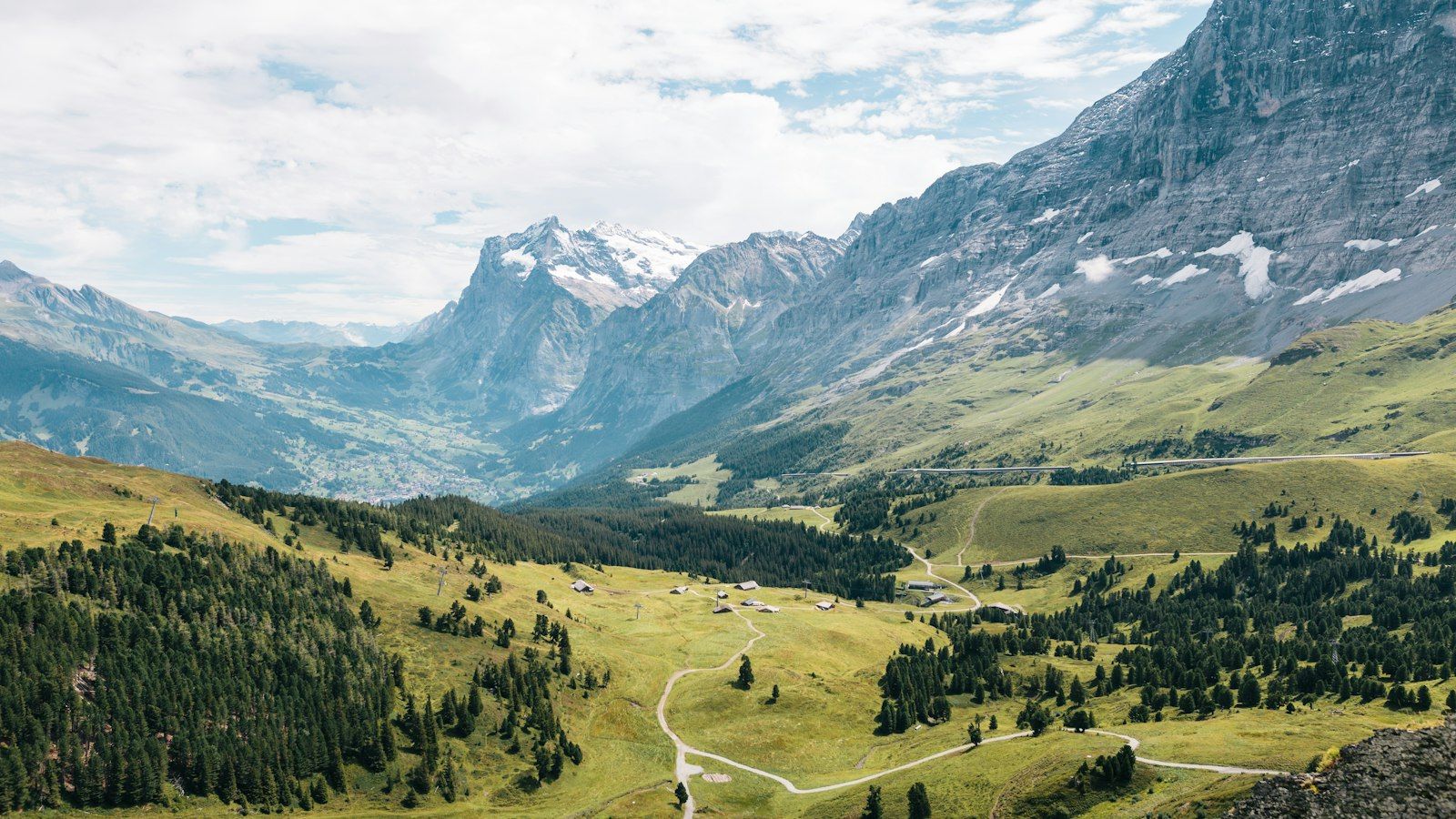
A sheer-walled glacial valley of 72 waterfalls, car-free cliff-top villages and cable cars, with Swiss Alps hiking from your doorstep.
- Best time to visit: Mid-June to September, plus December to March for snow
- Daily budget (budget traveller): CHF 130 to CHF 450
- Ideal trip length: 4 to 7 days
Lauterbrunnen sits on the floor of a U-shaped glacial trough in the Bernese Oberland. The limestone walls rise several hundred metres on both sides, and dozens of waterfalls pour off them. The most famous, Staubbach Falls, drops almost 300 metres straight past the village houses and costs nothing to see. The valley is the gateway to a cluster of places that feel built for walkers. Wengen and Mürren are car-free villages perched on opposite cliff tops. Gimmelwald is a farming hamlet with a famous hostel. Stechelberg, at the end of the road, is the start of the cable cars to the Schilthorn. The Jungfraujoch, Europe's highest railway station, is a cog-railway ride away. Switzerland is expensive and Lauterbrunnen is no exception, but it works well for solo travellers. There is a well-run hostel by the station, a supermarket for picnic supplies, punctual public transport and very little crime. Most of the best days here cost the price of one lift ticket and a sandwich.
Lauterbrunnen is a village of a couple of thousand people at about 800 metres, at the bottom of one of the steepest-sided valleys in the Alps. The waterfalls come off the cliffs everywhere, the Staubbach right behind the church, and the Jungfrau fills the end of the view. Most visitors arrive on a day trip from Interlaken, photograph the falls and leave by lunchtime. Stay a few nights instead. Once the day-trippers have gone, the valley floor is quiet and the trails are empty, and when the evening light hits the Staubbach you can see why Tolkien is said to have had this valley in mind for Rivendell. The catch is the cost. Switzerland is expensive, and the region's lifts are priced for people on a once-in-a-lifetime trip: about CHF 115 return to the Schilthorn from Stechelberg and over CHF 200 to the Jungfraujoch. The good news is that much of the best of the valley is free or close to it.
The practical shape of a trip is simple. Sleep in Lauterbrunnen village for price and connections, or up in Mürren or Gimmelwald for views and calm. The valley has two sides. The east side is Wengen, Männlichen, Kleine Scheidegg and the Jungfraujoch, reached by the Wengernalp cog railway. The west side is Grütschalp, Mürren, Gimmelwald and the Schilthorn, reached by the BLM cable car or the Schilthornbahn from Stechelberg. PostBus 141 runs along the valley floor between them. Do one side per day and you will rarely backtrack. If you plan three or more lift days in a row, price up a Jungfrau Travel Pass. Otherwise a Half Fare Card and single tickets usually win.
Timing decides almost everything. From mid-June to September all the lifts run, the alpine meadows are in flower and the high trails are open. July and August are busy, so book the hostel early. Late April to May and November are the quiet seasons, when Trümmelbach may be open but Männlichen and other upper lifts often close for maintenance, and snow lingers above about 1,500 metres. Winter turns Mürren and Wengen into ski villages, and the valley floor stays in shade and cold for much of the day. Whatever the month, check the summit webcams before buying a ticket, and keep one or two flexible days for when the forecast changes.
Lauterbrunnen itinerary
Arrive and walk to Staubbach Falls
Morning: Train to Interlaken Ost, then the BOB to Lauterbrunnen (about 20 minutes). Drop bags at Valley Hostel, which has set reception hours, so check yours before you arrive.
Afternoon: Walk five minutes to Staubbach Falls and climb the short path to the gallery behind the water (closed in winter). Photograph the church and falls from the main road.
Evening: Stock up at the Coop by the station, then dinner at the Hotel Oberland restaurant or a cook-up in the hostel kitchen. Watch the falls light up at dusk.
Valley floor walk and Trümmelbach Falls
Morning: Walk the flat valley path south past waterfalls and meadows to Trümmelbach Falls, about 45-60 minutes. Pay about CHF 16-18 at the door (open roughly early April to early November).
Afternoon: Continue on foot to Stechelberg, then bus 141 back. Watch the BASE jumpers land in the valley-floor meadows near the village. Stay off the landing field.
Evening: Rösti at Restaurant Weidstübli in Lauterbrunnen and an early night before the cliff-top day.
Grütschalp, Mürren and down to Gimmelwald
Morning: BLM cable car to Grütschalp, then walk the panorama path to Mürren (about 1 to 1.5 hours) with the Eiger, Mönch and Jungfrau across the valley.
Afternoon: Funicular up to Allmendhubel and walk the Northface Trail back to Mürren (about 2.5 hours), or the shorter Flower Trail. Then walk down to Gimmelwald (30-40 minutes).
Evening: Buy cheese at a Gimmelwald honesty-box shop, then cable car to Stechelberg and bus 141 back. Or stay a night at the Mountain Hostel.
Schilthorn summit and the Thrill Walk
Morning: Check the summit webcam, then bus 141 to Stechelberg for an early cable car to the Schilthorn via Mürren and Birg (CHF 115 return, half with a Half Fare Card). The early Schilthorn Brunch ticket is a fun treat.
Afternoon: Stop at Birg for the Thrill Walk. If the weather is settled and you have a head for heights, hire gear in Mürren and do the via ferrata to Gimmelwald.
Evening: Cheese fondue at Restaurant Stägerstübli in Mürren, then the cable car back down before the last departure.
Wengen, the Royal Walk and Kleine Scheidegg
Morning: Cog train to Wengen (about 15 minutes), then the cable car to Männlichen. Climb the 15-20 minute Royal Walk to the crown viewpoint.
Afternoon: Hike the panorama trail beneath the Eiger north face to Kleine Scheidegg (about 1.5 hours). Lunch on the terrace, then the WAB train back down to Wengen.
Evening: Pizza at Ristorante Da Sina in Wengen, then the train down to Lauterbrunnen.
Jungfraujoch, Top of Europe
Morning: Book a timed seat reservation in advance (mandatory May to October, CHF 10). Take an early train from Lauterbrunnen via Wengen and Kleine Scheidegg, about 1.5 hours up.
Afternoon: Sphinx terrace, Ice Palace and the Aletsch Glacier view at 3,454 metres. Move slowly and drink water. On the way down, consider getting off at Eigergletscher or Kleine Scheidegg and walking part of the way.
Evening: Recover with Älplermagronen at Hotel Schützen in Lauterbrunnen. Poor forecast? Swap this day with Day 7.
Obersteinberg hike, last night
Morning: Bus 141 to Stechelberg by 8am and climb through forest and pasture to Berghotel Obersteinberg, about 2.5 to 3 hours and roughly 870 metres of ascent.
Afternoon: Lunch on the terrace (summer season only, so check it is open). Strong hikers continue an hour to the Oberhornsee before returning the same way to Stechelberg.
Evening: Final dinner in the village and a last look at the Staubbach. Take the train out tomorrow morning.
Best neighbourhoods
- Lauterbrunnen village: The valley-floor hub, with the train station, the Coop supermarket, Valley Hostel, the Staubbach Falls path and direct trains to Wengen and cable cars to Grütschalp and Mürren. The best value base and the easiest place to come and go.
- Wengen: A car-free resort village on a sunny terrace east of the valley, 15 minutes up by cog railway. Chalets, a short main street, the cable car to Männlichen and easy access to Kleine Scheidegg and the Jungfraujoch trains.
- Mürren: A car-free village on the western cliff edge facing the Eiger, Mönch and Jungfrau. Quieter than Wengen, with the Allmendhubel funicular, the Schilthorn cable cars, the via ferrata and some of the valley's best walking straight out of the door.
- Gimmelwald: A tiny farming hamlet below Mürren, reached only by cable car or on foot. Barns, honesty-box farm shops, the Mountain Hostel and enormous views. Very little to do except walk and look, which is the point.
- Stechelberg: The end of the valley road, about 15 minutes by PostBus from Lauterbrunnen. Home to the Schilthornbahn valley station and the trailheads for Obersteinberg and the upper valley nature reserve. Quiet, green and wet with waterfall spray.
Must-do experiences
- Walk to the foot of Staubbach Falls: Stroll five minutes from the station to the almost 300-metre falls, then climb the short path to the gallery behind the water for spray and valley views. The gallery path is closed in winter.
- Go inside the mountain at Trümmelbach Falls: Ride a tunnel lift into the rock and climb past ten glacier-fed falls thundering through corkscrew gorges. It is seasonal, roughly early April to early November, and children under 4 are not allowed.
- Walk from Grütschalp to Mürren: Take the cable car up from Lauterbrunnen to Grütschalp, then follow the gentle panorama path to Mürren in about 1 to 1.5 hours, with the Eiger, Mönch and Jungfrau lined up across the valley.
- Ride to the Schilthorn and the Thrill Walk: Take the cable cars via Birg to the 2,970-metre summit and the Piz Gloria revolving restaurant of Bond film fame. Stop at Birg for the Thrill Walk, a steel walkway bolted to the cliff.
- Hike the Royal Walk and Männlichen to Kleine Scheidegg: Ride the cable car from Wengen to Männlichen, climb the short Royal Walk to the crown viewpoint, then follow the panorama trail beneath the Eiger north face to Kleine Scheidegg in about 1.5 hours.
- Clip into the Mürren to Gimmelwald via ferrata: Edge along the cliff face on steel cables, ladders and a Tyrolean-style bridge high above the valley. Hire gear in Mürren, go in settled weather, and only if you are comfortable with exposure.
- Take the cog railway to the Jungfraujoch: Ride from Lauterbrunnen via Wengen and Kleine Scheidegg to Europe's highest railway station at 3,454 metres, with the Sphinx terrace, the Ice Palace and the Aletsch Glacier. Seat reservations are mandatory from May to October.
- Follow the Northface Trail from Allmendhubel: Ride the funicular above Mürren and walk the signposted trail back down through meadows and past info boards on the climbing history of the Eiger north face, about 2.5 hours.
Hidden gems
- Isenfluh and the little Sulwald cable car, a quiet hamlet on the valley's northern shoulder with a walk up to the Lobhornhütte and its classic view of the big three peaks
- Berghotel Obersteinberg, a candlelit summer-only mountain inn about 2.5 to 3 hours' climb above Stechelberg, with the glacier-fed Oberhornsee another hour beyond
- The Sprutz waterfall above Gimmelwald, a short forest walk to a fall you can step behind, far from the Staubbach crowds
- Gimmelwald's honesty-box farm shops, where you leave cash in a tin for local cheese, eggs and sausages
- The Sefinental below Gimmelwald, a wild side valley of torrents and forest that sees a fraction of the valley's visitors
Daily budget
- Accommodation: budget CHF 45-75 / night (dorm at Valley Hostel or Mountain Hostel Gimmelwald), mid-range CHF 200-350 (3-star hotel or boutique double used solo), splurge CHF 400-800+ (Hotel Eiger Mürren, Beausite Park Hotel Wengen). Book June to September and Christmas months ahead. A local guest tax of a few francs per night is usually added. Hotels near the station usually include breakfast, which saves one meal a day.
- Food: budget CHF 35-55 / day (Coop picnics, hostel kitchen, one hot lunch), mid-range CHF 80-120 (mountain-restaurant lunch, sit-down dinner), splurge CHF 180+ (Piz Gloria, fondue and wine, hotel dinners). A restaurant main like rösti or pasta is roughly CHF 25-40, fondue CHF 30-40 per person. The Coop by Lauterbrunnen station is the budget lifeline. Tap and village-fountain water is drinkable.
- Transport: budget CHF 10-35 / day (walking, PostBus 141, one BLM or WAB ride), mid-range CHF 55-90 (a Jungfrau Travel Pass at about CHF 70 a day over 3 days), splurge CHF 150+ (Swiss Travel Pass plus lift supplements, taxis). Interlaken Ost to Lauterbrunnen and Lauterbrunnen to Wengen are short, cheap hops of under about CHF 10 each way. Stechelberg to Mürren is CHF 11.80 one way in 2026. A Half Fare Card halves most fares. Check new fares from mid-December.
- Activities: budget CHF 0-20 / day (free falls and trails, Trümmelbach at about CHF 16-18), mid-range CHF 60-120 (Schilthorn with Half Fare, Männlichen, via ferrata gear), splurge CHF 220+ (Jungfraujoch, tandem paragliding). In 2026 the Schilthorn is CHF 115 return from Stechelberg or CHF 91.40 from Mürren, half price with a Half Fare Card. Jungfraujoch from Lauterbrunnen runs roughly CHF 200-260 return in peak season, plus a mandatory CHF 10 seat reservation from 1 May to 31 October.
- Drinks & nightlife: budget CHF 5-15 (Coop beers on the hostel terrace), mid-range CHF 25-50 (a few beers or a glass of wine at a hotel bar), splurge CHF 80+ (cocktails and wine in Wengen). A bar beer is roughly CHF 6-9. Nightlife is quiet: the Horner Pub in Lauterbrunnen and hotel bars in Wengen and Mürren, busiest in ski season. Most hikers are asleep by 10pm.
Where to stay
- Social hostel in Lauterbrunnen village (CHF 45-75 / night (dorm bed)): Valley Hostel has 92 beds in three chalets, with dorms, women-only dorms and private rooms, a shared kitchen and a garden facing the cliffs, a short walk from the station and Coop. For views over convenience, Mountain Hostel Gimmelwald sits by the cable car stop above the valley.
- Boutique hotel in Lauterbrunnen village (CHF 230-350 / night): Hotel Silberhorn is a family-run hotel off the main road, about 150 metres from the station, with wood-clad rooms and balconies looking at Staubbach Falls. Listed room prices start at about CHF 279.
- Apartment in Lauterbrunnen or Wengen (CHF 170-320 / night): Chalet apartments such as Apartment Staubbach give you a kitchen and a balcony, so you can self-cater, which saves a lot in Switzerland. Many have minimum stays of 3 nights or more in summer.
- Splurge in Mürren or Wengen (CHF 400-800+ / night): Hotel Eiger Mürren is by the train station with big-peak views and a spa, and Beausite Park Hotel & Spa in Wengen is a quiet, upmarket base close to the Männlichen cable car.
What to eat
- Rösti: crisp pan-fried grated potato, often topped with a fried egg, cheese or ham, the standard hiker's lunch at mountain restaurants
- Cheese fondue: a shared pot of melted Swiss cheese, white wine and garlic with bread for dipping, served for one or more at places like Restaurant Stägerstübli in Mürren
- Älplermagronen: Alpine herdsman's macaroni baked with potatoes, cream and cheese, served with apple sauce on the side
- Raclette: melted cheese scraped over boiled potatoes with pickled onions and gherkins, at its best on a cold evening
- Alpkäse: hard cheese made on the summer pastures, sold at alp huts and Gimmelwald's honesty-box shops
- Meringues with double cream: a Bernese Oberland dessert from nearby Meiringen, crunchy outside and chewy inside, served with plenty of cream
- Bergkäse and Trockenfleisch platter: cured mountain meats, cheese and bread, the classic shared snack in a hut after a long walk
Day trips
- Jungfraujoch (About 1.5 hours each way by cog railway from Lauterbrunnen): Europe's highest railway station at 3,454 metres, with the Sphinx observation terrace, the Ice Palace and views over the UNESCO-listed Aletsch Glacier. Spectacular on a clear day, a costly mistake in cloud. WAB train from Lauterbrunnen via Wengen to Kleine Scheidegg, then the Jungfrau Railway via Eigergletscher. Roughly CHF 200-260 return in peak season. Seat reservation CHF 10, mandatory 1 May to 31 October 2026. Pass holders get discounts.
- Isenfluh, Sulwald and the Lobhornhütte (About 15 minutes by PostBus from Lauterbrunnen): A tiny hamlet on the valley's northern shoulder with a small cable car up to Sulwald, then a steep, quiet hike to the Lobhornhütte for a front-row view of the Eiger, Mönch and Jungfrau. PostBus from Lauterbrunnen station to Isenfluh, then the Sulwald cable car. The hut and lift are seasonal and the hike is steep in places, so check opening dates and allow most of a day.
- Interlaken and Lake Brienz (About 20 minutes by train to Interlaken Ost): A lake day for bad mountain weather: a BLS boat across turquoise Lake Brienz past waterside villages, with an optional stop at the Giessbach falls before the train back. BOB train to Interlaken Ost, then BLS boats from the jetty behind the station. Boats run most often in the main season, roughly April to October, with a much smaller winter service. Many rail passes cover or discount the boat.
When to visit
- Spring thaw (April - May): 5-17°C in the valley, snow above 1,500m, showers. Crowds: Low, apart from Easter and Pentecost weekends. The waterfalls are at their most powerful with snowmelt, and Trümmelbach usually opens in early April. Many upper lifts, huts and hotels shut for maintenance, so this is a valley-floor trip, not a high-hiking one.
- High summer (June - August): 15-26°C in the valley, cooler up high, afternoon thunderstorms. Crowds: Heavy in July and August, especially day-trippers at Staubbach. Everything is open, and the meadows are full of flowers in June and July. Start hikes early to beat storms and crowds, book dorms well ahead, and reserve Jungfraujoch seats.
- Golden autumn (September - October): 8-20°C, crisp and often clear, first snow on the peaks. Crowds: Moderate in September, thinning through October. The locals' pick. Settled weather, long views and larches turning gold by mid-October. Lifts start closing for maintenance from mid-October, so check dates before you go.
- Winter (December - March): -5 to 5°C, snow, a valley floor in shade much of the day. Crowds: Busy at Christmas, New Year and February; Lauberhorn race week in Wengen each January. Great for skiing, sledging and winter walks above Mürren and Wengen. Trümmelbach and the Staubbach gallery are closed, and the valley floor is cold and dim, so stay up high if snow is the point.
Entry rules for your passport
Visa rules for Switzerland depend on the passport you travel on. Check the official source before you book: European Commission: Schengen visa policy
Getting there
The nearest major airport is Zurich (ZRH), about 2.5 to 3 hours by train via Bern and Interlaken Ost. Geneva (GVA) and Basel (BSL) are about 2.5 to 3 hours away, and Bern's small airport is closest but has few flights. From Interlaken Ost, BOB trains reach Lauterbrunnen in about 20 minutes, roughly every 30 minutes, and some trains split en route, so sit in the Lauterbrunnen carriages. Book through the SBB app. A Half Fare Card or Swiss Travel Pass cuts the cost of the airport leg. If you drive, use the multi-storey car park at Lauterbrunnen station, because Wengen and Mürren are car-free. Up the valley sides, the WAB cog railway climbs to Wengen and Kleine Scheidegg. The BLM cable car and train go to Grütschalp and Mürren. From Stechelberg, the Schilthornbahn runs to Mürren directly or via Gimmelwald. Check maintenance closures: the Stechelberg to Gimmelwald to Mürren cable cars, for example, are scheduled to close from 26 April to 7 May 2027.
Border checks: non-EU visitors (other than Swiss, Norwegian, Icelandic, Liechtenstein, Andorran, Monegasque, San Marinese and Vatican citizens, and holders of an EU residence permit or long-stay visa) are registered in the EU's Entry/Exit System (EES) instead of getting a passport stamp. On your first crossing, officers take your photo and/or fingerprints, so allow extra time at passport control. ETIAS, the planned travel authorisation, is not in operation yet, so don't pay any website for one.
Getting around
You do not need a car. Bernese Oberland Railway (BOB) trains run from Interlaken Ost to Lauterbrunnen in about 20 minutes, roughly every half hour. From Lauterbrunnen, the Wengernalp Railway (WAB) cog train climbs to Wengen in about 15 minutes and continues to Kleine Scheidegg for the Jungfraujoch trains. On the other side, the Bergbahn Lauterbrunnen-Mürren (BLM) cable car rises to Grütschalp, where a small train runs along the cliff to Mürren. PostBus line 141 runs along the valley floor to Stechelberg, stopping at Trümmelbach Falls. From Stechelberg, a new direct cable car opened in December 2024 runs to Mürren, and the older cable cars via Gimmelwald still operate. Wengen and Mürren are car-free, so if you drive, leave the car in the multi-storey car park by Lauterbrunnen station. The valley floor is flat and easy to walk or cycle. Check the official timetables before late trips, and note that lifts close for maintenance in spring and autumn.
Safety
Lauterbrunnen is very safe, with very little crime against visitors. The real risks are in the mountains. Weather changes fast: summer afternoons often bring thunderstorms, so start high-altitude hikes early and come down if the sky darkens. Stay on marked trails, as rockfall and steep, wet grass are common hazards on the valley walls, and some paths close after storms or snow. Keep your distance from cows with calves, and never walk between a mother and calf. Do not attempt the via ferrata without proper gear and a head for heights. At the Jungfraujoch, move slowly at 3,454 metres, drink water and go down if you feel dizzy or sick. Wear sunglasses and suncream on glaciers and snow. Check your travel insurance covers mountain rescue, because helicopter evacuations are expensive. In winter, follow avalanche closures. The emergency numbers are 112 (general), 144 (ambulance) and 1414 (Rega air rescue).
Solo travel tips
- Base at Valley Hostel, then go up a night: Valley Hostel by the station has dorms including women-only rooms, a shared kitchen and an easy social garden. Then spend a night at Mountain Hostel Gimmelwald for the terrace, the view and a crowd of hikers swapping routes.
- Let the webcam decide your summit day: Never buy a Schilthorn or Jungfraujoch ticket without checking the live summit webcams first. Cloud often sits on the peaks while the valley is clear, or the other way round. Keep two flexible days and swap them around the forecast.
- Do the maths on passes: Add up your single fares before buying anything. A Half Fare Card halves most lifts and trains. A 3-day Jungfrau Travel Pass at CHF 210 in 2026 only pays off if you ride lifts on consecutive days. The Swiss Travel Pass suits people touring the whole country.
- Picnic like a local: Buy bread, cheese, fruit and chocolate at the Coop by Lauterbrunnen station before you head up. Mountain restaurants charge mountain prices, so one hot meal a day is plenty. Refill your bottle at village fountains.
- Hike smart on your own: Start early, tell your hostel your route, and download offline maps and the SwissTopo or MeteoSwiss apps. Yellow signs mark easy trails, white-red-white mountain trails and white-blue-white alpine routes. As a solo hiker, stick to yellow and white-red-white unless you are experienced.
- Find company on the trail: The Grütschalp to Mürren walk, the Männlichen panorama trail and the Kleine Scheidegg terrace are full of other walkers, and hostel kitchens are the easiest place to find hiking partners. Swiss hikers greet each other with 'Grüessech' or 'Grüezi', so say it back.
Cultural etiquette
- Greet people. 'Grüessech' is the Bernese hello, 'Grüezi' works everywhere, and 'Merci' is the standard thank you. Greet other hikers on the trail, especially on quiet paths.
- Be punctual and orderly. Trains and lifts leave on the minute, and queues are respected.
- Keep noise down at night and on Sundays, when quiet hours are taken seriously in villages and guesthouses.
- Close every gate behind you on farm trails, keep to the path through hay meadows, and never feed or approach livestock.
- Take your rubbish home. Bins are sparse on trails, and recycling is sorted carefully, so follow the system at your hostel.
- Do not fly drones near lifts, villages or the BASE landing areas without checking local rules, and never stand on the BASE jumpers' landing field.
- Service is included in prices, so tipping is optional. Rounding up or adding a few francs for good service is appreciated.
Frequently asked questions
How do I get from Zurich Airport to Lauterbrunnen?
Take the train. From Zurich Airport, trains run via Bern to Interlaken Ost, usually with one or two changes, and the BOB train from Interlaken Ost reaches Lauterbrunnen in about 20 minutes. Allow roughly 2.5 to 3 hours in total. Geneva and Basel are each about 2.5 to 3 hours away by train. Plan on the SBB app and check whether a Half Fare Card or Swiss Travel Pass makes the journey cheaper.
How many days do I need in Lauterbrunnen?
Four days covers the valley floor, Mürren and one big summit. Six or seven days lets you add Wengen and Männlichen, the Jungfraujoch, a long hike such as Obersteinberg, and spare days in case of bad weather. In the mountains, having spare days in case the weather turns matters more than packing in sights.
When is the best time to visit Lauterbrunnen?
Mid-June to September, when all the lifts and mountain restaurants are open and the high trails are mostly free of snow. July and August are busiest. September is calmer, clearer and often the best month for hiking. Late April to May and November are quiet seasons, when many upper lifts and hotels close for maintenance. December to March is ski season in Mürren and Wengen.
Should I stay in Lauterbrunnen, Wengen or Mürren?
Lauterbrunnen is the cheapest and best connected, with the hostel, the supermarket and trains in every direction. Mürren puts you on top of the cliff, with the best views and walks from the door and the Schilthorn lifts nearby. Wengen is a little busier and better for the Jungfraujoch and Männlichen. Gimmelwald suits solo travellers who want total quiet and a social hostel.
Which travel pass should I buy?
It depends on your plans. A Swiss Half Fare Card halves most train and lift fares, including the Schilthorn. A Jungfrau Travel Pass costs CHF 210 for 3 consecutive days in the 2026 season and covers most Jungfrau Region railways and lifts, with a discounted connecting ticket for the Jungfraujoch. It pays off if you stack several lift days back to back. Add up your planned single fares first, and check the new prices from mid-December 2026.
Is Lauterbrunnen expensive?
Yes, by most standards. A dorm bed is roughly CHF 45 to 75, a restaurant main CHF 25 to 40 and the big lifts CHF 100 or more return. You can keep costs down with the hostel kitchen, Coop picnics, free waterfalls and valley walks, and one paid summit every couple of days. Cards are accepted almost everywhere.
Is Lauterbrunnen safe for solo female travellers?
Yes. Switzerland is one of the safest countries in Europe, and the valley is small, well lit around the station and friendly. Valley Hostel has women-only dorms. The main risks are in the mountains, so tell someone your hiking route, start early, carry layers and water, and turn back if the weather changes.
What entry rules apply to travellers visiting Switzerland in 2026?
Switzerland is in the Schengen Area, so the 90-days-in-180 rule for short stays applies. The EU Entry/Exit System, which records fingerprints and a photo for non-EU visitors at Schengen external borders, began in October 2025. ETIAS, the planned online travel authorisation for visa-exempt visitors, was not yet running in late 2026 and had no confirmed start date. When it launches, many visitors who do not need a visa will need it. Rules change, so confirm on the official State Secretariat for Migration (SEM) website and the EU's official ETIAS site before you book.
More about Lauterbrunnen
Tours and activities in Lauterbrunnen | Lauterbrunnen in 3 days | Lauterbrunnen in 5 days | Lauterbrunnen in 7 days
Joy Plus home | Destinations | Itineraries | Activities | Flights | Budget planner | Calendar | Map | Blog | Lifetime access