Destinations / Asia
Luang Prabang, Laos travel guide
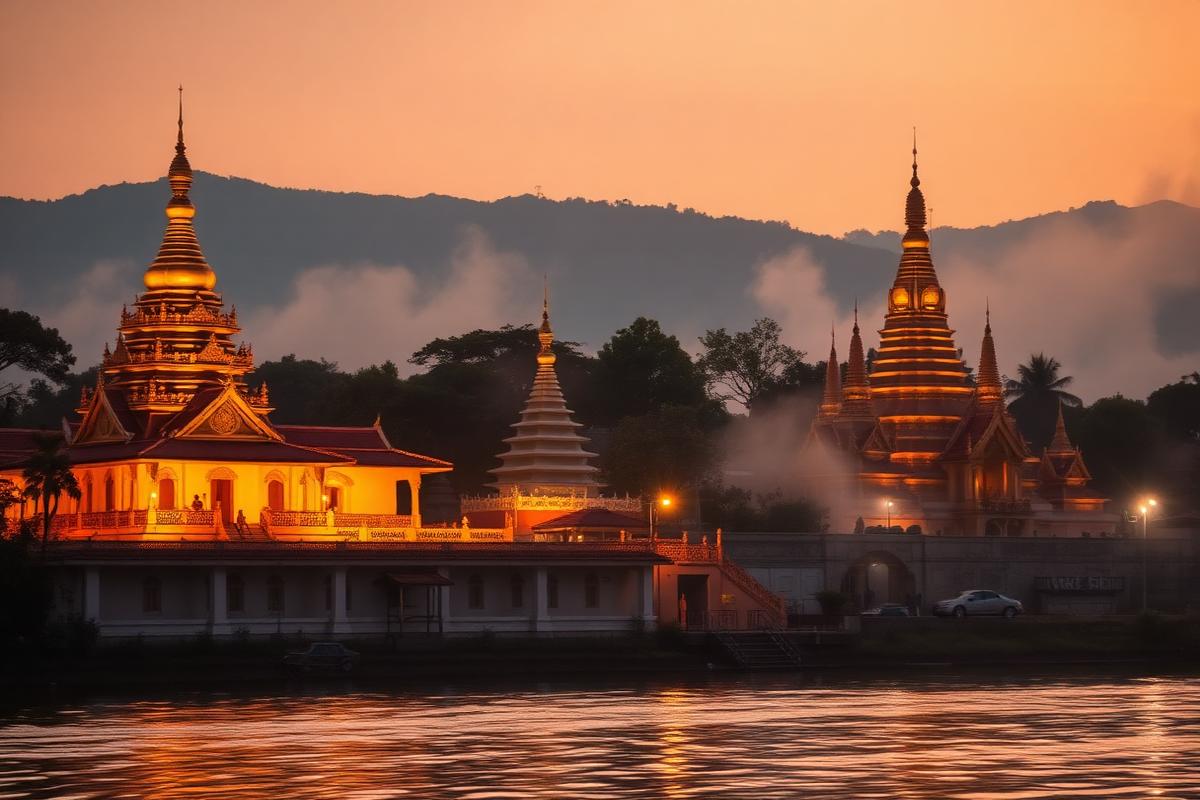
A serene UNESCO town of golden temples, saffron-robed monks, Mekong sunsets and turquoise waterfalls.
- Best time to visit: November-February (cool, dry season)
- Daily budget (budget traveller): $20 to $40 USD
- Ideal trip length: 3 to 4 days
Luang Prabang is Southeast Asia at its most peaceful: a tiny UNESCO peninsula where French-colonial shophouses meet gilded Buddhist temples, monks collect alms at dawn, and the Mekong drifts past at sunset. Nearby, the Kuang Si waterfalls cascade into impossibly blue pools. Joy Plus times the dawn alms-giving respectfully, clusters the temples and night market, and slots the waterfalls and a Mekong cruise.
Luang Prabang is a peninsula about 1.5km long, pinched between the Mekong and the Nam Khan, and you can walk the whole UNESCO core before lunch. That is the point. Gilded wats sit between ochre French shophouses, novices in saffron robes cut across the road to school, and by 11:30pm the town has gone to bed. Nobody is coming to rush you. Come for the rhythm: alms at dawn, a long humid midday, a river sunset, a cheap dinner under market lanterns.
The big sights are simple and good. Wat Xieng Thong (30,000 kip) is the finest temple in the country. The 328 steps up Mount Phousi (30,000 kip) buy you the classic sunset. Kuang Si (60,000 kip) is a tiered stack of milky turquoise pools 29km south, and the slow boat to the Pak Ou caves gives you a morning on the Mekong. The best moments are unticketed: a baguette with Lao coffee at the morning market, a bamboo bridge across the Nam Khan, a 90-minute herbal sauna at the Red Cross for the price of a coffee in Europe.
Logistics got easier. The Laos-China Railway runs from Vientiane in about two hours to a station 12km east of town, and the airport is 10 minutes from the old quarter. Laos is still a cash economy with a wobbly currency: carry kip, keep small notes for tuk-tuks, and expect many places to be cash-only. Three or four days is enough for the essentials, and a full week is a pleasure if you want to cycle to weaving villages, take a cooking class and do almost nothing at all.
How many days in Luang Prabang?
For Luang Prabang, we recommend 3 to 4 days. With more time, add a day trip to Pak Ou Caves or Tad Sae Falls.
| Trip length | What you'll see | Itinerary |
|---|---|---|
| 2 days | Wat Xieng Thong and the night market; Alms, Royal Palace and Phousi sunset | Luang Prabang in 2 days |
| 3 days · Recommended | Adds: Kuang Si waterfalls | Luang Prabang in 3 days |
| 4 days · Recommended | Adds: Mekong slow boat to Pak Ou | Luang Prabang in 4 days |
| 5 days | Adds: Cook, weave and sauna | Luang Prabang in 5 days |
| 7 days | Adds: Ban Phanom by bike and a river sunset | Luang Prabang in 7 days |
Luang Prabang itinerary
Arrive, Wat Xieng Thong and the night market
Morning: Land at LPQ (4km from town, fixed-fare taxi from the arrivals counter, from about 80,000 kip) or take the fast train and a shared minivan from the station (40,000-50,000 kip). Drop bags, then a baguette and Lao coffee at Joma Bakery Cafe.
Afternoon: Walk to Wat Xieng Thong at the peninsula tip (30,000 kip, 8am to 5pm). Drift back along the Mekong with a stop at Saffron Coffee for a cold brew.
Evening: Night market opens around 5:30pm on Sisavangvong Road. Pile a plate at the food alley buffet (about 25,000 kip), buy a Hmong blanket, bed early for dawn alms.
Alms, Royal Palace and Phousi sunset
Morning: Be on Sakkaline Road by 5:30am for tak bat. Stand across the street, no flash, no rice from touts. Breakfast of noodle soup at the morning market near Wat Nong (20,000-30,000 kip). Royal Palace Museum at 8am (60,000 kip, closed Tuesdays, bags in lockers).
Afternoon: Wat Mai next door, then Wat Visoun and its watermelon-shaped That Makmo stupa. Siesta through the 1pm heat.
Evening: Climb Mount Phousi by 4:45pm (30,000 kip, 328 steps) for the sunset. Dinner across the bamboo bridge at Dyen Sabai, order the sindat grill-top (bridge is open November to May).
Kuang Si waterfalls
Morning: Leave at 8am by shared tuk-tuk or minivan (60,000-80,000 kip per person return, 45 min). Visit the Free the Bears sanctuary at the entrance, then walk up through the pools (60,000 kip entry, opens 8am).
Afternoon: Swim in the third pool where swimming is allowed, then climb the steep side path to the top of the main fall. Cheap grilled chicken and sticky rice at the picnic stalls. Be back on the road by 2pm.
Evening: Book a 1-hour Lao massage or the herbal sauna at the Red Cross (about 150,000 kip for the massage, 25,000 kip for the sauna). Dinner at Tamarind with a jeow tasting platter.
Mekong slow boat to Pak Ou
Morning: Board a boat at the dock below the Royal Palace by 8:30am. About 2 hours upstream to Pak Ou with a stop at Ban Xanghai, the whisky village (boat charter about 300,000 kip for 4 people, caves 20,000 kip).
Afternoon: Explore the two caves (a phone torch is fine for the upper cave). Float back downstream in about an hour. Late lunch of kaipen riverweed with jeow.
Evening: Beerlao on Khem Khong Road at sunset, then dinner at a Mekong-front restaurant. Quiet night.
Cook, weave and sauna
Morning: Half-day cooking class at Tamarind or Tamnak Lao with a market visit (about 350,000-450,000 kip). You'll learn or lam, jeow bong and sticky rice.
Afternoon: Tuk-tuk or bike (2.5km) to Ock Pop Tok Living Crafts Centre on the Mekong, free to visit, with a riverside cafe and weaving demos.
Evening: Back to the old quarter for sunset drinks at Utopia on the Nam Khan, with cushions and a view. Finish with the Red Cross herbal sauna if you skipped it earlier.
Ban Phanom by bike and a river sunset
Morning: Hire a bike (30,000-50,000 kip) and cycle about 4km to Ban Phanom, the Tai Lue weaving village. Buy scarves directly from weavers at fair prices.
Afternoon: Return for lunch at Le Banneton or Saffron. Rest through the heat, then a Mekong sunset cruise (about 150,000 kip).
Evening: Farewell dinner at L'Elephant or Manda de Laos. If you want a night out, tuk-tuks run to the bowling alley after 10pm, the only place open past 11:30.
Slow morning and depart
Morning: One last dawn at the Nam Khan bamboo bridge, then coffee and pain au chocolat at Le Banneton. Pick up any last textiles from the market stalls.
Afternoon: Final khao soi at a street stall. Check out and take a tuk-tuk to LPQ (from about 80,000 kip) or a minivan to the train station (40,000-50,000 kip).
Evening: Fly or ride the fast train to Vientiane or Vang Vieng. Book through the official Laos-China Railway site or at the station.
Best neighbourhoods
- The Peninsula: The historic heart between the Mekong and Nam Khan rivers, dense with temples.
- Mount Phousi area: The central hill with a temple-topped sunset viewpoint.
- Night Market streets: Sisavangvong Road, lined with stalls each evening.
- Ban Xieng Mouane: A quiet artisan quarter of old wooden houses.
- Across the Nam Khan: Footbridges lead to laid-back guesthouses and gardens.
Must-do experiences
- Kuang Si Waterfalls: Turquoise tiered pools perfect for a swim, plus a bear sanctuary.
- Dawn alms-giving (Tak Bat): Watch (respectfully, from a distance) monks collect rice at sunrise.
- Sunset from Mount Phousi: Climb the central hill for golden views over the rivers.
- Mekong cruise to Pak Ou Caves: A river trip to caves filled with thousands of Buddha statues.
Hidden gems
- Wat Xieng Thong, the town's most beautiful temple, best seen at opening before the tour groups.
- A traditional Lao massage or herbal sauna in the evening.
- The morning fresh market for a local breakfast.
- Sunset drinks at a riverside bar across the Nam Khan.
Daily budget
- Accommodation: budget 100,000-180,000 kip / night (hostel dorm), mid-range 800,000-1,400,000 kip (boutique double with breakfast), splurge 8,500,000+ kip (Rosewood, Amantaka). Prices drop 30-40% from May to September. The peninsula costs more, so the far bank of the Nam Khan is the value zone.
- Food: budget 180,000-260,000 kip / day (night market buffet, noodle soup, baguettes), mid-range 400,000-650,000 (one dinner at Tamarind or L'Elephant), splurge 1,200,000+ (set dinners at Manda de Laos, hotel dining rooms). The night market food alley buffet (about 25,000 kip a plate) and morning market noodles (20,000-30,000) are the local hacks.
- Transport: budget 0-60,000 kip / day (walk, bicycle 30,000-50,000), mid-range 150,000-350,000 (tuk-tuks plus a shared Kuang Si ride), splurge 1,200,000+ (private car and driver for the day). The peninsula is walkable. Always agree the tuk-tuk fare before you climb in, and share rides to waterfalls.
- Activities: budget 100,000-150,000 kip / day (Wat Xieng Thong 30,000, Phousi 30,000, Kuang Si 60,000), mid-range 350,000-600,000 (cooking class, Pak Ou boat, Royal Palace 60,000), splurge 1,500,000+ (private long-tail charter, ethical elephant sanctuary day). Temples are cheap, the cooking class is the best splurge. Skip any elephant riding.
- Drinks & nightlife: budget 40,000-70,000 kip (large Beerlao from a mini-mart plus a bar beer), mid-range 150,000-250,000 (riverside cocktails, a few Beerlao), splurge 500,000+ (hotel bar cocktails at 150,000 each). Luang Prabang closes around 11:30pm. After that, the bowling alley on the edge of town is the only party left.
Where to stay
- Social hostel in Old quarter, near Ban Wat Nong (110,000-200,000 kip / night): Spicy Laos Backpackers, central, with mixed dorms, privates and a lively common room. Five minutes on foot from the night market and the morning market.
- Boutique hotel in Ban Xieng Mouane and Sakkaline Road (1,400,000-3,200,000 kip / night): 3 Nagas or Villa Santi, restored colonial houses with teak floors, courtyard breakfasts and walking distance to Wat Xieng Thong and the alms route.
- Apartment in Across the Nam Khan (Ban Khily side) (450,000-900,000 kip / night): Family-run studios and Airbnb rooms on quiet residential lanes, over the old bridge from the peninsula. Best value for 5+ nights, and bikes are cheap.
- Splurge in Nam Khan riverbank and old town fringe (8,500,000-18,000,000 kip / night): Rosewood Luang Prabang or Amantaka, pool villas, private dining and river views. Both arrange alms, boat trips and Kuang Si transfers.
What to eat
- Khao soi Luang Prabang, the local noodle soup
- Or lam, a herby Lao stew
- Mekong riverweed (kaipen) with jeow dip
- French-influenced baguettes and Lao coffee
Day trips
- Kuang Si Waterfalls (29km, 45 min by tuk-tuk): Milky-turquoise tiered pools you can swim in, a steep path to the top of the main fall and the Free the Bears sanctuary at the entrance. Go at 8am to beat the tour vans. Shared tuk-tuk or minivan from the old quarter, 60,000-80,000 kip per person return. Private tuk-tuk 300,000-400,000 kip. Entry 60,000 kip, open 8am to 5:30pm.
- Pak Ou Caves (25km upriver, about 2 hours by boat): Two limestone caves crowded with thousands of Buddha statues, with a stop at the whisky village of Ban Xanghai on the way. The trip is half the point. Long-tail boat from the dock below the Royal Palace, around 300,000 kip per boat for 4 people. Entry to the caves is 20,000 kip. Downstream takes about an hour.
- Tad Sae Falls (15km, about 40 min by tuk-tuk and short boat): A quieter, forested alternative to Kuang Si with wide cascades and shallow pools. Best in the wet season and into November, and it can dry out by March. Tuk-tuk about 200,000 kip return for the vehicle, then a short boat or walk. Entry about 20,000 kip.
When to visit
- Cool season (November - February): 15-29°C, dry and sunny, chilly mornings (12°C at dawn in January). Crowds: Peak, busiest mid-December to January. The best window. Kuang Si is at its bluest, the bamboo bridges are open and alms-giving is comfortable. Book rooms ahead for Christmas and New Year.
- Hot season (March - May): 24-37°C, humid, hazy from burning-season smoke. Crowds: Low, with a spike around Pi Mai Lao New Year (14-16 April). Haze is worst in March and April and can dull the views and your lungs. Pi Mai is a joyful, soaking street water fight if you want it.
- Green season (June - September): 24-32°C, daily downpours, very humid. Crowds: Lowest of the year. Lush, cheap and quiet, with the lowest hotel rates. Kuang Si turns murky brown after heavy rain and the Mekong runs fast and chocolate-coloured.
- Shoulder (October): 22-31°C, rains easing, fresh green hills. Crowds: Moderate and rising late in the month. The locals' pick. The Lai Heua Fai fire-boat festival marks the end of Buddhist Lent, the countryside is green and prices haven't peaked yet.
Entry rules for your passport
Visa rules for Laos depend on the passport you travel on. Check the official source before you book: Laos's official eVisa site
Getting there
Luang Prabang International Airport (LPQ) is about 4km from the old quarter, a 10 minute ride. There are direct flights from Bangkok, Hanoi, Siem Reap, Vientiane and Kunming. Use the fixed-fare taxi counter at the arrivals exit, from about 80,000 kip. Tuk-tuks are not allowed to pick up at the airport, so for one you have to walk out to the road and negotiate. The faster, cheaper option is the Laos-China Railway: Vientiane to Luang Prabang takes about two hours and costs roughly 360,000-569,000 kip depending on class, with Vang Vieng about an hour away. The station is about 12km east of the peninsula, roughly 25 minutes by road, so take a shared minivan (40,000-50,000 kip per person) or a private tuk-tuk (100,000-150,000 kip). Buy tickets at the station or the official Laos-China Railway site, and bring your passport. Buses from Vientiane and the slow boat from Huay Xai still run, but they take 8 hours to 2 days.
Getting around
The peninsula is small and made for walking or cycling, with bikes for hire everywhere. Tuk-tuks reach the waterfalls and bus station; agree fares first or share with others. The new fast train links Luang Prabang to Vientiane and the Chinese border, making arrivals and onward travel easy.
Safety
Luang Prabang is very safe and relaxed. The key is respect: dress modestly at temples, never touch monks or block the alms procession, and observe the alms ceremony quietly from a distance. Watch your footing on wet waterfall rocks and bring cash, as ATMs can be limited. Across Laos, avoid free or very cheap spirits and unlabelled bottles: six travellers died of suspected methanol poisoning in Vang Vieng in November 2024.
Solo travel tips
- Share your Kuang Si ride: Tuk-tuk drivers gather along Sisavangvong Road and in front of guesthouses. Join a shared van and you pay 60,000-80,000 kip instead of 300,000 for a private tuk-tuk, and you meet people on the way.
- Don't buy the alms rice: Vendors push sticky rice and sweets at tourists, and the monks are often handed poor-quality food. Watch from across the road with your shoulders covered, or join a proper local-guided session.
- Hostel pick: Spicy Laos Backpackers: A friendly, social hostel in the old quarter with mixed dorms and a lively common room. It runs low-key group dinners and Kuang Si trips, with no forced bar crawls.
- Plan late nights around 11pm: The town goes quiet around 11:30pm and bars close. If you want to keep going, tuk-tuks run to the bowling alley on the edge of town, where travellers gather to drink Beerlao.
- Solo female travellers: Luang Prabang is one of the safest towns in Southeast Asia for women alone. Dress modestly at temples, take a tuk-tuk home after dark if you're on the far bank, and carry a phone torch for unlit lanes.
- Find your tribe at the cooking class or Utopia: Tamarind and Tamnak Lao classes run in small groups and end with everyone eating together. Utopia on the Nam Khan has shared cushions and a sunset crowd, an easy place to join a conversation.
Cultural etiquette
- Cover shoulders and knees at temples, and take your shoes off before entering any prayer hall. A cheap sarong (about 30,000 kip) from the market is useful.
- Never touch a monk or hand something directly to one if you are a woman. Don't sit higher than a monk on a bus or boat.
- At dawn alms, stand across the street, stay silent, skip the flash and selfies, and don't block the procession. Don't buy rice from touts.
- Don't touch heads, and don't point your feet at people or Buddha images. Hand money and objects over with your right hand, ideally with the left supporting your elbow.
- Learn three words: sabaidee (hello), khop chai (thank you) and bo pen nyang (no worries). A small bow with palms together is the greeting.
- Bargain gently at the night market. Aim for 70-80% of the first price, smile, and stop after two refusals. Never bargain over food or for a tuk-tuk after dark.
- Dress modestly in town: no swimwear, no topless sunbathing, and swim in proper swimwear at Kuang Si. Keep your voice low in the evening, as the town sleeps early.
Frequently asked questions
How many days do you need in Luang Prabang?
Three to four days lets you slow down for the temples, the waterfalls, a Mekong cruise and the night market without rushing the town's gentle pace.
Is it okay to watch the monks' alms-giving?
Yes, but respectfully: keep your distance, stay silent, don't use flash, dress modestly, and don't buy rice to join in unless you understand the custom. It's a sacred ritual, not a photo op.
How do you get to Luang Prabang?
Fly in, or take the fast train from Vientiane or the Chinese border. The train has made reaching Luang Prabang far quicker and more comfortable than the old mountain roads.
When is the best time to visit Luang Prabang?
November-February (cool, dry season) is the sweet spot for weather and crowds. Shoulder season brings lower prices and easier bookings, while peak months mean higher accommodation costs and longer queues at the best known sights, so book early if you travel then.
How much does a trip to Luang Prabang cost?
Budget around $20 to $40 USD per person per day, covering a hostel bed or simple room, local transport, two or three meals out and an activity or entry ticket. You can go lower with markets and free walking tours, or far higher with boutique hotels and private guides.
How much does a solo trip to Luang Prabang cost?
Budget on roughly $20-$40 USD per day in Luang Prabang as a solo traveller. That covers a hostel bed or simple room, local food, getting around and a couple of paid sights. Mid-range comfort with private rooms, sit-down dinners and the odd tour runs closer to double, while shoestring travellers who cook and stick to street food can come in under it.
Is Luang Prabang safe for solo female travellers?
Luang Prabang is generally a comfortable place to travel solo, including for women, as long as you use normal city sense. Luang Prabang is very safe and relaxed. The key is respect: dress modestly at temples, never touch monks or block the alms procession, and observe the alms ceremony quietly from a distance. Watch your footing on wet waterfall rocks and bring cash, as ATMs can be limited. Across Laos, avoid free or very cheap spirits and unlabelled bottles: six travellers died of suspected methanol poisoning in Vang Vieng in November 2024.
How do you get around Luang Prabang?
The peninsula is small and made for walking or cycling, with bikes for hire everywhere. Tuk-tuks reach the waterfalls and bus station; agree fares first or share with others. The new fast train links Luang Prabang to Vientiane and the Chinese border, making arrivals and onward travel easy.
Do I need a visa for Laos?
Most visitors, including French, other EU, British and American citizens, need a tourist visa for a 30-day stay: about US$30 to US$42 on arrival, in cash, depending on nationality, or an e-visa from the official site, laoevisa.gov.la. Since 1 September 2025 foreign visitors must also complete the free Lao Digital Immigration Form on immigration.gov.la within the three days before arriving, and again before leaving.
More about Luang Prabang
- Solo Travel Southeast Asia Itinerary 2026: 2, 3 and 4 Week Overland Routes
- Solo Travel in Southeast Asia: The 2026 Beginner's Guide to Visas, Money and Safety
Tours and activities in Luang Prabang | Luang Prabang in 2 days | Luang Prabang in 3 days | Luang Prabang in 4 days | Luang Prabang in 5 days | Luang Prabang in 7 days
Can't decide? Compare Luang Prabang with...
- Chiang Mai vs Luang Prabang
- Hanoi vs Luang Prabang
- Luang Prabang vs Vang Vieng
- Vientiane vs Luang Prabang
Joy Plus home | Destinations | Itineraries | Activities | Flights | Budget planner | Calendar | Map | Blog | Lifetime access