Destinations / Europe
Lübeck, Germany travel guide
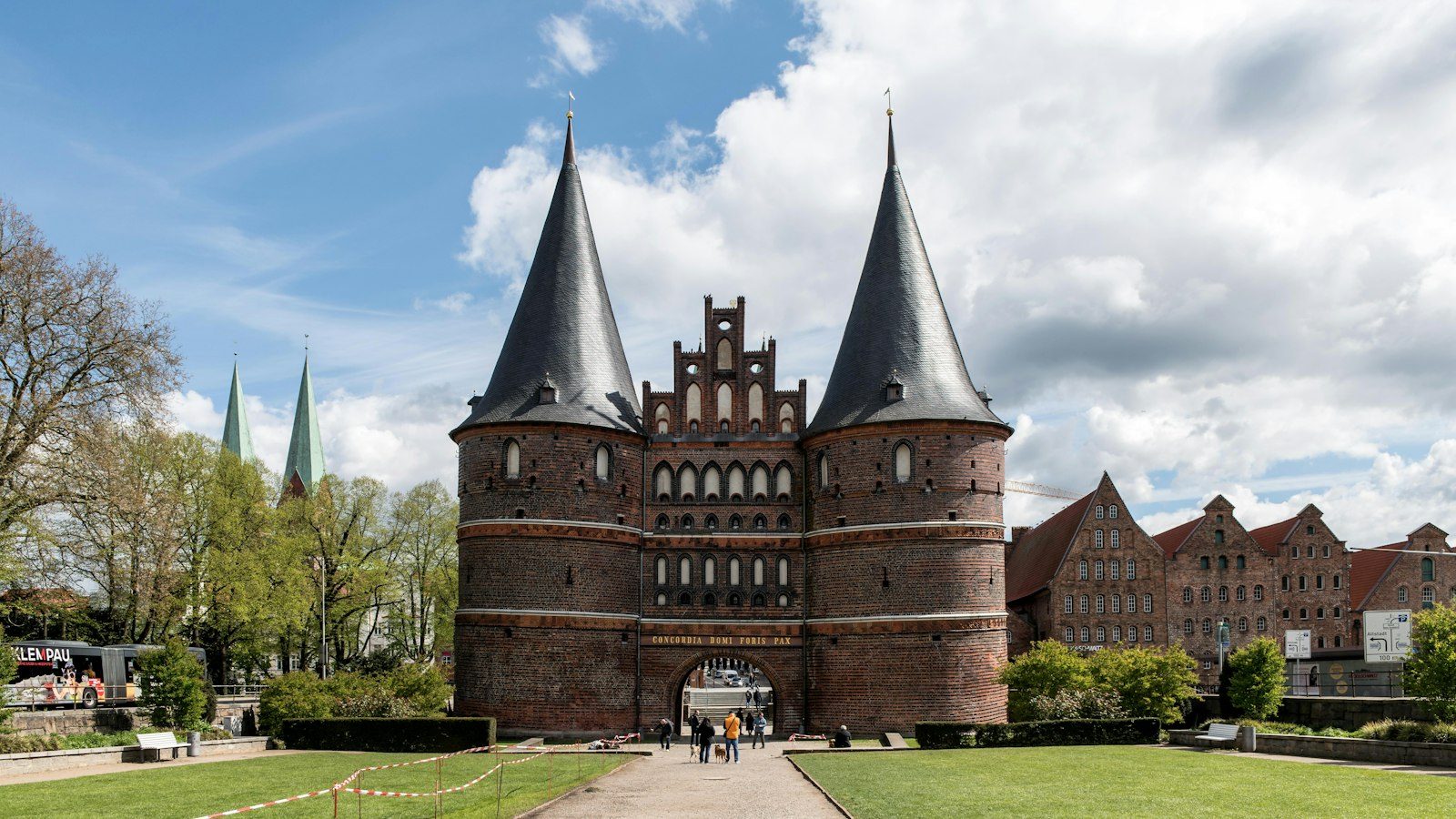
A red-brick Hanseatic city on an island ringed by water in Germany's far north. You walk under the leaning towers of the Holstentor, eat marzipan where it is still made by the tonne and take a short train to the Baltic beach at Travemünde.
- Best time to visit: May to September and Advent
- Daily budget (budget traveller): $70 to $215 USD
- Ideal trip length: 3 to 5 days
Lübeck sits on an oval island in the River Trave, about 45 minutes by train north-east of Hamburg and 20 minutes from the Baltic Sea. For a few hundred years it led the Hanseatic League, the trading network that ran much of northern Europe's commerce. The money built what you see today: tall brick churches, gabled merchants' houses, salt warehouses on the water and the famous Holstentor gate. The whole old town island is a UNESCO World Heritage Site, and it is small enough to cross on foot in 20 minutes. Behind the main streets are the Gänge, narrow passages leading to hidden courtyards of tiny almshouses, and most are open to the public. Climb St Peter's tower for the view, spend half a day in the European Hansemuseum and buy marzipan at Niederegger. Then take the train to Travemünde for a swim or a cliff walk. Lübeck is quieter and cheaper than Hamburg, very safe and easy to get around. The weather is the main catch, as northern Germany can be grey and windy outside summer. Even so, a hostel bed in the old town, cheap regional trains and a museum day pass make it an easy and rewarding stop for a solo traveller.
Lübeck was once the capital of the Hanseatic League, and it still looks it. The old town fills an island in the Trave, ringed by the river and a canal. It is packed with brick Gothic churches, merchants' houses with stepped gables and the salt warehouses that made the city rich. Around 220,000 people live in Lübeck, but the island itself feels like a small town. The whole old town is a UNESCO World Heritage Site, and Thomas Mann set Buddenbrooks here. Many visitors come for a few hours from Hamburg, see the Holstentor and buy marzipan. Stay a few nights instead. You can have the Gänge courtyards to yourself in the morning, spend an unhurried afternoon in the Hansemuseum, walk the river at sunset and have the Baltic 20 minutes away. Prices are lower than in Hamburg, and a hostel bed and a museum pass go a long way.
Getting here is easy. Regional trains from Hamburg take about 45 minutes, and from Hamburg Airport the journey takes about 1.5 hours with one change. There are also direct trains from Kiel, and ferries from Scandinavia and Finland dock at Travemünde. In 2026 the Deutschlandticket costs €63 a month and covers every regional train and city bus. It pays off quickly if you are staying a week or travelling on in Germany. Once you are here, walk. The island is flat and compact. Stay in the Jakobi quarter for character and hostels, around St Mary's for convenience, or by the station for cheaper hotels and quick trains. Save the buses for Travemünde, the Wakenitz and rainy days.
Timing shapes the trip. Summer brings long light evenings, boat trips, beach days and festivals on the waterfront. Advent turns the old town into one of Germany's best Christmas market towns. In between, Lübeck is cool, damp and quiet. That is fine for museums and churches, but the beach and the boats wind down, and the Holstentor shortens its hours from January to March. The Buddenbrookhaus is closed until around 2031, so do not plan around it. The city is very safe, English is widely spoken and evenings are relaxed rather than wild. Go to Hamburg if you want big nightlife. Stay here if you want old streets, good cake and a glass of Rotspon in a medieval cellar.
Lübeck itinerary
Arrive and find your feet
Morning: Take the train from Hamburg (about 45 minutes). Drop your bag and walk over the bridge to the Holstentor and the Salzspeicher warehouses.
Afternoon: Go inside the Holstentor museum (€9), then walk up to the Markt and the town hall. Have coffee and marzipan cake at Niederegger.
Evening: Walk the Obertrave riverbank at sunset, then have dinner and a house beer at Brauberger.
Churches, towers and courtyards
Morning: See St Mary's Church (€5) when it opens, including the fallen bells. Then take the lift up St Peter's tower for the view.
Afternoon: Hunt down the Gänge, such as Füchtingshof and Glandorps Gang. Then visit the free Willy-Brandt-Haus on Königstraße.
Evening: Dinner and a glass of Rotspon at the Schiffergesellschaft, the old sea captains' guild house on Breite Straße.
The Hanseatic north end
Morning: Spend the morning in the European Hansemuseum (€16). Arrive at opening time and allow two to three hours.
Afternoon: Walk through the Burgtor gate, then look inside the Heiligen-Geist-Hospital on the Koberg. Take a boat trip around the island (roughly €15-20).
Evening: Eat a simple dinner in the Jakobi quarter, then have a drink in one of the small bars around the Koberg.
Travemünde and the Baltic
Morning: Take the train to Travemünde (about 20 minutes). Walk the promenade and look round the sailing ship Passat across the river.
Afternoon: Follow the clifftop path north along the Brodtener Steilufer, keeping well back from the edge. Swim from the main beach in summer.
Evening: Eat a fish roll on the harbour while the big Scandinavian ferries sail out, then take the train back to Lübeck.
Museums and the Wakenitz
Morning: Use a museum day pass (€14) for the St Annen Museum and the Günter Grass-Haus, then walk round the cathedral.
Afternoon: Walk or cycle along the Wakenitz river east of the old town. In summer, take a boat towards Rothenhusen.
Evening: Watch the sunset by the Mühlenteich pond behind the cathedral, then have dinner in the quiet Dom quarter.
A day in Hamburg
Morning: Take an early regional train to Hamburg (about 45 minutes, around €15 each way). Walk from the station to the Speicherstadt warehouse district.
Afternoon: Go up to the free Elbphilharmonie Plaza for harbour views, then walk along the Elbe or take a harbour ferry.
Evening: Eat in Hamburg's St Pauli or Sternschanze district, then take a late train back to Lübeck. Check the last departure first.
Slow morning and depart
Morning: Have a last breakfast in a bakery, then walk the Gänge or the riverbank before the shops open.
Afternoon: Buy marzipan at Niederegger to take home, then catch a train to Hamburg, Kiel or onwards.
Evening: Arrive at your next stop, or catch an evening flight from Hamburg Airport.
Best neighbourhoods
- Merchants' quarter around St Mary's: The heart of the old town, between the Markt, the town hall, St Mary's Church and the Trave. Mengstraße and Breite Straße have the grandest houses, plus Niederegger, the shops and plenty of cafés. Everything is within a 10-minute walk, though the main shopping streets get busy on Saturdays.
- Jakobi quarter and Koberg: The northern end of the island, around St Jakobi, the sailors' church, and the Koberg square. You have the Hansemuseum, the Burgtor gate, the Heiligen-Geist-Hospital and the old Schiffergesellschaft guild house. It feels calmer and more local than the centre and has some of the best budget beds.
- Dom quarter: The quiet southern end of the island, around the cathedral and the St Annen Museum. The streets are lined with old houses, small gardens and some of the prettiest Gänge. It is a good base if you want peace at night, and the Markt is still only 10 minutes away.
- St Lorenz and the station: Just west of the Holstentor, on the mainland side of the river. It is less pretty, but the chain hotels here are cheaper, and trains to Hamburg and Travemünde leave from the doorstep. The old town is a five-minute walk over the bridge.
- Travemünde: Lübeck's seaside district at the mouth of the Trave, about 20 minutes away by train. There is a long sandy beach, a promenade, fish stalls and the big ferries to Scandinavia. It suits you in summer if you would rather wake up by the sea and go into the old town for day trips.
Must-do experiences
- Go through the Holstentor: The 15th-century city gate, with its sinking twin towers, is Lübeck's symbol. Walk round it to see how much it leans, then go inside for the museum on Hanseatic trade. Adult entry is €9 from April 2026. It opens daily from April to December and from Tuesday to Sunday in winter.
- Spend half a day in the European Hansemuseum: This is the biggest museum about the Hanseatic League, built into the old Burgkloster friary at the north end of the island. You walk through reconstructed scenes from Novgorod to Bruges. Adults pay €16, and students and under-18s get in free. Allow two to three hours.
- See St Mary's Church: The mother church of northern brick Gothic, with some of the tallest brick vaults in the world. Look for the shattered bells left where they fell in a 1942 air raid and the little devil statue outside. Tourist entry costs €5, or €3 reduced, and is free if you come to pray.
- Climb St Peter's tower: A lift takes you up St Petri's tower to a viewing platform about 50 metres up. From there you get the best view in town over the copper spires, the Trave and the Salzspeicher warehouses. Entry is about €5. Go on a clear late afternoon.
- Explore the Gänge and courtyards: Narrow passages lead off the main streets into hidden courtyards of tiny houses, many built for poor widows and workers. Füchtingshof and Glandorps Gang are two of the prettiest. They are free, but people live there, so keep quiet and respect any closed doors.
- Take a boat around the island: Hour-long cruises circle the old town on the Trave and the city canal. They pass the warehouses, the cathedral and the green banks behind the Dom. Tickets cost roughly €15-20. In summer, boats also run up the leafy Wakenitz river towards Rothenhusen.
- Spend a day at Travemünde: Take the train 20 minutes to Lübeck's beach suburb. Walk the promenade, look round the four-masted sailing ship Passat and eat a fish roll by the harbour. Then follow the clifftop path north to the Brodtener Steilufer. Swim in summer if you can handle the Baltic.
Hidden gems
- The Heiligen-Geist-Hospital on the Koberg, one of Europe's oldest hospitals, where you can see the small wooden cabins where residents once slept inside the great hall
- Willy-Brandt-Haus on Königstraße, a free and well-made museum on the Lübeck-born chancellor and Cold War Germany
- The riverside path along the Wakenitz east of the old town, where locals swim, row and sunbathe in summer
- Glandorps Gang and Glandorps Hof, a long, narrow run of tiny cottages that feels like a village hidden behind a city street
- The cathedral's quiet garden side by the Mühlenteich pond, a good place to escape on a busy Saturday
Daily budget
- Accommodation: budget €25-40 / night (hostel dorm), mid-range €90-150 (3-star or boutique hotel in the old town), splurge €200+ (spa hotel in Travemünde or a top city hotel). Prices rise in July and August, during Advent and on summer weekends in Travemünde. Single rooms in hostels and small hotels sell out first. A spa tax applies in Travemünde.
- Food: budget €20-30 / day (bakery breakfast, fish roll, supermarket picnic), mid-range €40-60 (café lunch and a sit-down dinner), splurge €80+ (multi-course dinner with wine). A fish roll is about €4-7, a main course in a traditional restaurant roughly €16-28, and coffee and cake at Niederegger around €8-10. Prices are rough guides.
- Transport: budget €0-6 / day (walking, the odd bus), mid-range €10-35 (trains to Travemünde or Hamburg), splurge €63 (Deutschlandticket for a month of regional travel). A city bus single is about €3. Hamburg is around €15 each way by regional train. The Deutschlandticket is a monthly subscription, so cancel it before the next month if you do not need it.
- Activities: budget €0-15 / day (Gänge, churches, St Mary's at €5), mid-range €15-35 (museum day pass €14-18, Hansemuseum €16), splurge €40+ (boat trips, guided tours, St Mary's tower tours). The Holstentor is €9 for adults from April 2026. The Hansemuseum is free for students and under-18s. The Day Pass plus adds St Mary's and St Peter's tower.
- Drinks & nightlife: budget €5-10 (a beer or a glass of wine), mid-range €15-30 (a few drinks in a pub or wine bar), splurge €50+ (cocktails and a long night out). A beer costs about €4-5.50 and a coffee about €3-4. Nightlife is mostly pubs, wine taverns and student bars. Hamburg is the place for clubs.
Where to stay
- Social hostel in Merchants' quarter, Mengstraße (€25-40 / night (dorm)): The Jugendherberge Lübeck Altstadt is a well-run youth hostel in an old merchant's house in the middle of the island. It is near St Mary's and the Trave, and has single rooms as well as dorms. Breakfast is usually included.
- Boutique hotel in Alfstraße, below St Mary's (€120-200 / night): Hotel Anno 1216 sits in one of the oldest houses in the city, with painted ceilings and old beams. The Trave, the Markt and the Holstentor are all a few minutes' walk away.
- Apartment in Jakobi or Dom quarter (€80-140 / night): Small apartments in old gabled houses give you a kitchen and a quieter street. Expect steep, narrow stairs and no lift, and check the exact address if you have heavy luggage.
- Splurge in Travemünde (€200-400+ / night): A-ROSA Travemünde is a large spa resort near the beach, with pools, saunas and sea air. Trains to the old town take about 20 minutes, so you can combine beach days with city sightseeing.
What to eat
- Marzipan from Niederegger: buy it in the shop on Breite Street, then go upstairs to the café for marzipan cake and a small free museum on its history
- Fischbrötchen: a bread roll with pickled herring, smoked mackerel or fried fish, the cheapest good lunch in town and best eaten on Travemünde harbour
- Rotspon: French red wine traditionally aged in Lübeck's cellars, served by the glass in old wine taverns and at the Schiffergesellschaft
- Hearty northern dishes such as Labskaus (corned beef hash with beetroot and fried egg) or, in winter, Grünkohl (kale) with sausage
- Unfiltered house beer at Brauberger, a small brewery-pub in a medieval cellar on Alfstraße
- Coffee and a Franzbrötchen, the cinnamon pastry of northern Germany, from any bakery for an easy breakfast
Day trips
- Travemünde and the Brodtener Steilufer (About 20km north-east of the old town, 20 minutes by train): Lübeck's seaside district, with a sandy Baltic beach, a promenade, the four-masted ship Passat and a clifftop walk north to Niendorf. It is busy in summer and windswept but bracing out of season. Take a regional train from Lübeck Hauptbahnhof to Travemünde Strand, or a city bus. Both are covered by the Deutschlandticket. A small ferry crosses to the Priwall side and the Passat.
- Hamburg (About 65km south-west, 45 minutes by train): Germany's second city, with the Speicherstadt warehouses, the Elbphilharmonie, a busy harbour and far bigger nightlife than Lübeck. It makes a good contrast with the calm of the old Hanseatic island. Regional trains run at least hourly from Lübeck Hauptbahnhof for around €15 each way, or free with a Deutschlandticket. Check the time of the last train back before you go out in the evening.
- Wismar (About 60km east, around 1 to 1.5 hours by train): Another UNESCO-listed Hanseatic port, smaller and quieter than Lübeck, with a huge market square, brick churches and a working old harbour. It sees fewer tourists and is good for a calm day out. Take a regional train and change at Bad Kleinen. The whole route is covered by the Deutschlandticket. Trains are roughly hourly, so check connections both ways.
When to visit
- Spring (April - May): 8-17°C, fresh and changeable, often windy. Crowds: Low to moderate, busier at Easter and on May bank holidays. Good for walking and museums at lower prices. The Holstentor goes back to daily hours in April, and boats start running. It is too cold to swim yet.
- Summer (June - August): 19-24°C, long days, occasional showers and the odd hot spell. Crowds: Busy, especially at weekends and during Travemünde Week in late July. The best time for beach days, boat trips and outdoor cafés. Book Travemünde rooms early, and see the old town early or late in the day to avoid tour groups.
- Autumn (September - October): 10-19°C, cooling, more rain and wind from October. Crowds: Moderate in September, quieter in October. September is the locals' pick, with mild days, the odd last swim and calmer streets. October is fine for museums and walks, but the beach season is over.
- Winter (November - March): 0-6°C, grey and damp, short days, occasional frost. Crowds: Very busy during Advent, then very quiet until March. Advent is magical, with Christmas markets across the island, but rooms cost more. January to March is cheap and peaceful, though sights keep shorter hours.
Entry rules for your passport
Visa rules for Germany depend on the passport you travel on. Check the official source before you book: European Commission: Schengen visa policy
Getting there
Lübeck has a small airport with very few flights, so most people fly into Hamburg. From Hamburg Airport, take the S-Bahn to Hamburg Hauptbahnhof and change to a regional train to Lübeck. The whole trip takes about 1.5 hours. Regional trains from Hamburg run at least hourly, take about 45 minutes and cost around €15 one way. They are all covered by the Deutschlandticket, which costs €63 a month in 2026. Direct trains also run from Kiel, and there are connections from Copenhagen via Hamburg. Long-distance buses such as FlixBus stop at the central bus station next to the main station. By sea, ferries from Sweden and Finland, including Trelleborg and Helsinki, dock at Travemünde, which is linked to the city by train in about 20 minutes. If you drive, leave the car in a car park at the edge of the island, as the old town streets are narrow and many are restricted.
Border checks: non-EU visitors (other than Swiss, Norwegian, Icelandic, Liechtenstein, Andorran, Monegasque, San Marinese and Vatican citizens, and holders of an EU residence permit or long-stay visa) are registered in the EU's Entry/Exit System (EES) instead of getting a passport stamp. On your first crossing, officers take your photo and/or fingerprints, so allow extra time at passport control. ETIAS, the planned travel authorisation, is not in operation yet, so don't pay any website for one.
Getting around
The old town island is about 2km long and 1km wide, so you can walk almost everywhere. It takes about 20 minutes from the Holstentor to the Burgtor. The streets are cobbled in places but mostly flat, apart from the slope up to St Mary's. The main station is a five-minute walk west of the Holstentor. Stadtverkehr Lübeck runs city buses, and many cross the island along Königstraße and Breite Straße. A single costs about €3, and you can buy tickets from the driver, from machines or in the app. Regional trains run to Travemünde in about 20 minutes and to Hamburg in about 45 minutes. If you are in Germany for a week or more, the Deutschlandticket costs €63 a month in 2026. It covers all buses and regional trains nationwide, but it is a monthly subscription, so cancel it in time. Bikes are a good way to reach the Wakenitz and the edges of town, and there are several rental shops near the centre. Taxis are easy to find at the station. Driving into the old town is not worth it, as most streets are narrow, one-way or restricted, so use a car park on the edge of the island.
Safety
Lübeck is a very safe city for visitors, and violent crime against tourists is rare. Watch your bag at the Christmas markets, in crowds around the Holstentor and on busy trains to Hamburg. The area around the main station can feel a little rough late at night, but it is not dangerous. The main risks are slippery cobbles in rain and ice, cyclists in the narrow streets and swimming in the Baltic, which is cold and can have strong currents on windy days. Swim at Travemünde beaches with lifeguards in summer and check the flags. Stay well back from the edge of the Brodtener Steilufer, as the cliffs erode and sometimes collapse. Tap water is safe to drink. The EU emergency number is 112, and 110 calls the police. EU travellers should carry an EHIC and UK travellers a GHIC, and everyone else needs travel insurance with medical cover.
Solo travel tips
- Stay on the island: A bed on the old town island means you can walk everywhere, see the Gänge before the day trippers arrive and wander home after dinner. The Jakobi quarter is the best mix of character and value.
- Do the big sights early: Coach groups from Hamburg and cruise passengers from Travemünde arrive mid-morning. See the Holstentor and St Mary's at opening time, and have the courtyards almost to yourself after 5pm.
- Bundle your tickets: A museum day pass covers several sights for €14-18, and a Deutschlandticket covers every regional train and city bus. Work out your week first and see which combination saves the most.
- Eat well for less: Fish rolls, bakery breakfasts and supermarket picnics by the Trave keep food costs down. Save money for one proper dinner in a historic guild house or wine cellar.
- Safety for solo travellers: Lübeck is very safe. The main risks are slippery cobbles, cyclists and cold Baltic water. At night, stick to the lit main streets rather than quiet riverside paths, and swim only at beaches with lifeguards.
- Meet people on a tour or in a hostel: Free and paid walking tours start near the Holstentor, and hostel common rooms are easy places to start a conversation. A brewery pub with long shared tables works too.
Cultural etiquette
- Greet shopkeepers with 'Moin', the all-day hello of northern Germany, and say 'danke' (thank you). 'Tschüss' is the usual goodbye.
- Stay out of red bike lanes on pavements, as cyclists move fast and expect them to be clear.
- Wait for the green man at crossings, even when the road is empty. Locals do, and jaywalking can earn a stern look.
- Keep your voice down in the Gänge and courtyards, as these are private homes that residents kindly leave open.
- Pay the €5 MarienTaler for a tourist visit to St Mary's, and stay quiet during services. Entry is free if you come only to pray.
- Shops close on Sundays, apart from some bakeries and the station. Stock up on Saturday.
- Return deposit bottles (Pfand) to supermarket machines for a refund, and sort your rubbish if your accommodation asks you to.
Frequently asked questions
How do I get to Lübeck and from the station to my room?
Most people arrive by train from Hamburg. Regional trains run at least hourly, take about 45 minutes and cost around €15 one way, or nothing extra with a Deutschlandticket. From Hamburg Airport, take the S-Bahn to Hamburg Hauptbahnhof and change there. Lübeck's main station is a five-minute walk from the Holstentor, and most of the old town is within 15 to 20 minutes on foot. If your bed is at the far end of the island, near the Burgtor or the Dom, take a city bus for about €3.
How many days do I need in Lübeck?
Two nights covers the Holstentor, St Mary's, St Peter's tower, the Hansemuseum and a wander through the Gänge. Three to five nights lets you add a day at Travemünde, a boat trip and a slow afternoon on the Wakenitz. A week works if you add day trips to Hamburg and Wismar or the lake town of Ratzeburg.
When is the best time to visit Lübeck?
May to September brings the longest days, open-air cafés and Baltic swimming from July. The weather is still changeable, so pack a layer. Advent is the other high point, when the Christmas markets fill the old town from late November until just before New Year. January to March is cold, grey and quiet, and some sights keep shorter hours, but rooms are cheap.
Is the Lübeck museum day pass worth it?
Often, yes. The Lübeck Day Pass costs €14 for one day or €18 for two, and covers the city museums, including the Holstentor, the St Annen Museum, the Günter Grass-Haus and the Behnhaus Drägerhaus. The Day Pass plus also includes St Mary's and St Peter's tower. The Holstentor alone is €9, so two museums already make it worthwhile. The European Hansemuseum is separate, at €16 for adults.
Can I visit the Buddenbrookhaus?
Not for now. The Thomas Mann museum on Mengstraße is closed for a major rebuild and expansion, and the city now expects it to reopen around 2031. You can still see the white façade from the street. Until then, a small shop and exhibition space called Buddenbrooks am Markt, between St Mary's and the town hall, covers the Mann family.
Can I swim at Travemünde?
Yes, from roughly June to September, though the Baltic is cool, usually around 17-20°C in midsummer. The main beach is long and sandy, with lifeguards in season and wicker beach chairs to rent. Expect a small spa tax (Kurabgabe) for the beach in season. The Priwall beach across the river, reached by a short ferry, is usually calmer.
Is Lübeck safe for solo female travellers?
Yes. It is one of the calmer cities in Germany, and the old town is well lit and lively until mid-evening. Take normal care with drinks in bars, watch your bag at busy markets and pick a lit, central route home late at night, such as Königstraße or Breite Straße, rather than the quiet riverside paths.
What entry rules apply to Germany in 2026?
Germany is in the EU and the Schengen area. Many non-EU visitors, including those from the UK, US, Canada and Australia, can stay visa-free for up to 90 days in any 180-day period across Schengen. The EU's Entry/Exit System has been fully running since April 2026. It records non-EU travellers' fingerprints and photos at the external border. The ETIAS travel authorisation has no confirmed start date and is now expected in 2027. Germany also carries out checks at some of its land borders, so keep your passport with you. Confirm the rules on official EU and German government websites and check your own government's travel advice.
More about Lübeck
Tours and activities in Lübeck | Lübeck in 2 days | Lübeck in 3 days | Lübeck in 4 days | Lübeck in 5 days | Lübeck in 7 days
Joy Plus home | Destinations | Itineraries | Activities | Flights | Budget planner | Calendar | Map | Blog | Lifetime access