Destinations / Europe
Lucerne, Switzerland travel guide
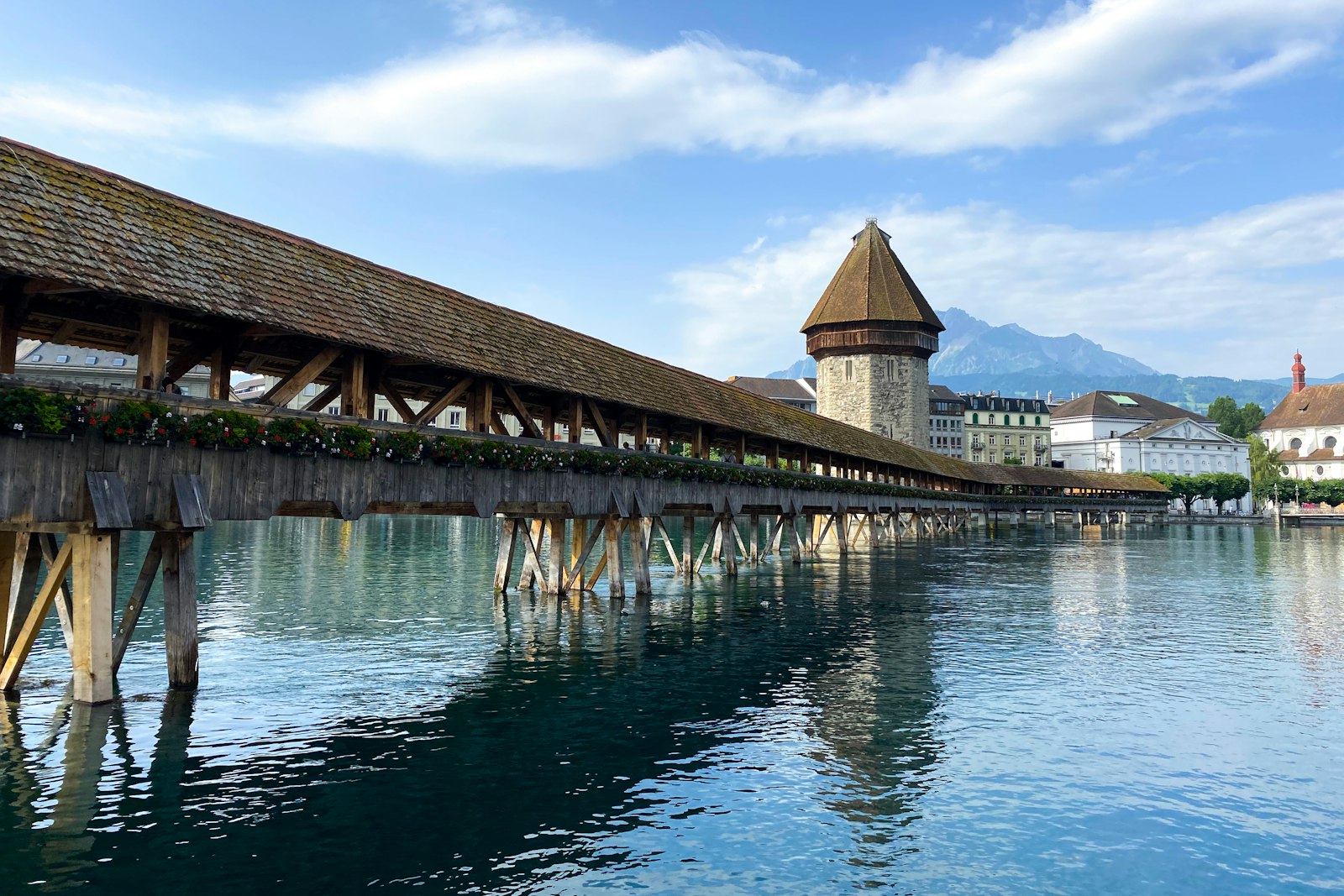
Switzerland's lakeside jewel: a wooden covered bridge, a mountain-ringed lake and gateway to the Alps.
- Best time to visit: May-September
- Daily budget (budget traveller): $160 to $280 USD
- Ideal trip length: 2 to 3 days
Lucerne (Luzern) is the postcard of Switzerland, a beautifully preserved medieval town wrapped around a shimmering lake and framed by the peaks of Mount Pilatus and Rigi. Its iconic flower-decked Chapel Bridge, painted facades and lakefront promenades make it irresistible, and it's the perfect base for spectacular Alpine excursions. Joy Plus shapes the old town, the lake, the bridges and the mountain trips into an easy few days.
Lucerne has about 85,000 residents, a medieval old town you can cross in twenty minutes, and a lake that turns every sunset into a screensaver. The Chapel Bridge, the painted facades, the Lion Monument carved into a sandstone cliff and the lakefront promenade are all within a 15-minute walk of the station. That compactness is the point. You spend less time in town than in any other European postcard, and the rest of the trip is spent looking up at Pilatus, Rigi and Titlis and deciding which one gets your best weather day.
The trick to Lucerne is sequencing. Mountain days are decided by cloud, not by calendar, so check the Pilatus and Rigi webcams the night before, take the clear day up and keep the grey day for the Rosengart Collection, the Museggmauer towers and a long lunch. Boats, cog railways and gondolas all link into one network, which means you can leave by paddle steamer, climb by rack railway and come home by cable car without ever booking a car. Fog sits on the lake in autumn and winter, but a 40-minute ride up usually puts you above it in full sun.
Yes, it is expensive. A dorm bed is CHF 45 and up, a beer is CHF 6 to 8, and a Pilatus round trip is over CHF 100 at full price. You can tame it with a Half Fare Card (CHF 150 for a month), a Swiss Travel Pass if you stack three or more excursions, Migros and Coop picnics, and the Tagesteller lunch specials that cost half of dinner. Lucerne works brilliantly for solo travellers: it is safe at any hour, everything runs on time, and the long tables at the brewery and the lakeside swimming spots do the social work for you.
How many days in Lucerne?
For Lucerne, we recommend 2 to 3 days.
| Trip length | What you'll see | Itinerary |
|---|---|---|
| 2 days · Recommended | Chapel Bridge and the old town loop; Lion Monument, Musegg Wall and Picasso | Lucerne in 2 days |
| 3 days · Recommended | Adds: Pilatus Golden Round Trip | Lucerne in 3 days |
| 4 days | Adds: Rigi, the Queen of the Mountains | Lucerne in 4 days |
| 5 days | Adds: Engelberg and Titlis | Lucerne in 5 days |
| 7 days | Adds: Bürgenstock cliff walk, Verkehrshaus and Lido; Spreuer Bridge | Lucerne in 7 days |
Lucerne itinerary
Arrive, Chapel Bridge and the old town loop
Morning: From Zurich Airport take the direct train to Luzern, about 1h10 and CHF 33 second class, two per hour. Use the station lockers if the room isn't ready. Coffee and a Luzerner Lebkuchen at Confiserie Bachmann.
Afternoon: Walk from the Seebrücke to the Chapel Bridge and Water Tower, then the Jesuit Church (free), the Rathaus and Weinmarkt. Finish at the Spreuer Bridge and its Dance of Death panels.
Evening: Dinner at Wirtshaus Galliker (Schützenstrasse 1, since 1856): Luzerner Chügelipastete, about CHF 35. Walk Schweizerhofquai at golden hour and head to bed early.
Lion Monument, Musegg Wall and Picasso
Morning: Lion Monument at 8am before the coaches (free, always open), then climb the Museggmauer towers. The Zytturm clock chimes one minute before every other clock in town.
Afternoon: Tagesteller lunch at Rathaus Brauerei on the Reuss. Then the Rosengart Collection (Pilatusstrasse 10, Picasso and Klee, about CHF 20). It's the rainy-day backup, so swap days if the forecast flips.
Evening: 1-hour SGV lake cruise at golden hour, then fondue at Zunfthaus zu Pfistern by the Chapel Bridge, about CHF 34. Nightcap at Schüür if there's a gig.
Pilatus Golden Round Trip
Morning: Morning SGV boat from Pier 2 to Alpnachstad (about 1h, check the timetable), then the world's steepest cog railway (48% gradient) to Pilatus Kulm at 2,073m.
Afternoon: Walk the short Esel and Tomlishorn paths, lunch at the summit. Take the gondola via Fräkmüntegg down to Kriens, then bus 1 to Lucerne station. Full price about CHF 105 to 120, half with Swiss Travel Pass or Half Fare Card.
Evening: Recover with a Älplermagronen at Wirtshaus Galliker or a Migros takeaway on the lakefront. Early night, legs will be dead.
Rigi, the Queen of the Mountains
Morning: Boat to Vitznau (about 1h), then Europe's oldest mountain railway (1871) to Rigi Kulm at 1,798m. Free with the Swiss Travel Pass, about CHF 90 to 100 for the full loop otherwise.
Afternoon: Ride or walk down to Rigi Kaltbad and soak in the Mario Botta mineral baths (about CHF 40). Cable car to Weggis, then boat back to Lucerne.
Evening: Celebration dinner at Old Swiss House (Löwenplatz 4, since 1859): Wiener Schnitzel or steak tartare prepared at the table, around CHF 55 to 70.
Engelberg and Titlis
Morning: Zentralbahn from Lucerne to Engelberg (45 min, about CHF 24 each way). Look in on the abbey show dairy, then Titlis Rotair, the rotating gondola, to 3,020m.
Afternoon: Cliff Walk (Europe's highest suspension bridge), glacier cave, ice flyer. Allow 4 to 5 hours up top. About CHF 100 return, 50% off with Swiss Travel Pass.
Evening: Train back. Brasserie Bodu on Kasernenplatz for a French-style supper, mains CHF 40 to 55.
Bürgenstock cliff walk, Verkehrshaus and Lido
Morning: SGV boat to Kehrsiten-Bürgenstock, the Bürgenstock funicular up, then the free Felsenweg cliff path to the Hammetschwand Lift (153m, Europe's highest outdoor elevator, about CHF 12).
Afternoon: Boat back, then the Swiss Museum of Transport (Verkehrshaus, about CHF 36 for the full day). Afterwards swim at Lido, the lake is 20 to 22°C in August.
Evening: Eichhof beers on the Lido terrace, then a gig at Schüür (Tribschenstrasse 1) or Treibhaus.
Slow morning, Spreuer Bridge, depart
Morning: On Tuesdays and Saturdays, the Reuss-side market. Coffee and Lebkuchen at Confiserie Bachmann, then a last walk across the Spreuer Bridge, empty before 9am.
Afternoon: Pick up Swiss chocolate and cheese at Coop or Migros, not the tourist shops. Station lockers if you have time to spare.
Evening: Train to Zurich Airport, about 1h10. Check the SBB app for the last connection and leave a 3-hour buffer for your flight.
Best neighbourhoods
- Old Town (Altstadt): The car-free medieval core of painted facades, squares, churches and the famous covered bridges.
- Lakefront & Bahnhof: The promenade, the railway station, the KKL concert hall and the boat piers along the lake.
- Wesemlin & Bramberg: Quiet, leafy residential hillsides above the town with views over the lake and mountains.
- Tribschen: A lakeside district that's home to the Richard Wagner Museum and peaceful shoreline walks.
Must-do experiences
- Chapel Bridge & Water Tower: Cross Europe's oldest wooden covered bridge, adorned with paintings and flowers.
- Old Town & Lion Monument: Wander the painted-facade squares and see the moving carved Lion of Lucerne.
- Lake Lucerne cruise: Glide across the lake on a paddle steamer beneath the surrounding Alpine peaks.
- Mount Pilatus or Rigi excursion: Ride cogwheel trains and cable cars up the mountains for panoramic views.
Hidden gems
- The lesser-known Spreuer Bridge with its haunting 'Dance of Death' panels.
- The panoramic walk along the old Musegg Wall and its medieval towers.
- Sunset over the lake and mountains from the lakefront promenade.
- The 'golden round trip' combining boat, cogwheel railway and cable car on Pilatus.
Daily budget
- Accommodation: budget CHF 45-75 / night (hostel dorm), mid-range CHF 180-280 (boutique double), splurge CHF 550+ (Schweizerhof, Mandarin Oriental Palace). Hotels in Kriens and Emmenbrücke run 20 to 30% cheaper and are on the bus line. Ask for the free Visitor Card at check-in for transport and attraction discounts.
- Food: budget CHF 35-50 / day (Migros and Coop picnics, kebab), mid-range CHF 75-110 (Tagesteller lunch + one proper dinner), splurge CHF 180+ (lakeside hotel restaurant, tasting menu). Lunch specials (Tagesteller) are CHF 20-26, dinner mains CHF 38-55. Supermarket picnics on the lakefront are the local hack.
- Transport: budget CHF 10-15 / day (city bus day pass, walk the rest), mid-range CHF 40-70 (Half Fare Card amortised + boats and trains), splurge CHF 110+ (first class Swiss Travel Pass). A Half Fare Card (CHF 150 per month) pays off after about 3 excursions. Swiss Travel Pass (about CHF 250 to 270 for 3 days) covers boats and Rigi free, with 50% off Pilatus and Titlis.
- Activities: budget CHF 15-40 / day (bridges, Lion Monument, Musegg towers, Lido swim), mid-range CHF 80-130 (Pilatus or Rigi with Half Fare, cruise, Rosengart), splurge CHF 250+ (Titlis Cliff Walk, Bürgenstock spa day, private boat). The bridges, Lion Monument and Musegg walls are free. Rosengart is about CHF 20, a lake cruise CHF 30 to 40.
- Drinks & nightlife: budget CHF 12-18 (lakefront supermarket beer + one pint), mid-range CHF 35-55 (brewery pints, a cocktail, a gig), splurge CHF 100+ (Schweizerhof bar, late hotel cocktails). Eichhof beer is the local lager, CHF 6 to 8 a glass. Lucerne is quiet after midnight on weekdays. Schüür and Treibhaus are the live-music rooms.
Where to stay
- Social hostel in Lakefront (Alpenquai) (CHF 45-75 / night): Backpackers Lucerne, lakeside, shared kitchen and dorms close to the lake and the Ufschötti lawn. A 10 to 15 minute walk from the station. Youth Hostel Luzern is the quieter alternative.
- Boutique hotel in Old Town (Altstadt) (CHF 230-380 / night): Hotel des Balances or Hotel Wilden Mann, historic buildings steps from the Chapel Bridge, river terraces and quiet after the day-trippers leave.
- Apartment in Tribschen or Hirschmatt-Neustadt (CHF 140-220 / night): Residential streets, a kitchenette to survive the restaurant prices, and a walk to the lake or Lido. Best value for a stay of 4+ nights.
- Splurge in Lakefront (Schweizerhofquai / Haldenstrasse) (CHF 550-1,100 / night): Hotel Schweizerhof (1845) or Mandarin Oriental Palace, Belle Époque grandeur, lake and mountain views, and the Bürgenstock boat dock in reach.
What to eat
- Luzerner Chügelipastete, a creamy meat-filled vol-au-vent
- Älplermagronen, Alpine macaroni with potato, cheese and apple sauce
- Swiss cheese fondue and raclette
- Lake fish such as perch (Egli) from Lake Lucerne
Day trips
- Mount Pilatus (Boat, cog railway and gondola loop, 5 to 6 hours): The 'Golden Round Trip' with the steepest cog railway in the world, summit viewpoints at 2,073m and a gondola descent through the forest. Check the webcam before committing. SGV boat from Pier 2 to Alpnachstad, cog railway to Pilatus Kulm, gondola via Fräkmüntegg to Kriens, bus 1 to Lucerne. About CHF 105 to 120, 50% off with Swiss Travel Pass or Half Fare Card.
- Rigi (1h boat plus 30 min rack railway): Europe's oldest mountain railway, gentler panoramas, hiking, and the Botta mineral baths at Rigi Kaltbad. Best on a clear day with a picnic. SGV boat from Lucerne to Vitznau, rack railway to Rigi Kulm, then return via Weggis cable car and boat. Free with Swiss Travel Pass, about CHF 90 to 100 otherwise.
- Engelberg and Titlis (45 min by train): Benedictine abbey town and the Titlis Rotair gondola to 3,020m, with the Cliff Walk suspension bridge and glacier cave. A full day, bring layers. Zentralbahn from Lucerne station to Engelberg, about CHF 24 each way, then Titlis Rotair about CHF 100 return (50% off with Swiss Travel Pass).
When to visit
- Spring (April - June): 8-21°C, fresh mornings, showers likely, snow above 1,800m until late May. Crowds: Building, manageable until June. Orchards in bloom and waterfalls running full. The Pilatus cog railway usually opens in May, and Rigi runs year round. Good value if you pack a waterproof shell.
- Summer (July - August): 20-28°C, warm lake, afternoon thunderstorms. Crowds: Heavy, tour groups cluster 10am to 4pm. Best mountain weather and lake swimming at Lido, but the highest prices. Book rooms three months ahead. The Lucerne Festival in August pushes hotels up further. Do the bridges at 7am.
- Autumn (September - October): 8-20°C, crisp, golden light, fog arrives mid-October. Crowds: Moderate, drops after mid-September. The locals' favourite. Clearest views in September, cheaper rooms, larches turning gold at altitude in late October. Mountain railways still run until November.
- Winter (November - March): -2 to 6°C, grey fog lid over the lake, snow above 1,000m. Crowds: Low, except Christmas and Fasnacht. Cheapest rooms. Fasnacht (4 to 9 Feb in 2027) kicks off with the 5am 'Urknall' and is wild. When the town is fogged in, ride up Pilatus or Rigi to get above the cloud into sun. Some boats and the Pilatus cog railway pause.
Entry rules for your passport
Visa rules for Switzerland depend on the passport you travel on. Check the official source before you book: European Commission: Schengen visa policy
Getting there
Lucerne has no airport. Fly into Zurich (ZRH), 55km away, and take the direct SBB train from the airport station, about 1h10 and CHF 33 second class, two per hour (some require a change at Zurich HB, 45 min from there at about CHF 28). Basel is about 1h10 by train and Milan about 3h40 via the Gotthard. FlixBus stops at Luzern Inseli. Lucerne station sits right on the lake and is a 5 to 10 minute walk from the old town. Don't rent a car: parking in the centre is CHF 25 to 35 a day and every excursion is better by boat or rail. Buy tickets in the SBB app, and check Supersaver fares for cheaper off-peak travel.
Border checks: non-EU visitors (other than Swiss, Norwegian, Icelandic, Liechtenstein, Andorran, Monegasque, San Marinese and Vatican citizens, and holders of an EU residence permit or long-stay visa) are registered in the EU's Entry/Exit System (EES) instead of getting a passport stamp. On your first crossing, officers take your photo and/or fingerprints, so allow extra time at passport control. ETIAS, the planned travel authorisation, is not in operation yet, so don't pay any website for one.
Getting around
Lucerne's old town is compact and best explored on foot, with everything close to the lake and station. Boats, cogwheel trains, cable cars and an efficient bus network reach the surrounding mountains and lakeside villages, and the Swiss rail system is superb. A Swiss Travel Pass or regional pass can save money, as Switzerland is expensive and excursions add up.
Safety
Lucerne is extremely safe and ideal for solo travellers including women, day and night. Violent crime is very rare and the town feels calm and orderly. The main cautions are minor pickpocketing in peak-season crowds and natural hazards in the mountains, sudden weather changes, cold at altitude, so check forecasts and pack layers for excursions.
Solo travel tips
- Beat the groups with 7am and after 8pm: The Chapel Bridge and Lion Monument are free and open 24 hours. Tour groups pile in between 10am and 4pm. At 7am you get the bridge, the swans and the light almost to yourself.
- Hostel pick: Backpackers Lucerne: Lakeside on Alpenquai, 10 to 15 minutes from the station, with a shared kitchen and a decent mix of solo travellers. Dorms CHF 45 to 75, privates from CHF 130. Book early in summer.
- Do the pass maths before you buy: Half Fare Card CHF 150 for a month halves boats, trains and mountain lifts. A Swiss Travel Pass (about CHF 250 to 270 for 3 days) makes sense if you add Rigi (free), Pilatus and Titlis (50% off) plus a boat day.
- Eat the lunch special: Tagesteller at lunch is CHF 20 to 26 and often comes with soup or salad. Dinner for the same food is double. Migros and Coop takeaway counters near the station are the best budget fuel.
- Solo female travellers: Lucerne is among the safest places in Europe for women alone, day and night. Night buses run on weekends, taxis are metered and trustworthy. For the mountains, tell your hostel your route, stick to signed trails and check the weather before going above 1,500m.
- Find your tribe at the Brauerei and Lido: Rathaus Brauerei has long shared tables, Schüür and Treibhaus run live gigs most weekends, and Lido fills with swimmers and picnickers from May. Rigi and Pilatus morning boats are full of other solos.
Cultural etiquette
- Greet people with 'Grüezi' when entering shops, lifts and small cafés, and say 'Merci' and 'Uf Widerluege' when leaving. English works everywhere, but the greeting matters.
- Servers won't bring the bill until you ask. Say 'Zahle bitte' and don't read it as slow service. It is the polite default.
- Wait for the green man, even on an empty street. Locals do, and jaywalking can earn a fine and a stare.
- Sundays are quiet. Most shops are closed except the station Rail City, and noise (loud calls, music, laundry) is frowned on, especially after 10pm.
- On trails, greet everyone, give uphill hikers right of way, close gates behind you, avoid electric fences and keep clear of cows with calves.
- Fondue etiquette: stir the bread in a figure eight and don't double dip. Drop your bread in the pot and tradition says you buy the next round, mostly a joke.
- Keep voices low on trains and boats. Silence is normal, and phone calls get looked at.
Frequently asked questions
How many days do you need in Lucerne?
Two to three days is ideal. One day covers the old town, the bridges and a lake cruise, while a second and third let you take mountain excursions up Pilatus, Rigi or Titlis and enjoy the lakeside at a relaxed pace.
Is Lucerne safe for solo travellers?
Yes, extremely. Lucerne is one of Europe's safest towns and ideal for solo travellers including women at any hour. Violent crime is very rare; the only cautions are minor pickpocketing in peak-season crowds and mountain weather, so pack layers for excursions.
When is the best time to visit Lucerne?
May to September brings the best weather for lake cruises and mountain excursions, with long, warm days. Spring and autumn are quieter and beautiful, while winter offers snowy scenery and nearby skiing, though some mountain services run reduced schedules.
Is Lucerne worth visiting?
Yes. Lucerne is one of Switzerland's most beautiful towns, with its iconic Chapel Bridge, a charming medieval old town, a stunning mountain-ringed lake and easy access to spectacular Alpine excursions. It's a perfect introduction to Switzerland and an ideal base.
How do I get to Lucerne from Zurich Airport?
A direct or one-change train links Zurich Airport to Lucerne in about an hour and is the easiest, most scenic option. Trains run frequently, and Lucerne's station sits right beside the lake and a short walk from the old town.
Which mountain should I visit from Lucerne, Pilatus or Rigi?
Both are spectacular. Pilatus offers the dramatic 'golden round trip' with the world's steepest cogwheel railway and a cable car, while Rigi, the 'Queen of the Mountains', has gentler panoramas, hiking and a historic railway. If you have time for one, Pilatus is the classic choice.
Is Lucerne expensive?
Yes, like the rest of Switzerland, Lucerne is expensive, especially for hotels, dining and mountain excursions. You can manage costs with a Swiss Travel Pass for transport and excursions, picnics and supermarket meals, and by staying slightly outside the centre.
More about Lucerne
Tours and activities in Lucerne | Lucerne in 2 days | Lucerne in 3 days | Lucerne in 4 days | Lucerne in 5 days | Lucerne in 7 days
Can't decide? Compare Lucerne with...
- Lucerne vs Interlaken
- Zurich vs Lucerne
- Bern vs Lucerne
- Lucerne vs Geneva
- Lucerne vs Zermatt
- Lugano vs Lucerne
Joy Plus home | Destinations | Itineraries | Activities | Flights | Budget planner | Calendar | Map | Blog | Lifetime access