Destinations / Europe
Matera, Italy travel guide
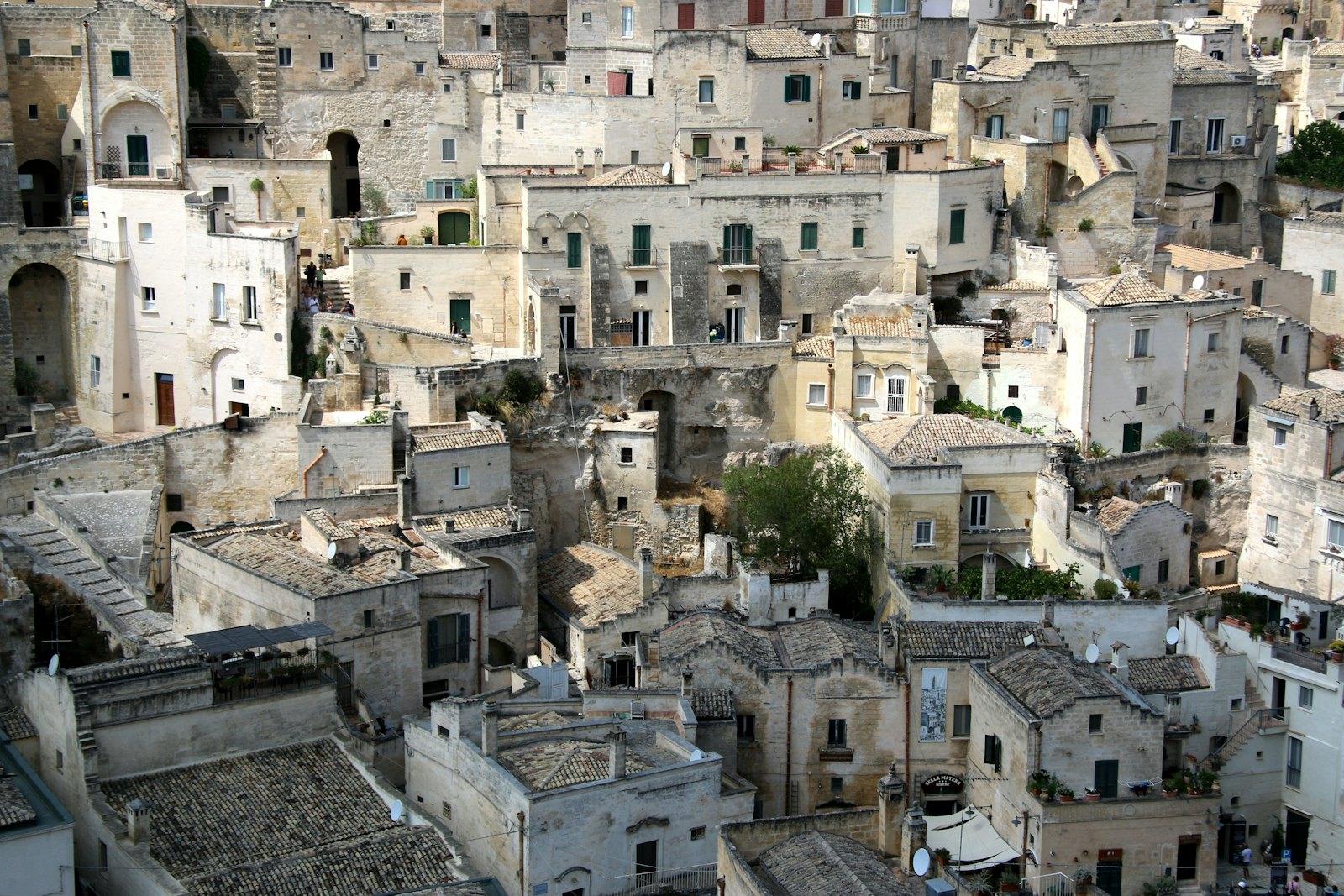
A UNESCO-listed city of ancient cave dwellings: honeycombed stone districts, rock-hewn churches, and sunrise views over a dramatic ravine.
- Best time to visit: April to June and September to October
- Daily budget (budget traveller): $75 to $185 USD
- Ideal trip length: 2 to 3 days
Perched on the edge of a deep limestone ravine in the southern region of Basilicata, Matera is one of the oldest continuously inhabited settlements in the world. Its Sassi districts, a tumbling maze of cave dwellings, stairways, and rock-cut churches carved into the hillside, were inscribed as a UNESCO World Heritage Site in 1993. They were once a byword for poverty in postwar Italy and have since been reborn as one of the country's most atmospheric destinations. The city served as a European Capital of Culture in 2019 and has doubled for ancient Jerusalem on film, yet it remains compact, quiet after the day trippers leave, and easy to explore on foot. For solo travellers, Matera is a gift. The old town is small enough to feel safe and navigable, the food is hearty and unpretentious, and the real magic comes at dawn and after dark, when the stone glows gold and then lamp-lit amber. Expect plenty of steps, so pack comfortable shoes.
Matera sits on the lip of a limestone ravine in Basilicata, the instep of Italy's boot, and people have lived in its caves for around 9,000 years. The Sassi, two districts of stacked stone houses, cave rooms and rock-cut churches, went from national shame to UNESCO listing in a single lifetime. Carlo Levi wrote about the squalor in Christ Stopped at Eboli in 1945, and in the 1950s the government moved roughly 15,000 residents out to new housing on the plateau. Then the Sassi emptied, filled with artists, hoteliers and bakers, and became a World Heritage Site in 1993 and European Capital of Culture in 2019. Film crews followed. The Passion of the Christ, Ben-Hur and the opening of No Time to Die all used these lanes.
The geography decides your trip. The Piano (upper town) is where the buses, banks and evening passeggiata are. The Sassi fall away below it in two directions: Sasso Barisano to the north, polished and full of cave hotels, and Sasso Caveoso to the south, older and more raw, facing the Murgia plateau across the Gravina gorge. Between them, the rock spur of Civita carries the cathedral. Everything is walkable and none of it is flat. Count on 15,000 to 20,000 steps a day without trying, and a lot of stairs. Dawn is the best hour, when the stone turns honey-coloured and the only sounds are bells and a few early bakers. Day-trip coaches arrive from Bari and Puglia around 10:30 and thin out by 17:00.
Eat the poor-man's food the region is proud of: Pane di Matera IGP, strascinati with peperoni cruschi, lucanica sausage, Aglianico del Vulture by the glass. Matera is small enough for a solo traveller to feel safe at any hour, and two nights is the minimum. Three to four lets you cross the gorge to the Murgia plateau and take a day trip to the ghost town of Craco or the bread town of Altamura. Skip the idea of a quick stop from Bari. The Sassi at 08:00 and at 21:00 are a different place from the Sassi at noon.
Matera itinerary
Arrive, upper town and the cistern
Morning: Land at Bari (BRI). Take a direct airport bus to Matera (check the timetable and arrival stop) or the FAL train from Bari Centrale (about 1h40). Drop bags, then espresso at Caffè Tripoli on Piazza Vittorio Veneto.
Afternoon: Join the guided visit to the Palombaro Lungo cistern under the piazza. Stroll Via Ridola and check which National Museums of Matera venues are open before planning a museum visit.
Evening: Passeggiata at 18:30 with the locals. Dinner at Trattoria Lucana: strascinati with crusco peppers, then a glass of Aglianico.
Sasso Caveoso and the rock churches
Morning: Be on Piazzetta Pascoli at sunrise for the best light on the cave houses. Casa Grotta di Vico Solitario at opening, then climb to Santa Maria de Idris and San Giovanni in Monterrone.
Afternoon: Siesta hours. Lunch at a bakery or small trattoria, then find the Convicinio di Sant'Antonio, four adjoining rock churches most visitors miss.
Evening: Dinner at Il Terrazzino. Walk the Sassi after dark when the lamps come on.
Civita, Sasso Barisano and contemporary art
Morning: Climb to the cathedral on Civita when it opens. Then MUSMA in Palazzo Pomarici, where sculpture sits in carved cave rooms.
Afternoon: Casa Cava for the cavern, then the long lanes of Sasso Barisano to the church of San Pietro Barisano. Lunch on Via Fiorentini.
Evening: Dinner at Baccanti or Oi Marì. Finish with an Amaro Lucano, the bitter from nearby Pisticci.
Across the gorge to the Murgia plateau
Morning: Check the park's current access arrangements and any closures before setting out on Sentiero 406 from Porta Pistola, across the suspension bridge and up to Murgia Timone. Access is managed and a ticket may be required. Start early in hot weather, carry plenty of water and wear sturdy shoes.
Afternoon: Wander the plateau's cave churches and ancient farmsteads, then eat a packed lunch from a bakery. Walk back slowly, resting in the shade of the cave mouths.
Evening: Watch the view from Belvedere Murgia Timone within the current access hours. Arrange a safe return before dark rather than descending the gorge trail after sunset, then have dinner in the Piano.
Craco ghost town
Morning: Drive or join a tour to Craco (about 45 min), abandoned after landslides in the 1960s. Visits are guided only and hard hats are provided.
Afternoon: Continue to the Metaponto coast if you have a car, or return to Matera for a long late lunch of pane e olio.
Evening: Early night, or a wine flight at a cave bar on Via Fiorentini.
Altamura bread and old town
Morning: Regional bus to Altamura (about 40 to 50 min). Hit a wood-fired forno for focaccia and Pane di Altamura DOP.
Afternoon: See the Romanesque cathedral and the old town's covered alleys. Ask the tourist office about visits tied to the Altamura Man cave.
Evening: Bus back to Matera. Pizza at Da Zero, which locals recommend, then a last night walk.
Slow morning, Bari, depart
Morning: Coffee, a last loaf from a Matera bakery and a final look from the belvedere before collecting bags.
Afternoon: Bus to Bari. If time allows, try fresh orecchiette on Strada delle Orecchiette in Bari Vecchia, where women still shape the pasta on doorstep tables.
Evening: Airport or onward train. Allow 1h30 at the airport.
Best neighbourhoods
- Sasso Caveoso: The older, more rugged of the two Sassi, with cave dwellings stacked down the slope above the ravine, the rock churches of Santa Maria de Idris and San Giovanni in Monterrone, and the best views across to the Murgia plateau.
- Sasso Barisano: The northern Sasso, more polished and lively, with restored palazzi, boutique cave hotels, small restaurants, and the large rock church of San Pietro Barisano tucked among winding lanes.
- Civita: The rocky spur between the two Sassi, crowned by the Romanesque cathedral and laced with quiet alleys, small museums, and some of the finest panoramic terraces in the city.
- Piano (Upper Town): The elegant 18th and 19th century city above the Sassi, centred on Piazza Vittorio Veneto, with arcaded streets, a lively evening passeggiata, everyday shops, and the main bus connections.
Must-do experiences
- Wander the Sassi at dawn and dusk: Lose yourself in the stairways and lanes of Sasso Caveoso and Sasso Barisano early in the morning or at twilight, when the crowds thin and the limestone glows.
- Step inside Casa Grotta di Vico Solitario: Visit this restored cave dwelling in Sasso Caveoso to see how families, and their animals, lived in a single stone room before the Sassi were emptied in the 1950s.
- Explore the rock churches of Santa Maria de Idris and San Giovanni in Monterrone: Climb the Monterrone rock above Sasso Caveoso to find these two linked cave churches, where faded Byzantine and medieval frescoes cling to the walls.
- Descend into the Palombaro Lungo: Join a visit to this vast underground cistern beneath Piazza Vittorio Veneto, a striking reminder of the ingenious water systems that kept the city alive.
- Visit the Cathedral of Matera: Climb to Civita to see the 13th century Apulian Romanesque cathedral, dedicated to the Madonna della Bruna, whose festival on 2 July is the city's biggest annual celebration.
- Cross the gorge into the Parco della Murgia Materana: Walk down into the Gravina ravine and up the far side to explore the rocky plateau, scattered with cave churches and ancient farm sites, and to see the Sassi from the classic postcard angle.
Hidden gems
- The Cripta del Peccato Originale, a cave sanctuary in the countryside near Matera with early medieval frescoes, managed by the Matera-based Fondazione Zétema and visited only by reservation
- The Convicinio di Sant'Antonio, a group of four adjoining rock churches in Sasso Caveoso that most visitors walk straight past
- MUSMA, the museum of contemporary sculpture housed partly in carved cave rooms inside Palazzo Pomarici, where modern art meets ancient stone
- Casa Cava, a former quarry in Sasso Barisano turned into an atmospheric cultural venue, a rare chance to see a vast hollowed out cavern used for events and exhibitions
Daily budget
- Accommodation: budget €25-45 / night (dorm) or €50-75 (single in a B&B), mid-range €90-170 (cave boutique double), splurge €250+ (Sextantio Le Grotte della Civita, Palazzo Gattini, Aquatio). Dorm beds are rare. A municipal tourist tax may be payable separately; ask your accommodation for the current rate.
- Food: budget €25-35 / day (bakery, pizza al taglio, one pasta), mid-range €45-70 (one proper dinner with wine), splurge €100+ (tasting menu with a Sassi view). Coperto (cover charge) is €1.50-2.50 per head. A plate of strascinati runs €10-14.
- Transport: budget €3-8 (walking plus one bus to Bari at €5-10), mid-range €10-25 (day-trip buses, the odd taxi), splurge €60-90 (rental car or private driver for Craco and the Murgia). Walk the centre. A car is only worth it for countryside days, and the Sassi are a ZTL.
- Activities: budget €5-12 (free viewpoints, Casa Grotta around €3), mid-range €25-45 (Palombaro Lungo, MUSMA, rock churches, guided Craco visit), splurge €100-200 (private guide, sunrise balloon flight, wine tasting). Many churches and viewpoints are free. Combine tickets at the desk where possible.
- Drinks & nightlife: budget €6-10 (spritz or beer plus an Amaro Lucano), mid-range €20-35 (aperitivo, wine with dinner), splurge €50-80 (cocktails in a cave bar plus bottle of Aglianico). Matera is a wine-and-passeggiata town. Bars close around midnight, and there is no clubbing to speak of.
Where to stay
- Social hostel in Piano (Upper Town) (€25-45 / night (dorm), €50-75 (single)): Dorm beds are scarce in Matera, so check recent reviews. The Piano has the few hostel-style options and cheap guesthouse singles, close to buses, shops and aperitivo bars, a 10 to 15 minute walk to the Sassi. The solo hack is a private room in a B&B.
- Boutique hotel in Sasso Barisano (€90-170 / night): Hotel Sassi or Hotel in Pietra: vaulted cave rooms, breakfast terraces, and a short stair-climb to restaurants on Via Fiorentini. Heated and air-conditioned, but ask about the luggage route.
- Apartment in Sasso Caveoso or Civita (€80-130 / night): A cave apartment with a kitchenette, tiny terrace and cool stone walls. Best value for 3+ nights, and you shop for bread and cheese like a local. Check there is a lift of stairs under 60 steps from the nearest road.
- Splurge in Civita (€250-450 / night): Sextantio Le Grotte della Civita, rooms carved into the old stable caves, or Palazzo Gattini beside the cathedral with a terrace over the gorge. A rare chance to sleep inside the UNESCO story.
What to eat
- Pane di Matera IGP: the city's famous crusty, golden semolina loaf with a long shelf life, traditionally baked in wood-fired ovens and made to a protected recipe
- Peperoni cruschi: crisp, sweet dried peppers from Basilicata, fried briefly and served as a crunchy topping or snack that tastes both smoky and fruity
- Strascinati: hand-shaped local pasta, often dressed with crushed crusco peppers and toasted breadcrumbs, a thrifty dish that is full of flavour
- Lucanica sausage with Aglianico del Vulture: a spiced, fennel-scented local pork sausage, best paired with a glass of the region's bold red wine
Day trips
- Altamura (20 km, about 40 to 50 min by bus): Bread town with a Romanesque cathedral, a maze of covered lanes and a wood-fired forno culture behind Pane di Altamura DOP. Nearby, the cave where Altamura Man (a Neanderthal skeleton) was found. Regional bus from Matera, about €3 to €5. Check timetables, as Sunday service is thin.
- Craco (About 45 min by car): A ghost town on a hill, abandoned after landslides in the 1960s and used as a film location. Visits are guided and hard hats are required. Car, or a small-group tour from Matera for around €25-40. The guided visit alone is about €10-15.
- Alberobello (About 1h by car, 3h by public transport): UNESCO trulli town with conical stone-roof houses. Crowded by day, magical at sunrise and after the coaches leave. Easiest by car. Without one, take the bus to Bari, then the FSE train to Alberobello, ideal on your way to the airport.
When to visit
- Spring (April - June): 14-25°C, mostly sunny, occasional showers in April. Crowds: Building, heavy at Easter and on May bank holidays. The best window. Green Murgia plateau, wildflowers, long light, and the hike across the gorge is actually pleasant.
- Summer (July - August): 30-38°C, dry, the stone holds the heat into the evening. Crowds: Heavy midday, quieter at dawn and after 21:00. Go only if you can live on a dawn and dusk schedule. The Festa della Bruna on 2 July is spectacular but books out rooms months ahead.
- Autumn (September - October): 16-28°C, warm until mid October, then rain begins. Crowds: Moderate, falling after the first week of October. The locals' pick. Warm light, olive harvest, restaurants relaxed, prices softening and the hike back on.
- Winter (November - March): 3-13°C, damp, fog and the odd snowfall. Crowds: Very low except Christmas and Epiphany. Cheapest rooms and empty lanes, with a nativity-scene atmosphere. Confirm heating in cave rooms and expect some restaurants to close one or two days a week.
Entry rules for your passport
Visa rules for Italy depend on the passport you travel on. Check the official source before you book: European Commission: Schengen visa policy
Getting there
Matera has no airport and no Italian high-speed rail, so the usual gateway is Bari Karol Wojtyla (BRI), about 65 km away. Direct airport buses (such as Pugliairbus) run to Matera; check times, fares and the exact Matera stop for your date. For a taxi or private transfer, ask for an all-inclusive quote. From Bari Centrale, the Ferrovie Appulo Lucane (FAL) narrow-gauge line to Matera Centrale takes about 1h40 and costs around €5; schedules change by season, so check before you travel. Matera Centrale and the bus stops sit in the Piano, around 1 km from Piazza Vittorio Veneto, so allow 10 to 25 minutes on foot to Sassi hotels, longer with luggage. From Naples, FlixBus takes about 4 hours for €15-25. Brindisi (BDS) is another option, about 2 hours by road. If you rent a car, park in a lot on the edge of the Piano, because the Sassi are a restricted zone.
Border checks: non-EU visitors (other than Swiss, Norwegian, Icelandic, Liechtenstein, Andorran, Monegasque, San Marinese and Vatican citizens, and holders of an EU residence permit or long-stay visa) are registered in the EU's Entry/Exit System (EES) instead of getting a passport stamp. On your first crossing, officers take your photo and/or fingerprints, so allow extra time at passport control. ETIAS, the planned travel authorisation, is not in operation yet, so don't pay any website for one.
Getting around
The Sassi and the historic centre are best explored on foot, but be ready for steep stairs, uneven cobbles, and slopes that are tiring in summer heat. Much of the old town is pedestrian only or restricted to residents, so your luggage may need to be carried or wheeled over rough surfaces, which is worth checking with your accommodation before booking. Matera is not on the main Italian rail network, and the most common rail link is the regional Ferrovie Appulo Lucane line from Bari, with direct coach services also running from Bari and its airport, which is the usual gateway. Check current timetables before travelling, as schedules change. Local city buses connect the upper town with outer districts, and taxis are available but limited. If you want to reach the Murgia plateau viewpoints, the Cripta del Peccato Originale, or villages elsewhere in Basilicata, renting a car or joining a small group tour is the easiest option.
Safety
Matera is generally very safe for solo travellers, with low levels of violent crime and a calm, small-town atmosphere even at night. Petty theft such as pickpocketing can occur in busy spots, so keep bags zipped and valuables out of sight. The real risks are physical. Stone steps and cobbles can be slippery, especially after rain, and some lanes are poorly lit, so wear shoes with good grip and carry a small torch or use your phone light in the evening. Summer afternoons can be intensely hot with limited shade, so carry water, wear a hat, and schedule sightseeing for early morning and late afternoon. Take care near unfenced edges and ravine viewpoints, and stick to marked paths when hiking in the Murgia park.
Solo travel tips
- Check the luggage route before booking: Most Sassi hotels sit on stepped lanes where cars cannot reach. Ask whether staff meet you at the nearest road with a cart or tuk-tuk, and pack a soft duffel or backpack rather than a hard-shell wheelie. A 20 kg case on cobbles is a miserable arrival.
- Eat at the counter or on the terrace early: Restaurants with good terraces fill by 20:00 at weekends. Walk in at 19:30 as a solo, or book Il Terrazzino a day ahead. Bakers and pizza al taglio shops sell lunch for under €6.
- Sunrise is your solo superpower: You'll have Piazzetta Pascoli, the cathedral terrace and the Sasso Caveoso lanes almost to yourself between 06:30 and 08:30. Photos are better, the air is cooler and you meet the bakers and shopkeepers opening up.
- Hike the Murgia in company: The plateau is easy to follow but remote, and mobile signal drops in the gorge. Join a small guided group walk (typically €20-35) or tell your hotel your route and return time. Tracking apps like Komoot or AllTrails help.
- Night safety is about steps, not people: Matera is safe, even after dark, but the Sassi are poorly lit in places and the stone is polished smooth. Wear grip soles, carry a phone torch and avoid empty back lanes after a few glasses of wine. Solo women generally report feeling comfortable, with the usual late-night awareness.
- Pick your base with energy in mind: Staying in the Piano means no climbing after dinner and easier bus links. Staying in the Sassi means atmosphere at breakfast and midnight. For a solo traveller, the Piano is better for 2 nights, and the Sassi for a splurge night.
Cultural etiquette
- Dress to cover shoulders and knees in churches, including the cave churches, and keep your voice down. Some still hold services.
- Many terraces and doorways in the Sassi belong to private homes and cave hotels. Don't wander through open doors or climb onto roofs for a photo.
- Understand the history. The Sassi were once a symbol of poverty and forced resettlement, so skip the jokes about caveman living.
- Say buongiorno or buonasera when entering a shop or restaurant. Locals notice and the service improves.
- Coperto, the cover charge of €1.50-2.50 per person, is normal and not a scam. Service is rarely included but not expected, so round up or leave €1-3.
- Lunch is 12:30 to 14:30 and dinner starts after 19:30. Many places close between 15:00 and 19:00, so plan around it.
- Don't leave litter or climb on the ruined cave dwellings of the Murgia plateau. It is a protected park.
Frequently asked questions
How do I get from Bari to Matera?
Bari is the usual gateway, with its airport around 60 kilometres away. You can take a direct coach from the airport or city, or use the regional Ferrovie Appulo Lucane train from Bari, with journey times of roughly 1.5 to 2 hours. Timetables and operators change, so check current schedules before you travel.
How many days do I need in Matera?
Two to three days is ideal. That gives you time to see both Sassi, visit a cave house and a few rock churches, enjoy a sunrise or sunset over the ravine, and add a half day in the Murgia park without rushing.
When is the best time of year to visit Matera?
Spring (April to June) and early autumn (September to October) offer pleasant temperatures and good light for walking and photography. July and August can be very hot, while winter is cool, quiet, and sometimes damp, though it has its own charm.
Do I need a car in Matera?
Not for the old town, which is walkable and partly pedestrian only. A car is useful if you want to reach the Murgia plateau viewpoints, countryside rock churches, or other parts of Basilicata. Otherwise taxis, local buses, and guided tours cover most needs.
Is staying in a cave hotel a good idea for solo travellers?
Yes, it is one of the highlights of a visit. Many cave hotels and guesthouses in the Sassi offer small, comfortable rooms. Check how far the property is from the nearest road, how many stairs there are, and whether there is a reception for late arrivals before you book.
Is Matera safe for solo female travellers?
Yes, Matera is considered safe for solo female travellers. The historic centre is lively in the evenings, and locals are welcoming. Standard precautions apply, such as watching your drinks, keeping to better lit lanes at night, and taking care on steep, uneven steps.
Can I use my credit card everywhere?
Cards are widely accepted in hotels, restaurants, and larger shops, but small cafes, bakeries, and some market stalls may prefer cash. A small city tax is usually charged per night by your accommodation and is often paid in cash, so keep some euros on hand.
What entry rules apply to travellers visiting Italy in 2026?
Italy is part of the Schengen Area. Citizens of EU and EEA countries and Switzerland can enter with a valid passport or national ID card. Many other nationalities, including travellers from the US, UK, Canada, and Australia, can visit visa free for short stays of up to 90 days in any 180 day period, but must hold a valid passport. The EU Entry/Exit System now registers visa-exempt visitors at the border; ETIAS is not yet accepting applications, so check the official EU pages for its status. Always confirm current requirements with the official Italian government source (the Ministry of Foreign Affairs) and your own government's travel advice before you travel.
More about Matera
Tours and activities in Matera | Matera in 2 days | Matera in 3 days | Matera in 4 days | Matera in 5 days | Matera in 7 days
Can't decide? Compare Matera with...
Joy Plus home | Destinations | Itineraries | Activities | Flights | Budget planner | Calendar | Map | Blog | Lifetime access