Matera in 4 days
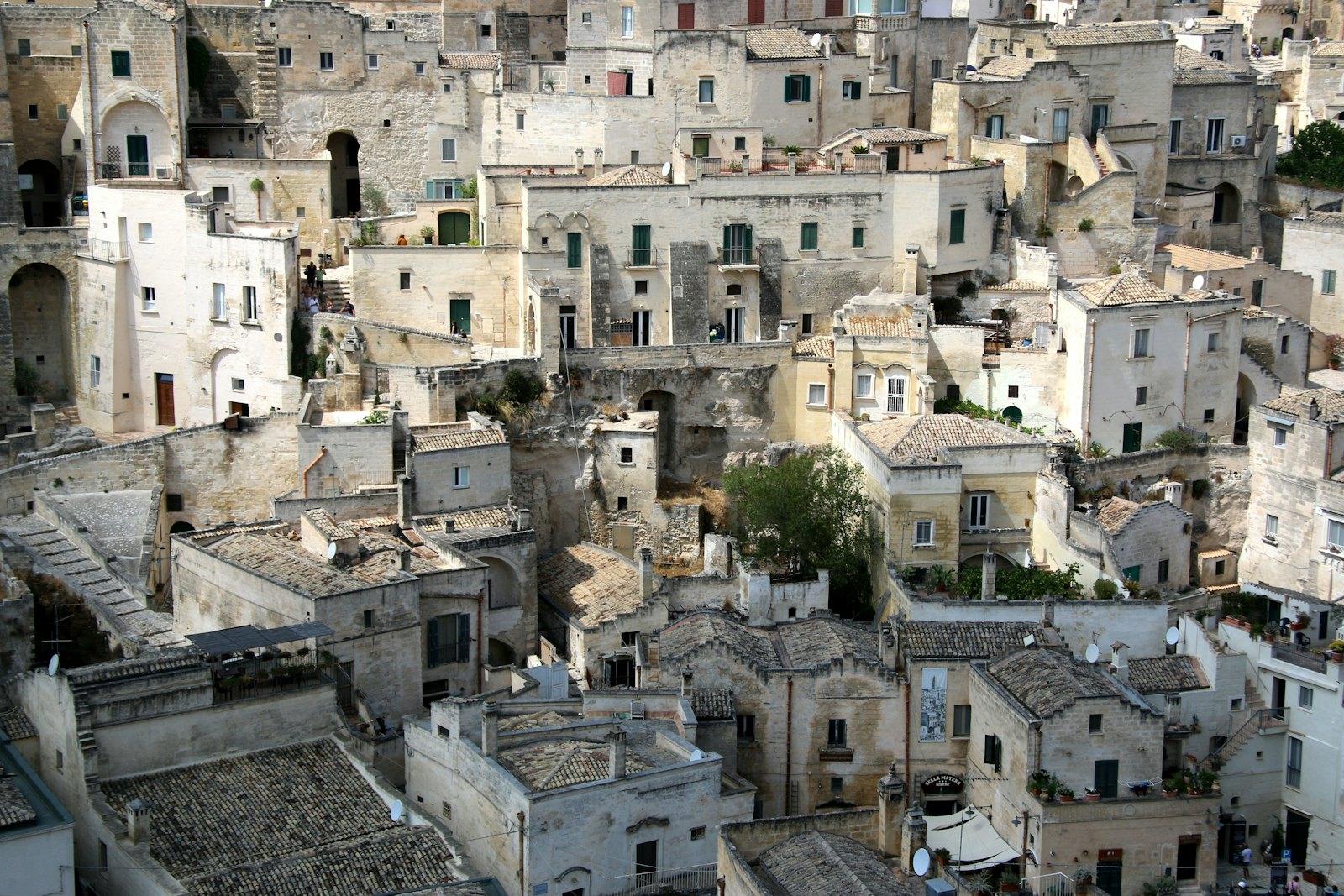
A UNESCO-listed city of ancient cave dwellings: honeycombed stone districts, rock-hewn churches, and sunrise views over a dramatic ravine. Best time to visit: April to June and September to October. Daily budget (budget traveller): $75 to $185 USD.
Arrive, upper town and the cistern
Morning: Land at Bari (BRI). Take a direct airport bus to Matera (check the timetable and arrival stop) or the FAL train from Bari Centrale (about 1h40). Drop bags, then espresso at Caffè Tripoli on Piazza Vittorio Veneto.
Afternoon: Join the guided visit to the Palombaro Lungo cistern under the piazza. Stroll Via Ridola and check which National Museums of Matera venues are open before planning a museum visit.
Evening: Passeggiata at 18:30 with the locals. Dinner at Trattoria Lucana: strascinati with crusco peppers, then a glass of Aglianico.
Sasso Caveoso and the rock churches
Morning: Be on Piazzetta Pascoli at sunrise for the best light on the cave houses. Casa Grotta di Vico Solitario at opening, then climb to Santa Maria de Idris and San Giovanni in Monterrone.
Afternoon: Siesta hours. Lunch at a bakery or small trattoria, then find the Convicinio di Sant'Antonio, four adjoining rock churches most visitors miss.
Evening: Dinner at Il Terrazzino. Walk the Sassi after dark when the lamps come on.
Civita, Sasso Barisano and contemporary art
Morning: Climb to the cathedral on Civita when it opens. Then MUSMA in Palazzo Pomarici, where sculpture sits in carved cave rooms.
Afternoon: Casa Cava for the cavern, then the long lanes of Sasso Barisano to the church of San Pietro Barisano. Lunch on Via Fiorentini.
Evening: Dinner at Baccanti or Oi Marì. Finish with an Amaro Lucano, the bitter from nearby Pisticci.
Across the gorge to the Murgia plateau
Morning: Check the park's current access arrangements and any closures before setting out on Sentiero 406 from Porta Pistola, across the suspension bridge and up to Murgia Timone. Access is managed and a ticket may be required. Start early in hot weather, carry plenty of water and wear sturdy shoes.
Afternoon: Wander the plateau's cave churches and ancient farmsteads, then eat a packed lunch from a bakery. Walk back slowly, resting in the shade of the cave mouths.
Evening: Watch the view from Belvedere Murgia Timone within the current access hours. Arrange a safe return before dark rather than descending the gorge trail after sunset, then have dinner in the Piano.
Heading home: Airport or onward train. Allow 1h30 at the airport.
What to eat in Matera
- Pane di Matera IGP: the city's famous crusty, golden semolina loaf with a long shelf life, traditionally baked in wood-fired ovens and made to a protected recipe
- Peperoni cruschi: crisp, sweet dried peppers from Basilicata, fried briefly and served as a crunchy topping or snack that tastes both smoky and fruity
- Strascinati: hand-shaped local pasta, often dressed with crushed crusco peppers and toasted breadcrumbs, a thrifty dish that is full of flavour
- Lucanica sausage with Aglianico del Vulture: a spiced, fennel-scented local pork sausage, best paired with a glass of the region's bold red wine
Hidden gems
- The Cripta del Peccato Originale, a cave sanctuary in the countryside near Matera with early medieval frescoes, managed by the Matera-based Fondazione Zétema and visited only by reservation
- The Convicinio di Sant'Antonio, a group of four adjoining rock churches in Sasso Caveoso that most visitors walk straight past
- MUSMA, the museum of contemporary sculpture housed partly in carved cave rooms inside Palazzo Pomarici, where modern art meets ancient stone
- Casa Cava, a former quarry in Sasso Barisano turned into an atmospheric cultural venue, a rare chance to see a vast hollowed out cavern used for events and exhibitions
Getting around
The Sassi and the historic centre are best explored on foot, but be ready for steep stairs, uneven cobbles, and slopes that are tiring in summer heat. Much of the old town is pedestrian only or restricted to residents, so your luggage may need to be carried or wheeled over rough surfaces, which is worth checking with your accommodation before booking. Matera is not on the main Italian rail network, and the most common rail link is the regional Ferrovie Appulo Lucane line from Bari, with direct coach services also running from Bari and its airport, which is the usual gateway. Check current timetables before travelling, as schedules change. Local city buses connect the upper town with outer districts, and taxis are available but limited. If you want to reach the Murgia plateau viewpoints, the Cripta del Peccato Originale, or villages elsewhere in Basilicata, renting a car or joining a small group tour is the easiest option.
Safety
Matera is generally very safe for solo travellers, with low levels of violent crime and a calm, small-town atmosphere even at night. Petty theft such as pickpocketing can occur in busy spots, so keep bags zipped and valuables out of sight. The real risks are physical. Stone steps and cobbles can be slippery, especially after rain, and some lanes are poorly lit, so wear shoes with good grip and carry a small torch or use your phone light in the evening. Summer afternoons can be intensely hot with limited shade, so carry water, wear a hat, and schedule sightseeing for early morning and late afternoon. Take care near unfenced edges and ravine viewpoints, and stick to marked paths when hiking in the Murgia park.
Frequently asked questions
What does this 4-day Matera itinerary cover?
Day 1: Arrive, upper town and the cistern. Day 2: Sasso Caveoso and the rock churches. Day 3: Civita, Sasso Barisano and contemporary art. Day 4: Across the gorge to the Murgia plateau.
Is 4 days enough for Matera?
Our recommended trip length for Matera is 2 to 3 days. This 4-day plan focuses on the highlights and groups sights by area so you spend less time travelling between them.
How much does 4 days in Matera cost?
A budget traveller spends about $75 to $185 USD a day in Matera, so roughly $300 to $740 USD for 4 days, not counting flights.
Where should I stay for 4 days in Matera?
Sasso Caveoso: The older, more rugged of the two Sassi, with cave dwellings stacked down the slope above the ravine, the rock churches of Santa Maria de Idris and San Giovanni in Monterrone, and the best views across to the Murgia plateau. Sasso Barisano: The northern Sasso, more polished and lively, with restored palazzi, boutique cave hotels, small restaurants, and the large rock church of San Pietro Barisano tucked among winding lanes.
When is the best time to visit Matera?
The best time to visit Matera is April to June and September to October.
How do I get around Matera?
The Sassi and the historic centre are best explored on foot, but be ready for steep stairs, uneven cobbles, and slopes that are tiring in summer heat. Much of the old town is pedestrian only or restricted to residents, so your luggage may need to be carried or wheeled over rough surfaces, which is worth checking with your accommodation before booking.
Is Matera safe for solo travellers?
Matera is generally very safe for solo travellers, with low levels of violent crime and a calm, small-town atmosphere even at night. Petty theft such as pickpocketing can occur in busy spots, so keep bags zipped and valuables out of sight.
Read more about Matera
More 4-day guides
- San Gimignano in 4 days
- Sirmione in 4 days
- Varenna in 4 days
- Cortina d'Ampezzo in 4 days
- Polignano a Mare in 4 days
- Alberobello in 4 days
- Ostuni in 4 days
- Ischia in 4 days
Matera in 2 days | Matera in 3 days | Matera in 5 days | Matera in 7 days | Full Matera guide
Joy Plus home | Destinations | Itineraries | Activities | Flights | Budget planner | Calendar | Map | Blog | Lifetime access