Destinations / Europe
Mdina, Malta travel guide
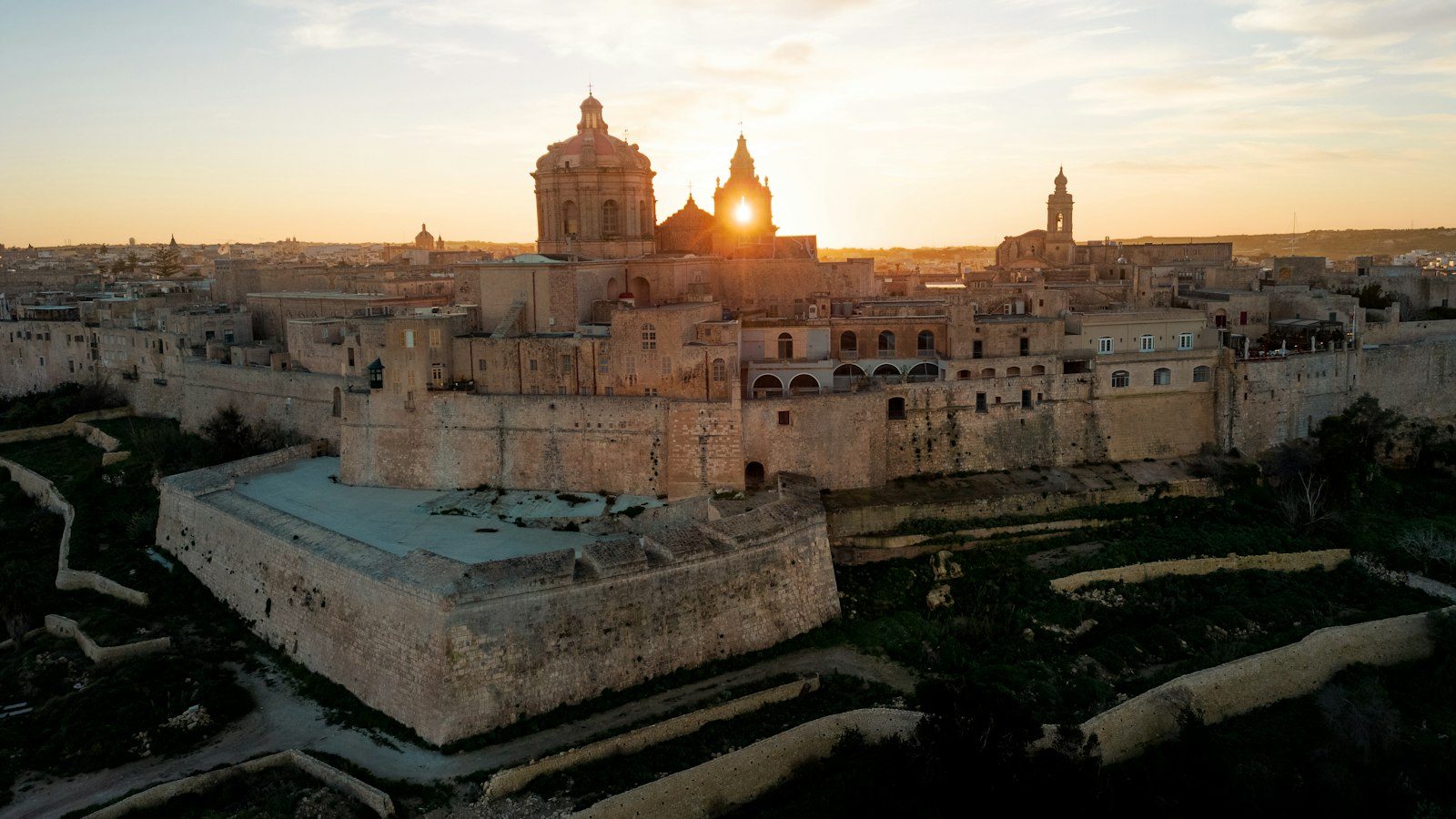
Malta's old walled capital sits on a hilltop in the middle of the island. It has honey-coloured palaces, quiet lanes and bastion views that stretch to the sea. Once the day trippers leave, you can walk its lamplit streets almost alone, then eat pastizzi and rabbit stew next door in Rabat.
- Best time to visit: April to June and late September to October
- Daily budget (budget traveller): $85 to $270 USD
- Ideal trip length: 3 to 5 days
Mdina sits on a ridge in the centre of Malta, about 40 minutes by bus from Valletta and 20 to 25 minutes by road from the airport. It was the island's capital long before the Knights built Valletta. Today fewer than 300 people live inside its walls, which is why it is called the Silent City. Only residents and service vehicles can drive in, so the lanes are calm, narrow and easy to walk. You enter through the Baroque Main Gate, which Game of Thrones fans may recognise. Inside you will find a Baroque cathedral, a medieval house museum and Bastion Square, where the view runs across half of Malta to the coast. Rabat starts just outside the walls. It is a normal working town with Roman remains, early Christian catacombs, cheap pastizzi and bus stops for the rest of the island. Mdina is busy with tour groups from mid-morning to late afternoon, and there are only a few places to stay inside the walls. Base yourself in Rabat or just outside the gate and you get the best of both: a quiet evening walk through the old city, cheaper food and rooms, and buses to Dingli Cliffs, Valletta and beyond. For a solo traveller who likes history, quiet streets and early starts, it is a very good base.
Mdina is one of Europe's best-preserved small walled cities. It sits on a rocky ridge in the middle of Malta, and fewer than 300 people live inside the walls. The Phoenicians and Romans first fortified the site, the Arabs gave it its name and Maltese nobles built palaces along its lanes. It stayed the capital until the Knights of St John moved to the harbour in 1530. Most visitors come for a couple of hours on a coach tour. Stay a night or two and you see it at its best: Bastion Square empty at 8am, the cathedral bells over silent lanes and the walls glowing gold at sunset. It is not the cheapest place in Malta to sleep. A guesthouse in Rabat, pastizzi for breakfast and cheap island buses keep costs sensible.
Getting here is easy. Malta International Airport is about 20 to 25 minutes away by road, and the hourly TD1 and TD5 Airport Direct buses stop in Rabat. From Valletta, several regular routes reach Rabat in around 40 minutes, and the 202 comes from Sliema. Inside the walls you walk, as the city is car-free and small. Stay inside Mdina for atmosphere, or in Rabat for lower prices, local food and the bus stops. Use buses or ride-hail apps for Dingli Cliffs, Buskett Gardens, Mosta and the coast.
Timing shapes the trip. Spring and autumn are warm and pleasant for walking, and in spring the fields below the walls turn green. July and August are hot, the coach crowds peak and midday is best spent in a museum. Winter is mild and quiet, with occasional heavy showers. Check the accommodation tax before you book, as it rose to €1.50 a night in July 2026, and a much bigger increase has been announced for January 2027. Malta is very safe and English is an official language, so getting by alone is easy. Evenings in Mdina are hushed rather than lively. If you want bars and clubs, go to St Julian's. If you want a lamplit walk and a glass of Maltese wine, stay here.
Mdina itinerary
Arrive and find your feet
Morning: Take the TD1 or TD5 bus, or a taxi, from the airport to Rabat. Drop your bag and grab a pastizz at Is-Serkin outside the gate.
Afternoon: Walk through the Main Gate and wander without a map. Find Mesquita Square and look out from Bastion Square.
Evening: Dinner in Rabat, then a slow walk through the walled city after dark, when it is almost empty.
Cathedral, palace and bastions
Morning: Be at the Cathedral Museum for 9:30 to buy the €15 combined ticket. See the Dürer prints first, then the cathedral before the tour groups arrive.
Afternoon: Visit Palazzo Falson (about €10 with an audio guide), then cake and coffee at Fontanella Tea Garden on the walls.
Evening: Watch the sunset from the bastions, then dinner inside the walls at a place such as Medina Restaurant.
Roman and early Christian Rabat
Morning: See the mosaics at the Domvs Romana (about €6) just outside the walls.
Afternoon: Go underground at St Paul's Catacombs (about €6), then visit St Paul's Grotto and St Agatha's Crypt nearby.
Evening: Have a drink in St Paul's Square and rabbit stew at a Rabat restaurant.
Dingli Cliffs and Buskett
Morning: Take a bus to Buskett Gardens, one of Malta's few woodlands, and look up at Verdala Palace on the ridge.
Afternoon: Walk or take the bus to Dingli Cliffs. Follow the cliff-top road to the Chapel of St Mary Magdalene. Bring water.
Evening: Stay for sunset, then take the bus or a ride-hail car back to Rabat. Farmhouse dinner if you are near Dingli.
A day in Valletta
Morning: Take a bus from Rabat to Valletta (about 40 minutes). Walk Republic Street to St John's Co-Cathedral.
Afternoon: See the Upper Barrakka Gardens and the Grand Harbour, then take the ferry to Birgu if you have time.
Evening: Watch the city lights from the harbour, then take a late bus back to Rabat.
Mosta and Ta' Qali
Morning: Take the bus to Mosta and see the Rotunda, with its huge dome and its story of the wartime bomb that failed to explode.
Afternoon: Visit the Ta' Qali Crafts Village to see glassblowing and filigree work, or book a tasting at Meridiana wine estate.
Evening: Back to Mdina for a last lamplit walk and a glass of Maltese wine.
Slow morning and depart
Morning: Have a last early walk around the empty bastions and a pastizzi breakfast outside the gate.
Afternoon: Take the TD1 or TD5 to the airport, or a taxi (20 to 25 minutes). Check bus times the night before.
Evening: Fly out, or carry on to Gozo or Sicily.
Best neighbourhoods
- Inside the walls: The old city itself, with the cathedral, Palazzo Falson, Bastion Square and a handful of boutique hotels and rented rooms. It is magical at night, when the lanes empty and the lamps come on. Expect higher prices, few shops and almost nothing open after dinner. Luggage has to be wheeled over stone paving.
- Rabat centre: The town around St Paul's Square, just south of the walls. You have the catacombs, St Paul's Grotto, local bars, bakeries and small restaurants. Rooms cost less than inside Mdina, it feels lived-in rather than touristy, and the Main Gate is a 5 to 10 minute walk away.
- Saqqajja and Howard Gardens: The open area just outside the Main Gate, with the main bus stops, Howard Gardens and the famous pastizzi shop. It is the most practical base if you will be using buses a lot. Expect some traffic noise and busy pavements in the daytime.
- Mtarfa: A quiet residential village on the next hill north, built around an old British military base and clock tower. It has a few apartments and good views back to Mdina's walls. You will need to walk around 20 minutes or take a short bus ride into Mdina.
- Dingli: A village about 5km south-west, near the island's highest sea cliffs. It suits you if you want walking, sunsets and farmhouse stays. Buses link it to Rabat, but evenings are very quiet and you will rely on taxis after dark.
Must-do experiences
- See St Paul's Cathedral and its museum: The cathedral was rebuilt by Lorenzo Gafà after the 1693 earthquake. Inside are an inlaid marble floor and a painted ceiling. One €15 adult ticket covers both the cathedral and the museum across the square, which holds a fine set of Dürer prints. Buy it at the museum first. It opens Monday to Saturday, about 9:30 to 16:30.
- Take in the view from Bastion Square: Walk to the northern edge of the walls for the classic view across Mosta's great dome, the old Ta' Qali airfield and the coast beyond. It is free, and best early in the morning or in the hour before sunset.
- Explore Palazzo Falson: This medieval house dates back to the 13th century. It is full of silver, paintings, rugs and armour collected by its last owner. Adult entry is about €10 and includes an audio guide. Do not miss the roof terrace. Check the opening days before you go, as it closes one day a week.
- Walk Mdina after dark: When the coaches leave, the walled city goes quiet. Wander from the Main Gate to Greeks Gate and back by lamplight, with only your footsteps and the odd cat for company. It is free and the best reason to stay overnight.
- Visit the Domvs Romana: The remains of a Roman town house sit just outside the walls, on the Rabat side. Inside are some of the best Roman mosaic floors in the Mediterranean, plus marble portraits and everyday objects. Heritage Malta charges about €6 for adults.
- Go underground at St Paul's Catacombs: Rabat's maze of Punic, Roman and Byzantine tombs is the earliest large archaeological evidence of Christianity in Malta. Adult entry is about €6. Afterwards, walk five minutes to St Paul's Grotto and the Wignacourt Museum.
- Watch the sunset at Dingli Cliffs: Take a short bus ride from Rabat to the tall limestone cliffs on Malta's south-west coast. Walk along the edge to the little Chapel of St Mary Magdalene and watch the sun drop towards the open sea. Go back to the bus before it gets fully dark.
Hidden gems
- Greeks Gate on the western side of the walls, a quieter way in or out with a view down over the ditch gardens
- Mesquita Square, a small square tucked behind the cathedral that is easy to walk straight past
- The Carmelite Priory, a working convent where part of the old building is open to visitors, giving a glimpse of monastic life
- St Agatha's Crypt and Catacombs in Rabat, smaller and much less visited than St Paul's Catacombs
- The Chapel of St Mary Magdalene on the edge of Dingli Cliffs, a lonely little stone church with nothing but sea beyond it
Daily budget
- Accommodation: budget €50-80 / night (guesthouse room in Rabat), mid-range €100-180 (boutique B&B or apartment), splurge €250+ (The Xara Palace inside the walls). Malta has no real hostels near Mdina, so solo budget travellers usually book a single room. The €1.50 a night eco-contribution is added on top, and a large rise is planned from January 2027.
- Food: budget €20-30 / day (pastizzi breakfast, ftira lunch, simple dinner), mid-range €40-65 (café lunch and a sit-down Maltese dinner), splurge €100+ (fine dining at de Mondion). Pastizzi cost well under €1 each. Restaurant mains are roughly €15-28. Prices inside the walls are higher than in Rabat.
- Transport: budget €0-7 / day (walking and a few buses), mid-range €10-25 (buses plus a ride-hail trip), splurge €50+ (car hire or private driver). Single bus fares are around €2-2.50, depending on the season. The 7-day Explore card is about €25. Airport Direct costs around €3-3.50, and night buses €3.
- Activities: budget €0-12 / day (walls, bastions, Dingli Cliffs, Domvs Romana at €6), mid-range €15-30 (cathedral at €15, Palazzo Falson at about €10), splurge €40+ (guided tours, wine tasting, Heritage Malta pass). Domvs Romana and St Paul's Catacombs are Heritage Malta sites at about €6 each. The cathedral is run by the Church and is not covered by Heritage Malta passes.
- Drinks & nightlife: budget €4-10 (a Cisk or a glass of local wine), mid-range €15-30 (a few drinks at a wine bar), splurge €50+ (cocktails in St Julian's). A coffee costs about €1.50-3. Mdina is quiet in the evening, so drinks mean a wine bar or a terrace. For nightlife, take a taxi to St Julian's.
Where to stay
- Guesthouse in Saqqajja, just outside the Main Gate (€50-80 / night): Point de Vue Guesthouse is a long-running, simple guesthouse a couple of minutes from the gate and right by the bus stops. It is one of the most affordable ways to sleep next to the walls.
- Townhouse B&B in Rabat old core (€90-160 / night): Restored Maltese townhouses with a few rooms, courtyards and roof terraces. You get a local feel, home-cooked breakfasts and a short walk to both the catacombs and Mdina.
- Apartment in Inside the walls or Mtarfa (€80-170 / night): A few small apartments sit inside Mdina itself, with more in Rabat and Mtarfa. You get a kitchen and space. Expect stairs and no lift, and check how far you will carry luggage over stone paving.
- Splurge in Inside the walls, on the bastions (€250-500+ / night): The Xara Palace is a 17th-century palazzo on the walls, with views across the island and the fine-dining restaurant de Mondion. It is the most atmospheric place to stay in Mdina.
What to eat
- Pastizzi: flaky pastries filled with ricotta or mushy peas from Is-Serkin (Crystal Palace) by the bus stops outside the gate, open from very early and still the cheapest snack around
- Rabbit stew (stuffat tal-fenek): Malta's national dish, slow-cooked with wine and garlic. Try it in Rabat or at a farmhouse restaurant near Dingli
- Ftira and ħobż biż-żejt: Maltese bread spread with tomato and filled with tuna, capers and olives, perfect for a cheap lunch on a bench
- Cake and coffee at Fontanella Tea Garden on the bastions, where the view is as famous as the chocolate cake
- Qassatat and imqaret: savoury pastry pies and date-filled fried pastries from Rabat bakeries and kiosks
- Kinnie, Cisk and Maltese wine: the bitter orange soft drink, the local lager, and wines from Meridiana at nearby Ta' Qali
Day trips
- Dingli Cliffs and Buskett Gardens (About 5km south-west of Mdina, 15 to 20 minutes by bus): Malta's tallest sea cliffs, with a lonely chapel on the edge and wide sunset views, plus the shaded woodland of Buskett below Verdala Palace. It makes a perfect half-day walk. Take a bus from Rabat towards Dingli or Buskett. Route 201 serves both, and the tallinja app shows the others. Walk between the two along country lanes, and bring water as facilities are limited.
- Valletta (About 13km east, 35 to 45 minutes by bus): Malta's compact Baroque capital, built by the Knights. It has St John's Co-Cathedral, the Upper Barrakka Gardens and views over the Grand Harbour to the Three Cities. Take bus 50, 51, 52, 53 or 56 from Rabat to Valletta terminus, just outside City Gate. Buses run every few minutes in the daytime, and fares are around €2-2.50.
- Mosta and Ta' Qali (About 4 to 6km north-east, 10 to 20 minutes by bus): Mosta's Rotunda has one of the largest unsupported church domes in Europe. Nearby Ta' Qali has a crafts village with glassblowers and the Meridiana wine estate. Take a direct bus from Rabat to Mosta, as several routes pass through. Ta' Qali is a short bus or ride-hail trip from there, and a taxi is easiest for the winery.
When to visit
- Spring (March - May): 16-24°C, sunny and fresh, green countryside. Crowds: Moderate, busier at Easter and on spring weekends. Excellent for walking, cliff hikes and sightseeing in comfort. Easter brings processions in Rabat and around the island.
- Early summer (June): 25-30°C, dry and sunny. Crowds: Moderate to busy. Long evenings and warm nights for walking the walls. The Imnarja harvest festival fills Buskett Gardens around 29 June.
- High summer (July - August): 30-34°C, hot, humid and almost no rain. Crowds: Very busy in the daytime with coach tours. Do the sights early or late and rest at midday. Rooms cost the most. Evenings inside the walls are lovely once the heat breaks.
- Autumn and winter (September - February): September 26-29°C, then 12-17°C in winter with some heavy showers. Crowds: Moderate in autumn, quiet in winter. Late September and October are the locals' pick. Winter is cheap and peaceful, good for museums, though wet days are possible.
Entry rules for your passport
Visa rules for Malta depend on the passport you travel on. Check the official source before you book: European Commission: Schengen visa policy
Getting there
Malta International Airport at Luqa is about 20 to 25 minutes from Mdina by road. Taxis and ride-hail cars from Bolt, Uber and eCabs wait outside arrivals. The hourly Airport Direct buses TD1 and TD5 run to Rabat for around €3-3.50, and slower regular routes such as the 201 also link the airport and Rabat. From Valletta, buses 50, 51, 52, 53 and 56 reach Rabat in around 35 to 45 minutes for about €2-2.50, and the 202 runs from Sliema. All stop a few minutes' walk from the Main Gate. By sea, fast catamarans link Pozzallo in Sicily with Valletta in under two hours, and from there it is one bus to Rabat. If you drive, Malta drives on the left. Mdina is closed to visitors' cars, so use the car parks outside the walls. They fill up by late morning in summer.
Border checks: non-EU visitors (other than Swiss, Norwegian, Icelandic, Liechtenstein, Andorran, Monegasque, San Marinese and Vatican citizens, and holders of an EU residence permit or long-stay visa) are registered in the EU's Entry/Exit System (EES) instead of getting a passport stamp. On your first crossing, officers take your photo and/or fingerprints, so allow extra time at passport control. ETIAS, the planned travel authorisation, is not in operation yet, so don't pay any website for one.
Getting around
Mdina is closed to most cars, so you will walk everywhere inside the walls. You can cross it in about 10 minutes. The lanes are paved in smooth stone and get slippery when wet. Rabat is right next door and just as walkable, though its pavements are narrow and the traffic can be busy. Malta Public Transport (tallinja) buses stop at Saqqajja, just outside the Main Gate, and at the Rabat terminus. Routes 50, 51, 52, 53 and 56 run from Valletta, and route 202 comes from Sliema. A single fare is around €2-2.50, depending on the season, and is valid for two hours including changes. You can pay cash or tap a contactless card on the bus. Night buses cost €3. A 7-day Explore card costs about €25 and pays for itself if you take three or more rides a day. Buses can be slow and full in summer traffic, so use the tallinja app for live times. Bolt, Uber and eCabs are useful for evenings and for getting back from Dingli. Driving is on the left. If you hire a car, park in the public car parks outside the walls, never inside them.
Safety
Mdina and Rabat are very safe, and violent crime against visitors is rare. Keep an eye on your bag in the crowd at the Main Gate and on packed summer buses. The real risks are traffic in Rabat, where pavements are narrow and drivers are quick, and the summer heat, which often goes above 30°C. Carry water and plan to be indoors at midday. The polished stone lanes are slippery after rain. At Dingli Cliffs, most of the edge has no railings, so stay back from it, especially in wind. Tap water is safe but tastes of desalination, so many people buy bottled water or use a filter bottle. The emergency number is 112. EU travellers should carry an EHIC, UK travellers a GHIC, and everyone should have travel insurance with medical cover.
Solo travel tips
- Sleep near the walls: Stay inside Mdina or just outside the gate in Rabat. You can do your sightseeing before the coaches come and walk the empty lanes at night without having to plan transport.
- Beat the coaches: Tour groups arrive from about 10am and leave by late afternoon. See the cathedral at opening time, do Rabat at midday and come back to the walls after 5pm.
- Get an Explore card for longer stays: If you are taking several buses a day for a week, the 7-day card at about €25 saves money and fumbling for change. For a short stay, contactless pay-as-you-go is fine.
- Eat cheaply in Rabat: Pastizzi, ftira and bakery pies cost a fraction of the cafés inside the walls. Save money for one good dinner in Mdina or Rabat.
- Safety for solo travellers: The main risks are traffic on narrow Rabat streets, the summer heat and unfenced cliff edges at Dingli. Carry water, stay well back from the edge and use a ride-hail app after dark rather than walking along country roads.
- Meet people on a tour: Join a walking tour of Mdina and Rabat or a wine tasting at Ta' Qali. Locals in Rabat's bars and bakeries are chatty, and as English is an official language, conversation is easy.
Cultural etiquette
- Greet people with 'bonġu' (good morning) and say 'grazzi' (thank you). English is an official language and spoken everywhere, though a word of Maltese is always welcome.
- Respect the Silent City. Keep your voice down, especially in the evenings, as people live behind those doors.
- Cover your shoulders and knees in the cathedral and other churches. Wraps are offered at the cathedral if you forget.
- Do not sit on residents' doorsteps or photograph through windows. Many palaces are still private homes.
- If you come across a festa or religious procession in Rabat, step aside and let it pass. These are important community events, not shows.
- Tipping 5-10% for good table service is appreciated but not compulsory.
- Take your rubbish away from the cliffs and gardens, and never climb on the bastion walls.
Frequently asked questions
How do I get to Mdina and from the bus stop to my room?
From the airport, the hourly TD1 and TD5 Airport Direct buses run to Rabat. They cost a little more than normal routes, at about €3-3.50. A taxi or ride-hail car takes 20 to 25 minutes. From Valletta, take bus 50, 51, 52, 53 or 56 (about 35 to 45 minutes). From Sliema, take the 202. Buses stop at Saqqajja, about five minutes' walk from the Main Gate across a short bridge. Mdina is car-free, so you will have to roll your bag over stone paving. Ask your host for exact directions.
How many days do I need in Mdina?
One full day covers the walled city, the cathedral and Palazzo Falson. Two nights let you add Rabat's catacombs and the Domvs Romana, plus a quiet evening walk. With three to five nights you can add Dingli Cliffs, Buskett Gardens and day trips to Valletta and Mosta. Malta is small and the buses reach most of it, so Mdina works as a base for a whole week.
When is the best time to visit Mdina?
April to June and late September to October are best, with warm days, comfortable walking and lighter crowds. July and August often go above 30°C, and midday in the stone lanes can be draining. Winter is mild at around 12-17°C, with some rain and the fewest visitors, so it is a good time for museums and cheaper rooms.
Is it worth staying overnight rather than visiting on a day trip?
Yes, if you can. Most visitors come on coach tours between about 10am and 4pm. Stay the night and you get the walled city at its quietest, in the early morning and after dark, which is when the Silent City name really fits. Rooms inside the walls are few and expensive. Rabat, just outside, is cheaper and still within a short walk.
What should I know about visiting the cathedral?
One combined ticket covers St Paul's Cathedral and the Cathedral Museum. It costs €15 for adults and €10 for students and over-60s. Buy it at the museum across the square, as there is no ticket desk inside the cathedral. Opening hours are roughly 9:30 to 16:30, Monday to Saturday, with last tickets at 16:15. On Sundays, entry is limited to the afternoon. Cover your shoulders and knees. Wraps are provided if you forget.
How much is Malta's tourist tax?
Since 1 July 2026, adults pay an environmental contribution of €1.50 a night, up to €22.50 per stay. It is charged separately on your accommodation bill. In the October 2026 Budget, the government announced a big rise from 1 January 2027, to €8 a night in hotels and €10 in short-let apartments. Check the final rates before you book stays in 2027.
Is Mdina safe for solo female travellers?
Yes. Mdina and Rabat are among the calmest places in Malta, and locals are used to visitors. The walled city is very quiet at night but generally safe and lit. Take normal care with drinks in bars, use ride-hail apps rather than walking along unlit country roads, and do not stay at Dingli Cliffs alone after dark.
What entry rules apply to Malta in 2026?
Malta is in the EU and the Schengen area. Many non-EU visitors, including those from the UK, US, Canada and Australia, can stay visa-free for up to 90 days in any 180-day period across Schengen. The Entry/Exit System has been fully running since April 2026 and records fingerprints and a photo at your first entry. ETIAS has no confirmed start date yet and is not taking applications, so do not pay any website for it. Check the official EU and Maltese government sites before you travel.
Tours and activities in Mdina | Mdina in 2 days | Mdina in 3 days | Mdina in 4 days | Mdina in 5 days | Mdina in 7 days
Can't decide? Compare Mdina with...
Joy Plus home | Destinations | Itineraries | Activities | Flights | Budget planner | Calendar | Map | Blog | Lifetime access