Mdina in 5 days
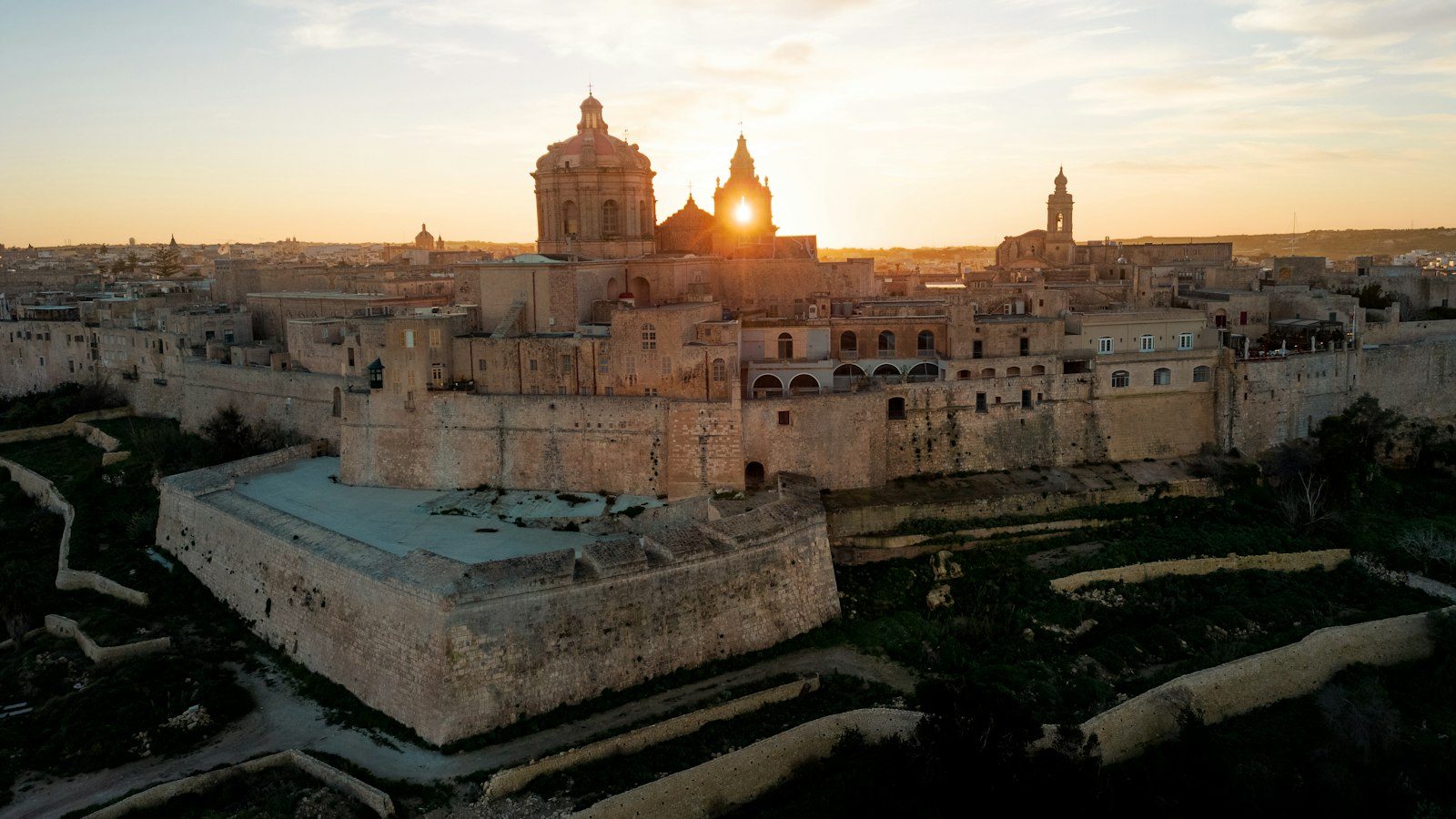
Malta's old walled capital sits on a hilltop in the middle of the island. It has honey-coloured palaces, quiet lanes and bastion views that stretch to the sea. Once the day trippers leave, you can walk its lamplit streets almost alone, then eat pastizzi and rabbit stew next door in Rabat. Best time to visit: April to June and late September to October. Daily budget (budget traveller): $85 to $270 USD.
Arrive and find your feet
Morning: Take the TD1 or TD5 bus, or a taxi, from the airport to Rabat. Drop your bag and grab a pastizz at Is-Serkin outside the gate.
Afternoon: Walk through the Main Gate and wander without a map. Find Mesquita Square and look out from Bastion Square.
Evening: Dinner in Rabat, then a slow walk through the walled city after dark, when it is almost empty.
Cathedral, palace and bastions
Morning: Be at the Cathedral Museum for 9:30 to buy the €15 combined ticket. See the Dürer prints first, then the cathedral before the tour groups arrive.
Afternoon: Visit Palazzo Falson (about €10 with an audio guide), then cake and coffee at Fontanella Tea Garden on the walls.
Evening: Watch the sunset from the bastions, then dinner inside the walls at a place such as Medina Restaurant.
Roman and early Christian Rabat
Morning: See the mosaics at the Domvs Romana (about €6) just outside the walls.
Afternoon: Go underground at St Paul's Catacombs (about €6), then visit St Paul's Grotto and St Agatha's Crypt nearby.
Evening: Have a drink in St Paul's Square and rabbit stew at a Rabat restaurant.
Dingli Cliffs and Buskett
Morning: Take a bus to Buskett Gardens, one of Malta's few woodlands, and look up at Verdala Palace on the ridge.
Afternoon: Walk or take the bus to Dingli Cliffs. Follow the cliff-top road to the Chapel of St Mary Magdalene. Bring water.
Evening: Stay for sunset, then take the bus or a ride-hail car back to Rabat. Farmhouse dinner if you are near Dingli.
A day in Valletta
Morning: Take a bus from Rabat to Valletta (about 40 minutes). Walk Republic Street to St John's Co-Cathedral.
Afternoon: See the Upper Barrakka Gardens and the Grand Harbour, then take the ferry to Birgu if you have time.
Evening: Watch the city lights from the harbour, then take a late bus back to Rabat.
Heading home: Take the TD1 or TD5 to the airport, or a taxi (20 to 25 minutes). Fly out, or carry on to Gozo or Sicily.
What to eat in Mdina
- Pastizzi: flaky pastries filled with ricotta or mushy peas from Is-Serkin (Crystal Palace) by the bus stops outside the gate, open from very early and still the cheapest snack around
- Rabbit stew (stuffat tal-fenek): Malta's national dish, slow-cooked with wine and garlic. Try it in Rabat or at a farmhouse restaurant near Dingli
- Ftira and ħobż biż-żejt: Maltese bread spread with tomato and filled with tuna, capers and olives, perfect for a cheap lunch on a bench
- Cake and coffee at Fontanella Tea Garden on the bastions, where the view is as famous as the chocolate cake
- Qassatat and imqaret: savoury pastry pies and date-filled fried pastries from Rabat bakeries and kiosks
- Kinnie, Cisk and Maltese wine: the bitter orange soft drink, the local lager, and wines from Meridiana at nearby Ta' Qali
Hidden gems
- Greeks Gate on the western side of the walls, a quieter way in or out with a view down over the ditch gardens
- Mesquita Square, a small square tucked behind the cathedral that is easy to walk straight past
- The Carmelite Priory, a working convent where part of the old building is open to visitors, giving a glimpse of monastic life
- St Agatha's Crypt and Catacombs in Rabat, smaller and much less visited than St Paul's Catacombs
- The Chapel of St Mary Magdalene on the edge of Dingli Cliffs, a lonely little stone church with nothing but sea beyond it
Getting around
Mdina is closed to most cars, so you will walk everywhere inside the walls. You can cross it in about 10 minutes. The lanes are paved in smooth stone and get slippery when wet. Rabat is right next door and just as walkable, though its pavements are narrow and the traffic can be busy. Malta Public Transport (tallinja) buses stop at Saqqajja, just outside the Main Gate, and at the Rabat terminus. Routes 50, 51, 52, 53 and 56 run from Valletta, and route 202 comes from Sliema. A single fare is around €2-2.50, depending on the season, and is valid for two hours including changes. You can pay cash or tap a contactless card on the bus. Night buses cost €3. A 7-day Explore card costs about €25 and pays for itself if you take three or more rides a day. Buses can be slow and full in summer traffic, so use the tallinja app for live times. Bolt, Uber and eCabs are useful for evenings and for getting back from Dingli. Driving is on the left. If you hire a car, park in the public car parks outside the walls, never inside them.
Safety
Mdina and Rabat are very safe, and violent crime against visitors is rare. Keep an eye on your bag in the crowd at the Main Gate and on packed summer buses. The real risks are traffic in Rabat, where pavements are narrow and drivers are quick, and the summer heat, which often goes above 30°C. Carry water and plan to be indoors at midday. The polished stone lanes are slippery after rain. At Dingli Cliffs, most of the edge has no railings, so stay back from it, especially in wind. Tap water is safe but tastes of desalination, so many people buy bottled water or use a filter bottle. The emergency number is 112. EU travellers should carry an EHIC, UK travellers a GHIC, and everyone should have travel insurance with medical cover.
Frequently asked questions
What does this 5-day Mdina itinerary cover?
Day 1: Arrive and find your feet. Day 2: Cathedral, palace and bastions. Day 3: Roman and early Christian Rabat. Day 4: Dingli Cliffs and Buskett. Day 5: A day in Valletta.
Is 5 days enough for Mdina?
Our recommended trip length for Mdina is 3 to 5 days. This 5-day plan focuses on the highlights and groups sights by area so you spend less time travelling between them.
How much does 5 days in Mdina cost?
A budget traveller spends about $85 to $270 USD a day in Mdina, so roughly $425 to $1,350 USD for 5 days, not counting flights.
Where should I stay for 5 days in Mdina?
Inside the walls: The old city itself, with the cathedral, Palazzo Falson, Bastion Square and a handful of boutique hotels and rented rooms. Rabat centre: The town around St Paul's Square, just south of the walls.
When is the best time to visit Mdina?
The best time to visit Mdina is April to June and late September to October.
How do I get around Mdina?
Mdina is closed to most cars, so you will walk everywhere inside the walls. You can cross it in about 10 minutes.
Is Mdina safe for solo travellers?
Mdina and Rabat are very safe, and violent crime against visitors is rare. Keep an eye on your bag in the crowd at the Main Gate and on packed summer buses.
More 5-day guides
- Valletta in 5 days
- Gozo in 5 days
- Milos in 5 days
- Nazaré in 5 days
- Óbidos in 5 days
- Portofino in 5 days
- Procida in 5 days
- Rethymno in 5 days
Mdina in 2 days | Mdina in 3 days | Mdina in 4 days | Mdina in 7 days | Full Mdina guide
Joy Plus home | Destinations | Itineraries | Activities | Flights | Budget planner | Calendar | Map | Blog | Lifetime access