Destinations / Europe
Meissen, Germany travel guide
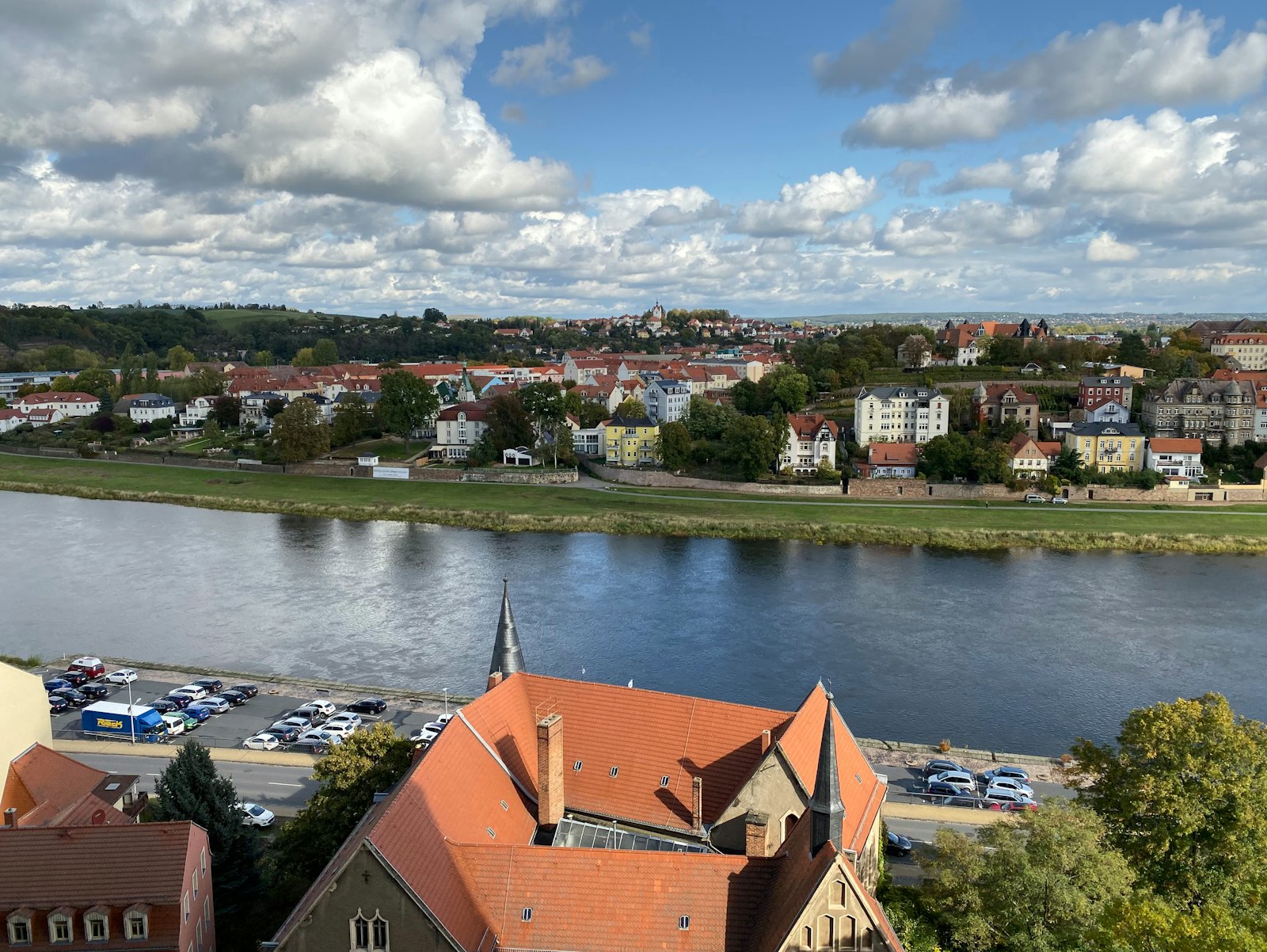
A small Saxon town on the Elbe, with a castle and cathedral on the hill above, Europe's first porcelain factory, steep vineyards and a paddle steamer that runs up the river to Dresden.
- Best time to visit: May to October
- Daily budget (budget traveller): $95 to $270 USD
- Ideal trip length: 3 to 5 days
Meissen sits on the Elbe about 25km downstream from Dresden. It is a town of roughly 28,000 people, and the S-Bahn gets you there from Dresden in around 40 minutes. The Burgberg rises over the river. At the top are the Albrechtsburg, often called the first true palace built in Germany, and a Gothic cathedral with two needle-thin spires. Below them, steep lanes and stone stairs drop into a compact old town of half-timbered houses and a market square. The Frauenkirche here has a carillon with bells made of porcelain. That fits, because in 1710 the Meissen porcelain manufactory was founded inside the castle walls. It still works today in the Triebisch valley, and you can watch painters and modellers at work. Vineyards climb the slopes on both banks. This is one of Germany's smallest and most northerly wine regions, so local wine rarely leaves Saxony. Most visitors come on a day trip from Dresden. Stay a few nights instead and you get quiet evenings on the hill, wine taverns and easy rail trips to Moritzburg, Radebeul and Dresden. It is affordable, safe and easy to walk, although the hills are steep.
Meissen is where Saxony began. In 929 the German king Henry I built a fortress on the rock above the Elbe, and the margraves of Meissen ruled from here for centuries. The hill now holds the Albrechtsburg, started in 1471, and a Gothic cathedral begun around 1250. In 1710 Augustus the Strong set up Europe's first porcelain manufactory inside the castle. It moved to the Triebisch valley in the 1860s and still makes its crossed-swords porcelain there. Most visitors arrive from Dresden at lunchtime and leave by late afternoon. Stay overnight and you get a different town: the Burgberg empty at dusk, a glass of wine by the Frauenkirche and an early start before the coaches arrive. Meissen is cheaper than Dresden, very walkable and calm. Accommodation is mostly guesthouses and small hotels, and there is no real hostel scene.
Getting here is easy. The S1 S-Bahn runs every 30 minutes from Dresden, roughly 35-40 minutes away, and VVO tickets cover trains and buses across the region. From April to October the paddle steamers of Sächsische Dampfschiffahrt sail between Dresden and Meissen. One way costs about €21, and many people take the boat in one direction and the train back. Base yourself in the Altstadt for cafés and taverns on your doorstep, or in Cölln for lower prices and the classic view of the castle across the river. Plan around the Albrechtsburg's Tuesday closing. Book the porcelain manufactory for a morning, before the tour groups arrive.
Timing shapes the trip. May to October brings long evenings, cathedral tower tours, steamers and vineyard walks. September is harvest month, and the Meissen Wine Festival takes over the old town on the second-to-last full weekend of the month. Hot, dry summers can drop the Elbe so low that steamers are cancelled, as happened for several weeks in summer 2026. Winter is cold and quiet, with shorter hours, but the Christmas market and empty museums have their own appeal. English is spoken at the main sights and in many hotels. A few words of German go a long way in taverns and bakeries.
Meissen itinerary
Arrive and find your feet in the Altstadt
Morning: This plan assumes you arrive on a Monday. Take the S1 from Dresden Hauptbahnhof, about 40 minutes, and get off at Meissen Altstadt. Drop your bags at your guesthouse.
Afternoon: Walk the Markt, listen for the porcelain carillon at the Frauenkirche and climb its tower if it is open. Try a Meissner Fummel and coffee at Konditorei Zieger on the Rote Stufen.
Evening: Cross the bridge to Cölln for the sunset view of the castle and cathedral, then come back for a glass of wine and dinner at Vincenz Richter.
Porcelain in the Triebisch valley
Morning: The Albrechtsburg is closed on Tuesdays, so do porcelain today. Arrive at the manufactory on Talstrasse at 9am, before the groups. A ticket costs about €16 and includes the audio-guided workshop tour.
Afternoon: Spend time in the porcelain museum, then walk back along the Triebisch into town. Visit the Stadtmuseum on Heinrichsplatz.
Evening: A cheap supper of Saxon potato soup at a tavern in the old town, then an early night.
Castle and cathedral on the Burgberg
Morning: Climb to Domplatz by the old stairways. Visit the Albrechtsburg at 10am, when it opens, and allow about two hours. Entry is €12.
Afternoon: Visit the cathedral, and from May to October catch the noon organ music from Monday to Saturday. Join a tower tour at 1pm, 2pm, 3pm or 4pm between April and October. Afterwards, walk down past St Afra's Church.
Evening: Dinner on the terrace of the Domkeller as the lights come on along the Elbe.
Vineyards and wine tasting
Morning: Cross to the right bank and walk up through the vineyards towards Schloss Proschwitz. Wear good shoes, because the paths are steep.
Afternoon: Do a tasting at the Schloss Proschwitz winery in Zadel or at the Meissen winegrowers' cooperative on Bennoweg. Check tasting times and book ahead if you can.
Evening: Picnic by the Elbe with bread, cheese and a bottle you bought today, or eat at a tavern in Cölln.
Moritzburg Castle
Morning: Take the S1 to Radebeul Ost, then the narrow-gauge Lössnitzgrundbahn steam train to Moritzburg. Check the timetable, because only a few trains run each day.
Afternoon: Tour Moritzburg Castle, the baroque hunting lodge on its lake, then walk to the Little Pheasant Castle through the park. Opening hours are shorter in winter.
Evening: Head back via Radebeul to Meissen. Have a simple dinner in the old town.
Radebeul wine and the Spaargebirge
Morning: Walk or cycle upstream on the Elbe cycle route and climb to the Boselspitze viewpoint above the vineyards of the Spaargebirge.
Afternoon: Continue to Radebeul by S-Bahn and visit Schloss Wackerbarth, the Saxon state winery, for a tour or a tasting of its sparkling wine.
Evening: Back in Meissen, have a farewell glass of Goldriesling at a wine tavern near the Frauenkirche.
Steamer to Dresden
Morning: Sunday is quiet and most shops are shut. Have a slow breakfast, then take a last walk on the Burgberg while the town is empty.
Afternoon: From April to October, take the 3pm paddle steamer from Meissen back to Dresden, about three hours upstream. If the river is low or it is winter, take the S1 instead.
Evening: Arrive at the Terrassenufer in Dresden's old town. Stay a night in Dresden or connect onwards from Dresden Hauptbahnhof.
Best neighbourhoods
- Altstadt: The old town around the Markt, Heinrichsplatz and Burgstrasse. Cafés, wine taverns, the Frauenkirche and most guesthouses are here, and it is all walkable. It is the obvious base for a first visit.
- Burgberg: The castle hill with the Albrechtsburg, the cathedral and Domplatz. It is busy with day trippers in the afternoon and very quiet after 6pm. A few rooms and restaurants up here have views straight down to the Elbe.
- Cölln: The right bank of the Elbe, around the main Meissen station. It is more residential and cheaper, and it gives you the best view of the castle and cathedral across the river, especially at sunset. The old town is a short walk over the bridge.
- Triebischtal: The valley southwest of the old town where the porcelain manufactory sits on Talstrasse. The S1 ends at Meissen Triebischtal station nearby. It is practical rather than pretty, but handy if you arrive by train.
- Proschwitz and the right-bank vineyards: The vine-covered slopes north and east of Cölln, with Schloss Proschwitz, the Prinz zur Lippe winery in Zadel and walking paths through the vineyards. It suits a slower stay, but you will be walking uphill or relying on buses.
Must-do experiences
- Explore the Albrechtsburg: The late-Gothic palace has cell vaults, huge 19th-century wall paintings and an exhibition on how European porcelain was invented here. Entry is €12. It is closed on Tuesdays, so plan around that.
- Climb the cathedral towers: Meissen Cathedral costs about €6 to visit on your own. From April to October, guided tower tours run daily at 1pm, 2pm, 3pm and 4pm for about €10-11, including the cathedral and its museum. On a clear day you can see along the Elbe valley towards Dresden.
- Watch porcelain being made: The Erlebniswelt at the manufactory opens daily from 9am to 5pm. Adult tickets cost about €16 at the desk and include an audio-guided workshop tour and the porcelain museum. Allow at least 90 minutes.
- Hear the porcelain bells: The Frauenkirche on the Markt has a carillon of porcelain bells that plays several times a day. From spring to autumn you can usually climb its tower for a close view over the rooftops to the castle.
- Take the paddle steamer to or from Dresden: From April to October, Sächsische Dampfschiffahrt runs a line service between Dresden and Meissen. In 2026 the one-way fare was €21 and the trip took about two hours downstream. Low water can cancel sailings in late summer.
- Taste Saxon wine: Try dry Müller-Thurgau, Riesling, Weissburgunder or the local Goldriesling at a wine tavern in the old town. You can also visit the Meissen winegrowers' cooperative or the Schloss Proschwitz estate for a tasting.
- Walk the Elbe and the vineyards: The Elbe cycle route runs right through town. Walk or cycle upstream along the river towards the Spaargebirge hills, then climb to the Boselspitze viewpoint for a wide view over the vines and the valley.
Hidden gems
- The Rote Stufen and the old stone stairways up to the Burgberg, quieter than the main road and lined with small houses
- St Afra's Church on the Afraberg, a plain, peaceful church just below the castle that most day trippers miss
- The cathedral's noon organ music, held Monday to Saturday from May to October, a short and cheap break in the middle of a sightseeing day
- The view from Cölln across the Elbe at sunset, when the castle and cathedral catch the light, free from the riverside path
- The Stadtmuseum on Heinrichsplatz, inside a former Franciscan church, which covers the town's history beyond porcelain
Daily budget
- Accommodation: budget €55-85 / night (simple guesthouse or Pension), mid-range €90-140 (old town hotel), splurge €150-250 (hotel on the Burgberg with Elbe views). Meissen has no reliable dorm hostels, so a single room in a Pension is the budget option. Prices rise for the wine festival and Christmas market weekends. Some hotels add a small local guest tax.
- Food: budget €25-40 / day (bakery breakfast, soup lunch, supermarket supper), mid-range €45-70 (café lunch and a tavern dinner), splurge €90+ (multi-course dinner with local wine). A bakery coffee and pastry costs about €4-7, and a hearty Saxon main €14-22. Lunch menus are cheaper than dinner. Prices are rough guides.
- Transport: budget €0-11 / day (walking, VVO day ticket), mid-range €20-35 (steamer one way plus S-Bahn), splurge €50+ (taxis, private wine tours). A two-zone VVO day ticket costs €10.80. The €63 Deutschlandticket is good value for longer stays. One way on the steamer between Dresden and Meissen costs about €21.
- Activities: budget €6-16 / day (one paid sight a day), mid-range €25-40 (castle plus cathedral tower or porcelain), splurge €60+ (private porcelain tours, guided wine tastings). Albrechtsburg €12, cathedral about €6, cathedral tower tour about €10-11, porcelain Erlebniswelt about €16. Look for combined tickets.
- Drinks & nightlife: budget €5-12 (a glass of local wine or a beer), mid-range €20-40 (wine flight at a tavern), splurge €60+ (estate tasting and good bottles). A glass of Saxon wine typically costs about €5-9, because the region is small and yields are low. Nightlife means wine taverns and the odd bar, and most places close by 11pm.
Where to stay
- Social hostel in Altstadt (€55-85 / night): Meissen has no real dorm hostels. The closest equivalent is a small family-run Pension in the old town, where single rooms are good value and owners often share local tips. If you want a proper hostel scene, stay in Dresden Neustadt and visit on a day trip.
- Boutique hotel in Altstadt (€90-140 / night): Hotel Goldener Löwe on Heinrichsplatz is a traditional hotel in a historic building, right by the Markt, the wine taverns and the stairs up to the Burgberg.
- Apartment in Cölln or Altstadt (€60-110 / night): Holiday flats with kitchens are common and suit longer stays. Cölln is quieter and cheaper, close to the main station and has the best view of the castle across the river.
- Splurge in Burgberg (€140-250 / night): Hotel Burgkeller on Domplatz sits right by the castle and cathedral, with a restaurant terrace looking over the Elbe. You get the hill to yourself in the evening.
What to eat
- Meissner Fummel: a fragile, hollow puff of pastry dusted with sugar, more a curiosity than a snack. Buy one at Konditorei Zieger on the Rote Stufen
- Eierschecke: Saxony's layered cake of yeast dough, quark and egg custard, the classic afternoon coffee order
- Sächsischer Sauerbraten: beef marinated for days and served in a sweet-sour gravy with red cabbage and potato dumplings
- Saxon potato soup with sausage, a cheap and filling lunch at most traditional inns
- A glass of local Goldriesling or Müller-Thurgau at Vincenz Richter, a historic wine tavern by the Frauenkirche
- Dinner on the terrace of the Domkeller on the Burgberg, for Saxon dishes with a view over the town and the river
Day trips
- Dresden (About 25km, 35-40 minutes by S-Bahn or 2-3 hours by steamer): Saxony's capital has the rebuilt Frauenkirche, the Zwinger, the Old Masters gallery, the Green Vault and lively bars in the Neustadt. It is the main reason many people stay in this valley. Take the S1 every 30 minutes from any Meissen station. A VVO day ticket covers the return trip. Between April and October you can sail back to Dresden on the 3pm steamer from Meissen.
- Moritzburg Castle (About 19km east of Meissen): A baroque hunting lodge on an artificial lake, with antler halls, a feather room and a park that leads to the small Pheasant Castle. It is a lovely half day out, especially in spring and autumn. Take the S1 to Radebeul Ost, then ride the narrow-gauge Lössnitzgrundbahn steam train to Moritzburg. Few trains run each day and fares are separate, so check times. The Albrechtsburg offers a discount when you visit both castles.
- Radebeul and Diesbar-Seusslitz (Radebeul is about 15 minutes upstream by S-Bahn. Diesbar-Seusslitz is about 15km downstream): Radebeul has Schloss Wackerbarth, the Saxon state winery, plus Hoflössnitz and the Karl May Museum. Diesbar-Seusslitz is a small wine village with a baroque castle and terraced vineyards along the Saxon Wine Route. Take the S1 to Radebeul-Weintraube or Radebeul Ost. For Diesbar-Seusslitz, cycle the Elbe route downstream, take a regional bus or catch a steamer that sails there in season.
When to visit
- Spring (April - May): 10-20°C, fresh, some showers. Crowds: Low to moderate, busier at Easter and on long weekends. A good-value window. The steamers and tower tours restart, the vines turn green and hotel prices are still reasonable. Pack a warm layer for evenings.
- Summer (June - August): 18-28°C, warm, occasional thunderstorms. Crowds: Busy with day trippers and river cruise groups. Long evenings for riverside walks and wine terraces. Go up the Burgberg early or late to avoid the crowds, and check steamer services if the Elbe is low.
- Harvest (September - October): 10-22°C, mostly mild and settled. Crowds: Very busy on wine festival weekend, moderate otherwise. The locals' pick. New wine, autumn colour in the vineyards and the Meissen Wine Festival. Book early if you are coming for the festival weekend.
- Winter (November - March): -3 to 7°C, grey, sometimes snow. Crowds: Quiet, with a bump during the Christmas market. Cheap and peaceful, with shorter opening hours and no steamers or tower tours. Good for museums, porcelain and warm taverns. Bring proper winter clothes.
Entry rules for your passport
Visa rules for Germany depend on the passport you travel on. Check the official source before you book: European Commission: Schengen visa policy
Getting there
The nearest airport is Dresden (DRS), which has limited European flights. Many travellers fly into Berlin (BER), Leipzig/Halle (LEJ) or Prague instead and continue by train. From Berlin, fast trains reach Dresden in about two hours. From Prague, EuroCity trains along the Elbe take around two and a half hours. From Dresden Hauptbahnhof or Dresden-Neustadt, the S1 S-Bahn runs every 30 minutes to Meissen. It takes about 35-40 minutes and stops at Meissen, Meissen Altstadt and Meissen Triebischtal. Fares follow the VVO tariff. A single for two zones costs €6.30, three zones €9.50 and a whole-network day ticket €17.70, so check the zones in the VVO mobil app. From Leipzig, take a regional train and change at Coswig or Dresden, which takes roughly one and three-quarter hours. From April to mid-October, Sächsische Dampfschiffahrt runs paddle steamers between Dresden's Terrassenufer and Meissen. In 2026 they left Dresden at 9.45am and Meissen at 3pm, and cost about €21 one way. Driving is easy via the A4 and A14, and the Meisastrasse car park has a lift up towards the Burgberg.
Border checks: non-EU visitors (other than Swiss, Norwegian, Icelandic, Liechtenstein, Andorran, Monegasque, San Marinese and Vatican citizens, and holders of an EU residence permit or long-stay visa) are registered in the EU's Entry/Exit System (EES) instead of getting a passport stamp. On your first crossing, officers take your photo and/or fingerprints, so allow extra time at passport control. ETIAS, the planned travel authorisation, is not in operation yet, so don't pay any website for one.
Getting around
Meissen is compact, and you can walk almost everywhere. The old town, the Burgberg and the bridge to Cölln are within 15 minutes of each other on foot, but the climb to the castle is steep and cobbled. A panorama lift runs from the car park on Meisastrasse up towards Domplatz for a small fee, and in season a hop-on tourist bus, the Stadtrundfahrt Meissen, does a loop of the main sights. The S1 S-Bahn stops at Meissen (in Cölln), Meissen Altstadt and Meissen Triebischtal, and runs every 30 minutes to Radebeul, Dresden and on to Saxon Switzerland. VVO tickets cover the S-Bahn and local buses. A single within one zone costs €3.30, and a two-zone day ticket costs €10.80. If you are staying a while, the €63 Deutschlandticket covers all local and regional transport in Germany for a calendar month. Buy tickets in the VVO mobil app or from machines, and validate paper tickets. Cycling is very easy along the Elbe cycle route, and bike hire is available in town in season.
Safety
Meissen is a safe, quiet town, and crime against visitors is rare. The main risks are physical ones. The cobbles and stone stairs to the Burgberg are steep and slippery in rain or frost, so wear shoes with grip. The town empties out in the evening, and side streets are dark but not usually threatening. Use normal city sense in Dresden, especially around the main station at night. Saxony sometimes sees political demonstrations, so walk away from large protests. The Elbe has flooded badly in the past, and in dry summers it can drop low enough to cancel steamer trips, so check before you rely on a boat. Do not swim in the river near the bridges or the shipping channel, because the current is strong. In an emergency, call 112.
Solo travel tips
- Stay overnight, not just for the day: The Burgberg is packed from 11am to 4pm and almost empty outside those hours. Sleeping in town gives you the castle hill in the morning and evening light, when it is at its best.
- Work around Tuesday: The Albrechtsburg is closed on Tuesdays. Use that day for the porcelain manufactory, which opens daily, or for a trip to Moritzburg or Radebeul.
- Eat at the bar or a shared table: Wine taverns are relaxed about solo diners, and sitting at the bar or a shared table is normal. Staff are usually happy to suggest a local wine by the glass.
- Keep a train backup for the steamer: Steamer trips are lovely, but low water or bad weather can cancel them. The S1 runs every 30 minutes, so you are never stuck.
- Safety for solo travellers: Meissen is very safe. The real hazards are wet cobbles, steep stairs and empty, dark lanes late at night. Wear sturdy shoes and keep to the main streets after dark.
- Use Dresden for a social night: Meissen is quiet after 10pm. If you want company, take the S-Bahn to Dresden Neustadt for bars and hostels. Download the VVO mobil app for tickets and live departures.
Cultural etiquette
- Greet people with 'Guten Tag' or the local 'Hallo' when you walk into shops, bakeries and taverns, and say 'Auf Wiedersehen' when you leave.
- Sunday is a rest day. Most shops are closed, and noise in residential streets is frowned on. Museums, the cathedral and many restaurants stay open.
- Dress neatly and keep your voice down in the cathedral and churches, and do not walk around during services.
- Wait for the green man at crossings, even on empty streets, and keep out of marked cycle lanes on the pavement.
- Return bottles marked Pfand to supermarkets for your deposit, and sort rubbish into the right bins at your accommodation.
- When paying in a tavern, staff will ask 'zusammen oder getrennt?' (together or separately). Round up or add 5-10% for good service when you pay, rather than leaving coins on the table.
- Ask before photographing workers in the porcelain workshops, and follow the photo rules in each part of the manufactory.
Frequently asked questions
How do I get from Dresden to Meissen?
Take the S1 S-Bahn from Dresden Hauptbahnhof or Dresden-Neustadt. It runs every 30 minutes and takes about 35-40 minutes. Get off at Meissen Altstadt for the old town or Meissen Triebischtal for the porcelain manufactory. A single ticket costs roughly €6-10 depending on the zones, so check the VVO app. From April to October you can also take a paddle steamer, which costs about €21 one way and takes around two hours.
How many days do I need in Meissen?
One full day covers the castle, cathedral, porcelain manufactory and old town at a rush. Two or three nights let you add wine tastings, a vineyard walk and quiet evenings on the hill. Five days or more works well if you use Meissen as a cheaper, calmer base for Dresden, Moritzburg and Radebeul.
When is the best time to visit Meissen?
May to October brings the best weather, steamer services, cathedral tower tours and vineyard walks. September is the local favourite, because the harvest is on and the Meissen Wine Festival fills the old town. In 2026 it ran from 18 to 20 September. Late November to Christmas brings the Christmas market. January to March is cold and quiet, with shorter opening hours.
Is the Albrechtsburg open every day?
No. It is closed on Tuesdays, except on public holidays. From March to October it opens 10am to 6pm, and from November to February 10am to 5pm, with the ticket desk closing 30 minutes before. Adult entry is €12. Combined tickets with the cathedral or the porcelain manufactory are available.
Can I visit the porcelain factory?
Yes. The Erlebniswelt at the Staatliche Porzellan-Manufaktur Meissen on Talstrasse opens daily from 9am to 5pm, closing only from 24 to 26 December. Adult tickets are about €16 at the desk and slightly cheaper online. They include an audio-guided tour of the demonstration workshops, available in 14 languages, and the porcelain museum.
Do I need cash in Meissen?
Cards are now widely accepted, but small bakeries, cafés, market stalls and some wine taverns still prefer cash or German Girocard. Carry €30-50 in cash. ATMs are easy to find around the Markt and the main station.
Is Meissen good for solo travellers?
Yes, for travellers who like history, wine and quiet evenings. It is safe, walkable and well connected by train. Nightlife is limited to wine taverns and a few bars, so if you want a social scene, spend a night or two in Dresden Neustadt as well.
What entry rules apply to Germany in 2026?
Germany is in the Schengen Area. Many non-EU visitors can stay visa-free for up to 90 days in any 180-day period. The EU's Entry/Exit System registers non-EU travellers at the border, and the ETIAS travel authorisation is due to follow. Rules depend on your nationality and change over time, so check the official EU and German Federal Foreign Office websites before you book.
More about Meissen
Tours and activities in Meissen | Meissen in 2 days | Meissen in 3 days | Meissen in 4 days | Meissen in 5 days | Meissen in 7 days
Joy Plus home | Destinations | Itineraries | Activities | Flights | Budget planner | Calendar | Map | Blog | Lifetime access