Destinations / Europe
Meteora, Greece travel guide
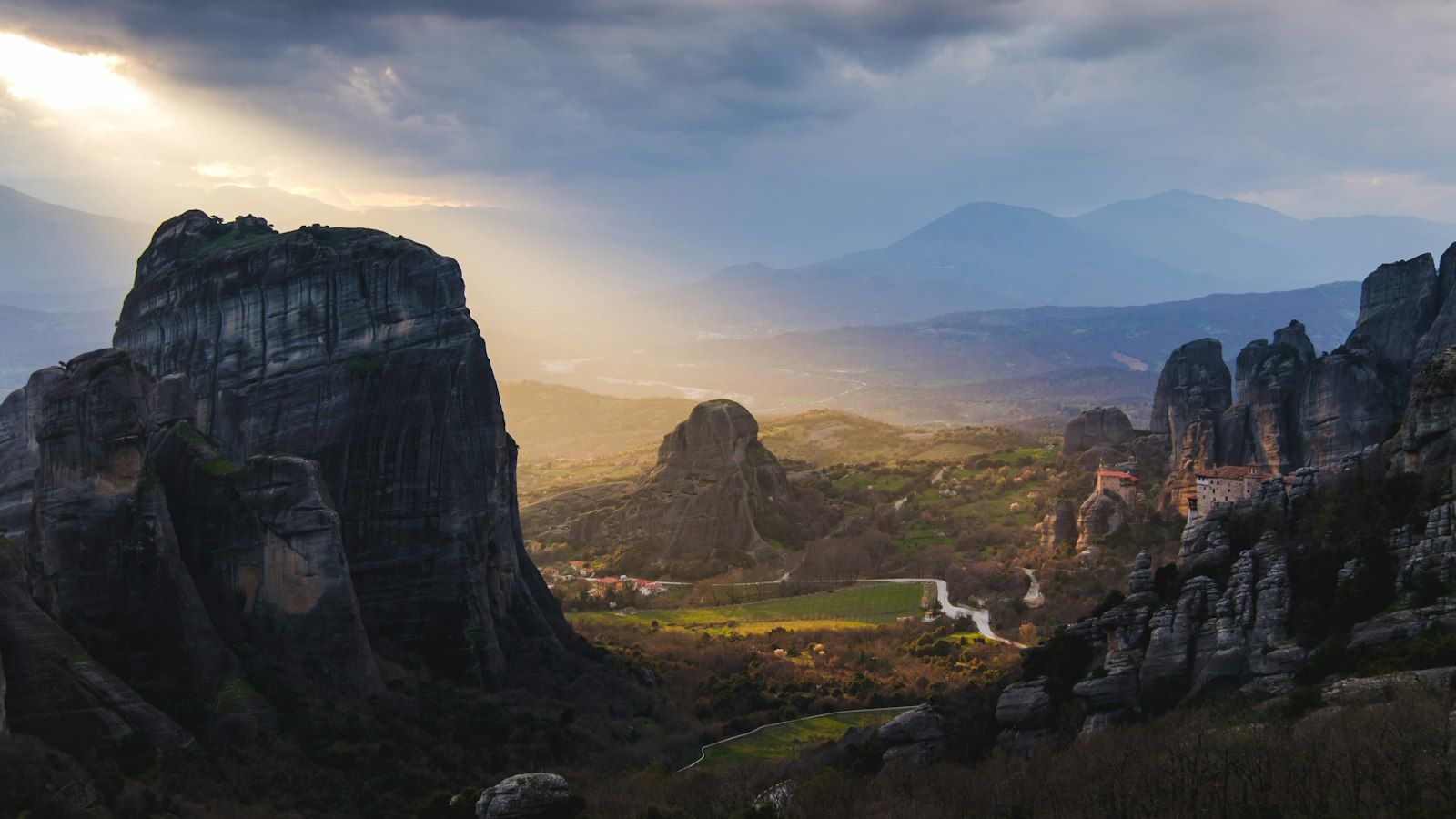
Six working monasteries perched on sandstone pillars above the Thessaly plain, with hermit caves, old footpaths and tsipouro tavernas in the villages below.
- Best time to visit: April to June and September to October
- Daily budget (budget traveller): $60 to $150 USD
- Ideal trip length: 3 to 7 days
Meteora means 'suspended in the air', and the name is accurate. Giant pillars of conglomerate rock rise out of the Thessaly plain, and since the 14th century monks have built monasteries on their summits. There were once more than 20. Six still have monks or nuns living in them and are open to visitors, and the whole area has been a UNESCO World Heritage Site since 1988. Most people see it in a rushed day trip from Athens. A solo traveller who stays longer gets a better version: the old footpaths between the rocks, hermit caves above Kastraki, sunrise without tour coaches, and slow taverna dinners under the cliffs. Kalambaka is the practical base, with the bus station, a hostel, supermarkets and the cheaper rooms. Kastraki, a 2km walk away, is the quieter village right under the pillars. Spring and autumn are best for walking. Each monastery closes on a different day, so plan your route around the timetables. Meteora is safe, cheap by Greek standards and very easy to manage alone.
Meteora is a cluster of conglomerate pillars at the north-western edge of the Thessaly plain, some rising around 400 metres above the valley. Hermits lived in its caves from about the 11th century, and monks built monasteries on the summits from the 14th century. Until the 1920s, visitors were hauled up in rope nets or climbed ladders. Today six monasteries are open to visitors, four run by monks and two by nuns, and each charges €5 in cash. Below them sit two very different bases. Kalambaka is a small, practical town with the bus station, the railway station, the hostel and most of the shops. Kastraki is a village of stone guesthouses and tavernas right under the rocks. Most visitors arrive on a coach from Athens, see two monasteries and leave by 5pm. Stay the night and the place empties out.
The Athens connection has changed. The rail branch from Palaiofarsalos to Kalambaka was wrecked by Storm Daniel in September 2023 and is still closed. The train to Meteora is now a train to Palaiofarsalos plus a Hellenic Train replacement bus via Karditsa and Trikala, about five hours in total. KTEL Trikala coaches from Athens Liosion terminal are the simpler option, with one early direct coach to Kalambaka and others via Trikala. Once you arrive, you need no car. The local Meteora bus, taxis from the main square and a network of old footpaths cover everything. The footpaths are the best way to see the area.
The weekly closing days drive any good itinerary. Great Meteoron closes on Tuesdays, Roussanou on Wednesdays, Holy Trinity on Thursdays, Varlaam on Fridays and St Stephen on Mondays, and winter adds more closures. Spring and autumn bring 15-25°C walking weather, wildflowers or golden light, and long opening hours. July and August are hot and coach-heavy, so be on the trail by 8am. Winter from November is cold, quiet and often misty. Meteora is safe, inexpensive by Greek standards and suits a solo traveller who likes to walk, look and eat well.
Meteora itinerary
Arrive in Kalambaka, first look at the rocks
Morning: Take the early KTEL Trikala coach from Athens Liosion terminal, or the Hellenic Train service to Palaiofarsalos plus the replacement bus. Either way you arrive around midday.
Afternoon: Check in and drop your bags. Withdraw cash for monastery fees. Walk up through the old quarter to the Byzantine Church of the Dormition and its frescoes.
Evening: Walk the 2km to Kastraki as the light drops on the pillars. Order tsipouro and grilled Trikala sausage at Taverna Gardenia, then take a taxi or walk back with a torch.
Great Meteoron and Varlaam
Morning: Pick a day that is not a Tuesday or Friday, and in winter not a Wednesday or Thursday either. Catch the morning Meteora bus from Kalambaka or take a taxi. Be at Great Meteoron when it opens around 9:30 and climb about 300 steps to the museum and courtyard.
Afternoon: Walk five minutes to Varlaam for the frescoes and the rope-net tower. Then take the old footpath down through the rocks to Kastraki, about an hour downhill.
Evening: Recover in Kastraki with spetzofai or lamb at Taverna Meteora Vavitsas. Book a Holy Spirit Rock guide now if you want one.
Holy Trinity on foot and St Stephen
Morning: Not on a Thursday or Monday. Start early from upper Kalambaka on the marked path to Holy Trinity, about an hour uphill. It opens at 10:00, so arrive just as it does.
Afternoon: Follow the road to St Stephen, the convent above Kalambaka with level access. It closes for a long lunch break, so time your visit for the afternoon opening.
Evening: Watch sunset from the rocky viewpoints between Roussanou and Holy Trinity, well back from the edge. Take the bus or a taxi down, or walk with a head torch.
Hermit caves and Roussanou
Morning: From Kastraki, take the Holy Spirit Rock loop past the Monks' Prison cave and the Agios Georgios Mandilas hermitage with its coloured scarves. Go solo with an offline map or with a local guide.
Afternoon: Roussanou, the nuns' convent reached by bridges (closed Wednesdays), and St Nicholas Anapafsas with its 16th-century frescoes. Check its closing day before you go.
Evening: Plastos and a Greek salad back in Kastraki, then coffee on Kalambaka's main square.
Theopetra Cave and a slow afternoon
Morning: Not a Tuesday. Take a taxi the 5km to Theopetra Cave for its 08:30 opening. The €5 ticket covers the cave and the education centre in the village.
Afternoon: Rest through the heat or the rain, do laundry and plan tomorrow's bus. In spring or autumn, consider a guided rock-climbing taster on Meteora's conglomerate.
Evening: Join a small-group sunset tour if you want company, then have dinner at Taverna Gardenia or a Kalambaka grill house.
Day trip to Trikala
Morning: Take the local KTEL bus from Kalambaka to Trikala, about 35-45 minutes and under €3. Walk the old Varousi and Manavika quarters, then climb to the fortress clock tower.
Afternoon: See the Ottoman-era Koursoum Mosque and the restored Matsopoulos Mill. Have lunch at a tsipouradiko near the Lithaios river.
Evening: Coffee or a drink on the riverside, then catch the bus back to Kalambaka. Check the last departure first.
Sunrise walk and departure
Morning: Walk the rock-forest trail from Kastraki at first light past the Pantokrator ruins towards Ypapanti, or revisit any monastery you missed. In autumn and winter the valley often fills with mist.
Afternoon: Late lunch in Kalambaka, then pick up your bags. Take the afternoon KTEL coach or the replacement bus and train back to Athens, and confirm departure times the day before.
Evening: Arrive in Athens late evening. If you have an early flight, book a night near the airport.
Best neighbourhoods
- Kalambaka centre: The working town at the foot of the rocks, with the KTEL bus station, the railway station, a taxi rank on the main square, supermarkets, ATMs and the widest choice of cheap rooms. The Meteora bus stops on the main street.
- Upper Kalambaka: The steep old quarter tucked under the cliffs, around the Byzantine Church of the Dormition. Quieter lanes, stone houses, guesthouses with rock views and the footpath up to Holy Trinity.
- Kastraki: A small village 2km from Kalambaka, directly under the pillars and the Holy Spirit Rock. It has family guesthouses, the best tavernas in the area and trailheads to the monasteries and hermit caves. It is quiet after dark, so it is best with a car or strong legs.
- Trikala: The regional capital, 22km away. It has a riverside café scene, an Ottoman-era old quarter and more nightlife than Kalambaka. It makes a good day trip or an alternative base if you want a livelier city.
Must-do experiences
- Climb to Great Meteoron: The largest and oldest of the six monasteries, founded in the 14th century. Roughly 300 stone steps lead to a museum, an old wine cellar, a monks' ossuary and the best courtyard views in Meteora. Entry is €5 cash, and it closes on Tuesdays.
- See the old winch at Varlaam: A short walk from Great Meteoron. Varlaam has superb frescoes and the tower where monks were once hauled up in rope nets. Entry is €5, and it closes on Fridays, with extra closing days in winter.
- Walk the old path from Kastraki: Skip the road and take the forest footpath that climbs from Kastraki through the rocks towards Varlaam and Great Meteoron. It takes about an hour uphill and is the way people reached the monasteries before cars.
- Hike up to Holy Trinity from Kalambaka: A marked path climbs from upper Kalambaka to Holy Trinity, the monastery from the 1981 Bond film For Your Eyes Only. Allow about an hour, then carry on along the road to St Stephen. Holy Trinity is closed on Thursdays.
- Visit the nuns at Roussanou and St Stephen: Both are convents. Roussanou is reached by small bridges and is the most dramatic monastery to photograph from outside. St Stephen sits right above Kalambaka with level access and closes for a long lunch break.
- Watch sunset over the rock forest: Find a spot on the rocky viewpoints along the main road between Roussanou and Holy Trinity and watch the pillars turn orange. Bring a torch for the walk down and stay well back from unfenced edges.
- Go underground at Theopetra Cave: Just 5km from Kalambaka, this cave shows tens of thousands of years of human occupation. It reopened in 2025 after years of closure and is open 08:30 to 15:30. It closes on Tuesdays, and the €5 ticket also covers the education centre.
Hidden gems
- The Holy Spirit Rock (Agio Pnevma) loop from Kastraki, a marked trail of moderate difficulty past a ruined cave chapel to some of the widest views in Meteora
- The Monks' Prison cave and the Agios Georgios Mandilas hermitage near Kastraki, where villagers still climb the rock each year to hang coloured scarves for the saint
- The Byzantine Church of the Dormition in upper Kalambaka, older than any of the monasteries, with frescoes that tour groups rarely see
- The rock-forest trail from Kastraki past the Pantokrator ruins to the little Ypapanti monastery, built into a cave below Great Meteoron
- Late autumn mornings when mist fills the valley and only the pillar tops show, best seen from Kastraki at dawn
Daily budget
- Accommodation: budget €16-35 / night (hostel dorm or simple guesthouse room), mid-range €70-120 (Kastraki guesthouse with a rock-view balcony), splurge €150-300+ (hotel with pool or spa at Kastraki). Dorm beds at Meteora Central Hostel start around €16-20. Prices jump at Easter and in August and fall sharply in winter. Many guesthouses include breakfast. Greece adds a small per-night climate resilience fee, so check whether it is included.
- Food: budget €20-30 / day (bakery pies, gyros at €4-5, one taverna meal), mid-range €40-60 (taverna lunch and dinner with wine), splurge €80+ (long multi-course dinners, bottles of Greek wine). Taverna mains are usually €9-16. Portions are generous, so order meze and share with the table if you meet people. Kalambaka supermarkets are cheaper than Kastraki's small grocery.
- Transport: budget €2-6 / day (Meteora bus €2, day ticket €5.50), mid-range €15-30 (a couple of taxis up to the monasteries), splurge €45-80 (car hire or a private driver). Athens to Kalambaka by KTEL is about €32-35 one way, and the train plus replacement bus costs about the same. Trikala is under €3 on the local KTEL. Bus fares were last confirmed in late 2025, so check current prices.
- Activities: budget €10-20 / day (two to four monasteries at €5 each), mid-range €30-60 (guided hike or sunset tour), splurge €100+ (private guide, rock-climbing taster day). All six monasteries cost €30 in total, paid in cash at each door. Theopetra Cave is €5, or €3 reduced. Self-guided footpaths are free and marked.
- Drinks & nightlife: budget €5-10 (a carafe of tsipouro with meze, or a beer), mid-range €15-30 (wine with dinner, a cocktail in Kalambaka), splurge €40+ (Greek wine bottles, bar-hopping in Trikala). Nightlife in Meteora means a long dinner and a café-bar on Kalambaka's main street. For actual bars, go to Trikala, which has a busy riverside café and bar scene.
Where to stay
- Social hostel in Kalambaka centre (€16-25 / night (dorm), from about €25-45 (private)): Meteora Central Hostel on Trikalon street is the best-rated hostel in town. It has small dorms including a female dorm, a shared kitchen and lounge, and friendly owners who help with bus times. The Meteora bus stops across the road.
- Boutique hotel in Upper Kastraki (€80-130 / night): Doupiani House sits at the top of the village with rock views from almost every room and breakfast on the terrace. Footpaths start nearby and the tavernas are a short walk down.
- Apartment in Upper Kalambaka or Kastraki (€45-80 / night): Family-run studios with kitchenettes are common on the main booking sites. Cook breakfast and lunch with supermarket supplies from Kalambaka and save the taverna for dinner. Ask for a Meteora-view balcony.
- Splurge in Kastraki (€150-300+ / night): Meteora Hotel at Kastraki sits high on the hillside with a pool and panoramic views, and Grand Meteora Hotel adds a spa. Both are good for a summer stay or a cold winter weekend.
What to eat
- Tsipouro with meze: the Thessaly way to drink, with a small carafe of grape spirit and a plate of small dishes, best on a Kastraki taverna terrace at sunset
- Trikala sausage: the region's leek-flecked pork loukaniko, grilled over charcoal and served with lemon, found on almost every taverna menu
- Plastos: a Thessalian cornmeal pie layered with wild greens and feta, sold at bakeries and served in family tavernas
- Spetzofai: a rustic stew of country sausage and peppers in tomato sauce, perfect after a cold winter hike
- Kontosouvli and lamb from the spit: large chunks of pork or lamb slow-roasted on a skewer, a taverna staple at weekends and around Easter
- Taverna Gardenia and Taverna Meteora Vavitsas in Kastraki: two long-standing family tavernas where solo diners get a table with a rock view without fuss
- Bougatsa or galaktoboureko for breakfast: custard or cheese pastry from a Kalambaka bakery, with a Greek coffee
Day trips
- Trikala (22km, 35-45 minutes by bus from Kalambaka): A relaxed regional capital split by the Lithaios river. Walk the old Varousi and Manavika quarters, climb to the fortress and clock tower, see the Ottoman-era Koursoum Mosque and the restored Matsopoulos Mill. The mill hosts a popular Christmas park in December. Riverside tsipouradika make it the best night out near Meteora. Local KTEL Trikala buses run roughly hourly from Kalambaka bus station, under €3 each way. Check the last bus back before you settle in for dinner.
- Theopetra Cave (5km south-east of Kalambaka): A limestone cave with one of the longest records of human life in Greece, reopened to visitors in 2025 after a long closure. The visit pairs the cave with a small education centre in the village and takes 60-90 minutes. Taxi from Kalambaka main square is easiest (agree a return fare with waiting time), or cycle. Open 08:30 to 15:30, closed Tuesdays, €5 or €3 reduced.
- Metsovo (About an hour west by road over the Pindus mountains): A stone mountain town known for its smoked cheese, wood-carved balconies, the Averoff art gallery and a local winery. It is cool in summer and snowy in winter, a complete change from the Thessaly plain. KTEL buses on the Kalambaka to Ioannina route stop at Metsovo, but there are only a few departures a day, so check the timetable at Kalambaka bus station. With a hire car it makes an easy half-day trip.
When to visit
- Spring (April - May): 14-26°C, fresh mornings, wildflowers, the odd shower. Crowds: Moderate, with a big spike around Orthodox Easter. The best hiking weather and the summer monastery timetable. Book Easter week early, when Greek visitors fill Kalambaka.
- Summer (June - August): 28-36°C, dry and hot in the valley, cooler on the rocks at dawn. Crowds: Heavy, with tour coaches from mid-morning to mid-afternoon. June is still lovely. July and August mean early starts, a long midday break and sunset walks. Carry plenty of water.
- Autumn (September - October): 15-28°C, settled, golden light, rain building late October. Crowds: Moderate in September, easing through October. Our top pick for walkers and climbers. The trails are dry, the evenings are on taverna terraces and the summer timetable runs to 31 October.
- Winter (November - March): 0-12°C, fog and frost, occasional snow on the pillars. Crowds: Low, busier at weekends and over Christmas. Atmospheric and cheap, with mist between the rocks. Shorter hours and extra closing days apply, the local bus runs less often, and it is dark by about 5pm.
Entry rules for your passport
Visa rules for Greece depend on the passport you travel on. Check the official source before you book: European Commission: Schengen visa policy
Getting there
Meteora sits above Kalambaka in western Thessaly, about 350km by road from Athens and 230km from Thessaloniki. Athens (ATH) and Thessaloniki (SKG) airports have the most flights. Ioannina (IOA) and Volos (VOL) are closer but have far fewer routes. By rail, the Palaiofarsalos to Kalambaka branch has been closed since Storm Daniel in September 2023. Hellenic Train runs trains from Athens to Palaiofarsalos with a connecting rail-replacement bus via Karditsa and Trikala, about five hours in total. Reopening of the line has been promised, so check hellenictrain.gr. By bus, KTEL Trikala coaches leave Athens Liosion terminal. Recent timetables show one early-morning coach running straight through to Kalambaka, Monday to Saturday, with an afternoon return. Other departures stop at Trikala, where frequent local buses cover the last 22km. Expect about €32-35 one way and 4.5 to 5.5 hours. From Thessaloniki, KTEL Makedonias buses run to Trikala in about 2.5 hours, with some continuing to Kalambaka. Driving from Athens takes about four hours on the A1/E65. Greece is in Schengen. The EU Entry/Exit System has recorded fingerprints and a face scan for non-EU visitors since April 2026, and ETIAS is expected to launch in late 2026, so check official EU sources before you fly.
Border checks: non-EU visitors (other than Swiss, Norwegian, Icelandic, Liechtenstein, Andorran, Monegasque, San Marinese and Vatican citizens, and holders of an EU residence permit or long-stay visa) are registered in the EU's Entry/Exit System (EES) instead of getting a passport stamp. On your first crossing, officers take your photo and/or fingerprints, so allow extra time at passport control. ETIAS, the planned travel authorisation, is not in operation yet, so don't pay any website for one.
Getting around
Kalambaka and Kastraki are 2km apart and easy to walk between. The monasteries sit along a winding road that climbs above both. KTEL Trikala runs a local Meteora bus from Kalambaka bus station via the main square and Kastraki to all six monasteries. A single was €2 in late 2025, and a day ticket was €5.50. It only runs a few times a day, usually more often in summer, and timetables are not reliably online, so ask at the bus station. Taxis wait on the central square in Kalambaka. Expect roughly €12 to €20 to the top monasteries and agree the fare first. Footpaths are often the best option. Marked trails link Kastraki with Varlaam and Great Meteoron, and upper Kalambaka with Holy Trinity. A hire car helps if you want sunrise at the top, but the monastery car parks fill up with coaches by mid-morning in summer. Trikala is about 35 to 45 minutes away by the frequent KTEL bus.
Safety
Meteora is very safe for solo travellers, and crime against visitors is rare. The main risks are physical. Many viewpoints are bare rock with no railings and sheer drops, and the sandstone gets slippery after rain or frost, so keep well back from edges, especially at sunset when everyone is looking at the view. Trails are mostly well marked but rocky, so wear proper shoes, carry water and tell your accommodation where you are going. In winter it gets dark early and fog can roll in fast, so start hikes early and carry a torch. The monastery road is narrow and busy with coaches, so walk facing traffic and use the footpaths where you can. Summer afternoons can pass 35°C. Stray dogs are common but usually harmless. Do not fly drones near the monasteries without checking current rules and asking permission. The emergency number is 112.
Solo travel tips
- Plan around the closing days, not the map: The six monasteries each close on a different weekday, and winter adds more. Write the week out before you arrive. Use Monday and Wednesday for Great Meteoron and Varlaam if you can, and save the weekend for flexibility, when all six are usually open.
- Carry €5 notes and coins: Each monastery charges €5 in cash at the door, and the ticket desks do not like breaking €50 notes first thing in the morning. Get cash in Kalambaka, where the ATMs are.
- Walk the old footpaths: Most visitors never leave the road. The paths from Kastraki to Varlaam and from upper Kalambaka to Holy Trinity are shaded, quiet and faster than waiting for the bus. Download an offline map first, because signal drops between the rocks.
- Stay where your transport is: Without a car, base yourself in Kalambaka near the bus station and the Meteora bus stop on the main street. With a car or strong legs, Kastraki's guesthouses give you the rocks at breakfast and better tavernas.
- Safety for solo travellers: Meteora is very safe, including for women alone. The real dangers are the unfenced cliff edges, slippery rock after rain and summer heat. Stay back from drops, start walks early, carry water and a torch, and tell your host where you are hiking.
- Meet people on the trail: Meteora Central Hostel's shared kitchen, small-group sunset tours and guided Holy Spirit Rock hikes are the easiest ways to meet other solo travellers. A tsipouro carafe on a Kastraki terrace tends to lead to a shared table.
Cultural etiquette
- Dress for a place of worship: shoulders covered, long trousers for men, and a below-the-knee skirt for women (wraps are usually lent at the door). Bring your own scarf to skip the queue.
- These are working monasteries. Keep your voice down, do not photograph inside the churches, do not touch the icons, and ask before photographing monks or nuns.
- Greet people with 'Kaliméra' (good morning) or 'Kalispéra' (good evening). 'Efcharistó' (thank you) is always appreciated, even though English is widely spoken.
- Opening hours change for religious holidays and services, and Orthodox Easter is a major event. Expect crowds, processions and some changed schedules that week.
- Greeks eat late: lunch around 2pm, dinner from 8:30 or 9pm. Tavernas happily serve early solo diners, but they will be empty.
- Tsipouro is sipped slowly with food, not shot. If someone at the next table sends one over, a raised glass and 'Giamas' (cheers) is the right reply.
- Do not leave litter on the trails, carve the rock or climb near monastery walls. Climbing is popular, but some rocks and areas are off-limits for religious and safety reasons.
Frequently asked questions
How do I get from Athens to Meteora?
There is no direct train. The Palaiofarsalos to Kalambaka line has been closed since Storm Daniel in 2023. Hellenic Train runs trains from Athens to Palaiofarsalos and a rail-replacement bus on to Kalambaka, about five hours in total. KTEL Trikala coaches leave Athens Liosion terminal. One early-morning coach goes straight to Kalambaka, and the rest need a change at Trikala. Expect around €32 to €35 one way. Driving takes about four hours.
How many days do I need in Meteora?
Two full days cover the main monasteries. Three to four days let you hike the old footpaths and the Holy Spirit Rock loop, work around the closing days and add Theopetra Cave. A week suits slow travellers who want day trips to Trikala and Metsovo as well.
How much does it cost to enter the monasteries, and are they open every day?
In 2026 each monastery charges €5 per person, paid in cash at the door, and children up to 12 enter free. Each monastery closes on a different day: Great Meteoron on Tuesdays, Roussanou on Wednesdays, Holy Trinity on Thursdays, Varlaam on Fridays and St Stephen on Mondays. Winter hours from November to March are shorter, with extra closing days. Check current timetables before you go.
What should I wear to visit the monasteries?
Cover your shoulders. Men need long trousers, and women are traditionally expected to wear a skirt below the knee. Wraps are usually available at the entrance, but bringing your own is easier. Avoid short shorts and strappy tops, and wear grippy shoes for the steps.
Should I stay in Kalambaka or Kastraki?
Stay in Kalambaka if you are arriving by bus or train with no car. It has the bus station, the hostel, supermarkets and more restaurants. Stay in Kastraki if you want the rocks outside your window, quiet evenings and trailheads at your door. The two are a 2km walk apart.
Is Meteora safe for solo female travellers?
Yes. Meteora is considered very safe, and solo women hike, stay and eat out here alone without trouble. The usual precautions apply: tell someone your hiking route, avoid isolated trails after dark and keep to marked paths. The bigger risks are unfenced cliff edges and summer heat.
Can I visit Meteora in winter?
Yes, and it can be magical, with fog between the pillars, occasional snow and far fewer coaches. Monasteries keep shorter winter hours and some close for two or three days a week, the Meteora bus runs less often, and nights drop close to freezing. Trikala's Christmas park at the Matsopoulos Mill is a seasonal bonus in December.
What entry rules apply to travellers visiting Greece in 2026?
Greece is in the Schengen Area. Since the EU Entry/Exit System became fully operational in April 2026, non-EU visitors have their fingerprints and a facial image recorded at their first Schengen border crossing instead of getting a passport stamp. ETIAS, a paid online travel authorisation for visa-exempt visitors, has been expected in late 2026 but had not launched by early November 2026. Visa-exempt visitors can usually stay up to 90 days in any 180. Rules change, so confirm on the official EU travel site (travel-europe.europa.eu), the Greek Ministry of Foreign Affairs and your own government's travel advice before you book.
Tours and activities in Meteora | Meteora in 2 days | Meteora in 3 days | Meteora in 4 days | Meteora in 5 days | Meteora in 7 days
Joy Plus home | Destinations | Itineraries | Activities | Flights | Budget planner | Calendar | Map | Blog | Lifetime access