Meteora in 7 days
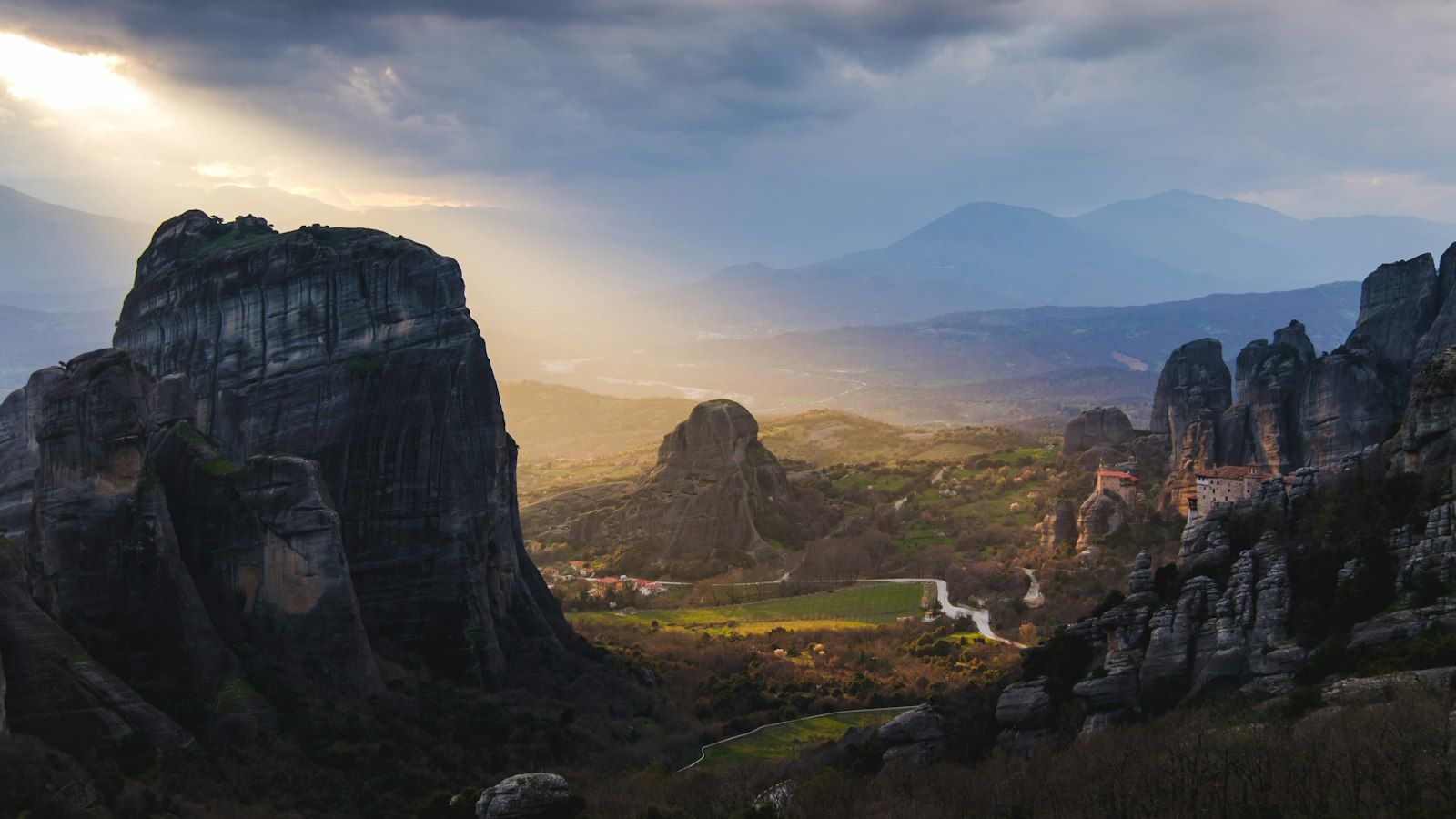
Six working monasteries perched on sandstone pillars above the Thessaly plain, with hermit caves, old footpaths and tsipouro tavernas in the villages below. Best time to visit: April to June and September to October. Daily budget (budget traveller): $60 to $150 USD.
Arrive in Kalambaka, first look at the rocks
Morning: Take the early KTEL Trikala coach from Athens Liosion terminal, or the Hellenic Train service to Palaiofarsalos plus the replacement bus. Either way you arrive around midday.
Afternoon: Check in and drop your bags. Withdraw cash for monastery fees. Walk up through the old quarter to the Byzantine Church of the Dormition and its frescoes.
Evening: Walk the 2km to Kastraki as the light drops on the pillars. Order tsipouro and grilled Trikala sausage at Taverna Gardenia, then take a taxi or walk back with a torch.
Great Meteoron and Varlaam
Morning: Pick a day that is not a Tuesday or Friday, and in winter not a Wednesday or Thursday either. Catch the morning Meteora bus from Kalambaka or take a taxi. Be at Great Meteoron when it opens around 9:30 and climb about 300 steps to the museum and courtyard.
Afternoon: Walk five minutes to Varlaam for the frescoes and the rope-net tower. Then take the old footpath down through the rocks to Kastraki, about an hour downhill.
Evening: Recover in Kastraki with spetzofai or lamb at Taverna Meteora Vavitsas. Book a Holy Spirit Rock guide now if you want one.
Holy Trinity on foot and St Stephen
Morning: Not on a Thursday or Monday. Start early from upper Kalambaka on the marked path to Holy Trinity, about an hour uphill. It opens at 10:00, so arrive just as it does.
Afternoon: Follow the road to St Stephen, the convent above Kalambaka with level access. It closes for a long lunch break, so time your visit for the afternoon opening.
Evening: Watch sunset from the rocky viewpoints between Roussanou and Holy Trinity, well back from the edge. Take the bus or a taxi down, or walk with a head torch.
Hermit caves and Roussanou
Morning: From Kastraki, take the Holy Spirit Rock loop past the Monks' Prison cave and the Agios Georgios Mandilas hermitage with its coloured scarves. Go solo with an offline map or with a local guide.
Afternoon: Roussanou, the nuns' convent reached by bridges (closed Wednesdays), and St Nicholas Anapafsas with its 16th-century frescoes. Check its closing day before you go.
Evening: Plastos and a Greek salad back in Kastraki, then coffee on Kalambaka's main square.
Theopetra Cave and a slow afternoon
Morning: Not a Tuesday. Take a taxi the 5km to Theopetra Cave for its 08:30 opening. The €5 ticket covers the cave and the education centre in the village.
Afternoon: Rest through the heat or the rain, do laundry and plan tomorrow's bus. In spring or autumn, consider a guided rock-climbing taster on Meteora's conglomerate.
Evening: Join a small-group sunset tour if you want company, then have dinner at Taverna Gardenia or a Kalambaka grill house.
Day trip to Trikala
Morning: Take the local KTEL bus from Kalambaka to Trikala, about 35-45 minutes and under €3. Walk the old Varousi and Manavika quarters, then climb to the fortress clock tower.
Afternoon: See the Ottoman-era Koursoum Mosque and the restored Matsopoulos Mill. Have lunch at a tsipouradiko near the Lithaios river.
Evening: Coffee or a drink on the riverside, then catch the bus back to Kalambaka. Check the last departure first.
Sunrise walk and departure
Morning: Walk the rock-forest trail from Kastraki at first light past the Pantokrator ruins towards Ypapanti, or revisit any monastery you missed. In autumn and winter the valley often fills with mist.
Afternoon: Late lunch in Kalambaka, then pick up your bags. Take the afternoon KTEL coach or the replacement bus and train back to Athens, and confirm departure times the day before.
Evening: Arrive in Athens late evening. If you have an early flight, book a night near the airport.
What to eat in Meteora
- Tsipouro with meze: the Thessaly way to drink, with a small carafe of grape spirit and a plate of small dishes, best on a Kastraki taverna terrace at sunset
- Trikala sausage: the region's leek-flecked pork loukaniko, grilled over charcoal and served with lemon, found on almost every taverna menu
- Plastos: a Thessalian cornmeal pie layered with wild greens and feta, sold at bakeries and served in family tavernas
- Spetzofai: a rustic stew of country sausage and peppers in tomato sauce, perfect after a cold winter hike
- Kontosouvli and lamb from the spit: large chunks of pork or lamb slow-roasted on a skewer, a taverna staple at weekends and around Easter
- Taverna Gardenia and Taverna Meteora Vavitsas in Kastraki: two long-standing family tavernas where solo diners get a table with a rock view without fuss
- Bougatsa or galaktoboureko for breakfast: custard or cheese pastry from a Kalambaka bakery, with a Greek coffee
Hidden gems
- The Holy Spirit Rock (Agio Pnevma) loop from Kastraki, a marked trail of moderate difficulty past a ruined cave chapel to some of the widest views in Meteora
- The Monks' Prison cave and the Agios Georgios Mandilas hermitage near Kastraki, where villagers still climb the rock each year to hang coloured scarves for the saint
- The Byzantine Church of the Dormition in upper Kalambaka, older than any of the monasteries, with frescoes that tour groups rarely see
- The rock-forest trail from Kastraki past the Pantokrator ruins to the little Ypapanti monastery, built into a cave below Great Meteoron
- Late autumn mornings when mist fills the valley and only the pillar tops show, best seen from Kastraki at dawn
Getting around
Kalambaka and Kastraki are 2km apart and easy to walk between. The monasteries sit along a winding road that climbs above both. KTEL Trikala runs a local Meteora bus from Kalambaka bus station via the main square and Kastraki to all six monasteries. A single was €2 in late 2025, and a day ticket was €5.50. It only runs a few times a day, usually more often in summer, and timetables are not reliably online, so ask at the bus station. Taxis wait on the central square in Kalambaka. Expect roughly €12 to €20 to the top monasteries and agree the fare first. Footpaths are often the best option. Marked trails link Kastraki with Varlaam and Great Meteoron, and upper Kalambaka with Holy Trinity. A hire car helps if you want sunrise at the top, but the monastery car parks fill up with coaches by mid-morning in summer. Trikala is about 35 to 45 minutes away by the frequent KTEL bus.
Safety
Meteora is very safe for solo travellers, and crime against visitors is rare. The main risks are physical. Many viewpoints are bare rock with no railings and sheer drops, and the sandstone gets slippery after rain or frost, so keep well back from edges, especially at sunset when everyone is looking at the view. Trails are mostly well marked but rocky, so wear proper shoes, carry water and tell your accommodation where you are going. In winter it gets dark early and fog can roll in fast, so start hikes early and carry a torch. The monastery road is narrow and busy with coaches, so walk facing traffic and use the footpaths where you can. Summer afternoons can pass 35°C. Stray dogs are common but usually harmless. Do not fly drones near the monasteries without checking current rules and asking permission. The emergency number is 112.
Frequently asked questions
What does this 7-day Meteora itinerary cover?
Day 1: Arrive in Kalambaka, first look at the rocks. Day 2: Great Meteoron and Varlaam. Day 3: Holy Trinity on foot and St Stephen. Day 4: Hermit caves and Roussanou. Day 5: Theopetra Cave and a slow afternoon. Day 6: Day trip to Trikala. Day 7: Sunrise walk and departure.
Is 7 days enough for Meteora?
Our recommended trip length for Meteora is 3 to 7 days. This 7-day plan focuses on the highlights and groups sights by area so you spend less time travelling between them.
How much does 7 days in Meteora cost?
A budget traveller spends about $60 to $150 USD a day in Meteora, so roughly $420 to $1,050 USD for 7 days, not counting flights.
Where should I stay for 7 days in Meteora?
Kalambaka centre: The working town at the foot of the rocks, with the KTEL bus station, the railway station, a taxi rank on the main square, supermarkets, ATMs and the widest choice of cheap rooms. Upper Kalambaka: The steep old quarter tucked under the cliffs, around the Byzantine Church of the Dormition.
When is the best time to visit Meteora?
The best time to visit Meteora is April to June and September to October.
How do I get around Meteora?
Kalambaka and Kastraki are 2km apart and easy to walk between. The monasteries sit along a winding road that climbs above both.
Is Meteora safe for solo travellers?
Meteora is very safe for solo travellers, and crime against visitors is rare. The main risks are physical.
More 7-day guides
- Chania in 7 days
- Monemvasia in 7 days
- Folegandros in 7 days
- Hydra in 7 days
- Kefalonia in 7 days
- Milos in 7 days
- Rethymno in 7 days
- Lefkada in 7 days
Meteora in 2 days | Meteora in 3 days | Meteora in 4 days | Meteora in 5 days | Full Meteora guide
Joy Plus home | Destinations | Itineraries | Activities | Flights | Budget planner | Calendar | Map | Blog | Lifetime access