Destinations / Europe
Milos, Greece travel guide
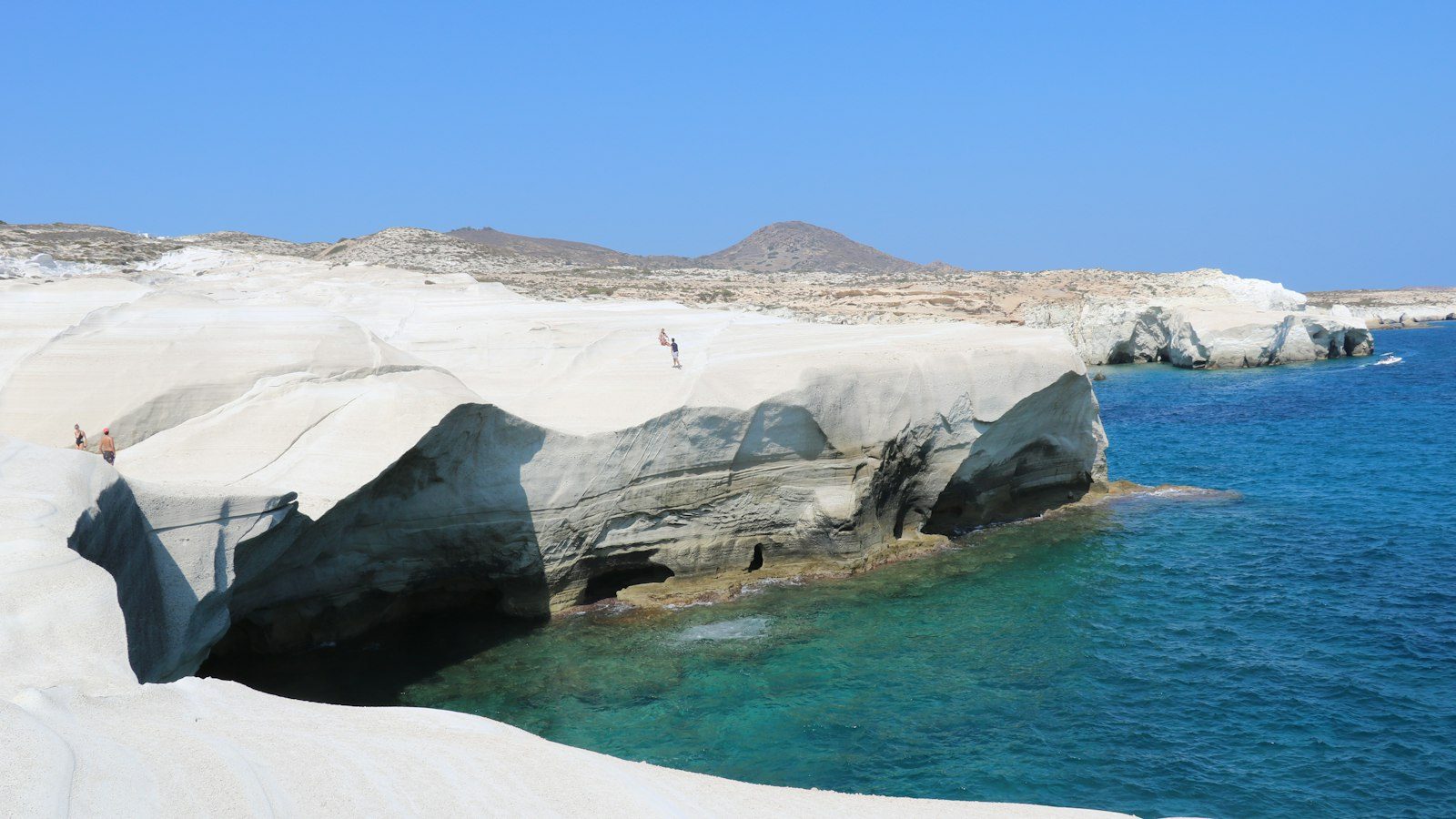
A volcanic island in the western Cyclades with more than 70 beaches. You swim off white moon-like rocks at Sarakiniko, take a boat to the sea caves at Kleftiko and watch the sun set from the castle above Plaka.
- Best time to visit: June and September
- Daily budget (budget traveller): $80 to $260 USD
- Ideal trip length: 4 to 7 days
Milos is a horseshoe-shaped volcanic island in the western Cyclades, about halfway between Athens and Crete. The fastest boats from Piraeus take around two and a half hours, and short flights from Athens take under an hour. Most people know it as the island where the Venus de Milo was found in 1820. Today they come for the coastline. Millions of years of volcanic activity left white, red, yellow and grey rock, and the sea around it is very clear. Sarakiniko looks like the surface of the moon, Kleftiko's arches and caves can only be reached by boat, and fishing hamlets such as Klima have brightly painted boathouses built right at the water's edge. The island is bigger and more spread out than it looks. Buses link the port at Adamas with Plaka, Pollonia and a few beaches, but many of the best coves are at the end of dirt roads. In July and August, Milos is busy and expensive, and the meltemi wind can stop boat trips. In June or September, with a simple room, a bus timetable and a day on a boat, it is one of the best Greek islands for a solo traveller who cares more about swimming than nightlife.
Milos is the most dramatic island in the western Cyclades. It is a volcanic horseshoe around a huge natural harbour, with about 5,000 people living mostly in Adamas, Plaka and the villages in between. Its history is written in rock. Obsidian from Milos was traded around the Aegean thousands of years ago, prehistoric Fylakopi was one of the great Bronze Age towns, and miners still dig bentonite and perlite here today. In 1820, a farmer near Trypiti found the statue now known as the Venus de Milo, which ended up in the Louvre. Most visitors stay only a few days, rushing between Sarakiniko and a boat trip. Stay longer and you get the better version: an early swim at Firopotamos, a slow lunch in Pollonia, sunset from Plaka and a ferry to sleepy Kimolos. It is not a cheap island, but rooms to let, bakery breakfasts and free beaches keep costs reasonable.
Getting here is simple, though times change with the seasons. Ferries from Piraeus run every day of the year, with up to six a day in summer and one or two in winter. High-speed boats take around 2.5 to 3.5 hours, and slower ferries take up to 7 hours but cost much less. Short flights from Athens land 5km from Adamas. Once you are here, decide how you will get around. If you will rely on buses, stay in Adamas, where every route starts. For village evenings, choose Plaka or Triovasalos. For a slower, seaside feel, choose Pollonia. Hire a car or scooter for a day or two to reach the south coast and the remote coves.
Timing shapes the trip. June and September bring warm seas, working buses and boats, and fewer people. July and August are hot and busy, rooms are at their most expensive, and the meltemi wind can whip up the north coast and cancel boat trips. From November to March, Milos is very quiet. Many places close and ferries are less frequent, but it is good for walking. The island is very safe and English is widely spoken. The evenings are about tavernas and sunsets rather than clubs. If you want big nightlife, go to Ios or Mykonos. If you want clear water, strange rocks and a plate of grilled octopus by the sea, stay here.
Milos itinerary
Arrive and find your feet
Morning: Take a morning ferry from Piraeus or a flight from Athens. Drop your bag in Adamas and have a coffee on the harbour.
Afternoon: Swim at Papikinou, the town beach a short walk east of the port, and pick up a bus timetable from the main square.
Evening: Take the bus up to Plaka, climb to the Kastro for sunset and have dinner in the lanes.
Sarakiniko and the north coast
Morning: Get to Sarakiniko early by bus or scooter, before the rock heats up. Swim in the inlet and explore the gullies.
Afternoon: Continue to Mandrakia for lunch at Medusa, then Papafragas and the ruins of Fylakopi on the way to Pollonia.
Evening: Watch the sun go down over Pollonia's harbour and eat grilled fish by the water.
Kleftiko by boat
Morning: Join a boat trip from Adamas or a smaller boat from Kipos (roughly €35-160, depending on the trip). Bring a towel, sunscreen and cash.
Afternoon: Swim through the arches and caves at Kleftiko and stop at Sykia or Gerontas if your trip includes them.
Evening: Back in Adamas, a simple taverna dinner and an early night.
Plaka, Klima and the Catacombs
Morning: Visit the Archaeological Museum in Plaka (€5) when it opens at 8:30, then walk down through Trypiti to the Catacombs (closed Tuesdays).
Afternoon: See the ancient theatre and the Venus de Milo discovery spot, then go down to Klima for a swim and a drink by the boathouses.
Evening: Watch sunset from the terraces in Trypiti, which are quieter than the Kastro, and eat pitarakia in Plaka.
South coast beaches
Morning: Hire a car or scooter and drive to Firiplaka for its red and white cliffs. Go early to get a spot.
Afternoon: Look in at Tsigrado if the access is open, then go on to Paliochori for warm volcanic water and lunch on the beach.
Evening: Drive back via Provatas for a last swim, then return the scooter or keep it for tomorrow.
A day on Kimolos
Morning: Take the small ferry from Pollonia to Kimolos (about 20 to 30 minutes). Walk up from the port at Psathi to the old village of Chorio.
Afternoon: Have lunch in the village, then walk or take a taxi boat to a quiet beach such as Prassa. Check the last ferry back.
Evening: Back in Pollonia for a sunset drink before returning to your base.
Slow morning and depart
Morning: Have a last early swim at Firopotamos or Sarakiniko and a bakery breakfast.
Afternoon: Buy pitarakia or local honey to take home, then catch your ferry or flight. Check times the day before, as they can change.
Evening: Arrive in Athens, or carry on to Sifnos or another island.
Best neighbourhoods
- Adamas: The port town and the island's transport hub. Every bus starts from the main square here, most boat trips leave from the harbour and there are supermarkets, car hire desks and plenty of tavernas along the seafront. It is not the prettiest village, but it is the easiest base if you are not driving.
- Plaka and Trypiti: The hilltop capital and its neighbour, with whitewashed lanes, the Kastro at the top and the Archaeological Museum. Trypiti runs down towards the Catacombs, the ancient theatre and Klima. It is lovely in the evening and quieter at night, and buses to Adamas take about 15 minutes.
- Pollonia: A small fishing village on the north-east tip, about 20 minutes' drive from Adamas. It has a sheltered sandy beach, good fish tavernas and the small ferry to Kimolos. It feels relaxed and sociable, but buses are less frequent, so a scooter or car helps.
- Triovasalos: A working village just below Plaka, joined to it along the main road. Rooms are cheaper here, there are bakeries and local cafés, and the Plaka bus passes through. It is a good compromise if you want village life without Plaka prices.
- Provatas and the south coast: A long sandy beach on the south coast, with a few hotels and apartments behind it. The south is sheltered when the north wind blows, and Firiplaka, Tsigrado and Paliochori are nearby. In summer a bus runs from Adamas, but you really need your own wheels here.
Must-do experiences
- Swim at Sarakiniko: The white volcanic rock here has been worn into smooth waves and gullies around a narrow inlet of turquoise water. It is free and has no facilities, so bring water and shade. Go early in the morning or near sunset, when the rock is cooler and the crowds thinner.
- Take a boat to Kleftiko: The old pirate hideout on the south-west coast has white cliffs, arches and caves you can swim through. It can only be reached by boat. Simple half-day trips start at roughly €35-80, and full-day trips with lunch cost about €100-160. Book a day or two ahead and keep a spare day in case the wind cancels it.
- Watch sunset from the Kastro: Climb through Plaka's lanes to the site of the old Venetian castle at the top of the village, past the church of Panagia Thalassitra. The view takes in the whole bay and the west of the island. It is free, but arrive early in summer because it fills up fast.
- See the boathouses at Klima: Klima is a row of fishermen's houses built into the rock, with the boat garage below and living space above. The doors and balconies are painted bright colours. Walk down from Trypiti, have a drink by the water and look out for the small swim spots at the end of the row.
- Visit the Catacombs and the ancient theatre: The early Christian Catacombs below Trypiti are among the most important outside Rome. Visits are short guided tours, they close on Tuesdays and recent visitors report paying around €10. Walk on to the Roman theatre above the sea and the spot where the Venus de Milo was found.
- Learn the island's story in Plaka: The Archaeological Museum is in a neoclassical building at the entrance to Plaka, with finds from prehistoric Fylakopi and a replica of the Venus de Milo. Entry is €5, and it opens 8:30 to 15:30, closed on Tuesdays in summer. It takes under an hour.
- Explore the north coast coves: Between Sarakiniko and Pollonia, the coast is full of small surprises: the colourful hamlet of Mandrakia, the rock tunnel at Papafragas and the ruins of ancient Fylakopi. The Pollonia bus passes close to several of them, or you can hire a scooter for the day.
Hidden gems
- Firopotamos, a tiny cove below Plaka with a whitewashed chapel, old boathouses and calm, clear water that is perfect for an early swim
- The abandoned sulphur mines at Paliorema on the east coast, with rusting buildings and yellow-stained rock above a quiet bay, reached by a dirt track
- The terraces of Trypiti at sunset, which are calmer than the Kastro and look straight down over the Klima bay
- Mandrakia early in the morning, when the boathouses are empty and the fishermen are mending nets
- The Milos Mining Museum in Adamas, a small, overlooked museum that explains how the island's volcanic minerals shaped its economy
Daily budget
- Accommodation: budget €20-70 / night (campsite or simple room to let), mid-range €100-180 (studio or 3-star hotel), splurge €350+ (boutique suite or 5-star resort). Prices roughly double in July and August. A per-room Climate Resilience Fee is added on top, from €2 a night for rooms to let up to €15 at 5-star hotels from April to October. Milos has almost no hostels.
- Food: budget €20-30 / day (bakery breakfast, gyros, supermarket picnic), mid-range €45-70 (café lunch and a taverna dinner), splurge €100+ (fish by the kilo, wine, dessert). A gyros pitta costs about €4-5 and taverna mains roughly €14-25. Fish is priced per kilo, so ask first. Prices are rough guides.
- Transport: budget €4-8 / day (KTEL buses), mid-range €40-80 (small car or scooter hire for a day), splurge €75-90 (high-speed ferry each way). Bus fares are about €2, cash on board. Conventional ferries from Piraeus start at around €33-45. Fuel is extra on hired cars and quads.
- Activities: budget €0-10 / day (free beaches, Kastro, Archaeological Museum at €5), mid-range €35-80 (small-boat Kleftiko trip, Catacombs), splurge €100-160+ (full-day sailing trip with lunch). The museum is €5 and closed on Tuesdays in summer. Recent visitors report paying around €10 for the Catacombs. Boat prices vary widely, so compare what is included.
- Drinks & nightlife: budget €5-10 (a beer or local wine at a taverna), mid-range €20-35 (sunset drinks in Plaka or Pollonia), splurge €60+ (cocktails at a sunset bar). A freddo espresso costs about €3.50-5 and a glass of wine €5-8. Nightlife is low-key, mostly bars in Adamas and Plaka.
Where to stay
- Budget stay in Achivadolimni and Adamas (€20-70 / night): Milos has almost no hostels. The cheapest beds are at the campsite at Achivadolimni, with tents and simple bungalows near the beach, or in family-run rooms to let in the back streets of Adamas, close to the buses.
- Boutique hotel in Plaka and Trypiti (€150-300 / night): Small hotels and suites in restored Cycladic houses put you in the prettiest village, with sunset views over the bay. Evenings are lovely, and the bus to Adamas takes about 15 minutes.
- Apartment in Pollonia (€90-180 / night): Studios with a kitchen and a terrace near the harbour give you a slower, village feel, good tavernas and the Kimolos ferry on your doorstep. Buses are less frequent, so plan to hire wheels.
- Splurge in North coast (€450-900+ / night): Milos Cove is a five-star resort above the sea on the north coast, with a spa, infinity pools and its own cove. You will want a car or taxis, but it is the most luxurious stay on the island.
What to eat
- Pitarakia: small fried cheese pies, the island's best-known snack, sold in bakeries and served as a starter in most tavernas
- Karpouzopita: a dense, sweet watermelon pie with honey and sesame, found in bakeries and cafés in summer
- Grilled fish and seafood: octopus, cuttlefish and fresh fish by the kilo at O! Hamos! near Papikinou or Medusa in Mandrakia. Ask the price per kilo before you order
- Ladenia: a flatbread topped with tomato, onion and olive oil, shared with neighbouring Kimolos and cheap to buy by the slice
- Local cheeses: soft manoura and tangy xinomyzithra, often served with tomatoes, capers and island bread
- A gyros pitta in Adamas for a cheap lunch, then a freddo espresso or a scoop of ice cream on the harbour
Day trips
- Kimolos (About 20 to 30 minutes by ferry from Pollonia): A small, quiet island with a fortified old village, white chalky cliffs and almost empty beaches. It feels like the Cyclades decades ago. Take the small ferry from Pollonia, which crosses several times a day in summer for a few euros. Some boats also run from Adamas. Check the last return before you set off.
- Polyaigos (About 1 hour by boat from Adamas or 20 minutes from Pollonia): The largest uninhabited island in the Aegean, with turquoise lagoons, sea caves and no buildings at all. It is a protected area, so it is wild and quiet. Only by boat tour, usually combined with Kleftiko on a full-day trip from Adamas or as a shorter trip from Pollonia. Expect about €100-160 with lunch.
- Sifnos (About 40 minutes by fast ferry): A greener neighbour known for its food, pottery and hilltop villages such as Apollonia and Kastro. It makes a good contrast to volcanic Milos. Take a fast ferry from Adamas to Kamares, with fares from about €18 each way. Sailings are less frequent than to Kimolos, so plan the return carefully or stay a night.
When to visit
- Spring (April - May): 17-25°C, sunny and fresh, sea still cool until late May. Crowds: Low, busier at Greek Easter. Good for walking, wildflowers and cheap rooms. Swimming is chilly until late May, and some boat tours and beach buses have not started yet.
- Early summer (June): 24-29°C, sunny, sea around 21-23°C. Crowds: Moderate, rising towards the end of the month. Arguably the best month. Long days, calm seas more often than in August and everything open without peak prices.
- High summer (July - August): 28-32°C, hot and dry, with strong meltemi winds. Crowds: Very busy, especially in August. Great for swimming and the full bus timetable, but rooms cost the most and boat trips may be cancelled. Book ahead and keep spare days.
- Autumn and winter (September - March): September 24-28°C, then cooling to 10-16°C in winter, with rain and wind. Crowds: Moderate in September, very quiet from November. September is the locals' pick, with warm water and calmer beaches. Winter is peaceful but limited, with many places closed and fewer boats.
Entry rules for your passport
Visa rules for Greece depend on the passport you travel on. Check the official source before you book: European Commission: Schengen visa policy
Getting there
Ferries from Piraeus run every day of the year, with up to six sailings a day in summer and one or two in winter. High-speed boats from Seajets and others take about 2.5 to 3.5 hours for roughly €75-90 one way. Conventional ferries, including Blue Star and Minoan Lines, take 4 to 7 hours from around €33-45. Piraeus is about 25 minutes from central Athens by metro, and boats for Milos usually leave from the gates at the southern end of the port, so allow time to walk. In summer, book a few days ahead. Milos also links by ferry to Sifnos, Serifos, Kimolos and other Cyclades, and some boats continue to Crete. Short flights from Athens take under an hour and land at the small airport about 5km from Adamas. The airport bus runs only in summer, roughly seven times a day, so in other months book a transfer or taxi. If you bring a car on the ferry, book it early in July and August.
Border checks: non-EU visitors (other than Swiss, Norwegian, Icelandic, Liechtenstein, Andorran, Monegasque, San Marinese and Vatican citizens, and holders of an EU residence permit or long-stay visa) are registered in the EU's Entry/Exit System (EES) instead of getting a passport stamp. On your first crossing, officers take your photo and/or fingerprints, so allow extra time at passport control. ETIAS, the planned travel authorisation, is not in operation yet, so don't pay any website for one.
Getting around
Milos is too big to walk around, so you will mix buses, boats and wheels. The KTEL bus network starts from the main square in Adamas. Fares are around €2 a ride, paid in cash on board. The core lines run year-round to Triovasalos, Plaka and Trypiti, and to Pollonia. The beach lines to Sarakiniko, Paliochori, Provatas and Achivadolimni run only in summer. In July and August buses are fairly frequent, but timetables thin out sharply outside high season, so check the latest timetable posted in Adamas. Taxis are few, so book through your host in summer. Many visitors hire a small car, scooter or quad for a day or two. Expect roughly €40-80 a day for a small car in summer. Many beaches are at the end of rough dirt roads, and rental insurance often does not cover them, so read the small print. Non-EU licence holders may need an International Driving Permit. Boat trips are the only way to reach Kleftiko and the best way to see the west coast. Small ferries run from Pollonia to Kimolos several times a day.
Safety
Milos is very safe, and crime against visitors is rare. Watch your belongings on busy beaches and in Adamas on summer evenings. The real risks come from the landscape and the sea. Sarakiniko and other cliffs have crumbling edges, and cliff jumping causes injuries every summer, so check the depth and never jump alone. Some beaches, such as Tsigrado, are reached by steep paths, ropes or ladders, and access can be closed after rockfalls. The meltemi wind blows hard in July and August, and it can bring strong currents and waves on north-facing beaches. Swim on the sheltered side and respect red flags. There is little shade on most beaches, so carry plenty of water and sun protection. Take care on quads and scooters, because gravel roads and tight bends cause many accidents. Tap water on Milos is generally not recommended for drinking, so buy bottled water or use a filter bottle. The emergency number is 112. EU travellers should carry an EHIC and UK travellers a GHIC, and everyone else needs travel insurance with medical cover.
Solo travel tips
- Stay in Adamas if you will not drive: Every bus starts and ends here, boat trips leave from the harbour and there is always somewhere open for dinner. It makes a bus-only trip workable.
- Plan around the wind: Check the forecast each evening. When the north wind blows, head for south coast beaches like Firiplaka and Provatas, and save Sarakiniko and the north for calm days.
- Book Kleftiko early in your stay: Boat trips are cancelled when the sea is rough. Book one for your first or second full day so you have spare days if it is called off.
- Eat cheaply between treats: Bakery pies, gyros and supermarket picnics on the beach keep food costs low. Save the fish taverna for one or two good dinners.
- Safety for solo travellers: The main risks are cliffs, rough dirt roads and swimming alone in remote coves. Avoid jumping from rocks alone, drive slowly on gravel and tell your host where you are heading.
- Meet people on a boat: Shared boat trips, small-group hikes and cooking classes are the easiest places to meet people on Milos. Sunset at the Kastro and the bars in Pollonia are also good for a chat.
Cultural etiquette
- Greet people with 'kalimera' (good morning) or 'kalispera' (good evening), and say 'efharisto' (thank you). A few words of Greek go a long way.
- Cover up when you leave the beach. Walking through Plaka or into a taverna in swimwear is frowned upon.
- Dress modestly in churches and chapels, with covered shoulders and knees, and keep your voice down if a service is on.
- Stay out of the private boathouses at Klima, Mandrakia and Firopotamos, and do not climb on them for photos. People live and work there.
- Ask the price of fish per kilo before you order, so the bill does not surprise you.
- Rounding up or leaving 5-10% for good table service is appreciated, though not compulsory.
- Take your rubbish with you from beaches with no bins, and do not carve or chip the soft rocks at Sarakiniko.
Frequently asked questions
How do I get to Milos and from the port to my room?
Most people take a ferry from Piraeus. In summer there are up to six sailings a day. High-speed boats take about 2.5 to 3.5 hours and cost roughly €75-90 one way, and conventional ferries take 4 to 7 hours from around €33-45. Short flights from Athens land at the small airport about 5km from Adamas. Ferries dock in Adamas, where the bus station is a short walk from the quay. Many hosts offer a pick-up if you ask in advance. The airport bus runs only in summer, so arrange a transfer or taxi in other months.
How many days do I need in Milos?
Three days covers Plaka, Klima, Sarakiniko and a Kleftiko boat trip. Four to five days lets you add the south coast beaches, the north coast coves and a day on Kimolos. A week gives you spare days for windy weather, which matters on Milos, and time to slow down in Pollonia.
When is the best time to visit Milos?
June and September are the sweet spot. The sea is warm, boats and buses are running and prices are lower than in high summer. July and August are hot, crowded and expensive, and the meltemi wind can cancel boat trips. Late May and early October are quieter and still good for swimming. From November to March, many hotels, tavernas and boat tours close, and ferries are less frequent.
Do I need a car on Milos?
Not for everything, but it helps. You can reach Plaka, Klima, Pollonia, Sarakiniko and a few beaches by bus in summer, and boat trips cover Kleftiko. For the south coast coves, the sulphur mines and sunset spots, hire a car or scooter for a day or two. Book early in July and August, check whether the insurance covers dirt roads and bring an International Driving Permit if your licence was issued outside the EU.
Can I visit Kleftiko without a boat trip?
Not easily. Kleftiko sits below roadless cliffs on the south-west coast, and boats are the practical way in. There is a long hiking route over rough ground, but it is hot, exposed and not for beginners. Small boats from Kipos and other south coast beaches are the cheapest option, at around €35. Bigger boats from Adamas cost about €55-160, depending on length and meals. Trips are cancelled when the wind is strong, so do not leave it until your last day.
Can I visit Kimolos or Sifnos from Milos?
Yes. Kimolos is the easiest day trip. Small ferries from Pollonia cross several times a day in summer, taking about 20 to 30 minutes for a few euros, and the island is quiet, rocky and very traditional. Sifnos is around 40 minutes away by fast ferry, with fares from about €18, but sailings are less frequent, so check the return time before you go. Polyaigos, the uninhabited island next door, can only be visited on a boat tour.
Is Milos safe for solo female travellers?
Yes. Milos is calm, friendly and safe, and plenty of women visit alone. Adamas, Plaka and Pollonia are busy in the evenings in summer. Take normal care with drinks in bars and with your bag on crowded beaches. Avoid empty dirt roads and isolated coves after dark, and tell someone where you are going if you swim or hike somewhere remote.
What entry rules apply to Greece in 2026?
Greece is in the EU and the Schengen area. Many non-EU visitors, including those from the UK, US, Canada and Australia, can stay visa-free for up to 90 days in any 180-day period across Schengen. The EU's Entry/Exit System now records non-EU travellers' fingerprints and photos at the external border, and the ETIAS travel authorisation is due to follow, so check whether it has started before you travel. Confirm the rules on official EU and Greek government websites and check your own government's travel advice.
Tours and activities in Milos | Milos in 2 days | Milos in 3 days | Milos in 4 days | Milos in 5 days | Milos in 7 days
Can't decide? Compare Milos with...
Joy Plus home | Destinations | Itineraries | Activities | Flights | Budget planner | Calendar | Map | Blog | Lifetime access