Milos in 2 days
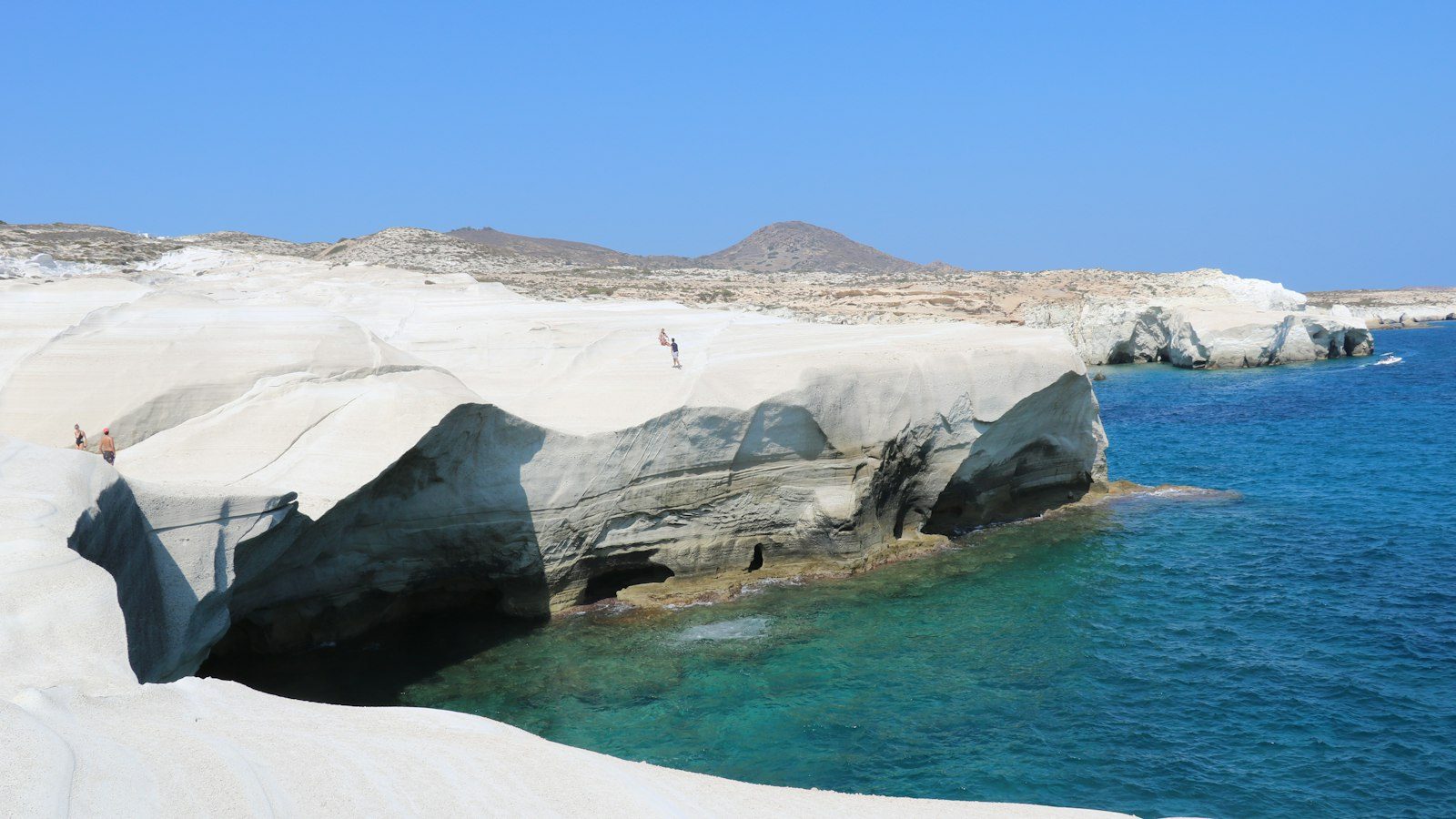
A volcanic island in the western Cyclades with more than 70 beaches. You swim off white moon-like rocks at Sarakiniko, take a boat to the sea caves at Kleftiko and watch the sun set from the castle above Plaka. Best time to visit: June and September. Daily budget (budget traveller): $80 to $260 USD.
Arrive and find your feet
Morning: Take a morning ferry from Piraeus or a flight from Athens. Drop your bag in Adamas and have a coffee on the harbour.
Afternoon: Swim at Papikinou, the town beach a short walk east of the port, and pick up a bus timetable from the main square.
Evening: Take the bus up to Plaka, climb to the Kastro for sunset and have dinner in the lanes.
Sarakiniko and the north coast
Morning: Get to Sarakiniko early by bus or scooter, before the rock heats up. Swim in the inlet and explore the gullies.
Afternoon: Continue to Mandrakia for lunch at Medusa, then Papafragas and the ruins of Fylakopi on the way to Pollonia.
Evening: Watch the sun go down over Pollonia's harbour and eat grilled fish by the water.
Heading home: Buy pitarakia or local honey to take home, then catch your ferry or flight.
What to eat in Milos
- Pitarakia: small fried cheese pies, the island's best-known snack, sold in bakeries and served as a starter in most tavernas
- Karpouzopita: a dense, sweet watermelon pie with honey and sesame, found in bakeries and cafés in summer
- Grilled fish and seafood: octopus, cuttlefish and fresh fish by the kilo at O! Hamos! near Papikinou or Medusa in Mandrakia. Ask the price per kilo before you order
- Ladenia: a flatbread topped with tomato, onion and olive oil, shared with neighbouring Kimolos and cheap to buy by the slice
- Local cheeses: soft manoura and tangy xinomyzithra, often served with tomatoes, capers and island bread
- A gyros pitta in Adamas for a cheap lunch, then a freddo espresso or a scoop of ice cream on the harbour
Hidden gems
- Firopotamos, a tiny cove below Plaka with a whitewashed chapel, old boathouses and calm, clear water that is perfect for an early swim
- The abandoned sulphur mines at Paliorema on the east coast, with rusting buildings and yellow-stained rock above a quiet bay, reached by a dirt track
- The terraces of Trypiti at sunset, which are calmer than the Kastro and look straight down over the Klima bay
- Mandrakia early in the morning, when the boathouses are empty and the fishermen are mending nets
- The Milos Mining Museum in Adamas, a small, overlooked museum that explains how the island's volcanic minerals shaped its economy
Getting around
Milos is too big to walk around, so you will mix buses, boats and wheels. The KTEL bus network starts from the main square in Adamas. Fares are around €2 a ride, paid in cash on board. The core lines run year-round to Triovasalos, Plaka and Trypiti, and to Pollonia. The beach lines to Sarakiniko, Paliochori, Provatas and Achivadolimni run only in summer. In July and August buses are fairly frequent, but timetables thin out sharply outside high season, so check the latest timetable posted in Adamas. Taxis are few, so book through your host in summer. Many visitors hire a small car, scooter or quad for a day or two. Expect roughly €40-80 a day for a small car in summer. Many beaches are at the end of rough dirt roads, and rental insurance often does not cover them, so read the small print. Non-EU licence holders may need an International Driving Permit. Boat trips are the only way to reach Kleftiko and the best way to see the west coast. Small ferries run from Pollonia to Kimolos several times a day.
Safety
Milos is very safe, and crime against visitors is rare. Watch your belongings on busy beaches and in Adamas on summer evenings. The real risks come from the landscape and the sea. Sarakiniko and other cliffs have crumbling edges, and cliff jumping causes injuries every summer, so check the depth and never jump alone. Some beaches, such as Tsigrado, are reached by steep paths, ropes or ladders, and access can be closed after rockfalls. The meltemi wind blows hard in July and August, and it can bring strong currents and waves on north-facing beaches. Swim on the sheltered side and respect red flags. There is little shade on most beaches, so carry plenty of water and sun protection. Take care on quads and scooters, because gravel roads and tight bends cause many accidents. Tap water on Milos is generally not recommended for drinking, so buy bottled water or use a filter bottle. The emergency number is 112. EU travellers should carry an EHIC and UK travellers a GHIC, and everyone else needs travel insurance with medical cover.
Frequently asked questions
What does this 2-day Milos itinerary cover?
Day 1: Arrive and find your feet. Day 2: Sarakiniko and the north coast.
Is 2 days enough for Milos?
Our recommended trip length for Milos is 4 to 7 days. This 2-day plan focuses on the highlights and groups sights by area so you spend less time travelling between them.
How much does 2 days in Milos cost?
A budget traveller spends about $80 to $260 USD a day in Milos, so roughly $160 to $520 USD for 2 days, not counting flights.
Where should I stay for 2 days in Milos?
Adamas: The port town and the island's transport hub. Plaka and Trypiti: The hilltop capital and its neighbour, with whitewashed lanes, the Kastro at the top and the Archaeological Museum.
When is the best time to visit Milos?
The best time to visit Milos is June and September.
How do I get around Milos?
Milos is too big to walk around, so you will mix buses, boats and wheels. The KTEL bus network starts from the main square in Adamas.
Is Milos safe for solo travellers?
Milos is very safe, and crime against visitors is rare. Watch your belongings on busy beaches and in Adamas on summer evenings.
More 2-day guides
- Rethymno in 2 days
- Lefkada in 2 days
- Nafplio in 2 days
- Parga in 2 days
- Sifnos in 2 days
- Skiathos in 2 days
- Santorini in 2 days
- Athens in 2 days
Milos in 3 days | Milos in 4 days | Milos in 5 days | Milos in 7 days | Full Milos guide
Joy Plus home | Destinations | Itineraries | Activities | Flights | Budget planner | Calendar | Map | Blog | Lifetime access