Destinations / Europe
Montepulciano, Italy travel guide
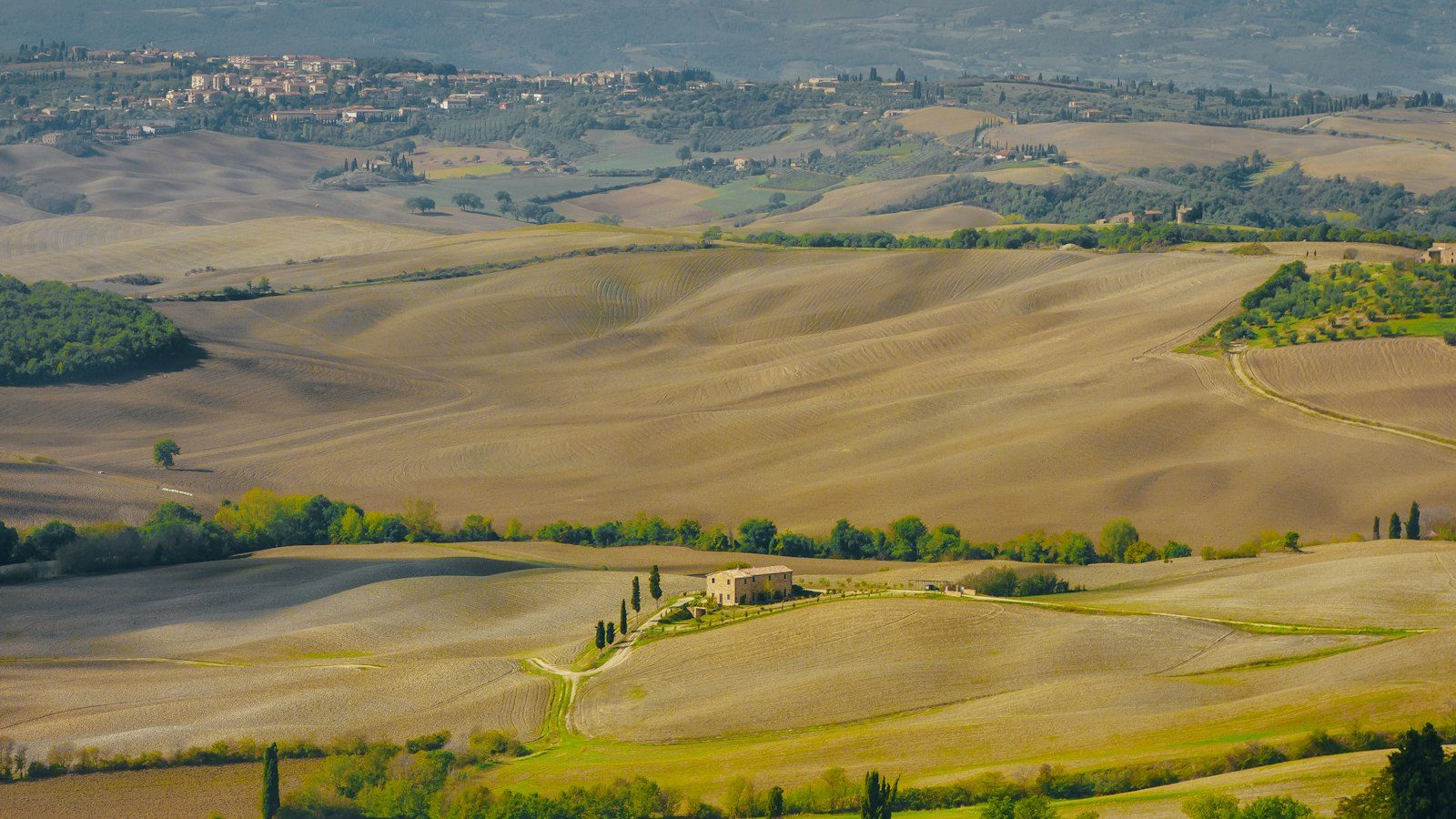
A long, steep Renaissance hill town on a ridge in southern Tuscany, with the Val d'Orcia on one side and the Val di Chiana on the other. You taste Vino Nobile in cellars cut into the rock, climb the town hall tower and walk down through the vineyards to San Biagio at sunset.
- Best time to visit: May to June and September to October
- Daily budget (budget traveller): $85 to $270 USD
- Ideal trip length: 3 to 5 days
Montepulciano runs along a narrow limestone ridge about 600m up, between the Val d'Orcia and the Val di Chiana in the province of Siena. It is roughly 15km from Chiusi-Chianciano Terme station on the Rome to Florence railway, and about an hour and a half from Siena by road. The town is one long street, the Corso, that climbs from the Porta al Prato gate at the bottom to Piazza Grande at the top. The Corso is lined with Renaissance palaces built by Florentine and local families, and under many of them are cellars full of oak barrels. This is the home of Vino Nobile di Montepulciano, one of Italy's oldest named wines. Most visitors spend a few hours here on a Tuscan road trip. Stay a few nights and you get the slower version: the piazza empty in the early morning, a glass of wine on a terrace over the valley and the walk down to the Tempio di San Biagio as the light turns gold. The old town is closed to most traffic, and it is steep. There are no hostels, and the buses to the surrounding villages are limited. Even so, a B&B room on the Corso, free cellar visits and cheap pici at lunch make it a good place for a solo traveller to spend a few unhurried days.
Montepulciano is one of the largest and grandest hill towns in southern Tuscany. Its long ridge of Renaissance palaces looks over two valleys, and about 13,000 people live across the wider municipality. Florence and Siena fought over it for centuries. Florence won, and you can see it in the Marzocco lion on a column near Porta al Prato and in a town hall that looks like a smaller version of Florence's Palazzo Vecchio. Wine has been made here for at least a thousand years, and the town is still built around it. There are cellars under the palaces, enoteche on every corner and estates on every slope. Most visitors arrive by coach or car, stay for two hours and leave. Stay a few nights and you get the better version: Piazza Grande empty at 8am, a cellar visit before lunch, pici in a back-lane osteria and the walk down to San Biagio at sunset. It is not cheap and it has no hostels, but a B&B room, free cellar visits and simple trattoria lunches keep costs reasonable.
Getting here takes a little planning. Fast trains from Rome and regional trains from Florence stop at Chiusi-Chianciano Terme, and Tiemme buses run from there up to town, roughly hourly on weekdays and much less often on Sundays. Line 112 links Montepulciano with Pienza, San Quirico d'Orcia and Siena. Once you are here, walk. The old town is car-free and about 1.5km long, but it is steep. Base yourself near Porta al Prato if you have luggage or want easy bus and taxi access, or near Piazza Grande for the views and quiet nights. Use the buses for Pienza and Chianciano, and book a tour or a taxi for the countryside estates and the Val d'Orcia villages.
Timing shapes the trip. Spring brings green hills and the first outdoor tables. Early autumn brings the harvest, warm days and cool evenings. July and August are hot and crowded, especially around the Bravio delle Botti on the last Sunday of August. From November to March, the tower closes, some restaurants take a break and the ridge can be cold and foggy, but rooms are much cheaper and you will have the town largely to yourself. Montepulciano is very safe. English is spoken in hotels, cellars and most restaurants, but a few words of Italian go a long way. Evenings mean long dinners and a glass on a terrace, not nightlife. If you want bars and clubs, go to Siena or Florence. If you want good wine, quiet streets and a view at every corner, stay here.
Montepulciano itinerary
Arrive and climb the Corso
Morning: Take a train to Chiusi-Chianciano Terme, then the Tiemme bus up to town (about 40 to 50 minutes). Drop your bag and have a coffee at Caffè Poliziano.
Afternoon: Walk the Corso from Porta al Prato to Piazza Grande. Stop at Palazzo Bucelli, the Pulcinella clock and the Loggia del Mercato.
Evening: Watch the light fade from the walls on the eastern side, then have pici all'aglione and a glass of Rosso in a back-lane osteria.
Tower, museum and cellars
Morning: Climb the Palazzo Comunale tower (€5) when it opens at 10am, then see the Assumption triptych in the cathedral for free.
Afternoon: Visit the Museo Civico on Via Ricci (€6, or €8 with the tower). Then go down into Cantine De Ricci and one more cellar near Piazza Grande for a tasting.
Evening: An early, light dinner, as the tastings add up. Walk Piazza Grande once the crowds have gone.
San Biagio and the slopes
Morning: Walk down through Porta di Grassi to the Tempio di San Biagio (about €5 with the audio guide) before the heat and the coaches arrive.
Afternoon: Follow the lanes below the walls past vineyards and olive groves. Have a long lunch, then rest during the hottest hours.
Evening: Come back to San Biagio's lawn for sunset, then climb slowly up to town for dinner. Book ahead if you want Chianina steak at Acquacheta.
Pienza by bus
Morning: Take the line 112 bus to Pienza (about 20 to 30 minutes). Check the return times first. Walk the town Pope Pius II rebuilt as an ideal Renaissance city.
Afternoon: See the cathedral and Piazza Pio II, then walk the panoramic lane along the walls over the Val d'Orcia. Buy pecorino for a picnic.
Evening: Bus back to Montepulciano and have a simple dinner. Picnic on bread, cheese and a bottle from a local enoteca if you are tired.
Thermal pools and slow afternoon
Morning: Take a bus or taxi to Sant'Albino for a morning in the thermal pools at the Terme di Montepulciano. Book a time slot ahead.
Afternoon: Back in town, browse the craft and food shops on the Corso and pick up wine to send or carry home.
Evening: Aperitivo at an enoteca with a view, then dinner at a trattoria you passed earlier in the week.
A day in Siena
Morning: Take line 112 or a bus via Chiusi to Siena, which takes 1.5 to 2 hours, often with a change. Start in the Piazza del Campo.
Afternoon: See Siena's cathedral and walk the medieval lanes of the contrade. Leave plenty of time for the bus back.
Evening: Back in Montepulciano for a farewell dinner, perhaps with a glass of aged Vino Nobile Riserva.
Slow morning and depart
Morning: Have a last walk up to Piazza Grande while it is empty, with coffee and a cornetto on the way.
Afternoon: Take the bus down to Chiusi-Chianciano Terme for your onward train. Check Sunday times the day before.
Evening: Arrive in Rome or Florence, or carry on to your next stop.
Best neighbourhoods
- Piazza Grande and the upper town: The top of the ridge, with the Palazzo Comunale and its tower, the unfinished brick face of the cathedral, the Pozzo dei Grifi e dei Leoni and several of the big wine cellars. The views stretch out on both sides. It is quiet at night once the day trippers leave, but every walk home from the lower town is uphill.
- The Corso and Porta al Prato: The lower and middle part of town, along Via di Gracciano nel Corso, Via di Voltaia nel Corso and Via dell'Opio nel Corso. You get the main gate, Sant'Agostino and the Pulcinella clock tower, Caffè Poliziano and plenty of shops and osterie. It is the most practical base if you are arriving with luggage, as the P1 car park and taxi drop-off are just outside the gate.
- San Biagio and the slopes below the walls: The green slopes on the western side of town, around the Tempio di San Biagio and the road down from Porta di Grassi. There are a few hotels with gardens and pools and some country B&Bs here. It is peaceful and has the best sunset views, but expect a 10 to 15 minute walk uphill into the centre.
- Sant'Albino and Montepulciano Terme: A small spa village about 5km south-east, built around the Terme di Montepulciano thermal baths. There are modern hotels and the Theia thermal pools, and a local bus runs to the old town. It suits you if you want a pool and a soak after a day of walking, but you will be out of town in the evenings.
- Vineyard countryside: The farms and wine estates on the slopes around town, towards Gracciano, Valiano and the Val d'Orcia. Agriturismi here offer rooms with pools, dinners and tastings, often at fair prices for a single traveller. You really need a car or taxis, and the nights are very dark and very quiet.
Must-do experiences
- Climb the Palazzo Comunale tower: The town hall tower on Piazza Grande opens daily from 10am to 6pm from April to early November, weather permitting. The full climb costs €5, the lower terrace €2.50, and a combined ticket with the Museo Civico is €8. On a clear day you can see Pienza, Lake Trasimeno and Monte Amiata.
- Go underground in the wine cellars: Several palaces on the Corso and around Piazza Grande sit on top of cellars carved into the rock. Cantine De Ricci under Palazzo Ricci is the most dramatic, with a vaulted space nicknamed the cathedral. Many cellars let you walk through for free and charge for tastings, usually around €15-30.
- Walk down to the Tempio di San Biagio: Antonio da Sangallo the Elder's honey-coloured Renaissance church stands alone in a field below the town, built between 1518 and 1548. Entry is about €5 with an audio guide, and tickets are sold from a small office to one side. Walk down through Porta di Grassi and come back up slowly, as the climb is steep.
- Walk the Corso from bottom to top: Start at Porta al Prato and climb the length of the town. Look for the Etruscan urns built into the base of Palazzo Bucelli, the Pulcinella figure that strikes the hours on the tower opposite Sant'Agostino, and the old Loggia del Mercato. Allow an hour, more with stops.
- See the Museo Civico and Pinacoteca Crociani: The town museum is in Palazzo Neri-Orselli on Via Ricci, a few steps from Piazza Grande. It holds Etruscan finds, Della Robbia terracottas and Sienese and Florentine paintings. Adult tickets are €6, or €8 with the tower.
- Look inside the cathedral: The Duomo on Piazza Grande has a plain, never-finished brick façade, but inside is Taddeo di Bartolo's huge gilded Assumption triptych from 1401 behind the high altar. Entry is free. Go in the late afternoon when the light is soft and the square is calmer.
- Catch the Bravio delle Botti: On the last Sunday of August, teams from the town's eight contrade push 80kg wine barrels up the steep streets to Piazza Grande. The week before brings processions, dinners in the contrade and flag-waving. Book a room months ahead if you want to be here.
Hidden gems
- The Pozzo dei Grifi e dei Leoni on Piazza Grande, a Renaissance well topped with griffins and lions from the Medici and town coats of arms that many people walk straight past
- The base of Palazzo Bucelli on the Corso, where an 18th-century owner set Etruscan urns and Roman inscriptions into the wall like a street-level museum
- The Church of Sant'Agnese just outside Porta al Prato, dedicated to the town's patron saint and much quieter than the churches on the Corso
- The Riserva Naturale Lago di Montepulciano on the valley floor to the east, with reed beds, bird hides and a visitor centre, best reached by bike or car
- The lanes on the eastern side of town around Santa Maria dei Servi, where you get wide views over the Val di Chiana and hardly any other visitors
Daily budget
- Accommodation: budget €60-90 / night (single room in a B&B or affittacamere), mid-range €110-180 (boutique B&B or 3-star hotel in or near town), splurge €300+ (wine estate suite or countryside villa hotel). There are no hostels, so a simple B&B room is the cheapest option. Prices rise from May to October and for the Bravio. A per-night tourist tax, charged for up to seven nights in a row, is added on top.
- Food: budget €25-35 / day (bar breakfast, pici lunch, picnic dinner), mid-range €45-70 (trattoria lunch and a sit-down dinner with wine), splurge €100+ (Chianina steak by the kilo, good bottle, dessert). A plate of pici is about €10-14 and mains €15-25. Steak is priced per kilo, so ask before you order. Coperto (cover charge) of €2-4 is common.
- Transport: budget €0-8 / day (walking, town minibus, local buses), mid-range €15-40 (buses plus a taxi), splurge €80+ (car hire or a private driver). The Chiusi station bus costs a few euros, and a taxi roughly €40-60. Parking is €2 for two hours, then €1.50 an hour, or €10 a day.
- Activities: budget €0-15 / day (free cellar visits, cathedral, tower at €5), mid-range €15-40 (San Biagio at €5, Museo Civico at €6, a tasting), splurge €80+ (estate tours, e-bike wine tours, thermal spa day). A tower and Museo Civico combined ticket is €8. Cellar tastings usually cost €15-30. The tower is open from April to early November.
- Drinks & nightlife: budget €5-10 (a glass of Rosso or Nobile on a terrace), mid-range €20-35 (aperitivo and a few glasses at an enoteca), splurge €60+ (a good bottle of aged Nobile with dinner). A coffee at the bar costs about €1.30-1.80. Sitting at a table costs more. Nightlife here means wine bars and late dinners, not clubs.
Where to stay
- Budget B&B in The Corso and Porta al Prato (€60-90 / night): With no hostels in town, family-run affittacamere and small B&Bs along the lower Corso are the cheapest beds. Many have single rooms or will discount a double, and you are close to buses, taxis and the P1 car park.
- Boutique hotel in Upper Corso near Piazza Grande (€130-250 / night): Restored palazzo B&Bs such as Palazzo Carletti offer high ceilings, frescoes and valley views a few minutes from the main square, the tower and the big cellars.
- Apartment in Old town lanes (€80-150 / night): Small apartments in old stone houses give you a kitchen for market food and a local feel. Expect stairs and no lift, and check the exact location against the slope if you have heavy luggage.
- Splurge in Vineyard countryside (€300-600+ / night): Wine estates and villa hotels on the slopes around town offer pools, views over the vines and dinners with their own wine. You will want a car or pre-booked taxis, but you get the classic Tuscan stay.
What to eat
- Pici all'aglione: thick hand-rolled pasta in a garlicky tomato sauce, the local staple and one of the cheapest good lunches in town at around €10-14
- Vino Nobile di Montepulciano and Rosso di Montepulciano: the town's Sangiovese reds. A glass is usually €5-8, and many cellars sell bottles at fair prices
- Pecorino di Pienza: sheep's cheese from the next hill town, sold young, aged or in ash. Buy some with bread for a picnic on the walls
- Chianina beef: bistecca sold by weight at places such as Osteria Acquacheta, where you must book. Ask the price per kilo and whether they will cut a smaller steak for one
- Cantucci and vin santo: almond biscuits dipped in sweet dessert wine at the end of a meal, often offered after a tasting
- Coffee and a pastry at Caffè Poliziano, the Art Nouveau café on the Corso that opened in 1868, with a back room looking over the valley
Day trips
- Pienza (About 13km west, 20 to 30 minutes by bus): The small Renaissance town Pope Pius II rebuilt as his ideal city, now a UNESCO World Heritage Site. It has a perfect central piazza, a walk along the walls over the Val d'Orcia and shops full of pecorino. Take Autolinee Toscane line 112 from Montepulciano. Buses are infrequent, so check the return time before you go. A taxi or a hire car gives you more flexibility.
- San Quirico d'Orcia and Bagno Vignoni (About 25 to 30km west, 45 minutes to 1 hour): San Quirico has a fine Romanesque church and the formal Horti Leonini garden. Nearby Bagno Vignoni is a tiny village built around a steaming medieval thermal pool, with spa pools to swim in. Line 112 continues from Pienza to San Quirico. Bagno Vignoni is about 5km further and is hard to reach by bus, so a car, taxi or tour is easier.
- Siena (About 70km north-west, 1.5 to 2 hours by bus): The great Gothic city of the Palio, with the shell-shaped Piazza del Campo, a striped marble cathedral and lanes divided between rival contrade. It makes a busy contrast to quiet Montepulciano. Take line 112 via Pienza and Buonconvento, or a bus with a change. Leave early, check the last return bus and allow a full day.
When to visit
- Spring (April - May): 14-23°C, fresh and green, with some showers. Crowds: Moderate, busy at Easter and on May weekends. Lovely for walking and cellar visits, with wild flowers in the Val d'Orcia. The tower reopens in April. Nights can still be cool on the ridge.
- Early summer (June): 22-28°C, sunny and dry. Crowds: Moderate to busy, especially at weekends. Long evenings, outdoor dinners and golden wheat fields around Pienza. Probably the best month for a first visit if you don't mind company.
- High summer (July - August): 28-33°C, hot, with occasional storms. Crowds: Busy, very busy around the Bravio in late August. Great atmosphere, festivals and late light, but the climbs are tiring in the heat and rooms cost the most. Book well ahead and sightsee early or late.
- Autumn and winter (September - March): September and October 15-25°C, then 2-10°C in winter, with fog and the odd snowfall. Crowds: Moderate in September and October, quiet from November. Harvest season is the locals' favourite, with mild weather and busy estates. Winter is cheap and peaceful, but the tower closes and some places shut for a few weeks.
Entry rules for your passport
Visa rules for Italy depend on the passport you travel on. Check the official source before you book: European Commission: Schengen visa policy
Getting there
There is no airport near Montepulciano. The nearest are Florence, about 1.5 hours by road, Perugia, about an hour, and Rome Fiumicino, about 2.5 hours. The easiest route is by train to Chiusi-Chianciano Terme on the Rome to Florence line. Fast trains from Roma Termini take about 1 hour 15 minutes to 1 hour 30 minutes, and regional trains from Florence take around 1.5 to 2 hours. From Chiusi, Tiemme buses run up to Montepulciano roughly hourly on weekdays in about 40 to 50 minutes for a few euros, with far fewer on Sundays. A taxi costs roughly €40-60. From Siena, Autolinee Toscane line 112 runs via Buonconvento, San Quirico d'Orcia and Pienza, and other routes need a change, taking roughly 1.5 to 2 hours. Montepulciano also has its own small railway station on the Siena to Chiusi line, but it is about 10km from town with few connections, so most people ignore it. If you drive, leave the A1 at Valdichiana or Chiusi-Chianciano Terme and park outside the walls, because the old town is a camera-controlled ZTL.
Border checks: non-EU visitors (other than Swiss, Norwegian, Icelandic, Liechtenstein, Andorran, Monegasque, San Marinese and Vatican citizens, and holders of an EU residence permit or long-stay visa) are registered in the EU's Entry/Exit System (EES) instead of getting a passport stamp. On your first crossing, officers take your photo and/or fingerprints, so allow extra time at passport control. ETIAS, the planned travel authorisation, is not in operation yet, so don't pay any website for one.
Getting around
Montepulciano's old town is closed to general traffic, so you will walk almost everywhere. It takes about 20 to 25 minutes to climb from Porta al Prato to Piazza Grande, and the gradient is steep in places, with cobbles and steps. Small town minibuses run a loop through and around the centre, which helps with luggage or tired legs. If you drive, stay out of the ZTL. Camera gates at the entrances read number plates, and fines arrive by post months later. Park in the numbered car parks outside the walls instead. P1 at Porta al Prato is the most convenient and fills first. From April 2026, municipal parking costs €2 for the first two hours, then €1.50 an hour, or €10 for the day, and you can pay by app. Yellow bays are for residents only. Tiemme buses link the town with Chiusi-Chianciano Terme station and Chianciano. Autolinee Toscane runs line 112 to Pienza, San Quirico d'Orcia and Siena. Fares are a few euros. Buy tickets at a tabacchi or check the operator's app, and look at timetables carefully, because Sunday and holiday services are thin. Taxis are few, so book them ahead through your accommodation. A taxi to Chiusi station costs roughly €40-60.
Safety
Montepulciano is very safe, and crime against visitors is rare. Watch your bag in the crowds at Piazza Grande on summer afternoons and during the Bravio. The real risks are physical: steep, polished cobbles that get slippery in rain, summer heat on the long climbs and narrow country roads with no pavements if you walk between villages. Wear shoes with grip and carry water. Don't drink and drive after tastings. Italy's limit is lower than in the UK and US, and it is zero for drivers who have held a licence for less than three years. Use the spittoon, book a tour or take the bus. Watch for ZTL camera gates if you have a hire car. Winters can bring fog, ice and occasional snow on the ridge. Tap water is safe to drink. The EU emergency number is 112. EU travellers should carry an EHIC and UK travellers a GHIC, and everyone else needs travel insurance with medical cover.
Solo travel tips
- Stay near Porta al Prato if you have luggage: The bottom of the Corso is close to the P1 car park, taxis and town minibuses. You can walk up for the views and roll down for dinner, rather than dragging a case up the whole ridge.
- Get out early: Coach groups arrive mid-morning and leave by late afternoon. See Piazza Grande, San Biagio and the cellars before 10.30am or after 5pm and you will have them almost to yourself.
- Plan around the bus timetable: Buses to Pienza, Siena and Chiusi are infrequent, especially on Sundays and holidays. Fix those days first, note the last bus back and fit everything else around them.
- Eat well for less at lunch: Many trattorie serve a plate of pici and a glass of wine for not much more than a sandwich. Have your big meal at lunch and keep dinner light, or picnic with pecorino and bread from a deli.
- Safety for solo travellers: The main risks are slippery cobbles, the summer heat on steep climbs and drinking too much at tastings. Wear shoes with grip, carry water, use the spittoon and never drive after a cellar crawl.
- Meet people at a tasting or on a tour: Cellar tastings and small-group wine or e-bike tours are the easiest places to talk to other travellers. Sitting at the counter of an enoteca also tends to start conversations, often with the owner.
Cultural etiquette
- Greet people with 'buongiorno' until mid-afternoon and 'buonasera' after that, and say 'grazie' (thank you). Always greet shop and cellar staff when you walk in.
- Cover your shoulders and knees in the cathedral, San Biagio and other churches, and stay quiet if a service is on.
- At tastings, it is fine to spit or pour away what you don't finish. Buying a bottle is appreciated but not expected if the tasting was paid.
- Keep noise down in the lanes at night. Sound carries between the stone walls, and people live above the shops and restaurants.
- Ask the price per kilo before ordering bistecca alla fiorentina, and expect it to be served rare.
- Coperto, a small per-person cover charge, is normal and is not a tip. Rounding up or leaving a few euros for good service is appreciated but not compulsory.
- Don't drive into the ZTL, and respect private property when walking through vineyards. Stay on paths and don't pick the grapes.
Frequently asked questions
How do I get to Montepulciano and from the bus stop to my room?
Most people take the train to Chiusi-Chianciano Terme, which is about 1 hour 15 minutes to 1 hour 30 minutes from Rome on fast trains and around 1.5 to 2 hours from Florence. From there, Tiemme buses run to Montepulciano roughly hourly on weekdays, take about 40 to 50 minutes and cost a few euros. Services are much thinner on Sundays. A taxi costs roughly €40-60. Buses stop at the Autostazione on Piazza Pietro Nenni below the east side of town, and many also call at Porta delle Farine. From either stop it is a steep walk up, so ask your host which stop is closest and whether the town minibus passes your door.
How many days do I need in Montepulciano?
One night covers the Corso, Piazza Grande, the tower and a cellar or two. Three nights lets you add San Biagio, the Museo Civico and a day in Pienza. Five nights gives you time for the Val d'Orcia, the thermal pools and a slower pace. A week works if you want to add Siena, Cortona or a few days at an agriturismo.
When is the best time to visit Montepulciano?
May, June, September and early October are the best months. The weather is warm without being punishing, the countryside is green or golden and the harvest brings activity to the estates in autumn. July and August are hot and busy, and the Bravio at the end of August fills every room. From November to March the town is quiet and much cheaper, but the tower closes for the season, some restaurants shut and the ridge can be cold and foggy.
Can I drive into Montepulciano?
Not into the old town. The whole historic centre is a ZTL, and cameras fine unregistered cars automatically. Park in the numbered car parks outside the walls, such as P1 at Porta al Prato. From April 2026, parking costs €2 for the first two hours, then €1.50 an hour, or €10 a day. If your hotel is inside the walls, ask it to register your plate for drop-off before you arrive, and follow its directions exactly.
Can I visit wineries without a car?
Yes, more easily than in most Tuscan wine towns. Several historic cellars are right in the old town, under palaces on the Corso and around Piazza Grande. You can walk between them, and many let you look around for free and charge around €15-30 for a tasting. For estates in the countryside, book a small-group tour or an e-bike wine tour, or arrange a taxi there and back.
Can I get to Pienza and the Val d'Orcia by bus?
Yes, but plan around the timetable. Autolinee Toscane line 112 links Montepulciano with Pienza and San Quirico d'Orcia, and carries on to Siena. The ride to Pienza takes about 20 to 30 minutes, but there are only a handful of buses a day, and fewer on Sundays. Check the return time before you leave. Places like Bagno Vignoni are much easier with a car or a tour.
Is Montepulciano safe for solo female travellers?
Yes. It is a small, calm town where locals are used to visitors, and the Corso stays lit and fairly busy into the evening in season. Take normal care with drinks, especially at tastings, where pours add up. In winter the side lanes get very quiet after dinner, so stick to the main street at night. If you are staying in the countryside, arrange transport back before you go out.
What entry rules apply to Italy in 2026?
Italy is in the EU and the Schengen area. Many non-EU visitors, including those from the UK, US, Canada and Australia, can stay visa-free for up to 90 days in any 180-day period across Schengen. The EU's Entry/Exit System now records non-EU travellers' fingerprints and photos at the external border. As of early November 2026, no start date had been announced for the ETIAS travel authorisation, so check whether it has started before you travel. Confirm the rules on official EU and Italian government websites and check your own government's travel advice.
More about Montepulciano
Tours and activities in Montepulciano | Montepulciano in 2 days | Montepulciano in 3 days | Montepulciano in 4 days | Montepulciano in 5 days | Montepulciano in 7 days
Joy Plus home | Destinations | Itineraries | Activities | Flights | Budget planner | Calendar | Map | Blog | Lifetime access