Montepulciano in 4 days
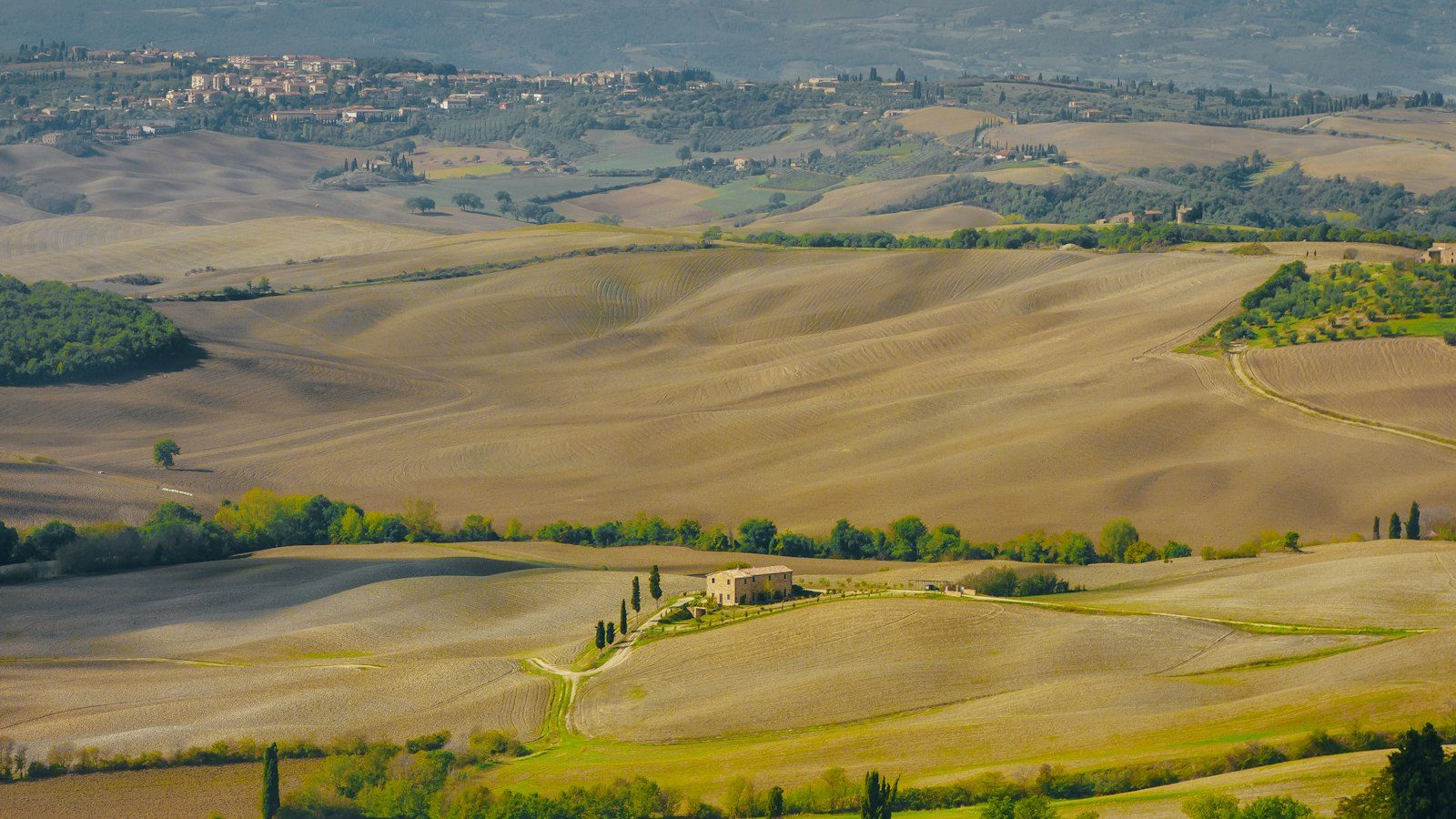
A long, steep Renaissance hill town on a ridge in southern Tuscany, with the Val d'Orcia on one side and the Val di Chiana on the other. You taste Vino Nobile in cellars cut into the rock, climb the town hall tower and walk down through the vineyards to San Biagio at sunset. Best time to visit: May to June and September to October. Daily budget (budget traveller): $85 to $270 USD.
Arrive and climb the Corso
Morning: Take a train to Chiusi-Chianciano Terme, then the Tiemme bus up to town (about 40 to 50 minutes). Drop your bag and have a coffee at Caffè Poliziano.
Afternoon: Walk the Corso from Porta al Prato to Piazza Grande. Stop at Palazzo Bucelli, the Pulcinella clock and the Loggia del Mercato.
Evening: Watch the light fade from the walls on the eastern side, then have pici all'aglione and a glass of Rosso in a back-lane osteria.
Tower, museum and cellars
Morning: Climb the Palazzo Comunale tower (€5) when it opens at 10am, then see the Assumption triptych in the cathedral for free.
Afternoon: Visit the Museo Civico on Via Ricci (€6, or €8 with the tower). Then go down into Cantine De Ricci and one more cellar near Piazza Grande for a tasting.
Evening: An early, light dinner, as the tastings add up. Walk Piazza Grande once the crowds have gone.
San Biagio and the slopes
Morning: Walk down through Porta di Grassi to the Tempio di San Biagio (about €5 with the audio guide) before the heat and the coaches arrive.
Afternoon: Follow the lanes below the walls past vineyards and olive groves. Have a long lunch, then rest during the hottest hours.
Evening: Come back to San Biagio's lawn for sunset, then climb slowly up to town for dinner. Book ahead if you want Chianina steak at Acquacheta.
Pienza by bus
Morning: Take the line 112 bus to Pienza (about 20 to 30 minutes). Check the return times first. Walk the town Pope Pius II rebuilt as an ideal Renaissance city.
Afternoon: See the cathedral and Piazza Pio II, then walk the panoramic lane along the walls over the Val d'Orcia. Buy pecorino for a picnic.
Evening: Bus back to Montepulciano and have a simple dinner. Picnic on bread, cheese and a bottle from a local enoteca if you are tired.
Heading home: For the airport or station, see Getting there in the full Montepulciano guide.
What to eat in Montepulciano
- Pici all'aglione: thick hand-rolled pasta in a garlicky tomato sauce, the local staple and one of the cheapest good lunches in town at around €10-14
- Vino Nobile di Montepulciano and Rosso di Montepulciano: the town's Sangiovese reds. A glass is usually €5-8, and many cellars sell bottles at fair prices
- Pecorino di Pienza: sheep's cheese from the next hill town, sold young, aged or in ash. Buy some with bread for a picnic on the walls
- Chianina beef: bistecca sold by weight at places such as Osteria Acquacheta, where you must book. Ask the price per kilo and whether they will cut a smaller steak for one
- Cantucci and vin santo: almond biscuits dipped in sweet dessert wine at the end of a meal, often offered after a tasting
- Coffee and a pastry at Caffè Poliziano, the Art Nouveau café on the Corso that opened in 1868, with a back room looking over the valley
Hidden gems
- The Pozzo dei Grifi e dei Leoni on Piazza Grande, a Renaissance well topped with griffins and lions from the Medici and town coats of arms that many people walk straight past
- The base of Palazzo Bucelli on the Corso, where an 18th-century owner set Etruscan urns and Roman inscriptions into the wall like a street-level museum
- The Church of Sant'Agnese just outside Porta al Prato, dedicated to the town's patron saint and much quieter than the churches on the Corso
- The Riserva Naturale Lago di Montepulciano on the valley floor to the east, with reed beds, bird hides and a visitor centre, best reached by bike or car
- The lanes on the eastern side of town around Santa Maria dei Servi, where you get wide views over the Val di Chiana and hardly any other visitors
Getting around
Montepulciano's old town is closed to general traffic, so you will walk almost everywhere. It takes about 20 to 25 minutes to climb from Porta al Prato to Piazza Grande, and the gradient is steep in places, with cobbles and steps. Small town minibuses run a loop through and around the centre, which helps with luggage or tired legs. If you drive, stay out of the ZTL. Camera gates at the entrances read number plates, and fines arrive by post months later. Park in the numbered car parks outside the walls instead. P1 at Porta al Prato is the most convenient and fills first. From April 2026, municipal parking costs €2 for the first two hours, then €1.50 an hour, or €10 for the day, and you can pay by app. Yellow bays are for residents only. Tiemme buses link the town with Chiusi-Chianciano Terme station and Chianciano. Autolinee Toscane runs line 112 to Pienza, San Quirico d'Orcia and Siena. Fares are a few euros. Buy tickets at a tabacchi or check the operator's app, and look at timetables carefully, because Sunday and holiday services are thin. Taxis are few, so book them ahead through your accommodation. A taxi to Chiusi station costs roughly €40-60.
Safety
Montepulciano is very safe, and crime against visitors is rare. Watch your bag in the crowds at Piazza Grande on summer afternoons and during the Bravio. The real risks are physical: steep, polished cobbles that get slippery in rain, summer heat on the long climbs and narrow country roads with no pavements if you walk between villages. Wear shoes with grip and carry water. Don't drink and drive after tastings. Italy's limit is lower than in the UK and US, and it is zero for drivers who have held a licence for less than three years. Use the spittoon, book a tour or take the bus. Watch for ZTL camera gates if you have a hire car. Winters can bring fog, ice and occasional snow on the ridge. Tap water is safe to drink. The EU emergency number is 112. EU travellers should carry an EHIC and UK travellers a GHIC, and everyone else needs travel insurance with medical cover.
Frequently asked questions
What does this 4-day Montepulciano itinerary cover?
Day 1: Arrive and climb the Corso. Day 2: Tower, museum and cellars. Day 3: San Biagio and the slopes. Day 4: Pienza by bus.
Is 4 days enough for Montepulciano?
Our recommended trip length for Montepulciano is 3 to 5 days. This 4-day plan focuses on the highlights and groups sights by area so you spend less time travelling between them.
How much does 4 days in Montepulciano cost?
A budget traveller spends about $85 to $270 USD a day in Montepulciano, so roughly $340 to $1,080 USD for 4 days, not counting flights.
Where should I stay for 4 days in Montepulciano?
Piazza Grande and the upper town: The top of the ridge, with the Palazzo Comunale and its tower, the unfinished brick face of the cathedral, the Pozzo dei Grifi e dei Leoni and several of the big wine cellars. The Corso and Porta al Prato: The lower and middle part of town, along Via di Gracciano nel Corso, Via di Voltaia nel Corso and Via dell'Opio nel Corso.
When is the best time to visit Montepulciano?
The best time to visit Montepulciano is May to June and September to October.
How do I get around Montepulciano?
Montepulciano's old town is closed to general traffic, so you will walk almost everywhere. It takes about 20 to 25 minutes to climb from Porta al Prato to Piazza Grande, and the gradient is steep in places, with cobbles and steps.
Is Montepulciano safe for solo travellers?
Montepulciano is very safe, and crime against visitors is rare. Watch your bag in the crowds at Piazza Grande on summer afternoons and during the Bravio.
Read more about Montepulciano
More 4-day guides
- Orvieto in 4 days
- Stresa in 4 days
- Syracuse in 4 days
- Bergamo in 4 days
- Sorrento in 4 days
- Capri in 4 days
- Florence in 4 days
- Rome in 4 days
Montepulciano in 2 days | Montepulciano in 3 days | Montepulciano in 5 days | Montepulciano in 7 days | Full Montepulciano guide
Joy Plus home | Destinations | Itineraries | Activities | Flights | Budget planner | Calendar | Map | Blog | Lifetime access