Destinations / North America
Mount Rainier National Park, United States travel guide
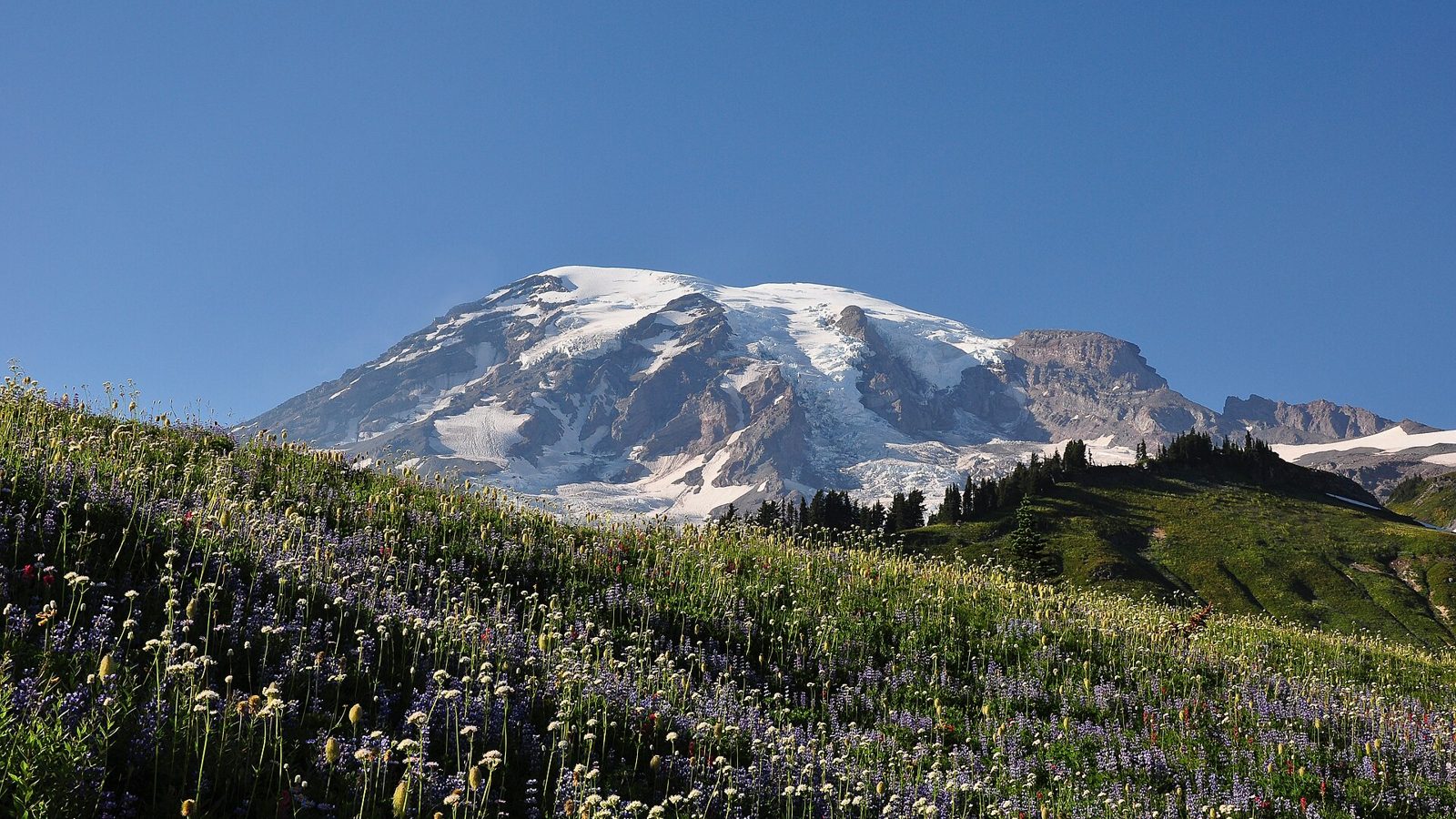
A glaciated volcano about two hours south-east of Seattle, ringed by wildflower meadows, old-growth forest and waterfalls. You walk the Skyline Trail above Paradise, wait for the mountain to show itself in Reflection Lakes and sleep in a 1916 lodge or a cabin in the woods.
- Best time to visit: July to September
- Daily budget (budget traveller): $110 to $380 USD
- Ideal trip length: 3 to 5 days
Mount Rainier rises 4,392m (14,410ft) above western Washington. It is an active volcano covered in more glacier ice than any other peak in the lower 48 states, and on a clear day you can see it from Seattle. The national park around it is about two hours' drive from Seattle-Tacoma airport. The main base is the Nisqually Entrance in the south-west corner, which stays open all year and leads to Longmire and then up to Paradise, a high meadow at about 1,650m with a visitor centre, a historic inn and the best-known trails in the park. In late July and August the meadows fill with lupine, paintbrush and avalanche lilies. There is no public transport into the park, so you either hire a car or join a day tour from Seattle. Petrol, shops and most beds are in the small gateway towns of Ashford and Packwood. Plans in 2026 were shaped by closures: wildfires shut Sunrise Road to cars for the rest of the year, and Ohanapecosh is closed for building work. There was no timed-entry system this year, though, and Paradise, Longmire and the waterfalls along the road stayed open. For a solo traveller, a campsite or a simple room in Ashford, early starts, free trails and picnics from the supermarket keep a few days here affordable.
Mount Rainier is the tallest peak in the Cascades and one of the most watched volcanoes in the world. It has 25 or so named glaciers, and its lower slopes are covered in old-growth forest of Douglas fir, western red cedar and hemlock. The park was created in 1899, one of the oldest in the country. Local tribes, including the Puyallup, Nisqually, Yakama and Cowlitz peoples, knew the mountain long before it had an English name, and you will still hear it called Tahoma. Most visitors come up from Seattle for a day, drive to Paradise, walk to Myrtle Falls and leave. Stay a few nights and you see it at its best: the mountain turning pink above the meadows at sunset, deer grazing by the road at dawn, and trails that are almost empty before 8am. It is not a cheap trip once you add car hire, but campsites, free trails and supermarket picnics keep the daily cost reasonable.
Getting here means driving. Seattle-Tacoma airport is about two hours from the Nisqually Entrance via Interstate 5 and State Route 706, and Portland is roughly three hours from the south side. There is no public transport into the park. Day tours from Seattle cost roughly $150 to $275 USD and usually include the entrance fee, but they give you little time on the trails. Base yourself in Ashford for year-round access and the most beds, in Longmire or Paradise for the inns inside the park, or in Packwood for the south-east side in summer. Fill up with fuel outside the park, as none is sold inside.
Timing matters more than almost anything. From mid-July to mid-September the trails are clear of snow and the wildflowers are out, but the car parks fill early. In 2026 the park dropped timed entry, Sunrise Road closed to cars for the rest of the year after wildfires, and Ohanapecosh closed for building work, so check what is open before you set your route. Winter is a different trip: deep snow at Paradise, ranger-led snowshoe walks at weekends, a gate above Longmire that closes every night and chains required on every car. There is no nightlife to speak of, just a few bars and diners in the gateway towns. If you want a hot shower, a slice of blackberry pie and a mountain view at the end of a long day on the trail, this is the place.
Mount Rainier National Park itinerary
Drive in and find your feet
Morning: Pick up a hire car at Seattle-Tacoma airport and stock up on food in Eatonville or Puyallup. Fill up with fuel, then drive on to Ashford, about two hours in total.
Afternoon: Enter at Nisqually and stop at the Kautz Creek boardwalk. Then walk the Trail of the Shadows at Longmire and visit the small museum.
Evening: Dinner and a slice of blackberry pie at Copper Creek Inn, then an early night ready for a dawn start.
Paradise and the Skyline Trail
Morning: Reach Paradise by 7am to park. Hike the Skyline Trail loop to Panorama Point, about 9km with roughly 520m of climbing.
Afternoon: Lunch at Paradise Camp Deli, then look round the exhibits in the Jackson Visitor Center. Finish with the short paved walk to Myrtle Falls.
Evening: Sit by the fire in the Paradise Inn lobby, then stay up for sunset over the meadows before driving back down carefully.
Waterfalls on the Paradise road
Morning: Start early for Comet Falls, a steep 6km return hike from a tiny car park. Stop at Christine Falls on the way back.
Afternoon: Picnic at Longmire, then stop at Narada Falls and drive the Ricksecker Point loop for views of the Tatoosh Range.
Evening: Momos at Wildberry in Ashford and a quiet evening.
Reflection Lakes and Stevens Canyon
Morning: Be at Reflection Lakes for sunrise, then hike up the Pinnacle Peak trail to the saddle for a big view of the mountain. It is short but steep.
Afternoon: Drive Stevens Canyon Road east, stopping at Inspiration Point and Box Canyon, then carry on to Packwood. The road is only open in summer and autumn.
Evening: Check into a cabin in Packwood and have pizza or a burger in town.
Chinook Pass and the east side
Morning: Drive north to Chinook Pass and walk the Naches Peak Loop clockwise, past Tipsoo Lake and huckleberry slopes.
Afternoon: If Sunrise Road is open, drive up to Sunrise, the highest point you can reach by car. If not, ride the gondola at Crystal Mountain for a view of Rainier.
Evening: Head back to Ashford via Packwood and Stevens Canyon, or stay a night near Greenwater.
Forest day around Longmire
Morning: Hike the Rampart Ridge loop from Longmire, about 7.5km, for a view down the Nisqually valley. Then walk to the Wonderland Trail suspension bridge.
Afternoon: Drive out to Northwest Trek Wildlife Park near Eatonville to see elk, bison and bears, or rest with a book at the National Park Inn.
Evening: A last diner dinner in Ashford, and stargazing if the sky is clear.
Last look and depart
Morning: Make an early run up to Paradise for one more view of the mountain while the meadows are empty, then have breakfast.
Afternoon: Drive back to Seattle-Tacoma, about two to two and a half hours. Allow extra time for traffic on Interstate 5.
Evening: Fly out, or carry on to Seattle or the Olympic Peninsula.
Best neighbourhoods
- Ashford and the Nisqually Entrance: A strung-out village along State Route 706, ending at the park's only year-round entrance. Most motels, cabins, restaurants and the last fuel before the park are here. Paradise is about 45 minutes' drive away, so it is the most practical base for a first visit.
- Longmire: The park's historic hub, about 10km inside the Nisqually Entrance, among big old cedars and firs at around 830m. You will find the National Park Inn, the small museum, a general store and the Trail of the Shadows. It stays open all year and is quiet after the day visitors leave.
- Paradise: The high meadow area on the mountain's south side, with the Jackson Visitor Center, Paradise Inn and the trailheads for the Skyline Trail and Myrtle Falls. Stay up here for sunrise and sunset on the trails without the drive. Rooms only open in summer and sell out early.
- Packwood: A small town on US Highway 12, about 20km south of the Stevens Canyon Entrance. It has cheaper cabins, a few diners and bars, and fuel. It works well for Reflection Lakes, Box Canyon and the south-east side when Stevens Canyon Road is open, roughly late May to October.
- Enumclaw and Greenwater: The gateway to the north-east side along State Route 410, for Sunrise, Chinook Pass and Crystal Mountain. Sunrise Road stayed closed to cars for the rest of 2026 after wildfires, so check whether it has reopened before basing yourself here in summer 2027.
Must-do experiences
- Walk the Skyline Trail to Panorama Point: The classic Rainier hike is a loop of about 9km (5.5 miles) from Paradise, climbing roughly 520m through meadows to Panorama Point. From there you look straight at the Nisqually Glacier and south to Mount Adams and Mount St Helens. Start early, as snow can linger on the upper section into July.
- Catch dawn at Reflection Lakes: These small lakes on Stevens Canyon Road mirror the mountain on calm mornings. Get there around sunrise, before the wind picks up and the car park fills. The road is only open in summer and autumn, roughly late May to October.
- Hike to Comet Falls: A steep trail of about 6km (3.8 miles) return climbs through forest past smaller falls to Comet Falls, one of the tallest waterfalls in the park at more than 90m. The trailhead car park is tiny, so arrive before 8am. Stop at Christine Falls just down the road on the way.
- Stop at Narada Falls: Between Longmire and Paradise, a short, steep path drops from the car park to a viewpoint where the Paradise River falls about 50m. Expect spray and rainbows on sunny afternoons. In winter it is a popular snowshoe start point.
- Walk the Trail of the Shadows at Longmire: This flat loop of about 1km goes past old mineral springs and a homesteader's cabin. It is free and easy, and a good first walk after the drive from Seattle. Then look round the Longmire Museum, one of the oldest park museums in the country.
- Do the Naches Peak Loop at Chinook Pass: A loop of about 5.5km (3.5 miles) on the park's eastern edge, past alpine ponds, late-summer huckleberries and a big view of Rainier on the second half. Walk it clockwise for the best views. Chinook Pass closes in winter, so this is a summer and early autumn hike.
- Snowshoe at Paradise in winter: Paradise gets a lot of snow, and from late December to March rangers lead free snowshoe walks from the Jackson Visitor Center at weekends. Snowshoes can be hired at the Longmire General Store. Check the gate status the evening before, as the road above Longmire opens only when it is safe.
Hidden gems
- Ricksecker Point Road, a short one-way loop off the Paradise road with wide views of the Tatoosh Range and the Nisqually valley, and far fewer people than Paradise
- The Bench and Snow Lakes trail off Stevens Canyon Road, a short walk with small ups and downs to two quiet lakes, good in late summer when the bear grass and huckleberries are out
- The lobby of Paradise Inn, with its huge log beams, stone fireplaces and the hand-carved piano and grandfather clock made by a German carpenter in 1919
- The Kautz Creek boardwalk between the entrance and Longmire, where you can see the ground torn up by the 1947 debris flow, a reminder that this is an active volcano
- The suspension bridge over the Nisqually River on the Wonderland Trail near Longmire, a short walk from the road and lovely when the river is milky with glacier silt
Daily budget
- Accommodation: budget $20 to $35 USD / night (Cougar Rock campsite with your own tent), mid-range $140 to $250 USD (Ashford motel, cabin or Paradise Inn shared-bath room), splurge $300+ USD (Paradise Inn suite or a private cabin with hot tub). Cougar Rock sites are about $20 a night from late May to early October, booked on Recreation.gov. Rooms inside the park sell out months ahead for July and August, and tax is added on top.
- Food: budget $30 to $45 USD / day (supermarket picnics, one diner meal), mid-range $60 to $90 USD (café breakfast, deli lunch, restaurant dinner), splurge $120+ USD (lodge dinners with wine). Shops in and near the park are small and expensive, so stock up in Eatonville, Enumclaw or Puyallup. Sales tax is added at the till, and table service expects an 18 to 20% tip.
- Transport: budget $60 to $90 USD / day (small hire car plus fuel), mid-range $90 to $140 USD (larger car, more driving), splurge $150 to $275 USD (guided day tour from Seattle). Entry is $30 per vehicle for seven days. Washington fuel prices are among the highest in the country, and there is no fuel in the park. Chains are required from November to May.
- Activities: budget $0 to $5 USD / day (hiking, ranger talks, entry spread over a week), mid-range $30 to $60 USD (snowshoe hire, gondola ride or wildlife park), splurge $200+ USD (guided hike or mountaineering course). Mount Rainier is not one of the parks with the $100 non-resident surcharge. The America the Beautiful pass is $80 for US residents and $250 for non-residents, so it only pays off if you visit several parks.
- Drinks & nightlife: budget $5 to $10 USD (a local beer at a bar in Ashford or Packwood), mid-range $20 to $35 USD (a few drinks with dinner), splurge $50+ USD (wine by the fire at a lodge). Nightlife means a saloon or brewpub in a gateway town and stargazing on a clear night. The minimum drinking age is 21, and bars will ask for ID.
Where to stay
- Campground or bunkhouse in Cougar Rock and Ashford ($20 to $150 USD / night): Cougar Rock Campground sits between Longmire and Paradise and has about 178 sites, open from late May to early October and booked on Recreation.gov. Without a tent, Whittaker's Bunkhouse in Ashford is a simple, long-running place with a climbing history and a café.
- Historic lodge in Paradise ($170 to $330 USD / night): Paradise Inn dates from 1916 and is right at the trailheads, so you can walk out at sunrise. Some rooms share bathrooms, there is no wifi, and it opens only from mid-May to 30 September. The National Park Inn at Longmire is the year-round alternative.
- Cabin in Ashford or Packwood ($130 to $250 USD / night): Small cabins in the woods give you a kitchen, space to dry wet gear and sometimes a wood stove. Ashford is closer to Paradise all year, and Packwood is cheaper and better for the south-east side in summer.
- Splurge in Paradise or Ashford ($300 to $500+ USD / night): Book a suite at Paradise Inn for the best location in the park, or a large private cabin near Ashford with a hot tub to soak in after the Skyline Trail.
What to eat
- Blackberry pie at Copper Creek Inn in Ashford, a roadside institution near the park entrance that also does big breakfasts
- Momos and Sherpa stew at Wildberry in Ashford, run by a family with Everest climbing roots and a favourite with climbers
- A slice of pizza or a sandwich from Paradise Camp Deli in the Jackson Visitor Center, the easiest hot food up at Paradise
- The breakfast or dinner buffet in the Paradise Inn dining room in summer, with the outdoor barbecue at lunchtime. No reservations are taken
- Huckleberry milkshakes, ice cream and jam in late summer, sold at cafés and shops in Ashford and Packwood
- A supermarket picnic of smoked salmon, Washington apples or cherries and local craft beer, bought in Eatonville, Enumclaw or Puyallup before you reach the park
Day trips
- Crystal Mountain and the Mount Rainier Gondola (About 1.5 hours north-east of Ashford via State Route 410, closer from Greenwater): A ski resort just outside the park's north-east corner, with a gondola up to a summit restaurant and one of the best close-up views of Rainier. It is a good alternative while Sunrise Road is closed. Drive State Route 410 to the Crystal Mountain turn-off. Gondola tickets and operating days change with the season, so check current prices and times before you go.
- Northwest Trek Wildlife Park (About 45 minutes north-west of Ashford, near Eatonville): A large wildlife park where a tram tour takes you past free-roaming elk, bison, moose and mountain goats, with bears, wolves and cougars in natural enclosures. A useful option for a cloudy or rainy day. Drive State Route 706 west and State Route 161 north. Adult tickets cost roughly $35 to $40 USD, and booking ahead is wise in summer.
- Tacoma (About 1.5 hours north-west of Ashford): A port city with the Museum of Glass, the Chihuly Bridge of Glass and the big forested park at Point Defiance. It makes a good stop on the way to or from the airport. Drive State Route 7 north to Tacoma. Amtrak and Sound Transit link Tacoma with Seattle if you return the car early.
When to visit
- Spring (April - June): Paradise 0-12°C with deep snow lingering, Longmire 5-18°C, often wet. Crowds: Low to moderate, rising at weekends from late May. Good for snowshoeing early on and quiet forest walks around Longmire. High trails are still snowbound, and Stevens Canyon and Chinook Pass open only from late May or June.
- Summer (July - August): Paradise 12-20°C by day, Longmire up to about 25°C, mostly dry. Crowds: Busy, very busy at weekends and in August. Peak season, with wildflowers from late July and all summer roads normally open. Arrive before 7am or after 4pm to park at Paradise, and book rooms months ahead.
- Autumn (September - October): Paradise 5-15°C, crisp clear days, first snow possible in October. Crowds: Moderate in September, quiet in October. The locals' pick in September, with red huckleberry leaves and fewer people. Paradise Inn closes at the end of September and the side roads shut from mid-October.
- Winter (November - March): Paradise well below freezing with metres of snow, Longmire around 0-5°C. Crowds: Quiet on weekdays, busy on clear weekends at Paradise. Superb for snowshoeing and quiet forest, but the road above Longmire opens only when safe and closes nightly. Chains are required, and only the Nisqually side is open to cars.
Entry rules for your passport
Visa rules for the United States depend on the passport you travel on. Check the official source before you book: U.S. Department of Homeland Security
Getting there
The nearest major airport is Seattle-Tacoma International (SEA), about 85 miles (137km) from the Nisqually Entrance, roughly two hours via Interstate 5 south and State Route 706 east. Portland International is about three hours from the south side via Interstate 5 and US Highway 12 to Packwood. All the main car hire firms are at both airports. In summer, book a car early and choose one with decent ground clearance if you plan to use forest roads. Amtrak trains run from Seattle and Portland to Tacoma, but you still need a car from there. There is no public transport into the park. Without a car, guided day tours from Seattle cost roughly $150 to $275 USD and usually include the $30 vehicle entrance fee. Some private shuttles will drop you at a trailhead. In winter, cars can only enter from the Nisqually side, and all vehicles in the park must carry chains from November to May. Visitors from Visa Waiver countries need an approved ESTA, which costs $40.62 from 16 October 2026, before flying.
Getting around
You need a car to explore the park on your own. There is no park shuttle and no public bus, and fuel is not sold inside the park, so fill up in Ashford, Elbe or Packwood. From the Nisqually Entrance it is about 10km to Longmire, then roughly 19km of winding road up to Paradise. Allow 45 minutes from the gate to Paradise without traffic. In summer the Paradise car parks can fill by mid-morning, especially at weekends, so arrive before 7am or after 4pm, as the park itself suggests. Stevens Canyon Road links Paradise with the south-east side and Packwood, but it usually opens only from late May or June to October, and it closed on 20 October in 2026. In winter, vehicle access is from the Nisqually Entrance only. The gate above Longmire closes every night and opens each morning only if the road is safe, and uphill traffic is usually stopped around 4pm. All vehicles must carry tyre chains in the park from November to May. Without a car, guided day tours from Seattle cost roughly $150 to $275 USD and usually include the entrance fee.
Safety
Crime against visitors is rare, but break-ins at trailhead car parks do happen, so leave nothing on show in the car. The real risks come from the mountain. Weather at Paradise can turn from sunshine to thick cloud in minutes, and people get lost on snow-covered trails, especially on the Muir Snowfield above Panorama Point. Carry a map, a headtorch and warm layers even in August, and turn back in whiteouts. Watch for snow bridges over streams in early summer, and do not walk on them or cross fast glacial rivers. Black bears live here, so keep your distance and store food properly when camping. Do not feed marmots or birds. Mobile signal is patchy or absent on most trails, so tell someone your plan. Mount Rainier is an active volcano, and if you sleep in a river valley, learn the lahar evacuation signs. In winter, avalanches and icy roads are a serious danger. The emergency number is 911. Healthcare in the US is very expensive, so overseas visitors need travel insurance with good medical cover.
Solo travel tips
- Start at dawn: Without timed entry, early starts decide your day. Be at Paradise or the Comet Falls car park by 7am and you get a parking space, cool air and quiet trails.
- Keep a cloud plan: The mountain hides behind cloud on many days, even in summer. Save the forest walks and waterfalls for grey days, and go up to Paradise when the webcams show it clear.
- Check closures every evening: Roads, trails and the winter gate change at short notice. Read the park's road status and alerts page the night before, especially in 2026 and 2027 while fire damage and building work continue.
- Eat from the supermarket: Shops near the park are small and pricey. Buy picnic food on the way in and save restaurant meals for one good dinner a day.
- Safety for solo travellers: Stick to busy trails if you hike alone, carry layers, a map and a headtorch, and tell someone your route. Assume you will have no signal, and turn back if cloud comes down on snow.
- Meet people on ranger walks: Free ranger talks at Paradise and Longmire in summer, and snowshoe walks in winter, are easy ways to meet other hikers. The campfire talks at Cougar Rock and the bar at Whittaker's in Ashford are good too.
Cultural etiquette
- Stay on the paved and marked paths at Paradise. The meadows are fragile, and one footprint can kill plants that took years to grow.
- Keep well back from wildlife: at least 100 yards from bears and 25 yards from deer, elk and other animals. Never feed marmots, chipmunks or jays.
- Uphill hikers have right of way on narrow trails, so step aside for them and say hello. A quick greeting is normal on American trails.
- Pack out everything you carry in, including fruit peel and tissues, and use toilets at trailheads where you can.
- Drones are banned in national parks, and campfires are often banned in summer when the fire risk is high.
- Tip 18 to 20% for table service in restaurants and a dollar or two per drink at bars. Sales tax is not included in shelf prices.
- Respect the mountain's Indigenous heritage. Many local tribes know it as Tahoma, and some places in the park are culturally important to them.
Frequently asked questions
How do I get to Mount Rainier without a car?
It is not easy. No public buses or trains run from Seattle, Tacoma or the airport into the park. Your options are a guided day tour from Seattle, which usually costs roughly $150 to $275 USD and normally includes the entrance fee, or a private shuttle to a trailhead. Tours spend most of the day on the road and give you only a few hours at Paradise and Longmire. To hike properly or stay overnight, hire a car at Seattle-Tacoma airport. The Nisqually Entrance is about 85 miles (137km) away, roughly two hours' drive.
How many days do I need at Mount Rainier?
A long day trip from Seattle shows you Longmire, Narada Falls and the Paradise meadows. Three days lets you hike the Skyline Trail, add Comet Falls and catch dawn at Reflection Lakes. With five days you can also cover Stevens Canyon, Packwood and Chinook Pass. A week suits keen hikers, or anyone who wants a few spare days in case the mountain hides in cloud.
When is the best time to visit Mount Rainier?
Mid-July to mid-September. The snow has mostly melted from the Paradise trails, wildflowers peak from late July into August, and all the summer roads are normally open. September is quieter and often clear, with autumn colour on the huckleberry bushes. From November to April, Paradise is deep in snow. The road above Longmire closes every night, and you need chains, but the snowshoeing is excellent. May and June are a mix of snow, rain and road openings.
Do I need a reservation to enter Mount Rainier?
Not in 2026. The park dropped its timed-entry system for the year and manages traffic through parking control instead. Overnight backcountry trips still need a wilderness permit, and campsites at Cougar Rock are booked through Recreation.gov. Rules can change from year to year, so check the official park website before a summer 2027 trip. Without timed entry, arriving before 7am or after 4pm is the best way to get a parking space at Paradise.
How much does it cost to enter, and do international visitors pay extra?
A private vehicle pays $30 for seven days, and walkers and cyclists pay $15 each. The Mount Rainier annual pass is $55. The America the Beautiful pass, valid at all national parks, costs $80 for US residents and $250 for non-residents. Since 2026, non-US residents pay an extra $100 per person at 11 of the busiest parks, but Mount Rainier is not one of them, so everyone pays the standard fee here. Fee-free days now apply to US residents only.
Is Sunrise open?
Not by car for the rest of 2026. The Grand Park 2 and Wonderland Complex wildfires closed Sunrise Road to vehicles, though walkers and cyclists could use it from early September, and several trails in the north-east of the park are closed until further notice. In a normal year the road opens in late June or early July and closes in late September or October. Check the park's road status page before planning a summer 2027 visit, and expect delays on White River Road from bridge works planned for 2027 to 2029.
Is Mount Rainier safe for solo female travellers?
Yes. The busy trails around Paradise and Longmire feel safe, other hikers are friendly, and serious crime is rare. The bigger risks are the weather, getting lost and having no phone signal, so stick to well-used trails if you hike alone and tell someone your route and return time. Lock valuables out of sight in the car, and camp at staffed campgrounds or stay in the inns rather than sleeping in remote laybys.
What entry rules apply to the United States in 2026?
Citizens of the 42 Visa Waiver Program countries, including the UK, most of the EU and Australia, can visit for up to 90 days with an approved ESTA. Apply only on the official CBP website. The ESTA fee rose to $40.62 for applications approved from 16 October 2026, and an approval generally lasts two years or until your passport expires. You need an e-passport with a chip. Other nationalities usually need a B1/B2 visa, and Canadians generally need neither. Rules change often, so check official US government sources and your own government's travel advice before you go.
Tours and activities in Mount Rainier National Park | Mount Rainier National Park in 2 days | Mount Rainier National Park in 3 days | Mount Rainier National Park in 4 days | Mount Rainier National Park in 5 days | Mount Rainier National Park in 7 days
Joy Plus home | Destinations | Itineraries | Activities | Flights | Budget planner | Calendar | Map | Blog | Lifetime access