Guides / Mount Rainier National Park
Mount Rainier National Park in 7 days
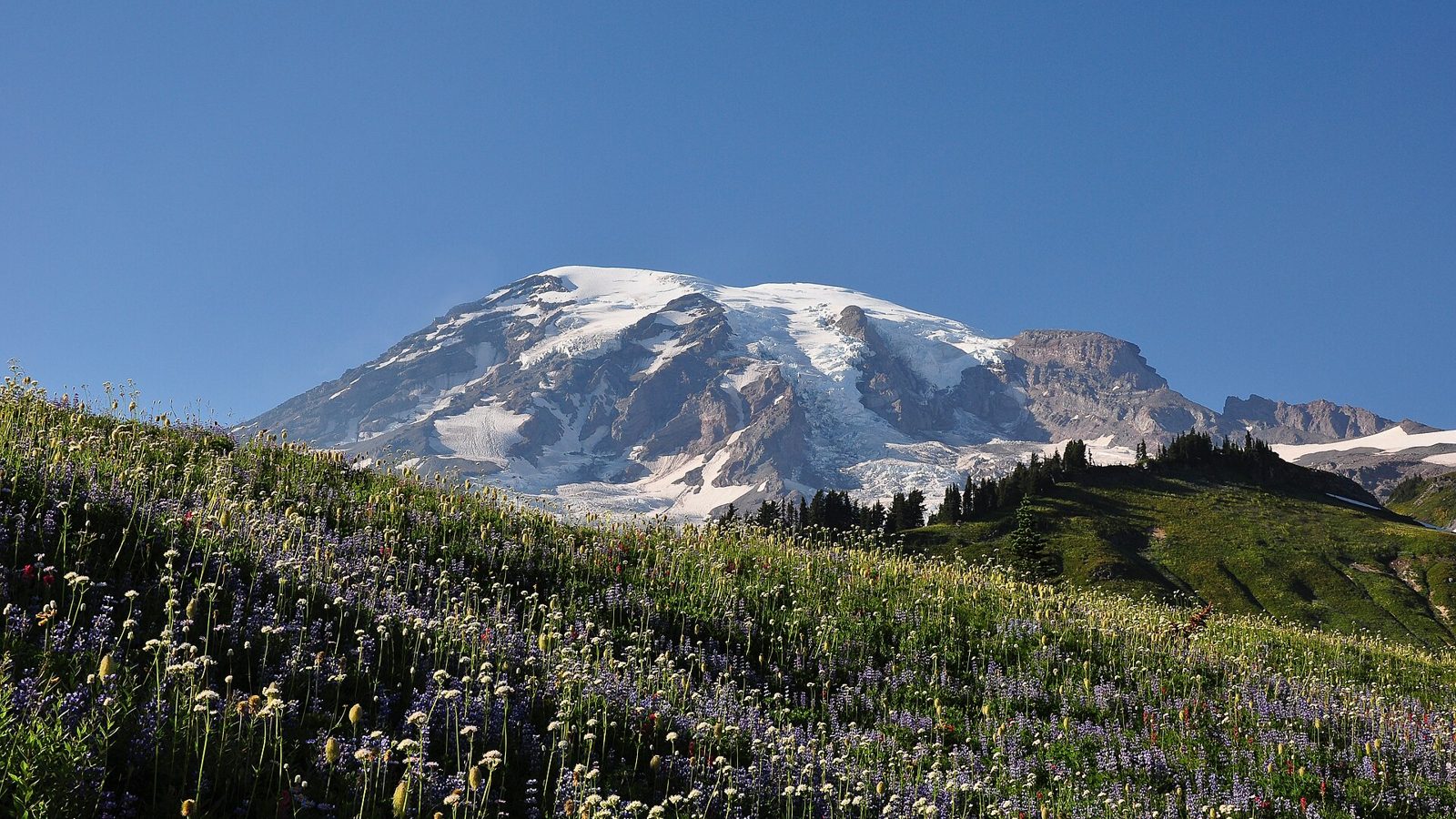
A glaciated volcano about two hours south-east of Seattle, ringed by wildflower meadows, old-growth forest and waterfalls. You walk the Skyline Trail above Paradise, wait for the mountain to show itself in Reflection Lakes and sleep in a 1916 lodge or a cabin in the woods. Best time to visit: July to September. Daily budget (budget traveller): $110 to $380 USD.
Drive in and find your feet
Morning: Pick up a hire car at Seattle-Tacoma airport and stock up on food in Eatonville or Puyallup. Fill up with fuel, then drive on to Ashford, about two hours in total.
Afternoon: Enter at Nisqually and stop at the Kautz Creek boardwalk. Then walk the Trail of the Shadows at Longmire and visit the small museum.
Evening: Dinner and a slice of blackberry pie at Copper Creek Inn, then an early night ready for a dawn start.
Paradise and the Skyline Trail
Morning: Reach Paradise by 7am to park. Hike the Skyline Trail loop to Panorama Point, about 9km with roughly 520m of climbing.
Afternoon: Lunch at Paradise Camp Deli, then look round the exhibits in the Jackson Visitor Center. Finish with the short paved walk to Myrtle Falls.
Evening: Sit by the fire in the Paradise Inn lobby, then stay up for sunset over the meadows before driving back down carefully.
Waterfalls on the Paradise road
Morning: Start early for Comet Falls, a steep 6km return hike from a tiny car park. Stop at Christine Falls on the way back.
Afternoon: Picnic at Longmire, then stop at Narada Falls and drive the Ricksecker Point loop for views of the Tatoosh Range.
Evening: Momos at Wildberry in Ashford and a quiet evening.
Reflection Lakes and Stevens Canyon
Morning: Be at Reflection Lakes for sunrise, then hike up the Pinnacle Peak trail to the saddle for a big view of the mountain. It is short but steep.
Afternoon: Drive Stevens Canyon Road east, stopping at Inspiration Point and Box Canyon, then carry on to Packwood. The road is only open in summer and autumn.
Evening: Check into a cabin in Packwood and have pizza or a burger in town.
Chinook Pass and the east side
Morning: Drive north to Chinook Pass and walk the Naches Peak Loop clockwise, past Tipsoo Lake and huckleberry slopes.
Afternoon: If Sunrise Road is open, drive up to Sunrise, the highest point you can reach by car. If not, ride the gondola at Crystal Mountain for a view of Rainier.
Evening: Head back to Ashford via Packwood and Stevens Canyon, or stay a night near Greenwater.
Forest day around Longmire
Morning: Hike the Rampart Ridge loop from Longmire, about 7.5km, for a view down the Nisqually valley. Then walk to the Wonderland Trail suspension bridge.
Afternoon: Drive out to Northwest Trek Wildlife Park near Eatonville to see elk, bison and bears, or rest with a book at the National Park Inn.
Evening: A last diner dinner in Ashford, and stargazing if the sky is clear.
Last look and depart
Morning: Make an early run up to Paradise for one more view of the mountain while the meadows are empty, then have breakfast.
Afternoon: Drive back to Seattle-Tacoma, about two to two and a half hours. Allow extra time for traffic on Interstate 5.
Evening: Fly out, or carry on to Seattle or the Olympic Peninsula.
What to eat in Mount Rainier National Park
- Blackberry pie at Copper Creek Inn in Ashford, a roadside institution near the park entrance that also does big breakfasts
- Momos and Sherpa stew at Wildberry in Ashford, run by a family with Everest climbing roots and a favourite with climbers
- A slice of pizza or a sandwich from Paradise Camp Deli in the Jackson Visitor Center, the easiest hot food up at Paradise
- The breakfast or dinner buffet in the Paradise Inn dining room in summer, with the outdoor barbecue at lunchtime. No reservations are taken
- Huckleberry milkshakes, ice cream and jam in late summer, sold at cafés and shops in Ashford and Packwood
- A supermarket picnic of smoked salmon, Washington apples or cherries and local craft beer, bought in Eatonville, Enumclaw or Puyallup before you reach the park
Hidden gems
- Ricksecker Point Road, a short one-way loop off the Paradise road with wide views of the Tatoosh Range and the Nisqually valley, and far fewer people than Paradise
- The Bench and Snow Lakes trail off Stevens Canyon Road, a short walk with small ups and downs to two quiet lakes, good in late summer when the bear grass and huckleberries are out
- The lobby of Paradise Inn, with its huge log beams, stone fireplaces and the hand-carved piano and grandfather clock made by a German carpenter in 1919
- The Kautz Creek boardwalk between the entrance and Longmire, where you can see the ground torn up by the 1947 debris flow, a reminder that this is an active volcano
- The suspension bridge over the Nisqually River on the Wonderland Trail near Longmire, a short walk from the road and lovely when the river is milky with glacier silt
Getting around
You need a car to explore the park on your own. There is no park shuttle and no public bus, and fuel is not sold inside the park, so fill up in Ashford, Elbe or Packwood. From the Nisqually Entrance it is about 10km to Longmire, then roughly 19km of winding road up to Paradise. Allow 45 minutes from the gate to Paradise without traffic. In summer the Paradise car parks can fill by mid-morning, especially at weekends, so arrive before 7am or after 4pm, as the park itself suggests. Stevens Canyon Road links Paradise with the south-east side and Packwood, but it usually opens only from late May or June to October, and it closed on 20 October in 2026. In winter, vehicle access is from the Nisqually Entrance only. The gate above Longmire closes every night and opens each morning only if the road is safe, and uphill traffic is usually stopped around 4pm. All vehicles must carry tyre chains in the park from November to May. Without a car, guided day tours from Seattle cost roughly $150 to $275 USD and usually include the entrance fee.
Safety
Crime against visitors is rare, but break-ins at trailhead car parks do happen, so leave nothing on show in the car. The real risks come from the mountain. Weather at Paradise can turn from sunshine to thick cloud in minutes, and people get lost on snow-covered trails, especially on the Muir Snowfield above Panorama Point. Carry a map, a headtorch and warm layers even in August, and turn back in whiteouts. Watch for snow bridges over streams in early summer, and do not walk on them or cross fast glacial rivers. Black bears live here, so keep your distance and store food properly when camping. Do not feed marmots or birds. Mobile signal is patchy or absent on most trails, so tell someone your plan. Mount Rainier is an active volcano, and if you sleep in a river valley, learn the lahar evacuation signs. In winter, avalanches and icy roads are a serious danger. The emergency number is 911. Healthcare in the US is very expensive, so overseas visitors need travel insurance with good medical cover.
Frequently asked questions
What does this 7-day Mount Rainier National Park itinerary cover?
Day 1: Drive in and find your feet. Day 2: Paradise and the Skyline Trail. Day 3: Waterfalls on the Paradise road. Day 4: Reflection Lakes and Stevens Canyon. Day 5: Chinook Pass and the east side. Day 6: Forest day around Longmire. Day 7: Last look and depart.
Is 7 days enough for Mount Rainier National Park?
Our recommended trip length for Mount Rainier National Park is 3 to 5 days. This 7-day plan focuses on the highlights and groups sights by area so you spend less time travelling between them.
How much does 7 days in Mount Rainier National Park cost?
A budget traveller spends about $110 to $380 USD a day in Mount Rainier National Park, so roughly $770 to $2,660 USD for 7 days, not counting flights.
Where should I stay for 7 days in Mount Rainier National Park?
Ashford and the Nisqually Entrance: A strung-out village along State Route 706, ending at the park's only year-round entrance. Longmire: The park's historic hub, about 10km inside the Nisqually Entrance, among big old cedars and firs at around 830m.
When is the best time to visit Mount Rainier National Park?
The best time to visit Mount Rainier National Park is July to September.
How do I get around Mount Rainier National Park?
You need a car to explore the park on your own. There is no park shuttle and no public bus, and fuel is not sold inside the park, so fill up in Ashford, Elbe or Packwood.
Is Mount Rainier National Park safe for solo travellers?
Crime against visitors is rare, but break-ins at trailhead car parks do happen, so leave nothing on show in the car. The real risks come from the mountain.
More 7-day guides
- Nantucket in 7 days
- Rocky Mountain National Park in 7 days
- Sequoia National Park in 7 days
- Sonoma in 7 days
- Portland, Maine in 7 days
- New York in 7 days
- San Francisco in 7 days
- Chicago in 7 days
Mount Rainier National Park in 2 days | Mount Rainier National Park in 3 days | Mount Rainier National Park in 4 days | Mount Rainier National Park in 5 days | Full Mount Rainier National Park guide
Joy Plus home | Destinations | Itineraries | Activities | Flights | Budget planner | Calendar | Map | Blog | Lifetime access