Destinations / Europe
Nerja, Spain travel guide
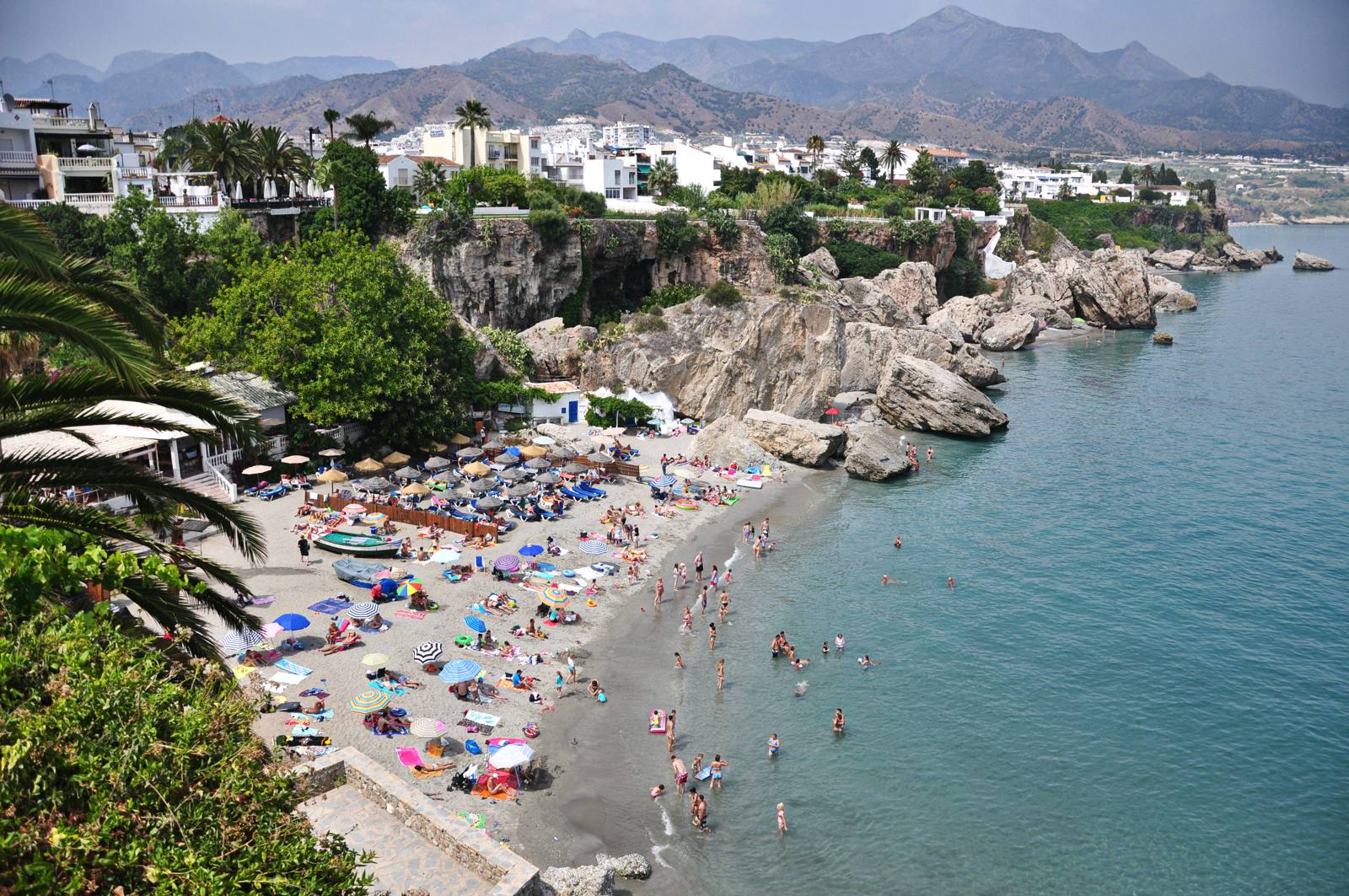
A clifftop town on the eastern Costa del Sol, with a seafront promenade over small coves, a huge show cave up the road, white villages in the hills behind and paella cooked over wood fires on the beach.
- Best time to visit: April to June and September to October
- Daily budget (budget traveller): $75 to $240 USD
- Ideal trip length: 4 to 7 days
Nerja is about 50km east of Málaga, at the point where the Costa del Sol turns rocky and quiet. Behind it, the Sierra Almijara rises steeply. The town sits on low cliffs above a string of small coves rather than one long strip of sand, so it feels more like a real town than a resort. The centre is the Balcón de Europa, a palm-lined lookout built out over the sea, with a whitewashed church beside it and narrow lanes behind it full of tapas bars. To the east are Burriana beach, the Nerja Caves and the village of Maro. Below Maro, protected cliffs run down to clear water that you can kayak. Frigiliana, one of Andalucía's best-known white villages, is a 20-minute bus ride inland. Nerja is busy with British, Spanish and Scandinavian visitors, and it gets crowded and pricey in July and August. Outside those months it is easy, walkable and good value. Buses are cheap, menus del día keep lunch affordable and the best views are free.
Nerja is a town of about 20,000 people in the Axarquía, the eastern corner of Málaga province. It grew from a fishing and sugar cane village into a holiday town, but it never got the high-rise strip of the western Costa del Sol. The old centre sits on low cliffs, and the beaches are a run of small coves divided by rocky points. The Balcón de Europa is the heart of it. It is a promenade on the site of an old fort, named after King Alfonso XII's visit in 1885, when he came to see the damage from an earthquake. Just east of town are the Nerja Caves, found by five boys in 1959 and now one of Spain's most visited caves. Beyond them is the village of Maro and the protected Maro-Cerro Gordo cliffs. Inland, the white village of Frigiliana is a short bus ride away.
Getting here is easy. Fly into Málaga, then take an Alsa bus. A single fare is about €5-6, and direct services reach Nerja in around 50 minutes from Málaga bus station. There is one direct airport bus a day, usually mid-afternoon. Base yourself in the old town near the Balcón for walkable evenings, at Burriana for long beach days or on the Torrecilla side for apartments and supermarkets. You do not need a car. A town bus runs to Maro and the caves, and a cheap local bus climbs to Frigiliana many times a day.
Timing makes a big difference. Spring and autumn are the sweet spots, with warm sun, a swimmable sea from about June and room on the beaches. July and August are hot and crowded, and accommodation prices jump. Winter is mild and sunny and popular with long-stay visitors, but the sea is cold. Plan around a few local rhythms. Frigiliana's Thursday market crowds out the village, the caves close on 15 May for the San Isidro pilgrimage, and the Río Chíllar river walk, once Nerja's most famous hike, has been closed since 2023. Nerja is relaxed, friendly and easy to do alone. Spanish is the main language, but English is widely spoken in the centre.
Nerja itinerary
Arrive and find the Balcón
Morning: This plan assumes you arrive on a Monday. Fly into Málaga and take an Alsa bus to Nerja, about 50 minutes on a direct service from the bus station.
Afternoon: Drop your bag in the old town and walk to the Balcón de Europa. Go down the steps to Calahonda to see the fishing boats, then swim at Carabeillo.
Evening: Sunset on the Balcón, then tapas along Calle Carabeo and around Plaza de España. Early night.
Market, caves and Maro
Morning: Browse the weekly market near Parque Verano Azul, which has run on Tuesday mornings. Then take the town bus to the Nerja Caves. Book a timed slot online for about €15.50.
Afternoon: Walk to the Acueducto del Águila, then down to Maro village. Swim at Playa de Maro, which is clear and rocky, so bring water shoes.
Evening: Bus back to Nerja. Use your cave ticket for the Nerja Museum if it is still open, or keep it for later in the week. Dinner in the old town.
Frigiliana
Morning: Catch an early bus to Frigiliana from Avenida de Pescia (about 20 minutes, around €1.20-1.30). Walk up into the Moorish quarter before the tour groups arrive.
Afternoon: Lunch in the village, then buy a jar of miel de caña. Ride the bus back down in the early afternoon, checking the timetable for the midday gap.
Evening: Walk the promenade west to Torrecilla for a sunset swim and dinner on that side of town.
Kayak the Maro cliffs
Morning: Join a guided kayak trip of about 2.5 hours from Burriana to the Cascada de Maro (around €39). Book ahead and choose a morning slot for calmer water.
Afternoon: Stay at Burriana for paella at Ayo's beach restaurant, then nap under an umbrella and swim.
Evening: Walk back up to the centre for drinks on a terrace near the Balcón. Keep tomorrow's plan flexible in case the kayak trip was moved.
Day trip to Málaga
Morning: Take an Alsa bus to Málaga, about 50 minutes on a direct service. Walk up to the Alcazaba and the Gibralfaro for city and port views.
Afternoon: Lunch near the Atarazanas market, then the cathedral or the Picasso Museum. Stroll along the port promenade at Muelle Uno.
Evening: Catch an evening bus back to Nerja. Check the last departure, and buy your return ticket earlier in the day in summer.
Coves and a slow day
Morning: An early walk west along the coast past El Salón, Torrecilla and El Playazo to the mouth of the Río Chíllar. The river walk itself is closed, so do not go past the signs.
Afternoon: Visit the Nerja Museum on Plaza de España for the history of the caves and the town, then rest through the hottest hours.
Evening: See La Dorada in Parque Verano Azul, then a farewell dinner of fried fish and a glass of Málaga wine.
Last swim and leave
Morning: Sunrise from an empty Balcón, then a final swim at Calahonda or Burriana before the beaches fill up.
Afternoon: Take an Alsa bus to Málaga, or the direct airport bus if its time fits your flight. Allow plenty of time in summer traffic.
Evening: Fly out from Málaga, or spend a night in the city if you have an early flight the next morning.
Best neighbourhoods
- Old town and the Balcón de Europa: The compact centre, around the Balcón, Plaza de España and the Church of El Salvador. Lanes such as Calle Carabeo and Calle Pintada hold most of the tapas bars, small hotels and simple hostales. It is lively until late, flat enough to walk everywhere and right above Calahonda and Carabeillo coves.
- Burriana: Nerja's biggest and busiest beach, about 15 minutes' walk east of the Balcón down a long flight of steps or via the clifftop roads. There are beach bars, kayak hire, Ayo's wood-fired paella and plenty of apartments on the slopes above. It is good for long beach days but quieter at night than the centre.
- Torrecilla and the west side: The newer, flatter side of town, around Torrecilla beach and El Playazo, which runs west towards the Río Chíllar. It has more apartment blocks, supermarkets and everyday cafés, and it is often slightly cheaper than the old town. The promenade walk back to the Balcón takes about 15 minutes.
- Parque Verano Azul and the bus stop: The practical inland edge of the centre, close to the Alsa stop on Avenida de Pescia, the weekly market area and the park named after the 1980s TV series filmed here. It is not pretty, but it is handy for early buses and cheaper rooms.
- Maro: A tiny white village about 4km east of Nerja, beside the caves and above Playa de Maro and the protected cliffs. It is very quiet, with a handful of places to eat. Stay here for peace and kayaking, but expect to take the town bus or a taxi for an evening in Nerja.
Must-do experiences
- Walk out onto the Balcón de Europa: The promenade sits on the site of an old fort and was named after King Alfonso XII's visit in 1885. Go at sunrise when it is empty, then again at dusk for the light on the mountains. Steps lead down to Calahonda's fishing boats below.
- Visit the Nerja Caves: Five local boys found the caves in 1959. A walkway leads through enormous halls of stalactites, including the Sala del Cataclismo and its huge central column. Book online, since adult tickets are about €15.50 and cost more at the gate. Bring a light layer.
- Kayak the Maro cliffs to the waterfall: Guided trips of about 2.5 hours leave from Burriana or Playa de Maro. They paddle under the protected Maro-Cerro Gordo cliffs to the Cascada de Maro, which falls straight into the sea. Book a morning slot, when the water is usually flattest.
- Take the bus up to Frigiliana: The white village sits about 20 minutes inland and has a Moorish old quarter of steep, flower-lined lanes. The local bus costs about €1.20-1.30. Go early, and avoid Thursdays, when the market fills the village and the bus.
- Eat paella at Burriana: Ayo's huge pans of paella cooked over a wood fire are a Nerja institution, and a plate is cheap by beach standards. Sardine espetos grilled on canes over embers at the beach bars are the other must.
- See the Acueducto del Águila: A four-tier brick aqueduct from the late 1800s, built to carry water to a sugar mill. It is a short walk from the caves. Combine it with the caves and a swim at Playa de Maro for an easy half-day.
- Walk the coves west of the Balcón: Follow the promenade from El Salón past Torrecilla to El Playazo, dropping down to each beach. It is flat, free and sociable, with cafés along the way and a sunset swim at the end.
Hidden gems
- Carabeillo, a small cove reached by steps from Calle Carabeo, much calmer than the bigger beaches in summer
- The view down into Calahonda from the steps below the Balcón, where fishing boats are pulled up between the rocks
- Playa del Cañuelo, a pebbly cove at the eastern end of the Maro-Cerro Gordo cliffs, with clear water for snorkelling
- Parque Verano Azul, which holds La Dorada, the boat from the 1980s Spanish TV series filmed in Nerja, a nostalgic stop for Spanish visitors
- Maro's plaza and church in the late afternoon, when the day-trippers have gone and the village is quiet again
Daily budget
- Accommodation: budget €50-90 / night (simple hostal room, shoulder season), mid-range €100-180 (small hotel or apartment), splurge €200-350+ (Parador de Nerja, sea-view hotels). There are few true dorm hostels, so solo travellers usually take a single room in a hostal. Prices often double in August, so book early. Apartments get cheaper on weekly stays.
- Food: budget €25-35 / day (menú del día, tapas, supermarket breakfast), mid-range €45-70 (sit-down lunch and dinner), splurge €90+ (seafood dinners, wine). A menú del día is usually around €14-18. Tapas cost about €3-4 each and a beach plate of paella is cheap. Prices are rough guides, so check.
- Transport: budget €0-5 / day (walking, local buses), mid-range €10-20 (buses plus the odd taxi), splurge €50+ (car hire, private transfers). The Alsa bus from Málaga is about €5-6. The Frigiliana bus is about €1.20-1.30. A taxi to Frigiliana is around €12, and an airport taxi costs far more than the bus.
- Activities: budget €0-16 / day (beaches, walks, caves once), mid-range €30-45 (guided kayak trip), splurge €70+ (private boat or guided tours). Adult cave tickets are about €15.50 online and include the Nerja Museum within 10 days. Guided kayak trips to the Maro waterfall have been listed at about €39.
- Drinks & nightlife: budget €5-10 (a couple of cañas), mid-range €20-35 (drinks at a terrace bar), splurge €50+ (cocktails with a sea view). A small beer costs roughly €2-3. Nightlife means busy tapas bars, a few late bars around Plaza Tutti Frutti and summer fiestas, not big clubs.
Where to stay
- Social hostel in Old town (€50-90 / night (more in August)): Nerja has very few dorm hostels. The usual budget choice is a single room in a family-run hostal in the lanes behind the Balcón. It is simple, central and close to the tapas bars, where meeting people is easy.
- Boutique hotel in Old town, Calle Carabeo (€120-220 / night): Small hotels such as Hotel Carabeo sit on the quiet lane above Carabeillo cove. You get sea views and character, and the Balcón is a two-minute walk away.
- Apartment in Burriana or Torrecilla (€70-150 / night): Holiday apartments are plentiful on both sides of town, with kitchens, supermarkets nearby and weekly rates outside summer. Burriana suits beach days and Torrecilla is flatter.
- Splurge in Burriana clifftop (€200-350+ / night): The Parador de Nerja has gardens on the cliff above Burriana beach and a lift down to the sand. It is quiet and spacious, a 15-minute walk from the Balcón.
What to eat
- Paella cooked over a wood fire on Burriana beach, eaten at a plastic table with your feet in the sand
- Espetos de sardinas: sardines on a cane skewer, grilled over embers in a beached boat, a Málaga coast staple from late spring to autumn
- Pescaíto frito: a mixed plate of small fried fish, squid and anchovies, best shared as a ración at a tapas bar
- Ajoblanco: a chilled almond and garlic soup, often served with grapes, from the Axarquía region
- Miel de caña: sugar cane molasses, made in Frigiliana and drizzled over fried aubergine
- Sweet Málaga wine from the Axarquía hills and local mangoes and avocados, which grow on the terraces around Nerja
Day trips
- Frigiliana (About 7km inland, 20 minutes by bus): A white village with a steep Moorish quarter, flower pots on every wall and views back down to the sea. It is famous for miel de caña, the local cane molasses. Go early in the day, and skip Thursdays, when the market fills the streets. Take the Grupo Verano Azul bus from Avenida de Pescia, about €1.20-1.30, paid on board. There are frequent runs from Monday to Saturday and fewer on Sundays. A taxi costs around €12.
- Maro and the Maro-Cerro Gordo cliffs (About 4km east of Nerja): A protected stretch of coast with clear water, small coves and the Cascada de Maro, a waterfall that drops into the sea. Pair it with the caves, the aqueduct and Playa de Maro. Further east, Playa del Cañuelo is good for snorkelling. Take the town bus to Maro and walk down to the beach. Join a guided kayak trip from Burriana or Maro (about 2.5 hours, around €39) to reach the waterfall. Cañuelo is easiest by car or taxi.
- Málaga (About 50km west, 50 minutes to 1 hour 30 by bus): Málaga has a Moorish fortress, a hilltop castle, a cathedral, the Picasso Museum, a busy market and a long seafront. It makes a lively contrast to Nerja and is a good choice for a cooler or cloudier day. Take an Alsa bus from Avenida de Pescia to Málaga bus station or the port stop. A single is about €5-6. Pick a direct service and check the last bus back.
When to visit
- Spring (March - May): 18-24°C, mostly sunny, sea still cool. Crowds: Moderate, busy over Easter. Great for walking, Frigiliana and the caves, with fair room prices. Easter week brings processions and higher prices. Swimming is brisk until late May.
- Summer peak (June - August): 27-32°C, dry and hot, sea around 21-24°C. Crowds: Very busy, especially August and weekends. Best for swimming and kayaking, and the Noche de San Juan on 23 June is a fun beach night. Book early, expect higher prices and plan for the heat.
- Autumn (September - October): 22-28°C, warm sea, the odd storm. Crowds: Moderate, easing through October. The locals' pick. The sea is at its warmest, the crowds thin and the October feria brings music and food stalls.
- Winter (November - February): 15-19°C by day, cool nights, some rainy spells. Crowds: Low, with long-stay visitors. Cheapest rooms and good walking weather. Some beach bars close and the sea is cold, but the Balcón in winter sun is still lovely.
Entry rules for your passport
Visa rules for Spain depend on the passport you travel on. Check the official source before you book: European Commission: Schengen visa policy
Getting there
Fly into Málaga Airport (AGP), which has direct flights from across the UK and Europe and connections worldwide. There is no train to Nerja. Alsa runs one direct bus a day from the airport to Nerja, usually around 14:30, taking about 1 hour 45 minutes. At other times, take the airport express bus or the C-1 Cercanías train into Málaga, then an Alsa bus from Málaga bus station. There are dozens of departures a day. Direct buses take about 50 minutes and stopping services up to 1 hour 30, with single fares around €5-6. Buy tickets online in summer and at weekends. Buses stop on Avenida de Pescia, close to the centre. A taxi from the airport takes 45-60 minutes but costs many times more than the bus. Alsa also runs buses to Nerja from Granada and towns along the coast. By car, Nerja is just off the A-7 motorway.
Border checks: non-EU visitors (other than Swiss, Norwegian, Icelandic, Liechtenstein, Andorran, Monegasque, San Marinese and Vatican citizens, and holders of an EU residence permit or long-stay visa) are registered in the EU's Entry/Exit System (EES) instead of getting a passport stamp. On your first crossing, officers take your photo and/or fingerprints, so allow extra time at passport control. ETIAS, the planned travel authorisation, is not in operation yet, so don't pay any website for one.
Getting around
Nerja is walkable. The old town, the Balcón and the western beaches are all within 15 minutes of each other, and Burriana is 15 minutes east on foot. Expect steps and slopes. A small town bus runs to Maro and stops near the caves. A tourist train has run to the caves too, at about €6 return according to recent visitors. The bus to Frigiliana leaves from Avenida de Pescia, by the main bus stop. Since August 2026 it has been run by Grupo Verano Azul, with frequent departures from Monday to Saturday and fewer on Sundays. Fares are about €1.20-1.30, paid on board. Alsa runs intercity buses from the same stop to Málaga, Granada and towns along the coast. Taxis wait behind the bus stop, and a ride to Frigiliana is around €12. You do not need a car. If you hire one for the hill villages, parking in central Nerja is tight and summer traffic on the N-340 is slow.
Safety
Nerja is a safe town with little crime against visitors. Watch for pickpockets in the crowds on the Balcón, at the bus stop and at summer fiestas, and keep an eye on your bag on the beach. Summer heat is the bigger risk. July and August often pass 30°C, so carry water, walk the hills early and take a long lunch in the shade. Sea conditions can change quickly. Swim on lifeguarded beaches in summer, follow the flags and do not swim alone into sea caves. Wind cancels kayak trips, and that is for a reason. The mountains behind town have a high wildfire risk in summer, and some paths, including the Río Chíllar, are closed. Never light fires or barbecues outdoors. Steps and wet marble pavements are slippery, so wear shoes with grip. In an emergency, call 112.
Solo travel tips
- Stay near the Balcón: You can walk to tapas, sunsets and the beach, and the centre stays busy and well lit in the evening. That makes dining alone and walking home easy.
- Eat at the bar: Sitting at the counter for tapas is normal in Spain and the best way to chat with staff and other travellers. Lunch is the main meal, so a menú del día is the cheapest way to eat well.
- Book weather-dependent trips early: Wind and swell can cancel kayak trips to the Maro waterfall. Book early in your stay so you have room to move it, and never on your last day.
- Join a small group on the water: Guided kayak trips usually take small groups, so they are a natural way to meet people. A kayak tour is also safer than paddling the cliffs alone.
- Safety for solo travellers: The main risks are heat, sea conditions and slippery steps, not crime. Walk early, carry water, swim on lifeguarded beaches and take a taxi rather than walking the dark road to Maro at night.
- Learn the bus times: The Frigiliana bus has a gap in the early afternoon and fewer runs on Sundays. Screenshot the timetable, and buy Alsa tickets online in summer so you get a seat.
Cultural etiquette
- Greet people with 'hola' or 'buenos días' when you walk into a shop or bar, and say 'gracias' when you leave. It is expected, even in tourist areas.
- Meals run late. Lunch is around 14:00-16:00 and dinner rarely starts before 20:30. Many kitchens close between lunch and dinner.
- Cover up away from the beach. Walking through town in swimwear or shirtless is frowned upon, and some towns fine people for it.
- Keep the noise down in residential lanes late at night. Many people live in the old town above the bars.
- Respect the protected Maro-Cerro Gordo coast. Do not take shells, sand or sea life, and do not light fires anywhere in the countryside.
- Religious processions at Easter and on feast days, including Virgen del Carmen in July, are serious events. Stand back, keep quiet as the floats pass and do not block the route.
- Some small shops still close in the afternoon, and Sunday is quiet. Plan errands for the morning.
Frequently asked questions
How do I get from Málaga Airport to Nerja?
Alsa runs one direct bus from the airport, usually around 14:30, and it takes about 1 hour 45 minutes. Otherwise, take the airport express bus or the C-1 train into Málaga, then an Alsa bus from the main bus station. Direct buses take about 50 minutes and stopping services take up to 1 hour 30. A single fare is about €5-6. Taxis take 45-60 minutes and cost much more.
How many days do I need in Nerja?
Three days covers the Balcón, the caves and Maro, and Frigiliana. Five days adds a kayak trip and a day in Málaga. With a week you can slow down, swim most afternoons and still have a spare day if wind cancels a boat trip.
When is the best time to visit Nerja?
April to June and September to October bring warm days, a swimmable sea from late spring and fewer crowds. July and August are hot, busy and pricier, especially at weekends. Winter is mild and sunny, around 16-18°C by day. It is good for walking and cheap rooms, but the sea is cold and some beach bars close.
Is the Río Chíllar walk open?
No. Nerja closed access to the river in August 2023 because of the wildfire risk and overcrowding, and it was still closed in autumn 2026. The regional government is looking at proposals for a controlled reopening, which would probably mean a paid ticket, limited numbers and booking ahead. Check with the Nerja tourist office before you plan around it.
Do I need to book the Nerja Caves in advance?
Booking online is cheaper and saves queuing. Adult tickets are about €15.50 online, and walk-up prices are higher. Opening hours are roughly 9:15-16:30 for most of the year, and until 17:30 from June to September and at Easter and Christmas. The caves close on 1 and 6 January, 15 May and 25 December. Your ticket also gets you into the Nerja Museum free within 10 days.
Can I swim in Nerja all year?
Locals swim from roughly June to October, when the sea is at its warmest. In spring and late autumn it is fresh but fine for a quick dip. In winter it is cold, around 15°C. Lifeguards are mainly on duty in summer. The coves are small, so they fill up fast in August, and quieter mornings are better.
Is Nerja good for solo female travellers?
Yes. The centre is busy and well lit late into the evening, and eating alone at a bar counter is completely normal in Spain. Use normal city sense: watch your drink during fiestas, take a taxi rather than walking unlit roads to Maro at night, and keep valuables out of sight on the beach.
What are the entry rules for Spain in 2026?
EU citizens need only an ID card or passport. Many non-EU visitors, including those from the UK, US, Canada and Australia, can stay up to 90 days in any 180 days in the Schengen area without a visa. The EU's Entry/Exit System now records fingerprints and a photo at the border. The ETIAS travel authorisation has been planned to follow, so check whether it is required before you travel and read your government's latest advice.
More about Nerja
Tours and activities in Nerja | Nerja in 2 days | Nerja in 3 days | Nerja in 4 days | Nerja in 5 days | Nerja in 7 days
Can't decide? Compare Nerja with...
Joy Plus home | Destinations | Itineraries | Activities | Flights | Budget planner | Calendar | Map | Blog | Lifetime access