Nerja in 7 days
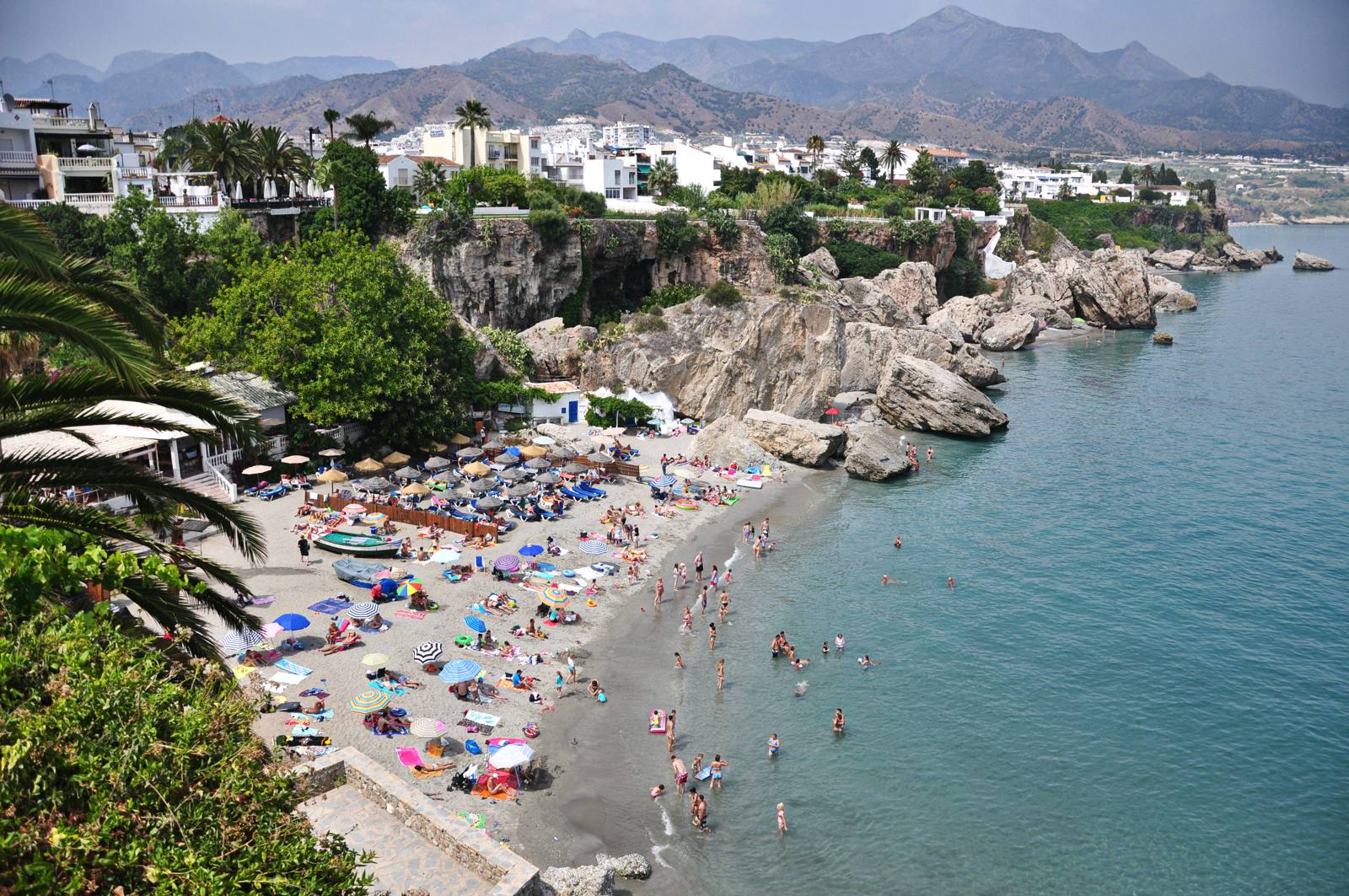
A clifftop town on the eastern Costa del Sol, with a seafront promenade over small coves, a huge show cave up the road, white villages in the hills behind and paella cooked over wood fires on the beach. Best time to visit: April to June and September to October. Daily budget (budget traveller): $75 to $240 USD.
Arrive and find the Balcón
Morning: This plan assumes you arrive on a Monday. Fly into Málaga and take an Alsa bus to Nerja, about 50 minutes on a direct service from the bus station.
Afternoon: Drop your bag in the old town and walk to the Balcón de Europa. Go down the steps to Calahonda to see the fishing boats, then swim at Carabeillo.
Evening: Sunset on the Balcón, then tapas along Calle Carabeo and around Plaza de España. Early night.
Market, caves and Maro
Morning: Browse the weekly market near Parque Verano Azul, which has run on Tuesday mornings. Then take the town bus to the Nerja Caves. Book a timed slot online for about €15.50.
Afternoon: Walk to the Acueducto del Águila, then down to Maro village. Swim at Playa de Maro, which is clear and rocky, so bring water shoes.
Evening: Bus back to Nerja. Use your cave ticket for the Nerja Museum if it is still open, or keep it for later in the week. Dinner in the old town.
Frigiliana
Morning: Catch an early bus to Frigiliana from Avenida de Pescia (about 20 minutes, around €1.20-1.30). Walk up into the Moorish quarter before the tour groups arrive.
Afternoon: Lunch in the village, then buy a jar of miel de caña. Ride the bus back down in the early afternoon, checking the timetable for the midday gap.
Evening: Walk the promenade west to Torrecilla for a sunset swim and dinner on that side of town.
Kayak the Maro cliffs
Morning: Join a guided kayak trip of about 2.5 hours from Burriana to the Cascada de Maro (around €39). Book ahead and choose a morning slot for calmer water.
Afternoon: Stay at Burriana for paella at Ayo's beach restaurant, then nap under an umbrella and swim.
Evening: Walk back up to the centre for drinks on a terrace near the Balcón. Keep tomorrow's plan flexible in case the kayak trip was moved.
Day trip to Málaga
Morning: Take an Alsa bus to Málaga, about 50 minutes on a direct service. Walk up to the Alcazaba and the Gibralfaro for city and port views.
Afternoon: Lunch near the Atarazanas market, then the cathedral or the Picasso Museum. Stroll along the port promenade at Muelle Uno.
Evening: Catch an evening bus back to Nerja. Check the last departure, and buy your return ticket earlier in the day in summer.
Coves and a slow day
Morning: An early walk west along the coast past El Salón, Torrecilla and El Playazo to the mouth of the Río Chíllar. The river walk itself is closed, so do not go past the signs.
Afternoon: Visit the Nerja Museum on Plaza de España for the history of the caves and the town, then rest through the hottest hours.
Evening: See La Dorada in Parque Verano Azul, then a farewell dinner of fried fish and a glass of Málaga wine.
Last swim and leave
Morning: Sunrise from an empty Balcón, then a final swim at Calahonda or Burriana before the beaches fill up.
Afternoon: Take an Alsa bus to Málaga, or the direct airport bus if its time fits your flight. Allow plenty of time in summer traffic.
Evening: Fly out from Málaga, or spend a night in the city if you have an early flight the next morning.
What to eat in Nerja
- Paella cooked over a wood fire on Burriana beach, eaten at a plastic table with your feet in the sand
- Espetos de sardinas: sardines on a cane skewer, grilled over embers in a beached boat, a Málaga coast staple from late spring to autumn
- Pescaíto frito: a mixed plate of small fried fish, squid and anchovies, best shared as a ración at a tapas bar
- Ajoblanco: a chilled almond and garlic soup, often served with grapes, from the Axarquía region
- Miel de caña: sugar cane molasses, made in Frigiliana and drizzled over fried aubergine
- Sweet Málaga wine from the Axarquía hills and local mangoes and avocados, which grow on the terraces around Nerja
Hidden gems
- Carabeillo, a small cove reached by steps from Calle Carabeo, much calmer than the bigger beaches in summer
- The view down into Calahonda from the steps below the Balcón, where fishing boats are pulled up between the rocks
- Playa del Cañuelo, a pebbly cove at the eastern end of the Maro-Cerro Gordo cliffs, with clear water for snorkelling
- Parque Verano Azul, which holds La Dorada, the boat from the 1980s Spanish TV series filmed in Nerja, a nostalgic stop for Spanish visitors
- Maro's plaza and church in the late afternoon, when the day-trippers have gone and the village is quiet again
Getting around
Nerja is walkable. The old town, the Balcón and the western beaches are all within 15 minutes of each other, and Burriana is 15 minutes east on foot. Expect steps and slopes. A small town bus runs to Maro and stops near the caves. A tourist train has run to the caves too, at about €6 return according to recent visitors. The bus to Frigiliana leaves from Avenida de Pescia, by the main bus stop. Since August 2026 it has been run by Grupo Verano Azul, with frequent departures from Monday to Saturday and fewer on Sundays. Fares are about €1.20-1.30, paid on board. Alsa runs intercity buses from the same stop to Málaga, Granada and towns along the coast. Taxis wait behind the bus stop, and a ride to Frigiliana is around €12. You do not need a car. If you hire one for the hill villages, parking in central Nerja is tight and summer traffic on the N-340 is slow.
Safety
Nerja is a safe town with little crime against visitors. Watch for pickpockets in the crowds on the Balcón, at the bus stop and at summer fiestas, and keep an eye on your bag on the beach. Summer heat is the bigger risk. July and August often pass 30°C, so carry water, walk the hills early and take a long lunch in the shade. Sea conditions can change quickly. Swim on lifeguarded beaches in summer, follow the flags and do not swim alone into sea caves. Wind cancels kayak trips, and that is for a reason. The mountains behind town have a high wildfire risk in summer, and some paths, including the Río Chíllar, are closed. Never light fires or barbecues outdoors. Steps and wet marble pavements are slippery, so wear shoes with grip. In an emergency, call 112.
Frequently asked questions
What does this 7-day Nerja itinerary cover?
Day 1: Arrive and find the Balcón. Day 2: Market, caves and Maro. Day 3: Frigiliana. Day 4: Kayak the Maro cliffs. Day 5: Day trip to Málaga. Day 6: Coves and a slow day. Day 7: Last swim and leave.
Is 7 days enough for Nerja?
Our recommended trip length for Nerja is 4 to 7 days. This 7-day plan focuses on the highlights and groups sights by area so you spend less time travelling between them.
How much does 7 days in Nerja cost?
A budget traveller spends about $75 to $240 USD a day in Nerja, so roughly $525 to $1,680 USD for 7 days, not counting flights.
Where should I stay for 7 days in Nerja?
Old town and the Balcón de Europa: The compact centre, around the Balcón, Plaza de España and the Church of El Salvador. Burriana: Nerja's biggest and busiest beach, about 15 minutes' walk east of the Balcón down a long flight of steps or via the clifftop roads.
When is the best time to visit Nerja?
The best time to visit Nerja is April to June and September to October.
How do I get around Nerja?
Nerja is walkable. The old town, the Balcón and the western beaches are all within 15 minutes of each other, and Burriana is 15 minutes east on foot.
Is Nerja safe for solo travellers?
Nerja is a safe town with little crime against visitors. Watch for pickpockets in the crowds on the Balcón, at the bus stop and at summer fiestas, and keep an eye on your bag on the beach.
Read more about Nerja
More 7-day guides
- Picos de Europa in 7 days
- Santillana del Mar in 7 days
- Albarracín in 7 days
- Frigiliana in 7 days
- La Gomera in 7 days
- Oviedo in 7 days
- El Hierro in 7 days
- Sóller in 7 days
Nerja in 2 days | Nerja in 3 days | Nerja in 4 days | Nerja in 5 days | Full Nerja guide
Joy Plus home | Destinations | Itineraries | Activities | Flights | Budget planner | Calendar | Map | Blog | Lifetime access