Destinations / Asia
Nong Khiaw, Laos travel guide
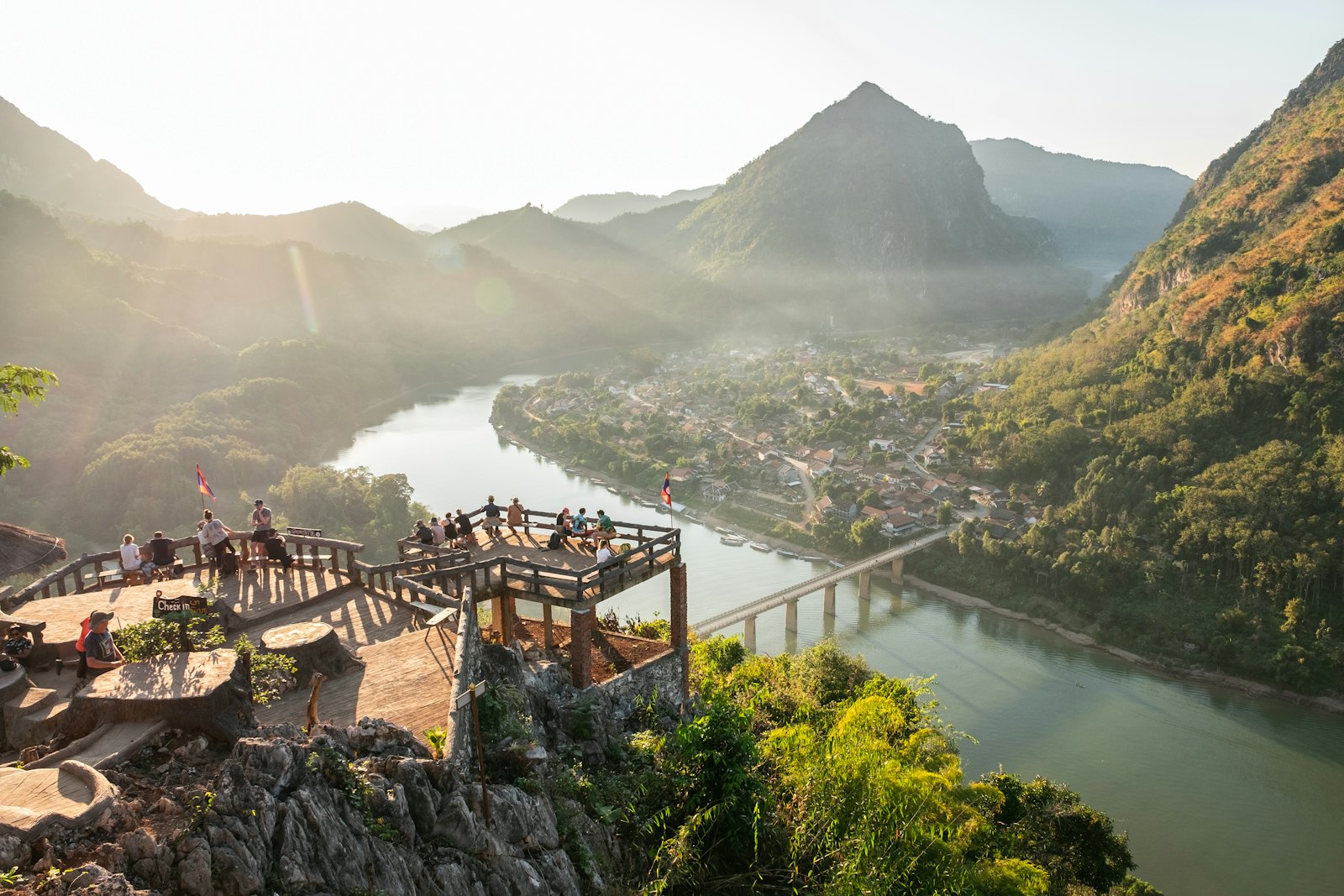
A small river town under huge limestone cliffs on the Nam Ou, where you climb to viewpoints at dawn, walk through wartime caves and take slow boats upriver to villages with no road.
- Best time to visit: November to February
- Daily budget (budget traveller): $20 to $115 USD
- Ideal trip length: 3 to 7 days
Nong Khiaw is about 140km north of Luang Prabang by road, roughly four hours by minivan on a winding road. The town is split in two by the Nam Ou river and joined by a single road bridge. The west bank has the bus station, the bank and the main street. The east bank, Ban Sop Houn, has most of the riverside bungalows and cafés. Steep limestone karsts rise straight out of the water on every side, and climbing them is the main thing people come for. Pha Daeng Peak is the famous viewpoint, and there are several more nearby. There are also caves that sheltered villagers and Pathet Lao fighters during the war, a full-day trek to the 100 Waterfalls and a public boat upriver to Muang Ngoi Neua. Nong Khiaw is cheap, quiet and easy to manage alone. The backpacker scene is small and friendly, and most evenings end with a Beerlao on a terrace above the river. It has got busier in the last few years, but it still feels like a village. Bring cash, a head torch and decent shoes.
Nong Khiaw grew up where the old road north crosses the Nam Ou, one of the main tributaries of the Mekong. A single bridge links the west bank, with the bus station, market and bank, to Ban Sop Houn on the east bank, where most travellers stay. Sheer karst cliffs rise on all sides, and they shape everything here. People climb them for the views, sleep beneath them in bamboo bungalows and visit the caves inside them, which sheltered villagers and Pathet Lao fighters during years of bombing. Nong Khiaw was once a quick stop on the boat trip between Luang Prabang and the far north. Dams have since cut parts of that route, and the town is now a destination in its own right, with a handful of hostels, mid-range riverside lodges and one proper resort with a pool.
The logistics are simple. Get to Luang Prabang by plane, or by the Laos-China Railway from Vientiane or Vang Vieng, then take a morning minivan for the four-hour drive north. Stay on the Ban Sop Houn side for river views and the Pha Daeng trailhead, or on the west bank to be near the bus station and agencies. Do the big viewpoint on your first clear morning, book the 100 Waterfalls trek a day ahead so others can join, and plan Muang Ngoi Neua as an overnight trip rather than a rushed day. Bring cash. The ATMs are unreliable, and almost nothing takes cards.
Timing matters more than you might expect. From November to February the mornings are cool and misty, and from the top of Pha Daeng you often look down on a sea of cloud. March and April bring heat and smoky haze from field burning, which can hide the karsts completely. The rains from May to October turn everything green but make the trails slick and the river fast. Nong Khiaw goes to bed early. Most kitchens close by 9pm or 10pm, and roosters start before dawn. If you want nightlife, go back to Vang Vieng. If you want to climb a mountain before breakfast and spend the afternoon in a hammock above the river, stay here.
Nong Khiaw itinerary
Arrive from Luang Prabang
Morning: Take a morning shared minivan from Luang Prabang, about four hours. Sit on the right for some river views on the final stretch.
Afternoon: Arrive at the bus station and take a shared tuk-tuk or walk 15 minutes to the bridge. Check in on the Ban Sop Houn side, then get cash at the ATM near the bridge in case it works.
Evening: Watch the sunset from a riverside terrace, then have a set meal at Deen Restaurant. Ask at your guesthouse who is climbing Pha Daeng tomorrow.
Pha Daeng sunrise and the Pha Tok caves
Morning: Start up Pha Daeng Peak by 5am with a head torch. Pay the fee at the trailhead booth, about ₭40,000-50,000, and allow 1 to 1.5 hours up. Watch the mist lift off the river.
Afternoon: Breakfast and a nap. Hire a bicycle and ride about 2km east to the Pha Tok caves, then on to the Ban Pha Toke Community Museum and its hospital cave.
Evening: Back for a Beerlao by the river. Visit an agency on the west bank and sign up for the 100 Waterfalls trek.
The 100 Waterfalls trek
Morning: Leave by boat up the Nam Ou with your group, then start the climb through the cascades. Wear shoes that can get wet, because much of the route is in the stream.
Afternoon: Lunch at the falls, then the walk back down and the boat home. Expect to be back mid to late afternoon.
Evening: Rinse off and get an early dinner at Delilah's. Pack a small bag for Muang Ngoi Neua and leave the rest at your guesthouse.
Upriver to Muang Ngoi Neua
Morning: Catch the public boat from the landing by the bridge, usually around 10:30. The trip takes about an hour and costs roughly ₭25,000-40,000.
Afternoon: Find a riverside bungalow with a hammock. Walk to Tham Kang cave, about ₭10,000 entry, and bring a torch.
Evening: Watch the sunset from the riverbank. Muang Ngoi is tiny and quiet, so eat early and go to bed with the village.
Village walks and back downriver
Morning: Walk the trails beyond the village through rice fields towards the nearby farming villages. Ask your guesthouse for the current route and stay on the path.
Afternoon: Catch the afternoon boat back to Nong Khiaw. Confirm the time the day before, because schedules change.
Evening: Check back into Ban Sop Houn. Have a quiet dinner by the river and do some laundry.
Sleeping Lady and a slow day
Morning: Climb the Sleeping Lady Viewpoint from Route 1C at dawn. It is steeper and rockier than Pha Daeng, so allow about an hour up and take the same path down.
Afternoon: Ride out to Pha Kuang Cave if you like tight squeezes, or rest in a hammock. Book your minivan back for tomorrow morning.
Evening: Drinks on the terrace at Hive Bar opposite the Sleeping Lady trailhead, then a farewell dinner by the river.
Morning market and leave
Morning: Go to the west bank morning market early for sticky rice and coffee, then catch your minivan to Luang Prabang.
Afternoon: Arrive in Luang Prabang around midday or early afternoon. Watch out for extra charges to be dropped in the city centre rather than at the northern bus station.
Evening: Connect onwards by train or plane, or spend the night in Luang Prabang.
Best neighbourhoods
- Ban Sop Houn (east bank): The village across the bridge from the bus station side, and the best base for most solo travellers. Riverside bungalows, Sunset Guesthouse, Nong Kiau Riverside and Deen Restaurant are here, and the Pha Daeng Peak trailhead is a short walk east. Sunset over the river is right in front of you.
- West bank main street: The practical side of town, with the bank and an ATM, tour agencies, Delilah's café and the morning market. The bus station is about 15 minutes' walk further west. It has cheaper guesthouses and hostels, and the boat landing for Muang Ngoi is close to the bridge.
- Route 1C towards the Sleeping Lady: The road heading out of town past the Sleeping Lady Viewpoint trailhead and Hive Bar. It is quieter, with a few hostels and guesthouses spread out along the road. It is fine if you have a bicycle, and you can be at the trailhead before sunrise.
- The road to Pha Tok: The stretch of Route 1C east of the bridge towards the Pha Tok caves and Ban Pha Toke. There is rice paddy, farmland and a handful of homestays and eco stays. It is very calm, but you will need a bicycle or scooter to get into town to eat.
- Muang Ngoi Neua: Not part of Nong Khiaw, but many travellers split their stay. It is a riverside village about an hour upriver by boat, with one dusty main street, cheap bungalows with hammocks and walking trails to nearby villages. It is a good place to slow right down for a night or two.
Must-do experiences
- Climb Pha Daeng Peak at sunrise: The classic Nong Khiaw viewpoint. The trail is roughly 2km each way with about 350m of climbing, and most people take 1 to 1.5 hours to get up. In the cool season the valley often fills with cloud at dawn and clears as the sun comes up. Entry is around ₭40,000-50,000 at the booth by the trailhead in Ban Sop Houn.
- Explore the Pha Tok caves: About 2km east of the bridge, a series of caves in a limestone cliff where villagers and Pathet Lao fighters hid from bombing during the war. The first is up a steep staircase. The others are reached by a short walk through farmland. Bring a torch, because the signs are hard to read in the dark.
- Trek to the 100 Waterfalls: A full day that starts with a boat ride up the Nam Ou, then follows a stream up a long series of cascades and pools, often walking right through the water. Agencies in town charge roughly US$30-40 per person, including the guide, boat and lunch, and prices drop when more people join.
- Take the boat to Muang Ngoi Neua: Public boats leave the landing by the bridge, usually around 10:30 and 14:00 to 14:30, and take about an hour. Tickets are roughly ₭25,000-40,000. The trip itself is one of the best parts, with cliffs, fishing boats and buffalo along the banks.
- Hike the Sleeping Lady Viewpoint: A steeper, rockier climb than Pha Daeng, starting on Route 1C about 1km from town near Hive Bar. Allow around 40 minutes to an hour up. Come back down the same marked path, because the alternative route is poorly signed.
- Visit the Ban Pha Toke Community Museum: About 4km from town, this newer site explains the war years and gives access to another cave that was used as a hospital. Entry has been about ₭50,000. It makes a good bicycle ride, and there is a restaurant on site.
- Watch sunset from the river: Grab a drink on a terrace on the Ban Sop Houn side and watch the light go orange on the karsts. Boats come in, kids swim off the sandbanks and the whole town slows down.
Hidden gems
- Pha Kuang Cave, around 3km out of town, a 300m cave with tight squeezes where you can borrow a torch when you buy your ticket
- The morning market on the west bank, best early, for sticky rice, river fish, forest greens and a sense of daily life
- Phanoy Cave and Viewpoint, a quieter climb than Pha Daeng, with a classic view over the town and the Sleeping Lady
- Hive Bar on Route 1C, opposite the Sleeping Lady trailhead, for a cold drink on the terrace after a sunset climb
- Tham Kang cave near Muang Ngoi Neua, a short walk from the village, with a pool at the bottom where large fish are left alone by local custom
Daily budget
- Accommodation: budget ₭80,000-200,000 / night (hostel dorm or basic bungalow), mid-range ₭350,000-800,000 (riverside bungalow or lodge), splurge ₭1,500,000+ (Mandala Ou Resort). Dorm beds can go for just a few US dollars. Riverside bungalows in Ban Sop Houn cost more for the view. Book ahead from December to January. Many places quote in US dollars, so compare prices.
- Food: budget ₭150,000-250,000 / day (noodle soup, market food, set meals), mid-range ₭300,000-500,000 (café breakfast, riverside dinners), splurge ₭600,000+ (resort dining with wine). Noodle soup and simple Lao dishes are cheap. Western-style café food costs noticeably more. Set meals at Deen have been around ₭20,000-25,000 in the past, but prices rise often with inflation, so treat all figures as rough.
- Transport: budget ₭0-100,000 / day (walking, bicycle hire), mid-range ₭150,000-300,000 (scooter hire or tuk-tuk trips), splurge ₭3,000,000+ (private car to Luang Prabang). The minivan from Luang Prabang costs roughly ₭120,000-250,000. The public boat to Muang Ngoi Neua is about ₭25,000-40,000, and a private boat about ₭300,000-400,000.
- Activities: budget ₭20,000-100,000 / day (viewpoints and caves), mid-range ₭650,000-900,000 (100 Waterfalls day trek), splurge US$80+ (two-day trek with homestay or kayaking). Recent fees: Pha Daeng about ₭40,000-50,000, Pha Kuang Cave about ₭10,000, Ban Pha Toke museum about ₭50,000. The 100 Waterfalls trek is roughly US$30-40, and the price falls with bigger groups.
- Drinks & nightlife: budget ₭20,000-50,000 (a Beerlao at sunset), mid-range ₭80,000-150,000 (a few drinks on a terrace), splurge ₭250,000+ (cocktails and imported drinks). Nightlife means a few bars and hostel terraces. Large bottles of Beerlao are cheap and shared. Most places are quiet by 10pm or 11pm.
Where to stay
- Social hostel in West bank and Route 1C (₭80,000-200,000 / night): Sunset Backpackers Hostel is often rated as the best pick for solo travellers, and Heaven Backpackers Hostel is known as the busier, more social option. Both make it easy to find hiking partners. Dorm beds are among the cheapest in northern Laos.
- Boutique hotel in Ban Sop Houn (₭700,000-1,300,000 / night): Nong Kiau Riverside has spacious wooden bungalows with river and mountain views, hammocks on the terraces and a tour desk. It is a short walk from the bridge and the Pha Daeng trailhead.
- Apartment in Ban Sop Houn (₭200,000-450,000 / night): There are no real apartments in town. The nearest thing is a simple riverside bungalow, such as those at Sunset Guesthouse, said to be the oldest guesthouse in town, with a terrace over the river and restaurants close by.
- Splurge in By the river, near the bridge (₭1,300,000-2,200,000 / night): Mandala Ou Resort is the town's most comfortable stay, with an infinity pool facing the river and karsts, breakfast and a central location within walking distance of restaurants.
What to eat
- Laap: minced meat or fish tossed with lime, roasted rice powder, chilli and fresh herbs, eaten with sticky rice and your fingers
- Khao niaw: sticky rice served in a small woven basket with almost every meal. Roll a ball and use it to scoop up food
- Or lam: a peppery Luang Prabang stew with meat, aubergine, greens and chilli wood, which gives it a numbing kick
- Mok pa: river fish steamed in banana leaf with herbs and lemongrass, often with fish from the Nam Ou
- Khai paen: crispy sheets of dried river weed topped with sesame, a northern Lao snack that goes well with Beerlao
- Indian set meals at Deen Restaurant in Ban Sop Houn, or homemade bread, soups and ice cream at Delilah's on the west bank
Day trips
- Muang Ngoi Neua (About 1 hour upriver by boat): A small riverside village with cheap bungalows, a slow pace and trails out through rice fields to farming villages. Tham Kang cave is a short walk from the main street. It is better as an overnight trip than a day trip. Public boats from the landing near the bridge, usually around 10:30 and 14:00 to 14:30, for roughly ₭25,000-40,000. Private boats cost about ₭300,000-400,000 one way. Confirm return times locally.
- The 100 Waterfalls (A boat ride up the Nam Ou, then a few hours of walking): A long chain of cascades and pools on a forest stream, climbed with your feet in the water much of the time. Lunch is usually by the falls, and some tours add a village visit or a historical cave. Book with an agency in town for roughly US$30-40 per person, including boat, guide and lunch. You can also charter a boat to the village near the falls and hire a local guide there, but agree prices before you set off.
- Muang Khua and the upper Nam Ou (Most of a day upriver, with a road transfer around a dam): The river north of Muang Ngoi Neua is some of the most scenic in Laos. Muang Khua is a small market town and the usual stop for travellers heading to the Vietnam border near Dien Bien Phu. It works best as an onward route rather than a return day trip. Ask at the boat landing about the morning boat that continues beyond Muang Ngoi with a minibus around the dam. Fares vary with demand, so check current prices and times the day before.
When to visit
- Cool dry season (November - February): 12-28°C, dry and sunny, misty mornings and cold nights. Crowds: Moderate, busiest from December to January. The best time to visit. You get clear views, safer trails and cloud seas at sunrise. Pack a fleece for the dawn climbs and book riverside bungalows ahead over Christmas.
- Hot and smoky season (March - April): 20-36°C, hot, dry and hazy. Crowds: Low to moderate, with a bump for Lao New Year in mid-April. Smoke from field burning can spoil the views for days at a time. Lao New Year is fun, with plenty of water throwing, but transport fills up. Go only if your dates are fixed.
- Early rains (May - July): 23-33°C, humid, afternoon storms. Crowds: Low. The air clears and the hills turn green. Mornings are often dry enough for hiking, and prices are soft. Expect some slippery trails and the odd cancelled trek.
- Late rains (August - October): 22-31°C, heavy rain in August and September, drying out in October. Crowds: Low, picking up in October. August and September are wet, with a high river and muddy trails. October is the locals' pick, with fresher air, golden rice fields and the dry season just starting.
Entry rules for your passport
Visa rules for Laos depend on the passport you travel on. Check the official source before you book: Laos's official eVisa site
Getting there
Most travellers reach Nong Khiaw from Luang Prabang. Fly into Luang Prabang International Airport, or take the Laos-China Railway to Luang Prabang station from Vientiane, Vang Vieng or the Chinese border. From Luang Prabang, shared minivans cover the roughly 90km in about four hours. Seats cost roughly ₭120,000-250,000, or US$10-14, depending on whether hotel pickup is included. Most departures are in the morning from the northern bus station, and tickets are sold by every agency and guesthouse in town. On the way back, some drivers charge extra to drop you in the city centre rather than at the bus station, so ask first. A private car or van costs roughly US$115-165. Some operators also sell a combined trip, with a minivan to a dam on the Nam Ou and a boat for the last stretch. Coming from Oudomxay, change at Pak Mong for a van to Nong Khiaw. From the far north or the Vietnam border via Muang Khua, boats run down the Nam Ou with a road transfer around a dam, so check the current arrangement locally. The Nong Khiaw bus station is about 15 minutes' walk west of the bridge. Most nationalities need a Lao visa, available as an e-Visa or on arrival at major entry points. Rules change, so check the official Lao e-Visa site and your government's travel advice before you go.
Getting around
Nong Khiaw is small enough to walk. It takes a few minutes to cross the bridge from the west bank to Ban Sop Houn, and the Pha Daeng trailhead is a short walk east of there. The bus station sits about 15 minutes' walk west of the bridge, and a shared tuk-tuk into town costs around ₭10,000-20,000 per person. Bicycles are the best way to reach Pha Tok, Pha Kuang and Ban Pha Toke, and recent reports put a full day's hire at about ₭100,000. Several guesthouses and agencies rent scooters. Check the brakes and lights, ride slowly on the gravel edges and make sure your travel insurance covers you. The roads are narrow, with trucks, dogs and livestock, and there are no streetlights outside town. Travel upriver is by boat. Public boats to Muang Ngoi Neua leave from the landing near the bridge at set times, and private boats can be chartered for roughly ₭300,000-400,000 one way. Download offline maps before you arrive.
Safety
Nong Khiaw is a safe, relaxed town, and crime against travellers is rare. The real risks are on the trails. Viewpoint paths are steep and get very slippery in the rain, and many people hike in the dark for sunrise or sunset. Carry a proper head torch, plenty of water and grippy shoes, and tell your guesthouse where you are going. Laos was heavily bombed during the war and unexploded ordnance is still present in the countryside, so stay on marked paths and never pick up metal objects. Scooter crashes cause most injuries. Wear a helmet and avoid riding after dark or after drinking. The Nam Ou can run fast, especially in the wet season, so swim only where locals do and wear a life jacket on boats if one is offered. Dengue is a risk in the rainy months, so use repellent. Medical care is very basic, and anything serious means a long drive to Luang Prabang or beyond, so get travel insurance that covers evacuation. In March and April, smoke from field burning can make the air poor for days at a time.
Solo travel tips
- Stay in Ban Sop Houn: The east bank puts you near the Pha Daeng trailhead, the riverside terraces and other travellers. You can walk everywhere, and you will not need to cross the bridge in the dark after dinner.
- Use the agency boards to find a group: Agencies post planned treks on boards outside their offices, and the price per person drops as others join. Sign up early, then check back in the evening. Hostels are another good place to find hiking partners.
- Never climb in the dark alone: The sunrise and sunset climbs mean steep trails at night. Go with someone you met the night before, carry a proper head torch and stay on the marked path, because unexploded ordnance is still found in this area.
- Bring kip from Luang Prabang: The ATMs near the bridge are unreliable, and Muang Ngoi Neua has none. Carry enough cash for your whole stay plus a buffer, in small notes for viewpoint booths and boats.
- Go to Muang Ngoi for a night: Day trips are rushed by the boat times. One night upriver gives you the quiet evening and early morning that make the village special, and other solo travellers tend to gather on the same few terraces.
- Keep the morning free for your minivan: Most vans to Luang Prabang leave in the morning. Book through your guesthouse the day before, ask if hotel pickup is included and keep your bag packed so you are not rushing.
Cultural etiquette
- Say 'sabaidee' (hello) and 'khop jai' (thank you). A smile and a slight nod go a long way.
- Dress modestly away from the river, and cover your shoulders and knees at temples such as Wat Ban Sop Houn. Swimwear is for swimming only.
- Take off your shoes before entering homes, temples and some guesthouses. If you see shoes at the door, add yours to the pile.
- Women should not touch monks or hand things to them directly. Avoid touching anyone's head, and do not point your feet at people or Buddha images.
- Ask before photographing people, especially in villages on treks and at the morning market.
- Keep your voice down and stay calm. Showing anger or raising your voice causes loss of face and rarely gets results.
- Stick to paths and do not wander through farmland or into homes on village walks. Your guide will show you where you are welcome.
Frequently asked questions
How do I get to Nong Khiaw from Luang Prabang?
Most people take a shared minivan. It is about 140km and takes roughly four hours on a winding road. Seats cost roughly ₭120,000-250,000, or around US$10-14, depending on whether hotel pickup is included. Vans mostly leave in the morning, around 8am to 10am, and every guesthouse and agency in Luang Prabang sells tickets. A private car costs roughly US$115-165. You arrive at the bus station on the west side of town, about 15 minutes' walk from the bridge.
Can I still take a boat from Luang Prabang to Nong Khiaw?
Not all the way any more. Dams on the Nam Ou cut the old river route. Some operators in Luang Prabang sell a combined trip, with a minivan to a dam on the river, then a boat for the last stretch into Nong Khiaw. It costs more and takes longer than the minivan, but the scenery is lovely. Ask your guesthouse what is currently running.
How many days do I need in Nong Khiaw?
Three days covers Pha Daeng Peak, the caves and either the 100 Waterfalls or a trip to Muang Ngoi Neua. Five days lets you do both and stay overnight upriver. With a week, you can add more viewpoints, a village trek and some proper hammock time.
When is the best time to visit Nong Khiaw?
November to February is the cool, dry season. You get clear days, misty sunrise views and safer trails, but early mornings can be cold. March and April are hot and often hazy from field burning. May to October is the rainy season. The valley is very green, but trails are muddy and some treks may be cut short. October is a good shoulder month as the rain eases.
Is there an ATM in Nong Khiaw?
There are BCEL ATMs near the bridge, but recent visitors say they are not always reliable and sometimes run out of cash. Most guesthouses, restaurants and boats only take cash. Bring enough kip from Luang Prabang to cover most of your stay, especially if you are heading to Muang Ngoi Neua, which has no ATM.
How much are the viewpoint entry fees?
Each viewpoint charges a small fee at a booth by the trailhead, and the money goes to the local community. Recent reports put Pha Daeng Peak at around ₭40,000-50,000, and the Sleeping Lady and Som Nang at roughly ₭20,000-50,000. Fees have gone up over the years, so carry small notes. You do not need a guide for the main viewpoints.
Can I do the 100 Waterfalls trek without a tour?
Some travellers charter a boat to the village near the falls and pay a local guide there, which can work out cheaper for a group. Most people book through an agency in town for roughly US$30-40, including boat, guide and lunch. Agencies post planned trips on boards outside their offices, so sign up early and the price per person drops as others join.
Is Nong Khiaw safe for solo female travellers?
Yes. It is a quiet, friendly town and many women travel here alone. Use the same care you would anywhere. Do not hike remote trails alone in the dark, tell someone where you are going and dress modestly away from the river. Joining other travellers for sunrise climbs is easy, so ask at your guesthouse or hostel the night before.
More about Nong Khiaw
- Solo Travel Southeast Asia Itinerary 2026: 2, 3 and 4 Week Overland Routes
- Solo Travel in Southeast Asia: The 2026 Beginner's Guide to Visas, Money and Safety
Tours and activities in Nong Khiaw | Nong Khiaw in 2 days | Nong Khiaw in 3 days | Nong Khiaw in 4 days | Nong Khiaw in 5 days | Nong Khiaw in 7 days
Joy Plus home | Destinations | Itineraries | Activities | Flights | Budget planner | Calendar | Map | Blog | Lifetime access