Destinations / Europe
Nuremberg, Germany travel guide
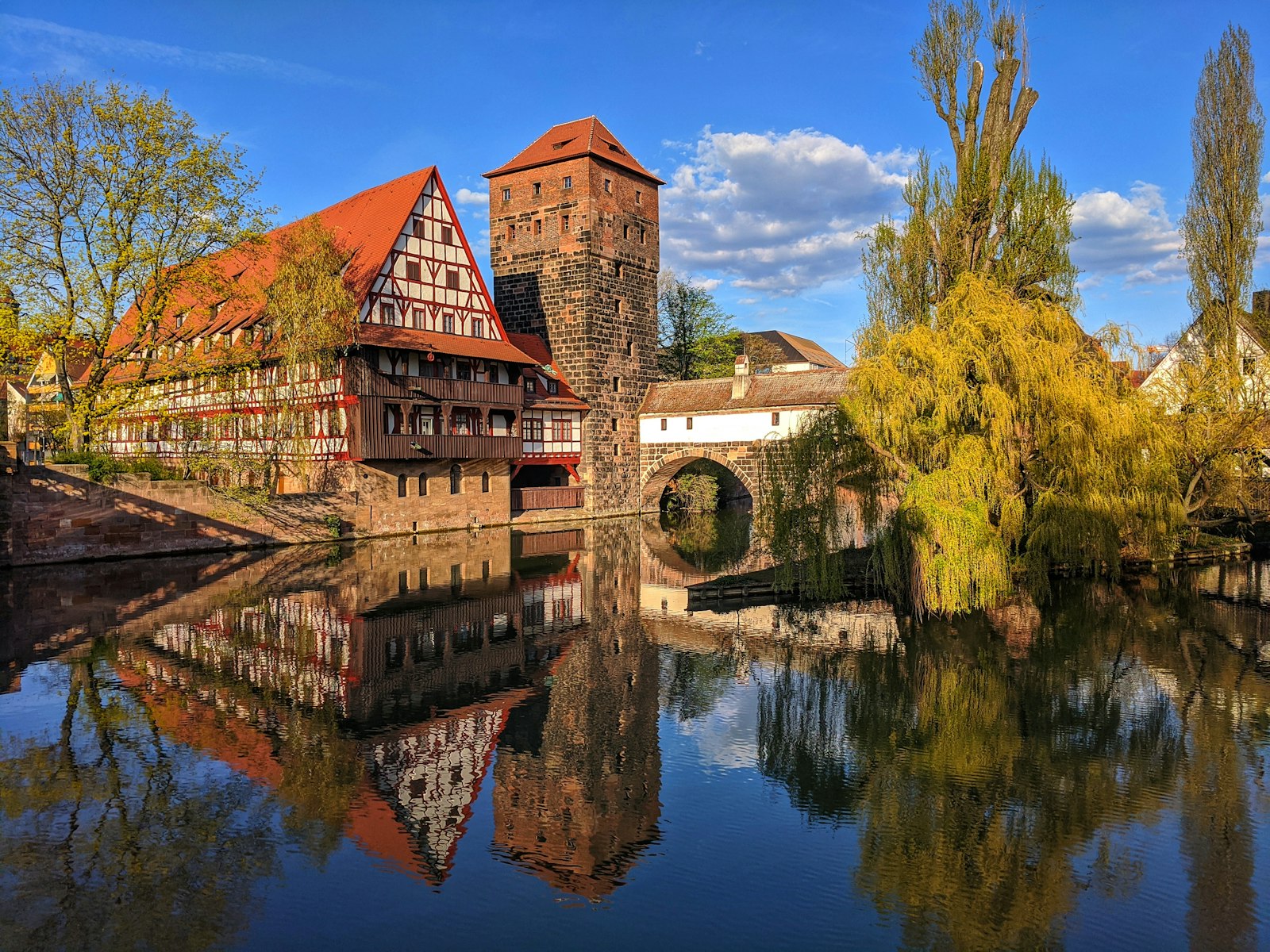
Bavaria's medieval old town: sandstone castle, half-timbered lanes and one of the world's most famous Christmas markets.
- Best time to visit: May-September, plus late November-December for the Christkindlesmarkt
- Daily budget (budget traveller): $110 to $220 USD
- Ideal trip length: 2 to 3 days
Nuremberg packs a huge amount of history into a walkable, walled old town: the Imperial Castle above red rooftops, half-timbered Albrecht Dürer's house and the Hauptmarkt, where the Christkindlesmarkt fills the square every December. Outside the walls lie the sobering WWII sites at the Documentation Center and Courtroom 600. It's Bavaria without the Munich crowds, and Joy Plus balances the medieval core, the beer halls and the darker 20th-century story.
Nuremberg looks like a postcard and carries a ledger. The old town sits inside nearly five kilometres of sandstone walls, with the Kaiserburg on its rock above a sea of red roofs. This is where Holy Roman emperors held their first imperial diets, where Albrecht Dürer painted, and where the first pocket watches and the first globe were made. It is also where the Nazis staged their rallies and where the Allies held the trials in 1945 and 1946. Much of what you see is a reconstruction. The RAF raid of 2 January 1945 flattened most of the old town, and the city rebuilt it stone by stone, so you are walking through a very stubborn act of memory.
The city works well for a short trip because it is compact and sits outside the Munich circuit. The old town fits in a 20-minute walk from the Hauptbahnhof to the castle. The food is its own thing: Rostbratwürste the size of your finger, Schäufele with a crackling crust, Rotbier, and Lebkuchen that has nothing to do with the supermarket kind. Locals will also tell you, politely and quickly, that this is Franconia, not Bavaria. Use the word Franken a few times and you will get better service.
Plan it in layers. Spend one day on the medieval core: Hauptmarkt, Lorenzkirche, Kaiserburg, the Dürer house and an evening in a brewery. Give the 20th-century story its own day: the Documentation Center in the unfinished Congress Hall, the Zeppelinfeld, and the Memorium Nuremberg Trials with Courtroom 600. Then add Gostenhof for the modern city, and a day trip to Bamberg or Regensburg. Avoid Mondays for museums, check the Spielwarenmesse dates in late January because hotels spike, and if you come for the Christkindlesmarkt (late November to 24 December), book a bed months ahead and go on a weekday evening.
How many days in Nuremberg?
For Nuremberg, we recommend 2 to 3 days. With more time, add a day trip to Rothenburg ob der Tauber.
| Trip length | What you'll see | Itinerary |
|---|---|---|
| 2 days · Recommended | Königstraße and the Hauptmarkt; Castle, Dürer and a brewery night | Nuremberg in 2 days |
| 3 days · Recommended | Adds: Rally grounds and Courtroom 600 | Nuremberg in 3 days |
| 4 days | Adds: Bamberg day trip | Nuremberg in 4 days |
| 5 days | Adds: Museums and Gostenhof | Nuremberg in 5 days |
| 7 days | Adds: Regensburg day trip; Lebkuchen | Nuremberg in 7 days |
Nuremberg itinerary
Arrive, Königstraße and the Hauptmarkt
Morning: Land at NUE, take the U2 to Hauptbahnhof (12 min). Drop bags, then walk Königstraße through the Königstor to Lorenzkirche. Be at the Frauenkirche by 11:55 for the Männleinlaufen clock show at noon.
Afternoon: Lunch at Zum Gulden Stern, the oldest Bratwurst kitchen, for a plate of six. Find the golden ring on the Schöner Brunnen and wander to the Pegnitz and the Henkersteg.
Evening: Schäufele with a dumpling at Heilig-Geist-Spital on the river. Walk back along the lit Pegnitz and head to bed early.
Castle, Dürer and a brewery night
Morning: Kaiserburg at opening (9am April to September, 10am in winter). Climb the Sinwell Tower, see the deep well, then Burggarten for the view over red roofs.
Afternoon: Albrecht-Dürer-Haus (closed Mondays). Then a guided Historic Rock-Cut Cellars tour at Altstadthof, meeting at Bergstraße 19.
Evening: Sunset at Tiergärtnertor, then dinner and Rotbier at Hausbrauerei Altstadthof. Walk the Burgviertel lanes after dark.
Rally grounds and Courtroom 600
Morning: Tram 8 from Hbf to Doku-Zentrum. Take the audio guide through the Documentation Center in the unfinished Congress Hall, about 2 hours. Walk the Zeppelinfeld and the Great Road.
Afternoon: Coffee on the Dutzendteich lake shore. Then U1 to Bärenschanzstraße for the Memorium Nuremberg Trials (closed Tuesdays), and Courtroom 600 if it is not in court use.
Evening: Quiet dinner in St. Johannis or Gostenhof. A day like this deserves a slow beer and an early night.
Bamberg day trip
Morning: Regional train from Hbf to Bamberg, 40 to 50 min. Walk the old town to the Altes Rathaus on its bridge and Klein Venedig. Climb to Kaiserdom.
Afternoon: Lunch at Schlenkerla (Dominikanerstraße 6) with a smoked Rauchbier and the stuffed onion. Walk up Michaelsberg for the roofline view.
Evening: Train back. Late easy dinner near the hotel.
Museums and Gostenhof
Morning: Germanisches Nationalmuseum at opening (closed Mondays): the 1492 Behaim Globe, Dürer and the Veit Stoss sculptures.
Afternoon: Lorenzer Platz browsing, then walk to Gostenhof for Turkish pastries and indie cafés along Fürther Straße.
Evening: Dinner and Rotbier at Schanzenbräu on Rennweg, or a craft beer bar crawl through Gostenhof.
Regensburg day trip
Morning: Regional express from Hbf to Regensburg, about 1h15. Cross the Steinerne Brücke and visit the cathedral.
Afternoon: Sausages at Wurstkuchl beside the bridge, then the Altstadt lanes and the Danube riverside.
Evening: Train back. Late drinks near the Hauptmarkt or stay in for a quiet evening.
Slow morning, Lebkuchen and depart
Morning: Coffee and a Butterbrezel, then the Handwerkerhof craft courtyard (seasonal, closed in winter). Sebalduskirche on the way.
Afternoon: Buy Lebkuchen to take home at Lebkuchen Schmidt. Last Bratwurst at Bratwursthäusle (Rathausplatz 1).
Evening: U2 from Hbf to NUE. Allow 45 min before check-in.
Best neighbourhoods
- Altstadt (Old Town): The walled medieval core split by the Pegnitz river, with the Hauptmarkt, churches, museums and half-timbered streets.
- Burgviertel: The steep lanes climbing to the Kaiserburg castle, home to Dürer's house and the best rooftop views.
- Gostenhof: The hip, multicultural district west of the old town with street art, indie cafes and craft-beer bars.
- Reichsparteitagsgelände: The former Nazi rally grounds south of the city, now home to the Documentation Center museum.
Must-do experiences
- Tour the Kaiserburg castle: The Imperial Castle towers above the old town with sweeping views, medieval halls and the deep castle well.
- Visit the Documentation Center: Housed in the unfinished Nazi Congress Hall, this museum unpacks the rise of the Third Reich and the Nuremberg rallies. It reopened in May 2026 with a new permanent exhibition after five years of rebuilding.
- See Courtroom 600: The Memorium Nuremberg Trials preserves the actual courtroom where Nazi leaders were tried after WWII.
- Wander the Hauptmarkt: Nuremberg's main square is home to the Frauenkirche, the golden Schöner Brunnen fountain and the Christmas market in December.
- Eat Nürnberger Rostbratwürste: The city's tiny finger-length sausages are grilled over beechwood and served three-in-a-bun or with sauerkraut in old-town beer halls.
Hidden gems
- The medieval tunnels of the Historic Rock-Cut Cellars beneath the castle.
- Sunset views from the Tiergärtnertor square below the castle walls.
- The Handwerkerhof craft courtyard just inside the old city gate.
- Franconian craft-beer bars in Gostenhof.
Daily budget
- Accommodation: budget €28-45 / night (hostel dorm), mid-range €100-160 (boutique double), splurge €200+ (Le Méridien Grand Hotel, Sheraton Carlton). Add 30 to 80% during the Christkindlesmarkt and the Spielwarenmesse. Book months ahead for those dates.
- Food: budget €25-35 / day (bakery breakfast, Bratwurst, Döner), mid-range €50-75 (one sit-down Franconian dinner), splurge €120+ (tasting menu with wine pairing). Three Rostbratwürste im Weggla at a street stand run €5-7. A Sechser plate with kraut or potato salad is €11-14. Mittagstisch lunch specials are €9-14.
- Transport: budget €0-9 / day (walk, VGN day ticket), mid-range €10-25 (day ticket plus a regional day trip), splurge €60+ (taxis, private driver to Bamberg). The old town is walkable. A VGN single is about €3.70 and a day ticket about €9. The Deutschlandticket (€63 / month) covers regional trains to Bamberg.
- Activities: budget €10-20 / day (one or two museums), mid-range €30-50 (Kaiserburg, Dürer house, Doku-Zentrum, Memorium), splurge €100+ (private WWII walking tour, guided cellar tour). Doku-Zentrum and Memorium are about €6 each, Kaiserburg about €9. The Nürnberg Card (about €38 for 48 hours) pays off on a full museum plan and includes transit.
- Drinks & nightlife: budget €8-12 (Helles or Rotbier at a Wirtshaus), mid-range €20-35 (brewery evening in Altstadt), splurge €60+ (hotel bar and cocktails). A 0.5L Franconian beer costs €4-5.50. Gostenhof bars are cheaper and more local. Last orders are earlier than in Munich or Berlin.
Where to stay
- Social hostel in Lorenzer Altstadt, near Hbf (€28-45 / night): Five Reasons Hostel & Hotel, minutes from the station and the Königstor, with social common rooms and a mix of dorms and privates.
- Boutique hotel in Königstraße / Burgviertel (€100-170 / night): Hotel Drei Raben (Königstraße 63) has themed rooms and Nuremberg legends. Hotel Elch near the castle sits in a half-timbered lane.
- Apartment in Gostenhof or St. Johannis (€70-110 / night): Real residential streets with cafés and bakeries. Good value for 4+ nights, close to the U-Bahn, quieter than the Altstadt.
- Splurge in Opposite Hauptbahnhof (€190-330 / night): Le Méridien Grand Hotel Nürnberg (Bahnhofstraße 1), a restored 1896 landmark. Sheraton Carlton is the modern alternative. Rooms are 5 minutes from the old town.
What to eat
- Nürnberger Rostbratwürste (small grilled sausages)
- Schäufele (roast pork shoulder with dumplings)
- Lebkuchen gingerbread from historic bakeries
- Franconian red beer and Kellerbier
Day trips
- Bamberg (40 to 50 min by regional train): UNESCO old town with the cathedral, the Altes Rathaus on its bridge and Klein Venedig. Drink smoked Rauchbier at Schlenkerla. Regional train from Hbf every 30 min. Covered by the Deutschlandticket (€63 / month) or a Bayern-Ticket from about €29.
- Regensburg (About 1h15 by regional express): Medieval Danube city with the 12th-century Stone Bridge, a huge cathedral and the Wurstkuchl, one of the oldest sausage kitchens in Europe. Regional express from Hbf, hourly. Bayern-Ticket or advance Sparpreis fares cover it.
- Rothenburg ob der Tauber (About 1h45 by train via Ansbach and Steinach): Walled Romantic Road town with half-timbered houses, a Christmas museum and the Plönlein corner. Touristy but gorgeous. Regional train with changes at Ansbach and Steinach, about €25 return with a Bayern-Ticket. Go early and walk the wall.
When to visit
- Spring (April - June): 8-22°C, bright spells, regular showers. Crowds: Moderate, busy on weekends and during Rock im Park in early June. The best all-round window. Beer gardens open, the Kellerberg terraces fill up, and daylight lasts until 9pm by June. Pack a rain jacket.
- Summer (July - August): 22-32°C, occasional thunderstorms. Crowds: Moderate, quieter in August when locals travel. Hot and good for beer gardens and the Pegnitz riverbanks. Castle and museums are comfortable, but the old town has little shade at midday.
- Autumn (September - October): 8-20°C, crisp mornings, golden light. Crowds: Moderate, drops after the Altstadtfest in September. The locals' pick. Cheaper rooms, Kellerbier weather, empty castle terraces and good light for photos.
- Winter (November - March): -3 to 5°C, grey, occasional snow. Crowds: Extreme from 27 Nov to 24 Dec (Christkindlesmarkt), low the rest of the time. Come for the market or for empty museums, not both. Hotel prices jump 30 to 80% in market weeks and during the Spielwarenmesse in late January.
Entry rules for your passport
Visa rules for Germany depend on the passport you travel on. Check the official source before you book: European Commission: Schengen visa policy
Getting there
Nuremberg airport (NUE) is about 7km north of the centre. The U2 U-Bahn runs direct to the Hauptbahnhof in about 12 minutes, and a VGN single ticket is roughly €3.70. A taxi to the old town is €25-30. The Hauptbahnhof is on the southern edge of the old town, a 10 to 15 minute walk up Königstraße to the Hauptmarkt. By train, ICE from Munich takes about 1h05 to 1h10 (Sparpreis fares from around €17.90 to €29.90 if booked ahead), Frankfurt about 2h, Berlin about 4h, and Bamberg is under an hour. Flixbus links Prague and Vienna to the Hauptbahnhof. Driving from Munich on the A9 takes 1.5 to 2 hours, but parking in the old town is expensive and unnecessary.
Border checks: non-EU visitors (other than Swiss, Norwegian, Icelandic, Liechtenstein, Andorran, Monegasque, San Marinese and Vatican citizens, and holders of an EU residence permit or long-stay visa) are registered in the EU's Entry/Exit System (EES) instead of getting a passport stamp. On your first crossing, officers take your photo and/or fingerprints, so allow extra time at passport control. ETIAS, the planned travel authorisation, is not in operation yet, so don't pay any website for one.
Getting around
Nuremberg's old town is compact and best explored on foot, most sights are within a 20-minute walk. The U-Bahn, trams and buses cover the outer districts and the rally grounds; a single VGN ticket works across all of them. The main train station sits just outside the southern city walls, and the airport is a quick U-Bahn ride from the centre.
Safety
Nuremberg is a safe, welcoming city with low crime rates and easy solo travel. Standard European precautions apply: watch for pickpockets in the Hauptmarkt and around the Hauptbahnhof, especially during Christmas market season, and use lit main streets at night. The area immediately around the train station can feel a bit rough after dark but is not dangerous.
Solo travel tips
- Eat at the counter: Bratwurst kitchens run on long communal tables and Imbiss counters. Squeeze in, order a Sechser or Drei im Weggla, and nod at your neighbour. You will have a chat before the beer is empty.
- Hostel pick: Five Reasons: Both sit within a few minutes of the Hauptbahnhof and Königstor, with social common rooms and easy mixed dorms. Book early for Christmas market weeks.
- Do the WWII sites at your own pace: The Documentation Center audio guide is included in the ticket and works well solo. Go early on a weekday and plan a gentle meal afterwards, since the material is heavy.
- Solo female travellers: Nuremberg is a safe mid-sized city. Standard rules apply: keep to lit streets near the Hauptbahnhof late at night, watch your bag in the Hauptmarkt crowd during market season, and use the U-Bahn until midnight on weekends.
- Find your tribe in Gostenhof: Gostenhof bars and cafés along Fürther Straße and Adam-Klein-Straße attract students, artists and expats. Sit at the bar and ask about the Franconian beers.
- Use the Nürnberg Card for a museum-heavy trip: About €38 for 48 hours covers transit and entry to most major museums, including the Germanisches Nationalmuseum, Dürer-Haus and Kaiserburg. Worth it only if you plan three or more sights a day.
Cultural etiquette
- Say 'Hallo' or 'Servus' when entering a shop or Wirtshaus. In Franconia you will also hear 'Grüß Gott', but locals identify as Franken, not Bayern.
- Tipping is 5 to 10%. Tell the server the total you want to pay when handing over the card or cash, do not leave coins on the table.
- Many Franconian pubs and Imbiss stands are cash only or card-averse. Carry €30 to €50 in cash.
- Nazi symbols and gestures are illegal in Germany (Section 86a). No jokes, no raised-arm photos at the Zeppelinfeld. Treat the rally grounds as a memorial.
- Sundays are quiet. Most shops are closed, and Ruhezeit means no loud noise. Plan groceries on Saturday.
- Bottles, mugs and cups carry a deposit (Pfand). At the Christkindlesmarkt the mug deposit is about €3 to €4, returned when you hand the mug back.
- Order Bratwurst by number: 'Drei im Weggla' for three in a roll, or 'ein Sechser' for six on a plate. Eat them with mustard, not ketchup.
Frequently asked questions
How many days do you need in Nuremberg?
Two to three days is ideal. One day covers the walled old town, the Kaiserburg castle and the Hauptmarkt, a second day handles the WWII sites (Documentation Center and Courtroom 600) and lets you slow down in Gostenhof, and a third day works well for the Germanisches Nationalmuseum or a day trip to Bamberg or Regensburg.
Is Nuremberg worth visiting?
Yes. It's one of Germany's most faithfully rebuilt medieval old towns and one of the most important WWII memorial sites in Europe, and it does both with real depth. Add Franconian food, cheap beer and a huge Christmas market, and you have a compact, layered city that rewards even a short stop.
When is the best time to visit Nuremberg?
May to September for long days, beer gardens and outdoor cafes; late November to 24 December for the Christkindlesmarkt, one of the world's most famous Christmas markets. Winter outside the market weeks is quiet and cold but great for museums and empty castle views.
Is Nuremberg safe for solo travellers?
Yes. Nuremberg is a safe, mid-sized German city and easy to navigate solo. Watch for pickpockets in the Hauptmarkt during Christmas market season and around the main train station, and stick to lit streets at night, but there are no no-go areas for tourists.
How do you get from Munich to Nuremberg?
The ICE high-speed train links Munich and Nuremberg in about 1 hour 5 minutes and runs several times an hour. Booking Sparpreis fares in advance on Deutsche Bahn can bring the price under €25 one-way. Driving takes around 1.5 to 2 hours on the A9 autobahn.
Is the Nuremberg Christmas market worth it?
Yes, if you enjoy Christmas markets at all. The Christkindlesmarkt runs from late November to 24 December, fills the entire Hauptmarkt with wooden stalls, and is famous for its gingerbread (Lebkuchen), grilled Rostbratwürste and mulled wine. Go on a weekday evening to avoid the worst weekend crowds.
Should you visit the Nazi rally grounds?
Yes, if you're interested in 20th-century history. The Documentation Center inside the unfinished Congress Hall is one of Europe's most thoughtful museums on the rise of the Third Reich, and the vast rally grounds themselves are freely walkable. It's a sobering but important complement to the medieval old town.
More about Nuremberg
Tours and activities in Nuremberg | Nuremberg in 2 days | Nuremberg in 3 days | Nuremberg in 4 days | Nuremberg in 5 days | Nuremberg in 7 days
Can't decide? Compare Nuremberg with...
Joy Plus home | Destinations | Itineraries | Activities | Flights | Budget planner | Calendar | Map | Blog | Lifetime access