Destinations / North America
Oaxaca, Mexico travel guide
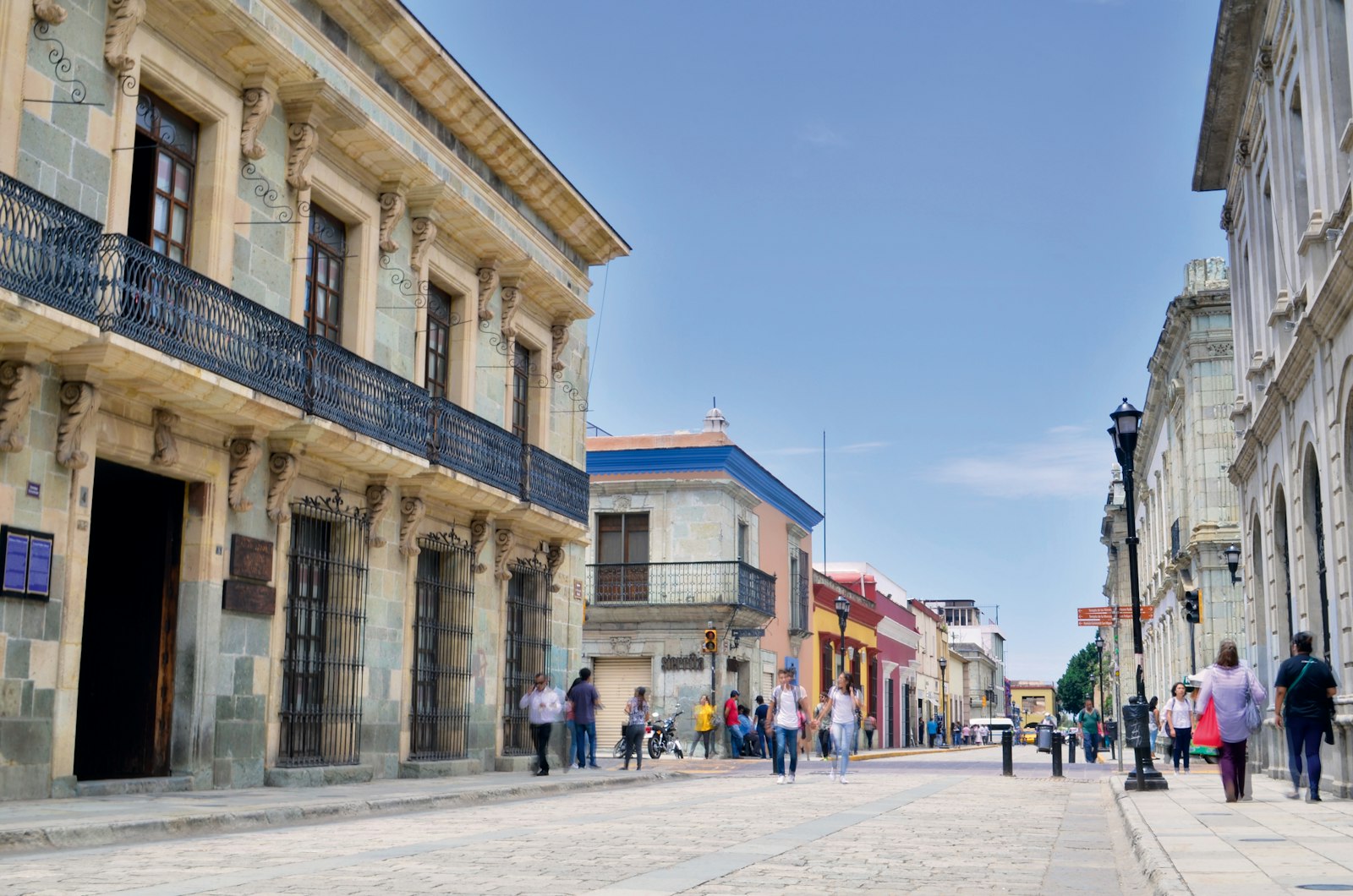
Mexico's culinary capital: mezcal, mole, and the most vivid markets in the country.
- Best time to visit: October-April (dry season), late October to early November for Día de Muertos (main days 31 Oct to 2 Nov)
- Daily budget (budget traveller): $45 to $70 USD
- Ideal trip length: 4 to 5 days
Oaxaca is where Mexico goes to eat. The food is some of the best in the country, the mezcal is made in villages an hour out of town, and the markets overflow with colour you'll never quite photograph well enough. Joy Plus paces the city's churches and food halls with day trips to the Zapotec ruins and mezcal valleys, and times it all around the festivals if your dates line up.
Oaxaca is a city you eat your way through, and then eat some more. The centro is a flat grid of ochre-and-green colonial streets at 1,555 metres, small enough to cross on foot in 25 minutes and dense enough to fill a week. Breakfast is a memela with asiento at a market counter. Lunch is mole negro that took someone two days. Dinner is a tlayuda charred over coals at 11pm, with a copita of mezcal that costs less than a coffee in Mexico City. The big names (Pitiona, Casa Oaxaca, Criollo) are worth a night each. But the best meal of your trip will probably cost MXN 90 and come on a plastic plate.
The city is only half the story. The Valles Centrales fan out in three arms, and every village has a specialty. Teotitlán del Valle weaves wool rugs dyed with cochineal. Santiago Matatlán distils mezcal in backyard palenques. San Bartolo Coyotepec fires black clay, and Tlacolula holds a Sunday market that has run for centuries. Monte Albán, the Zapotec capital, sits 400 metres above town and is 30 minutes away by bus. Hierve el Agua, a pair of petrified mineral cascades with infinity pools, is two hours east. Everything is close, but public transport is slow, so a little planning (colectivos, an early bus, one shared driver) gives you days instead of hours.
Plan around the calendar. November to February is cool, dry and sunny, with 10°C nights. Día de Muertos (October 28 to November 2) is spectacular and priced accordingly, with rooms booked six months out. July brings the Guelaguetza dance festival (the two Mondays after July 16, so July 19 and 26 in 2027), and the rains turn the hills green. Altitude catches people out, so go easy on the mezcal the first night. Learn three phrases (buen provecho, la cuenta por favor, ¿me recomienda algo?) and you will get better food, better pours and better conversations.
How many days in Oaxaca?
For Oaxaca, we recommend 4 to 5 days.
| Trip length | What you'll see | Itinerary |
|---|---|---|
| 2 days | Zócalo and the market grill; Santo Domingo, gardens and mole | Oaxaca in 2 days |
| 3 days | Adds: Monte Albán and Jalatlaco | Oaxaca in 3 days |
| 4 days · Recommended | Adds: Tule, Teotitlán and a palenque | Oaxaca in 4 days |
| 5 days · Recommended | Adds: Mitla and Hierve el Agua | Oaxaca in 5 days |
| 7 days | Adds: Cooking class and Soledad; Last supplies | Oaxaca in 7 days |
Oaxaca itinerary
Arrive, zócalo and the market grill
Morning: Land at OAX and take a shared airport colectivo (MXN 120-150) to the centro. Drop bags, then have a chocolate caliente and pan de yema at Chocolate Mayordomo or a coffee at Café Brújula.
Afternoon: Walk the zócalo and cathedral, then the pedestrian Andador Macedonio Alcalá toward Santo Domingo. At 2pm head to Mercado 20 de Noviembre and the pasillo de humo, pick your cecina and tasajo by weight, and eat at the stall (MXN 150-220 each).
Evening: Early mezcal at In Situ, which has a huge shelf and staff who explain without lecturing. Finish with a tlayuda at Tlayudas Libres. Keep it gentle, you are at 1,555m.
Santo Domingo, gardens and mole
Morning: Santo Domingo church at opening, then the Museo de las Culturas de Oaxaca in the old convent (MXN 210 for foreign visitors, closed Mondays). Book the guided Jardín Etnobotánico visit next door for 10am or 11am.
Afternoon: Late lunch at Itanoní in Reforma for heirloom corn tortillas, memelas and barbacoa. Walk back through Xochimilco's quiet lanes.
Evening: Sunset on a rooftop near Santo Domingo, then mole negro at Los Pacos or a full dinner at Casa Oaxaca El Restaurante (reserve ahead).
Monte Albán and Jalatlaco
Morning: Tourist bus from Mina 518, first departure around 8:30am (about MXN 120 return). Monte Albán opens at 8am. Climb the South Platform and see the Danzantes before the heat and tour groups.
Afternoon: Back in town by 1pm. Wander Jalatlaco's murals, buy bread at Boulenc, and do a cold-brew stop in a patio café.
Evening: Mezcalogía for a guided flight, then a quiet dinner on a Jalatlaco terrace.
Tule, Teotitlán and a palenque
Morning: Colectivo or small-group tour east. Stop at El Árbol del Tule (about MXN 30), a Montezuma cypress around 2,000 years old, then Teotitlán del Valle. Watch natural dyeing at Galería Fe y Lola.
Afternoon: Continue to Santiago Matatlán to see agave roasted in earth pits and distilled in clay or copper. Expect about MXN 450-650 for a tour that covers it all.
Evening: Back in town, light dinner of tamales oaxaqueños or a bowl of caldo de piedra. Early bed.
Mitla and Hierve el Agua
Morning: Leave by 8am. Mitla's Zapotec-built stone fretwork (MXN 210 entry for foreign visitors) first, before the heat and the tour buses.
Afternoon: Continue to Hierve el Agua (about MXN 50 entry plus parking). Hike the rim trail, swim in the infinity pools, eat at the cocinas near the entrance.
Evening: Back by 6pm. Dinner somewhere easy: market tacos and a cold beer.
Cooking class and Soledad
Morning: Market-to-table cooking class (Casa de los Sabores or Seasons of My Heart, MXN 1,800-2,800). Saturday is the big day at Mercado de Abastos, and Sunday is Tlacolula's market.
Afternoon: Basílica de la Soledad, the city's patron church, then browse La Mano Mágica or the artisan stalls on Calle Alcalá.
Evening: Dinner at Criollo or Pitiona if you are splurging, or a mezcal crawl through Sabina Sabe and Los Amantes.
Slow morning, last supplies, depart
Morning: Breakfast at Boulenc, then Mercado de la Merced for tejate and chocolate to bring home.
Afternoon: Buy mezcal at the small bottle shops around Alcalá (ask for a joven espadín to take home). Pack and eat a last tlayuda.
Evening: Shared colectivo or Didi to OAX (allow 25 minutes and arrive 2 hours before the flight).
Best neighbourhoods
- Centro Histórico: The colonial heart: the zócalo, Santo Domingo, and the main markets.
- Jalatlaco: Cobbled, mural-covered, the city's most charming barrio.
- Xochimilco: Quiet, leafy, the old aqueduct and artisan workshops.
- Reforma: Residential and local, good-value food and fewer tourists.
- La Noria: Central and walkable, handy budget stays near the markets.
Must-do experiences
- Eat through Mercado 20 de Noviembre: Grill your own meat at the smoky 'pasillo de humo'.
- Monte Albán ruins: Zapotec mountaintop city, 30 minutes from town. Go for opening.
- Mezcal tasting in the valleys: Visit a family palenque to see agave roasted and distilled.
- Santo Domingo church and museum: Gilded baroque interior and the Cultures of Oaxaca museum.
Hidden gems
- Hierve el Agua's petrified mineral 'waterfalls' and natural infinity pools (local disputes close it at times, so check it's open the week you go).
- Teotitlán del Valle for handwoven rugs dyed with cochineal.
- A tlayuda from a late-night street cart, Oaxaca's giant crisp 'pizza'.
- Sunset from the rooftop bars around Santo Domingo.
Daily budget
- Accommodation: budget MXN 280-550 / night (hostel dorm), mid-range MXN 1,800-3,200 (boutique double), splurge MXN 5,500+ (Quinta Real, a 16th-century convent). Jalatlaco and the streets north of Santo Domingo are the best value. Prices roughly double for Día de Muertos.
- Food: budget MXN 300-450 / day (market comidas, tlayudas, memelas), mid-range MXN 700-1,100 (one proper sit-down dinner), splurge MXN 2,500+ (tasting menu at Pitiona or Criollo). Comida corrida at a market or fonda is MXN 80-120 for soup, main, rice and agua fresca. That is the local hack.
- Transport: budget MXN 30-100 / day (walking, city bus MXN 10-12, colectivos), mid-range MXN 200-350 (Didi, taxis, a shared tour van), splurge MXN 2,000+ (private driver for a valley day). The centro is flat and walkable. A taxi inside the centro is MXN 60-80. Skip the rental car.
- Activities: budget MXN 200-350 / day (one museum or ruin, free churches and markets), mid-range MXN 450-800 (Monte Albán plus bus, or a Hierve el Agua tour), splurge MXN 1,800-2,800 (market-to-table cooking class, private mezcal visit). Monte Albán is MXN 210 entry for foreign visitors plus MXN 120 for the tourist bus. Museo de las Culturas is MXN 210 for foreign visitors.
- Drinks & nightlife: budget MXN 100-200 (cantina beers, a copita or two), mid-range MXN 400-700 (mezcalería crawl, a rooftop), splurge MXN 1,200+ (Mezcaloteca tasting, wild agave flights). A copita of espadín is MXN 60-120. Wild tobalá runs MXN 150-300 and is worth it once.
Where to stay
- Social hostel in Centro Histórico / Jalatlaco (MXN 280-550 / night): Hostal Pochón or Casa Angel Hostel, rooftop terraces, mixed dorms and privates, walkable to Santo Domingo and the markets.
- Boutique hotel in Centro Histórico (García Vigil) (MXN 2,200-3,800 / night): Casa Oaxaca or Casa Antonieta, courtyard hotels in restored colonial houses, quiet at night, steps from Santo Domingo and the best restaurants.
- Apartment in Xochimilco or Reforma (MXN 1,100-1,800 / night): Residential streets, a small kitchen and a patio. Best value for a 5+ night stay, close enough to walk into the centro in 15 minutes.
- Splurge in Centro Histórico (5 de Mayo) (MXN 5,500-9,500 / night): Quinta Real Oaxaca, a 16th-century Santa Catalina convent with cloisters, a pool and a famous Sunday brunch, in the middle of town.
What to eat
- Mole negro over chicken or enmoladas
- Tlayuda with tasajo (thin grilled beef)
- Quesillo (Oaxaca string cheese) and chapulines
- Mezcal, sipped slowly, never shot
Day trips
- Monte Albán (30 min, 9km): Zapotec hilltop capital, founded around 500 BCE, with the Great Plaza, ball court and carved Danzantes. Go for the 8am opening to beat the heat and the tour buses. Entry MXN 210 for foreign visitors. Autobuses Turísticos Monte Albán leave from Mina 518 from about 8:30am, around MXN 120 return, with a fixed return time about 2.5 hours later. Taxi is MXN 450-600 return with a wait.
- Hierve el Agua and Mitla (About 2 hours each way, 70km): Mitla, built by the Zapotecs, has stone fretwork mosaics blending Zapotec and Mixtec design (MXN 210 entry for foreign visitors). Hierve el Agua has petrified mineral cascades and natural infinity pools with views over the valley (about MXN 50 entry plus parking). Go early for the best light and the fewest people. Small-group tours are MXN 450-650 and include both. Or take a colectivo from the Abastos stands to Mitla (about MXN 50), then a pickup-truck colectivo to Hierve el Agua (about MXN 70).
- Teotitlán del Valle, Tule and mezcal country (30 to 45 min): El Árbol del Tule (MXN 30), a 2,000-year-old cypress. Then Teotitlán's cochineal-dyed wool rugs and Santiago Matatlán, the self-styled mezcal capital, for a palenque visit with tasting. Colectivos to Tule and Teotitlán leave from the Abastos area (MXN 25-50). For a palenque, book a small-group mezcal tour (MXN 450-650) or a private driver (MXN 1,500-2,000 per car).
When to visit
- Winter (December - February): 24-28°C days, 6-12°C nights, dry and sunny. Crowds: Busy around Christmas, quiet in January. The sweet spot. Clear skies for Monte Albán, and Noche de Rábanos (December 23) fills the zócalo with carved radish sculptures. Pack a jacket for the evenings.
- Spring (March - May): 28-34°C, dry, hot and dusty by May. Crowds: Moderate, spikes at Semana Santa. Good for food and mezcal, harder for ruin-walking at midday. Start sightseeing at 8am and use siesta hours for a long lunch in the shade.
- Summer (June - September): 22-28°C, afternoon thunderstorms, green hills. Crowds: Low, except the Guelaguetza weeks in late July. Cheapest rooms and the greenest valleys. Mornings are usually clear, so do day trips early and be back before the 4pm downpour.
- Autumn (October - November): 22-27°C, rains ending, cool nights from November. Crowds: Very heavy October 28 to November 2, moderate otherwise. Día de Muertos is unforgettable (comparsas, sand tapestries, panteón vigils) but rooms double in price and sell out early. The week after the festival is calmer and still beautiful.
Entry rules for your passport
Visa rules for Mexico depend on the passport you travel on. Check the official source before you book: Mexico National Migration Institute
Getting there
Oaxaca's airport (OAX, Xoxocotlán) is about 8km south of the centro. Most visitors fly in via Mexico City (about 1 hour, Viva Aerobus, Volaris, Aeroméxico), with direct flights from US cities including Houston, Dallas/Fort Worth and Los Angeles. Shared airport colectivos (Transportes Aeropuerto) run to hotels for MXN 120-150, and a fixed-fare airport taxi is MXN 350-450. Didi works but you may need to walk to the outer lot (MXN 120-180). From Mexico City, ADO's GL buses run 6.5 to 7 hours from TAPO or the southern terminal for MXN 700-1,100 via the new highway. From Puebla it is about 4.5 hours. From Puerto Escondido, colectivo vans take about 3 hours on the Barranca Larga-Ventanilla highway, open since 2024 (check current fares), or take the small plane in 35 minutes. Arriving by bus, ADO's first-class terminal is on Calzada Niños Héroes de Chapultepec, and a taxi to the centro is MXN 70-90.
Getting around
The centro is flat and walkable, the best way to see it. For day trips use a colectivo (shared taxi), a booked driver, or a small-group tour to the valleys; distances are short but public buses are slow. Use Didi or registered taxis at night.
Safety
Oaxaca is one of Mexico's safest tourist cities and very walkable by day and evening in the centro. Use registered taxis or Didi late at night, watch your belongings in crowded markets, and drink bottled or filtered water. Altitude is around 1,500m, so ease into the mezcal.
Solo travel tips
- Eat at the market counter: At Mercado 20 de Noviembre and Mercado de la Merced, sit on the shared bench, point at what looks good and ask 'qué me recomienda?' You will be talking to the cook, and likely the next diner, within five minutes.
- Share colectivos, not private cars: Day trips to Teotitlán, Mitla and Tlacolula run as colectivos (MXN 30-80 one way). For Hierve el Agua, join a small-group tour (MXN 450-650) so you are never paying a whole car solo.
- Hostel pick: Hostal Pochón or Casa Angel: Both are in the walkable centro with rooftop terraces and mixed dorms. Staff run low-key mezcal tastings and daily recommendations. Ask about the weekly cooking or food walk.
- Pace the mezcal and the altitude: Oaxaca sits at 1,555m. Drink water between copitas, eat before you drink, and skip the 'shots' pushed at tourist bars. Sip, with orange and sal de gusano.
- Solo female travellers: The centro is relaxed and safe for women alone. Use Didi or a registered taxi after about 11pm, avoid unlit side streets in Jalatlaco late, and keep your drink in sight at mezcal bars.
- Find your people in a class: A cooking class or a weaving workshop in Teotitlán puts you at a table with other solos in the first ten minutes. The Casa de los Sabores and Seasons of My Heart classes do it well.
Cultural etiquette
- Greet people when you walk into a shop, comedor or market stall. 'Buenos días' and 'buen provecho' to neighbours at the next table cost nothing and change the service.
- Mezcal is sipped, not shot. Take a small copita, smell first, and alternate with orange slices and sal de gusano. Pushing back a round at a mezcalería gets eye rolls.
- Haggle gently, if at all. Markets for food are fixed price. At textile and craft stalls, a 10-15% discount is fair, but do not bargain down a weaver who spent weeks on a rug.
- Ask before photographing people, especially Indigenous women in markets and artisans at work. Many will say yes, some will ask you to buy something, and some will say no.
- Día de Muertos is not Halloween. At panteón vigils (Xoxocotlán, San Felipe del Agua), keep voices low, do not step on graves, and ask before photographing families.
- Tip 10-15% at sit-down restaurants (check if 'servicio' is already added). Tip MXN 10-20 to guides and bag helpers. No tip needed in taxis.
- Lunch is the main meal, from 2 to 4pm. Many fondas close by 5pm, and dinner starts after 8pm. Eating dinner at 6pm is a tourist-menu hour.
Frequently asked questions
How many days do you need in Oaxaca?
Four to five days: two or three for the city's markets, food and churches, plus day trips to Monte Albán, Hierve el Agua and the mezcal valleys.
Is Oaxaca safe for solo travellers?
Yes. It's among Mexico's safest cities for visitors, with a relaxed, walkable centre. Use normal precautions with taxis at night and in busy markets.
When is the best time to visit Oaxaca?
The dry season, October to April. Late October to early November brings Día de Muertos (main days 31 Oct to 2 Nov), the city's most spectacular festival, book accommodation months ahead for those dates.
How much does a trip to Oaxaca cost?
Budget around $45 to $70 USD per person per day, covering a hostel bed or simple room, local transport, two or three meals out and an activity or entry ticket. You can go lower with markets and free walking tours, or far higher with boutique hotels and private guides.
What should I eat in Oaxaca?
Start with Mole negro over chicken or enmoladas, Tlayuda with tasajo (thin grilled beef), Quesillo (Oaxaca string cheese) and chapulines. Eating where locals queue is the simplest rule, and markets are usually the cheapest and best introduction to the food in Oaxaca.
How much does a solo trip to Oaxaca cost?
Budget on roughly $45-$70 USD per day in Oaxaca as a solo traveller. That covers a hostel bed or simple room, local food, getting around and a couple of paid sights. Mid-range comfort with private rooms, sit-down dinners and the odd tour runs closer to double, while shoestring travellers who cook and stick to street food can come in under it.
How do you get around Oaxaca?
The centro is flat and walkable, the best way to see it. For day trips use a colectivo (shared taxi), a booked driver, or a small-group tour to the valleys; distances are short but public buses are slow. Use Didi or registered taxis at night.
More about Oaxaca
- The 7-Day Mexico City Itinerary for 2026, with Real Prices
- Mexico City vs Medellín for Digital Nomads: Which Base Suits You in 2026?
Tours and activities in Oaxaca | Oaxaca in 2 days | Oaxaca in 3 days | Oaxaca in 4 days | Oaxaca in 5 days | Oaxaca in 7 days
Can't decide? Compare Oaxaca with...
- Oaxaca vs Mexico City
- Antigua vs Oaxaca
- Mérida vs Oaxaca
- Oaxaca vs San Cristóbal de las Casas
- San Miguel de Allende vs Oaxaca
Joy Plus home | Destinations | Itineraries | Activities | Flights | Budget planner | Calendar | Map | Blog | Lifetime access