Destinations / South America
Ollantaytambo, Peru travel guide
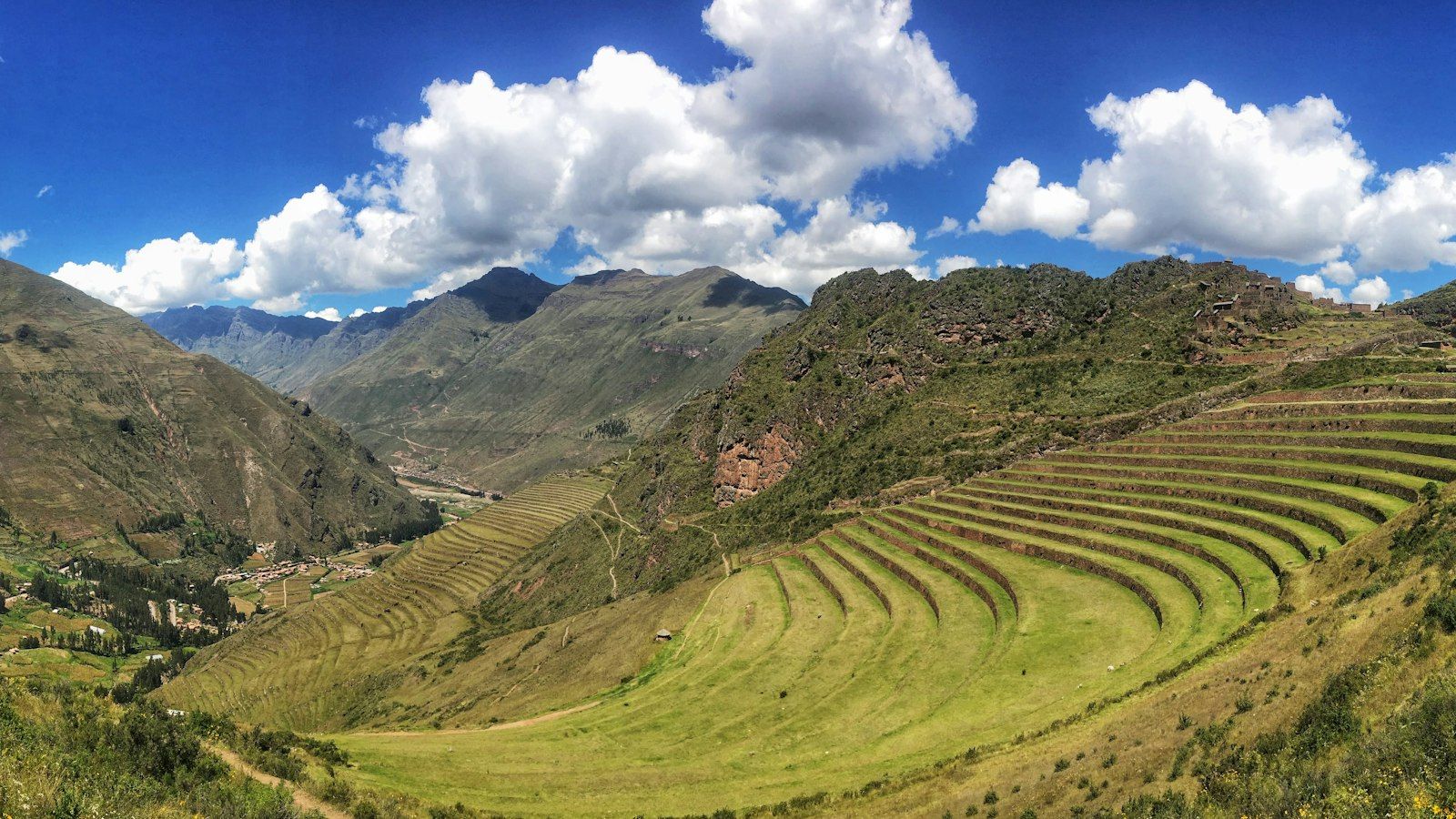
A living Inca town at the far end of the Sacred Valley. People still walk the original stone grid, a terraced fortress rises over the plaza, and the train to Machu Picchu leaves from the bottom of the hill.
- Best time to visit: April to October
- Daily budget (budget traveller): $40 to $160 USD
- Ideal trip length: 4 to 7 days
Ollantaytambo sits at around 2,800 metres where the Patacancha river meets the Urubamba, roughly 70 kilometres northwest of Cusco. Most visitors see it for 20 minutes on their way to the Machu Picchu train. That's a mistake, because this is one of the few places in Peru where an Inca town plan is still in daily use. Families live in stone courtyard compounds laid out over five centuries ago, and water still runs through Inca channels beside the cobbled lanes. Above the plaza, the terraces of the fortress climb to the unfinished Temple of the Sun. This is where Manco Inca beat back a Spanish attack in 1537. Across the valley, the Pinkuylluna granaries cling to a cliff and cost nothing to visit. From town you can hike up to Pumamarca, visit the circular terraces of Moray and the Maras salt pans in a day, and still be on a morning train to Aguas Calientes. Ollantaytambo is lower than Cusco, so it's a gentler place to acclimatise. It's also compact and safe, and there are enough hostels, cafés and fellow trekkers that you won't feel alone for long.
Ollantaytambo is a town of a few thousand people that sees a constant flow of travellers heading to Machu Picchu, and most of them leave without looking up. Those who stay find something rare: an Inca town that never stopped being lived in. The streets north of the plaza still follow the original grid of stone blocks, called canchas. Each one holds family courtyards behind trapezoidal doorways, and water still runs in Inca stone channels beside the lanes. Above it all is the fortress where Manco Inca held off the Spanish in 1537, flooding the plain below to stop their horses. Prices near the station are aimed at train passengers, but a menú del día in the back streets is still S/12 to S/20. The best viewpoint in town, the Pinkuylluna granaries, is free. This guide shows you how to see the town properly.
Altitude makes Ollantaytambo a smart first stop. At around 2,800 metres it's noticeably lower than Cusco, so many solo travellers fly into Cusco and come straight here. They spend a few gentle days hiking around the valley and only then tackle Cusco and its higher sites. The town works well as a base. Pinkuylluna and the fortress are on your doorstep. Pumamarca is a half-day walk up the Patacancha valley, and Moray and the Maras salt pans are a morning trip by taxi. The railway station sits ten minutes below the plaza, where both PeruRail and Inca Rail start their runs to Aguas Calientes. Budget carefully for that train. Standard class costs roughly US$120 to US$195 return, which is often more than everything else you spend here combined.
Timing matters. The dry season, from about May to September, brings blue skies and cold nights. Machu Picchu is at its busiest in July and August, when morning entry slots sell out months ahead. April and October are the sweet spots, with green terraces, fewer people and mostly dry days. The rainy season, from November to March, brings afternoon storms and the occasional landslide or strike disrupting trains. Plan your Boleto Turístico around your hikes. The S/70 Circuit III covers Ollantaytambo, Pisac, Chinchero and Moray but is valid for only two days, while the S/130 full pass lasts ten days. If you want ruins, trails and a pisco sour on the platform before the evening train, this is the right base.
Ollantaytambo itinerary
Land in Cusco, drop straight down to Ollantaytambo
Morning: Fly into Cusco (CUZ). Take a pre-booked transfer directly to Ollantaytambo (1.5 to 2 hours) or a taxi to Calle Pavitos for a shared colectivo (around S/15 to S/20).
Afternoon: Check in, drink plenty of water and rest. Take a slow walk around the Plaza de Armas and buy the Boleto Turístico in cash if you plan to use it tomorrow.
Evening: Early dinner at Chuncho on the plaza. Sopa de quinua is easy on an altitude-tired stomach. Skip the pisco tonight.
Fortress at opening, Pinkuylluna in the afternoon
Morning: Be at the fortress gate when it opens, around 7am, but check the current hours. Climb the terraces to the Temple of the Sun monoliths, then walk down to the Baño de la Ñusta fountains.
Afternoon: Menú del día lunch in the back streets, then climb the Pinkuylluna trail off Calle Lares (free, sign the logbook). Allow about 1 to 2 hours, and leave well before guards clear the site in late afternoon.
Evening: Wander the Inca grid north of the plaza at dusk. Dinner at Puka Rumi or Hearts Café.
Pumamarca and the Patacancha valley
Morning: Start early. Take a taxi up to Pumamarca and walk back down, or hike the full route of about 13 kilometres return with 560 metres of climbing (4.5 to 5 hours). Carry about S/10 for the community fee, plus water and a walking pole for dogs.
Afternoon: Back in town for a late lunch of grilled trout. Rest your legs in a river-garden hammock at your guesthouse.
Evening: Look for a red flag on a pole and try a glass of chicha de jora, then have an early night.
Moray terraces and the Maras salt pans
Morning: Hire a taxi for the morning (agree the price and waiting time first). Visit Moray's circular terraces with your Boleto, then Maras village.
Afternoon: Walk through the Salineras de Maras (about S/15 to S/20, cash) and down to the Urubamba river. Catch a colectivo on the valley road back via Urubamba.
Evening: Pack a small daypack for Machu Picchu, leave your big bag with your guesthouse and print or screenshot your tickets.
Train down the gorge to Aguas Calientes
Morning: Walk 10 minutes down to the station for a mid-morning PeruRail or Inca Rail train (1 hour 20 minutes to 1 hour 45 minutes). Sit on the left heading down for the best river views.
Afternoon: Check in to Aguas Calientes, buy your Consettur bus ticket (about US$24 return) and confirm your Machu Picchu entry time and circuit.
Evening: Soak at the town's thermal baths if you like, then have dinner early. Queue times for the first buses mean an early start.
Machu Picchu at first light, back to Ollantaytambo
Morning: Take one of the first buses up and enter on your booked circuit with your original passport. Hire an official guide at the gate if you didn't book one in advance.
Afternoon: Bus down, have a late lunch, then take an afternoon train back to Ollantaytambo. Leave at least two hours between your exit time and the train.
Evening: Celebrate with a pisco sour at El Albergue Restaurant on the platform.
Pisac ruins and onward to Cusco
Morning: Colectivo to Urubamba, then on to Pisac (about 1 to 1.5 hours in total). Take a taxi up to the ruins and walk down through the terraces, using your Boleto.
Afternoon: Browse the Pisac market in town, then take a colectivo to Cusco (about an hour).
Evening: Check in to Cusco to continue your trip, or stay near the airport for an early flight.
Best neighbourhoods
- Plaza de Armas and the Inca grid (Qosqo Ayllu): The heart of town. Narrow lanes of fitted Inca stone run off the main square, water channels gurgle beside the cobbles, and most cafés, colectivo stops and cheap guesthouses are within five minutes' walk.
- Avenida Ferrocarril (station quarter): The lane running down from the plaza to the railway station, about ten minutes on foot. It's lined with grill restaurants, pisco bars and small hotels. Handy for early trains, but busier and pricier than the old town.
- Patacancha road (north of town): The road up the Patacancha valley toward Pumamarca and the weaving villages. It's quieter, greener and has river-garden guesthouses a 5 to 15 minute walk from the plaza.
- Urubamba: The valley's working market town, about 30 minutes east by colectivo. It's less charming than Ollantaytambo but has more supermarkets, transport links and the valley's big resort hotels.
- Aguas Calientes (Machupicchu Pueblo): The rail-only town below Machu Picchu. It's expensive and built for tourists, but one night here lets you catch the first buses up to the citadel without a pre-dawn train.
Must-do experiences
- Climb the Ollantaytambo fortress at opening time: Climb the steep agricultural terraces to the unfinished Temple of the Sun and its six giant pink rhyolite monoliths. Then drop down to the fountains of the Baño de la Ñusta. Entry is covered only by the Boleto Turístico (S/70 Circuit III or S/130 full pass), and the tour buses arrive by mid-morning.
- Hike up to the Pinkuylluna granaries: A short, steep trail off Calle Lares takes you up to Inca storehouses on the cliff facing the fortress. It's free, you sign a logbook at the entrance, and guards usually clear the trail by late afternoon.
- Take the train to Machu Picchu: PeruRail and Inca Rail both run from Ollantaytambo to Aguas Calientes in about 1 hour 20 minutes to 1 hour 45 minutes, following the Urubamba gorge. Book your named, timed Machu Picchu circuit ticket first, then fit the train around it.
- Walk to the Pumamarca ruins: This hilltop Inca site sits above the Patacancha valley. It's a 4 to 5 hour round trip on foot, or take a taxi up and walk back down. You'll see few other visitors, the terraces are superb, and a community fee of about S/10 goes to the local villages.
- See Moray and the Maras salt pans: Moray's concentric terraces are covered by the Boleto Turístico. The Salineras de Maras, thousands of salt ponds worked by local families, charge their own cash fee of around S/15 to S/20. Do both in one morning by taxi or tour.
- Get lost in the Inca grid: Walk the lanes north of the plaza early in the morning or at dusk, when locals are moving livestock and the tour groups have left. Look for trapezoidal doorways into family courtyards, and for the red-flag poles marking chicha de jora sellers.
- Visit Pisac ruins and market: At the other end of the valley, the Pisac terraces are among the most dramatic in Peru, and the craft market fills the town below. Use your Boleto for the ruins, and go early before the day tours from Cusco arrive.
Hidden gems
- Ñaupa Iglesia near Pachar, a few kilometres east of town, is a carved Inca shrine set inside a natural rock overhang. It's free and has very few visitors.
- The full-day hike from the Inca quarries of Cachiccata up to the Inti Punku (Sun Gate) of Ollantaytambo is tough, so start before sunrise and carry at least 2 litres of water.
- The walk from Maras village down through the Salineras to the Urubamba river avoids the tour-bus car park. You still pay the salt pans fee, and you can pick up a colectivo on the valley road.
- The dawn view from the Pinkuylluna trail as light hits the fortress terraces opposite. Arrive when it opens and you may have the granaries to yourself.
- Weaving villages up the Patacancha valley, such as Willoq, where traditional red textiles are still made. Go with a community-run visit rather than turning up unannounced.
Daily budget
- Accommodation: budget S/40-80 / night (dorm bed) or S/100-180 (simple private room), mid-range S/280-480 (boutique double, e.g. Pakaritampu), splurge S/1,200+ (Sol y Luna or Tambo del Inka near Urubamba). Ollantaytambo has few true party hostels. Most budget beds are in small family-run hostales with breakfast included. Book early for June to August and for nights before an early train.
- Food: budget S/40-70 / day (menú del día, market snacks, bakery breakfast), mid-range S/100-180 (café lunch, sit-down dinner on the plaza), splurge S/300+ (El Albergue Restaurant or a tasting menu). Set lunches in the back streets cost S/12 to S/20 for soup, a main and a drink. Restaurants along the station lane charge noticeably more, and Aguas Calientes is pricier again.
- Transport: budget S/5-40 / day (colectivos to Urubamba and Cusco), mid-range S/100-200 (half-day taxi to Moray and Maras), splurge S/600+ (Vistadome or 360° panoramic train, private driver). Ollantaytambo to Aguas Calientes standard class (PeruRail Expedition or Inca Rail Voyager) costs roughly US$60 to US$90 each way. The Consettur bus up to Machu Picchu is about US$24 return. Check live fares.
- Activities: budget S/10-70 / day (Pinkuylluna free, Pumamarca about S/10, Circuit III S/70), mid-range S/150-300 (Maras salt pans S/15-20, guided valley tour), splurge S/500+ (Machu Picchu with a private guide, Huayna Picchu). The Boleto Turístico is cash only in soles: S/130 for the full 10-day pass or S/70 for the 2-day Circuit III. Machu Picchu is S/152 plus a S/11 conservation fee for foreign adults, or S/200 plus the fee for mountain routes.
- Drinks & nightlife: budget S/5-25 (chicha de jora by the glass, one beer), mid-range S/40-90 (a couple of pisco sours), splurge S/150+ (cocktails and wine with dinner). Nightlife means a quiet bar on the plaza or the station lane, and most places wind down by 10 or 11pm. Go easy on alcohol for your first nights at altitude.
Where to stay
- Social hostel in Patacancha road, near the plaza (S/45-80 / night (dorm), S/130-220 (private)): Mama Simona has a riverside garden, a shared kitchen and a lounge, and is a short walk from the plaza. Ollantaytambo doesn't really do party hostels, so this is about as social as it gets.
- Boutique hotel in Between the plaza and the station (S/280-480 / night): Pakaritampu is a long-established hotel with gardens, a reliable restaurant and comfortable rooms within walking distance of the trains. A calm base if you want comfort without spending a fortune.
- Apartment in Inca grid (Qosqo Ayllu) or the Patacancha road (S/150-300 / night): Look for small flats or casitas with a kitchen on the quieter lanes north of the plaza. Cooking your own breakfasts and dinners saves money, and you can live inside an Inca block for a few nights. Check heating and hot water before booking.
- Splurge in Station platform, Ollantaytambo, or near Urubamba (S/350-2,500+ / night): El Albergue Ollantaytambo occupies the original 1925 station building, with its own farm and restaurant. For full resort luxury, Sol y Luna or Tambo del Inka near Urubamba offer spas, gardens and valley views.
What to eat
- Trucha a la plancha: river trout grilled with garlic and served with rice, potatoes and salad. It's the valley's signature cheap lunch, often included in a menú del día for S/12 to S/20.
- Cuy al horno: roast guinea pig, a celebration dish in the Andes. Try it at a sit-down restaurant such as Chuncho on the plaza, where the kitchen showcases Andean produce.
- Sopa de quinua: a hearty quinoa and vegetable soup that starts most set lunches. It's ideal at altitude when your appetite is low.
- Choclo con queso: giant-kernel Andean corn eaten with a slab of fresh cheese, sold by women in the plaza and at the station.
- Chicha de jora: a mildly fermented maize beer sold by the glass in family homes marked with a red flag or plastic bag on a pole. Try chicha morada, a non-alcoholic purple corn drink, if you'd rather avoid alcohol.
- Lomo saltado: wok-fried beef with onions, tomatoes and chips. Order it at cafés like Hearts Café, whose profits support community projects, or Puka Rumi near the plaza.
- Pisco sour: Peru's signature cocktail of grape brandy, lime and egg white. Have one at El Albergue Restaurant on the station platform while you wait for an evening train.
Day trips
- Machu Picchu (About 1 hour 20 minutes to 1 hour 45 minutes by train from Ollantaytambo, then 25 minutes by bus): The Inca citadel above the Urubamba gorge, visited on fixed circuits and routes. Add Huayna Picchu or Machu Picchu Mountain if you want a steep climb and a bird's-eye view. It's possible as a long day trip, but an overnight in Aguas Calientes is far less rushed. Book your timed entry ticket on the official Ministry of Culture site (S/152 plus S/11 fee for foreign adults). Then take a PeruRail or Inca Rail train to Aguas Calientes (roughly US$60 to US$90 each way in standard class) and a Consettur bus (about US$24 return) to the gate.
- Moray and the Salineras de Maras (About 40 to 60 minutes by road from Ollantaytambo): Moray's huge concentric terraces are thought to have been an Inca agricultural experiment. The Maras salt pans are thousands of ponds fed by a single salty spring and still worked by local families. Hire a taxi for the morning from Ollantaytambo (roughly S/100 to S/180, so agree it first) or join a small-group tour. Moray is covered by the Boleto Turístico, while the salt pans charge around S/15 to S/20 in cash.
- Pisac ruins and market (About 1 to 1.5 hours by colectivo via Urubamba): Pisac's terraces wrap around a mountain spur high above the river, with Inca temples, baths and a huge cemetery cut into the cliffs. Down in town, the craft market sells textiles, ceramics and Andean snacks. Colectivo to Urubamba, then another to Pisac. Take a taxi up to the ruins and walk down. Entry is included in the Boleto Turístico (Circuit III or the full pass).
When to visit
- Late wet to dry (April - May): Around 20-23°C by day, 3-8°C at night, showers fading through April. Crowds: Moderate, busier at Easter. A lovely time to visit. The terraces are still green after the rains, the trails dry out and train prices are often lower than in peak season. Bring layers for cold evenings.
- Peak dry season (June - August): Around 19-22°C by day, close to 0°C at night, clear skies. Crowds: Very heavy, especially around Inti Raymi in Cusco on 24 June. The most reliable weather for hiking and the best views. Book Machu Picchu entry and trains months ahead, expect higher room rates and pack a warm jacket for nights.
- Spring shoulder (September - October): Around 21-24°C by day, 4-9°C at night, first showers late October. Crowds: Moderate, falling through October. Warm days, still mostly dry and noticeably calmer than mid-summer. Our favourite window for Pumamarca and the Moray and Maras loop.
- Rainy season (November - March): Around 19-22°C by day, mild nights, heavy afternoon downpours. Crowds: Low, except Christmas and New Year. Lush, quiet and cheaper. Hike in the mornings, carry a rain shell and allow a buffer day, as landslides and strikes can delay trains. The classic Inca Trail usually closes in February.
Entry rules for your passport
Visa rules for Peru depend on the passport you travel on. Check the official source before you book: Peru Ministry of Foreign Affairs
Getting there
Most travellers fly from Lima to Cusco's Alejandro Velasco Astete airport (CUZ), about 1 hour 15 minutes with LATAM, Sky Airline or JetSMART, and connect from international flights into Lima's Jorge Chávez airport (LIM). From Cusco airport it's about 1.5 to 2 hours by road to Ollantaytambo. Pre-booked transfers and taxis cost roughly US$25 to US$40 or more, so confirm when booking. Shared colectivos leave from Calle Pavitos in central Cusco for around S/15 to S/20 when full, from early morning into the evening. PeruRail and Inca Rail also sell bus-and-train tickets from Cusco that pass through Ollantaytambo. Coming back from Machu Picchu, the train from Aguas Calientes to Ollantaytambo takes about 1.5 to 2 hours. Both companies offer free luggage storage at Ollantaytambo station, but check hours when you book. Most Western visitors need no visa for tourism, but they need a passport valid for at least six months and proof of onward travel. Confirm on the official Peruvian government site before flying.
Getting around
Ollantaytambo itself is tiny, so walk. Everything from the plaza to the station takes about 10 minutes, but the cobbles are uneven and the main road through town carries tour buses. Shared colectivos to Cusco leave from the main plaza and the station road and drop you at Calle Pavitos in central Cusco. They take 1.5 to 2 hours and cost around S/15 to S/20, paid in cash. They leave when full, from early morning into the evening. Local colectivos to Urubamba take about 30 minutes and cost a few soles. From Urubamba you can change for Pisac or for Chinchero and Cusco. For Moray and the Maras salt pans, a private taxi for the morning is the simplest option. Agree the price and waiting time beforehand, and expect roughly S/100 to S/180, so check locally. The only way to Aguas Calientes, apart from trekking, is the train. PeruRail and Inca Rail run on the same track from Ollantaytambo station, and standard class costs roughly US$60 to US$90 each way. From Aguas Calientes, Consettur buses climb to the Machu Picchu gate for about US$24 return, or you can walk the steep stairs for free.
Safety
Ollantaytambo is a safe, friendly town, and violent crime against visitors is rare. The main hazard is altitude. The town sits at around 2,800 metres, and Moray and Maras are higher, so take the first day or two easy, drink plenty of water, go light on alcohol and see a doctor about medication before you travel. The Andean sun is fierce even when it feels cool, so use high-factor sunscreen and a hat. Watch your bags at the station, in colectivos and around the plaza at busy train times. Stray and farm dogs are common on rural trails such as the Pumamarca route, so carry a walking pole and keep a calm distance. Pinkuylluna and the fortress terraces are steep, without railings in places, so wear shoes with good grip. In the rainy season, from roughly November to March, landslides and strikes (paros) can delay trains and roads. Keep a buffer day before international flights. Don't drink the tap water.
Solo travel tips
- Start low, finish high: Come straight to Ollantaytambo from Cusco airport and spend your first nights here, at around 2,800 metres. Save Cusco and higher sites like Moray for later in your trip, once your body has had a few days to adjust.
- Book Machu Picchu before the train: Your entry ticket is named, dated and tied to a time slot and circuit, and some slots sell out months ahead in high season. Lock that in first on the official Ministry of Culture site, then book the train with at least two hours' slack on either side.
- Carry soles in small notes: The Boleto Turístico, the Maras salt pans, Pumamarca, colectivos and chicha sellers are cash only. Withdraw in Cusco, as the few ATMs in Ollantaytambo can run dry at busy times.
- Share the Moray and Maras taxi: A half-day taxi is the easiest way to see both sites, and it costs the same for one person or four. Ask at your hostel the night before, as other solo travellers are often looking to split one.
- Safety for solo travellers: Ollantaytambo is very safe, including for women alone. Your main risks are altitude, steep unrailed paths and dogs on rural trails. Tell your guesthouse where you are hiking, finish trails before dusk and watch your bags in crowds at the station.
- Find company on the trail: Hostel common rooms, the plaza cafés and the station lane fill with trekkers coming off the Inca Trail and Salkantay routes. Joining a small-group Moray and Maras tour or a guided Machu Picchu entry is an easy way to meet people for the day.
Cultural etiquette
- Greet people before asking anything. A 'buenos días' or 'buenas tardes' is expected, and a Quechua 'allillanchu' (how are you?) or 'sulpayki' (thank you) gets a big smile in the valley.
- Ask before photographing people, especially women in traditional dress and children with llamas. Many expect a small tip of S/1 to S/5 for posed photos, so agree before you shoot.
- Don't climb on, lean on or touch Inca walls, and stay on marked paths at archaeological sites. Drones are banned at Machu Picchu and restricted at other sites.
- Ollantaytambo is a living town, not an open-air museum. Many of the stone courtyards are private homes, so don't wander through doorways uninvited.
- Coca leaves and coca tea are legal and widely used in the Andes for altitude. Don't try to take them home, as they are illegal in many countries.
- Dress modestly in churches and during festivals. The town's processions, including the Señor de Choquekillka celebrations around Pentecost, are religious events first.
- Bargain politely at craft stalls, but don't haggle hard over a few soles. Many weavers spend weeks on a single textile.
Frequently asked questions
How do I get from Cusco airport to Ollantaytambo?
Cusco's Alejandro Velasco Astete airport (CUZ) is about 1.5 to 2 hours by road from Ollantaytambo. A pre-booked private transfer or taxi is the easiest option with luggage, roughly US$25 to US$40 or more depending on time and vehicle, so confirm when booking. On a budget, take a taxi into Cusco and then a shared colectivo from Calle Pavitos for around S/15 to S/20. Many travellers head straight to Ollantaytambo on arrival because it's lower than Cusco and easier on the body.
How many days do I need in Ollantaytambo?
Allow at least two full days for the fortress, Pinkuylluna and the old town. Four to five days lets you add Pumamarca and the Moray and Maras loop. A week covers Machu Picchu with a night in Aguas Calientes and a visit to Pisac, and gives you a relaxed pace for acclimatising.
When is the best time to visit Ollantaytambo?
The dry season, roughly May to September, brings sunny days and the most reliable hiking, but nights can drop close to freezing and Machu Picchu is at its busiest in July and August. April and October are good shoulder months, with greener hills and fewer crowds. November to March is the rainy season, with afternoon downpours and occasional train disruptions.
Do I need to worry about altitude in Ollantaytambo?
Ollantaytambo sits at around 2,800 metres, lower than Cusco at about 3,400 metres. That's why many travellers start here. Mild headaches and breathlessness are common for the first day or two. Rest, drink water, eat lightly, limit alcohol and try coca tea. Speak to a doctor before you go about altitude medication, and descend if symptoms get worse.
How do Machu Picchu tickets and trains work from Ollantaytambo?
Buy a named, timed circuit ticket on the official Ministry of Culture website. In 2026 a standard ticket for a foreign adult costs S/152, or S/200 with Huayna Picchu or Machu Picchu Mountain. Since May 2026 there's also a S/11 conservation fee. Then book a PeruRail or Inca Rail train from Ollantaytambo to Aguas Calientes, about US$60 to US$90 each way in standard class. Morning slots in July and August can sell out months ahead, so book both early and check live prices.
Can I use cards, or do I need cash?
Hotels, train companies and most sit-down restaurants take Visa and Mastercard. You need cash in soles for the Boleto Turístico, the Maras salt pans and Pumamarca fees, colectivos, market food and small cafés. Ollantaytambo has a handful of ATMs around the plaza, but they can run out at busy times, so withdraw extra in Cusco.
Is Ollantaytambo safe for solo female travellers?
Yes. Ollantaytambo is small, walkable and generally considered very safe, with many solo women passing through on their way to Machu Picchu. Usual precautions apply. Avoid walking isolated trails alone late in the day, tell your guesthouse where you are hiking, use registered taxis in Cusco and keep an eye on your drink in bars.
What are the entry rules for visiting Peru in 2026?
Many nationalities, including UK, EU, US, Canadian and Australian citizens, have generally been able to enter Peru as tourists without a visa. You usually need a passport valid for at least six months from arrival and proof of onward or return travel. The border officer decides how long you can stay. Rules can change and differ by nationality, so always confirm on the official Peruvian government site (gob.pe, Superintendencia Nacional de Migraciones) and check your own government's travel advice before you book.
Tours and activities in Ollantaytambo | Ollantaytambo in 2 days | Ollantaytambo in 3 days | Ollantaytambo in 4 days | Ollantaytambo in 5 days | Ollantaytambo in 7 days
Joy Plus home | Destinations | Itineraries | Activities | Flights | Budget planner | Calendar | Map | Blog | Lifetime access