Destinations / South America
Otavalo, Ecuador travel guide
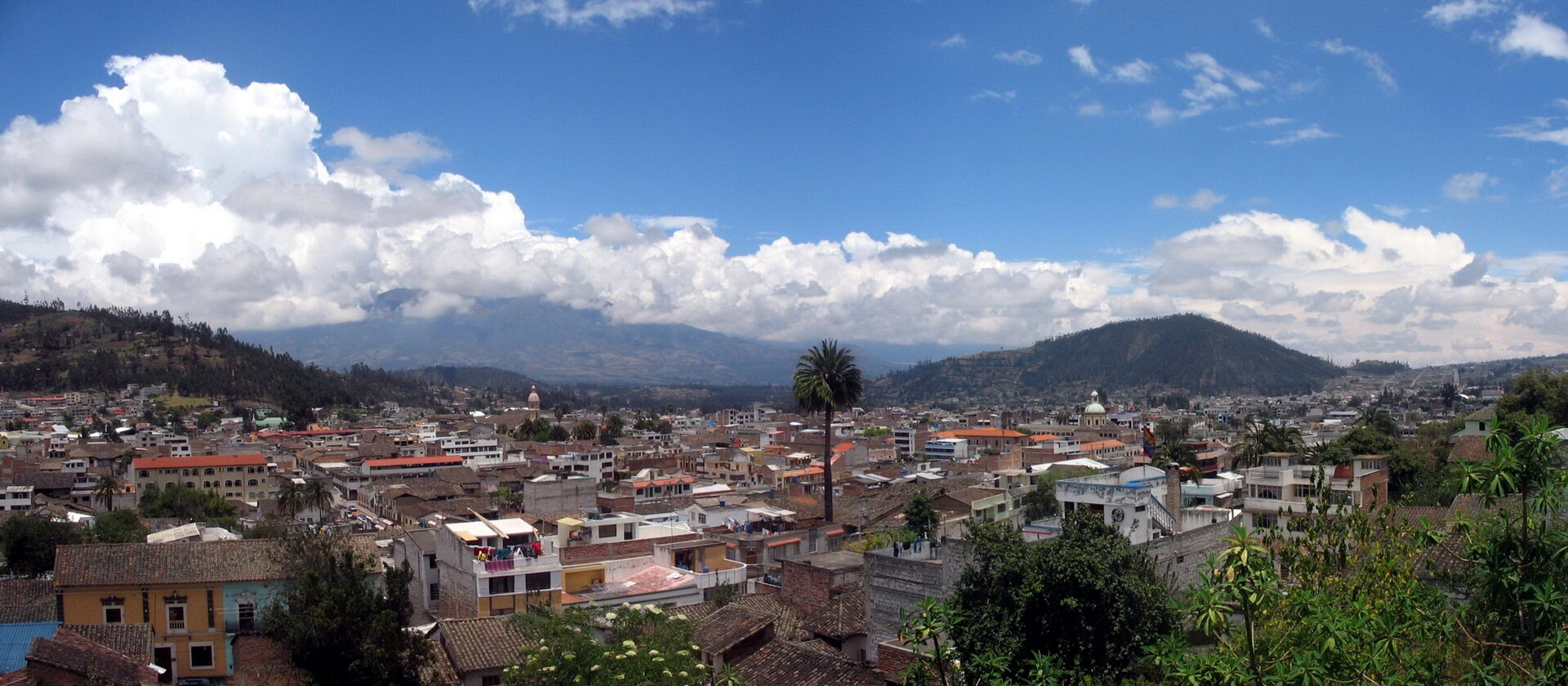
A highland market town at 2,550m with Ecuador's best-known crafts market, crater lakes, a sacred waterfall and volcanoes on every side, all within an easy bus ride of Quito.
- Best time to visit: June to September
- Daily budget (budget traveller): $35 to $120 USD
- Ideal trip length: 3 to 5 days
Otavalo is a market town in Imbabura province, about two hours north of Quito by bus. It sits at roughly 2,550m in a wide green valley, with Imbabura volcano on one side and the Mojanda hills on the other. Most people here are Kichwa Otavalo, and many still wear traditional dress: white trousers, ponchos and a long plait for men, embroidered blouses and gold bead necklaces for women. The craft market on Plaza de los Ponchos runs every day. On Saturday it spills into the streets around it, and an animal market takes over the edge of town from dawn. Plenty of visitors come up from Quito for that one Saturday. Stay a few nights and you get the rest: a cold dip at Peguche waterfall, the crater rim walk at Cuicocha, the high lakes of Mojanda and cheap set lunches in the food market. Otavalo is easy on a budget. Dorm beds start around US$10, local buses cost under a dollar and the main natural sights are free to enter. It is small, walkable and a good place to get used to the altitude before bigger Andean trips.
Otavalo is a town of a few tens of thousands of people at about 2,550m, ringed by Imbabura, Cotacachi and the Mojanda hills. The Kichwa Otavalo are known across South America as weavers and traders, and the market on Plaza de los Ponchos is the result: a daily square full of textiles, hats, hammocks and jewellery that doubles in size every Saturday. Most visitors come on a day trip from Quito and leave by mid-afternoon. Stay longer and the town changes. You see the dawn animal fair, cold mornings with the volcanoes clear, Sunday family outings at Peguche and long hikes around crater lakes. It is a cheap place to travel. Dorm beds cost around US$10-15, set lunches a few dollars and local buses well under a dollar, and the biggest natural sights are free to enter.
Logistics are easy. Buses run from Quito's Carcelén terminal several times an hour for about US$3-4 and take around two hours, longer in traffic. Base yourself in the centre if this is your first visit, because you can walk everywhere and catch buses to Peguche, Cotacachi, San Pablo del Lago and Ibarra from the terminal. Plan around a Saturday. Put the big hikes on early starts, because cloud builds over Mojanda and Cuicocha by late morning. Parque Cóndor opens only from Wednesday to Sunday. Use taxis for Mojanda, and agree the price and waiting time before you leave town.
Timing shapes the trip. June to September is the driest stretch, with sunny days, chilly nights and the best volcano views. Inti Raymi around the June solstice and the Yamor festival in early September bring music, dancing and full hostels. The rest of the year is greener, with afternoon showers, but mornings are often fine. Days are mild and nights are cold whatever the month, so pack layers. Spanish is the main language, and Kichwa is widely spoken. Otavalo is not a party town, but it has a few bars and live Andean music at weekends. It is a good, gentle place to get used to the altitude before the rest of the Andes.
How many days in Otavalo?
For Otavalo, we recommend 3 to 5 days.
| Trip length | What you'll see | Itinerary |
|---|---|---|
| 2 days | Saturday market day | Otavalo in 2 days |
| 3 days · Recommended | Adds: Peguche, El Lechero and Parque Cóndor | Otavalo in 3 days |
| 4 days · Recommended | Adds: Cuicocha crater and Cotacachi | Otavalo in 4 days |
| 5 days · Recommended | Adds: Mojanda lakes and Fuya Fuya | Otavalo in 5 days |
| 7 days | Adds: Lago San Pablo and Ibarra; Last stroll and back to Quito | Otavalo in 7 days |
Otavalo itinerary
Arrive and find your feet
Morning: This plan assumes you arrive on a Friday. Take a bus from Quito's Carcelén terminal (about US$3-4, roughly two hours). Keep your bag on your lap.
Afternoon: Check in near the centre, then walk to Plaza de los Ponchos for a quiet first look at the weekday market. Have a set lunch at Mercado 24 de Mayo.
Evening: Take it easy at altitude. Have dinner near Parque Bolívar or at your hostel, and plan Saturday's early start.
Saturday market day
Morning: Head to the animal market at about 6:30am while the trading is busiest, then have breakfast in town before the craft stalls fill up.
Afternoon: Browse Plaza de los Ponchos and the streets around it. Compare prices, bargain gently and try hornado or fritada from a market stall.
Evening: Drop your shopping off at your hostel. If you have the energy, find live Andean music at a bar or peña.
Peguche, El Lechero and Parque Cóndor
Morning: Walk or take a local bus to Peguche, then follow the forest path to the waterfall. Visit a weaving workshop in the village.
Afternoon: Take a taxi up to Parque Cóndor (open Wednesday to Sunday, about US$5-6) and catch a flight demonstration. Walk to El Lechero for the lake views.
Evening: Head back down before dark. Have an early dinner and book a taxi for Mojanda later in the week.
Cuicocha crater and Cotacachi
Morning: Catch an early bus towards Quiroga or Cotacachi, then a taxi to Cuicocha (about US$5-6). Register at the gate and start the rim loop clockwise.
Afternoon: Finish the 14km loop in 3.5 to 5 hours, or do half of it and take a short boat ride. Go down to Cotacachi for carne colorada and a look at the leather shops.
Evening: Take the bus back to Otavalo. Have soup and an early night.
Mojanda lakes and Fuya Fuya
Morning: Leave about 7am in a pre-booked taxi or pickup with an agreed waiting time. Hike up Fuya Fuya or walk the shore of Laguna Grande before the cloud rolls in.
Afternoon: Stop at the Taxopamba waterfall in Mojandita on the way down, then have a late lunch in town.
Evening: Rest your legs. A hot canelazo and a hearty locro de papa suit a cold evening.
Lago San Pablo and Ibarra
Morning: Take a bus to San Pablo del Lago and walk along the lakeshore below Imbabura. Book ahead if you want to visit the Tahuantinsuyo workshop in Agato.
Afternoon: Take a bus to Ibarra, wander the white colonial centre and try helados de paila.
Evening: Head back to Otavalo for a farewell dinner, then pack and buy any last crafts.
Last stroll and back to Quito
Morning: Have a slow breakfast, then make a last market visit on a quiet Thursday morning for small gifts.
Afternoon: Take the bus to Carcelén. Allow plenty of time if you have a flight, because traffic in north Quito can be slow.
Evening: Connect onwards from Quito, or head north towards Ibarra and the Colombian border if you are travelling overland.
Best neighbourhoods
- Centro and Plaza de los Ponchos: The compact grid around the market square and Parque Bolívar. Hostels, small hotels, cafés, ATMs and the bus terminal are all within a 10 to 15 minute walk. It is the easiest base for a solo traveller, and lively until mid-evening.
- Peguche: A weaving village about 3km northeast of the centre, next to the sacred Peguche waterfall. It has a few family-run guesthouses and workshops, and it is quieter and more rural than town, with buses and cheap taxis back to the market.
- Road to Mojanda: The cobbled road climbing southwest out of town towards the Mojanda lakes and the Taxopamba falls at Mojandita. Farm stays and countryside lodges sit along it. You get valley views and fresh air, but you will rely on taxis after dark.
- Lago San Pablo: The large lake below Imbabura, about 20 minutes east of town. Haciendas and lakeside inns line the shore, including Hacienda Cusín at San Pablo del Lago. It suits a slower stay with walks, birdlife and sunsets.
- Cotacachi: A calmer small town about 15km north, known for its leather shops and as the gateway to Laguna Cuicocha. It is a good alternative base if you want to hike the crater early, and buses to Otavalo run often.
Must-do experiences
- Spend a Saturday at Plaza de los Ponchos: The market runs daily, but on Saturday stalls fill the surrounding streets with textiles, tapestries, hats, jewellery and food. Go early for the calmest browsing, bargain politely and compare a few stalls before buying.
- Visit the Saturday animal market at dawn: From about 6am, farmers trade pigs, cattle, sheep, guinea pigs and chickens on the western edge of town. It is a working market, not a show, so go early, step out of the way and ask before taking close-up photos.
- Walk to Cascada de Peguche: A 30 to 45 minute walk or a short local bus ride brings you to this waterfall of roughly 18m in a eucalyptus forest. It is a Kichwa ceremonial site used for purification around Inti Raymi. Entry is free, with a donation of a dollar or two at the desk.
- Hike the Cuicocha crater rim: Laguna Cuicocha fills a volcanic crater about 3km wide near Cotacachi. The rim loop is about 14km and takes 3.5 to 5 hours. Entry is free, but you register with your passport details at the gate. Short boat rides around the islands cost a few dollars.
- Climb Fuya Fuya above the Mojanda lakes: The Mojanda lakes sit in the páramo above 3,700m, about 17km south of town. Fuya Fuya rises to roughly 4,260m and is a popular first acclimatisation peak. There is no public bus, so hire a taxi or pickup that waits for you.
- See the birds at Parque Cóndor: A rescue centre for Andean condors, owls, eagles and other birds of prey on a hill east of town. It opens from Wednesday to Sunday, roughly 9:30am to 5pm, with entry around US$5-6. Check the times of the flight demonstrations when you arrive.
- Walk out to El Lechero and the lake views: A lone, sacred tree on a ridge above town, with wide views over Lago San Pablo and Imbabura. Combine it with Parque Cóndor on a half-day loop, and go in daylight with company.
Hidden gems
- The Taxopamba waterfall at Mojandita, on the road to the Mojanda lakes, which is taller than Peguche and has a much quieter walk in
- A set lunch (almuerzo) of soup, a main and juice for a few dollars at the food stalls in Otavalo's Mercado 24 de Mayo
- The Tahuantinsuyo Weaving Workshop in Agato near Lago San Pablo, where a family weaves on traditional backstrap looms, best visited by appointment
- The shore of Lago San Pablo late in the afternoon, when the light falls on Imbabura and herons work the reeds
- Helados de paila in Ibarra, sorbet whipped in a copper pan over ice, a short bus ride north and worth the trip on its own
Daily budget
- Accommodation: budget US$10-20 / night (dorm or simple private room), mid-range US$40-90 (small hotel or guesthouse), splurge US$130+ (Hacienda Cusín or a countryside hacienda). Prices rise for Inti Raymi in late June and Yamor in September. Many places include breakfast. Countryside lodges save on noise but add taxi costs.
- Food: budget US$10-18 / day (set lunches, market food, bakery breakfasts), mid-range US$20-35 (café meals and sit-down dinners), splurge US$45+ (hacienda dinners, wine). A set lunch of soup, a main and juice costs a few dollars in markets and local cafés. Bigger restaurants may add a 10% service charge and 15% VAT.
- Transport: budget US$1-5 / day (local buses, walking), mid-range US$10-25 (taxis to Cuicocha and short hops), splurge US$40+ (taxi with waiting time to Mojanda, private transfers). The bus from Quito costs about US$3-4, and local buses about US$0.35-0.50. Agree taxi prices before you get in.
- Activities: budget US$0-6 / day (Peguche, Cuicocha and Mojanda are free), mid-range US$10-30 (Parque Cóndor, Cuicocha boat ride, a weaving workshop), splurge US$60+ (guided Imbabura or Cotacachi climb, private tours). Parque Cóndor costs about US$5-6. Cuicocha boat rides cost about US$3.50-6. Leave a donation of a dollar or two at Peguche.
- Drinks & nightlife: budget US$2-6 (a beer or a canelazo), mid-range US$10-20 (a few drinks with live music), splurge US$30+ (cocktails at a hotel bar). Nightlife is low key, with a few bars and peñas playing Andean music, mostly on Friday and Saturday. Weeknights are quiet.
Where to stay
- Social hostel in Centro (US$10-25 / night): Hostal Flying Donkey is a few minutes' walk from Plaza de los Ponchos. It has dorms, private rooms, a shared kitchen and a lounge where solo travellers can easily meet hiking partners.
- Boutique hotel in Centro (US$45-95 / night): Hotel Doña Esther on Juan Montalvo has rooms around a courtyard and a restaurant with a wood-fired oven. It is close to the market, and you can walk to everything.
- Apartment in Centro or the road to Mojanda (US$25-60 / night): Short-let flats with kitchens are easy to find in town and on the hill roads. They suit longer stays and self-catering from the produce markets. Check how far they are from the terminal before you book.
- Splurge in San Pablo del Lago (US$130-220 / night): Hacienda Cusín is a historic hacienda near the lake, with gardens, fireplaces and views of Imbabura. It is a quiet, comfortable base 20 minutes from town.
What to eat
- Fritada: chunks of pork simmered and then fried in their own fat, served with mote (hominy), potatoes, plantain and toasted corn
- Hornado: whole roast pig carved to order with llapingachos (cheesy potato cakes) and pickled onion, a market staple
- Chicha del Yamor: a sweet fermented drink made from several types of maize, brewed for the Yamor festival in September
- Carne colorada: pork stained red with achiote, a speciality of Cotacachi and Imbabura, usually with potatoes and avocado
- Empanadas de morocho and tortillas de tiesto: snack-sized pastries and griddle cakes, sold hot from street stalls with a coffee
- Helados de paila: hand-turned fruit sorbet from Ibarra, in flavours such as mora (Andean blackberry) and naranjilla
Day trips
- Laguna Cuicocha and Cotacachi (About 25km northwest of Otavalo, 30-45 minutes): A deep crater lake with two islands inside a volcanic caldera, in the Cotacachi-Cayapas Ecological Reserve. The 14km rim loop takes 3.5 to 5 hours and has views of Cotacachi, Imbabura and Cayambe on clear days. Afterwards, stop in Cotacachi for leather shops and carne colorada. Take a bus from Otavalo's terminal to Quiroga or Cotacachi (about US$0.40-0.50), then a taxi or pickup to the gate (about US$5-6). Entry is free, but you register with your passport details. Boat rides cost about US$3.50-6.
- Lagunas de Mojanda and Fuya Fuya (About 17km south of Otavalo, 30-45 minutes up a cobbled road): Three main lakes in the cold, grassy páramo above 3,700m. Walk the shore of Laguna Grande or climb Fuya Fuya, at roughly 4,260m, for views of the lakes and the volcanoes. Come down via the Taxopamba waterfall at Mojandita. There is no public bus. A taxi or pickup costs roughly US$12-20 each way. Agree a waiting time and a total price before you leave, as travellers have reported around US$40 for a return trip with a three-hour wait.
- Lago San Pablo and Ibarra (San Pablo del Lago is about 10km east. Ibarra is about 25km northeast.): Walk the lakeshore below Imbabura, visit a weaving family in Agato, then continue to Ibarra, a white-walled colonial city known for helados de paila. It makes an easy, low-effort day after a big hike. Local buses from Otavalo's terminal run to San Pablo del Lago and to Ibarra often, each for well under a dollar. Taxis can link the lake villages cheaply.
When to visit
- Dry season (June - September): About 8-22°C, sunny, windy afternoons, cold nights. Crowds: Busier in July and August, and around Inti Raymi and Yamor. The best months for Cuicocha, Mojanda and volcano views. Book ahead for late June and early September festivals.
- Autumn showers (October - November): About 9-21°C, clear mornings, afternoon rain more common. Crowds: Low. Good value and quiet. Hike early, come back for lunch and spend wet afternoons in the market.
- Holiday break (December - January): About 9-21°C, often a short drier spell between rains. Crowds: Busy over Christmas, New Year and local holidays. A decent window, with festive markets and Ecuadorian visitors. Buses from Quito fill up around the holidays.
- Wet season (February - May): About 9-20°C, the heaviest rain, often in March and April. Crowds: Low, with a bump around Carnival and Pawkar Raymi. Green and cheap, but trails get muddy and cloud hides the peaks. Carnival and Peguche's Pawkar Raymi festival make February lively.
Entry rules for your passport
Visa rules for Ecuador depend on the passport you travel on. Check the official source before you book: Ecuador Ministry of Foreign Affairs
Getting there
Fly into Mariscal Sucre International Airport (UIO) outside Quito. From the airport, a public bus runs to Terminal Carcelén in north Quito for about US$2, and buses for Otavalo leave Carcelén several times an hour for about US$3-4. Companies include Cooperativa Otavalo, Los Lagos and Flota Imbabura. The ride takes about two to 2.5 hours. If you are coming from central Quito, a taxi to Carcelén costs about US$10-15 and can take up to an hour in traffic. Private shuttles and taxis from the airport cost roughly US$45-70. Buses arrive at Otavalo's terminal on the north side of the centre, a short walk from most hostels. Heading north overland, buses connect Otavalo with Ibarra and onwards to Tulcán and the Colombian border at Rumichaca. Make sure you get your passport stamped at the border.
Getting around
Otavalo's centre is small and flat enough to walk everywhere, and most hostels are within 15 minutes of Plaza de los Ponchos and the bus terminal. Local buses leave the terminal for Peguche, Cotacachi, Quiroga, San Pablo del Lago and Ibarra, usually for around US$0.35-0.50. Yellow taxis are cheap for short hops, roughly US$2-3 to Peguche, and drivers rarely use meters, so agree the price first. For Cuicocha, take a bus to Quiroga or Cotacachi, then a taxi or pickup for about US$5-6, or take a taxi straight from Otavalo. Mojanda has no public transport. Taxis and pickups charge roughly US$12-20 each way, or a set price to wait while you hike, and travellers have reported paying around US$40 for a return trip with a three-hour wait. Agree the waiting time and the total price before you set off, and pay at the end. Car hire is possible in Quito but not needed here.
Safety
Otavalo is generally calm, and Ecuador's worst violent crime is concentrated on the coast, away from the highlands. Petty theft is the main risk. Pickpockets work the Saturday crowds, and bags go missing on buses, so keep your daypack on your lap, not in the overhead rack or the hold. Walks to quiet viewpoints such as El Lechero and some trails above town have seen robberies over the years, so hike in daylight, with others where you can, and leave valuables at your hostel. At Mojanda and Cuicocha the bigger dangers are cold, fog and altitude. Carry layers and water, start early and turn back if the cloud comes in. Otavalo sits at about 2,550m and the lakes are far higher, so take a slow first day, drink water and go easy on alcohol. Ecuador has used states of emergency and curfews in recent years, so check your government's travel advice before and during your trip. Use registered taxis at night.
Solo travel tips
- Stay central for your first visit: You can walk to the market, the terminal and dinner, and you will not need taxis at night. Countryside lodges are lovely, but they are better for a second visit or a longer stay.
- Share taxis to the lakes: Mojanda and Cuicocha are cheaper and safer with company. Ask at your hostel or post in a common room the night before. A shared pickup with a waiting time works well.
- Start hikes early: Cloud and wind build over the páramo by late morning. Leave by 7am, carry layers, water and snacks, and turn back if fog comes in.
- Carry small notes: Market stalls, buses and taxis rarely have change for US$20. Break big notes at supermarkets or your hotel, and keep a stash of US$1 bills and coins.
- Safety for solo travellers: Keep your daypack on your lap on buses, watch your pockets in Saturday crowds and avoid isolated viewpoints alone. Use registered taxis after dark.
- Learn a few Kichwa words: A simple 'yupaychani' (thank you) goes down well in markets and villages. A little Spanish helps even more, because few people speak English outside hostels.
Cultural etiquette
- Greet people with 'buenos días' before asking a question or a price. A greeting matters in shops and markets.
- Ask before photographing people, especially at the animal market and in villages. Some people will say no or ask for a small tip, and both are fair.
- Bargain politely and with a smile. Start a little below the asking price, but do not haggle hard over small amounts.
- Peguche waterfall and El Lechero are sacred sites. Keep noise down, do not leave rubbish and respect any ceremony in progress.
- Dress modestly in villages and churches. Shorts are fine for hikes, but locals rarely wear them in town.
- Festivals such as Inti Raymi are community events first. Watch from the edge, follow local lead and do not push into dance circles unless invited.
- Things run on a relaxed clock. Shops may open late and close for lunch, and buses leave when they are full.
Frequently asked questions
How do I get from Quito to Otavalo?
Buses leave Quito's Terminal Carcelén in the north of the city several times an hour and cost about US$3-4. The trip usually takes 2 to 2.5 hours, depending on traffic. From Quito airport, a public bus to Carcelén costs about US$2, so the whole journey can come in under US$7. A taxi or shuttle from the airport costs far more, roughly US$45-70. The bus drops you at Otavalo's terminal, a short walk from most hostels.
How many days do I need in Otavalo?
Three days covers the Saturday market, Peguche and one big hike. Four or five days lets you do both Cuicocha and Mojanda without rushing, plus Parque Cóndor and Lago San Pablo. A day trip from Quito only shows you the market.
Is the market only on Saturday?
No. The craft market at Plaza de los Ponchos runs every day, roughly from morning to early evening. Saturday is much bigger, with stalls spreading into nearby streets, plus the animal market at dawn. Weekday visits are calmer and often better for bargaining.
When is the best time to visit Otavalo?
June to September is the driest period, with clearer views of the volcanoes, which makes it the best time for hiking. Late June brings Inti Raymi, and early September has the Yamor festival, so book ahead for both. The rest of the year has more afternoon rain, but mornings are often clear and the town is quieter.
Do I need cash in Otavalo?
Yes. Ecuador uses the US dollar. Market stalls, buses, taxis and set lunches all expect cash, ideally in small notes, because US$20 bills and above can be hard to change. There are ATMs around the centre. Hotels and some restaurants take cards.
Will the altitude affect me?
Otavalo is at about 2,550m, which is lower than Quito, so most people feel fine. The Mojanda lakes are above 3,700m, and Fuya Fuya reaches about 4,260m. Leave hikes like that until you have spent a few days at altitude. Drink water, eat lightly and come down if you develop a bad headache or nausea.
Is Otavalo safe for solo female travellers?
Generally yes. The town is used to visitors, and plenty of women travel here alone. Watch your bags in the Saturday crowds, use registered taxis at night and avoid isolated trails and viewpoints on your own. Hostels can often match you with other hikers or recommend a trusted driver.
What are the entry rules for Ecuador in 2026?
Citizens of the UK, EU, US, Canada, Australia and New Zealand can enter visa-free as tourists for up to 90 days in a 12-month period. Your passport should be valid for at least six months, and officers may ask for proof of onward travel. Ecuadorian law has required tourists to carry health insurance since 2017, although it is rarely checked, so bring a policy with medical cover. Rules change, so confirm with official sources before you travel.
Tours and activities in Otavalo | Otavalo in 2 days | Otavalo in 3 days | Otavalo in 4 days | Otavalo in 5 days | Otavalo in 7 days
Joy Plus home | Destinations | Itineraries | Activities | Flights | Budget planner | Calendar | Map | Blog | Lifetime access