Destinations / Europe
Padua, Italy travel guide
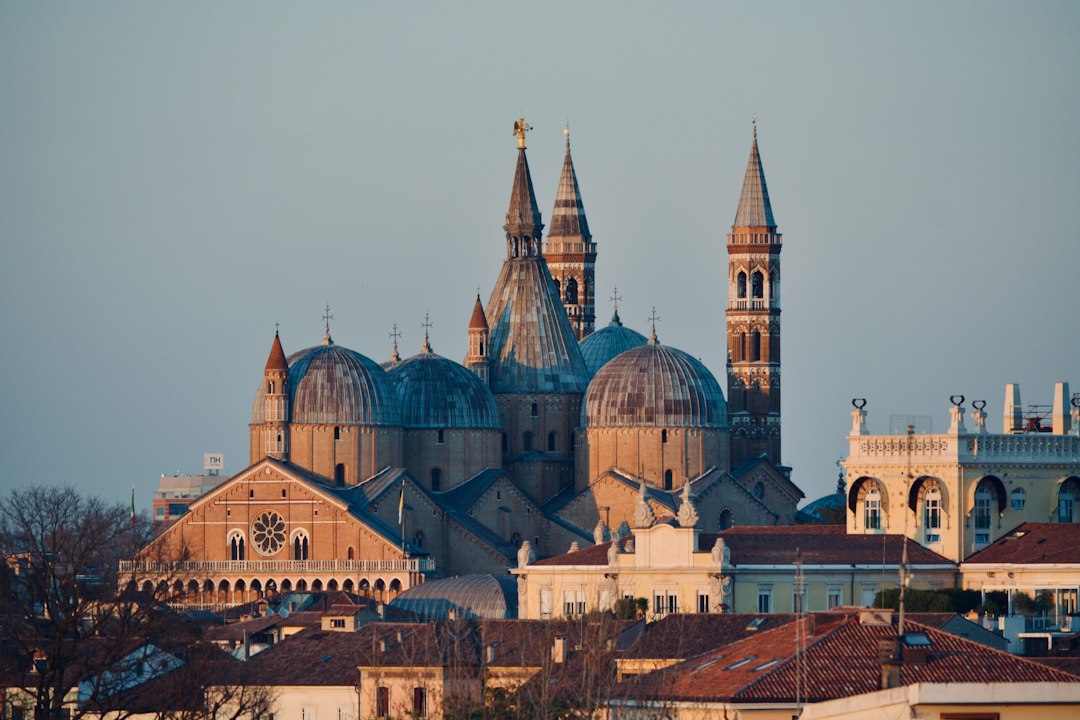
Veneto's intellectual capital: Giotto frescoes, buzzing piazza aperitivi and arcaded medieval streets.
- Best time to visit: April to June, September to October
- Daily budget (budget traveller): $75 to $160 USD
- Ideal trip length: 2 to 4 days
Padua is often rushed through on the train between Venice and Verona, yet it holds some of northern Italy's most remarkable treasures. Home to Giotto's groundbreaking frescoes in the Scrovegni Chapel, the world's oldest academic botanical garden, and Italy's second oldest university where Galileo taught for eighteen years, the city balances immense cultural weight with the relaxed swagger of an energetic university town. Under miles of terracotta-toned porticoes, morning fruit and cheese markets melt into lively late-afternoon spritz sessions across grand medieval squares, with scarcely a tour bus in sight.
Padua sits squarely on the Venetian plain, twenty-five miles west of the lagoon, yet its personality could not be more different from Venice. While its famous neighbour can feel like an exquisite open-air museum, Padua remains a thriving, self-confident working city. Merchant carts still rattle across the cobblestones of Piazza delle Erbe every dawn, students debate over bitter spritzes beneath marble arches, and bells echo from the eight Byzantine domes of Basilica di Sant'Antonio. It is compact, largely flat, and laced with thirty-three miles of fresco-lined porticoes that shelter you from summer sun and winter rain.
The artistic and intellectual pedigree here rivals Florence or Bologna. In 1305, Giotto completed the fresco cycle of the Scrovegni Chapel, replacing medieval flat gold backgrounds with expressive human emotion, deep ultramarine skies, and revolutionary spatial depth. Two centuries later, the University of Padua, founded in 1222, became Europe's sanctuary for free scientific enquiry: Galileo Galilei described his eighteen years lecturing here as the happiest of his life, William Harvey discovered the circulation of blood after studying in the world's first anatomical theatre, and Elena Cornaro Piscopia became the first woman in history to receive an academic degree here in 1678. These are not forgotten relics; they remain embedded in daily life.
Padua also happens to be one of northern Italy's most strategic bases. Venice is just twenty-six minutes away by frequent regional trains, Vicenza is twenty minutes west, and Verona is under an hour. South of town, the volcanic mounds of the Euganean Hills rise like islands from the flat farmland, offering hot thermal springs, olive groves, and medieval villages. Best of all, hotel prices are reasonable, food markets retain their centuries-old authenticity, and the streets belong to residents rather than package tour groups. Spend a couple of nights here and you will wonder why anyone rushes past.
Padua itinerary
Medieval squares and the great Salone
Morning: Arrive at Padova railway station and take the tram straight to the historic centre. Begin in Piazza delle Erbe, watching the lively morning market beneath the arcades, then enter the colossal Palazzo della Ragione (entry €8) to inspect its vast timber-vaulted hall and massive wooden horse.
Afternoon: Descend Sotto il Salone, the vaulted 13th-century food market under the palace, and sample local Montasio cheese and prosciutto at a traditional delicatessen. Walk two minutes to the Cathedral Baptistery (entry €5) to view Giusto de' Menabuoi's breathtaking fresco dome.
Evening: Head to Piazza dei Signori as the clock on the Torre dell'Orologio strikes six. Pull up an outdoor chair for an Aperol spritz, then dine on bigoli con l'anatra at Osteria dei Fabbri.
Giotto's masterpiece and university halls
Morning: Walk to the Giardini dell'Arena for your pre-booked morning slot at the Scrovegni Chapel (entry €16). Spend fifteen quiet minutes in the decompression chamber before stepping into Giotto's luminous blue sanctuary. Afterwards, browse the adjacent Musei Civici degli Eremitani.
Afternoon: Stroll down Via Altinate to historic Caffè Pedrocchi and order their famous mint coffee. At 2pm, join the guided tour of Palazzo Bo (university tour approx €12) to see Galileo's wooden lectern and the steep wooden balconies of the 1595 anatomical theatre.
Evening: Wander through the narrow lanes of the old Jewish Ghetto. Stop at a cosy bacaro for glasses of crisp Friulano and toasted crostini topped with creamy baccalà mantecato.
Pilgrims, plants and the great square
Morning: Follow the porticoes south to the magnificent Basilica di Sant'Antonio. Explore the Santo's tomb, the serene cloisters and Donatello's bronze masterpieces on the high altar. Next door, pop into the Oratorio di San Giorgio to see Altichiero's rich narrative frescoes.
Afternoon: Walk five minutes to the UNESCO-listed Orto Botanico (entry €10), established in 1545. Wander past Goethe's palm tree inside the historic circular stone walls before exploring the modern greenhouse pavilions showcasing plants from rain forests to polar zones.
Evening: Emerge onto Prato della Valle, Europe's second-largest piazza. Admire the eighty-seven statues reflected in the canal ring, then grab a wood-fired pizza and craft beer at a terrace overlooking the square.
Day trip to Palladian Vicenza
Morning: Board a frequent regional train from Padua to Vicenza (twenty minutes, €4.70). Walk through the historic core along Corso Andrea Palladio, admiring the dramatic Renaissance palaces designed by master architect Andrea Palladio.
Afternoon: Tour the mind-bending trompe-l'oeil stage set of Teatro Olimpico (approx €13), the oldest covered amphitheatre in the world. Enjoy lunch in Piazza dei Signori with a plate of baccalà alla vicentina.
Evening: Take the scenic walk up to the Santuario di Monte Berico for panoramic views across the pre-Alps. Train back to Padua for an easy dinner of pasta e fagioli.
Canals, student life and hidden oratories
Morning: Head northeast to the Portello district, entering through the monumental 1518 Venetian water gate of Porta Portello. Stroll along the Piovego canal, where transport barges once connected Padua to the Venetian lagoon.
Afternoon: Cross to the nearby Oratorio di San Michele, hidden near the Specola astronomical observatory tower where Galileo stargazed. Stop for a lunch of hot panzerotti or a filled tramezzino at Bar Nazionale near the piazze.
Evening: Join the student crowds sitting along the Portello canal steps for a relaxed evening beer, followed by traditional rustic fare at Trattoria di Portello.
Euganean Hills and wine country
Morning: Take a short regional bus or train south to the Colli Euganei volcanic hills (approx 30 minutes). Arrive in the poetic hillside village of Arquà Petrarca, where the Italian Renaissance poet Francesco Petrarca spent his final years.
Afternoon: Visit Petrarch's House and stone tomb, then walk between olive groves to a hillside cantina for wine tasting, sampling Colli Euganei Rosso and sweet Fior d'Arancio DOCG accompanied by cured meats and rustic bread.
Evening: Return to Padua. Indulge in an elevated dinner featuring local duck, seasonal mushrooms and polenta at an osteria off Via Roma.
Market foraging and grand farewell
Morning: Spend a lazy morning shopping Sotto il Salone for culinary souvenirs: vacuum-packed aged Asiago cheese, bottles of local olive oil, and artisan Zaeti cornmeal biscuits.
Afternoon: Take a final leisurely walk down the porticoes of Via Umberto I. Sit on the terrace of a piazza bar for a lunchtime piadina and an espresso while watching local cyclists weave past.
Evening: Pack bags and depart via high-speed train to Venice Marco Polo Airport, Bologna or Milan, or continue onwards to Verona.
Best neighbourhoods
- Centro Storico & Le Piazze: The medieval heart flanking Piazza delle Erbe, Piazza della Frutta and Piazza dei Signori, crowded with arcaded cafés, morning produce stalls and bustling evening wine bars.
- Il Santo & Prato della Valle: The atmospheric southern quarter centred on the monumental Byzantine domes of Basilica di Sant'Antonio, quiet conventual lanes and Europe's largest elliptical square.
- Portello: The historic student neighbourhood along the Piovego canal, filled with lively casual eateries, university faculties and stone water gates.
Must-do experiences
- Gaze upon Giotto's Scrovegni Chapel: Step into the climate-controlled chapel to marvel at Giotto's 1305 fresco cycle, the masterpiece that launched the Italian Renaissance.
- Join the aperitivo hour on Piazza delle Erbe: Order an Aperol, Campari or local Cynar spritz accompanied by warm tramezzini as the market stalls pack away at dusk.
- Explore the medieval Salone in Palazzo della Ragione: Walk through the colossal unsupported wooden ceiling hall surrounded by hundreds of astrological frescoes, then browse the 800-year-old food stalls underneath.
- Visit the Basilica di Sant'Antonio: Wander through this multi-domed pilgrimage basilica to view Donatello's high altar bronze sculptures and the marble shrine of Saint Anthony.
- Tour Palazzo Bo and the world's first anatomical theatre: Join a guided walk through the historic university building to stand beneath the wooden tiers of the 1595 anatomical dissection theatre.
- Walk through the UNESCO Orto Botanico: Stroll the circular 16th-century medicinal plant beds and the futuristic solar-powered Biodiversity Garden in the world's oldest academic botanical grounds.
Hidden gems
- The Cathedral Baptistery, covered wall to dome in hypnotic 14th-century frescoes by Giusto de' Menabuoi
- Sotto il Salone, the vaulted food market below Palazzo della Ragione selling regional cheeses and cured meats since 1218
- The quiet porticoes and former synagogues of the historic Jewish Ghetto south of Piazza delle Erbe
- Oratorio di San Giorgio, an intimate frescoed chapel next to the Basilica featuring vibrant narratives by Altichiero
Daily budget
- Accommodation: budget €30-55 / night (hostel bed or simple student guesthouse), mid-range €85-140 (central 3-star hotel or characterful boutique flat), splurge €180-320 (historic palazzo suite or luxury hotel near Prato della Valle). Hotel rates spike around 13 June (Feast of Saint Anthony) and major trade fairs in nearby Venice. Booking three months ahead yields great central value.
- Food: budget €15-25 / day (market panino, tramezzino snack, bakery slice and cheap pizza), mid-range €40-70 (traditional trattoria lunch, pasta dinner and evening spritz), splurge €100+ (multi-course fine dining with regional Colli Euganei wine pairings). The weekday lunch fixed menu (pranzo di lavoro) at local trattorie costs around €13 to €16 including pasta, second course, water and wine.
- Transport: budget €0-3.50 / day (mostly walking, single tram hop), mid-range €5-12 (tram passes plus regional train ticket to Vicenza or Venice), splurge €25-50 (taxis across town or private car transfers). Padua is wonderfully flat for walking. A regional train to Venice costs only €4.70 each way, while a bus to the Euganean Hills runs about €3.50.
- Activities: budget €5-16 (Basilica entry is free; Scrovegni Chapel ticket €16), mid-range €20-35 (Padova Urbs Picta card covering UNESCO fresco sites and museums), splurge €50-80 (private art historian tour or guided bicycle excursion). The Padova Urbs Picta Card (approx €28 for 48 hours) includes Scrovegni Chapel entry, seven other fresco sights and free urban transport.
- Drinks & nightlife: budget €4-8 (supermarket Peroni, standing espresso and a street spritz), mid-range €12-22 (two wine bar glasses, aperitivo spritzes and cicchetti snacks), splurge €35+ (historic salon cocktails at Caffè Pedrocchi and reserve Veneto wines). A classic Aperol or Campari spritz costs €3.50 to €4.50 in the piazze and usually comes with crisps or green olives.
Where to stay
- Social hostel in Portello / Stazione (€30-55 / night): Modern options like Ostello Città di Padova offer bright dorms, guest kitchens and social courtyards near the university and a short walk from train platforms.
- Boutique hotel in Centro Storico (€90-160 / night): Charming properties like Hotel Belludi 37 or Majestic Toscanelli place you steps from the piazze and Giotto frescoes, featuring historic Venetian styling and breakfast spreads.
- Apartment in Il Santo / Jewish Ghetto (€80-150 / night): Restored medieval flats with exposed wooden beams, quiet courtyards and small kitchens, ideal for foraging in the markets and staying three or more nights.
- Splurge in Prato della Valle / Basilica area (€180-350 / night): Palatial residences and historic villas like Le Camp Suite & Spa, offering thermal wellness facilities, marble finishes, and terraces overlooking monastic spires.
What to eat
- Bigoli con l'anatra: thick, toothsome egg pasta strands coated in slow-simmered minced duck ragù
- Tramezzini at Bar Nazionale: plump, triangular white-bread sandwiches stuffed to bursting with porchetta, baccalà or chicory
- Caffè Pedrocchi's signature mint coffee: rich espresso topped with chilled mint-infused cream and dusted with bitter cocoa
- Bollito misto and baccalà mantecato served alongside creamy polenta at traditional osterie
Day trips
- Vicenza (20 min by train): The elegant city of Andrea Palladio, boasting the Basilica Palladiana, the breathtaking wooden trompe-l'oeil interior of Teatro Olimpico, and stately Renaissance palaces lining quiet streets. Frequent regional and high-speed trains run from Padua Centrale to Vicenza every 15 minutes, costing €4.70 to €12 each way.
- Colli Euganei & Arquà Petrarca (35 min by bus or car): Volcanic hills rising dramatically from the plain, covered in vineyards, olive groves and thermal springs, home to the postcard-perfect medieval stone hamlet of Arquà Petrarca. FSBusitalia regional bus from Padua bus station to Arquà Petrarca or Monselice, roughly €3.50 one way; or 20 minutes by train to Terme Euganee.
- Chioggia (60 min by bus): Known as Little Venice, this working fishing port at the southern tip of the Venetian lagoon features quiet canals, historic fishing trawlers, and incredible fresh seafood trattorie without the crowds. Direct FSBusitalia bus from Padua bus station to Chioggia Sottomarina, taking about one hour for approximately €6 one way.
When to visit
- Spring (April - June): 12-25°C, mild days, fresh breezes and occasional showers in May. Crowds: Moderate, busier during Easter and the Feast of Saint Anthony on 13 June. The premier time to explore. Wisteria drapes the porticoes, the Botanical Garden bursts into full bloom, and outdoor café seating is at its absolute best.
- Summer (July - August): 22-34°C, hot and humid with occasional fierce afternoon thunderstorms. Crowds: Low in town as university students leave; busy at nearby thermal spas. Warm and languid. Sightseeing is best done early in the morning, followed by long lazy lunches. Many neighbourhood shops close for two weeks in mid-August.
- Autumn (September - November): 10-23°C, crisp mornings, golden afternoon light, cool and misty in November. Crowds: Moderate, lively university semester begins late September. Superb for food lovers. Market stalls overflow with wild mushrooms, radicchio and chestnuts, and day trips to the Euganean wine harvest are spectacular.
- Winter (December - March): 1-10°C, chilly, frequent morning river fog, occasional light frost. Crowds: Very low, except during the Christmas markets on Prato della Valle. Quiet and atmospheric. Perfect for museum viewing without crowds, warming up over thick hot chocolate at Caffè Pedrocchi and enjoying cheap hotel rates.
Entry rules for your passport
Visa rules for Italy depend on the passport you travel on. Check the official source before you book: European Commission: Schengen visa policy
Getting there
Padua has no commercial airport of its own, but it is exceptionally well connected to nearby northern hubs. Venice Marco Polo Airport (VCE) sits 45 kilometres away; the direct FSBusitalia shuttle coach links the airport directly to Padua bus station in 65 minutes (€9.50). Treviso Airport (TSF), used by budget airlines, connects via direct regional bus or train in roughly one hour. From Verona Catullo Airport or Bologna Airport, frequent high-speed trains take one to 1.5 hours. By train, Padua Centrale is a major intersection on the Venice-Milan and Venice-Rome mainlines: high-speed Frecciarossa and Italo trains connect Venice in 26 minutes, Bologna in one hour, and Milan in two hours. Remember to validate physical regional train tickets at green machines before boarding to avoid hefty conductor fines.
Border checks: non-EU visitors (other than Swiss, Norwegian, Icelandic, Liechtenstein, Andorran, Monegasque, San Marinese and Vatican citizens, and holders of an EU residence permit or long-stay visa) are registered in the EU's Entry/Exit System (EES) instead of getting a passport stamp. On your first crossing, officers take your photo and/or fingerprints, so allow extra time at passport control. ETIAS, the planned travel authorisation, is not in operation yet, so don't pay any website for one.
Getting around
Padua is compact and largely pedestrianised, making walking under the extensive porticoes the best option. A sleek single-track tram line (SIR 1) runs from the central railway station through the centre to Prato della Valle in under 15 minutes (€1.70 per ticket, valid 90 minutes). City buses cover outlying areas, and RideMovi bikeshare bikes are parked throughout town. Driving is strictly regulated with automated cameras guarding the historic centre ZTL zone.
Safety
Padua is generally safe and peaceful. Normal caution is advised around the railway station and Piazzale Stanga late at night, where occasional rowdiness occurs; stick to well-lit main boulevards and the tram line. Keep an eye on bags and pockets in busy market crowds on Piazza delle Erbe and Piazza della Frutta, as well as on crowded trams. Never leave phones or cameras unattended on outdoor café tables.
Solo travel tips
- Embrace the standing counter culture: Drinking your morning cappuccino or evening spritz standing at the bancone is half the price of table service and an easy, natural way to strike up casual conversations with local baristi and regulars.
- Buy the Padova Urbs Picta card: If you plan to see Giotto and more than two other sights, the 48-hour Urbs Picta card (approx €28) is essential. It includes Scrovegni entry, unlimited urban tram and bus rides, and admission to seven additional UNESCO fresco sites.
- Dine solo without self-consciousness: Padua's vibrant academic and business culture means solo diners are an everyday sight. Casual wine bars with cicchetti or counter-service osterie are everywhere, particularly around the Ghetto and Piazza della Frutta.
- Walk the illuminated porticoes at night: Padua remains safe and lively well into the late hours thanks to its thirty-thousand university students. The illuminated porticoes create atmospheric, well-lit corridors that feel welcoming even when wandering alone after midnight.
- Take advantage of cheap train links: Padua is a transport hub. When travelling solo, regional trains are cheaper and far less stressful than renting a car. Tickets to Venice, Vicenza and Ferrara cost under €10 each way and run continuously throughout the day.
- Use luggage lockers at the train station: If you are visiting between flights or day-tripping, the automatic luggage storage facility right inside Padua railway station allows you to store a pack for around €6 to €9 per locker, leaving your hands free for cobblestones.
Cultural etiquette
- Dress respectfully when visiting churches: Basilica di Sant'Antonio and the Cathedral strictly enforce covered shoulders and knees. Carry a light scarf in warm months.
- Never touch produce with your bare hands at the open-air stalls in Piazza delle Erbe. Tell the vendor what you want, or put on the disposable plastic gloves provided.
- Drink espresso at the counter if you want local pricing. Sitting at an outdoor table often incurs a service surcharge (coperto) on your bill.
- Tipping is not customary in Italy. Rounding up the bill with small change or leaving a euro or two for good service is appreciated but never expected.
- Strict silence and no flash photography are observed inside the Scrovegni Chapel and religious shrines.
- Keep to the right under porticoes and on bicycle lanes. Cyclists in Padua move swiftly along narrow arcades and expect pedestrians to be observant.
- Aperitivo drinks come with light bites, but do not treat the bar snacks as a full buffet dinner unless you are at a dedicated apericena venue.
Frequently asked questions
How do I reach Padua from Venice or Milan?
Padua sits on the main northern railway line. High-speed Frecciarossa and Italo trains connect Venice Santa Lucia in 26 minutes (€10 to €20) and Milan Centrale in roughly two hours (€25 to €50). Regular regional trains from Venice run every 15 minutes and cost only €4.70.
Do I need to book the Scrovegni Chapel in advance?
Yes, advance booking is mandatory. Tickets are strictly timed and often sell out two to three weeks ahead during spring and autumn. The standard adult ticket costs roughly €16, which includes entry to the adjacent Musei Civici degli Eremitani and Palazzo Zuckermann.
Is Padua worth staying in or just a day trip?
Padua works as a day trip from Venice, but staying two to three nights is far more rewarding. Hotel prices are less than half those in Venice, dining is authentic and unhurried, and evening aperitivo culture across the piazze gives a genuine slice of Italian student and town life.
How do I get around Padua?
Walking is effortless because most sights sit within a two-kilometre radius linked by shaded porticoes. For longer hops, tram line SIR 1 connects the train station directly to Piazza Eremitani, the Santo and Prato della Valle. Single tickets cost €1.70 and can be bought at kiosks or via contactless card on board.
Is Padua safe for solo travellers?
Padua is very safe for solo travellers, including women. The large student population keeps streets active until late, and dining solo at wine bars and osterie is completely standard. As in any European city, stay alert around the central railway station after midnight.
What is the aperitivo culture like in Padua?
Padua claims to have invented the Aperol Spritz, and evening drinks are an essential community ritual. From 6pm to 9pm, crowds gather around Piazza delle Erbe, Piazza della Frutta and Piazza dei Signori for spritzes (€3.50 to €5) paired with tiny cicchetti snacks or polpette.
What daily budget do I need for Padua?
Budget travellers can manage on €60 to €80 per day by staying in hostels or simple guesthouses, eating market snacks and using regional trains. A comfortable mid-range budget is €120 to €170 per day, covering a boutique hotel, sit-down trattoria meals, museum entries and evening spritzes.
Do I need a visa to visit Padua?
Italy is in the Schengen area. Visitors from the UK, the US, Canada, Australia and many other countries can stay up to 90 days in any 180 without a visa, and since October 2025 non-EU travellers are registered in the EU's Entry/Exit System (photo and fingerprints) instead of getting a passport stamp, so allow extra time at your first border. ETIAS pre-travel authorisation is not yet required. Check the rules for your nationality before booking.
More about Padua
Tours and activities in Padua | Padua in 2 days | Padua in 3 days | Padua in 4 days | Padua in 5 days | Padua in 7 days
Can't decide? Compare Padua with...
Joy Plus home | Destinations | Itineraries | Activities | Flights | Budget planner | Calendar | Map | Blog | Lifetime access