Destinations / Europe
Palma de Mallorca, Spain travel guide
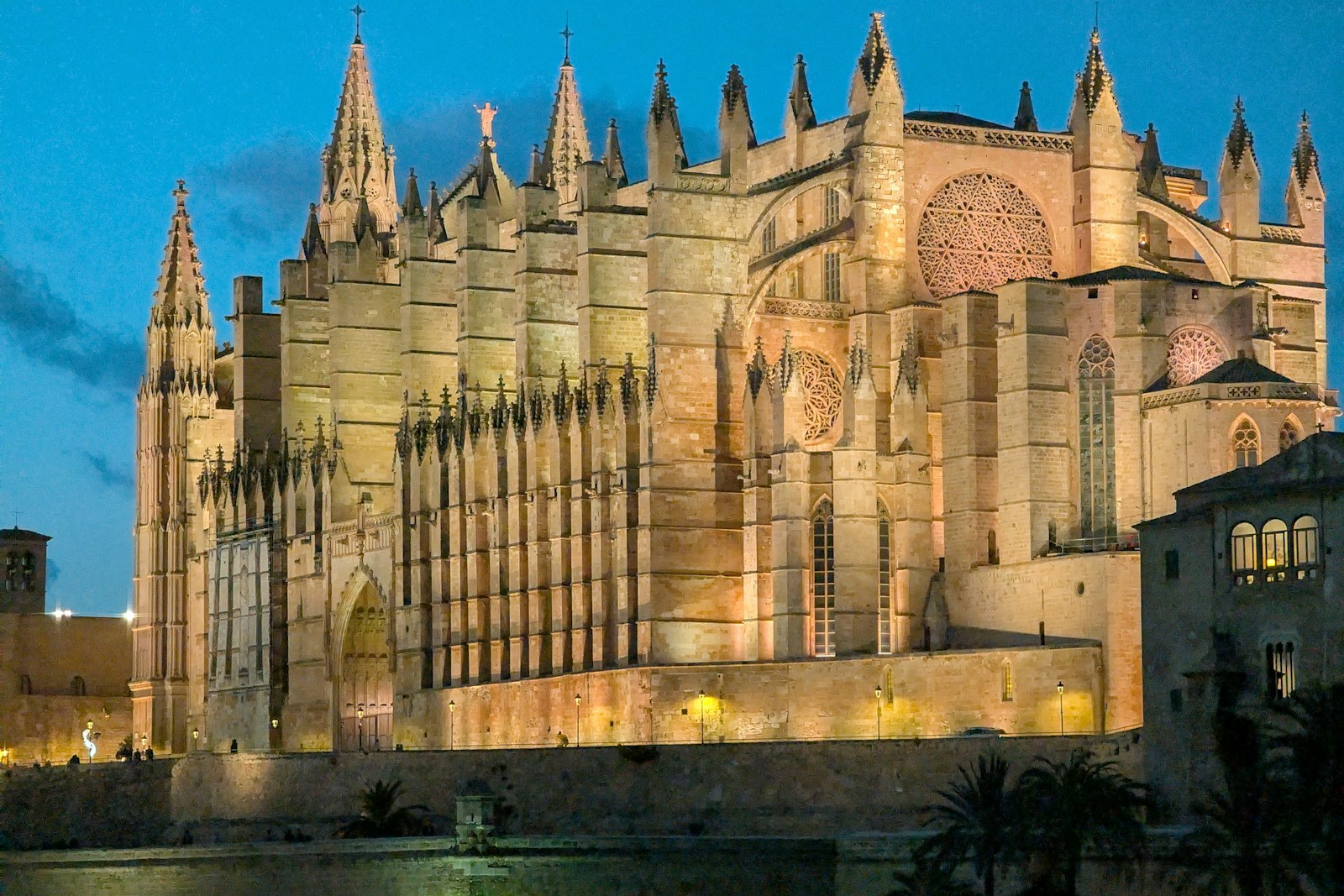
Mallorca's elegant capital: a soaring seafront cathedral, golden-stone old town, marina life and beaches close by.
- Best time to visit: May-June and September-October
- Daily budget (budget traveller): $110 to $180 USD
- Ideal trip length: 3 to 4 days
Palma is far more than a gateway to Mallorca's beaches, a sophisticated Mediterranean capital with a vast Gothic cathedral rising over the bay, a maze of honey-coloured lanes, leafy patios and a buzzing tapas and wine scene. Combine old-town wandering with marina sunsets and quick trips to coves and mountain villages. Joy Plus shapes the cathedral, the old town, the beaches and the day trips into an easy, sun-soaked few days.
Palma is the rare island capital where you can eat an ensaïmada under a Gothic cathedral and be in the sea an hour later. La Seu sits right on the waterfront, with a nave 44 metres high and a rose window of roughly 11 metres. Inside are a Gaudí canopy over the altar and a Miquel Barceló ceramic chapel that looks like a cave of mud and fish. Around it, the old town is a flat, walkable knot of honey-coloured lanes. Behind the heavy wooden doors are patios with columns, wells and lemon trees, and most visitors walk straight past them. Santa Catalina, the old fishermen's quarter, has turned into the city's food district around its covered market, with cocktail bars to follow. The Paseo Marítimo and the marina handle the sunset.
The thing to understand is that Palma's own beaches are fine but not the point. Can Pere Antoni and Ciutat Jardí are good for a quick dip. The postcard coves are 30 to 90 minutes away by bus or car, and the Serra de Tramuntana mountains (a UNESCO cultural landscape) wall off the north-west coast. That makes Palma a great base: city mornings, a swim, a long lunch, then a day on the 1912 wooden Sóller train or the winding coast road to Valldemossa and Deià. Bellver Castle, a round 14th-century fortress on a pine hill, gives you the best single view of the bay. Book the cathedral and the Sóller train at least a day ahead in summer.
Time it well and Palma is a bargain-ish, easygoing city break. Time it badly (August, cruise-ship days, a Sunday when the cathedral and the markets are shut) and you will be queuing in 33°C heat. The sweet spots are May to June and September to October. The sea is swimmable, the lanes are comfortable and the island feels like it belongs to the people who live there. Lunch is long, dinner is late, shops in the centre close for a few hours in the afternoon, and almost everyone speaks a bit of English. Locals also speak Catalan in its Mallorcan form, so a bon dia goes a long way.
How many days in Palma de Mallorca?
For Palma de Mallorca, we recommend 3 to 4 days. With more time, add a day trip to Santanyí and Caló des Moro.
| Trip length | What you'll see | Itinerary |
|---|---|---|
| 2 days | Old town and sunset; La Seu, palace and Arab Baths | Palma de Mallorca in 2 days |
| 3 days · Recommended | Adds: Santa Catalina and Bellver Castle | Palma de Mallorca in 3 days |
| 4 days · Recommended | Adds: Sóller train and Port de Sóller | Palma de Mallorca in 4 days |
| 5 days | Adds: City beach and Portixol | Palma de Mallorca in 5 days |
| 7 days | Adds: Valldemossa and Deià; Markets | Palma de Mallorca in 7 days |
Palma de Mallorca itinerary
Arrive, settle, old town and sunset
Morning: Land at PMI, take the A1 bus (€5, about 20 min) to Plaça d'Espanya, then walk or hop a bus to the old town. Drop bags and have coffee and an ensaïmada at Ca'n Joan de s'Aigo on Carrer Can Sanç.
Afternoon: Wander the lanes between Plaça Major and the cathedral, peeking into open patios. Lunch on pa amb oli or a menú del día around Plaça de Santa Eulàlia.
Evening: Walk the Parc de la Mar pond at sunset for the cathedral reflected in the water, then tapas and wine at Taberna de la Bóveda in La Lonja. Early night.
La Seu, palace and Arab Baths
Morning: Be at La Seu at 10am opening (closed to visitors on Sundays). Cover shoulders and knees, and look at the Gaudí canopy, the Barceló chapel and the rose window. Then walk next door to Palau de l'Almudaina.
Afternoon: Lunch at Celler Sa Premsa for old-school Mallorcan plates. Then the Banys Àrabs (about €3), a quiet 10th-century bathhouse with a tiny garden.
Evening: Vermouth at Bar Bosch on Plaça Rei Joan Carles I, then dinner in La Lonja. Drinks at Bar Abaco if you want to splash out.
Santa Catalina and Bellver Castle
Morning: Mercat de Santa Catalina when it opens (closed Sundays, shuts mid-afternoon). Stand-up breakfast, then browse and eat at the counters.
Afternoon: Es Baluard modern art museum and its ramparts, then bus 50 (check the stop at Plaça d'Espanya) up to Castell de Bellver (about €4, closed Mondays) for the bay view.
Evening: Back to Santa Catalina for dinner and cocktails. Walk home via the Paseo Marítimo, it is lit and lively until late.
Sóller train and Port de Sóller
Morning: Wooden train from Plaça d'Espanya, around an hour through tunnels and orange groves. Book online, as trains run only a handful of times a day with the first departures about 10am.
Afternoon: Walk Sóller's main square, then take the vintage tram (about €8) to Port de Sóller for grilled fish and a swim.
Evening: Train or TIB bus back to Palma, then a light dinner near your hotel.
City beach and Portixol
Morning: Swim at Platja de Can Pere Antoni, the city beach just east of the cathedral, before the sun gets heavy.
Afternoon: Walk or cycle the Paseo Marítimo to Es Portitxol and Molinar. Fish lunch on a seafront terrace, then a lazy afternoon on the rocks.
Evening: Sunset from the Portixol promenade, then dinner in Santa Catalina or a late tapas crawl back in the old town.
Valldemossa and Deià
Morning: TIB bus 203 from the Estació Intermodal to Valldemossa (about 30 to 40 min). Cartoixa Reial where Chopin and George Sand stayed in 1838-39, then a coca de patata pastry.
Afternoon: Continue by bus or rental car to Deià. Walk down to Cala Deià for a swim and seafood in the cove (closed or limited in winter).
Evening: Back to Palma for a final big dinner at a restaurant you booked a week ago.
Slow morning, markets, depart
Morning: Mercat de l'Olivar for gifts (ensaïmadas, sobrassada, hierbas liqueur) and a last pastry at Fornet de la Soca on Plaça Weyler.
Afternoon: Final swim or a stroll through the Born area. Collect bags.
Evening: A1 bus to PMI, allow 2h30 before a short-haul flight in summer.
Best neighbourhoods
- Old Town (Casc Antic): The historic heart around the cathedral, with Gothic lanes, hidden patios, churches and tapas bars.
- Santa Catalina: A trendy former fishermen's quarter packed with a food market, brunch spots, cocktail bars and street art.
- Es Portitxol & Molinar: A relaxed seafront strip of bobbing boats, beach bars and a flat promenade walk back to the centre.
- Paseo Marítimo & Marina: The waterfront of yachts, late-night bars and sunset views back to the illuminated cathedral.
Must-do experiences
- La Seu Cathedral: Tour Mallorca's spectacular Gothic cathedral with its huge rose window and Gaudí interventions.
- Wander the old town & patios: Get lost in the lanes around the cathedral, peeking into the city's elegant hidden courtyards.
- Sóller vintage train & town: Ride the antique wooden train through the mountains to pretty Sóller and its tram to the port.
- Beach & cove afternoon: Hit city beaches like Cala Major or take a boat or bus to calmer coves around the island.
Hidden gems
- The Arab Baths (Banys Àrabs), a peaceful 10th-century survivor hidden in a garden.
- Sunset drinks along the Es Portitxol seafront away from the tourist crowds.
- The Bellver Castle, a unique round hilltop fortress with sweeping bay views.
- Market mornings and a vermouth at the lively Mercat de Santa Catalina.
Daily budget
- Accommodation: budget €30-55 / night (dorm or basic hostal), mid-range €140-230 (old-town boutique double), splurge €350+ (Sant Francesc Hotel Singular, Can Cera). Palma is pricier than mainland Spain and July-August can double rates. Add the island tourist tax of roughly €1-4 per person per night, often not in the quoted price.
- Food: budget €25-35 / day (market, pa amb oli, menú del día), mid-range €55-85 (tapas lunch, one proper dinner), splurge €150+ (Michelin-starred tasting menu). Weekday lunch menús run €13-18 with a drink. Ensaïmada from a bakery is €2-4.
- Transport: budget €2-8 / day (EMT buses plus walking), mid-range €45-70 (Sóller train return plus tram and a few taxis), splurge €90+ (car hire day plus fuel and parking, or driver). A1 airport bus is €5. Sóller train is about €30 each way, so book the return as a combo. Palma itself is mostly walkable.
- Activities: budget €10-20 (Bellver, Arab Baths, free beaches and churches), mid-range €40-70 (cathedral, Almudaina Palace, Sóller train), splurge €150+ (small-group sailing day, private boat). La Seu is roughly €10-12 with audioguide. Bellver is about €4 and the Arab Baths about €3.
- Drinks & nightlife: budget €10-15 (caña, vermouth, cheap tapas), mid-range €30-50 (Santa Catalina and La Lonja bar hop), splurge €90+ (Bar Abaco cocktails, club table on the Paseo Marítimo). A small beer is €2.50-3.50, wine by the glass €3.50-6. Street drinking is fined, so stick to terraces.
Where to stay
- Social hostel in Santa Catalina / Plaça d'Espanya (€30-60 / night (dorm)): Hostel beds are scarce, so look at Hostelworld for dorms near the market, or try a budget hostal such as Hostal Apuntadores in the old town. You are walking distance from the food scene and the A1 airport bus.
- Boutique hotel in Old Town (Casc Antic) / Born (€140-230 / night): Hotel Born, Hotel Cort or Santa Clara Urban Hotel, set in historic palaces, with courtyards a minute from the cathedral and the best lanes.
- Apartment in Santa Catalina (€90-160 / night): A one-bed near the market, with a kitchen, a terrace and a view of rooftops. Best value for stays of five nights or more.
- Splurge in Old Town, cathedral quarter (€350-650 / night): Sant Francesc Hotel Singular, Can Cera or Palacio Ca Sa Galesa, rooftop pools, restored mansions and the cathedral on your doorstep.
What to eat
- Ensaïmada, the spiral coiled pastry dusted with sugar
- Pa amb oli, rustic bread rubbed with tomato, oil and cured ham or cheese
- Tumbet, a layered Mallorcan ratatouille of potato, aubergine and pepper
- Fresh seafood and arroz brut, a soupy island rice
Day trips
- Sóller and Port de Sóller (About 1 hour by vintage train): A 1912 wooden train through tunnels and orange groves to a handsome mountain town, then an old tram down to a horseshoe harbour with swimming and seafood. Train from Plaça d'Espanya, about €30 one way (book online, it runs only a few times a day). Sóller tram to the port is about €8.
- Valldemossa and Deià (30 to 60 min by bus or car): Stone villages in the Tramuntana: Chopin's Royal Charterhouse in Valldemossa, artists and poets in Deià, and a small cove with fish restaurants below. TIB bus 203 from the Estació Intermodal to Valldemossa (about €4-8), then connecting buses along the coast. A rental car makes this much easier.
- Santanyí and Caló des Moro (About 1h15 to 1h30 by bus or car): A golden-stone market town and one of the island's loveliest tiny turquoise coves. Arrive early, it fills by 10am in summer. TIB bus from the Estació Intermodal to Santanyí, then walk or taxi to the cove. A car is much easier in July and August.
When to visit
- Spring (April - June): 18-28°C, mostly sunny, sea 16-22°C and fresh. Crowds: Building, comfortable until mid-June. The best window. Cycling and hiking weather, almond and wildflower hills, patios open, and May beach days are doable if you don't mind a bracing swim.
- Summer (July - August): 29-34°C, humid, sea 25-27°C. Crowds: Very heavy, cruise ships plus package tourism. Swimming is perfect but the old town is an oven at 2pm. Book everything ahead, sightsee before 11am, and expect the highest hotel prices of the year.
- Autumn (September - October): 22-29°C, warm sea up to 25°C, occasional storms in October. Crowds: Moderate, falls off after mid-October. The locals' favourite. September has the warmest water and the lightest queues, and the Tramuntana turns gentle and gold.
- Winter (November - March): 8-17°C, sunny spells and rain, almond blossom in Jan-Feb. Crowds: Low. Cheap rooms and empty cathedral aisles. Good for hiking and food, but beach clubs close and some Tramuntana roads and cove facilities shut down.
Entry rules for your passport
Visa rules for Spain depend on the passport you travel on. Check the official source before you book: European Commission: Schengen visa policy
Getting there
Palma airport (PMI) is only about 8km east of the centre and has direct flights from most of Europe. The EMT A1 airport bus runs every 15 to 20 minutes into the centre, ending at Plaça d'Espanya near the train and bus station, for about €5 and about 20 minutes. Taxis cost roughly €25-35 to the old town, with a small surcharge for luggage. FREENOW and Cabify also work. Ferries from Barcelona and Valencia (Baleària, Trasmed) take around 7 to 8 hours and arrive at the port, about 2km from the cathedral. They are cheap if you are bringing a car or like overnight crossings. Once you are in, skip the car in the city and rent for one or two days only if you want the Tramuntana coast.
Border checks: non-EU visitors (other than Swiss, Norwegian, Icelandic, Liechtenstein, Andorran, Monegasque, San Marinese and Vatican citizens, and holders of an EU residence permit or long-stay visa) are registered in the EU's Entry/Exit System (EES) instead of getting a passport stamp. On your first crossing, officers take your photo and/or fingerprints, so allow extra time at passport control. ETIAS, the planned travel authorisation, is not in operation yet, so don't pay any website for one.
Getting around
Palma's old town is compact and best explored on foot. City buses (EMT) are cheap and reach the beaches and suburbs, while the historic Sóller train, the island's SFM trains and TIB buses serve longer trips. Renting a car for a day or two unlocks the Tramuntana coast and remote coves, but parking in the centre is tricky, so stay central and walk.
Safety
Palma is very safe and excellent for solo travellers including women, day and night. Violent crime is rare; the main risk is pickpocketing in crowded tourist spots, the market and on busy buses. Take normal beach-bag precautions, watch your belongings at nightlife hotspots, and you'll have an easy, relaxed trip.
Solo travel tips
- Eat at the bar and at the market: Santa Catalina market counters, La Lonja tapas bars and old-town bodegas all have bar seating. Order a caña, point at the pintxos, and you will be chatting with a local or a fellow solo within ten minutes.
- Join one small-group boat day: Solo sunset catamarans and small sailing trips (about €40-70) run from the Palma marina and Port de Sóller. It is the easiest way to get a swim, a drink and some company without a car.
- Stay in the old town or Santa Catalina: Palma has few true party hostels, so check Hostelworld for dorms in Santa Catalina or near Plaça d'Espanya, or take a basic hostal like Hostal Apuntadores in the old town. Both areas are walkable and well lit at night.
- Rent a bike for the Paseo Marítimo: There is a flat, dedicated bike lane from the cathedral to Portixol and beyond. Rentals run roughly €10-15 a day, and you can stop for a swim wherever you like.
- Solo female travellers: Palma is very comfortable for women alone, day and night. Normal rules apply: drinks supervised, use FREENOW or Cabify for late rides, and avoid the rowdier Plaça Gomila and Platja de Palma nightlife strips after midnight.
- Use the free walking tour to find your tribe: A tip-based old-town walk on day one gets you the layout and a ready-made lunch group. Evening wine-bar crawls and Spanish-cooking classes (around €60-90) are the other quick routes to company.
Cultural etiquette
- Cover your shoulders and knees in the cathedral and other churches. Staff do turn people away, and the cathedral is closed to tourists on Sundays.
- Don't walk around the old town in a bikini or shirtless. Palma's civility rules allow fines, and locals find it rude.
- Lunch is 1:30 to 3:30pm, dinner 8:30 to 10:30pm. A restaurant open at 6pm is probably aiming at tourists.
- Say bon dia and gràcies. Mallorquí (Catalan) is the local language, and the effort is noticed even if Spanish is your fallback.
- Tipping is modest. Round up at cafés, and 5 to 10% for good service at a sit-down dinner is plenty.
- Don't drink in the street, and don't pub crawl in residential areas. Palma fines both, and neighbours are tired of it.
- Keep noise down on patios and in the evening in the old town, because people really do live above the bars.
Frequently asked questions
How many days do you need in Palma de Mallorca?
Three to four days is ideal. Two days cover the cathedral, old town, Santa Catalina and a beach, while a third and fourth let you ride the Sóller train, explore the Tramuntana mountains and visit quieter coves around the island.
Is Palma de Mallorca safe for solo travellers?
Yes, very. Palma is a safe city and great for solo travellers including women at any hour. The only real caution is pickpocketing in crowded tourist areas, markets and on busy buses, so keep an eye on your belongings.
When is the best time to visit Palma de Mallorca?
May to June and September to October bring warm weather, swimmable seas and thinner crowds. July and August are hot and very busy, while winter is mild, quiet and great for hiking and city breaks, though many beach businesses close.
Is Palma worth visiting beyond the beaches?
Absolutely. Palma has one of the Mediterranean's finest Gothic cathedrals, a beautiful old town of patios and lanes, a strong food and wine scene and trendy neighbourhoods. It's a proper city break that happens to have beaches and mountains on its doorstep.
How do I get from Palma Airport to the city?
The A1 airport bus runs to the centre in about 15 to 20 minutes and is cheap and frequent. Taxis and ride-hailing take around 15 minutes. The airport is very close to the city, so transfers are quick and easy.
Do I need a car in Mallorca?
Not for Palma itself, which is walkable with good buses. A car helps for a day or two to reach remote Tramuntana villages and hidden coves, but the scenic Sóller train, buses and boat trips cover many highlights without one.
What are the best day trips from Palma?
Top day trips include the mountain town of Sóller and its port via vintage train, the artists' village of Deià, the dramatic Tramuntana coast, the caves and beaches near Portocristo, and the hilltop sanctuary and wine country around the island's interior.
More about Palma de Mallorca
- Where to Travel in 2027: 15 Places Worth Planning a Trip Around
- Total Solar Eclipse 2 August 2027: Where to Watch It and How to Plan Now
- Barcelona in 3 Days: Gaudí, Tapas, the Beach and 2026 Prices
Tours and activities in Palma de Mallorca | Palma de Mallorca in 2 days | Palma de Mallorca in 3 days | Palma de Mallorca in 4 days | Palma de Mallorca in 5 days | Palma de Mallorca in 7 days
Can't decide? Compare Palma de Mallorca with...
- Palma de Mallorca vs Ibiza
- Palma de Mallorca vs Menorca
- Palma de Mallorca vs Barcelona
- Palma de Mallorca vs Tenerife
Joy Plus home | Destinations | Itineraries | Activities | Flights | Budget planner | Calendar | Map | Blog | Lifetime access