Destinations / Europe
Pamplona, Spain travel guide
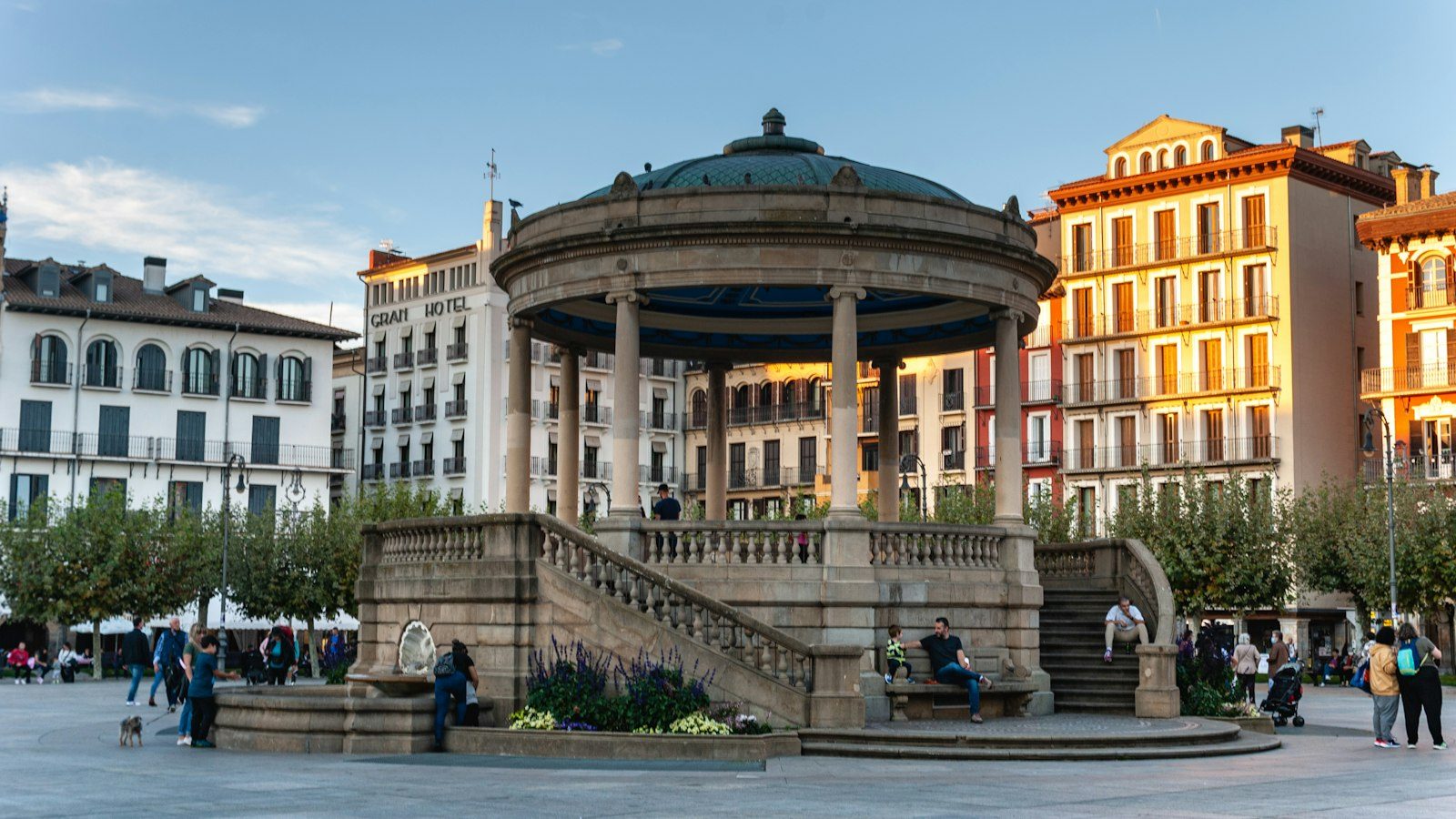
The old capital of the Kingdom of Navarre, inside its own stone walls, with a Gothic cathedral and some of the best pintxo bars in northern Spain. Most people know it for one week of bull runs in July. The other fifty-one weeks it is a calm, green, easy city to walk.
- Best time to visit: May to June and September to October
- Daily budget (budget traveller): $70 to $215 USD
- Ideal trip length: 3 to 5 days
Pamplona, or Iruña in Basque, is the capital of Navarre. It sits on a low hill above the River Arga, about 80km south of San Sebastián and a little over three hours from Madrid by train. Most of the old town is still enclosed by Renaissance walls and bastions, and the narrow streets inside are full of tall balconied houses, churches and bars. This is the Pamplona Hemingway wrote about, and every year from 6 to 14 July it becomes the noisy, crowded, red-and-white party of San Fermín, with the bull run through the streets each morning. Outside that week, things are much quieter. You can walk the walls in an afternoon, see one of the most complete cathedral complexes in Spain for a few euros and spend the evening going from bar to bar along Calle San Nicolás and Calle Estafeta for pintxos. The city is green, with the star-shaped Ciudadela, the Taconera gardens and a long river park on the Camino de Santiago. Prices are fair for northern Spain, the buses are cheap and the centre is safe and compact, so it is an easy city for a solo traveller. The exception is San Fermín, when beds can cost three or four times the normal rate.
Pamplona is a city of about 200,000 people that still feels like a large market town. The old town sits on a bluff above the River Arga, ringed by walls and bastions that are among the best preserved in Spain. For centuries this was the capital of the Kingdom of Navarre, and later a fortress guarding the road to France. You can see both in the Gothic cathedral, the town hall's fancy baroque front and the star-shaped Ciudadela. The Camino de Santiago runs straight through the middle, so you will see pilgrims with backpacks and scallop shells every day from spring to autumn. Most visitors come for San Fermín or pass through on the Camino. Stay a few nights at any other time of year and you get a relaxed, walkable city with great bar food and fair prices.
Getting here is simple. Direct Alvia trains run from Madrid Atocha in about 3 hours 25 minutes, with fares from around €20 if you book ahead. Alsa buses run to San Sebastián roughly every hour or two in about 1 hour 15 minutes for around €10, and there are buses to Bilbao, Zaragoza and Logroño. Pamplona's own airport is small, with few routes. Bilbao and Biarritz have more flights, and both are within a couple of hours by road. Once you are here, walk. Stay in the Casco Viejo for the bars and the sights, or in the Segundo Ensanche for quieter nights. Use the €1.70 villavesas for the train station and the outer districts.
Timing shapes the trip. Spring and autumn are mild and green, with fresh asparagus in spring and new wine and mushrooms in autumn. Summer is warm and dry, and San Fermín takes over the whole city from 6 to 14 July, so plan for it or avoid it. Winter is cold, sometimes frosty, but the bars are warm and the streets are full on Friday and Saturday nights. Pamplona is safe and friendly, and people are proud of their city, though less English is spoken here than on the coast. If you want beaches, go to San Sebastián for the day. If you want a long lunch, a walk on the walls and pintxos until midnight, stay here.
Pamplona itinerary
Arrive and find your feet
Morning: Arrive by train or bus and drop your bag. Walk to Plaza del Castillo and have a coffee at Café Iruña under the old mirrors.
Afternoon: Wander the old town streets to the town hall, San Saturnino and the Mercado de Santo Domingo, then walk the route of the bull run down Calle Estafeta to the bullring.
Evening: Start your first pintxo crawl on Calle San Nicolás. One pintxo and one drink per bar, then move on.
Cathedral and walls
Morning: Visit the cathedral, cloister and museum (€5) when it opens at 10:30. Book the bell tower climb ahead if you want to see the María bell.
Afternoon: Walk the walls from the Portal de Francia to the Mirador del Caballo Blanco, then down to the river and the Magdalena bridge.
Evening: Sundowner at the Caballo Blanco terrace, then pintxos on Calle Estafeta and around Plaza del Castillo.
Parks and the Museo de Navarra
Morning: Visit the Museo de Navarra (€2, closed Mondays) for the Roman mosaics, Gothic paintings and Goya. Come on Saturday afternoon or Sunday and it is free.
Afternoon: Picnic in the Taconera gardens, say hello to the deer in the moat, then walk round the bastions of the Ciudadela.
Evening: Dinner in the Segundo Ensanche, or a Thursday pintxo-and-drink deal in a local neighbourhood bar.
Olite and its palace
Morning: Take a regional bus south to Olite, about 45 minutes away. Walk the little medieval town and its walls.
Afternoon: Tour the turreted Royal Palace of the Kings of Navarre and climb the towers. Then try a glass of local wine at one of the bodegas in town.
Evening: Bus back to Pamplona for a quiet dinner and an early night.
A day in San Sebastián
Morning: Take an early Alsa bus to San Sebastián (about 1 hour 15 minutes, around €10). Walk La Concha bay and swim if it is warm.
Afternoon: Climb Monte Urgull for views, then wander the Parte Vieja for lunch and pintxos.
Evening: Bus back to Pamplona. Check the last departure before you set off.
Walk the Camino
Morning: Follow the Camino de Santiago out of the city through Cizur Menor towards the Alto del Perdón, with its iron pilgrim sculptures on the ridge.
Afternoon: Continue down to Puente la Reina and its Romanesque bridge if you have the legs, or turn back. Buses link Puente la Reina and Pamplona.
Evening: Back in town for a long, final pintxo crawl and a pacharán to finish.
Slow morning and depart
Morning: Have a last coffee on Plaza del Castillo and walk the river park while it is quiet.
Afternoon: Buy cheese, piquillo peppers or wine to take home, then take the train or bus onwards. Check times the day before.
Evening: Arrive in Madrid, San Sebastián or Bilbao, or carry on to your next stop.
Best neighbourhoods
- Casco Viejo (old town): The walled medieval core, with Plaza del Castillo, the town hall, the cathedral and the bull run route. Calle San Nicolás and Calle Estafeta have the best pintxo bars, and nearly every sight is a few minutes away on foot. It is lively until late at weekends, so ask for a room at the back if you sleep lightly.
- Segundo Ensanche: The 20th-century grid of wide streets just south of the old town, with Avenida Carlos III, shops, cafés and plenty of apartments. It is calmer and a little cheaper than the Casco Viejo, and Plaza del Castillo is only 5 to 10 minutes' walk away. It is a good base for longer stays or during San Fermín.
- San Juan (Donibane) and the Ciudadela: A residential area west of the Ciudadela park, close to the main bus station and the university. It has local bars, supermarkets and better-value hotels and flats. It is handy if you are arriving by bus, and the walk through the Ciudadela into the centre takes about 15 minutes.
- Rochapea and the river: The flat area north of the old town, across the River Arga, where the train station is. It is mostly residential and not pretty, but rooms cost less and the river park runs right through it. You have to walk uphill to the walls or take a villavesa (city bus).
- Iturrama and the University: A quiet, leafy district south-west of the centre, next to the University of Navarra campus and its modern art museum. You get students, cheap menú del día lunches and green space. Walk 20 minutes or take a short bus ride to the old town.
Must-do experiences
- See the cathedral and its cloister: Behind the plain neoclassical front of Santa María is a tall Gothic interior and one of the finest 14th-century cloisters in Europe. General entry is €5 and covers the church, cloister, museum and medieval rooms. The museum is closed on Sundays. Climbs up the bell tower to see the huge María bell run at set times and must be booked ahead.
- Walk the walls to the Caballo Blanco: Follow the ramparts around the north side of the old town, from the Portal de Francia drawbridge to the Mirador del Caballo Blanco, a terrace with a bar looking over the river and the hills. It is free, and the light is best in the late afternoon. Then carry on round to the cathedral.
- Go on a pintxo crawl on San Nicolás and Estafeta: Do what the locals do. Stand at the bar, order one pintxo and a small drink, then move on. Pintxos cost about €2.50 to €4.50 each, and the hot ones made to order are worth waiting for. Bar Gaucho, Casa Otaño and the bars around Plaza del Castillo are good places to start.
- Follow the route of the bull run: Walk the roughly 850m encierro route from the Santo Domingo corrals, past the town hall, round the sharp bend at Mercaderes and down Calle Estafeta to the bullring. Outside July it is just a lovely street walk. Look for the Hemingway statue by the bullring and have a coffee at Café Iruña on Plaza del Castillo, his old haunt.
- Wander the Ciudadela and Taconera: The Ciudadela is a 16th-century star-shaped fortress that is now a free public park with lawns, bastions and exhibition halls. Walk on to the Taconera gardens next door, where deer, ducks and peacocks live in the old moat. It is the best picnic spot in town.
- Visit the Museo de Navarra: The regional museum is in a Renaissance hospital beside the walls. Look out for Roman mosaics, the Romanesque capitals from the old cathedral, Gothic wall paintings and a Goya portrait. Entry is €2, and it is free on Saturday afternoons and Sundays. It is closed on Mondays.
- Follow the Camino along the river: The Camino de Santiago enters Pamplona over the medieval Magdalena bridge and climbs through the Portal de Francia. Walk the river park along the Arga past the bridge, then follow the scallop-shell markers up into the old town, as pilgrims have done for a thousand years. It is free and flat for most of the way.
Hidden gems
- The Portal de Francia, the only old city gate that still has its drawbridge and chains, where pilgrims on the Camino walk into the old town
- The cloister garden and the Barbazana chapel inside the cathedral complex, quiet even when the church is busy
- The Mercado de Santo Domingo in the morning, a small covered market at the start of the bull run with local cheese, peppers and asparagus
- The Church of San Saturnino (San Cernin), with its fortified brick towers and a scallop shell set in the pavement outside
- The deer in the old moat of the Taconera gardens, which most visitors walk straight past on their way to the Ciudadela
Daily budget
- Accommodation: budget €25-40 / night (hostel dorm), mid-range €70-130 (central 3-star hotel or apartment), splurge €200+ (Gran Hotel La Perla or boutique suite). Prices are fair most of the year but jump hugely during San Fermín, when central beds can cost three or four times as much. Book months ahead for July.
- Food: budget €20-30 / day (bakery breakfast, menú del día, a few pintxos), mid-range €40-60 (sit-down lunch and a long pintxo crawl), splurge €90+ (tasting menu with Navarran wine). Pintxos cost about €2.50-4.50 each and a weekday menú del día about €15-20. Prices are rough guides.
- Transport: budget €0-4 / day (walking, villavesa at €1.70), mid-range €10-25 (taxis and a regional bus), splurge €60+ (car hire or a private tour to the Bardenas). Direct Madrid trains start at about €20 and average around €55. Buses to San Sebastián cost about €10 and take 1 hour 15 minutes.
- Activities: budget €0-7 / day (walls, Ciudadela, Museo de Navarra at €2 or free), mid-range €10-20 (cathedral at €5, guided walk, Olite palace), splurge €40+ (private guide or wine tasting). The cathedral museum is closed on Sundays. The Museo de Navarra is free on Saturday afternoons and Sundays and closed on Mondays.
- Drinks & nightlife: budget €5-10 (a couple of zuritos or glasses of wine with pintxos), mid-range €15-30 (a night of bar hopping in the old town), splurge €50+ (cocktails and late bars at the weekend). A coffee costs about €1.60-2.20, a small beer (zurito) €1.50-2.50 and a glass of wine €2-4. Weekend nights in the Casco Viejo run very late.
Where to stay
- Social hostel in Near the bus station and Ciudadela (€25-40 / night (dorm)): Aloha Hostel is a friendly, well-run hostel a short walk from the bus station and about 10 minutes from Plaza del Castillo. Pilgrims and backpackers both stay here, so it is easy to meet other travellers.
- Boutique hotel in Plaza Consistorial, old town (€100-180 / night): Hotel Pompaelo stands next to the town hall, right on the bull run route. Rooms are modern and comfortable, and the cathedral, the walls and the best pintxo bars are all a few minutes away.
- Apartment in Segundo Ensanche (€70-130 / night): Flats in the grid of streets south of the old town give you a kitchen, more space and quieter nights. Check for a lift, as many older buildings have steep stairs.
- Splurge in Plaza del Castillo (€200-450+ / night): Gran Hotel La Perla is the city's historic grand hotel on the main square, where Hemingway stayed. Some rooms have balconies over Calle Estafeta and the bull run.
What to eat
- Hot pintxos made to order: try the bars on Calle San Nicolás and Bar Gaucho, and ask what the house speciality is that day
- Chistorra: a thin, spicy Navarran sausage, fried and served on bread or with eggs in almost every bar
- Piquillo peppers from Lodosa, stuffed with cod or meat, and white asparagus from Navarre, which is at its best in spring
- Menú del día: three courses with bread and wine for about €15 to €20 at weekday lunchtimes, the best-value sit-down meal in town
- Roncal and Idiazábal sheep's cheese, then cuajada (set sheep's milk) with honey for dessert
- Navarra rosado and red wines at a few euros a glass, and a pacharán (sloe liqueur) to finish
Day trips
- Olite (About 40km south, around 45 minutes by bus or car): A small medieval town dominated by the fairytale Royal Palace of the Kings of Navarre, full of towers, battlements and courtyards. It is the heart of Navarre's wine country and good for a slow lunch. Take a regional bus from Pamplona bus station, or drive. Check the return times, as services are less frequent at weekends. Palace tickets cost a few euros.
- San Sebastián (Donostia) (About 80km north, around 1 hour 15 minutes by bus): A Basque seaside city with the curving beach of La Concha, two hills with views and the most famous pintxo bars in Spain. It is a big contrast to inland Pamplona. Alsa buses run about every hour or two from Pamplona bus station, with fares around €10. Book the return in summer and at weekends.
- Puente la Reina and the Alto del Perdón (About 24km south-west, 30 minutes by bus or a full day on foot): Follow the Camino de Santiago over the windswept Alto del Perdón ridge, with its iron pilgrim sculptures, down to Puente la Reina and its fine 11th-century bridge. Walk the waymarked Camino from the city, or take a regional bus to Puente la Reina and walk part of the route. Bring water, as there is little shade on the ridge.
When to visit
- Spring (March - May): 10-20°C, changeable, with frequent showers. Crowds: Low to moderate, busier at Easter and as Camino walkers arrive. Good for walking, fresh white asparagus and normal prices. Pack a waterproof. May is lovely, with long evenings and green parks.
- Early summer (June): 20-27°C, warm and mostly sunny. Crowds: Moderate, rising towards the end of the month. Arguably the best month. Terraces are open, the evenings are long and San Fermín prices have not yet kicked in.
- High summer (July - August): 25-31°C, hot and dry, with occasional heatwaves. Crowds: Extreme from 6 to 14 July, then moderate in August. San Fermín is unforgettable if you book months ahead and expect huge crowds and very high prices. August is quieter, and some local bars close for holidays.
- Autumn and winter (September - February): September 18-25°C, then cooling to 1-10°C in winter, with fog and frost. Crowds: Moderate in September and October, quiet in winter. September and October are the locals' pick, with sunny days and harvest food. Winter is cheap and calm, but dress for cold nights.
Entry rules for your passport
Visa rules for Spain depend on the passport you travel on. Check the official source before you book: European Commission: Schengen visa policy
Getting there
Pamplona has a small airport about 6km south of the centre with only a few routes, so many people fly into Bilbao, Biarritz or Madrid instead. A taxi from Pamplona airport to the centre costs roughly €15-20. From Madrid, direct Renfe Alvia trains leave Atocha four times a day on weekdays and take about 3 hours 25 minutes. Fares start at about €20 if you book early and average around €55. Pamplona's train station is in Rochapea, north of the river, so take villavesa line 9 or a taxi to the old town. Alsa buses link Pamplona with San Sebastián about every hour or two, taking roughly 1 hour 15 minutes for around €10, and there are regular buses to Bilbao in about 2 to 3 hours, Zaragoza and Logroño. Buses use the underground station next to the Ciudadela, which is a 10-minute walk from Plaza del Castillo. If you drive, use one of the underground car parks around the old town, as much of the centre is closed to traffic.
Border checks: non-EU visitors (other than Swiss, Norwegian, Icelandic, Liechtenstein, Andorran, Monegasque, San Marinese and Vatican citizens, and holders of an EU residence permit or long-stay visa) are registered in the EU's Entry/Exit System (EES) instead of getting a passport stamp. On your first crossing, officers take your photo and/or fingerprints, so allow extra time at passport control. ETIAS, the planned travel authorisation, is not in operation yet, so don't pay any website for one.
Getting around
The old town is small and mostly pedestrianised, so you will walk almost everywhere. It takes about 10 minutes from Plaza del Castillo to the cathedral or the Ciudadela. Expect some slopes up from the river and cobbles in the old streets. The red villavesas (city buses) cover the wider area. A single ticket costs €1.70 in 2026 and €2 during San Fermín, and you can pay in cash or with a bank card. It is due to rise to €1.75 in 2027. Locals use a rechargeable transport card with discounted fares, but for a short stay single tickets are fine. Line 9 is the easiest way between the train station and the centre. The main bus station is underground next to the Ciudadela, a 10-minute walk from the old town. Taxis are reasonably priced and easy to find at ranks around Plaza del Castillo and the stations. Pamplona also has a good network of cycle lanes and riverside paths. You do not need a car in the city, but it helps for the Bardenas Reales or the Irati forest.
Safety
Pamplona is a safe city, and violent crime against visitors is rare. San Fermín is the exception to almost every rule. The streets are packed, pickpockets and drink spiking are a real risk, and huge crowds at night can be overwhelming. Keep valuables to a minimum, watch your drink and stick with people you trust. The city runs purple 'punto violeta' stands where you can report harassment or ask for help. Running with the bulls is genuinely dangerous. People are injured every year, and runners must be over 18 and sober, and must not carry bags or cameras. Watching from a balcony or the bullring is much safer. The rest of the year, the main risks are slippery cobbles in the rain and cold winter nights. Tap water is safe to drink. The EU emergency number is 112. EU travellers should carry an EHIC and UK travellers a GHIC, and everyone else needs travel insurance with medical cover.
Solo travel tips
- Stay in or near the old town: You can walk to every sight and stroll home after pintxos in minutes. If you sleep lightly, pick a street just outside the walls or a room at the back.
- Eat at the bar: Pintxo culture is made for solo travellers. Standing at the counter is normal, nobody minds a table for one, and you can try a dozen dishes for the price of one restaurant meal.
- Plan around San Fermín: Either book months ahead and embrace the chaos, or avoid 6 to 14 July altogether. The days just before and after are also busier and pricier than usual.
- Use the menú del día: Make weekday lunch your main meal. Three courses with wine for €15 to €20 beats any dinner deal and fits the Spanish rhythm of the day.
- Safety for solo travellers: Pamplona is safe at night most of the year. During the fiesta, carry little, watch your drink, stay with people you know and use the purple 'punto violeta' stands if you need help.
- Meet people on the Camino: Pilgrim hostels, free walking tours from the Ciudadela and the bars along San Nicolás are easy places to start a conversation. Pilgrims are usually happy to swap stories.
Cultural etiquette
- Greet people with 'hola' or 'buenos días'. In Basque, 'kaixo' means hello and 'eskerrik asko' means thank you.
- Eat late. Lunch is around 14:00 to 15:30 and dinner rarely starts before 21:00, so many kitchens are shut in between.
- At pintxo bars, take what you want from the counter or order from the board, keep track of what you had and pay at the end. Do not pile your plate.
- Dress modestly in the cathedral and other churches, with covered shoulders, and keep quiet if a service is on.
- During San Fermín, wear white with a red scarf (pañuelo). Locals tie it on only after the opening rocket at noon on 6 July.
- Keep noise down in the old town streets late at night. People live above the bars.
- Tipping is not expected. Rounding up or leaving a few euros for good table service is appreciated.
Frequently asked questions
How do I get to Pamplona and into the centre?
Most people come by train from Madrid or by bus from San Sebastián or Bilbao. Direct Alvia trains from Madrid Atocha take about 3 hours 25 minutes, with four a day on weekdays. Fares start at around €20 if you book early and average about €55. The train station is in Rochapea, north of the river, so take villavesa line 9 or a taxi up to the old town. Buses arrive at the underground bus station next to the Ciudadela, about 10 minutes' walk from Plaza del Castillo.
How many days do I need in Pamplona?
Two nights covers the cathedral, the walls, the Ciudadela and a couple of pintxo crawls. Three to five nights lets you add the Museo de Navarra, the river park and day trips to Olite, Puente la Reina or San Sebastián. A week works if you want to slow down or walk a stretch of the Camino.
When is the best time to visit Pamplona?
May, June, September and October are best. The weather is mild, the parks are green and room prices are normal. July and August are warm, and San Fermín (6 to 14 July every year) is exciting but crowded and very expensive. Winter is cold, with frosty nights, but it is quiet and cheap, and the bars stay just as lively.
Should I go during San Fermín?
Only if you want a huge, loud street party and have booked early. Hostels and hotels in the centre often sell out months ahead and charge several times their usual rates, so many people stay further out or in nearby towns. The opening rocket goes off at noon on 6 July, and the bull runs start at 8am each morning from 7 to 14 July. Bus fares go up to €2 during the fiesta. If you want to see the city properly, come another time.
Is the cathedral open every day?
The cathedral museum, which includes the cloister and the main rooms, opens Monday to Saturday from 10:30. In spring and summer the last entry is at 18:00, and it closes earlier in winter. It is closed on Sundays, though you can often see the church itself during services. General entry is €5, and €4 for pilgrims and pensioners. Bell tower climbs run at set times and must be booked.
Do I need to speak Spanish or Basque?
Spanish is the everyday language, and Basque (euskera) is co-official in Pamplona, so you will see signs in both. Younger people and staff at hotels and tourist sights often speak some English, but less than in Madrid or Barcelona. A few words of Spanish go a long way in bars, and saying 'kaixo' (hello) or 'eskerrik asko' (thank you) in Basque always goes down well.
Is Pamplona safe for solo female travellers?
Yes, outside San Fermín it is one of the calmer cities in Spain to visit alone. The old town is busy and well lit in the evenings, and walking back from the bars is generally fine. During the fiesta, take extra care. Watch your drink, avoid the thickest crowds late at night and use the city's purple 'punto violeta' stands if anyone bothers you.
What entry rules apply to Spain in 2026?
Spain is in the EU and the Schengen area. Many non-EU visitors, including those from the UK, US, Canada and Australia, can stay visa-free for up to 90 days in any 180-day period across Schengen. The EU's Entry/Exit System has been fully running since 10 April 2026 and records non-EU travellers' fingerprints and photos at the external border. The ETIAS travel authorisation had no confirmed start date as of autumn 2026, so check whether it has started before you travel. Confirm the rules on official EU and Spanish government websites and check your own government's travel advice.
More about Pamplona
Tours and activities in Pamplona | Pamplona in 2 days | Pamplona in 3 days | Pamplona in 4 days | Pamplona in 5 days | Pamplona in 7 days
Joy Plus home | Destinations | Itineraries | Activities | Flights | Budget planner | Calendar | Map | Blog | Lifetime access