Destinations / Europe
Picos de Europa, Spain travel guide
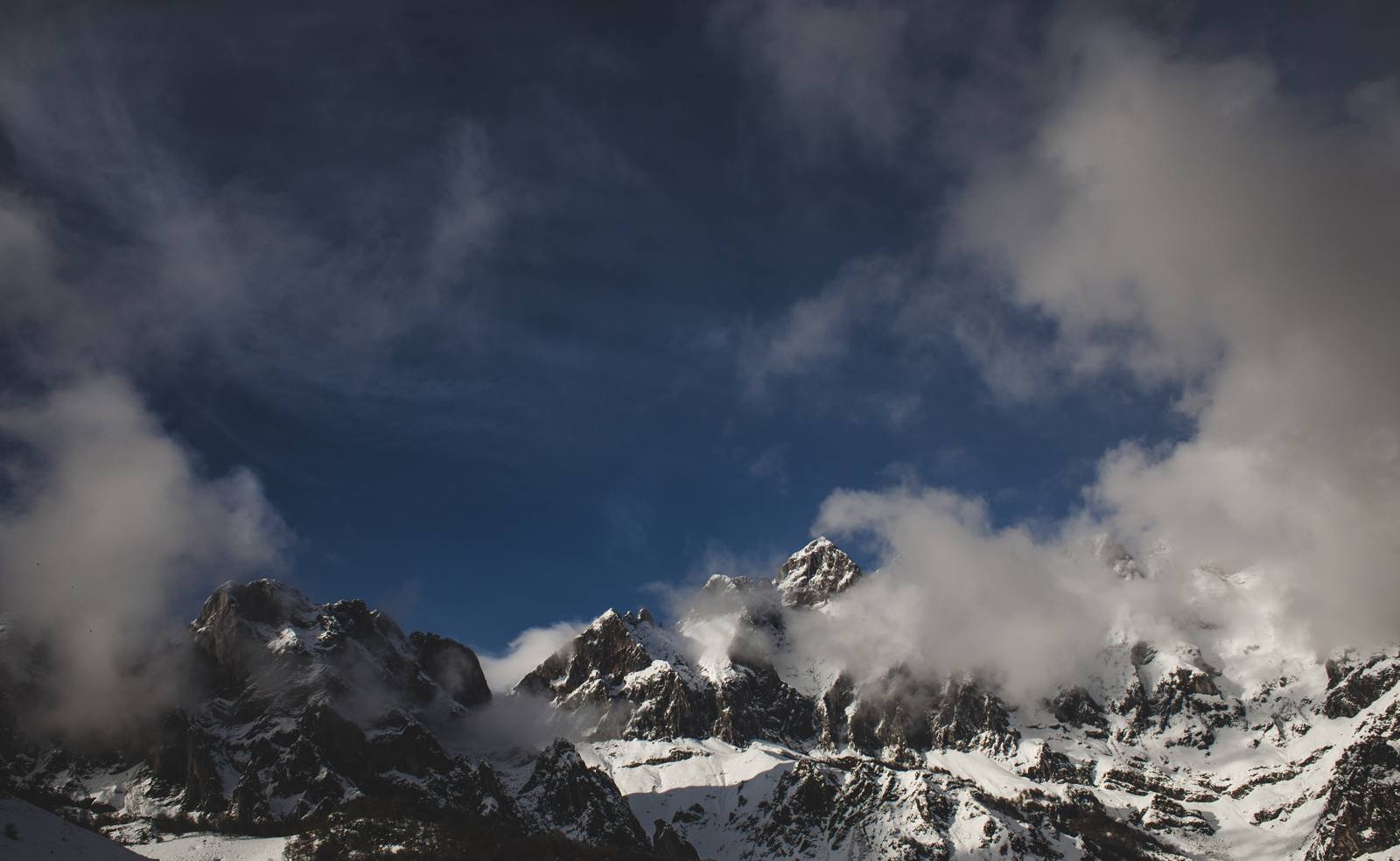
Limestone peaks a short drive from the sea, where you walk the Cares Gorge, ride a funicular to a village with no road and eat blue cheese aged in mountain caves.
- Best time to visit: Late May to early October
- Daily budget (budget traveller): $75 to $240 USD
- Ideal trip length: 4 to 7 days
The Picos de Europa are a compact block of limestone mountains in northern Spain. They cross three regions: Asturias, Cantabria and Castilla y León. The sea is only about 20km away, so the peaks catch a lot of cloud and rain, and the valleys stay very green. The area became Spain's first national park in 1918, and today the park covers all three massifs. Most people come for the walking. The Cares Gorge path runs about 12km between Poncebos and Caín along a ledge high above the river. The Covadonga lakes sit in high pasture full of cows. The Fuente Dé cable car lifts you straight into bare rock. Bulnes has no road at all, so you reach it on foot or by an underground funicular. There is no entry fee for the park. The catch is transport. Buses are thin, the three main bases are a long way apart by road, and the weather changes fast. With a bit of planning, though, a solo traveller can do it all without a car. Cangas de Onís, Arenas de Cabrales and Potes each work as a base, with cider houses, cheap set lunches and plenty of other walkers.
The Picos de Europa are three limestone massifs, the Western, Central and Eastern, cut apart by deep river gorges. The highest summit, Torre Cerredo, reaches about 2,650m. The best-known peak, the Naranjo de Bulnes or Picu Urriellu, is a bare rock tower that climbers come from all over Europe to tackle. The park was first created in 1918 around Covadonga, which makes it Spain's oldest national park. It now spreads across Asturias, Cantabria and León. Most visitors come for a few classic sights. These are the Covadonga lakes, the Cares Gorge, the funicular to Bulnes and the cable car at Fuente Dé. They are popular for good reason, but you can also have a quiet trail to yourself an hour away from any of them. There is no entry fee, and a solo walker with a bus pass, a bunk in an albergue and a set lunch can get by on a modest budget.
Logistics shape everything here. The mountains block direct roads, so going from Cangas de Onís to Potes means a long loop through Panes and the La Hermida gorge. Caín and Poncebos are a 12km walk apart but more than 100km apart by road. Buses from Oviedo to Cangas are frequent. Everything beyond that is thinner and more seasonal. A sensible plan for a solo traveller without a car is to start in Cangas de Onís for Covadonga and the lakes, then move to Arenas de Cabrales for Bulnes and the Cares, then cross to Potes for Fuente Dé and Liébana. Fly out of Santander. With a hire car, you can base yourself in one place for longer, but expect slow, twisting roads.
The weather is the other big factor. Sea cloud often sits on the Asturian side while Liébana stays sunny, and the reverse happens too. Fog can close in on the lakes in minutes. June and September are the sweet spot, with long days, fewer crowds and green pastures. August is busy, with car restrictions, queues at the cable car and hot afternoons in the gorge. Winter brings snow above about 1,500m, and some high routes become mountaineering terrain. Spanish is the language you will need. English is patchy outside hotels, so a few phrases and a translation app help. Lunch is the main meal, served from about 1:30pm, and dinner rarely starts before 9pm.
Picos de Europa itinerary
Arrive in Cangas de Onís
Morning: Fly into Asturias Airport and take the bus into Oviedo, then an ALSA bus to Cangas de Onís (about 1 hour 10 to 1 hour 35 minutes, roughly €7-8).
Afternoon: Check in, then walk to the arched bridge over the Sella with the Victory Cross hanging below it. Pick up food, water and a park map in town.
Evening: Your first cider house dinner. Order a bottle of sidra, a plate of Cabrales and something light, and get an early night.
Covadonga and the lakes
Morning: Take an early shuttle from Cangas towards the lakes (€9 adult return in regulated periods, valid all day). Walk the roughly 5km loop around Lago Enol and Lago Ercina, past the Buferrera mines and the viewpoints.
Afternoon: Ride the shuttle down to Covadonga. Visit the Santa Cueva in the cliff and the pink basilica, then continue back to Cangas on the same ticket.
Evening: A slow dinner in Cangas. If fog spoilt the lakes, keep the next morning flexible.
Arenas de Cabrales and Bulnes
Morning: Take the bus to Arenas de Cabrales (about 30-45 minutes). Drop your bag and visit the Cueva del Queso to learn how Cabrales is aged.
Afternoon: Get to Poncebos by taxi or a seasonal shuttle and ride the funicular to Bulnes (€22.16 return, every 30 minutes). Explore both hamlets. Fit walkers can take a one-way ticket up and walk down the Canal del Texu.
Evening: Back in Arenas, try Cabrales cheese with cider. Check the forecast and pack for a long day.
The Cares Gorge
Morning: Be at Poncebos by 8am. Climb the first steep section while it is cool, then follow the ledge path through the tunnels towards Caín.
Afternoon: Lunch in Caín, then walk back the same way (about 24km round trip, six to eight hours with stops). The light in the gorge changes completely in the afternoon.
Evening: Stretch, eat well and sleep. You have earned the fabada.
La Hermida gorge to Potes
Morning: Take the bus from Arenas towards Panes, then the Santander to Potes bus through the La Hermida gorge. If you have a car, stop at the little church of Santa María de Lebeña.
Afternoon: Check in in Potes. Walk the old quarter, the river bridges and the Torre del Infantado, and watch the valley light up from the terraces.
Evening: Try cocido lebaniego or a lighter dinner and a glass of local orujo. Book or confirm transport to Fuente Dé for the morning.
Fuente Dé cable car and Áliva
Morning: Get to Fuente Dé early, by summer bus or taxi, before the queues build. Take the cable car up (one way €17 in 2026) and walk across the high ground to the Áliva pastures.
Afternoon: Walk down the track through Áliva to Espinama, a long but easy descent with big views. Have a late lunch in the village.
Evening: Bus or taxi back to Potes. Dinner on the main street, then pack.
Santo Toribio and fly out
Morning: Walk about 3km uphill to the Santo Toribio de Liébana monastery, which keeps what is said to be the largest surviving fragment of the True Cross. If it is Monday, browse the Potes market first.
Afternoon: Take the afternoon Palomera bus to Santander (about 2 hours 25 minutes). Check the timetable, as there are only a few departures a day.
Evening: Fly out of Santander, or stay a night by the bay and eat in town before an early flight.
Best neighbourhoods
- Cangas de Onís: The main town on the Asturian side and the easiest base without a car. It has frequent ALSA buses from Oviedo, the shuttle to Covadonga and the lakes, banks, supermarkets and lots of cider houses. The arched bridge over the Sella is the town's landmark. It gets busy in August.
- Arenas de Cabrales: A smaller village at the meeting of the Cares and Casaño rivers, about 6km from Poncebos. It is the base for the Cares Gorge, Bulnes and Cabrales cheese. It has a few hotels, pensions, cider bars and a cheese cave you can visit.
- Potes: The busy little capital of Liébana on the Cantabrian side, with stone houses, a medieval tower and river bridges. Buses run from Santander, it is the jumping-off point for Fuente Dé and Santo Toribio, and its Monday market is a local fixture. The weather is often drier here than on the Asturian side.
- Posada de Valdeón and Caín: Quiet villages in the Valdeón valley on the León side, at the southern end of the Cares Gorge. They have a few guesthouses, and staying in Caín lets you walk the gorge early before the crowds arrive. Bus links are poor, so you need good planning or a car.
- Covadonga: A sanctuary village below the lakes road, with the basilica, the Holy Cave and a handful of hotels. It is very quiet once the day visitors leave, and handy for an early start up to the lakes. Shops and places to eat are limited.
Must-do experiences
- Walk the Cares Gorge: The path runs about 12km each way between Poncebos and Caín. It is cut into the cliff, passes through short tunnels and crosses bridges high above the river. Most solo walkers go there and back in a day, about 24km in total. Start early to avoid the heat and the crowds.
- See the Covadonga lakes: Lago Enol and Lago Ercina sit at about 1,100m in open pasture. Do the easy loop of roughly 5km past the old Buferrera mines and the viewpoints. In regulated periods you get there on the shuttle bus from Cangas de Onís.
- Ride the funicular to Bulnes: An underground funicular climbs from Poncebos to Bulnes in about seven minutes, through a tunnel of more than 2km. The village has no road. Wander its two hamlets, have a drink on a terrace, then walk down the Canal del Texu path if your knees allow.
- Take the Fuente Dé cable car: The cable car lifts you from the end of the Liébana valley onto the high rock of the Central Massif in a few minutes. From the top station you can walk across to the Áliva pastures on easy tracks. Buy a one-way ticket if you plan to walk down.
- Visit Covadonga sanctuary: The Santa Cueva is a chapel built into a cliff above a waterfall, linked to the 8th-century battle Asturians treat as the start of the Reconquista. The pink stone basilica stands nearby. Entry is free.
- Taste Cabrales cheese in Arenas: Cabrales is a strong blue cheese matured in natural limestone caves. Visit the Cueva del Queso in Arenas de Cabrales to see how it is aged, then order a plate with cider in the village.
- Drink cider poured from a height: In Asturian sidrerías the waiter pours natural cider from above his head to wake it up. You drink each short pour straight away. Cangas de Onís and Arenas are full of cider houses, and a bottle is cheap.
Hidden gems
- Santa María de Lebeña, a small pre-Romanesque church in the La Hermida gorge, an easy stop on the road between Panes and Potes
- The Monday market in Potes, where valley farmers sell cheese, honey, orujo and vegetables in the streets around the old town
- The Canal del Texu path from Bulnes down to Poncebos, the old mule track the village depended on before the funicular, steep but well marked
- The Valdeón valley around Posada de Valdeón and Caín, far quieter than the Asturian side and a good place to start the Cares walk at dawn
- The Áliva pastures beyond the Fuente Dé top station, wide meadows with grazing horses and views of the Central Massif, reached on broad tracks
Daily budget
- Accommodation: budget €20-35 / night (albergue bunk), mid-range €55-100 (rural pension or small hotel, single room), splurge €140+ (Parador or boutique rural hotel). Single rooms often cost close to the double rate. August and bank holiday weekends sell out, so book well ahead. Some albergues and huts close in winter.
- Food: budget €25-35 / day (supermarket breakfast, set lunch, picnic dinner), mid-range €45-70 (set lunch plus a cider house dinner), splurge €120+ (tasting menu at a top Asturian restaurant). The menú del día, a set lunch with bread and wine, usually costs about €14-20 and is the best value meal of the day. Portions are large. Prices are rough guides, so check locally.
- Transport: budget €5-15 / day (buses and the lakes shuttle), mid-range €40-70 (small hire car plus fuel), splurge €160+ (taxi between Caín and Poncebos, private transfers). Oviedo to Cangas is about €7-8 by bus. The lakes shuttle is €9 return. Parking at the shuttle car parks costs a few euros a day. Taxis are expensive on long mountain roads.
- Activities: budget €0-10 / day (free trails, Covadonga, the Cares), mid-range €20-30 (Bulnes funicular or Fuente Dé cable car), splurge €45-80 (4x4 return from Caín or a guided day walk). In 2026 the Bulnes funicular costs €22.16 return and €17.61 one way. Fuente Dé lists €30 return and €17 one way for adults in 2026. Park entry is free.
- Drinks & nightlife: budget €5-10 (a bottle of cider shared at the bar), mid-range €15-30 (cider and raciones in a sidrería), splurge €50+ (wine with dinner and an orujo afterwards). Nightlife means cider houses and village bars. A bottle of natural cider is cheap and meant to be shared. Things get lively in Cangas in summer, but the villages are quiet by midnight.
Where to stay
- Social hostel in Cangas de Onís or Potes (€20-35 / night): Both towns have simple albergues used by walkers, and Potes also gets pilgrims on the Camino Lebaniego. You get dorm beds, a shared kitchen and other walkers to talk to, plus bus links and cheap set lunches nearby.
- Boutique hotel in Arenas de Cabrales (€60-120 / night): Small family-run hotels and rural houses in and around Arenas put you close to Poncebos for an early Cares start, with cider houses and the cheese cave within walking distance.
- Apartment in Potes (€60-110 / night): Self-catering flats in and near the old town let you shop at the Monday market and cook. They are handy for Fuente Dé and Santo Toribio, and Liébana often has the driest weather.
- Splurge in Cangas de Onís or Fuente Dé (€130-260 / night): The Parador de Cangas de Onís sits in the old monastery of San Pedro de Villanueva on the Sella. The Parador de Fuente Dé is right at the foot of the cable car, with cliffs rising behind it.
What to eat
- Fabada asturiana: white beans slow-cooked with chorizo, morcilla and pork, a heavy lunch dish best before a long walk rather than after
- Cabrales cheese: a sharp blue cheese from cow's milk, sometimes mixed with goat's and sheep's milk, matured in mountain caves under a protected designation
- Cocido lebaniego: the Liébana stew of chickpeas, cabbage, meats and sausage, served in courses at restaurants around Potes
- Cachopo: two veal fillets with ham and cheese inside, breaded and fried, large enough to share
- Sidra natural: still Asturian cider poured from a height in short measures, sold by the bottle in every sidrería
- Arroz con leche: rice pudding with a caramelised top, the classic Asturian dessert on almost every set lunch menu
Day trips
- Llanes and the Asturian coast (About 45 minutes by road from Cangas de Onís or Arenas): A fishing town with an old harbour, painted breakwater blocks and small sandy coves backed by cliffs. With the mountains on one side and the sea on the other, it makes a good rest day between hikes. ALSA buses link Cangas de Onís and Arenas with Llanes, and the coastal FEVE train line also stops in Llanes. Check timetables, as connections are infrequent.
- Ribadesella and the Tito Bustillo cave (About 30 minutes by road from Cangas de Onís): A seaside town at the mouth of the Sella, where the summer canoe descent finishes. The Tito Bustillo cave has Palaeolithic paintings and is a UNESCO World Heritage Site. Visitor numbers are limited, and the cave closes for part of the year. Take an ALSA bus from Cangas de Onís to Ribadesella. Book Tito Bustillo cave visits ahead online and check the opening season.
- La Hermida gorge and Lebeña (About 30 minutes by road from Potes): A narrow, sheer-sided gorge of about 20km that the Deva river cuts through, with the small pre-Romanesque church of Santa María de Lebeña near its southern end. The Santander to Potes bus runs through the gorge, so you can see it on the way in. For the church, a car or taxi is easiest. Check opening hours locally.
When to visit
- Spring (April - May): 10-20°C in the valleys, snow still on high ground, frequent showers. Crowds: Busy at Easter and on May weekends, quiet otherwise. Green and full of flowers, with waterfalls at their best. High routes can still be snowbound, so stick to valleys, the lakes and the Cares. Lakes bus restrictions apply at Easter and on May weekends.
- Summer (June - August): 18-28°C, hotter in the gorges, fog and storms possible. Crowds: Moderate in June, very busy from mid July to the end of August. The full walking season, with every bus and hut running. June is excellent. In August, book beds early, start walks at dawn and expect queues at Fuente Dé.
- Autumn (September - October): 12-22°C, mostly settled in September, wetter in October. Crowds: Moderate, dropping quickly after mid September. The locals' pick. The summer crowds have gone, the light is soft and the beech woods turn gold in October. Shuttles and seasonal buses wind down from mid October.
- Winter (November - March): 2-12°C in the valleys, snow and ice on high ground. Crowds: Very quiet, except at Christmas and bank holiday weekends. Cheap and peaceful, with snowy peaks above green valleys. Short days, closed huts and avalanche risk make high walking a job for experienced people. Valley walks and village stays are still lovely.
Entry rules for your passport
Visa rules for Spain depend on the passport you travel on. Check the official source before you book: European Commission: Schengen visa policy
Getting there
The nearest airports are Asturias (OVD), about 1 hour 30 minutes by road from Cangas de Onís, and Santander (SDR), about 2 hours from Potes. Bilbao is a bigger airport with more international flights and is about 3 hours away. From Asturias Airport, take a bus into Oviedo, then an ALSA bus to Cangas de Onís. These run around 20 or more times a day, take about 1 hour 10 to 1 hour 35 minutes and cost roughly €7-8. From Cangas, a few buses a day continue to Arenas de Cabrales. From Santander bus station, Autobuses Palomera runs two or three buses a day to Potes, taking about 2 hours 25 minutes via Panes and the La Hermida gorge. Trains reach Oviedo, Gijón and Santander from Madrid, and Brittany Ferries sails from the UK to Santander and Bilbao. Car hire at either airport gives you the most freedom, but mountain roads are slow, and the Covadonga lakes road closes to private cars in busy periods. Spain is in the Schengen area, so check entry rules for your nationality before you travel.
Border checks: non-EU visitors (other than Swiss, Norwegian, Icelandic, Liechtenstein, Andorran, Monegasque, San Marinese and Vatican citizens, and holders of an EU residence permit or long-stay visa) are registered in the EU's Entry/Exit System (EES) instead of getting a passport stamp. On your first crossing, officers take your photo and/or fingerprints, so allow extra time at passport control. ETIAS, the planned travel authorisation, is not in operation yet, so don't pay any website for one.
Getting around
Without a car, you rely on buses, a few shuttles and taxis. ALSA runs frequent buses between Oviedo and Cangas de Onís, around 20 or more a day, taking about 1 hour 10 to 1 hour 35 minutes, for roughly €7-8. From Cangas, a few ALSA buses a day continue to Arenas de Cabrales in about 30-45 minutes. On the Cantabrian side, Autobuses Palomera runs Santander to Potes two or three times a day, taking about 2 hours 25 minutes, via Panes and the La Hermida gorge. The Potes to Fuente Dé bus has mainly run in summer. Outside summer a taxi has cost roughly €30 each way. The Covadonga lakes road closes to private cars in busy periods, and a shuttle runs every 30 minutes from Cangas and the car parks. Caín and Poncebos are 12km apart on foot but more than 100km apart by road. A taxi between them starts at around €160 a vehicle, so most solo walkers go there and back on foot. A hire car from Oviedo or Santander airport makes linking the three sides much easier. Roads are narrow and winding, and parking at trailheads fills early in August.
Safety
The Picos are safe for solo travellers in terms of crime. The real risks are mountain ones. Weather changes fast, and thick fog can roll over the lakes and high pastures within minutes, so carry a map, a charged phone and a warm layer even in summer. The Cares path has long drops and no railings in many places. Keep to the inside, watch for falling stones and do not walk it in heavy rain or ice. The gorge gets very hot on summer afternoons, so start early and carry plenty of water. Stay well away from cows with calves and from the large mastiffs that guard flocks. Do not try to pet or cross them. Ticks are common in long grass. Mobile signal drops in the gorges and deep valleys. Tell your accommodation which route you are walking and when you expect to be back. The European emergency number 112 works across Spain, and mountain rescue is run by the Guardia Civil and regional services. Winter brings snow and avalanche risk on high ground, so only go up then with proper experience or a guide.
Solo travel tips
- Base yourself in three places, not one: Without a car, the cheapest and least stressful plan is Cangas de Onís, then Arenas de Cabrales, then Potes. Each move takes half a day, but it saves long return trips.
- Walk the Cares there and back: The road between the two ends is very long. A taxi starts at around €160 a vehicle. Walking there and back costs nothing, and the views going back look different. A guided 4x4 return from Caín is the middle option, at about €45 per person.
- Eat your main meal at lunch: The menú del día, at about €14-20, is the best value food in the area, and eating alone at lunch is completely normal. In the evening, a few raciones at the cider house bar are plenty.
- Watch the forecast for each side: The Asturian and Cantabrian sides often have different weather. Swap the order of your days if fog is forecast on one side. Never plan the cable car or the Cares for your last morning.
- Safety for solo walkers: Tell your host your route and when you expect to be back. Start long walks early, carry water and a warm layer, and turn back if fog or rain comes in on exposed ground. Mobile signal is patchy, so download offline maps.
- Use albergues to meet people: Albergues and mountain huts have shared tables and walkers swapping route advice, which makes them the easiest places to find company for a day on the trails. Cider houses are just as sociable, because a bottle is meant to be shared.
Cultural etiquette
- Greet people with 'buenos días' or 'buenas tardes' when you walk into a shop, bar or village. Walkers say 'hola' to each other on the trail.
- Spanish meal times are late. Lunch runs from about 1:30pm to 4pm and dinner from 9pm. Many kitchens close in between.
- Let the waiter pour your cider. Drink each short pour in one go and leave a splash in the glass to rinse the rim, as locals do.
- Leave gates as you find them. Do not disturb livestock or walk through private meadows, which are hay fields that farmers depend on.
- Covadonga is an active shrine. Dress modestly in the Santa Cueva and the basilica, keep your voice down and avoid taking photos during Mass.
- Asturians, Cantabrians and Leonese each have strong regional pride. Asturian (asturianu) appears on signs in Asturias, so place names may have two spellings.
- Wild camping is not allowed in the national park, apart from limited bivouacking near huts under park rules. Take all your rubbish home.
Frequently asked questions
How do I get to the Picos de Europa without a car?
Fly into Asturias Airport (OVD) or Santander (SDR). From Oviedo, ALSA buses run often to Cangas de Onís, in about 1 hour 10 to 1 hour 35 minutes, for roughly €7-8. A few buses a day continue to Arenas de Cabrales. From Santander, Autobuses Palomera runs to Potes two or three times a day in about 2 hours 25 minutes. Check current timetables before you travel, as they change with the season.
Is there an entry fee for the national park?
No. Walking in the Picos de Europa National Park is free. You only pay for transport and attractions such as the lakes shuttle bus (€9 adult return in 2026), the Bulnes funicular (€22.16 return) and the Fuente Dé cable car. The Covadonga sanctuary is free to visit.
Can I drive up to the Covadonga lakes?
For much of the year, yes. In busy periods the road from Covadonga to the lakes closes to private cars, and you take the shuttle bus. In 2026 that covered Easter, May weekends, June to mid October and some bank holiday weekends. Buses run about every 30 minutes, roughly 7:40am to 8pm, from Cangas de Onís and park-and-ride car parks that cost a few euros a day. The ticket is valid all day. Check the official dates before you go.
How hard is the Cares Gorge walk?
The path itself is wide and mostly level once you are past the climb near Poncebos, but it is long. There and back is about 24km, which takes most people six to eight hours with stops. The drops are big and there are no railings in many places, so it is not ideal if you have a fear of heights. Starting at Caín avoids the steepest climb, but Caín is hard to reach by bus.
How many days do I need?
Four days lets you see the lakes, Bulnes and the Cares Gorge from the Asturian side. Six or seven days lets you cross to Potes for Fuente Dé and Liébana as well, with a spare day for bad weather. Moving between the three sides takes time without a car, so allow half a day for each move.
When is the best time to visit?
Late May to early October is the walking season. June and September are the best months: long days, green pastures and fewer crowds than in August. July and August are busy and can be hot in the gorges, with queues at Fuente Dé. Winter brings snow on the high ground and short days, so it suits experienced mountain walkers more than first-timers.
Is the Picos de Europa good for solo female travellers?
Yes. The villages are small and friendly, and the main trails are busy in season, so you are rarely alone for long. The usual precautions are about the mountains rather than people. Tell your host your route, avoid starting long walks late in the day and turn back if fog comes in. Albergues and cider houses make it easy to meet other walkers.
What entry rules apply to Spain in 2026?
Spain is in the Schengen area. Many non-EU visitors can stay up to 90 days in any 180 without a visa, and the EU Entry/Exit System now registers fingerprints and a photo at the border. The ETIAS travel authorisation was due to start in late 2026, so check whether it applies to your trip. Rules vary by nationality, so confirm with official EU and Spanish government sources before you book.
More about Picos de Europa
Tours and activities in Picos de Europa | Picos de Europa in 2 days | Picos de Europa in 3 days | Picos de Europa in 4 days | Picos de Europa in 5 days | Picos de Europa in 7 days
Joy Plus home | Destinations | Itineraries | Activities | Flights | Budget planner | Calendar | Map | Blog | Lifetime access