Destinations / Europe
Piran, Slovenia travel guide
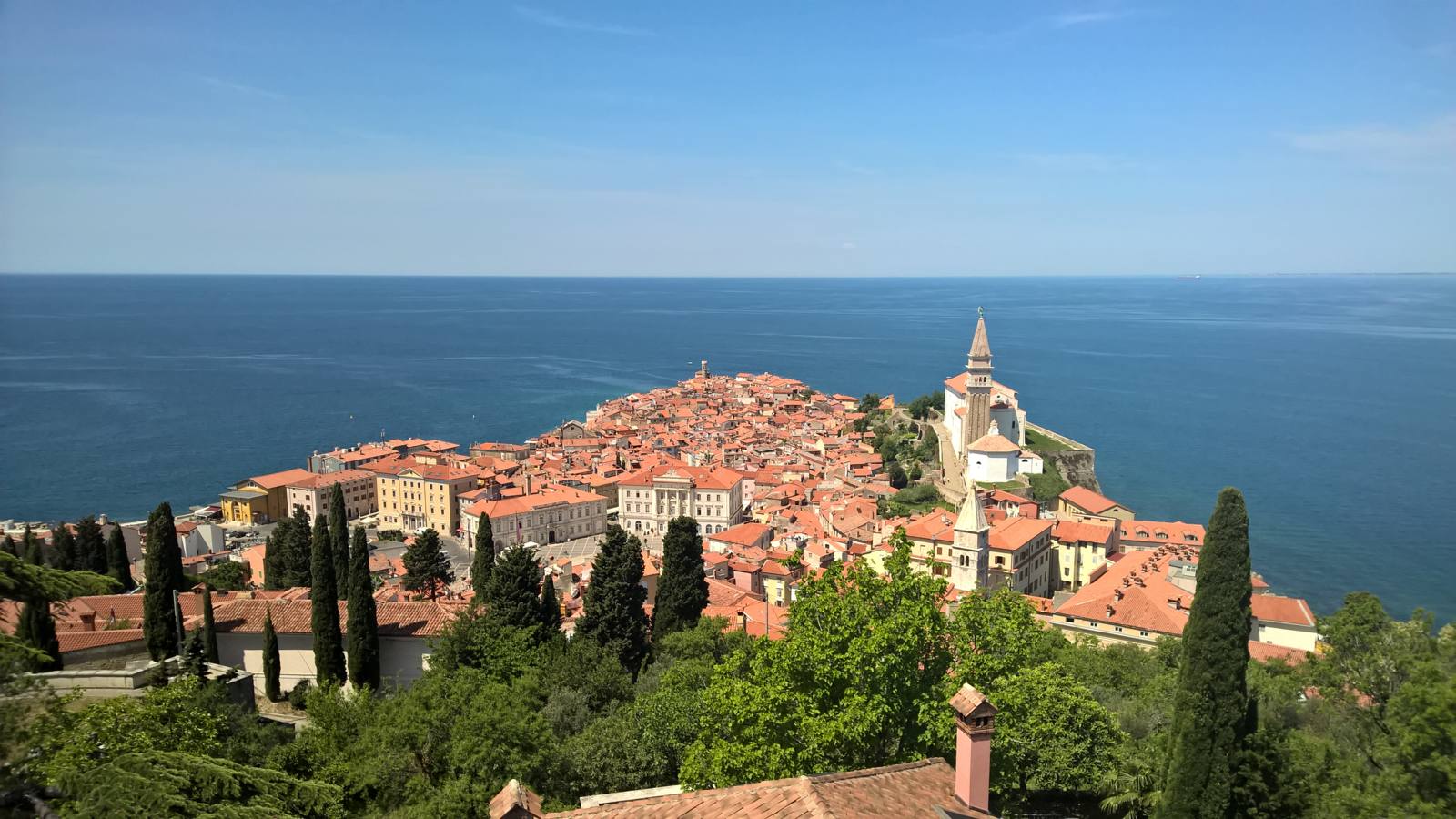
A small Venetian-built town on a narrow peninsula at the end of Slovenia's short coastline. You swim off the stone quays, climb the bell tower for views of three countries and eat fried fish as the sun goes down over the Gulf of Trieste.
- Best time to visit: May to June and September
- Daily budget (budget traveller): $75 to $240 USD
- Ideal trip length: 3 to 5 days
Piran sits at the tip of a narrow peninsula on Slovenia's short stretch of Adriatic coast. It is about two hours from Ljubljana by bus and close to the Italian and Croatian borders. For centuries it belonged to Venice, and it still looks the part, with a marble main square, a tall bell tower copied from St Mark's and lanes too narrow for cars. The old town is closed to most traffic, so it is quiet, compact and easy to walk. There are no sandy beaches here. People swim from ladders on the concrete and stone quays around the Punta, the rocky tip of the peninsula, and the sunsets from there are why many visitors stay longer than they planned. Climb the medieval town walls for the classic view over red roofs, eat grilled fish by the harbour and take local buses to the salt pans at Sečovlje or the cliffs at Strunjan. Piran gets busy with day trippers in July and August, and rooms in the old town cost more than inland Slovenia. Even so, a hostel bed, cheap fried fish, free swimming and short bus rides make it a good place for a solo traveller to spend a slow few days.
Piran is the best-preserved old town on Slovenia's 47km of coast. It is a tight cluster of Venetian Gothic houses on a peninsula that juts into the Gulf of Trieste, with roughly 4,000 people living in the town itself. Venice ruled here for about five centuries, and you can see it everywhere: in the oval marble square, in the bell tower above the town and in the Italian street names alongside the Slovene ones. Piran is officially bilingual. Most visitors come for a few hours from Ljubljana or Portorož. Stay a few nights and you get the better version: the square empty at 7am, a swim off the Punta before breakfast, the walls at sunset and fried fish on a harbour bench. It is not the cheapest place in Slovenia, but a hostel bed, free swimming from the quays and cheap local buses keep costs reasonable.
Getting here is simple. Direct Arriva buses from Ljubljana take around 2 to 2.5 hours for about €10.50-13, with roughly five a day, plus slower services that change in Koper. GoOpti shuttles cover the airports at Ljubljana, Trieste and Venice. In summer, boats link Piran with Trieste and with Venice on Saturdays. Once you are here, walk. The old town is car-free and small enough to cross in 10 minutes. Base yourself near the Punta for swimming and quiet nights, or around Tartini Square for cafés and the bus. Use the cheap local buses for Portorož, Strunjan, Izola, Koper and the salt pans at Sečovlje.
Timing shapes the trip. May, June and September bring warm sea, long days and fewer crowds. July and August are hot, busy and the most expensive, though they bring summer concerts in the Minorite cloister and the Trieste and Venice boats. From November to March, Piran is quiet and mild, but some restaurants close, the Sečovlje salt-making museum shuts and the bora can bring days of cold, strong wind. Piran is very safe and most people speak some English, and Italian is widely understood. Evenings are relaxed rather than loud. If you want clubs, go to Portorož. If you want a swim, a walk on the walls and a glass of Malvazija by the water, stay here.
Piran itinerary
Arrive and find your feet
Morning: Take a morning bus from Ljubljana (about 2 to 2.5 hours). Drop your bag at your hostel or apartment and walk to Tartini Square for a coffee.
Afternoon: Wander the lanes up to Prvomajski trg and down to the inner harbour. Have a first swim off the quays near the Punta lighthouse.
Evening: Watch the sunset from the Punta, then grab a fried fish plate from Fritolin pri Cantini and eat it by the water.
Bell tower, walls and museums
Morning: Climb the bell tower of St George's (about €3) before the heat, and add the parish museum if you like church art. Walk on to the town walls (about €3) while it is still quiet.
Afternoon: Escape the midday heat in the Sergej Mašera Maritime Museum (about €5) and the small Piran Aquarium on the waterfront. Then swim again.
Evening: Look into the Minorite cloister to see if a concert is on. Dinner at a back-lane restaurant such as Pri Mari.
Coast path to Fiesa and Strunjan
Morning: Walk east along the shore path to Fiesa (20 to 30 minutes) while it is still cool, and have a swim from the pebbles.
Afternoon: Climb over the headland into Strunjan Landscape Park. Look down from the cliffs, then go down to Moon Bay for a swim. Pack a picnic and plenty of water.
Evening: Take a bus back from Strunjan or retrace your steps. A simple dinner and a glass of Malvazija on the seafront.
Sečovlje salt pans
Morning: Take a local bus via Portorož to Lucija, then walk to the Lera entrance of Sečovlje Salina Nature Park (€7 April to October). Go early for softer light and birds.
Afternoon: Follow the trails and dykes through the salt pans. In season, visit the Fontanigge area and the salt-making museum on the same ticket. Buy a tub of flower of salt.
Evening: Stop in Portorož on the way back for a swim off the long beach and a drink, then take the bus back to Piran.
Izola and Koper by bus
Morning: Take a bus to Izola, a working fishing town with a smaller old centre and a busy harbour. Walk its lanes and have coffee by the boats.
Afternoon: Continue to Koper, the coast's biggest town. See Tito Square and the Praetorian Palace, and walk the old streets. Lunch in the centre.
Evening: Bus back to Piran (about €3). Sunset from the walls if you missed it on day two.
A day in Trieste
Morning: In summer, check whether the fast ferry to Trieste (about 40 minutes, around €9.50) runs today. Otherwise, take a bus via Koper. If it is a Saturday between May and October, you could take the Venice catamaran instead.
Afternoon: Walk Piazza Unità d'Italia and the Canal Grande, and have a coffee in one of Trieste's old cafés. Allow time for the return boat or bus.
Evening: Back in Piran for a late swim and a farewell fish dinner by the harbour, at Pavel or a similar spot.
Slow morning and depart
Morning: Have a last early swim off the Punta and breakfast on Tartini Square before the crowds arrive.
Afternoon: Buy salt or wine for home, then catch an afternoon bus to Ljubljana or a shuttle to the airport. Check times the day before.
Evening: Arrive in Ljubljana, or carry on to your next stop.
Best neighbourhoods
- Old town and Tartini Square: The heart of Piran, set around the oval marble square named after the violinist Giuseppe Tartini. You have the inner harbour, the Maritime Museum, the bus station a short walk south, cafés and most of the restaurants. It is lively until late in summer, so pick a room on a side lane if you sleep lightly.
- Punta: The western tip of the peninsula, with the lighthouse, the little Church of St Clement and the quays where most people swim. The lanes behind it are full of apartments and small guesthouses. It is the best base for sunset swims and quiet evenings, and the square is still only five minutes away on foot.
- Fornače and the town entrance: The modern edge of Piran to the south, where cars are left in the large Fornače car park and a free shuttle runs into the centre. It is less pretty, but you will find a few hotels, apartments and bigger shops here. It is practical if you are driving, and the seafront walk into town takes about 10 minutes.
- Fiesa: A small cove about 20 to 30 minutes' walk east along the coast path, with two small lakes, a pebbly beach and a few hotels. It is calmer than the old town and has better swimming, but after dark you have to walk back along the shore path or around by road.
- Portorož: The big resort town about 3km south, with a long beach, large hotels, a casino and lots of bars. Local buses link it to Piran in minutes. It suits you if you want nightlife or a big hotel pool, and the salt pans at Sečovlje are closer from here.
Must-do experiences
- Climb the town walls at sunset: Walk uphill from Tartini Square along Ulica IX. korpusa to the 15th-century walls. Entry is about €3 through a turnstile that takes coins and contactless cards. Climb the towers for the classic view of the peninsula, the bell tower and the open sea.
- Go up the bell tower of St George's: The parish church stands on the hill above the square, and its bell tower was modelled on St Mark's in Venice. The climb costs around €3, and from the top you can see Italy, Slovenia and Croatia on a clear day. The parish museum and the full church interior cost a little more.
- Swim off the Punta quays: Piran has no sandy beach, but there are ladders into clear water all along the seafront around the lighthouse. It is free. Bring a towel or a mat for the warm stone and go late in the afternoon, when the day trippers have left.
- Linger in Tartini Square: Sit on the marble square in the early morning or late evening. Look out for the Tartini statue, the town hall and the red Venetian House with its carved stone balcony. Coffee at a square café costs more than in the back lanes, but you are paying for the view.
- Walk the coast path to Strunjan: Follow the shoreline path east to Fiesa, then climb over the headland into Strunjan Landscape Park. The flysch cliffs here are the highest on the Adriatic coast. Swim in Moon Bay below the cliffs and catch a bus back, or walk.
- Visit the Sečovlje salt pans: Salt has been harvested south of Portorož for centuries, and some pans are still worked by hand. Adult entry is €7 from April to October and €6 in winter, and one ticket covers both the Lera and Fontanigge areas. Entry is free on the first Sunday of each month from October 2026.
- Learn the town's sea history: The Sergej Mašera Maritime Museum is in the Gabrielli Palace on the harbour. It covers ship models, fishing and salt-making, and adult tickets cost about €5. On a hot afternoon, combine it with the small Piran Aquarium on the same waterfront.
Hidden gems
- The cloister of the Minorite Monastery of St Francis, a peaceful courtyard just above the square that hosts summer concerts in the Piran Musical Evenings series
- Prvomajski trg (First of May Square), a small square in the back lanes with an old stone rainwater cistern, away from the crowds on Tartini Square
- The far end of the town walls, where on a clear day you can see the Italian coast and, in winter, snow on the Alps beyond Trieste
- The shore path to Fiesa early in the morning, when it is almost empty and the cliffs catch the first light
- The Church of St Clement by the lighthouse at the Punta, a small, plain church that is easy to miss if you are heading straight for a swim
Daily budget
- Accommodation: budget €30-50 / night (hostel dorm), mid-range €90-160 (old town apartment or 3-star hotel), splurge €250+ (sea-view suite or Kempinski Palace Portorož). Prices jump in July and August and on summer weekends. A per-night tourist tax is added on top. Book June to September early, especially for single rooms.
- Food: budget €20-30 / day (bakery breakfast, fried fish plate, supermarket picnic), mid-range €40-65 (café lunch and a sit-down fish dinner), splurge €90+ (whole fish by the kilo, wine, dessert). A fried fish plate is about €10-15 and restaurant mains roughly €15-28. Whole fish is priced per kilo, so ask before ordering. Prices are rough guides.
- Transport: budget €0-6 / day (walking, local buses), mid-range €10-25 (buses plus a taxi or boat trip), splurge €95-105 (Venice catamaran day trip). The Ljubljana bus is about €10.50-13 each way. The Trieste summer ferry is around €9.50. Parking at Fornače costs roughly €20-30 a summer day.
- Activities: budget €0-10 / day (swimming, walls at about €3, bell tower at about €3), mid-range €10-20 (Maritime Museum, salt pans at €7, aquarium), splurge €30+ (guided tours, boat trips, concerts). Sečovlje entry is €7 from April to October and €6 in winter, and free on the first Sunday of the month from October 2026. The walls turnstile takes coins and contactless cards.
- Drinks & nightlife: budget €5-10 (a glass of local wine or a beer on the quay), mid-range €15-30 (a few drinks at a seafront bar), splurge €50+ (cocktails in Portorož). A coffee costs about €1.80-2.50 and a glass of wine €3-5. Nightlife in Piran means bars and terraces, while Portorož has the clubs and casino.
Where to stay
- Social hostel in Old town, near the Punta (€30-50 / night (dorm)): Hostel Val is a simple, long-running hostel in the old town lanes, a few minutes from the swimming quays and the square. It is the main budget option inside Piran and easy for meeting other travellers.
- Boutique hotel in Tartini Square (€120-220 / night): Hotel Tartini sits right on the main square, with rooms that look over the marble piazza or the harbour. The bus stop, cafés and museums are all on the doorstep.
- Apartment in Punta and the old town lanes (€80-150 / night): Small apartments in old stone houses give you a kitchen and a local feel. Expect steep stairs and no lift, and check the exact location if you have heavy luggage.
- Splurge in Portorož (€250-500+ / night): Kempinski Palace Portorož is a restored grand hotel on the seafront, with a spa and pools. It is a short bus or taxi ride from Piran, so you get luxury and the old town in one trip.
What to eat
- Fried small fish and calamari: a paper plate of girice (picarel) or squid from Fritolin pri Cantini, one of the cheapest seaside meals in town
- Grilled whole fish: sea bass or bream sold by weight at harbour restaurants such as Pavel or Pri Mari. Ask the price per kilo before you order
- Fuži with truffles or scampi: the hand-rolled Istrian pasta, served in most local restaurants
- Piran salt and flower of salt (solni cvet): sold in small tubs and good for taking home, and sometimes used on fish and even desserts
- Teran and Refošk: the local red wines from the Karst and Istria, plus crisp Malvazija white, at a few euros a glass
- Burek or a sandwich from a bakery for breakfast, then a scoop of ice cream on the seafront in the evening
Day trips
- Strunjan Landscape Park and Moon Bay (About 5km east of Piran, 1 to 1.5 hours on foot via Fiesa or 15 minutes by bus): High flysch cliffs, a quiet bay below them and views back to Piran. The walk from Piran along the shore to Fiesa, then over the headland, is one of the best half-days on this coast. Walk the coast path from the Punta seafront via Fiesa, or take an Arriva bus towards Strunjan and Izola. Bring water and a picnic, as there are few facilities at the cliffs.
- Sečovlje Salina Nature Park (About 8km south of Piran, near the Croatian border): Working salt pans, birdlife and the old salt workers' houses at Fontanigge. One ticket covers both the Lera and Fontanigge areas. The salt-making museum opens only from April to October. Take a local bus via Portorož to Lucija and walk to the Lera entrance, or take a taxi. Adult entry is €7 from April to October and €6 in winter, and free on the first Sunday of each month from October 2026.
- Trieste (About 40 minutes by fast ferry or 1 to 1.5 hours by road): A grand Italian port city with a huge seafront square, old coffee houses and a canal lined with cafés. It is a good contrast to small Piran. From late June to the end of August, the fast ferry runs on some days for around €9.50. Otherwise, take a bus to Koper and change for Trieste. Check return times before you set off.
When to visit
- Spring (April - May): 15-22°C, mild and fresh, sea still cool until late May. Crowds: Low to moderate, busier at Easter and on May weekends. Good for walking, the salt pans and cheap rooms. Swimming is for the brave until the end of May. The Venice catamaran starts in early May.
- Early summer (June): 22-27°C, sunny, sea around 21-24°C. Crowds: Moderate, rising towards the end of the month. Arguably the best month. Long evenings, warm water and the old town still breathable. The Trieste ferry starts late in the month.
- High summer (July - August): 27-31°C, hot and humid, sea up to about 26°C. Crowds: Busy, very busy at weekends and in August. Great for swimming, concerts and boat trips, but rooms cost the most and the square fills with day trippers. Book well ahead and explore early or late in the day.
- Autumn and winter (September - March): September 20-26°C, then cooling to 5-12°C in winter, with bora wind. Crowds: Moderate in September, quiet from October. September is the locals' pick, with warm water and calm streets. Winter is cheap and peaceful, but some places close and windy days can be raw.
Entry rules for your passport
Visa rules for Slovenia depend on the passport you travel on. Check the official source before you book: European Commission: Schengen visa policy
Getting there
There is no airport in Piran. The nearest are Trieste, about an hour by road, Ljubljana, about 1.5 to 2 hours, and Venice, about 2.5 hours. GoOpti and other shared shuttles connect all three. From Ljubljana, about five direct Arriva buses a day reach Piran in roughly 2 to 2.5 hours for €10.50-13 one way, and slower services change in Koper. In summer, buy tickets a day or two ahead. You can also take the train from Ljubljana to Koper, then a local bus to Piran, which takes about 40 minutes and costs around €3. By sea, a fast ferry runs from Trieste to Piran from late June to the end of August, on a few days a week. The crossing takes about 40 minutes and costs around €9.50. The Prince of Venice catamaran links Venice and Piran on Saturdays from 2 May to 10 October 2026. If you drive, the old town is closed to traffic, so park at the Fornače garage and take the free shuttle in. Slovenian motorways need an e-vignette, so buy one online before you drive on them.
Border checks: non-EU visitors (other than Swiss, Norwegian, Icelandic, Liechtenstein, Andorran, Monegasque, San Marinese and Vatican citizens, and holders of an EU residence permit or long-stay visa) are registered in the EU's Entry/Exit System (EES) instead of getting a passport stamp. On your first crossing, officers take your photo and/or fingerprints, so allow extra time at passport control. ETIAS, the planned travel authorisation, is not in operation yet, so don't pay any website for one.
Getting around
Piran's old town is small and closed to most cars, so you will walk almost everywhere. It takes about 10 minutes from the bus station to the Punta. Expect steep lanes and steps up to the church and the walls. If you drive, leave the car in the Fornače car park at the town entrance. A summer day there costs roughly €20-30, and a free electric shuttle runs into the centre about every 15 minutes, or you can walk 10 minutes along the sea. Arriva runs regular local buses from Piran to Portorož, Lucija, Strunjan, Izola and Koper. Short hops cost a couple of euros, and Koper is around €3. You can pay on board or with a contactless card on many routes, so check the current options. Buses for Sečovlje and the salt pans go via Lucija. Taxis are few and fairly expensive, so book through your accommodation. The coast path to Fiesa and Strunjan is the nicest way to travel east. In summer, boats run to Trieste and other ports, but timetables are limited.
Safety
Piran is very safe, and violent crime against visitors is rare. Watch your bag on crowded summer evenings in Tartini Square and on busy buses. The real risks are slipping on polished marble and wet stone steps, the summer heat and swimming. Use the ladders rather than jumping from the quays, watch for boats near the harbour and look out for jellyfish and sea urchins on rocky entry points. Water shoes help. The town walls have narrow, steep steps with few handrails, so take care in sandals. In winter, the bora (burja) wind can blow very hard, making the seafront dangerous and sometimes bringing waves over the quays. Tap water is safe to drink. The EU emergency number is 112. EU travellers should carry an EHIC and UK travellers a GHIC, and everyone else needs travel insurance with medical cover.
Solo travel tips
- Stay near the Punta: You can swim before breakfast, watch the sunset without planning and walk home in two minutes. The square is close enough for dinner but far enough for sleep.
- Get out early: Tour groups and day trippers arrive mid-morning and leave by early evening. Do the bell tower, the walls and the square before 10am or after 5pm and you will have them almost to yourself.
- Check summer boat days: The Trieste ferry and the Venice catamaran run only in summer and only on certain days. Plan those trips first, then fit the rest of your week around them.
- Eat cheaply by the harbour: A fried fish plate, a bakery burek and a supermarket picnic on the quay keep food costs low. Save the per-kilo whole fish for one good dinner.
- Safety for solo travellers: The main risks are slippery marble, steep steps on the walls and swimming alone off deep quays. Use the ladders, swim near other people and keep to the lit seafront at night rather than the Fiesa path.
- Meet people on a walk or at a concert: Join a guided walking tour of the old town or a summer concert in the Minorite cloister. Hostel common rooms and the quays at sunset are also easy places to start a conversation.
Cultural etiquette
- Greet people with 'dober dan' (good day) and say 'hvala' (thank you). Piran is officially bilingual, so 'buongiorno' and 'grazie' are also fine.
- Cover up when you leave the quays. Walking through town or into churches in swimwear is frowned upon.
- Dress modestly in St George's and other churches, with covered shoulders, and keep your voice down if a service is on.
- Keep noise down in the old town lanes at night. Sound carries between the stone houses, and people live above the restaurants.
- Ask the price of whole fish per kilo before you order, so you are not surprised by the bill.
- Rounding up or leaving about 10% for good restaurant service is appreciated, though not compulsory.
- Take your rubbish with you from the quays and coast paths, and do not climb on the fragile parts of the town walls.
Frequently asked questions
How do I get to Piran and from the bus stop to my room?
Most people take a bus from Ljubljana. About five direct buses run a day, and the journey takes roughly 2 to 2.5 hours for around €10.50-13 one way. In summer, book a day or two ahead. GoOpti shared shuttles also run from Ljubljana, Trieste and Venice airports. The bus stops on the waterfront just south of Tartini Square, and almost everywhere in the old town is within a 10-minute walk, though some lanes are steep. If you have heavy luggage, ask your host for exact directions.
How many days do I need in Piran?
Two nights covers the old town, the walls, the bell tower and a couple of swims. Three to five nights lets you add the Strunjan coast walk, the Sečovlje salt pans and a bus trip to Izola or Koper. A week works if you want to slow right down or add day trips to Trieste or the Karst.
When is the best time to visit Piran?
May, June and September are the sweet spot. The sea is warm enough to swim, the days are long and crowds are lighter than in high summer. July and August are hot and busy, especially at weekends, and rooms cost the most. October to April is quiet and mild, but some restaurants and seasonal services close, and the bora wind can bring cold, blustery days.
Can I drive into Piran?
Not really. The old town is closed to general traffic, and visitors are expected to park at the Fornače garage at the town entrance. From there a free shuttle runs into the centre about every 15 minutes, or you can walk 10 minutes along the sea. A summer day of parking costs roughly €20-30. If your hotel is inside the old town, ask whether it offers a permit for dropping off luggage.
Where can I swim in Piran?
Mostly off the stone and concrete quays around the Punta and along the seafront, where ladders lead into deep, clear water. It is free. For a pebbly beach, walk 20 to 30 minutes along the coast path to Fiesa, or carry on to Strunjan and Moon Bay. Portorož has the longest beach on this coast and is a short bus ride away.
Can I take a boat to Trieste or Venice?
Yes, but only in summer. A fast ferry runs between Trieste and Piran from late June to the end of August, taking about 40 minutes for around €9.50, on only some days of the week. The Prince of Venice catamaran sails from Piran to Venice and back every Saturday from 2 May to 10 October 2026. Day trips cost about €95-105, and Venice's day-visitor fee is not included. Outside these months, travel to Trieste by bus via Koper.
Is Piran safe for solo female travellers?
Yes. It is one of the calmest and safest seaside towns in Europe to visit alone. The old town is well lit and busy in the evenings, and locals are used to visitors. Take normal care with drinks in bars, watch your bag in crowds and use the lit seafront rather than the coast path to Fiesa late at night.
What entry rules apply to Slovenia in 2026?
Slovenia is in the EU and the Schengen area. Many non-EU visitors, including those from the UK, US, Canada and Australia, can stay visa-free for up to 90 days in any 180-day period across Schengen. The EU's Entry/Exit System now records non-EU travellers' fingerprints and photos at the external border, and the ETIAS travel authorisation is due to follow, so check whether it has started before you travel. Confirm the rules on official EU and Slovenian government websites and check your own government's travel advice.
Tours and activities in Piran | Piran in 2 days | Piran in 3 days | Piran in 4 days | Piran in 5 days | Piran in 7 days
Joy Plus home | Destinations | Itineraries | Activities | Flights | Budget planner | Calendar | Map | Blog | Lifetime access